TTA104  Structures and Materials Dr Paul Cunningham, SM1.22 Dr Andrew Watson, SM3.11 ©  Loughborough University 2010. This work is licensed under a  Creative Commons Attribution 2.0 Licence .
Summary & Contents The module aims and objectives will be covered, together with the module outline and the methods of teaching and assessment. The module will then be introduced, and the important physical assumptions that will be applied throughout this module will be highlighted. Module Aims and Objectives Teaching and Assessment Module Delivery and Study Guide The Importance of Attending Lectures Reading List Lecture Etiquette Introduction to Module State of Structural Materials Isotropy Homogeneity Equilibrium Conditions Rate of Loading Summary of Assumptions Credits & Notices
Module Aims and Objectives Aim of the Module: Introduce the basic concepts, materials, theories, methodologies and some important issues encountered in the analysis and design of simple structural components subjected to tension, compression and shear. Intended Learning Outcomes: Draw free body diagram and establish equilibrium equations for structural systems under tension or compression Apply tensile/compressive, shear and thermal loading to simple structures and calculate deformation Manipulate one-dimensional stress-strain relationships Explain microstructures of engineering materials and relate them to mechanical properties Explain plastic deformation by using dislocations theory Apply concepts such as load, force, support, moment, stress, strain and energy to simple structures Become familiar with prominent mechanical properties and concepts used in structural design
Module Outline Section 1 – Statics (AW) Section 2 – Tension, Compression and Shear (PC) Section 3 – Stress / Strain Relationships (PC) Section 4 – Behaviour of Materials (PC) Section 5 – Major Structural Materials (PC) Section 6 – Axially Loaded Structural Members (AW) Section 7 – Stress Concentrations (AW) Section 8 – Statically Indeterminate Structures (AW)
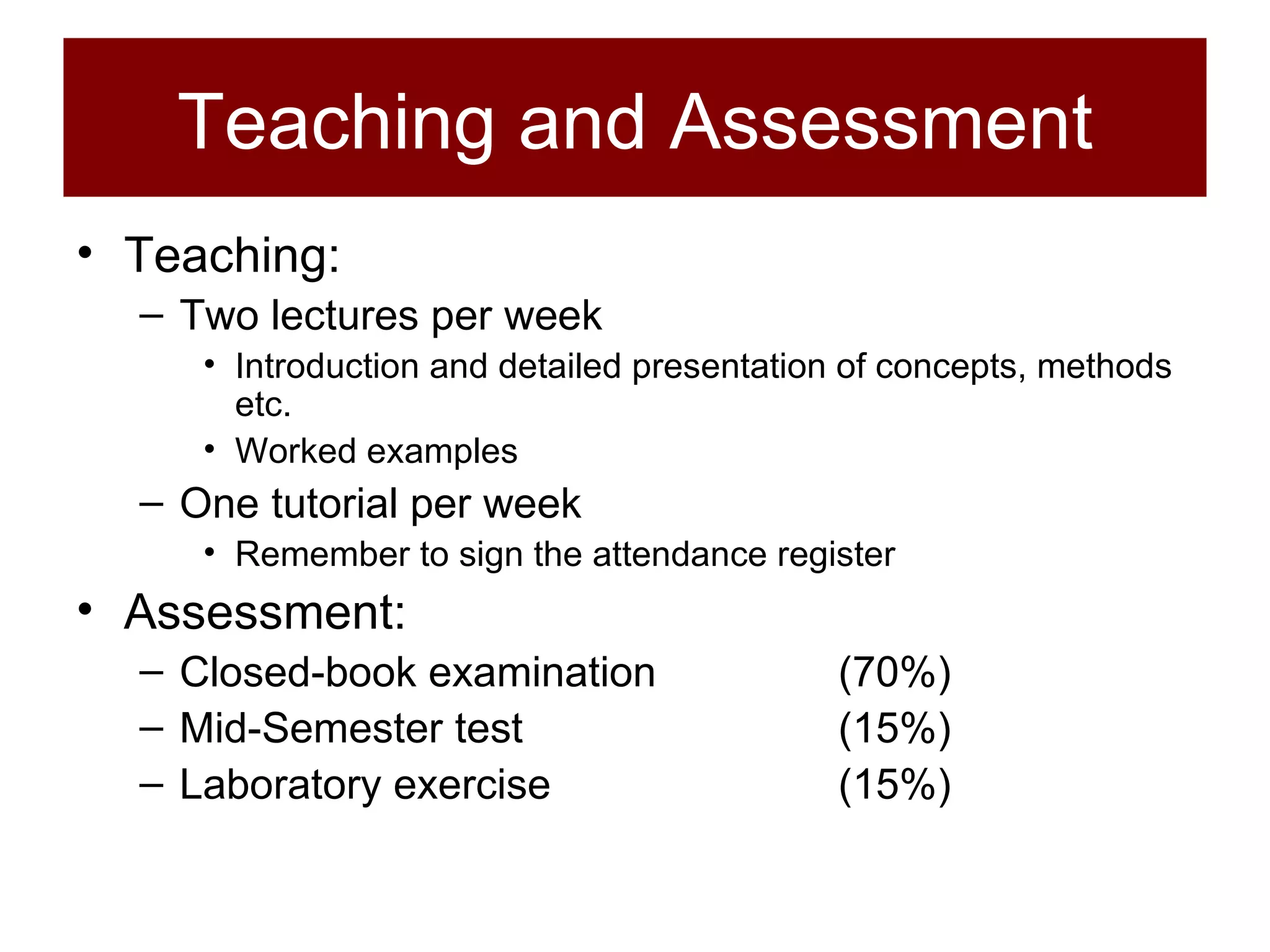
Teaching and Assessment Teaching: Two lectures per week Introduction and detailed presentation of concepts, methods etc. Worked examples One tutorial per week Remember to sign the attendance register Assessment: Closed-book examination (70%) Mid-Semester test  (15%) Laboratory exercise (15%)
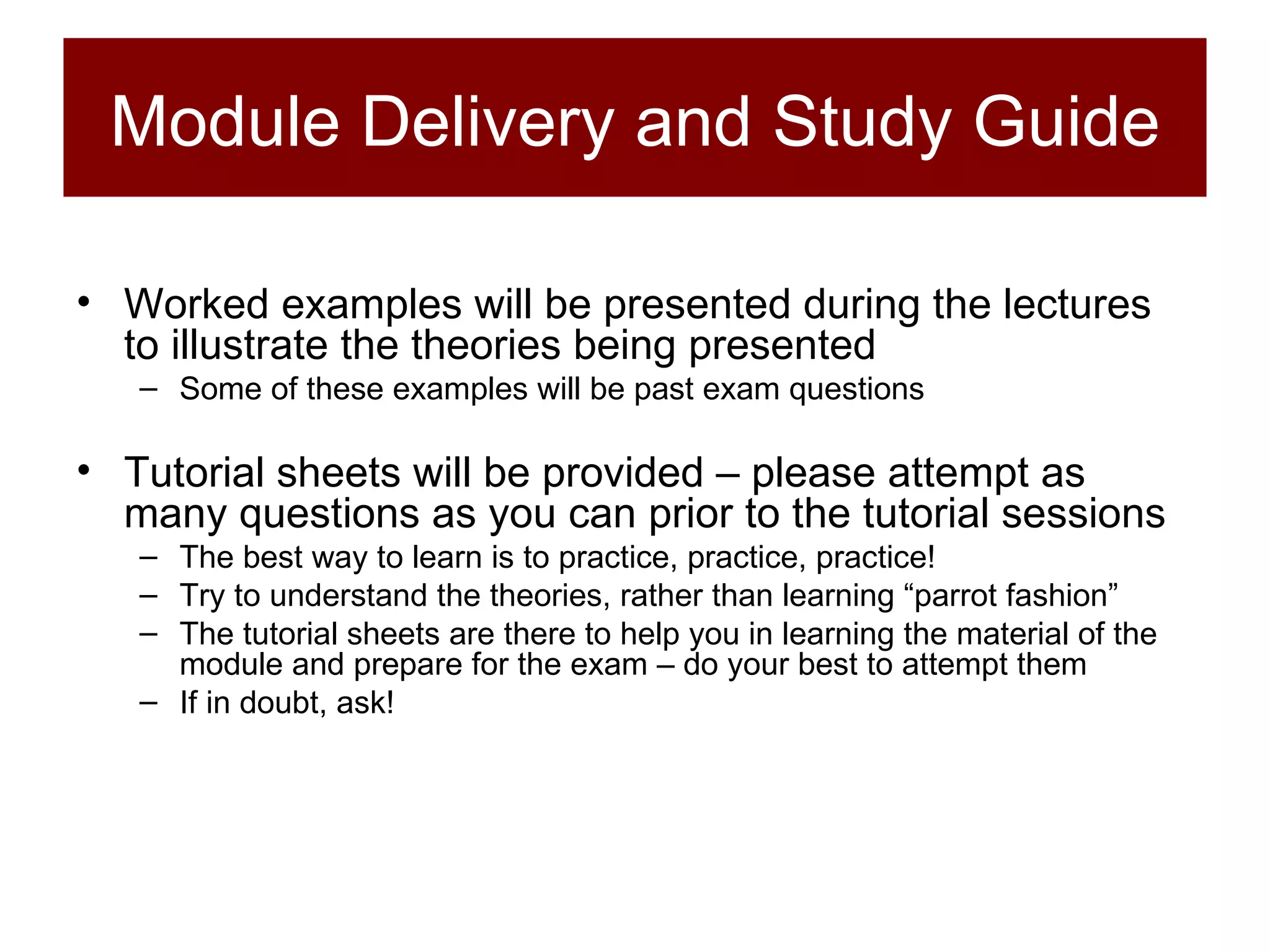
Module Delivery and Study Guide Worked examples will be presented during the lectures to illustrate the theories being presented Some of these examples will be past exam questions Tutorial sheets will be provided – please attempt as many questions as you can prior to the tutorial sessions The best way to learn is to practice, practice, practice! Try to understand the theories, rather than learning “parrot fashion” The tutorial sheets are there to help you in learning the material of the module and prepare for the exam – do your best to attempt them If in doubt, ask!
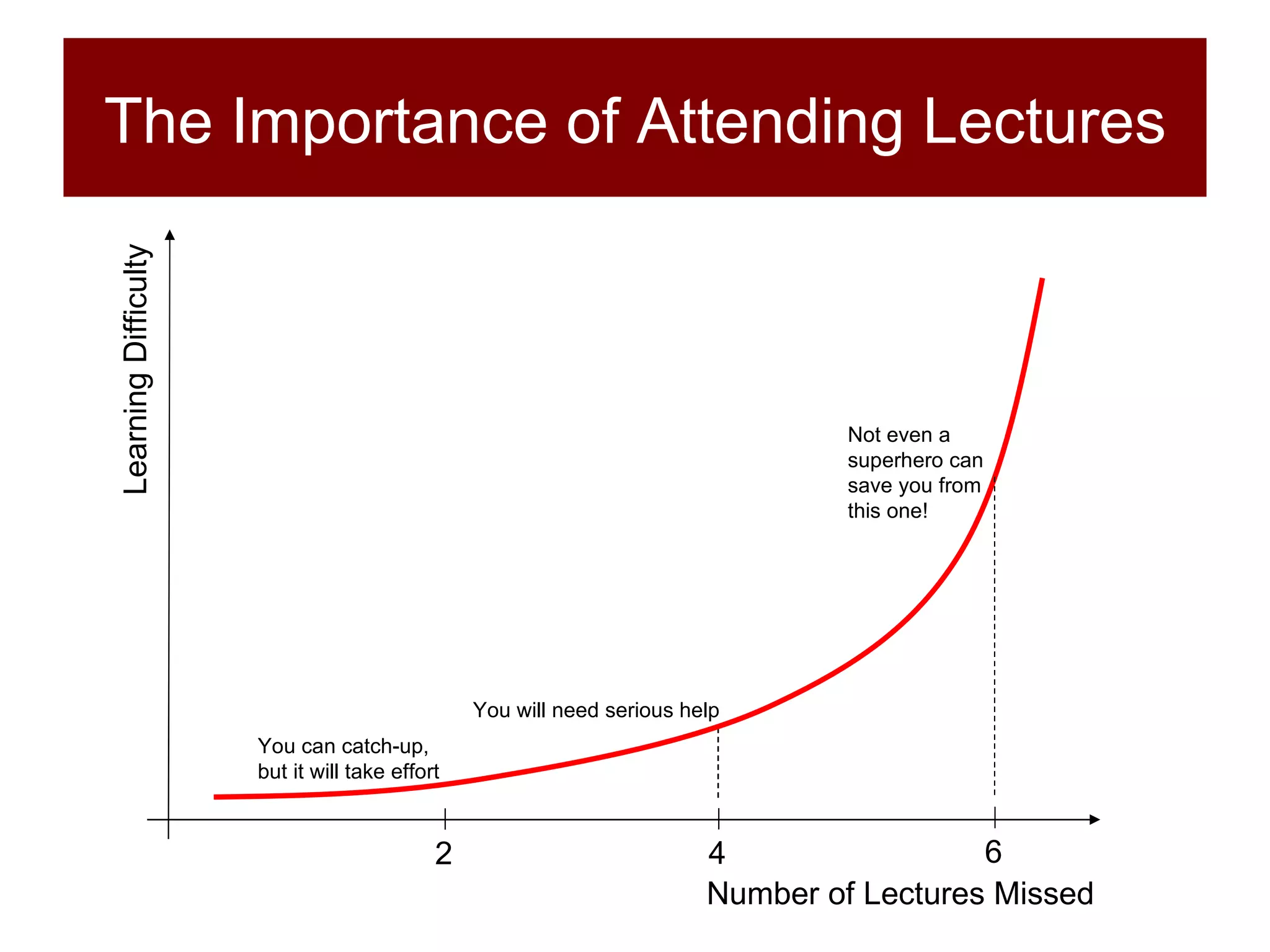
The Importance of Attending Lectures Number of Lectures Missed Learning Difficulty 2 4 6 You can catch-up, but it will take effort You will need serious help Not even a superhero can save you from this one!
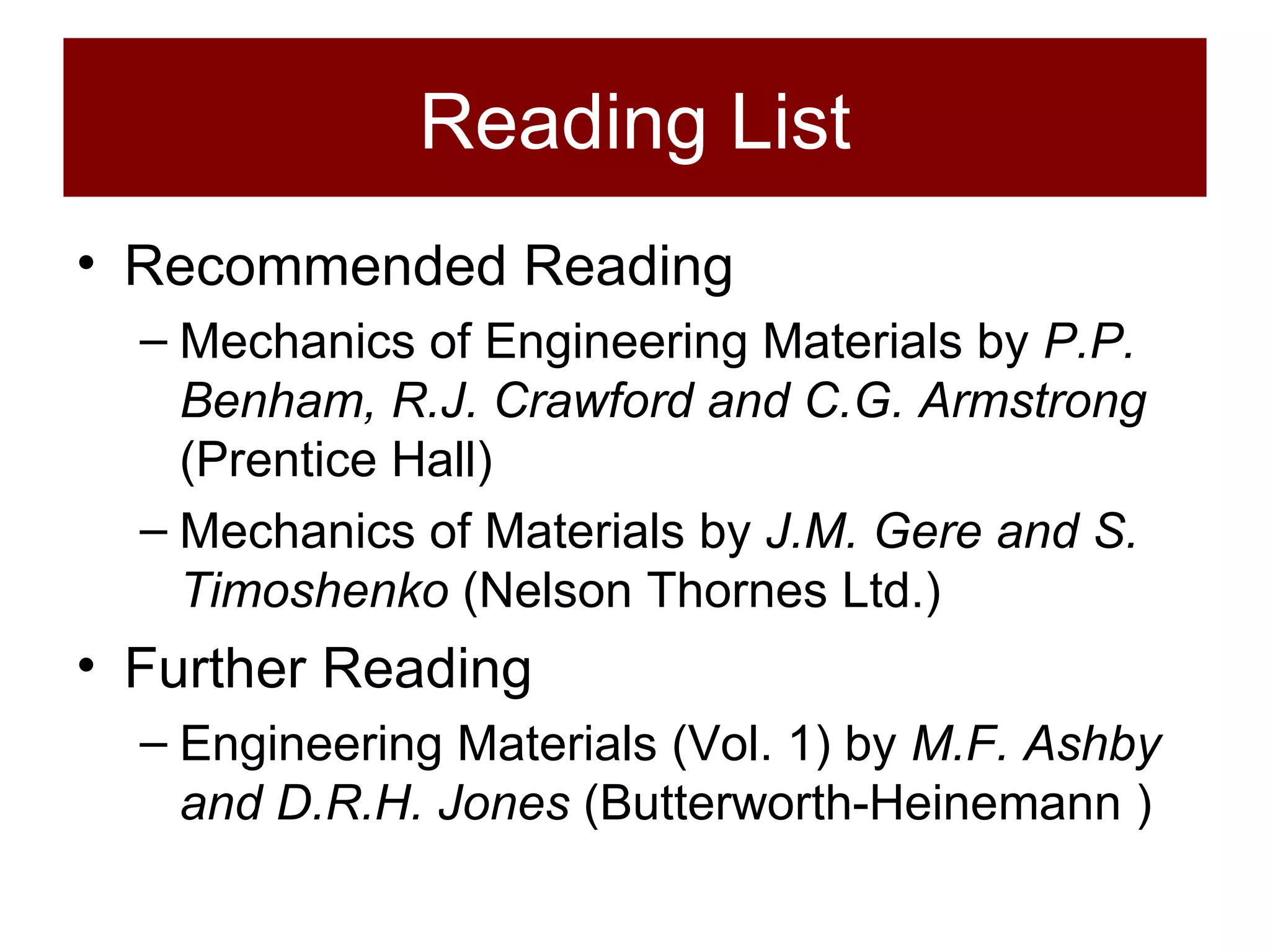
Reading List Recommended Reading Mechanics of Engineering Materials by  P.P. Benham, R.J. Crawford and C.G. Armstrong  (Prentice Hall) Mechanics of Materials by  J.M. Gere and S. Timoshenko  (Nelson Thornes Ltd.) Further Reading Engineering Materials (Vol. 1) by  M.F. Ashby and D.R.H. Jones  (Butterworth-Heinemann )
Lecture Etiquette Please do not use mobile phones Switch off or activate silent mode Please turn up on time A prompt start will mean a prompt finish Please refrain from chatting during the lecture If you have a question – ask
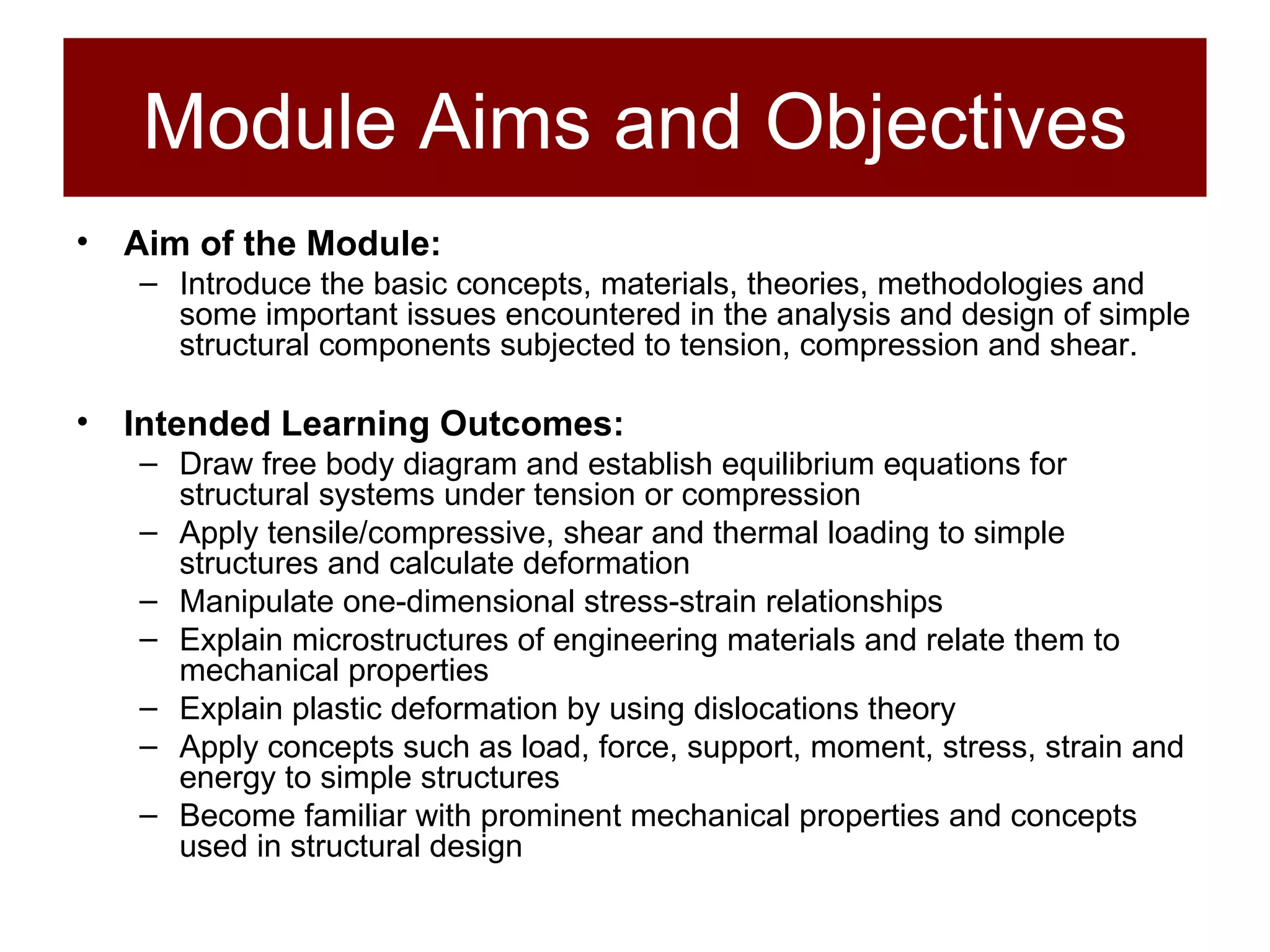
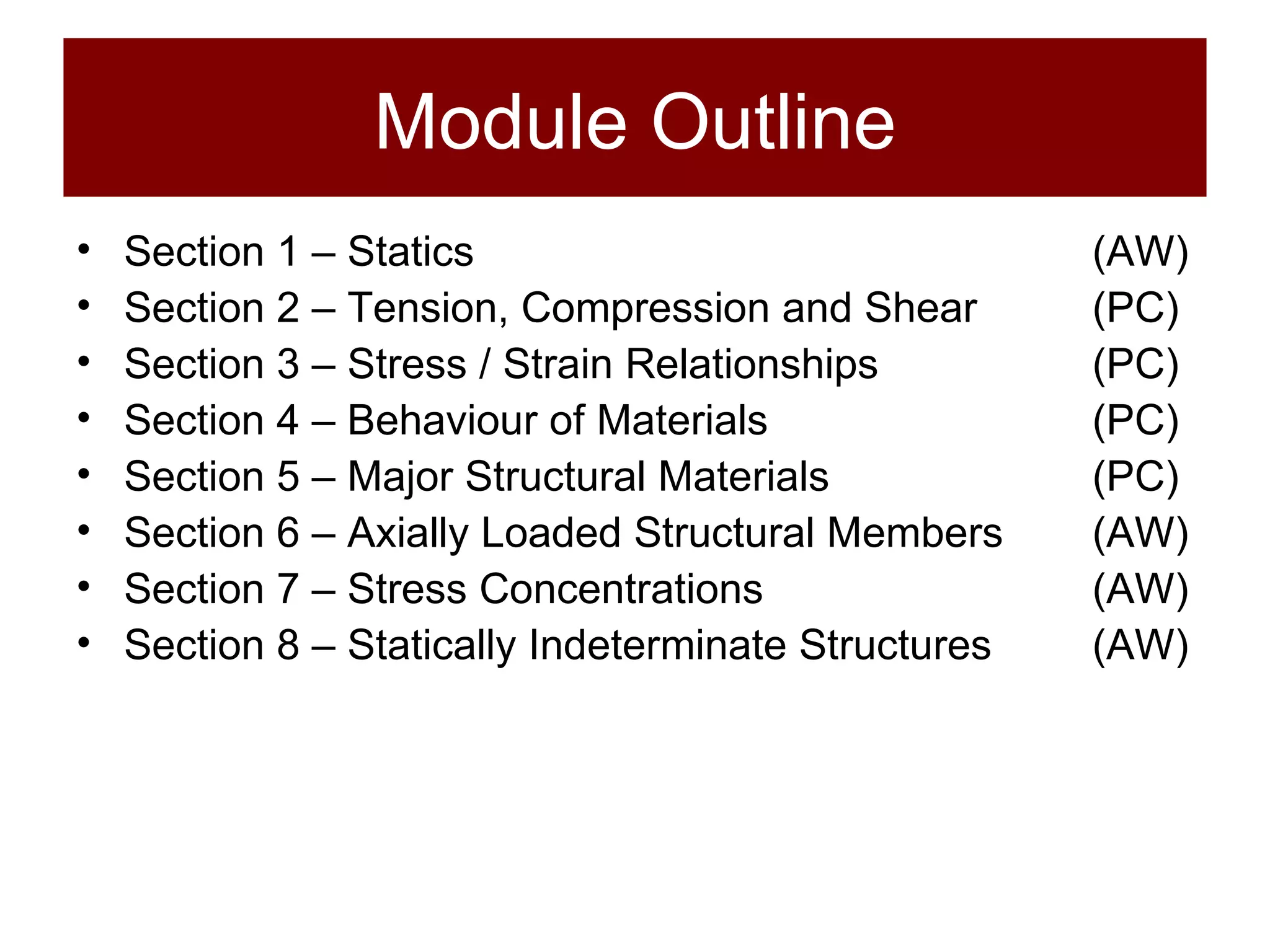
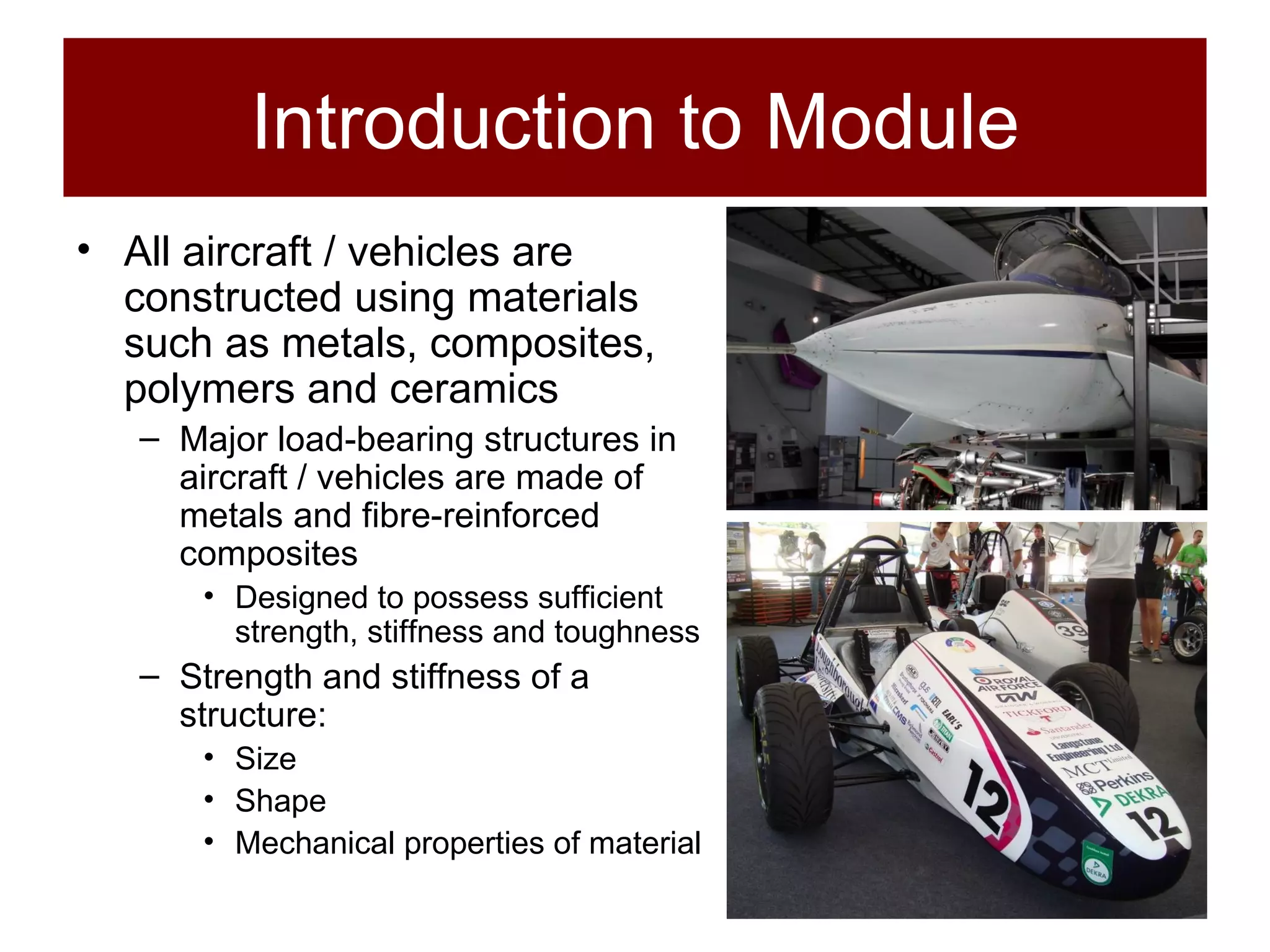
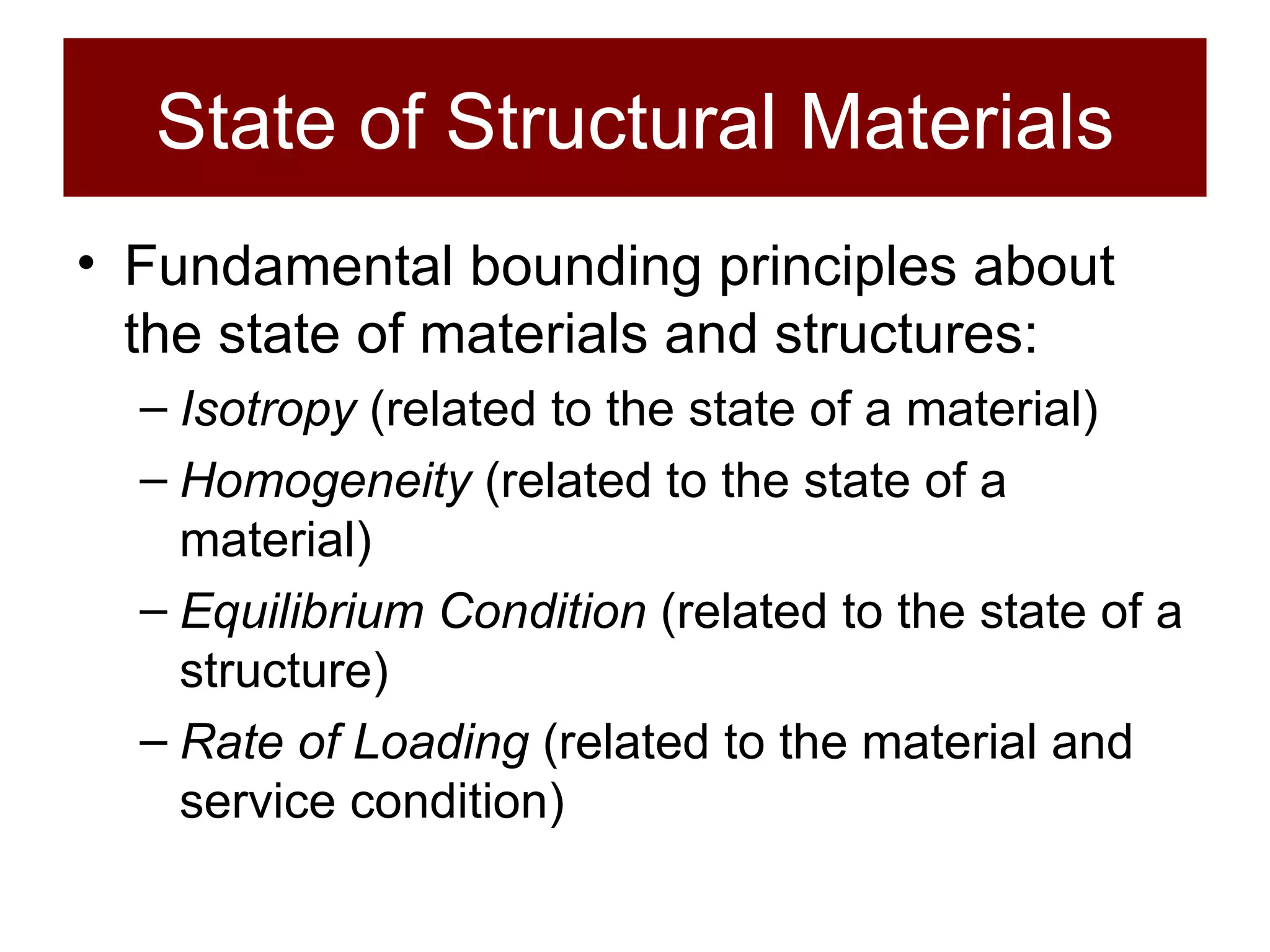
Introduction to Module All aircraft / vehicles are constructed using materials such as metals, composites, polymers and ceramics Major load-bearing structures in aircraft / vehicles are made of metals and fibre-reinforced composites Designed to possess sufficient strength, stiffness and toughness Strength and stiffness of a structure: Size Shape Mechanical properties of material
State of Structural Materials Fundamental bounding principles about the state of materials and structures: Isotropy  (related to the state of a material) Homogeneity  (related to the state of a material) Equilibrium Condition  (related to the state of a structure) Rate of Loading  (related to the material and service condition)
Isotropy When materials are made to possess  micro-structural characteristics  such that their  physical  and  mechanical properties  are the  same in all directions , they are said to be  isotropic If this condition is not met, they are considered  anisotropic Most metals, polymers and ceramics are considered isotropic Fibre-reinforced composites are generally considered as anisotropic Unless expressly stated, the existence of an isotropic state is assumed
Homogeneity If  physical  and  mechanical properties  at  any point  of a bulky material are the  same as that at any other point  within the material, this material is said to be  homogeneous When this condition is not met, the material is  inhomogeneous Most metals, polymers and ceramics are homogeneous Fibre-reinforced composites are generally inhomogeneous on a  microscopic scale Considered homogeneous on a  macroscopic scale  (i.e. millimeters) Unless expressly stated, the existence of an homogeneous state is assumed
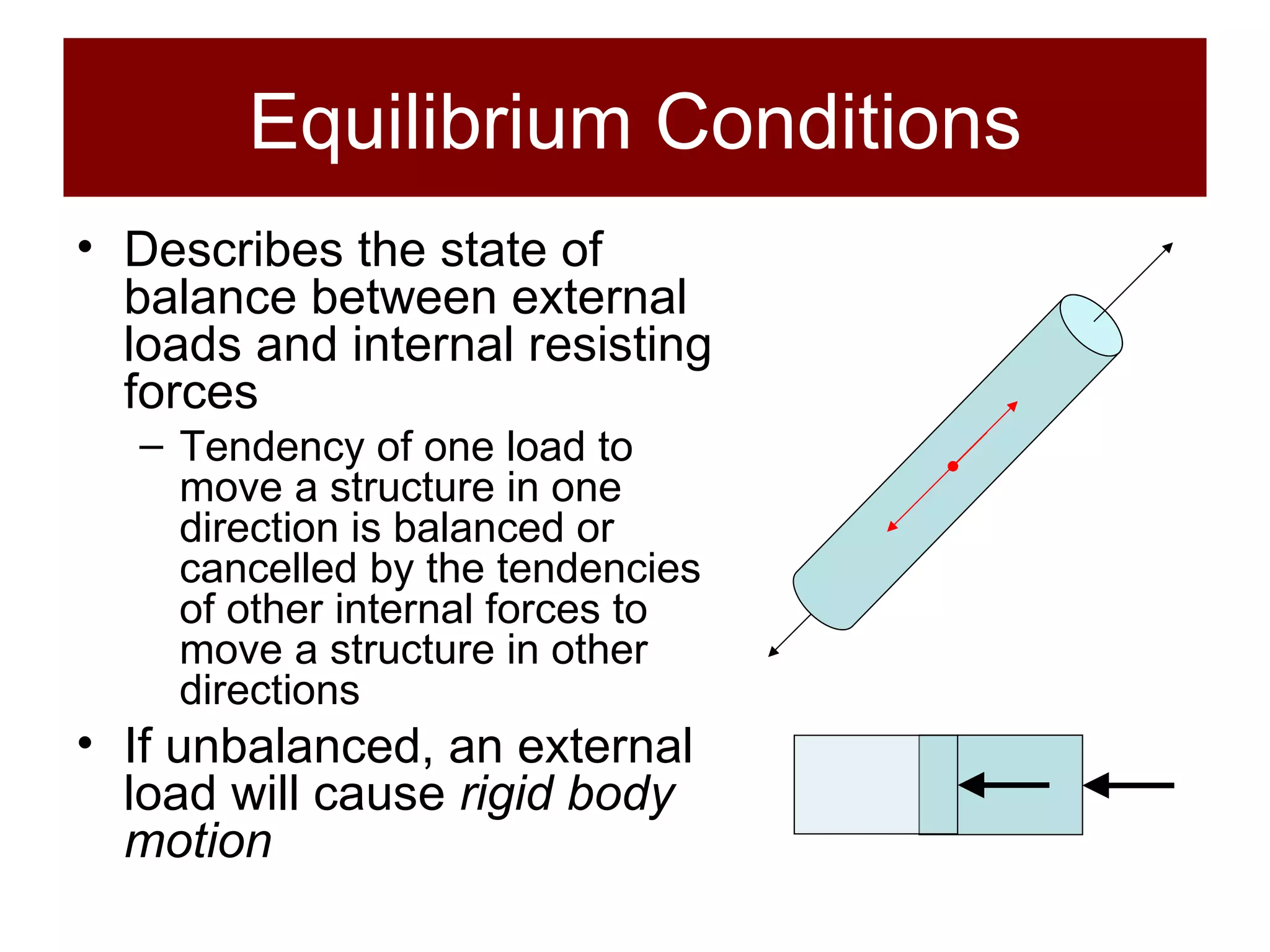
Equilibrium Conditions Describes the state of balance between external loads and internal resisting forces Tendency of one load to move a structure in one direction is balanced or cancelled by the tendencies of other internal forces to move a structure in other directions If unbalanced, an external load will cause  rigid body motion
Rate of Loading Static  or  quasi-static  load: mechanical load applied at constant speed usually between 0.1 and 10 mm/min Structure is in equilibrium Dynamic  or  impact  load: no equilibrium conditions during the load Repeated loading : typical loading dealing with fatigue Consists of many identical loading cycles Each cycle is quasi-dynamic and overall mean loading of a static nature Unless expressly stated, the existence of a quasi-static load is assumed
Summary of Assumptions Structural materials are  isotropic ,  homogenous  deformable solids Structural members in most cases are one-dimensional Structural members are subjected to a  quasi-static  loading The loaded structural members are in  equilibrium
This resource was created by Loughborough University and released as an open educational resource through the Open Engineering Resources project of the HE Academy Engineering Subject Centre. The Open Engineering Resources project was funded by HEFCE and part of the JISC/HE Academy UKOER programme. © 2010 Loughborough University This work is licensed under a  Creative Commons Attribution 2.0 Licence .  The name of Loughborough University, and the Loughborough University logo are the name and registered marks of Loughborough University. To the fullest extent permitted by law Loughborough University reserves all its rights in its name and marks, which may not be used except with its written permission. The JISC logo is licensed under the terms of the Creative Commons Attribution-Non-Commercial-No Derivative Works 2.0 UK: England & Wales Licence.  All reproductions must comply with the terms of that licence. The HEA logo is owned by the Higher Education Academy Limited may be freely distributed and copied for educational purposes only, provided that appropriate acknowledgement is given to the Higher Education Academy as the copyright holder and original publisher. Credits

Structures and Materials- Outline and Introduction

  • 1.
    TTA104 Structuresand Materials Dr Paul Cunningham, SM1.22 Dr Andrew Watson, SM3.11 © Loughborough University 2010. This work is licensed under a Creative Commons Attribution 2.0 Licence .
  • 2.
    Summary & ContentsThe module aims and objectives will be covered, together with the module outline and the methods of teaching and assessment. The module will then be introduced, and the important physical assumptions that will be applied throughout this module will be highlighted. Module Aims and Objectives Teaching and Assessment Module Delivery and Study Guide The Importance of Attending Lectures Reading List Lecture Etiquette Introduction to Module State of Structural Materials Isotropy Homogeneity Equilibrium Conditions Rate of Loading Summary of Assumptions Credits & Notices
  • 3.
    Module Aims andObjectives Aim of the Module: Introduce the basic concepts, materials, theories, methodologies and some important issues encountered in the analysis and design of simple structural components subjected to tension, compression and shear. Intended Learning Outcomes: Draw free body diagram and establish equilibrium equations for structural systems under tension or compression Apply tensile/compressive, shear and thermal loading to simple structures and calculate deformation Manipulate one-dimensional stress-strain relationships Explain microstructures of engineering materials and relate them to mechanical properties Explain plastic deformation by using dislocations theory Apply concepts such as load, force, support, moment, stress, strain and energy to simple structures Become familiar with prominent mechanical properties and concepts used in structural design
  • 4.
    Module Outline Section1 – Statics (AW) Section 2 – Tension, Compression and Shear (PC) Section 3 – Stress / Strain Relationships (PC) Section 4 – Behaviour of Materials (PC) Section 5 – Major Structural Materials (PC) Section 6 – Axially Loaded Structural Members (AW) Section 7 – Stress Concentrations (AW) Section 8 – Statically Indeterminate Structures (AW)
  • 5.
    Teaching and AssessmentTeaching: Two lectures per week Introduction and detailed presentation of concepts, methods etc. Worked examples One tutorial per week Remember to sign the attendance register Assessment: Closed-book examination (70%) Mid-Semester test (15%) Laboratory exercise (15%)
  • 6.
    Module Delivery andStudy Guide Worked examples will be presented during the lectures to illustrate the theories being presented Some of these examples will be past exam questions Tutorial sheets will be provided – please attempt as many questions as you can prior to the tutorial sessions The best way to learn is to practice, practice, practice! Try to understand the theories, rather than learning “parrot fashion” The tutorial sheets are there to help you in learning the material of the module and prepare for the exam – do your best to attempt them If in doubt, ask!
  • 7.
    The Importance ofAttending Lectures Number of Lectures Missed Learning Difficulty 2 4 6 You can catch-up, but it will take effort You will need serious help Not even a superhero can save you from this one!
  • 8.
    Reading List RecommendedReading Mechanics of Engineering Materials by P.P. Benham, R.J. Crawford and C.G. Armstrong (Prentice Hall) Mechanics of Materials by J.M. Gere and S. Timoshenko (Nelson Thornes Ltd.) Further Reading Engineering Materials (Vol. 1) by M.F. Ashby and D.R.H. Jones (Butterworth-Heinemann )
  • 9.
    Lecture Etiquette Pleasedo not use mobile phones Switch off or activate silent mode Please turn up on time A prompt start will mean a prompt finish Please refrain from chatting during the lecture If you have a question – ask
  • 10.
    Introduction to ModuleAll aircraft / vehicles are constructed using materials such as metals, composites, polymers and ceramics Major load-bearing structures in aircraft / vehicles are made of metals and fibre-reinforced composites Designed to possess sufficient strength, stiffness and toughness Strength and stiffness of a structure: Size Shape Mechanical properties of material
  • 11.
    State of StructuralMaterials Fundamental bounding principles about the state of materials and structures: Isotropy (related to the state of a material) Homogeneity (related to the state of a material) Equilibrium Condition (related to the state of a structure) Rate of Loading (related to the material and service condition)
  • 12.
    Isotropy When materialsare made to possess micro-structural characteristics such that their physical and mechanical properties are the same in all directions , they are said to be isotropic If this condition is not met, they are considered anisotropic Most metals, polymers and ceramics are considered isotropic Fibre-reinforced composites are generally considered as anisotropic Unless expressly stated, the existence of an isotropic state is assumed
  • 13.
    Homogeneity If physical and mechanical properties at any point of a bulky material are the same as that at any other point within the material, this material is said to be homogeneous When this condition is not met, the material is inhomogeneous Most metals, polymers and ceramics are homogeneous Fibre-reinforced composites are generally inhomogeneous on a microscopic scale Considered homogeneous on a macroscopic scale (i.e. millimeters) Unless expressly stated, the existence of an homogeneous state is assumed
  • 14.
    Equilibrium Conditions Describesthe state of balance between external loads and internal resisting forces Tendency of one load to move a structure in one direction is balanced or cancelled by the tendencies of other internal forces to move a structure in other directions If unbalanced, an external load will cause rigid body motion
  • 15.
    Rate of LoadingStatic or quasi-static load: mechanical load applied at constant speed usually between 0.1 and 10 mm/min Structure is in equilibrium Dynamic or impact load: no equilibrium conditions during the load Repeated loading : typical loading dealing with fatigue Consists of many identical loading cycles Each cycle is quasi-dynamic and overall mean loading of a static nature Unless expressly stated, the existence of a quasi-static load is assumed
  • 16.
    Summary of AssumptionsStructural materials are isotropic , homogenous deformable solids Structural members in most cases are one-dimensional Structural members are subjected to a quasi-static loading The loaded structural members are in equilibrium
  • 17.
    This resource wascreated by Loughborough University and released as an open educational resource through the Open Engineering Resources project of the HE Academy Engineering Subject Centre. The Open Engineering Resources project was funded by HEFCE and part of the JISC/HE Academy UKOER programme. © 2010 Loughborough University This work is licensed under a Creative Commons Attribution 2.0 Licence . The name of Loughborough University, and the Loughborough University logo are the name and registered marks of Loughborough University. To the fullest extent permitted by law Loughborough University reserves all its rights in its name and marks, which may not be used except with its written permission. The JISC logo is licensed under the terms of the Creative Commons Attribution-Non-Commercial-No Derivative Works 2.0 UK: England & Wales Licence.  All reproductions must comply with the terms of that licence. The HEA logo is owned by the Higher Education Academy Limited may be freely distributed and copied for educational purposes only, provided that appropriate acknowledgement is given to the Higher Education Academy as the copyright holder and original publisher. Credits