CERAMICS
Inorganic solid
Introduction
• It’s a man made non metallic and inorganic solid
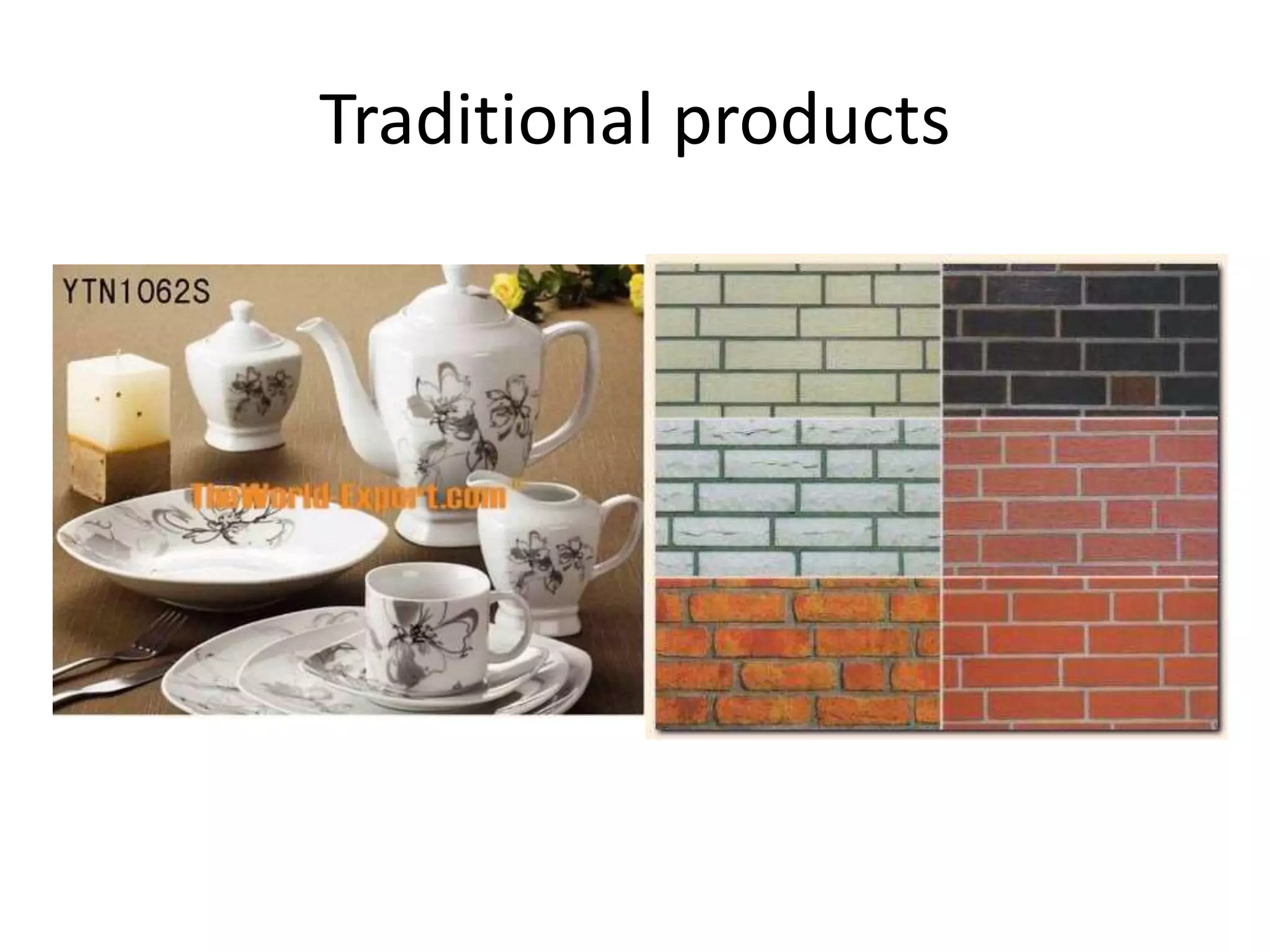
Traditional products
• Bricks
• Cook wares
• Cements
• Concretes
• Tiles
• potteries
Traditional products
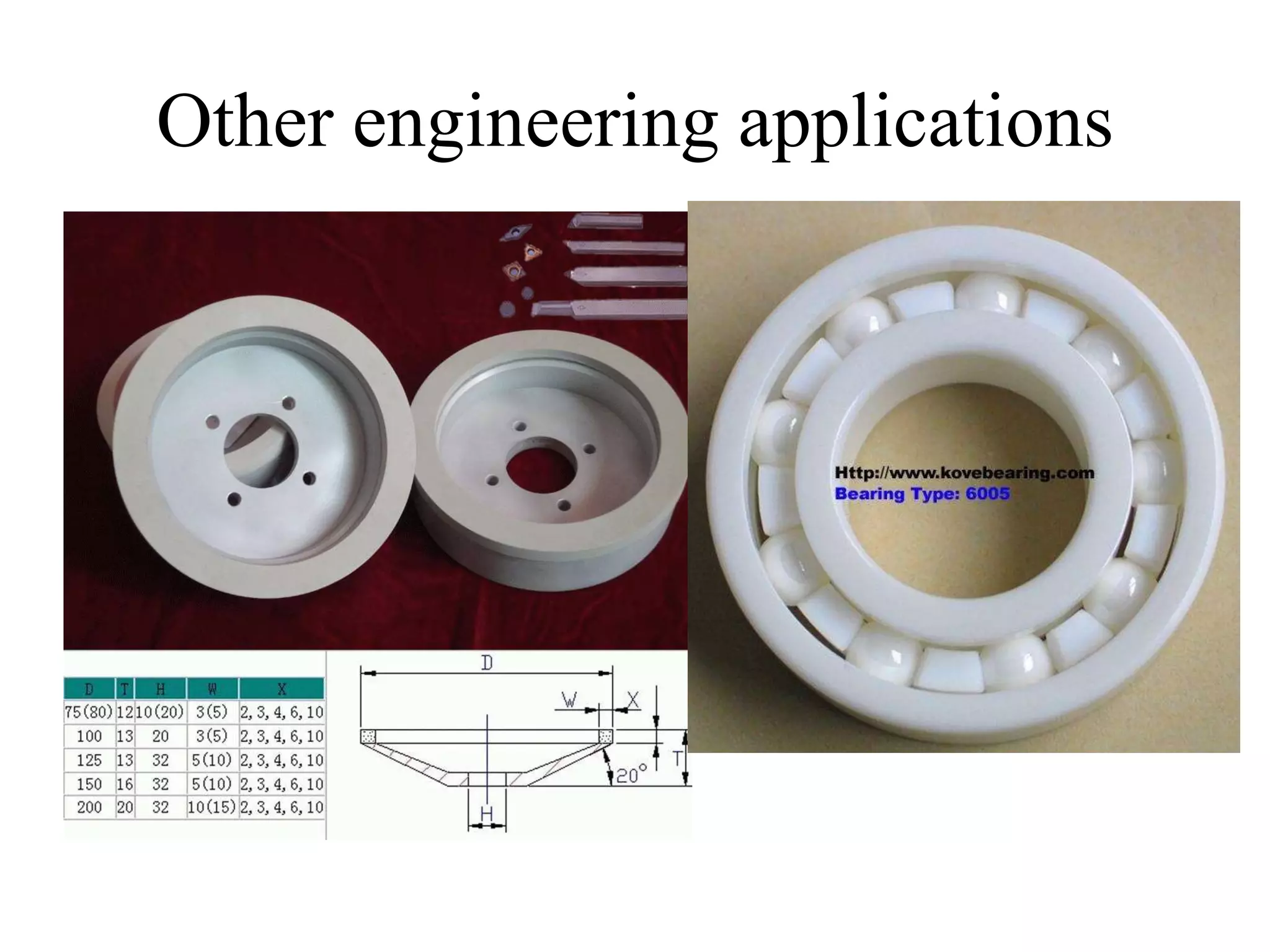
Other engineering applications
Used as
• tool for grinding and Cutting
• Bearings
• And many in electrical and electronics fields.
Other engineering applications
Characteristics of ceramics
• Used in high temperature places
• Its strong, hard and brittle
• High melting point
• Good thermal and electrical insulators
• Resistant to oxidation and corrosion
• Having high compressive strength but are weak intension
Engineering ceramics
• Its specially for engineering applications
• They are basically oxides, carbides, sulphides
and nitrides of metal.
Characteristics of engineering ceramics
• High resistance to abrasion and wear
• High strength at high temperature
• Good chemical stability
• Good electrical insulation characteristics.
Important engineering ceramics
• Alumina (Al2O3)
• Silicon Carbide (SiC)
• Silicon Nitride (Si3N4)
• Partially stabilized Zirconia
• Sialons
Alumina (aluminium oxide)
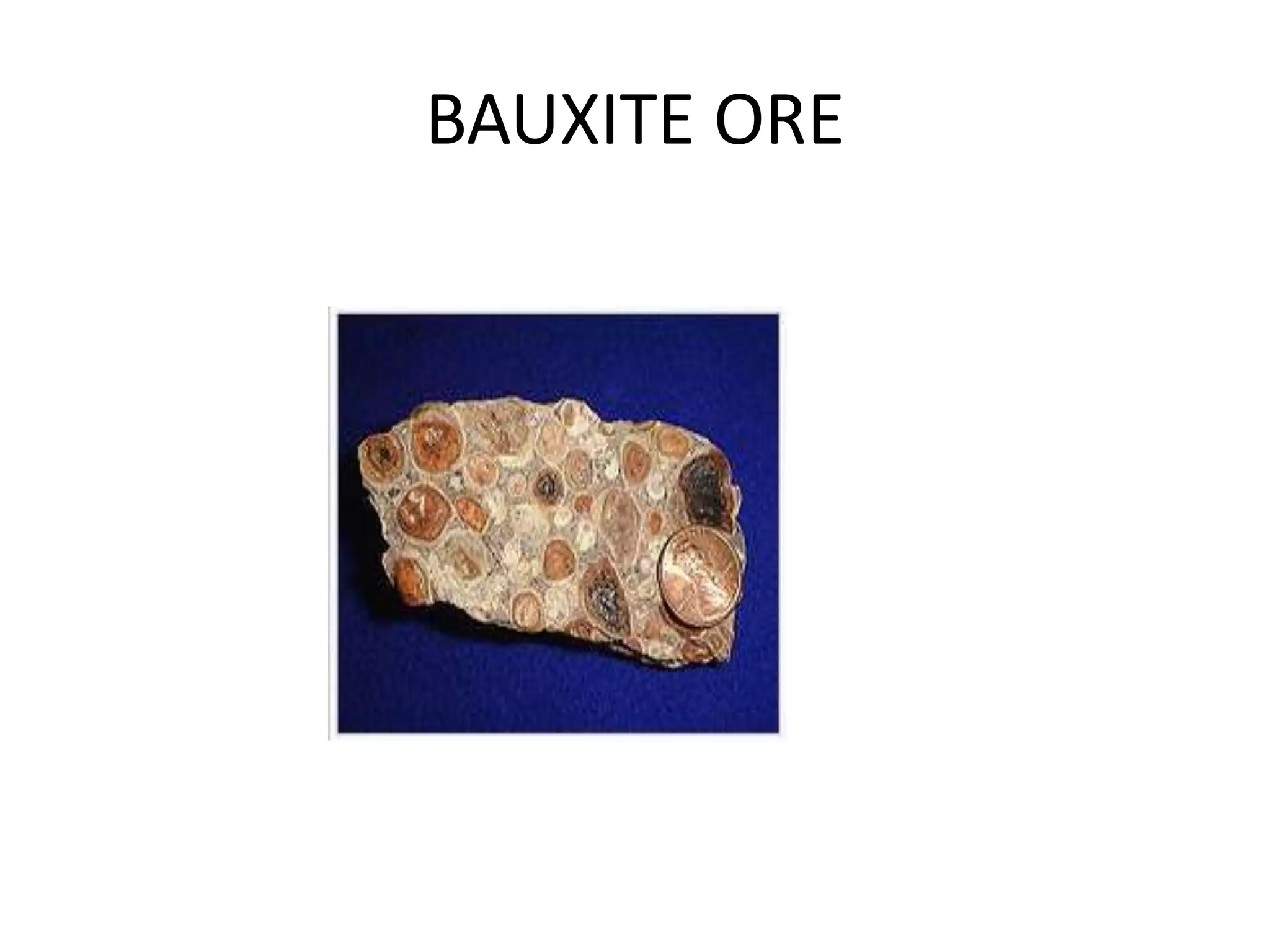
• Its produced from bauxite
• It’s a old engineering ceramic
BAUXITE ORE
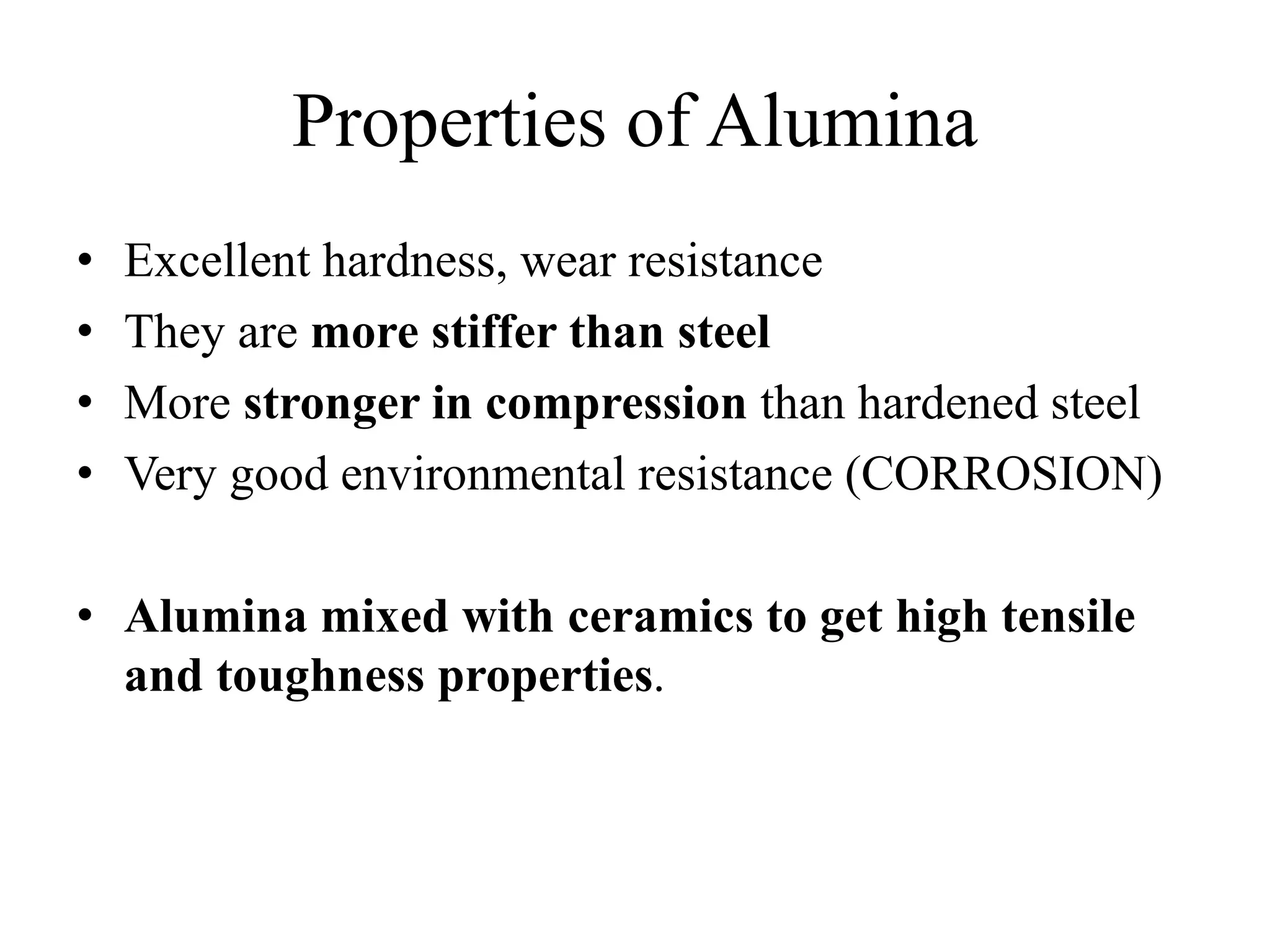
Properties of Alumina
• Excellent hardness, wear resistance
• They are more stiffer than steel
• More stronger in compression than hardened steel
• Very good environmental resistance (CORROSION)
• Alumina mixed with ceramics to get high tensile
and toughness properties.
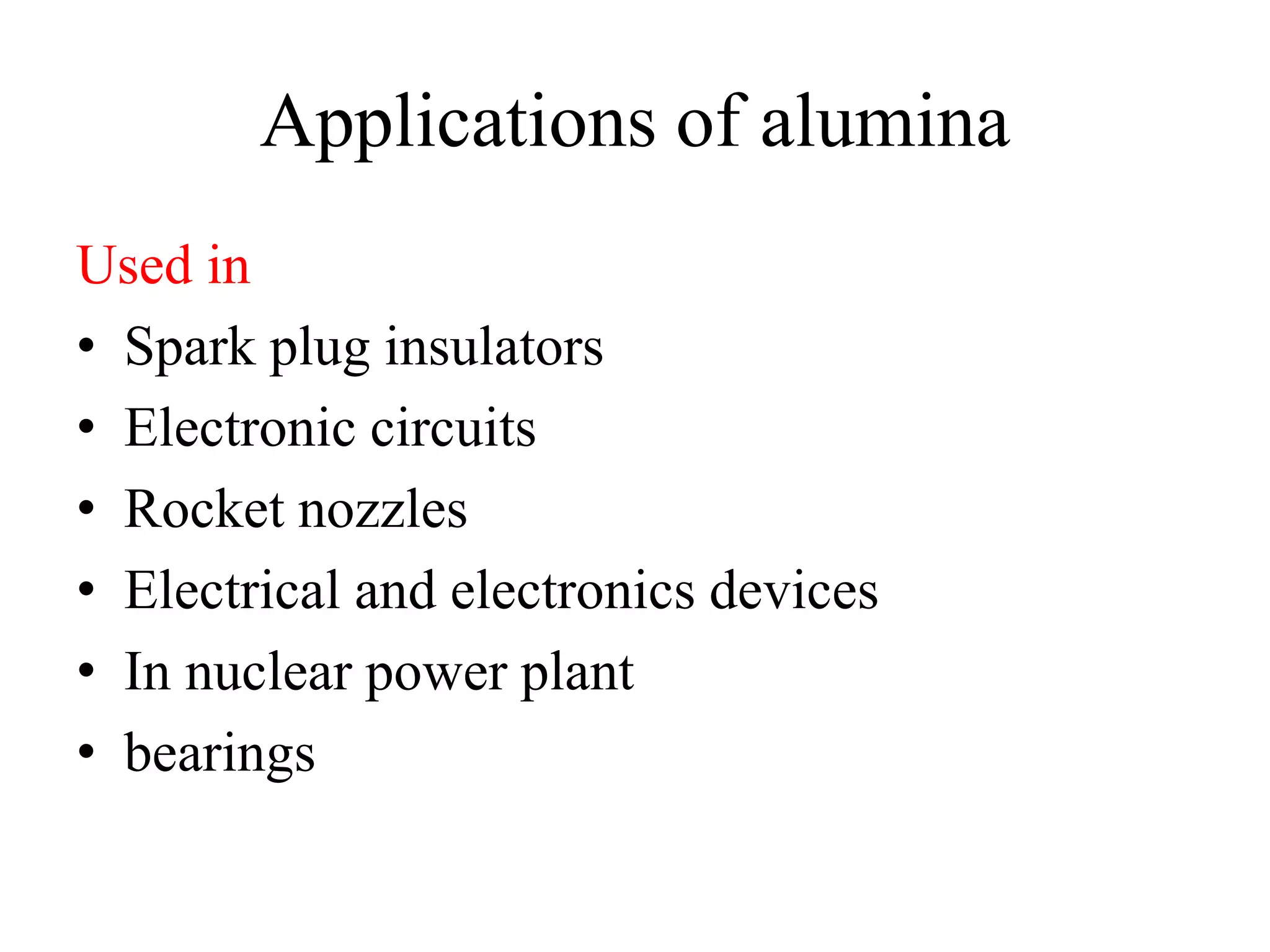
Applications of alumina
Used in
• Spark plug insulators
• Electronic circuits
• Rocket nozzles
• Electrical and electronics devices
• In nuclear power plant
• bearings
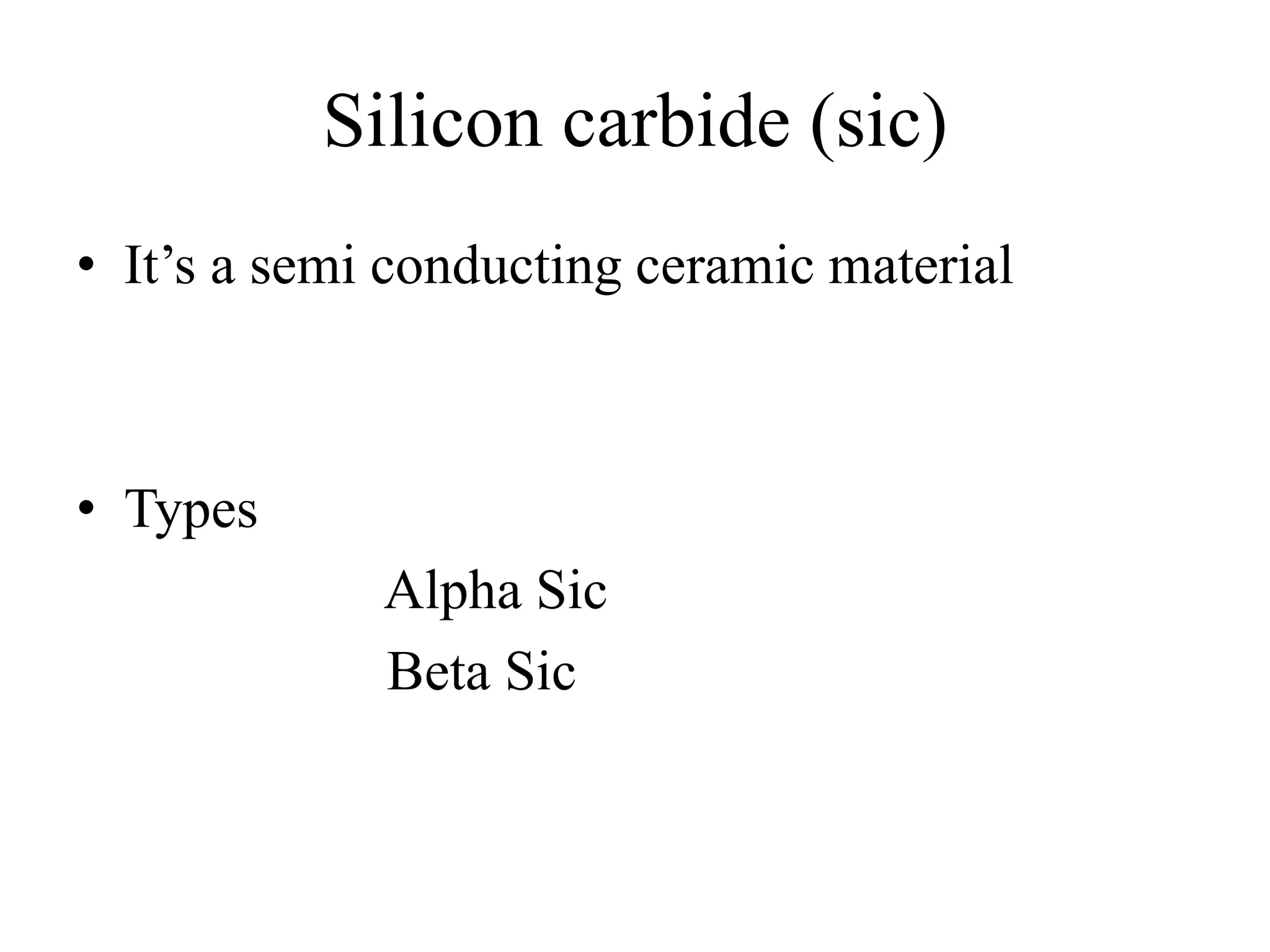
Silicon carbide (sic)
• It’s a semi conducting ceramic material
• Types
Alpha Sic
Beta Sic
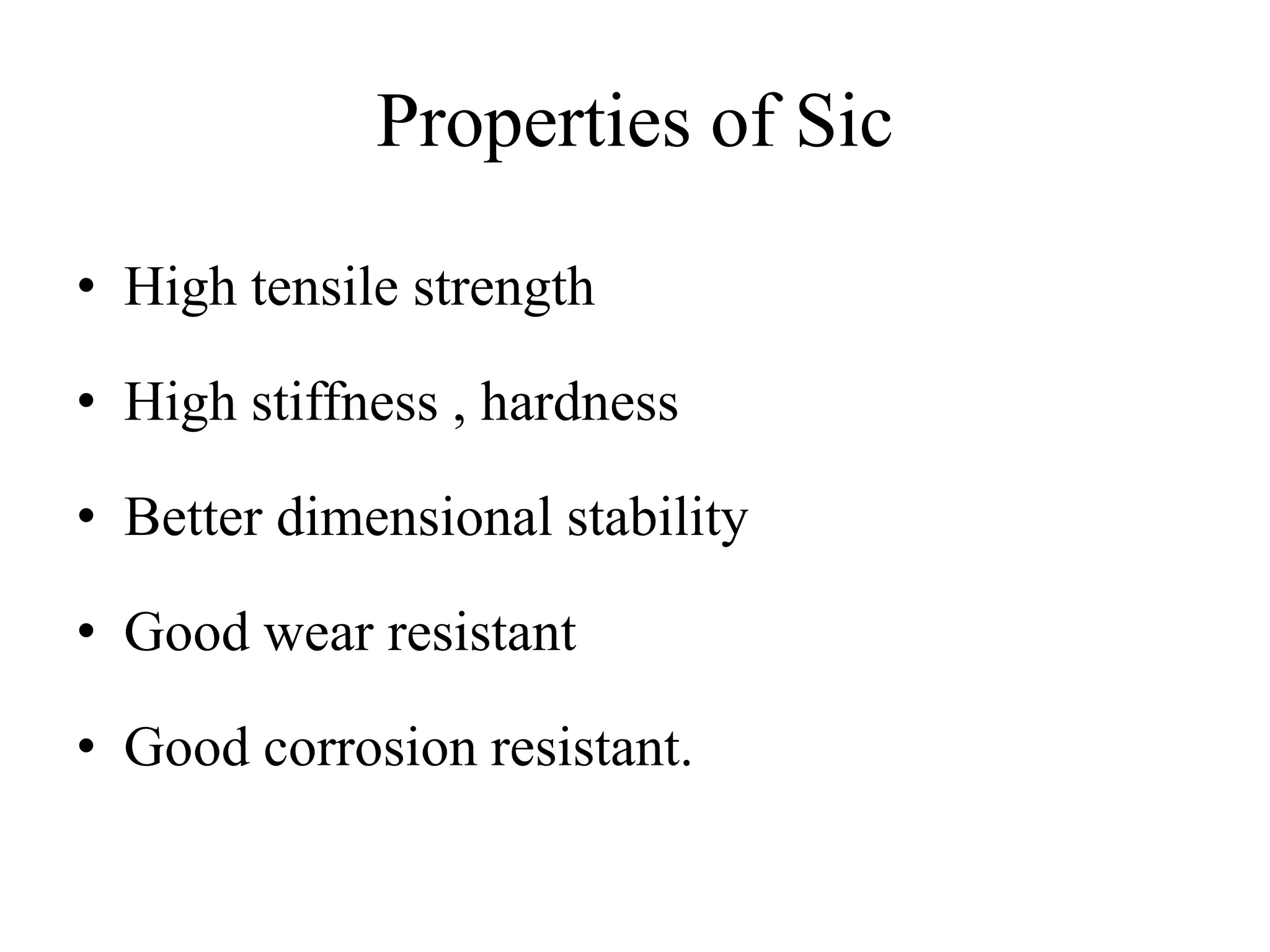
Properties of Sic
• High tensile strength
• High stiffness , hardness
• Better dimensional stability
• Good wear resistant
• Good corrosion resistant.
Applications of Sic
Used
• As a abrasives for grinding wheel
• As a coating material
• As a refractory tubes
• In nuclear reactor
• In bearings
• And in very high temperature places
Silicon nitrate (Si3n4)
• It’s a use full ceramics in chemical industries
Properties of silicon nitrides
• Resistant to strong acids
• Resistance to thermal
• Low density and low weight
• Low thermal expansion
• More stiffer
Applications of silicon nitrides
Used in
• Cutting tool materials
• Turbine parts
• Pump parts
• High temperature engineering components
Partially stabilized zirconia (PSZ)
• It’s a zirconium oxide
• Blended and sintered with others like
magnesium oxide, calcium oxide
Properties of PSZ
• High tensile strength
• Low thermal conductivity
Applications of PSZ
Used in
• As a blade in jet engine
• As a joint
• In furnace portions
• Internal combustion engine parts
Sialons
• They are Si – Al – O – N
• They are formed when Aluminium and oxygen
partially substitute for silicon and nitrogen in
silicon nitride
Properties of sialons
• High tough and strength
• Good mechanical properties
• Light weight
• Low co-efficient of thermal expansion
Applications of sialons
Used in
• Cutting material
• Nozzles
• Welding shields
• Radiant heater tubes
• impellers
COMPOSITES
TO GET A REQUIRE PROPERTIES
IN METALS
.
COMPOSITES
• Two or more materials added to get require qualities in
a material.
• The weakness of one metal rectified by the strength of
second metal
• Example
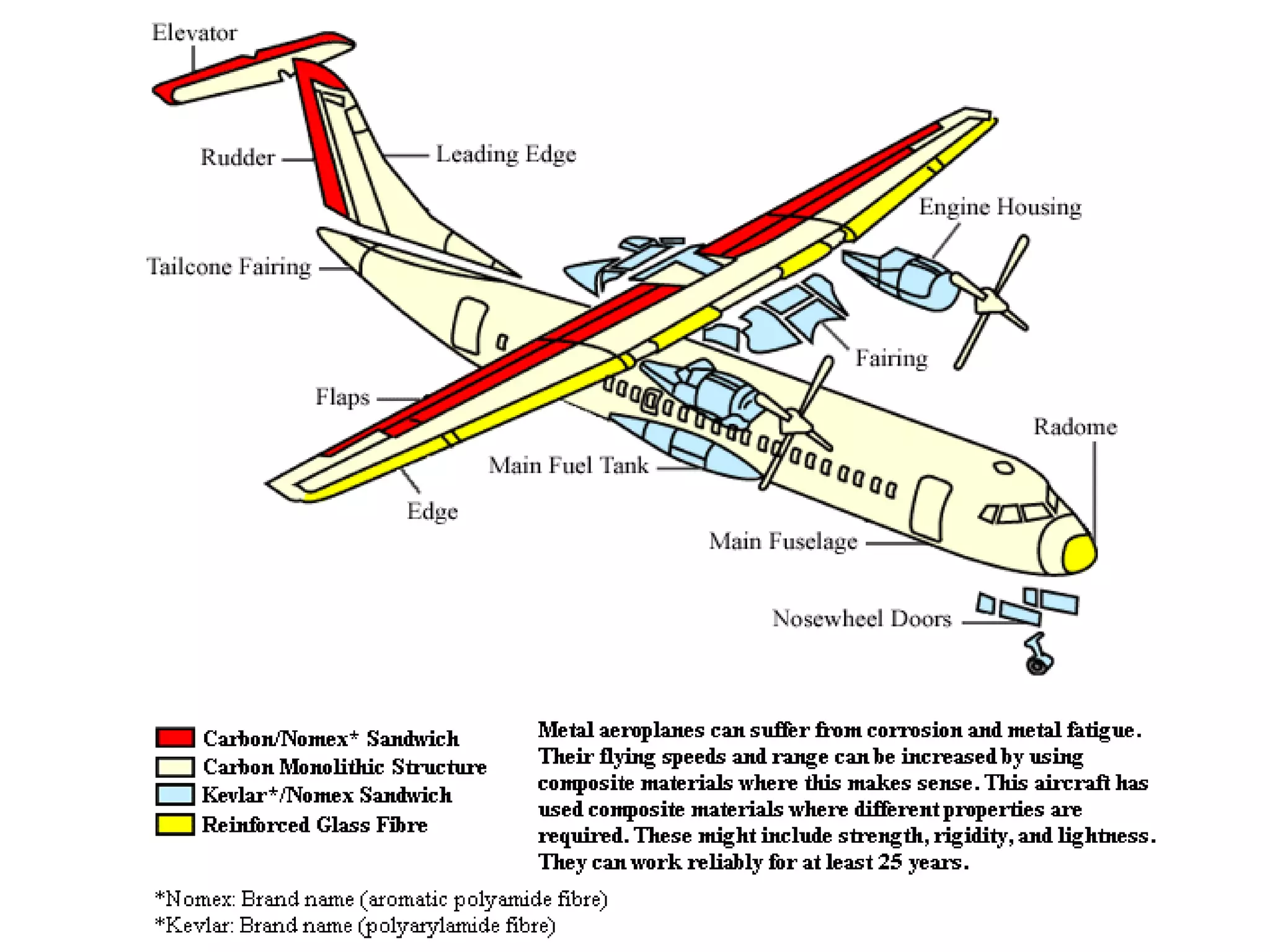
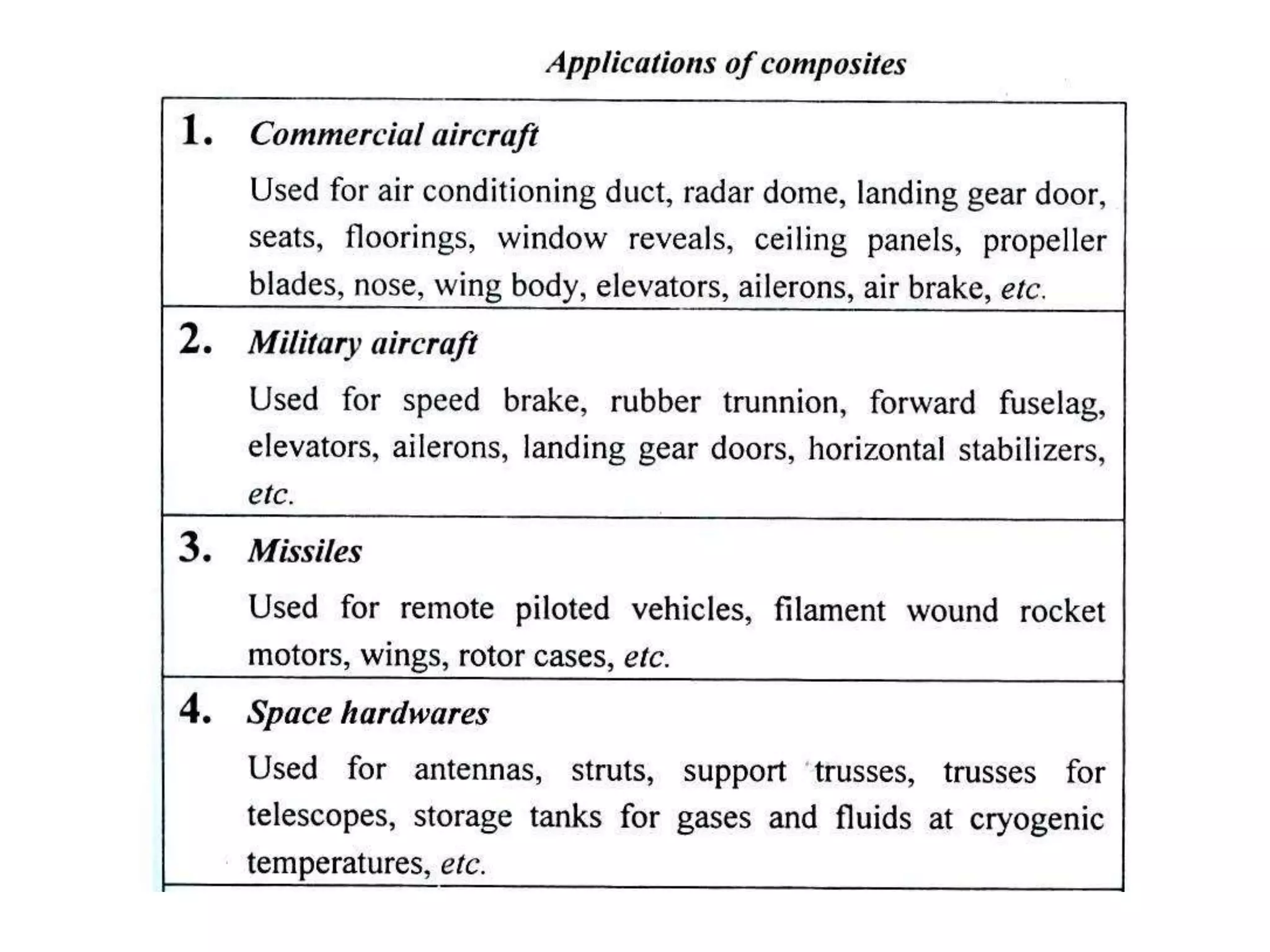
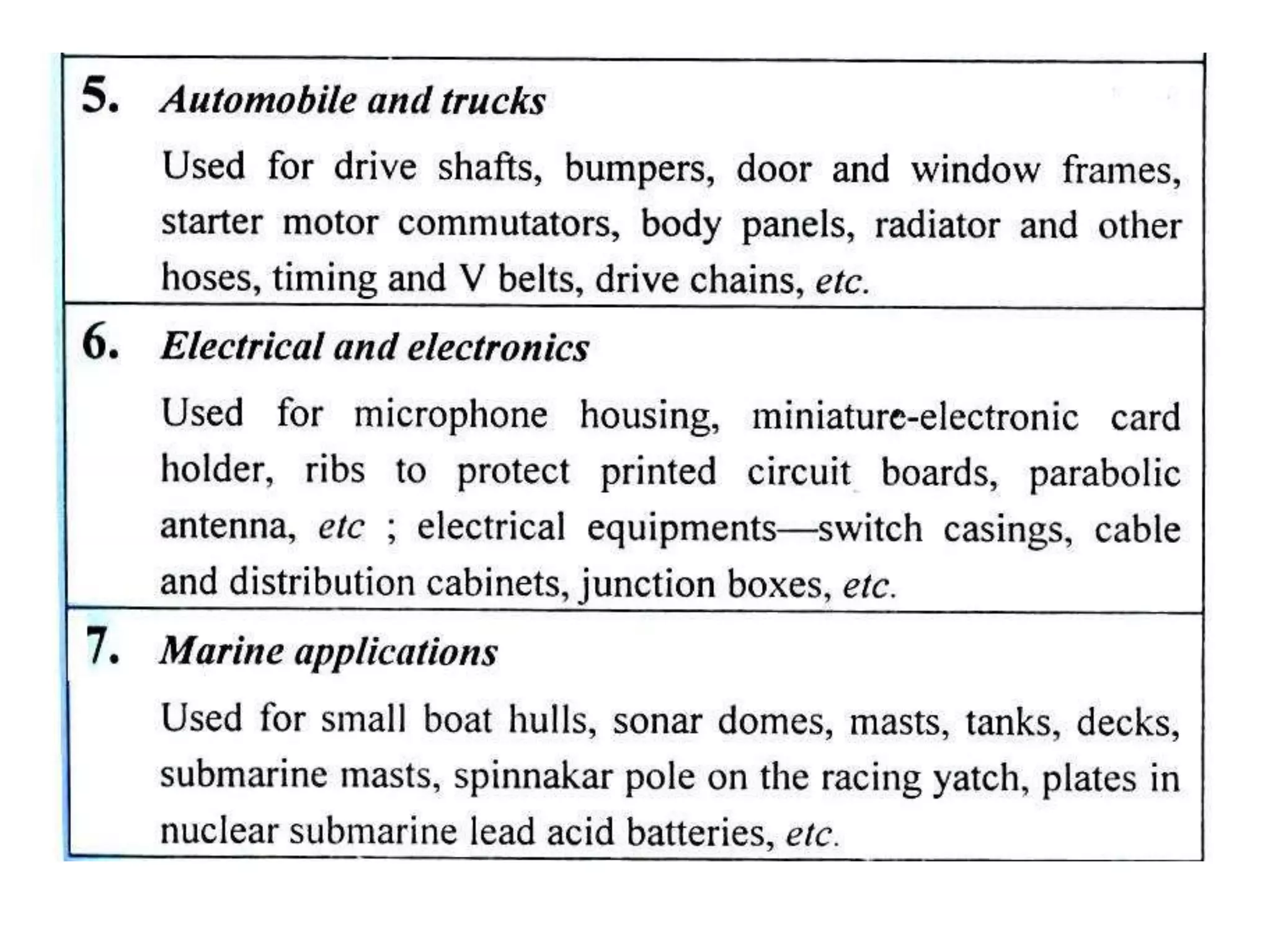
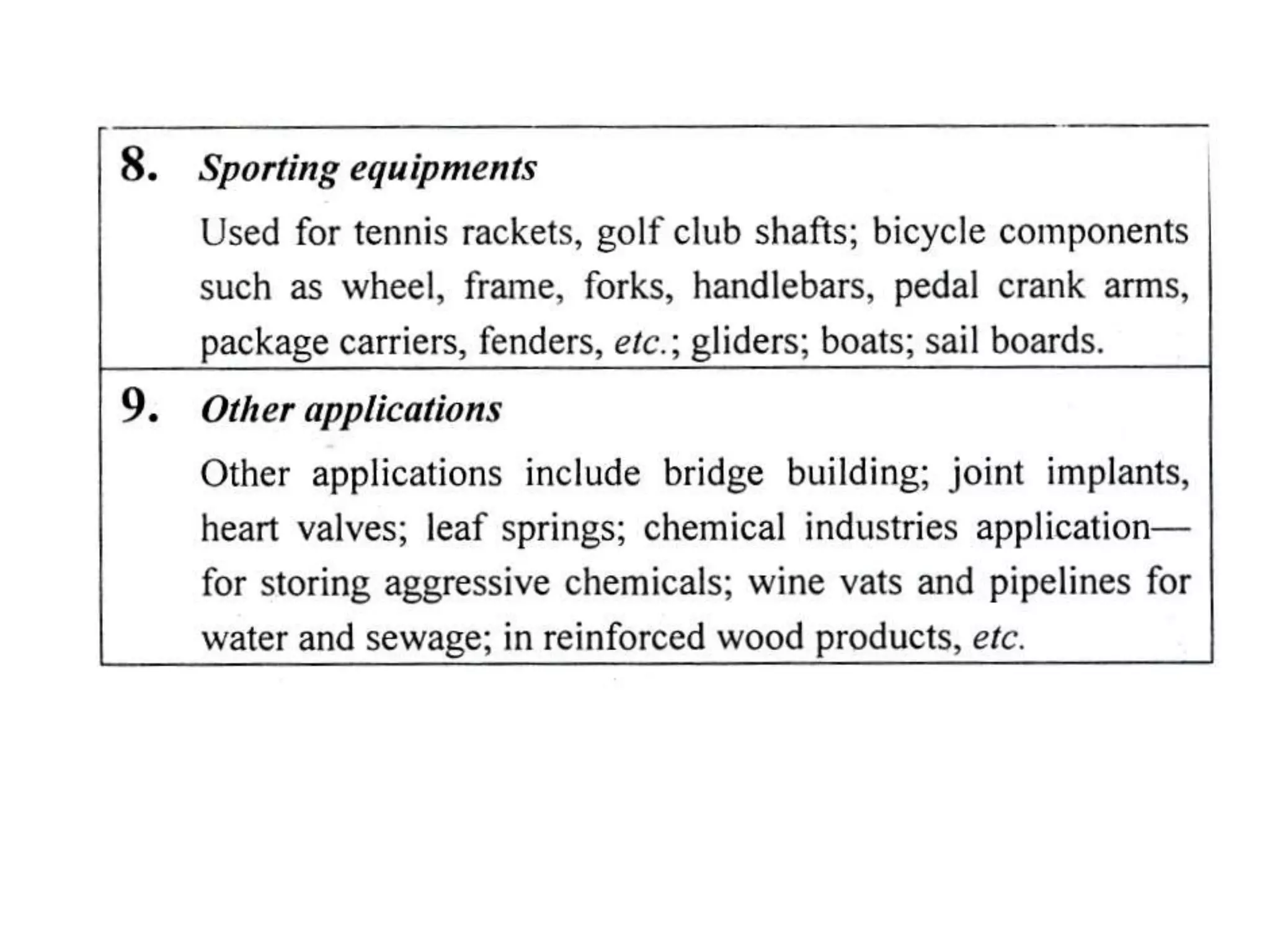
Aerospace components
• That should have low weight , stiffness, impact and
corrosion resistance, good abrasive properties.
,
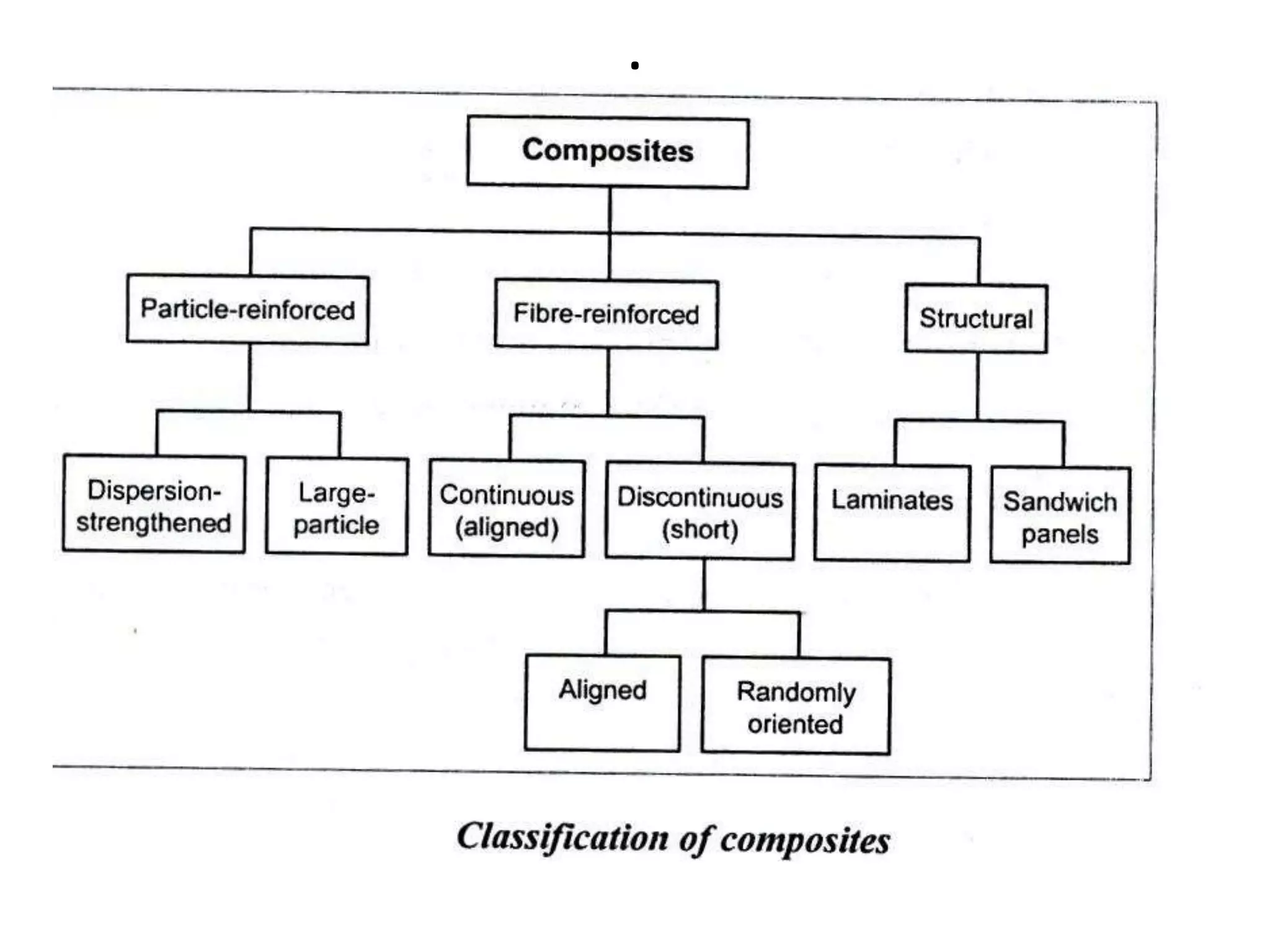
Particle re-inforced (FIBER)
composites
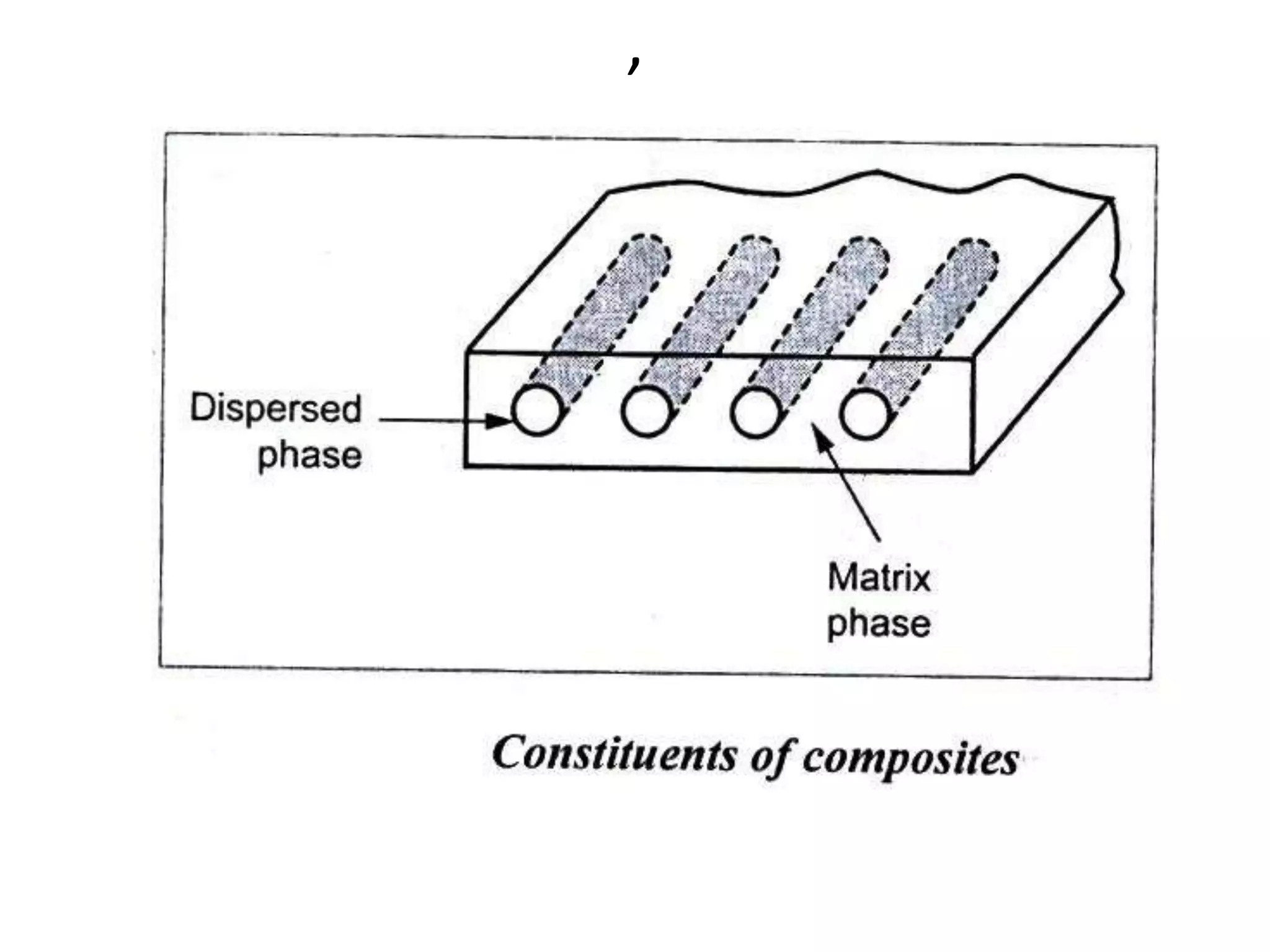
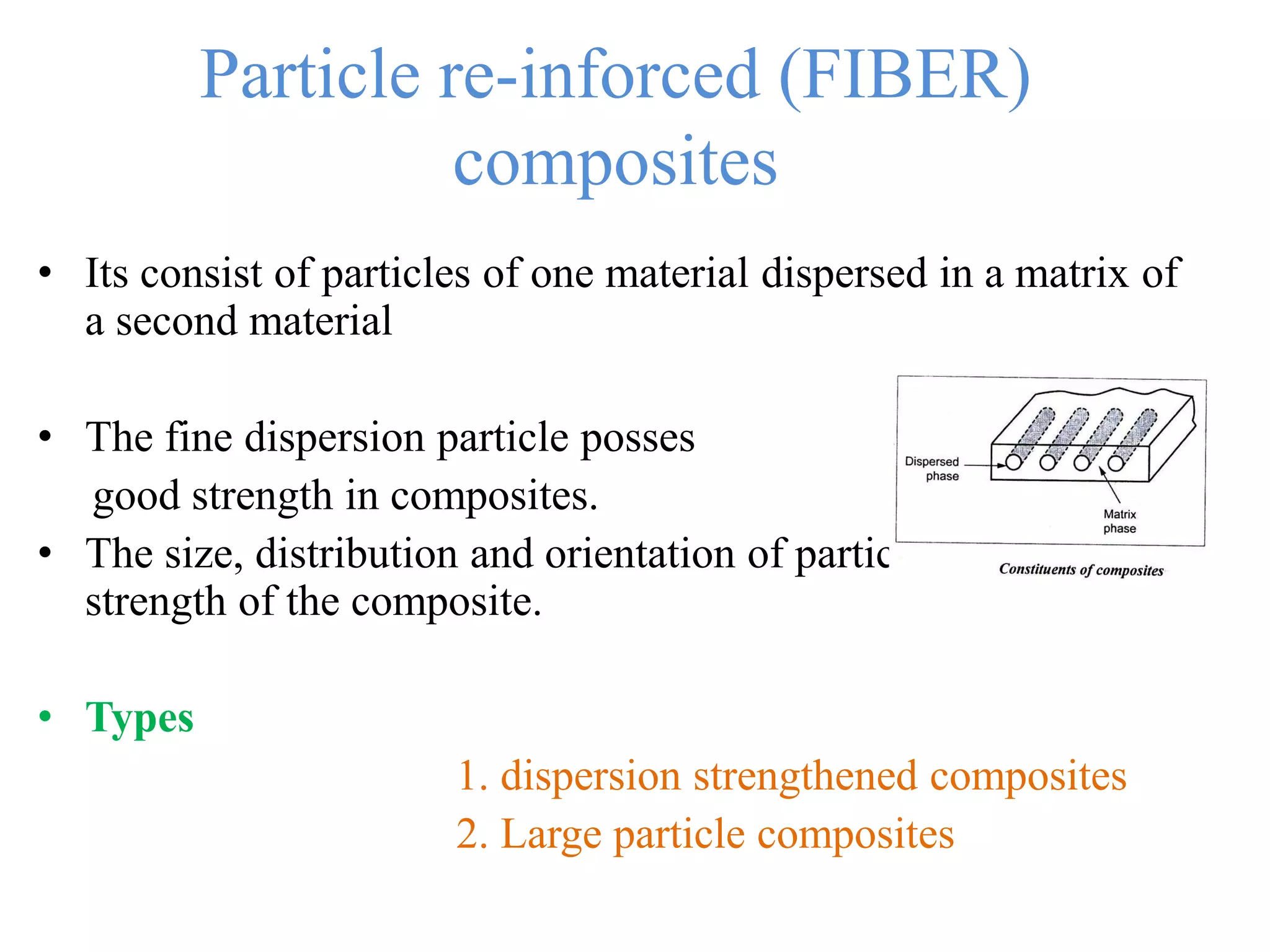
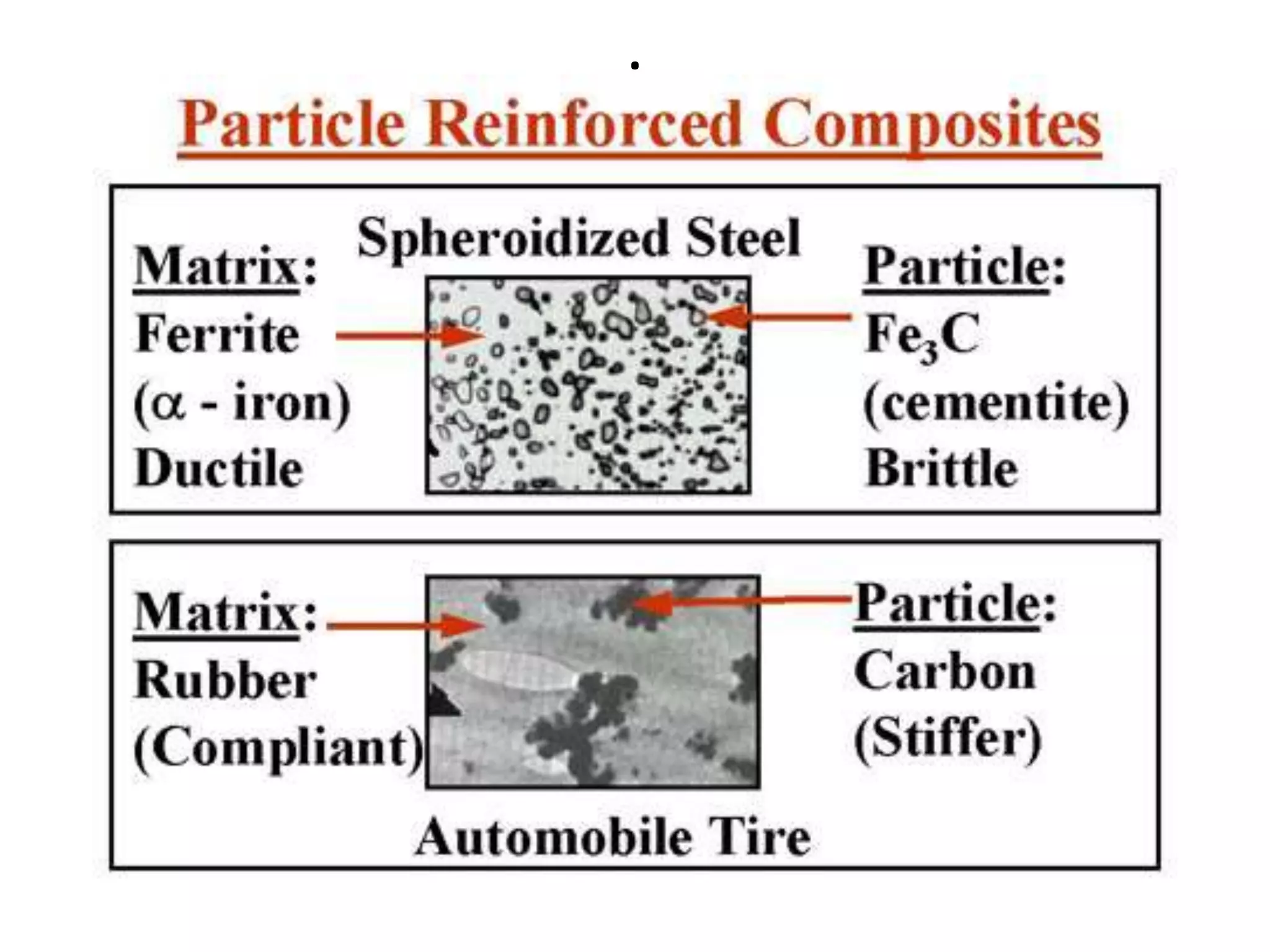
• Its consist of particles of one material dispersed in a matrix of
a second material
• The fine dispersion particle posses
good strength in composites.
• The size, distribution and orientation of particles defines the
strength of the composite.
• Types
1. dispersion strengthened composites
2. Large particle composites
.
1.Dispersion strengthened composites
• The particles are smaller and having diameter 0.01 –
0.1 microns and volume concentration 1 – 15 % of fiber
• This method is similar to that for precipitation hardening.
• Due to this , the composites have good yield and
tensile strength. And the plastic deformation is
restricted.
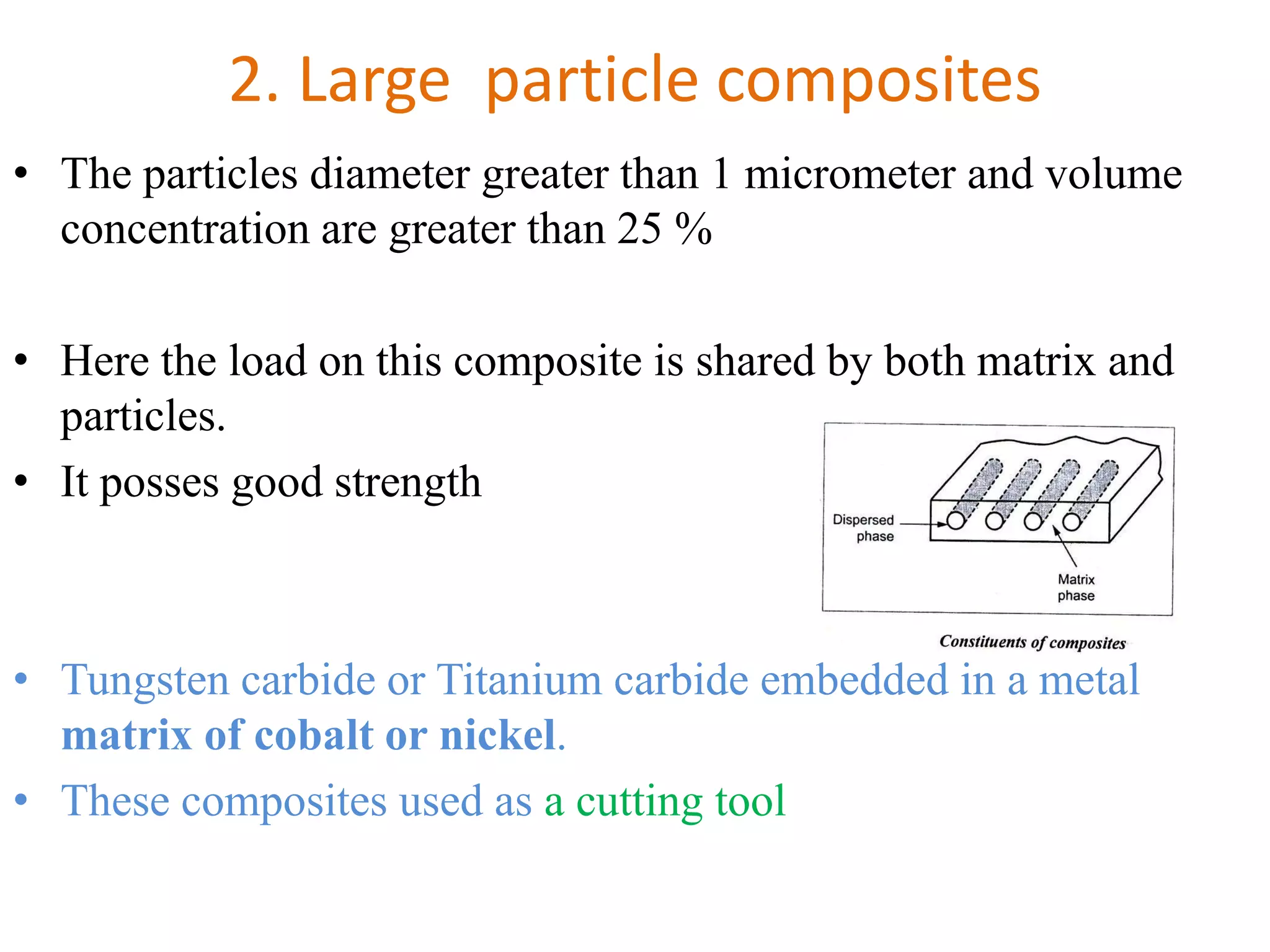
2. Large particle composites
• The particles diameter greater than 1 micrometer and volume
concentration are greater than 25 %
• Here the load on this composite is shared by both matrix and
particles.
• It posses good strength
• Tungsten carbide or Titanium carbide embedded in a metal
matrix of cobalt or nickel.
• These composites used as a cutting tool
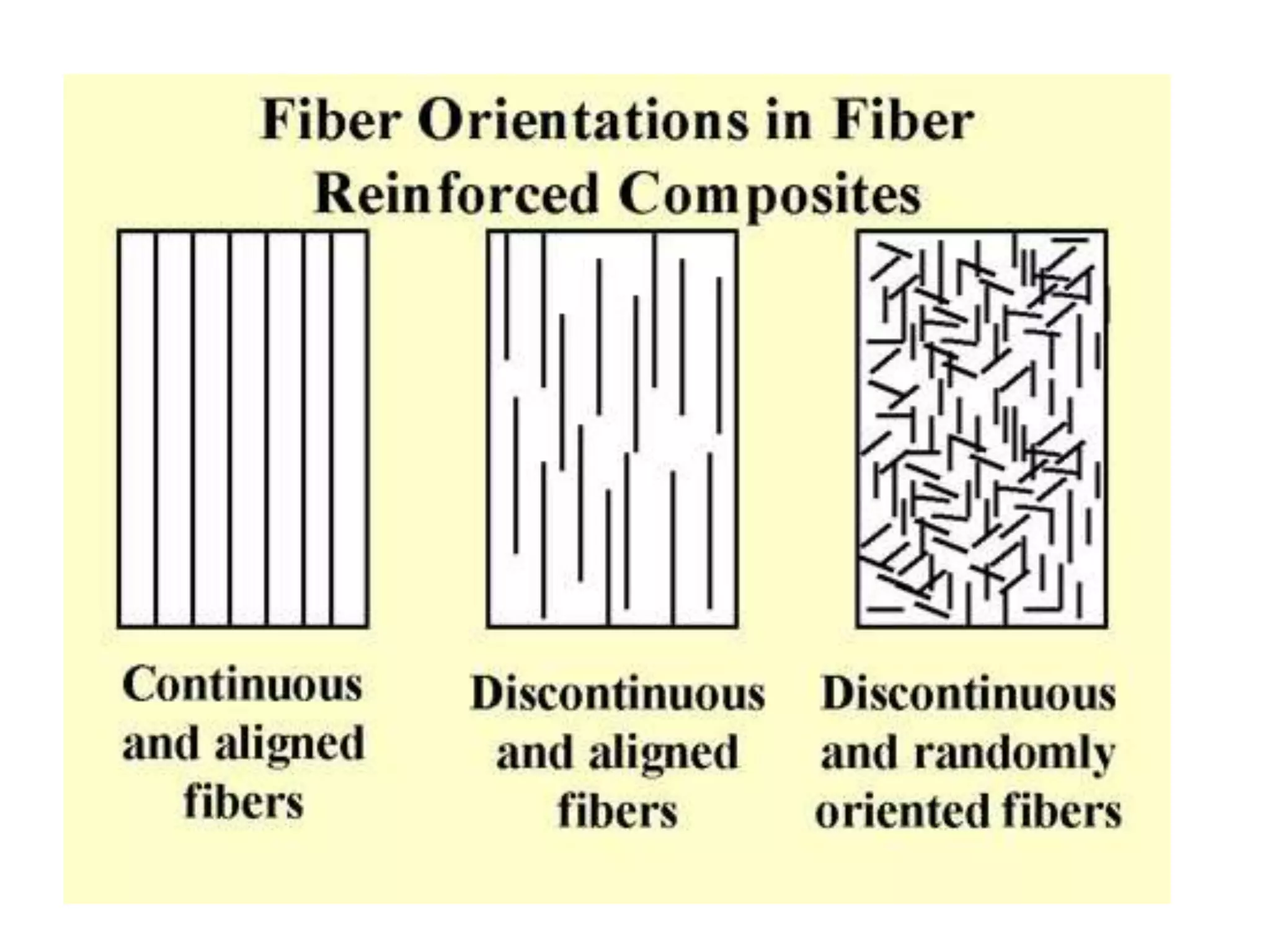
FIBRE REINFORCED COMPOSITES
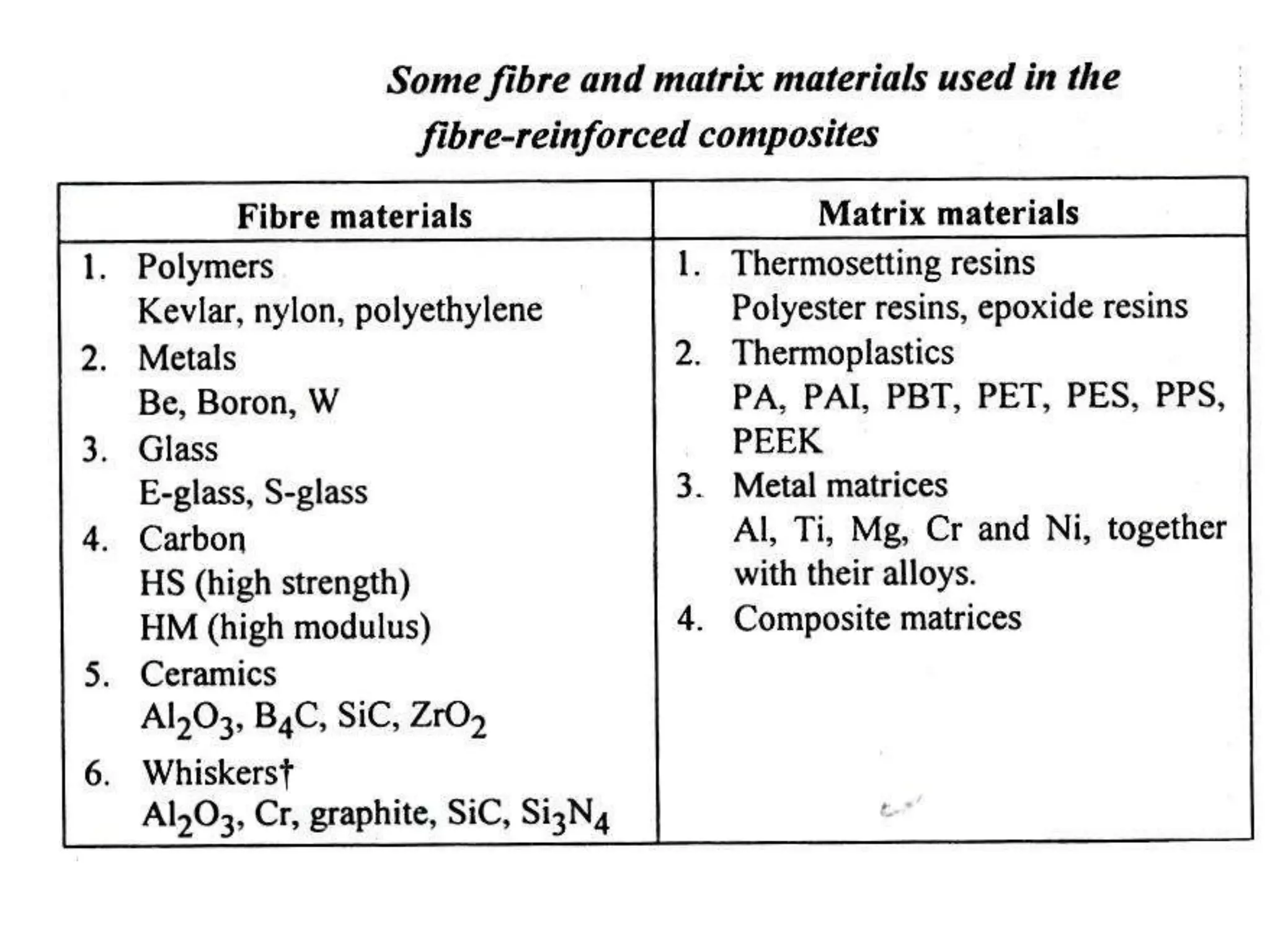
• Here the dispersed phase is in the form of fibers.
• These fibre reinforced composites having improved
strength, fatigue resistant, stiffness and strength-to-
weight ratio
.
.
.
.
Advantages
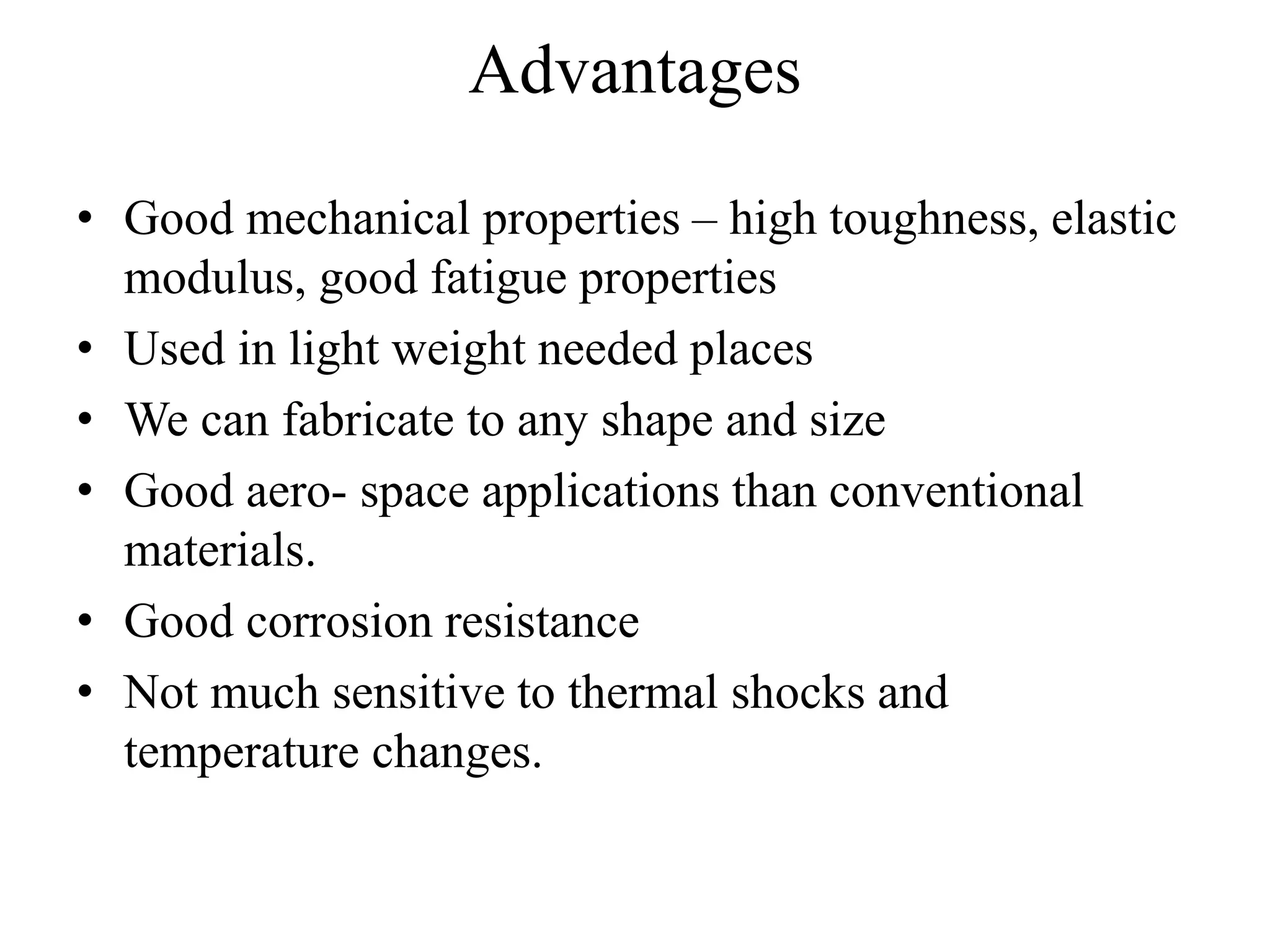
• Good mechanical properties – high toughness, elastic
modulus, good fatigue properties
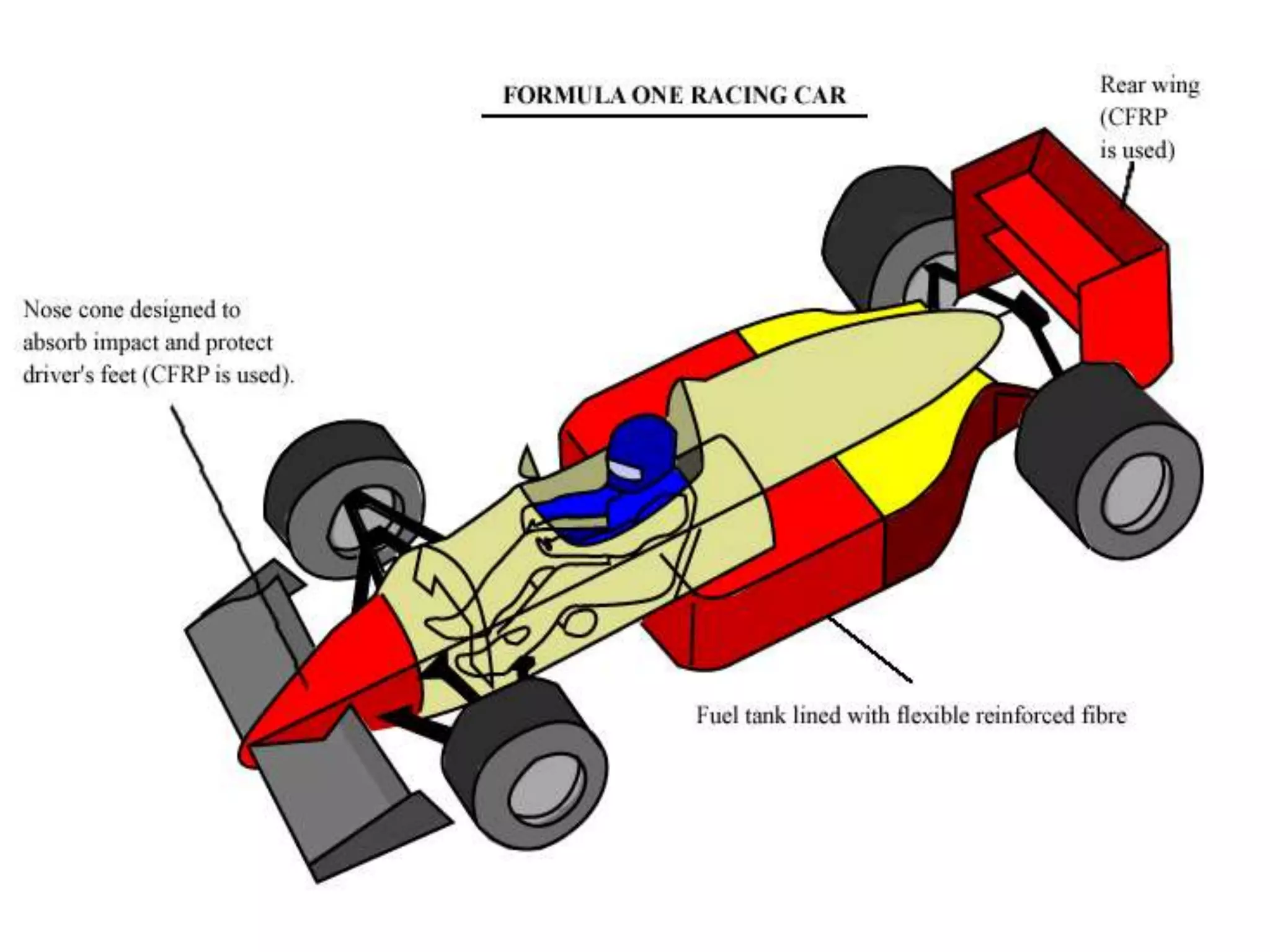
• Used in light weight needed places
• We can fabricate to any shape and size
• Good aero- space applications than conventional
materials.
• Good corrosion resistance
• Not much sensitive to thermal shocks and
temperature changes.
Limitations
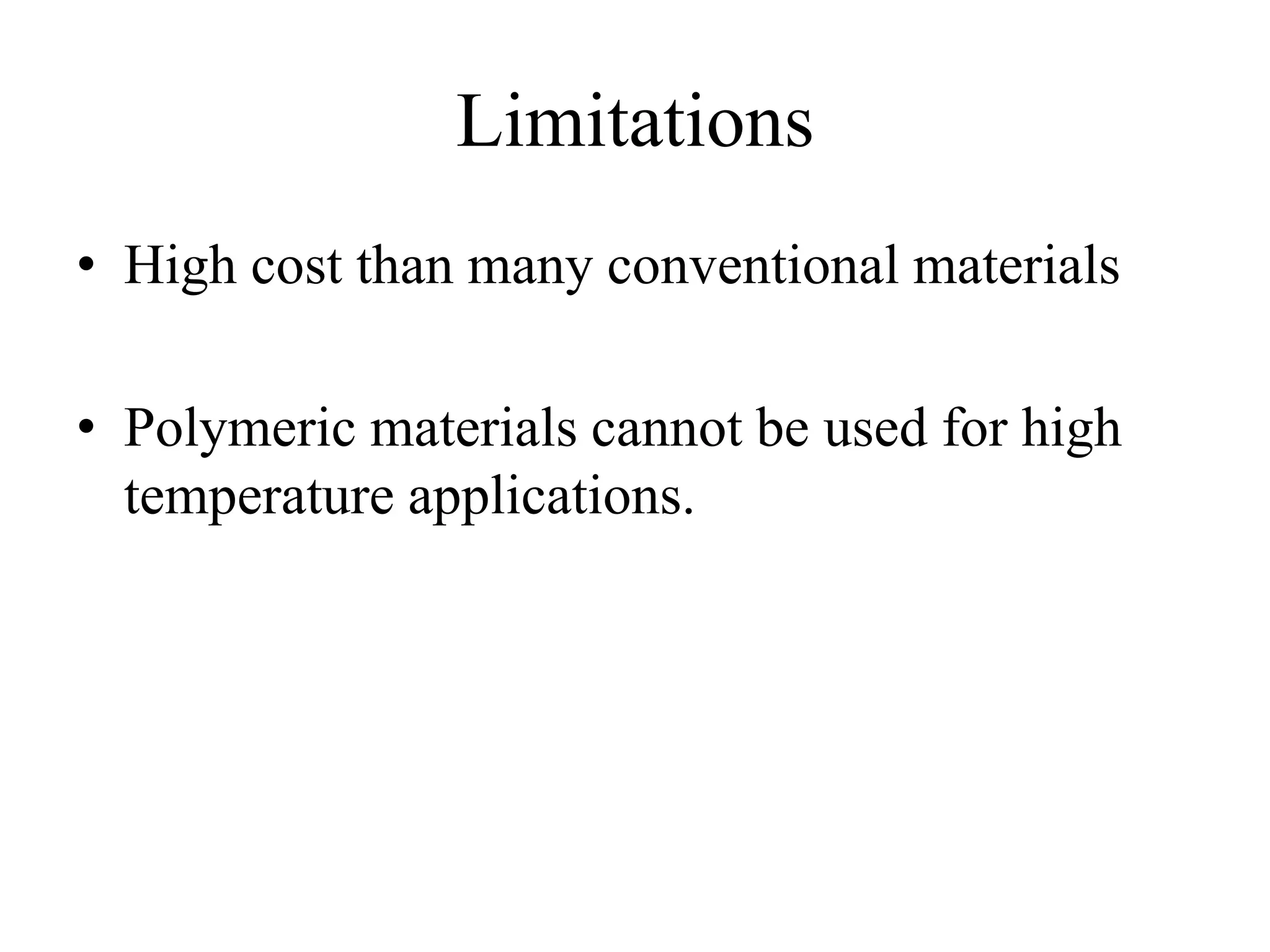
• High cost than many conventional materials
• Polymeric materials cannot be used for high
temperature applications.
.
.
.

CERAMICS AND COMPOSITE MATERIALS

  • 1.
  • 2.
    Introduction • It’s aman made non metallic and inorganic solid
  • 3.
    Traditional products • Bricks •Cook wares • Cements • Concretes • Tiles • potteries
  • 4.
  • 5.
    Other engineering applications Usedas • tool for grinding and Cutting • Bearings • And many in electrical and electronics fields.
  • 6.
  • 7.
    Characteristics of ceramics •Used in high temperature places • Its strong, hard and brittle • High melting point • Good thermal and electrical insulators • Resistant to oxidation and corrosion • Having high compressive strength but are weak intension
  • 8.
    Engineering ceramics • Itsspecially for engineering applications • They are basically oxides, carbides, sulphides and nitrides of metal.
  • 9.
    Characteristics of engineeringceramics • High resistance to abrasion and wear • High strength at high temperature • Good chemical stability • Good electrical insulation characteristics.
  • 10.
    Important engineering ceramics •Alumina (Al2O3) • Silicon Carbide (SiC) • Silicon Nitride (Si3N4) • Partially stabilized Zirconia • Sialons
  • 11.
    Alumina (aluminium oxide) •Its produced from bauxite • It’s a old engineering ceramic
  • 12.
  • 13.
    Properties of Alumina •Excellent hardness, wear resistance • They are more stiffer than steel • More stronger in compression than hardened steel • Very good environmental resistance (CORROSION) • Alumina mixed with ceramics to get high tensile and toughness properties.
  • 14.
    Applications of alumina Usedin • Spark plug insulators • Electronic circuits • Rocket nozzles • Electrical and electronics devices • In nuclear power plant • bearings
  • 15.
    Silicon carbide (sic) •It’s a semi conducting ceramic material • Types Alpha Sic Beta Sic
  • 16.
    Properties of Sic •High tensile strength • High stiffness , hardness • Better dimensional stability • Good wear resistant • Good corrosion resistant.
  • 17.
    Applications of Sic Used •As a abrasives for grinding wheel • As a coating material • As a refractory tubes • In nuclear reactor • In bearings • And in very high temperature places
  • 18.
    Silicon nitrate (Si3n4) •It’s a use full ceramics in chemical industries
  • 19.
    Properties of siliconnitrides • Resistant to strong acids • Resistance to thermal • Low density and low weight • Low thermal expansion • More stiffer
  • 20.
    Applications of siliconnitrides Used in • Cutting tool materials • Turbine parts • Pump parts • High temperature engineering components
  • 21.
    Partially stabilized zirconia(PSZ) • It’s a zirconium oxide • Blended and sintered with others like magnesium oxide, calcium oxide
  • 22.
    Properties of PSZ •High tensile strength • Low thermal conductivity
  • 23.
    Applications of PSZ Usedin • As a blade in jet engine • As a joint • In furnace portions • Internal combustion engine parts
  • 24.
    Sialons • They areSi – Al – O – N • They are formed when Aluminium and oxygen partially substitute for silicon and nitrogen in silicon nitride
  • 25.
    Properties of sialons •High tough and strength • Good mechanical properties • Light weight • Low co-efficient of thermal expansion
  • 26.
    Applications of sialons Usedin • Cutting material • Nozzles • Welding shields • Radiant heater tubes • impellers
  • 27.
    COMPOSITES TO GET AREQUIRE PROPERTIES IN METALS
  • 28.
  • 29.
    COMPOSITES • Two ormore materials added to get require qualities in a material. • The weakness of one metal rectified by the strength of second metal • Example Aerospace components • That should have low weight , stiffness, impact and corrosion resistance, good abrasive properties.
  • 30.
  • 31.
    Particle re-inforced (FIBER) composites •Its consist of particles of one material dispersed in a matrix of a second material • The fine dispersion particle posses good strength in composites. • The size, distribution and orientation of particles defines the strength of the composite. • Types 1. dispersion strengthened composites 2. Large particle composites
  • 32.
  • 33.
    1.Dispersion strengthened composites •The particles are smaller and having diameter 0.01 – 0.1 microns and volume concentration 1 – 15 % of fiber • This method is similar to that for precipitation hardening. • Due to this , the composites have good yield and tensile strength. And the plastic deformation is restricted.
  • 34.
    2. Large particlecomposites • The particles diameter greater than 1 micrometer and volume concentration are greater than 25 % • Here the load on this composite is shared by both matrix and particles. • It posses good strength • Tungsten carbide or Titanium carbide embedded in a metal matrix of cobalt or nickel. • These composites used as a cutting tool
  • 35.
    FIBRE REINFORCED COMPOSITES •Here the dispersed phase is in the form of fibers. • These fibre reinforced composites having improved strength, fatigue resistant, stiffness and strength-to- weight ratio
  • 36.
  • 37.
  • 38.
  • 39.
  • 40.
    Advantages • Good mechanicalproperties – high toughness, elastic modulus, good fatigue properties • Used in light weight needed places • We can fabricate to any shape and size • Good aero- space applications than conventional materials. • Good corrosion resistance • Not much sensitive to thermal shocks and temperature changes.
  • 41.
    Limitations • High costthan many conventional materials • Polymeric materials cannot be used for high temperature applications.
  • 42.
  • 43.
  • 44.