
Structured Approach to Problem Solving
– PDCA & DMAIC
www.optimumfx.com
Intent of Session
This section is designed to:
• Introduce two simple methodologies for problem-solving
projects
• Demonstrate how the tools and techniques fit into the
phases of the methodologies
Why use structured approach?
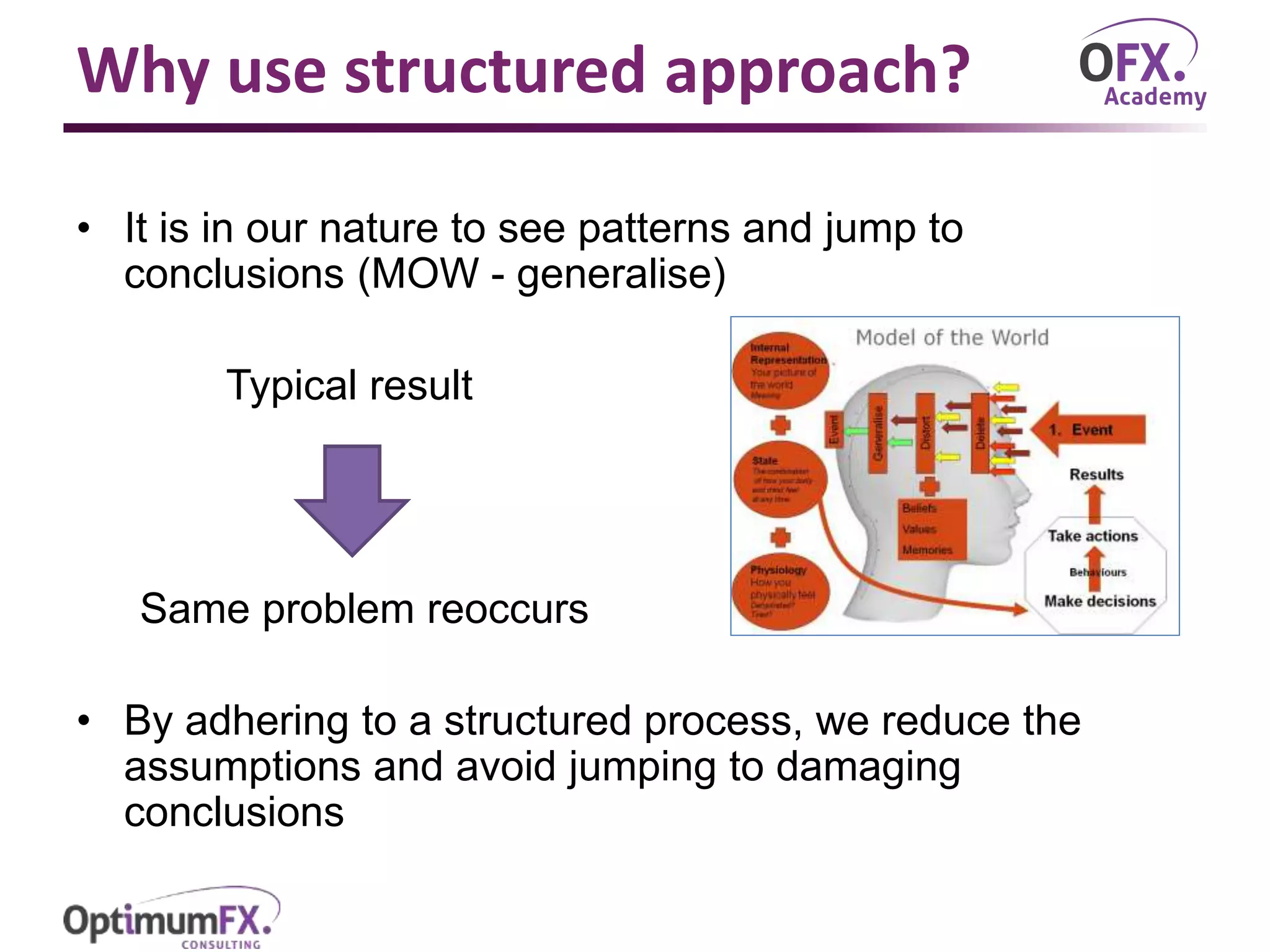
• It is in our nature to see patterns and jump to
conclusions (MOW - generalise)
Typical result
Same problem reoccurs
• By adhering to a structured process, we reduce the
assumptions and avoid jumping to damaging
conclusions
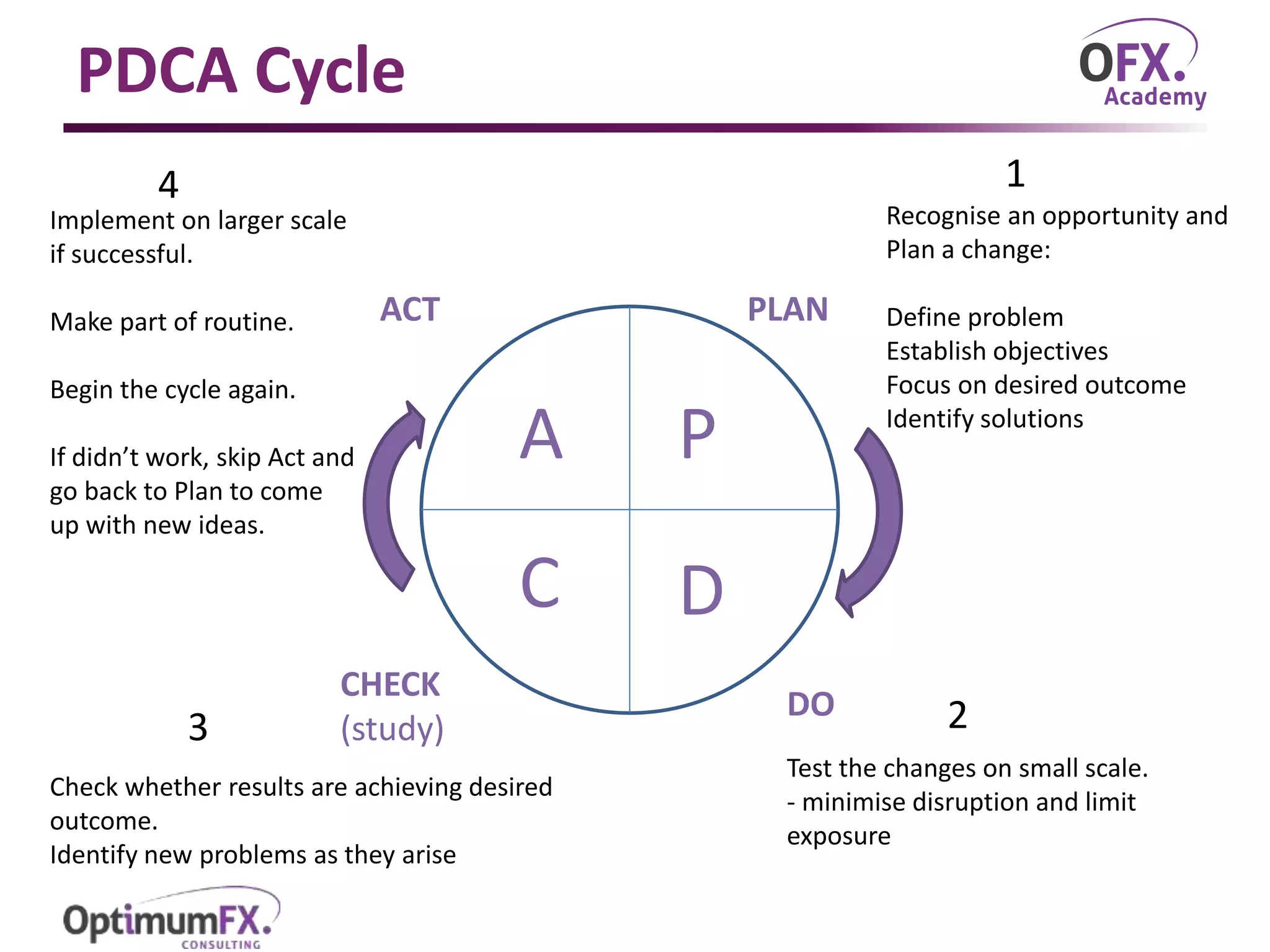
PDCA Cycle
Recognise an opportunity and
Plan a change:
Define problem
Establish objectives
Focus on desired outcome
Identify solutions
Test the changes on small scale.
- minimise disruption and limit
exposure
Check whether results are achieving desired
outcome.
Identify new problems as they arise
Implement on larger scale
if successful.
Make part of routine.
Begin the cycle again.
If didn’t work, skip Act and
go back to Plan to come
up with new ideas.
PLAN
DO
CHECK
(study)
ACT
P
DC
A
1
23
4
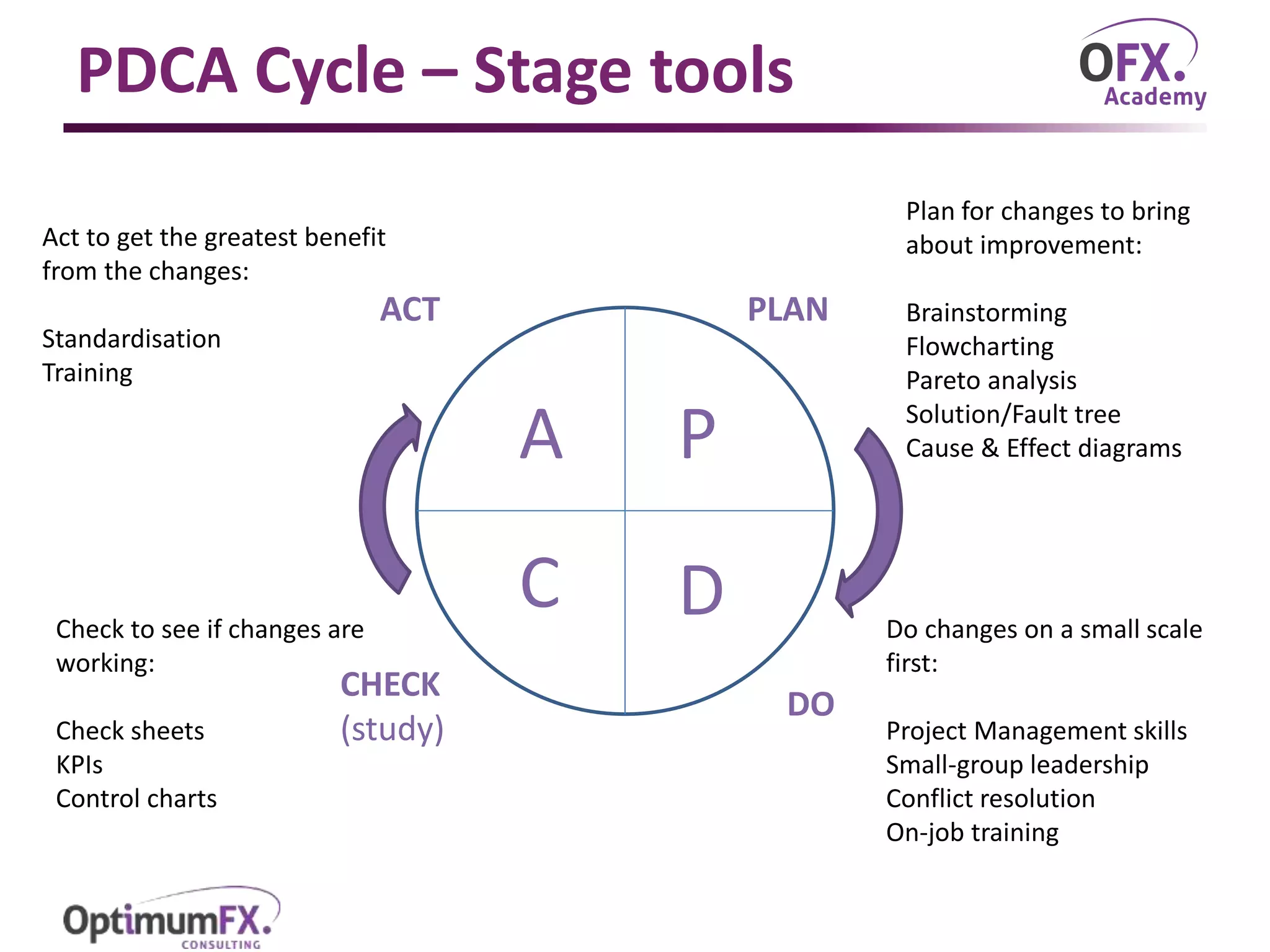
PDCA Cycle – Stage tools
Plan for changes to bring
about improvement:
Brainstorming
Flowcharting
Pareto analysis
Solution/Fault tree
Cause & Effect diagrams
Do changes on a small scale
first:
Project Management skills
Small-group leadership
Conflict resolution
On-job training
Check to see if changes are
working:
Check sheets
KPIs
Control charts
Act to get the greatest benefit
from the changes:
Standardisation
Training
PLAN
DO
CHECK
(study)
ACT
P
DC
A
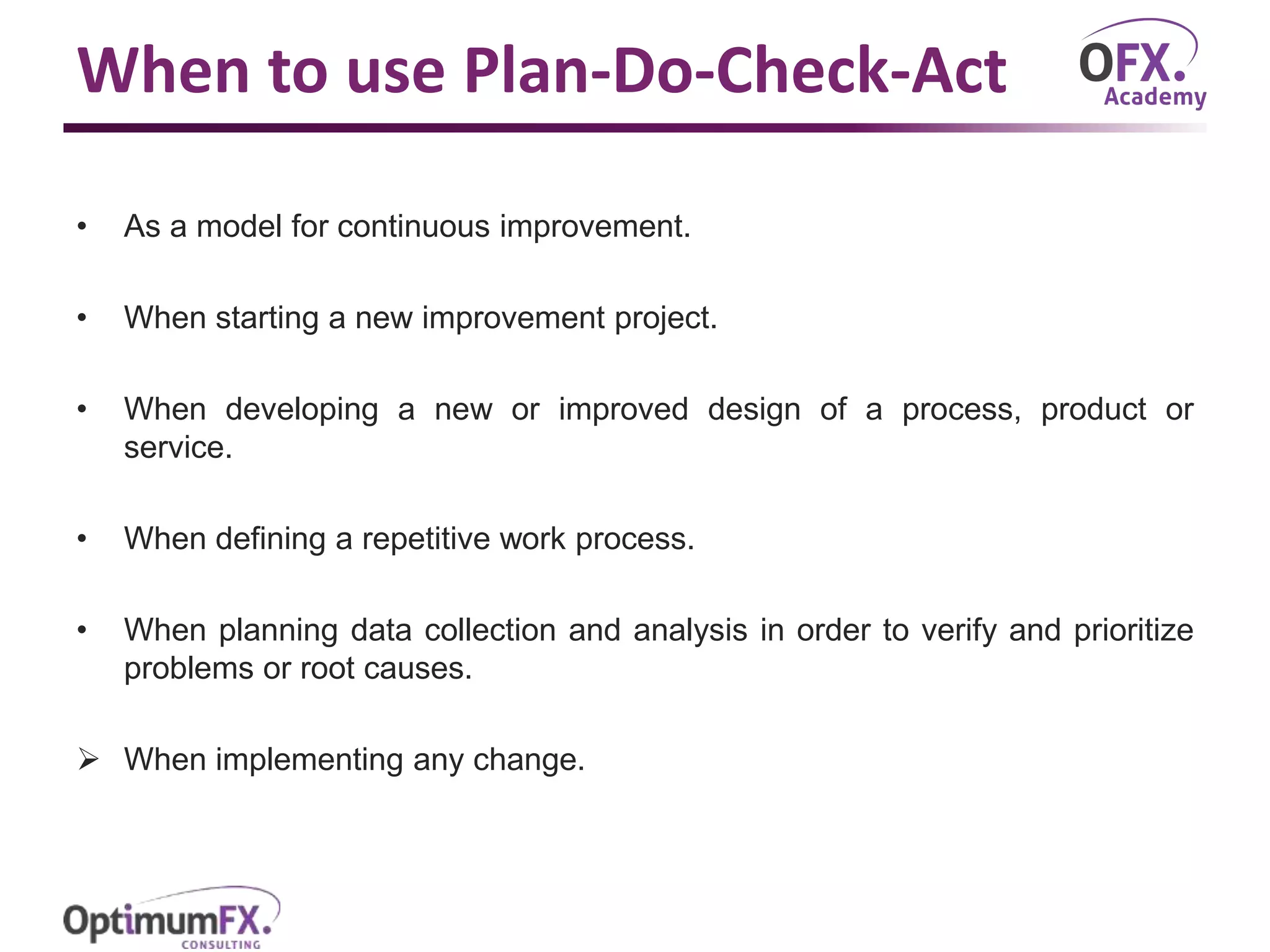
When to use Plan-Do-Check-Act
• As a model for continuous improvement.
• When starting a new improvement project.
• When developing a new or improved design of a process, product or
service.
• When defining a repetitive work process.
• When planning data collection and analysis in order to verify and prioritize
problems or root causes.
 When implementing any change.
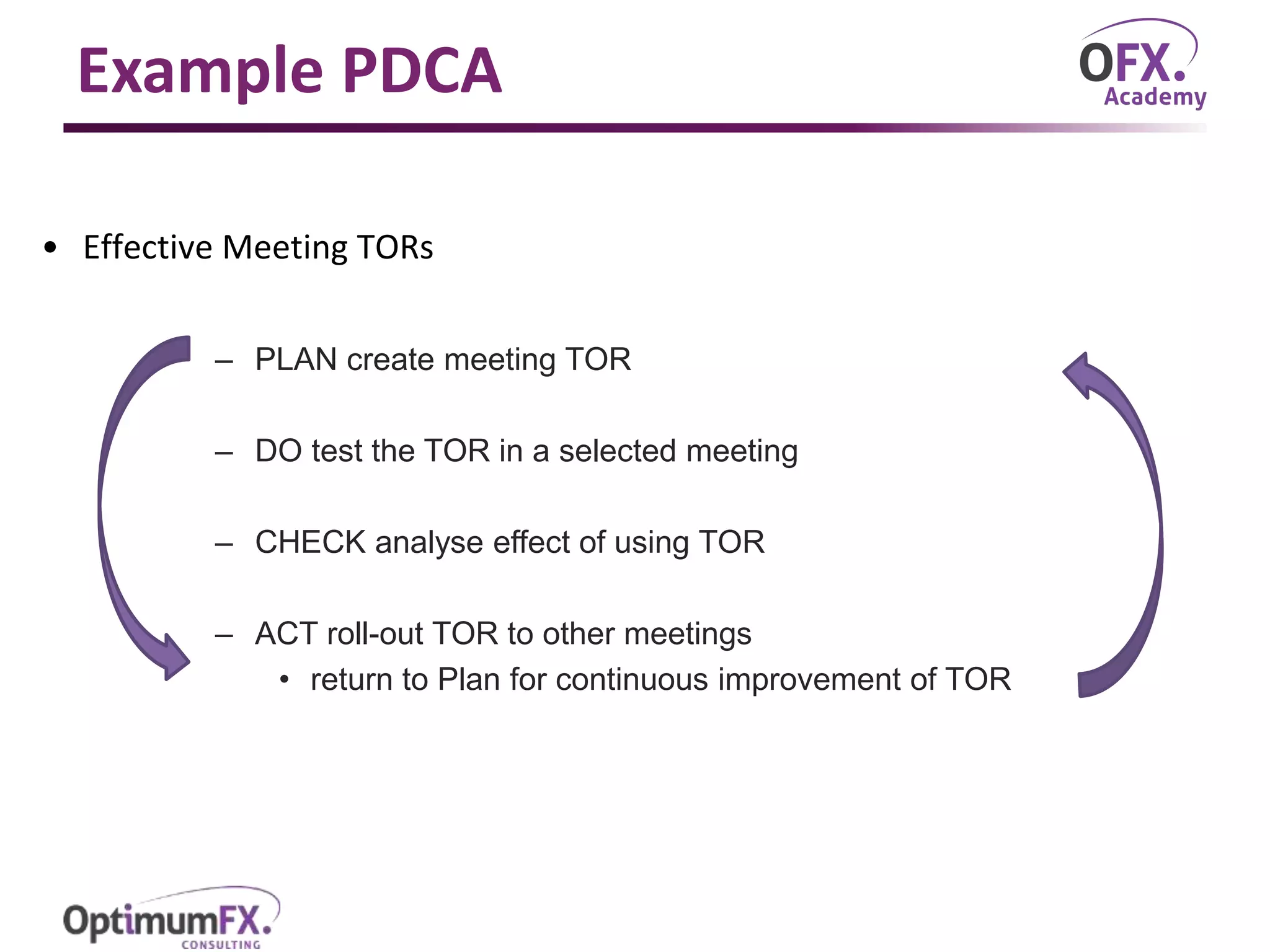
Example PDCA
– PLAN create meeting TOR
– DO test the TOR in a selected meeting
– CHECK analyse effect of using TOR
– ACT roll-out TOR to other meetings
• return to Plan for continuous improvement of TOR
• Effective Meeting TORs
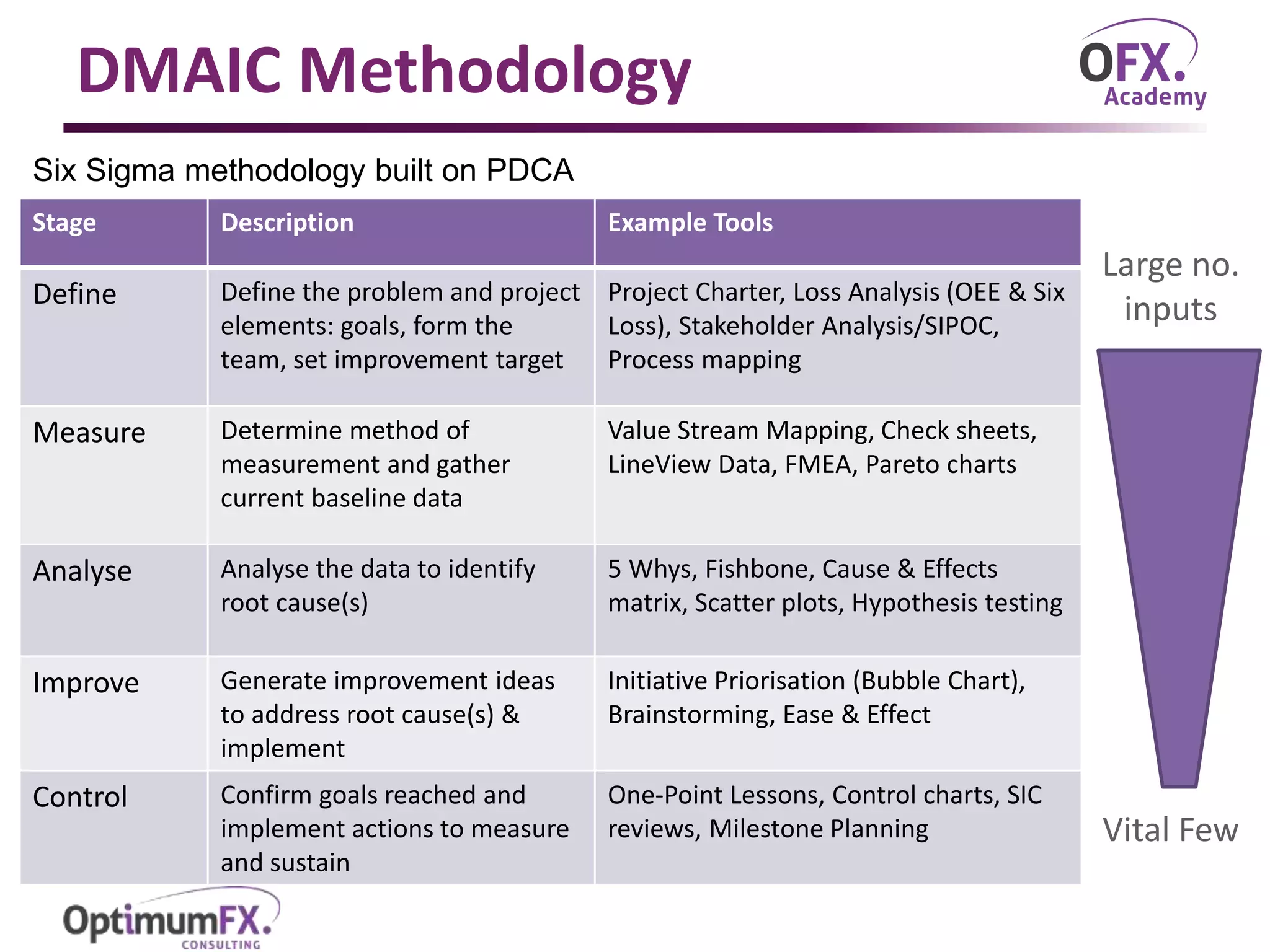
DMAIC Methodology
Six Sigma methodology built on PDCA
Stage Description Example Tools
Define Define the problem and project
elements: goals, form the
team, set improvement target
Project Charter, Loss Analysis (OEE & Six
Loss), Stakeholder Analysis/SIPOC,
Process mapping
Measure Determine method of
measurement and gather
current baseline data
Value Stream Mapping, Check sheets,
LineView Data, FMEA, Pareto charts
Analyse Analyse the data to identify
root cause(s)
5 Whys, Fishbone, Cause & Effects
matrix, Scatter plots, Hypothesis testing
Improve Generate improvement ideas
to address root cause(s) &
implement
Initiative Priorisation (Bubble Chart),
Brainstorming, Ease & Effect
Control Confirm goals reached and
implement actions to measure
and sustain
One-Point Lessons, Control charts, SIC
reviews, Milestone Planning
Large no.
inputs
Vital Few
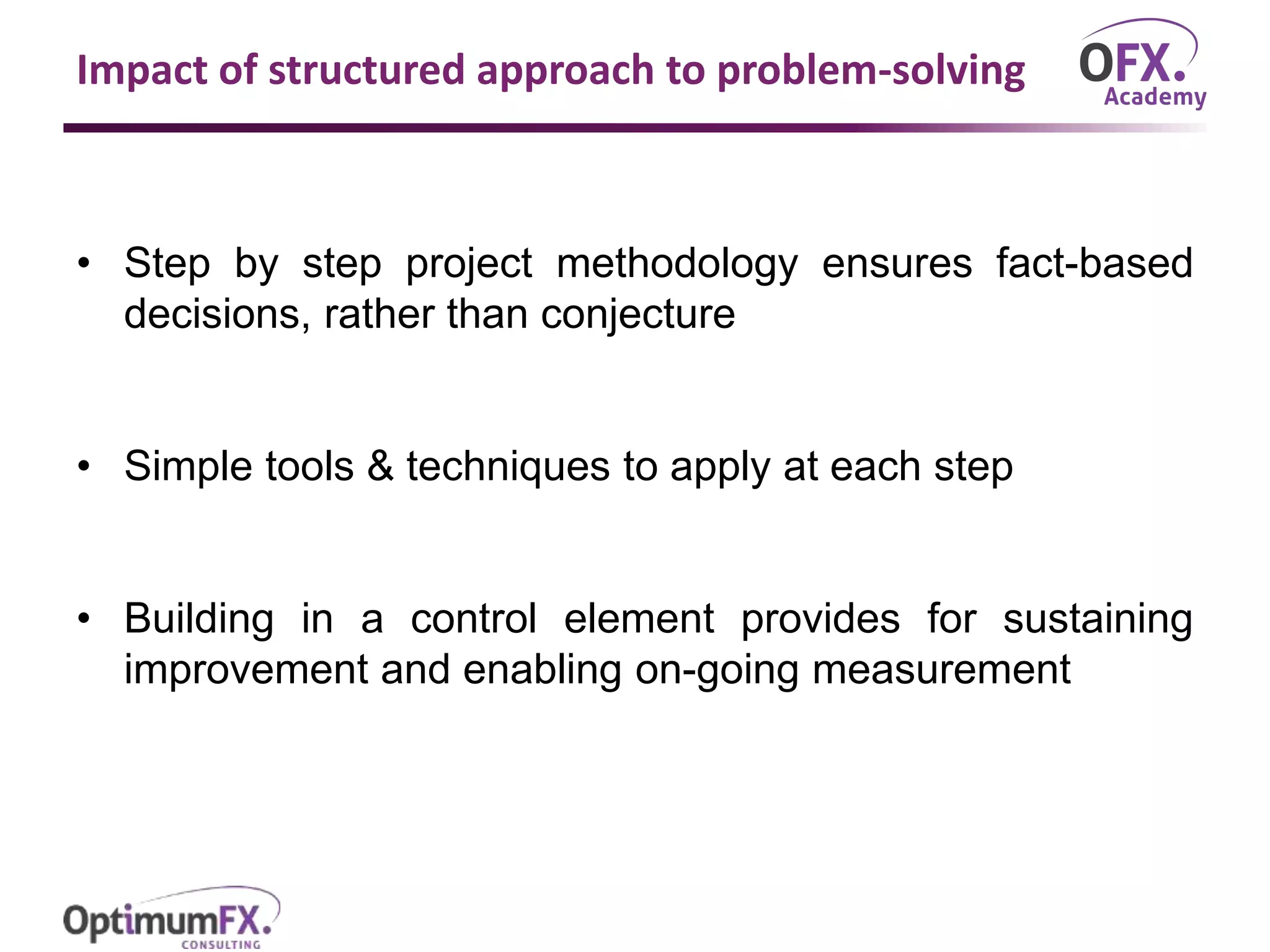
Impact of structured approach to problem-solving
• Step by step project methodology ensures fact-based
decisions, rather than conjecture
• Simple tools & techniques to apply at each step
• Building in a control element provides for sustaining
improvement and enabling on-going measurement

Structured approach to problem solving

  • 1.
    Structured Approach toProblem Solving – PDCA & DMAIC www.optimumfx.com
  • 2.
    Intent of Session Thissection is designed to: • Introduce two simple methodologies for problem-solving projects • Demonstrate how the tools and techniques fit into the phases of the methodologies
  • 3.
    Why use structuredapproach? • It is in our nature to see patterns and jump to conclusions (MOW - generalise) Typical result Same problem reoccurs • By adhering to a structured process, we reduce the assumptions and avoid jumping to damaging conclusions
  • 4.
    PDCA Cycle Recognise anopportunity and Plan a change: Define problem Establish objectives Focus on desired outcome Identify solutions Test the changes on small scale. - minimise disruption and limit exposure Check whether results are achieving desired outcome. Identify new problems as they arise Implement on larger scale if successful. Make part of routine. Begin the cycle again. If didn’t work, skip Act and go back to Plan to come up with new ideas. PLAN DO CHECK (study) ACT P DC A 1 23 4
  • 5.
    PDCA Cycle –Stage tools Plan for changes to bring about improvement: Brainstorming Flowcharting Pareto analysis Solution/Fault tree Cause & Effect diagrams Do changes on a small scale first: Project Management skills Small-group leadership Conflict resolution On-job training Check to see if changes are working: Check sheets KPIs Control charts Act to get the greatest benefit from the changes: Standardisation Training PLAN DO CHECK (study) ACT P DC A
  • 6.
    When to usePlan-Do-Check-Act • As a model for continuous improvement. • When starting a new improvement project. • When developing a new or improved design of a process, product or service. • When defining a repetitive work process. • When planning data collection and analysis in order to verify and prioritize problems or root causes.  When implementing any change.
  • 7.
    Example PDCA – PLANcreate meeting TOR – DO test the TOR in a selected meeting – CHECK analyse effect of using TOR – ACT roll-out TOR to other meetings • return to Plan for continuous improvement of TOR • Effective Meeting TORs
  • 8.
    DMAIC Methodology Six Sigmamethodology built on PDCA Stage Description Example Tools Define Define the problem and project elements: goals, form the team, set improvement target Project Charter, Loss Analysis (OEE & Six Loss), Stakeholder Analysis/SIPOC, Process mapping Measure Determine method of measurement and gather current baseline data Value Stream Mapping, Check sheets, LineView Data, FMEA, Pareto charts Analyse Analyse the data to identify root cause(s) 5 Whys, Fishbone, Cause & Effects matrix, Scatter plots, Hypothesis testing Improve Generate improvement ideas to address root cause(s) & implement Initiative Priorisation (Bubble Chart), Brainstorming, Ease & Effect Control Confirm goals reached and implement actions to measure and sustain One-Point Lessons, Control charts, SIC reviews, Milestone Planning Large no. inputs Vital Few
  • 9.
    Impact of structuredapproach to problem-solving • Step by step project methodology ensures fact-based decisions, rather than conjecture • Simple tools & techniques to apply at each step • Building in a control element provides for sustaining improvement and enabling on-going measurement

Editor's Notes

  • #5 Four-step model for carrying out change. From problem faced to problem solved. Circle has no end – PDCA should be repeated again and again for CI emphasises and demonstrates that improvement programs must start with careful planning, must result in effective action, and must move on again to careful planning in a continuous cycle.
  • #6 Four-step model for carrying out change. From problem faced to problem solved. Circle has no end – PDCA should be repeated again and again for CI emphasises and demonstrates that improvement programs must start with careful planning, must result in effective action, and must move on again to careful planning in a continuous cycle.