CHADS2 Scoring System
http://crisbertcualteros.page.tl
CHADS2 score:
• clinical prediction rule for assessing the risk of
stroke in patients with non-rheumatic atrial
fibrillation
• used to determine if treatment is required
with anticoagulation therapy or antiplatelet
therapy or not
• High CHADS2 score: greater risk of stroke
• Low CHADS2 score: lower risk of stroke
Condition Points
C Congestive Heart Failure 1
H Hypertension 1
A AGE >75yo 1
D Diabetes Mellitus 1
S2 Prior Stroke or TIA 2
CHADS2
Score
Stroke Risk % 95% confidence interval
0 1.9 1.2-3.0
1 2.8 2.0-3.8
2 4.0 3.1-5.1
3 5.9 4.6-7.3
4 8.5 6.3-11.1
5 12.5 8.2-17.5
6 18.2 10.5-27.4
Annual Stroke Risk with Respect to CHADS 2 Score
Anticoagulation based on the CHADS2 score
Score Risk
Anticoagulation
Therapy
Considerations
0 Low Aspirin Aspirin daily
1 Moderate
Aspirin or
Warfarin
Aspirin daily or raise INR to 2.0-
3.0, depending on factors such as
patient preference
2 or
greater
Moderate
or High
Warfarin
Raise INR to 2.0-3.0, unless
contraindicated (e.g. clinically
significant GI bleeding, inability to
obtain regular INR screening)
http://crisbertcualteros.page.tl
CHA2DS2-VASc score
http://crisbertcualteros.page.tl
Feature Score
Congestive Heart Failure 1
Hypertension 1
Age >75 years 2
Age between 65 and 74 years 1
Stroke/TIA/TE 2
Vascular disease (previous MI, PAD or
aortic plaque)
1
Diabetes mellitus 1
Female 1
HAS-BLED score
http://crisbertcualteros.page.tl
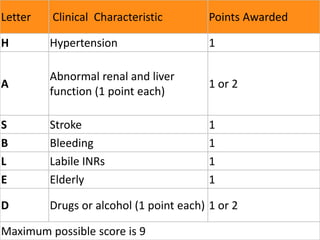
• is a therapeutic bleeding risk stratification
score for those on oral anticoagulants in atrial
fibrillation
Letter Clinical Characteristic Points Awarded
H Hypertension 1
A
Abnormal renal and liver
function (1 point each)
1 or 2
S Stroke 1
B Bleeding 1
L Labile INRs 1
E Elderly 1
D Drugs or alcohol (1 point each) 1 or 2
Maximum possible score is 9
H Hypertension -( systolic blood pressure >160 mmHg) (Points: 1 )
A Abnormal renal function ( defined as the presence of chronic dialysis or renal
transplantation
or serum creatinine 200µmol/L (>~2.3 mg/dL)) (Points: 1 )
Abnormal liver function ( defined as chronic hepatic disease (eg. cirrhosis) or
biochemical
evidence of significant hepatic derangement (eg. bilirubin >2x upper limit of
normal, in association
with AST/ALT/ALP >3x upper limit normal) (Points: 1 )
S Stroke (Previous history of stroke) (Points: 1 )
B Bleeding (Major bleeding history (anemia or predisposition to bleeding)) (Points: 1 )
L Labile INRs (refers to unstable/high INRs or poor time in therapeutic
range(eg<60%))(Points: 1)
E Elderly (age >/= 65) (Points: 1 )
D Drug Therapy (concomitant therapy such as antiplatelet agents, NSAID's) (Points: 1 )
Alcohol intake (consuming 8 or more alcoholic drinks per week) (Points: 1)
Feature Score
Hypertension (Systolic >= 160mmHg) 1
Abnormal renal function 1
Abnormal liver function 1
Age >= 65 years 1
Stroke in past 1
Bleeding 1
Labile INRs 1
Taking other drugs as well 1
Alcohol intake at same time 1
HAS-BLED score
The risk of major bleeding within one year in atrial fibrillation patients enrolled in the Euro
Heart Survey.
HAS-BLED, acronym: Hypertension [uncontrolled, >160 mmHg systolic), Abnormal renal/liver
function, Stroke, Bleeding history or predisposition [anemia], Labile INR [i.e.
therapeutic time in range <60%], Elderly (>65) and Drugs/alcohol concomitantly [antiplatelet
agents, non-steroidal anti-inflammatory drugs] [Maximum score 9].
HAS-BLED score n Bleeds, n Bleeds/100 patients*
0 798 9 1.13
1 1286 13 1.02
2 744 14 1.88
3 187 7 3.74
4 46 4 8.70
5 8 1 12.50
Any score 3071 48 1.56
• score of 3 or more indicates increased one
year bleed risk on anticoagulation sufficient to
justify caution or more regular review
> risk is for intracranial bleed, bleed requiring
hospitalization or a hemoglobin drop > 2g/L or
that needs transfusion.

CHA2DS2-VASc, Score CHADS2 score, and Hasbled score

  • 1.
  • 2.
    CHADS2 score: • clinicalprediction rule for assessing the risk of stroke in patients with non-rheumatic atrial fibrillation • used to determine if treatment is required with anticoagulation therapy or antiplatelet therapy or not • High CHADS2 score: greater risk of stroke • Low CHADS2 score: lower risk of stroke
  • 3.
    Condition Points C CongestiveHeart Failure 1 H Hypertension 1 A AGE >75yo 1 D Diabetes Mellitus 1 S2 Prior Stroke or TIA 2
  • 4.
    CHADS2 Score Stroke Risk %95% confidence interval 0 1.9 1.2-3.0 1 2.8 2.0-3.8 2 4.0 3.1-5.1 3 5.9 4.6-7.3 4 8.5 6.3-11.1 5 12.5 8.2-17.5 6 18.2 10.5-27.4 Annual Stroke Risk with Respect to CHADS 2 Score
  • 5.
    Anticoagulation based onthe CHADS2 score Score Risk Anticoagulation Therapy Considerations 0 Low Aspirin Aspirin daily 1 Moderate Aspirin or Warfarin Aspirin daily or raise INR to 2.0- 3.0, depending on factors such as patient preference 2 or greater Moderate or High Warfarin Raise INR to 2.0-3.0, unless contraindicated (e.g. clinically significant GI bleeding, inability to obtain regular INR screening)
  • 6.
  • 7.
  • 8.
    Feature Score Congestive HeartFailure 1 Hypertension 1 Age >75 years 2 Age between 65 and 74 years 1 Stroke/TIA/TE 2 Vascular disease (previous MI, PAD or aortic plaque) 1 Diabetes mellitus 1 Female 1
  • 10.
  • 11.
    • is atherapeutic bleeding risk stratification score for those on oral anticoagulants in atrial fibrillation
  • 12.
    Letter Clinical CharacteristicPoints Awarded H Hypertension 1 A Abnormal renal and liver function (1 point each) 1 or 2 S Stroke 1 B Bleeding 1 L Labile INRs 1 E Elderly 1 D Drugs or alcohol (1 point each) 1 or 2 Maximum possible score is 9
  • 13.
    H Hypertension -(systolic blood pressure >160 mmHg) (Points: 1 ) A Abnormal renal function ( defined as the presence of chronic dialysis or renal transplantation or serum creatinine 200µmol/L (>~2.3 mg/dL)) (Points: 1 ) Abnormal liver function ( defined as chronic hepatic disease (eg. cirrhosis) or biochemical evidence of significant hepatic derangement (eg. bilirubin >2x upper limit of normal, in association with AST/ALT/ALP >3x upper limit normal) (Points: 1 ) S Stroke (Previous history of stroke) (Points: 1 ) B Bleeding (Major bleeding history (anemia or predisposition to bleeding)) (Points: 1 ) L Labile INRs (refers to unstable/high INRs or poor time in therapeutic range(eg<60%))(Points: 1) E Elderly (age >/= 65) (Points: 1 ) D Drug Therapy (concomitant therapy such as antiplatelet agents, NSAID's) (Points: 1 ) Alcohol intake (consuming 8 or more alcoholic drinks per week) (Points: 1)
  • 14.
    Feature Score Hypertension (Systolic>= 160mmHg) 1 Abnormal renal function 1 Abnormal liver function 1 Age >= 65 years 1 Stroke in past 1 Bleeding 1 Labile INRs 1 Taking other drugs as well 1 Alcohol intake at same time 1 HAS-BLED score
  • 15.
    The risk ofmajor bleeding within one year in atrial fibrillation patients enrolled in the Euro Heart Survey. HAS-BLED, acronym: Hypertension [uncontrolled, >160 mmHg systolic), Abnormal renal/liver function, Stroke, Bleeding history or predisposition [anemia], Labile INR [i.e. therapeutic time in range <60%], Elderly (>65) and Drugs/alcohol concomitantly [antiplatelet agents, non-steroidal anti-inflammatory drugs] [Maximum score 9]. HAS-BLED score n Bleeds, n Bleeds/100 patients* 0 798 9 1.13 1 1286 13 1.02 2 744 14 1.88 3 187 7 3.74 4 46 4 8.70 5 8 1 12.50 Any score 3071 48 1.56
  • 16.
    • score of3 or more indicates increased one year bleed risk on anticoagulation sufficient to justify caution or more regular review > risk is for intracranial bleed, bleed requiring hospitalization or a hemoglobin drop > 2g/L or that needs transfusion.