Strengths Based LeadershipPresented by Eric K. Kaufman,
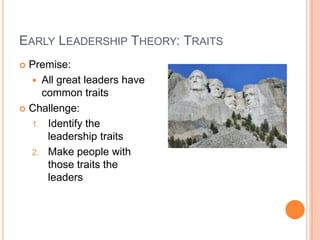
Early Leadership Theory: TraitsPremise: All great leaders have common traitsChallenge: Identify the leadership traitsMake people with those traits the leaders
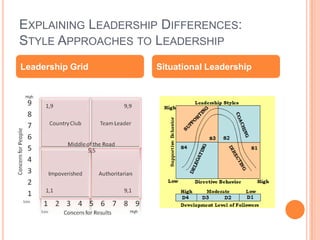
Explaining Leadership Differences: Style Approaches to LeadershipLeadership GridSituational Leadership
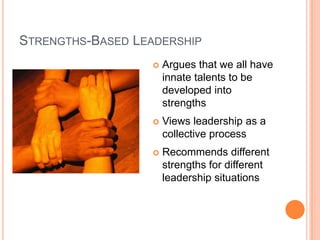
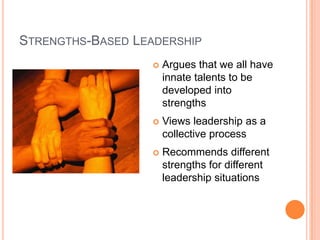
Strengths-Based LeadershipArgues that we all have innate talents to be developed into strengthsViews leadership as a collective processRecommends different strengths for different leadership situations
“A leader needs to know his strengths as a carpenter knows his tools, or as a physician knows the instruments at her disposal.  What great leaders have in common is that each truly knows his or her strengths – and can call on the right strength at the right time.  This explains why there is no definitive list of characteristics that describes all leaders.”- Donald O. Clifton, Gallup Researcher and Father of Strengths Psychology
Key Findings from 50 Years of Gallup Research (Rath & Conchie, 2008)“All too often, leaders are blind to the obvious when it comes to something of critical importance to them – their own personality.”Rath & Conchie, 2008, p. 11The most effective leaders:Are always investing in strengthsSurround themselves with the right people and then maximize their teamUnderstand their followers needs
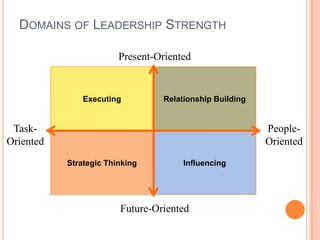
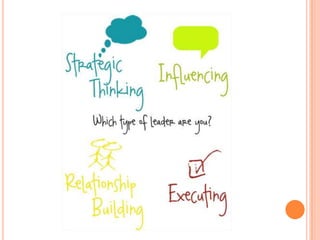
Domains of Leadership StrengthPresent-OrientedTask-OrientedPeople-OrientedFuture-Oriented
Executing DomainKnow how to make things happenHave ability to “catch” an idea and make it happen
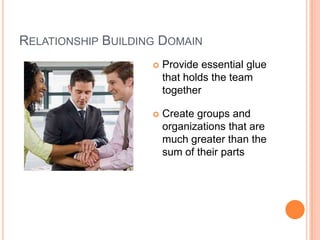
Relationship Building DomainProvide essential glue that holds the team togetherCreate groups and organizations that are much greater than the sum of their parts
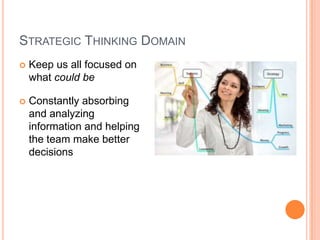
Strategic Thinking DomainKeep us all focused on what could beConstantly absorbing and analyzing information and helping the team make better decisions
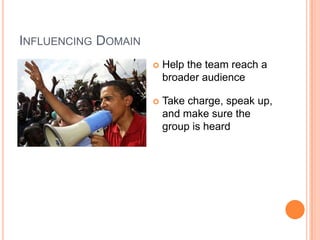
Influencing DomainHelp the team reach a broader audienceTake charge, speak up, and make sure the group is heard
Strengths-Based LeadershipArgues that we all have innate talents to be developed into strengthsViews leadership as a collective processRecommends different strengths for different leadership situations
Lessons for Practice“A leader is someone who can get things done through other people.”Warren Buffet (as cited by Rath & Conchie, 2008, p. 79)

Strengths Based Leadership

  • 1.
  • 2.
    Early Leadership Theory:TraitsPremise: All great leaders have common traitsChallenge: Identify the leadership traitsMake people with those traits the leaders
  • 3.
    Explaining Leadership Differences:Style Approaches to LeadershipLeadership GridSituational Leadership
  • 4.
    Strengths-Based LeadershipArgues thatwe all have innate talents to be developed into strengthsViews leadership as a collective processRecommends different strengths for different leadership situations
  • 5.
    “A leader needsto know his strengths as a carpenter knows his tools, or as a physician knows the instruments at her disposal. What great leaders have in common is that each truly knows his or her strengths – and can call on the right strength at the right time. This explains why there is no definitive list of characteristics that describes all leaders.”- Donald O. Clifton, Gallup Researcher and Father of Strengths Psychology
  • 6.
    Key Findings from50 Years of Gallup Research (Rath & Conchie, 2008)“All too often, leaders are blind to the obvious when it comes to something of critical importance to them – their own personality.”Rath & Conchie, 2008, p. 11The most effective leaders:Are always investing in strengthsSurround themselves with the right people and then maximize their teamUnderstand their followers needs
  • 7.
    Domains of LeadershipStrengthPresent-OrientedTask-OrientedPeople-OrientedFuture-Oriented
  • 8.
    Executing DomainKnow howto make things happenHave ability to “catch” an idea and make it happen
  • 9.
    Relationship Building DomainProvideessential glue that holds the team togetherCreate groups and organizations that are much greater than the sum of their parts
  • 10.
    Strategic Thinking DomainKeepus all focused on what could beConstantly absorbing and analyzing information and helping the team make better decisions
  • 11.
    Influencing DomainHelp theteam reach a broader audienceTake charge, speak up, and make sure the group is heard
  • 13.
    Strengths-Based LeadershipArgues thatwe all have innate talents to be developed into strengthsViews leadership as a collective processRecommends different strengths for different leadership situations
  • 14.
    Lessons for Practice“Aleader is someone who can get things done through other people.”Warren Buffet (as cited by Rath & Conchie, 2008, p. 79)

Editor's Notes

  • #7 They studied more than 1 million work teams, conducted more than 20,000 in-depth interviews with leaders, and even interviewed more than 10,000 followers around the world to ask exactly why they followed the most important leader in their life.
  • #9 Example: Monique McBride (associate minister for Christian education @ Trinity GNV) can lead any project, but sometimes people get bowled over in the process.
  • #10 Example: Pastor Jeff (Marty’s minister in Nashville) was great with small groups, but struggled when promoted to senior minister
  • #11 Example: Karen Kaufman (NEO Synod Resource Center Director) connects people to resources and examples that highlight what could be, but becomes frustrated when others don’t see the opportunity.
  • #12 Example: Troy Holloway (Director of Generosity @ Trinity GNV) is charismatic and has a proven record with securing support for projects missions, but hates to get bogged down with details.