Gallup Strengths
based Leadership &
Maximizing Team
Effectiveness
Knowledge sharing with a lighter note
-By Kaushik Iyer
4th Dec’14
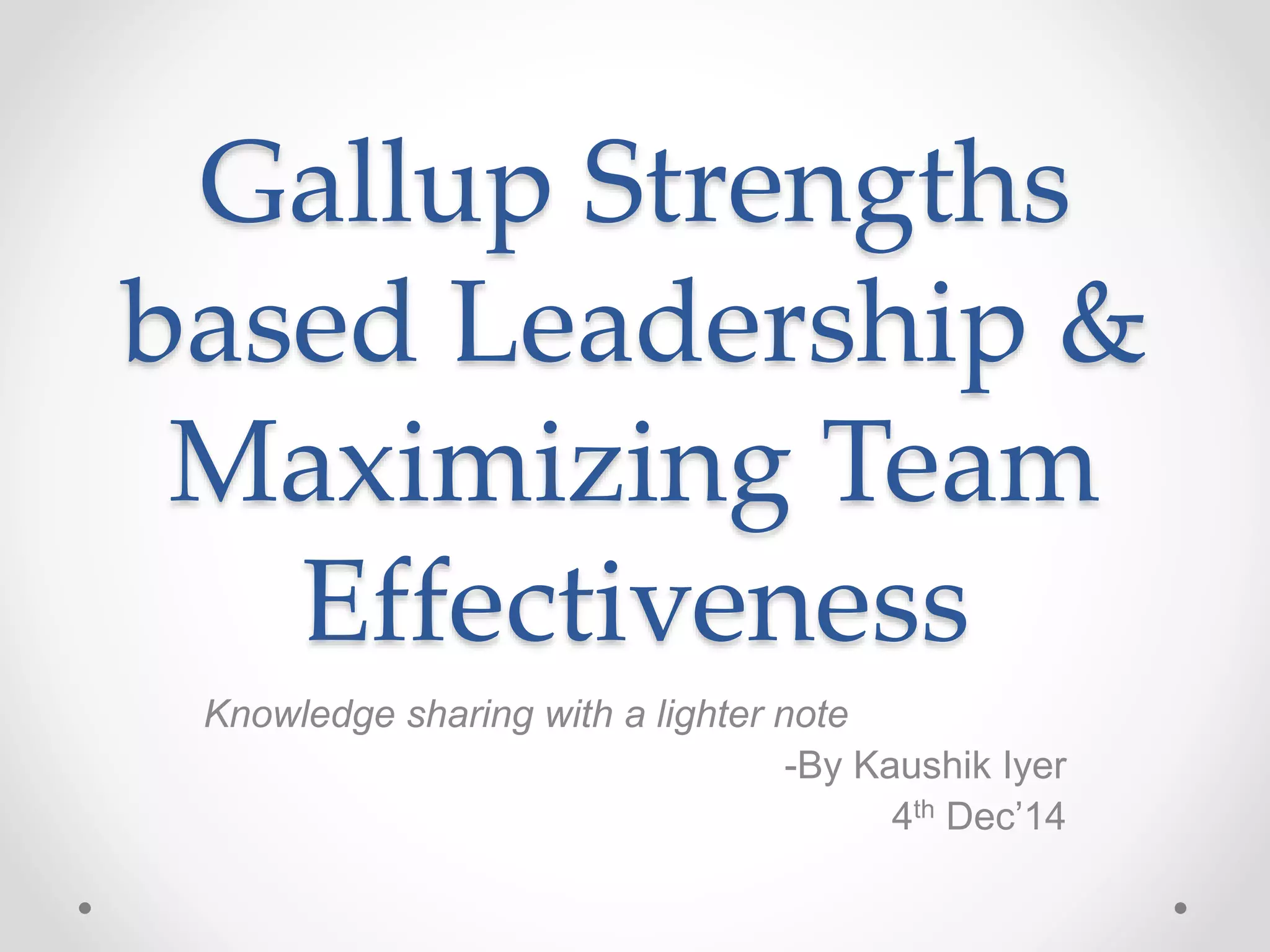
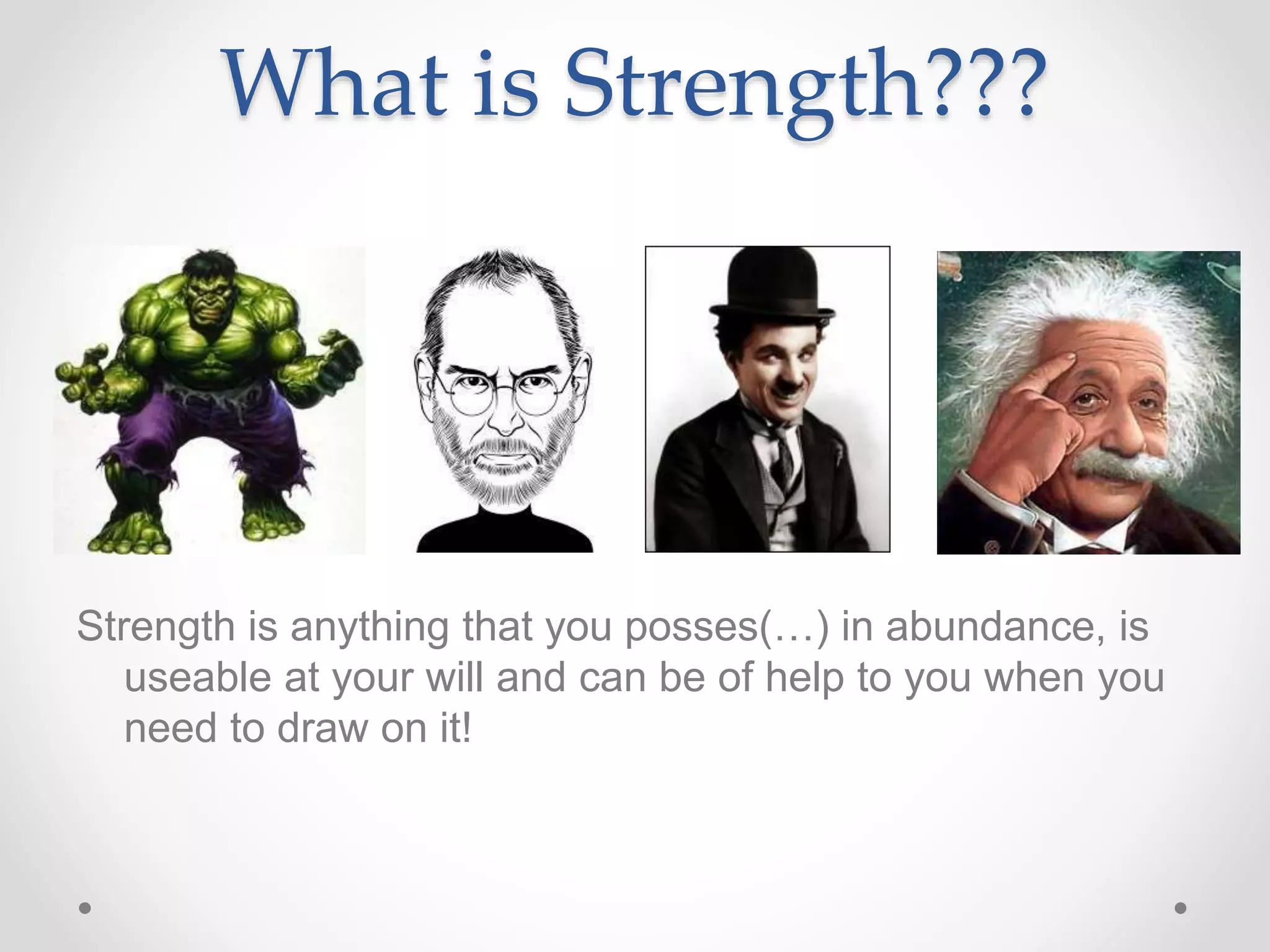
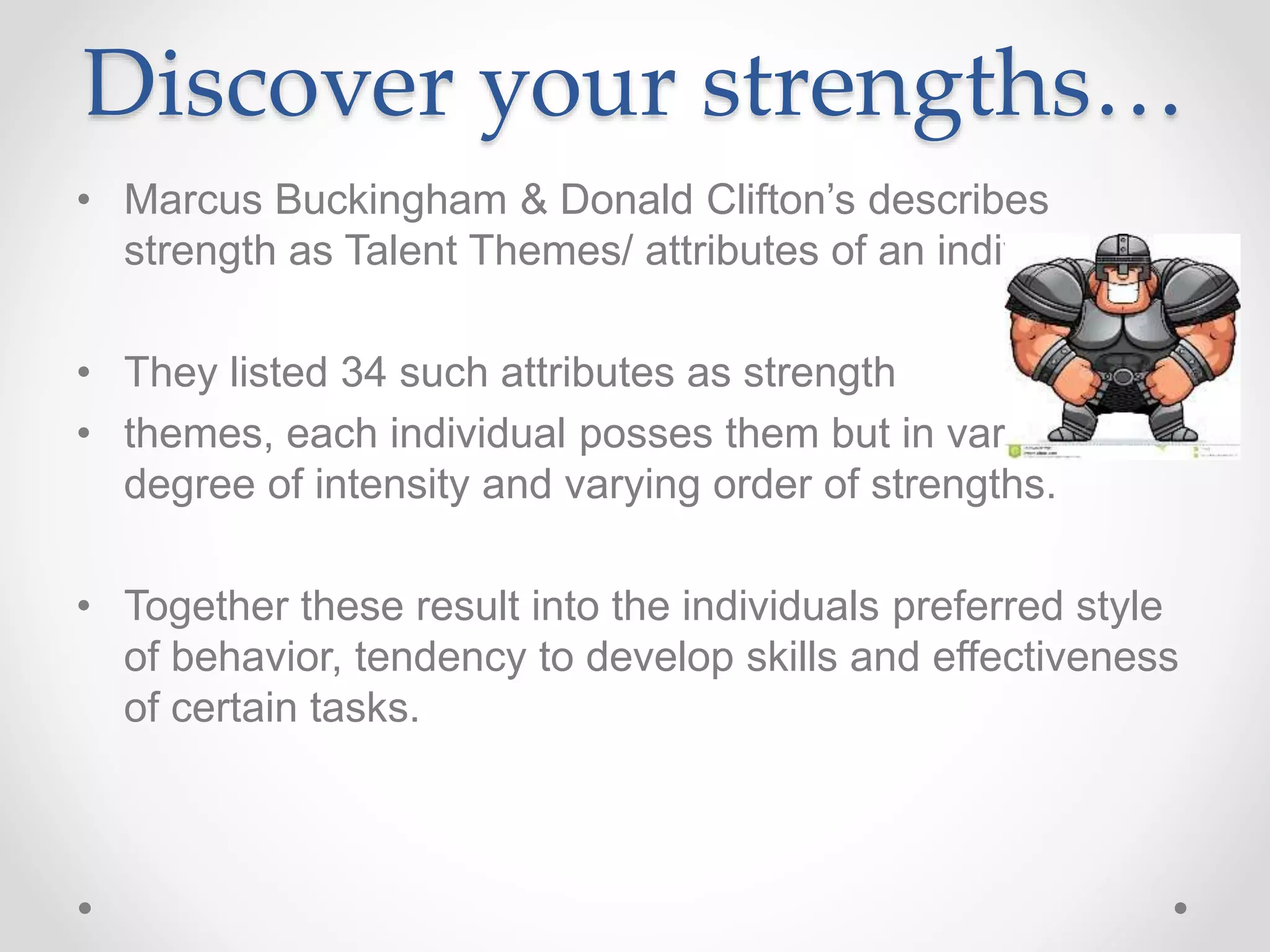
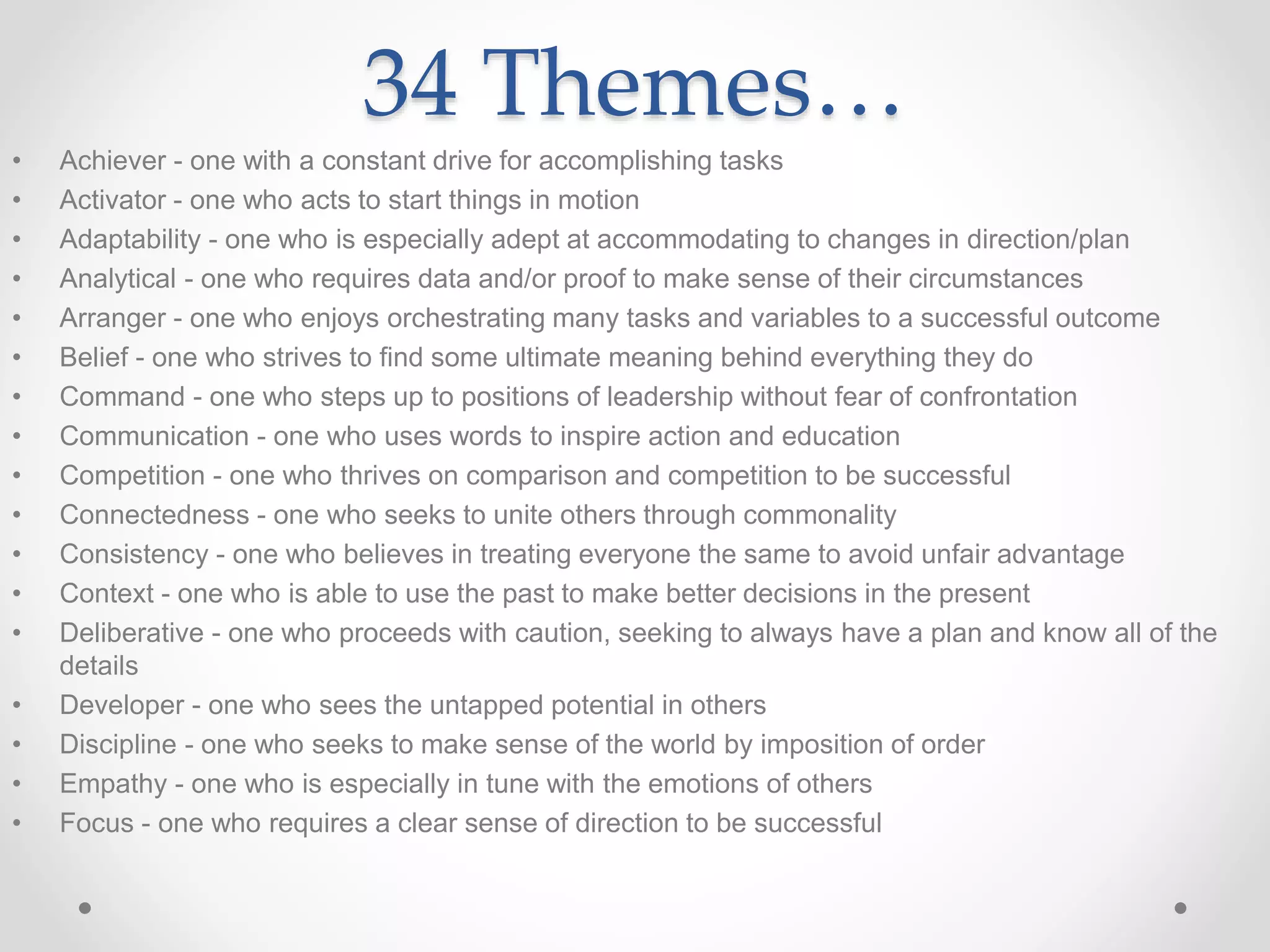
What is Strength???
Strength is anything that you posses(…) in abundance, is
useable at your will and can be of help to you when you
need to draw on it!
Discover your strengths…
• Marcus Buckingham & Donald Clifton’s describes
strength as Talent Themes/ attributes of an individual.
• They listed 34 such attributes as strength
• themes, each individual posses them but in varying
degree of intensity and varying order of strengths.
• Together these result into the individuals preferred style
of behavior, tendency to develop skills and effectiveness
of certain tasks.
34 Themes…
• Achiever - one with a constant drive for accomplishing tasks
• Activator - one who acts to start things in motion
• Adaptability - one who is especially adept at accommodating to changes in direction/plan
• Analytical - one who requires data and/or proof to make sense of their circumstances
• Arranger - one who enjoys orchestrating many tasks and variables to a successful outcome
• Belief - one who strives to find some ultimate meaning behind everything they do
• Command - one who steps up to positions of leadership without fear of confrontation
• Communication - one who uses words to inspire action and education
• Competition - one who thrives on comparison and competition to be successful
• Connectedness - one who seeks to unite others through commonality
• Consistency - one who believes in treating everyone the same to avoid unfair advantage
• Context - one who is able to use the past to make better decisions in the present
• Deliberative - one who proceeds with caution, seeking to always have a plan and know all of the
details
• Developer - one who sees the untapped potential in others
• Discipline - one who seeks to make sense of the world by imposition of order
• Empathy - one who is especially in tune with the emotions of others
• Focus - one who requires a clear sense of direction to be successful
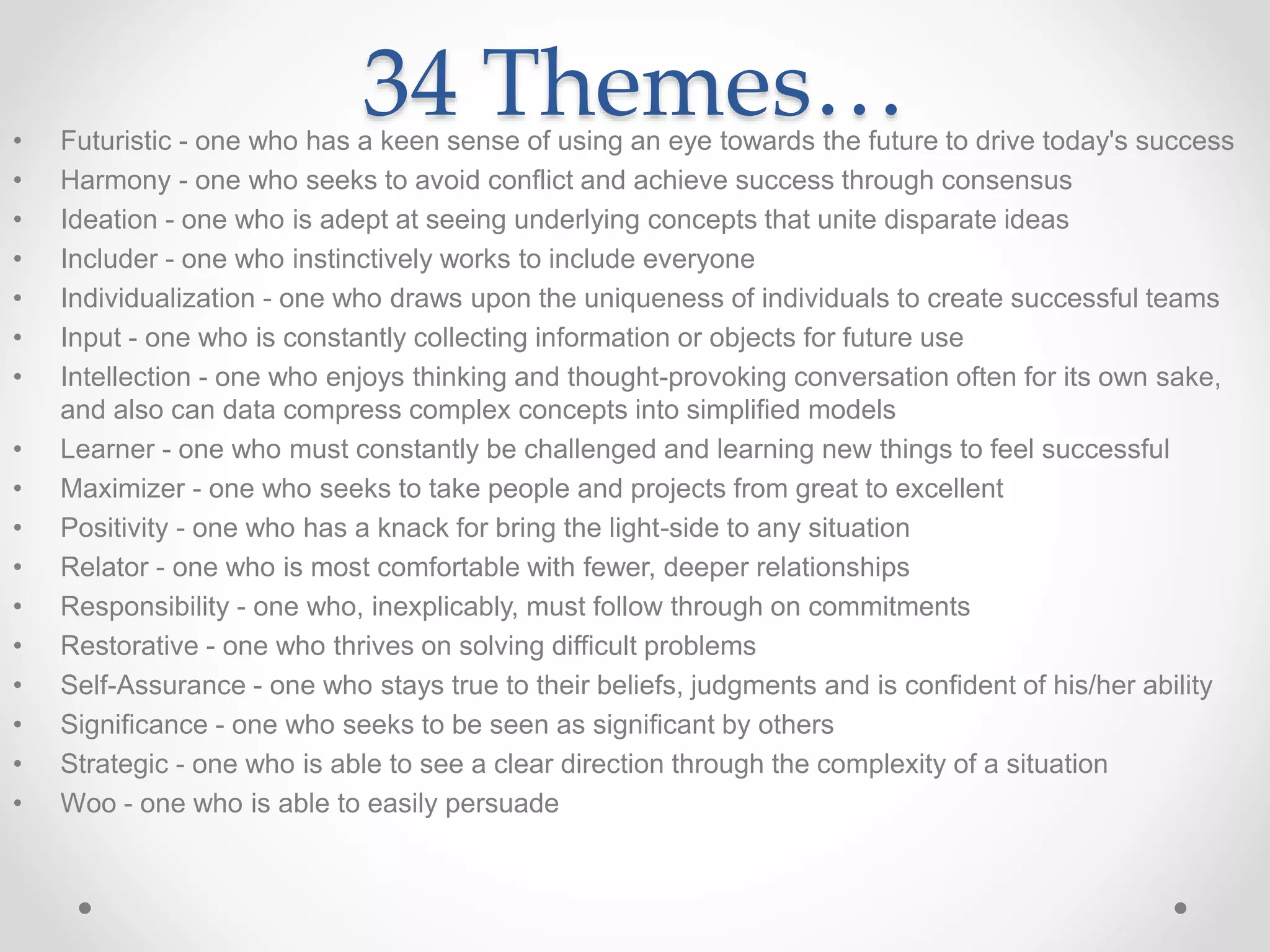
34 Themes…• Futuristic - one who has a keen sense of using an eye towards the future to drive today's success
• Harmony - one who seeks to avoid conflict and achieve success through consensus
• Ideation - one who is adept at seeing underlying concepts that unite disparate ideas
• Includer - one who instinctively works to include everyone
• Individualization - one who draws upon the uniqueness of individuals to create successful teams
• Input - one who is constantly collecting information or objects for future use
• Intellection - one who enjoys thinking and thought-provoking conversation often for its own sake,
and also can data compress complex concepts into simplified models
• Learner - one who must constantly be challenged and learning new things to feel successful
• Maximizer - one who seeks to take people and projects from great to excellent
• Positivity - one who has a knack for bring the light-side to any situation
• Relator - one who is most comfortable with fewer, deeper relationships
• Responsibility - one who, inexplicably, must follow through on commitments
• Restorative - one who thrives on solving difficult problems
• Self-Assurance - one who stays true to their beliefs, judgments and is confident of his/her ability
• Significance - one who seeks to be seen as significant by others
• Strategic - one who is able to see a clear direction through the complexity of a situation
• Woo - one who is able to easily persuade
Leadership….???
Doing things
right........!!!!
OR
Doing the right
things......!!!!
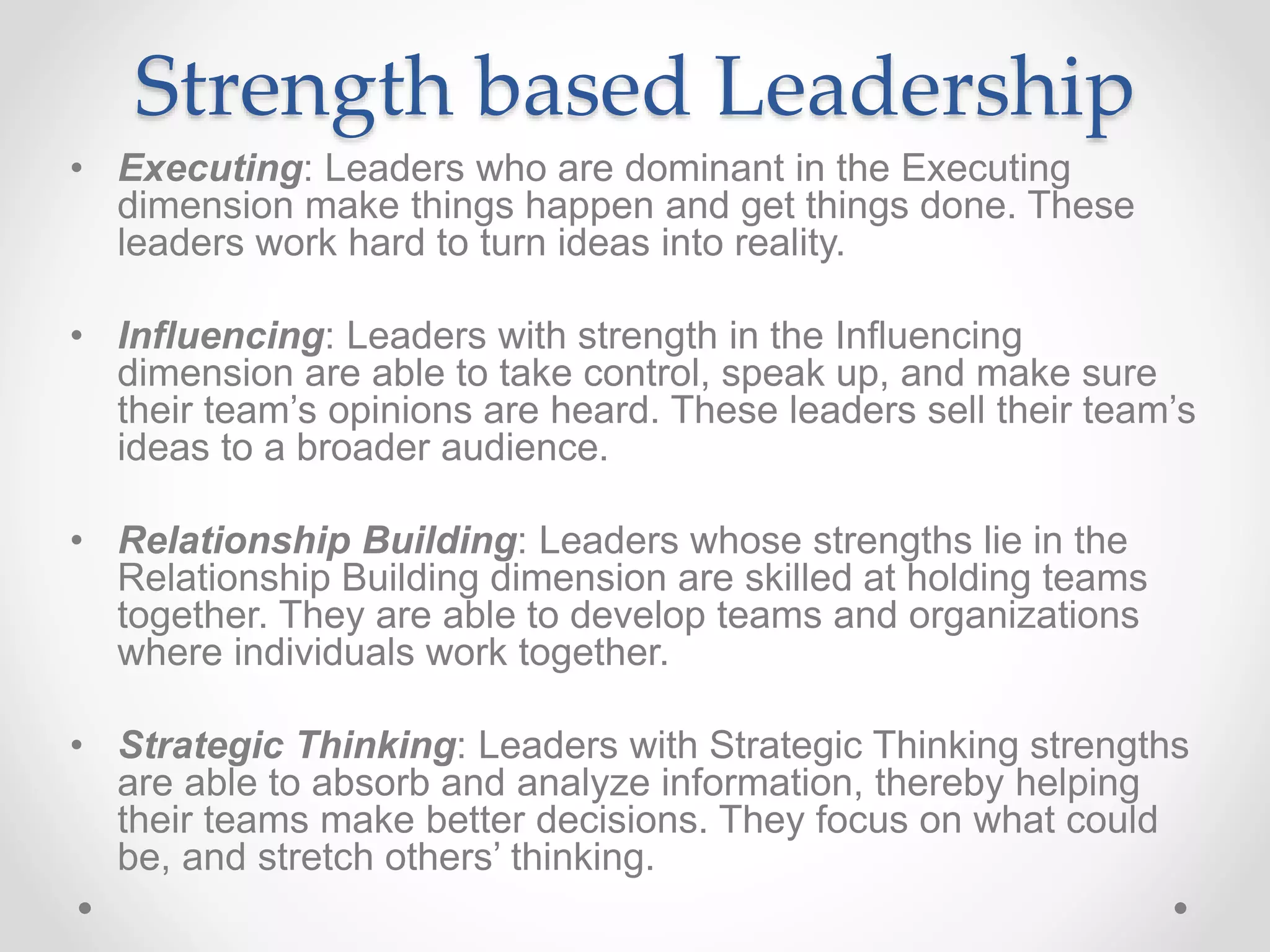
Strength based Leadership
• Executing: Leaders who are dominant in the Executing
dimension make things happen and get things done. These
leaders work hard to turn ideas into reality.
• Influencing: Leaders with strength in the Influencing
dimension are able to take control, speak up, and make sure
their team’s opinions are heard. These leaders sell their team’s
ideas to a broader audience.
• Relationship Building: Leaders whose strengths lie in the
Relationship Building dimension are skilled at holding teams
together. They are able to develop teams and organizations
where individuals work together.
• Strategic Thinking: Leaders with Strategic Thinking strengths
are able to absorb and analyze information, thereby helping
their teams make better decisions. They focus on what could
be, and stretch others’ thinking.
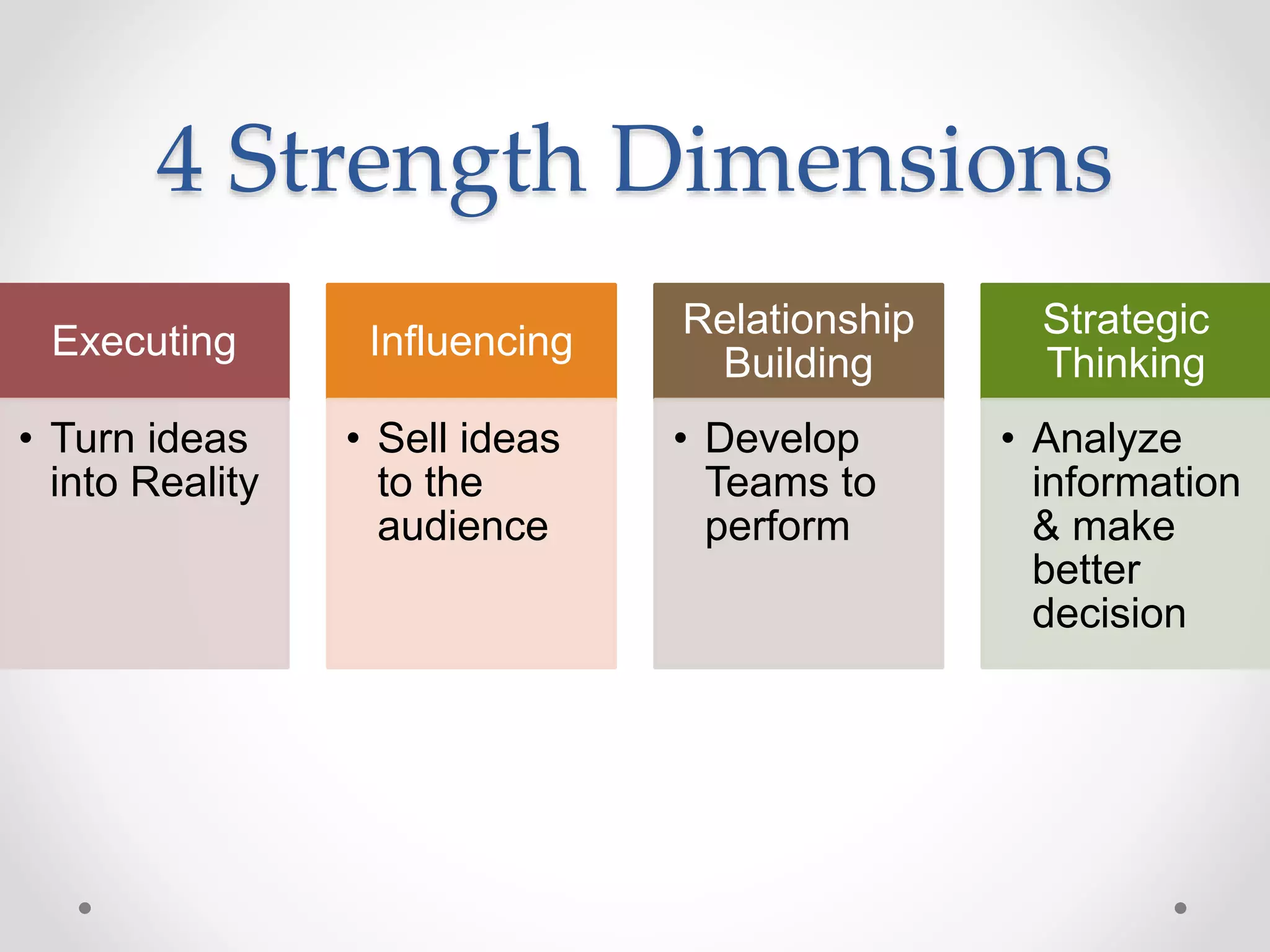
Executing
• Turn ideas
into Reality
Influencing
• Sell ideas
to the
audience
Relationship
Building
• Develop
Teams to
perform
Strategic
Thinking
• Analyze
information
& make
better
decision
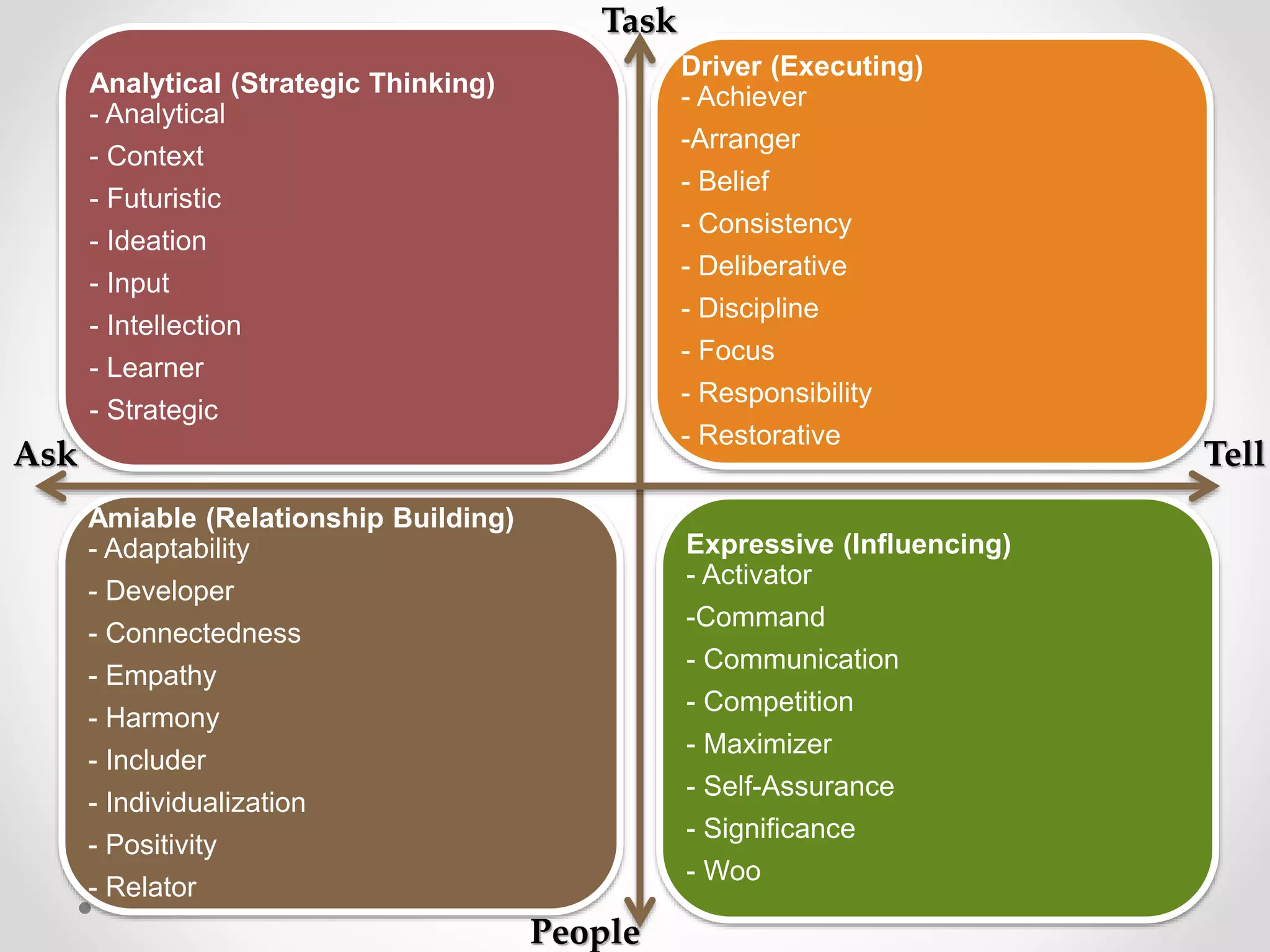
4 Strength Dimensions
Analytical (Strategic Thinking)
- Analytical
- Context
- Futuristic
- Ideation
- Input
- Intellection
- Learner
- Strategic
Amiable (Relationship Building)
- Adaptability
- Developer
- Connectedness
- Empathy
- Harmony
- Includer
- Individualization
- Positivity
- Relator
Driver (Executing)
- Achiever
-Arranger
- Belief
- Consistency
- Deliberative
- Discipline
- Focus
- Responsibility
- Restorative
Expressive (Influencing)
- Activator
-Command
- Communication
- Competition
- Maximizer
- Self-Assurance
- Significance
- Woo
Ask Tell
Task
People
Your Leaderhip Strength
• Sort your Top 5 strengths into the Leadership
Dimensions
Executing Influencing
Relationship
Building
Strategic
Thinking
Maximizer Futuristic
Learner
Input
Ideation
Executing Influencing
Relationship
Building
Strategic
Thinking
Activator Adaptability Strategic
Maximizer Ideation
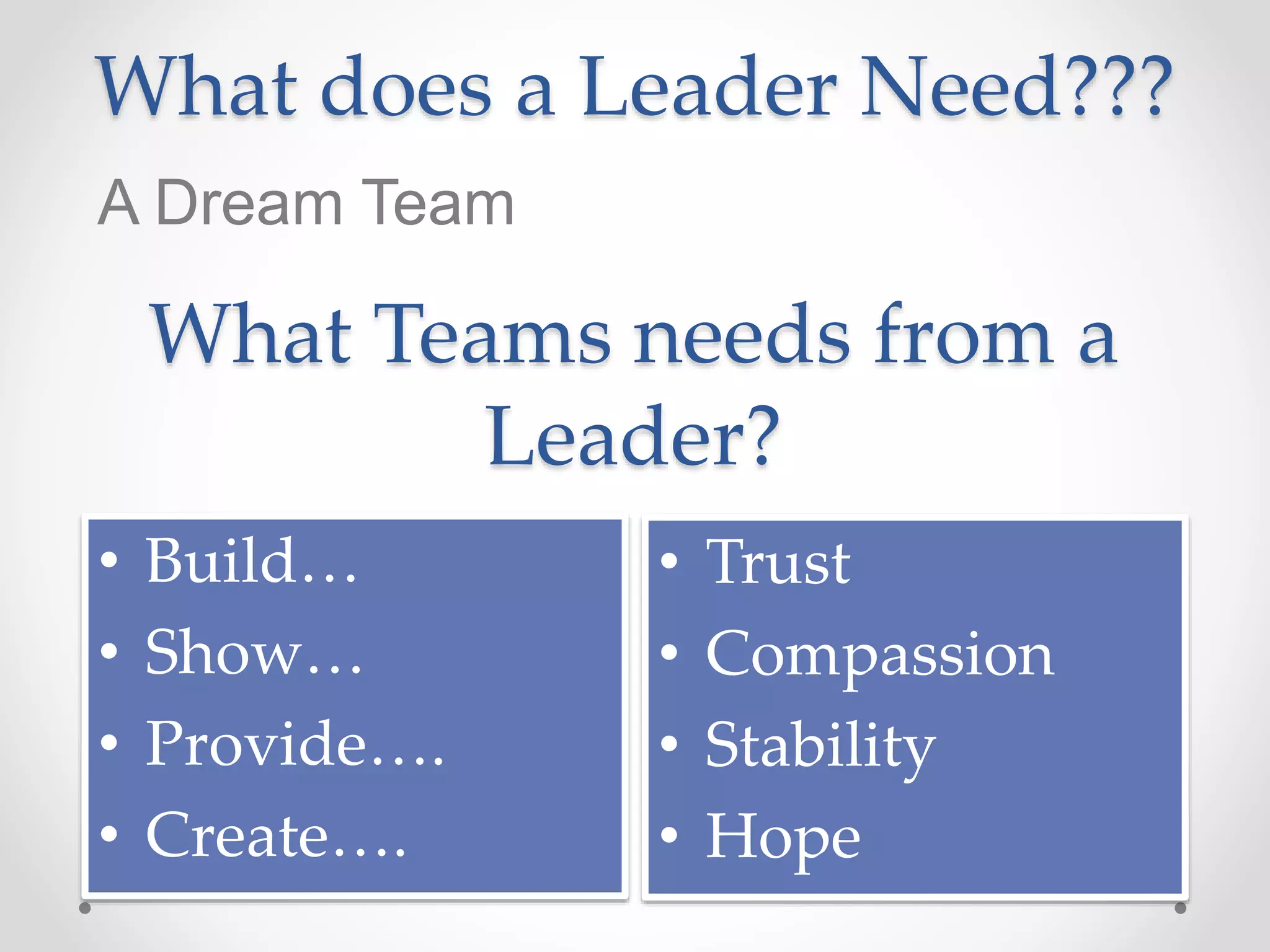
What does a Leader Need???
• Build…
• Show…
• Provide….
• Create….
What Teams needs from a
Leader?
A Dream Team
• Trust
• Compassion
• Stability
• Hope
Using strength for leading…an example
• Futuristic: People strong in the Futuristic theme are
inspired by the future and what could be. They can
inspire others with their visions of the future.
• Build Trust – Help them imagine, Provide as much
details of the future, how can they be part of the future
• Show Compassion – Make a connect, do dreaming for
them, invest in their dreams.
• Provide Stability – Help others stay calm in the present,
remove anxiety of the future.
• Create Hope – Play as a guide for their dreams, assure
them you share their dreams.
Using strength for leading… an example
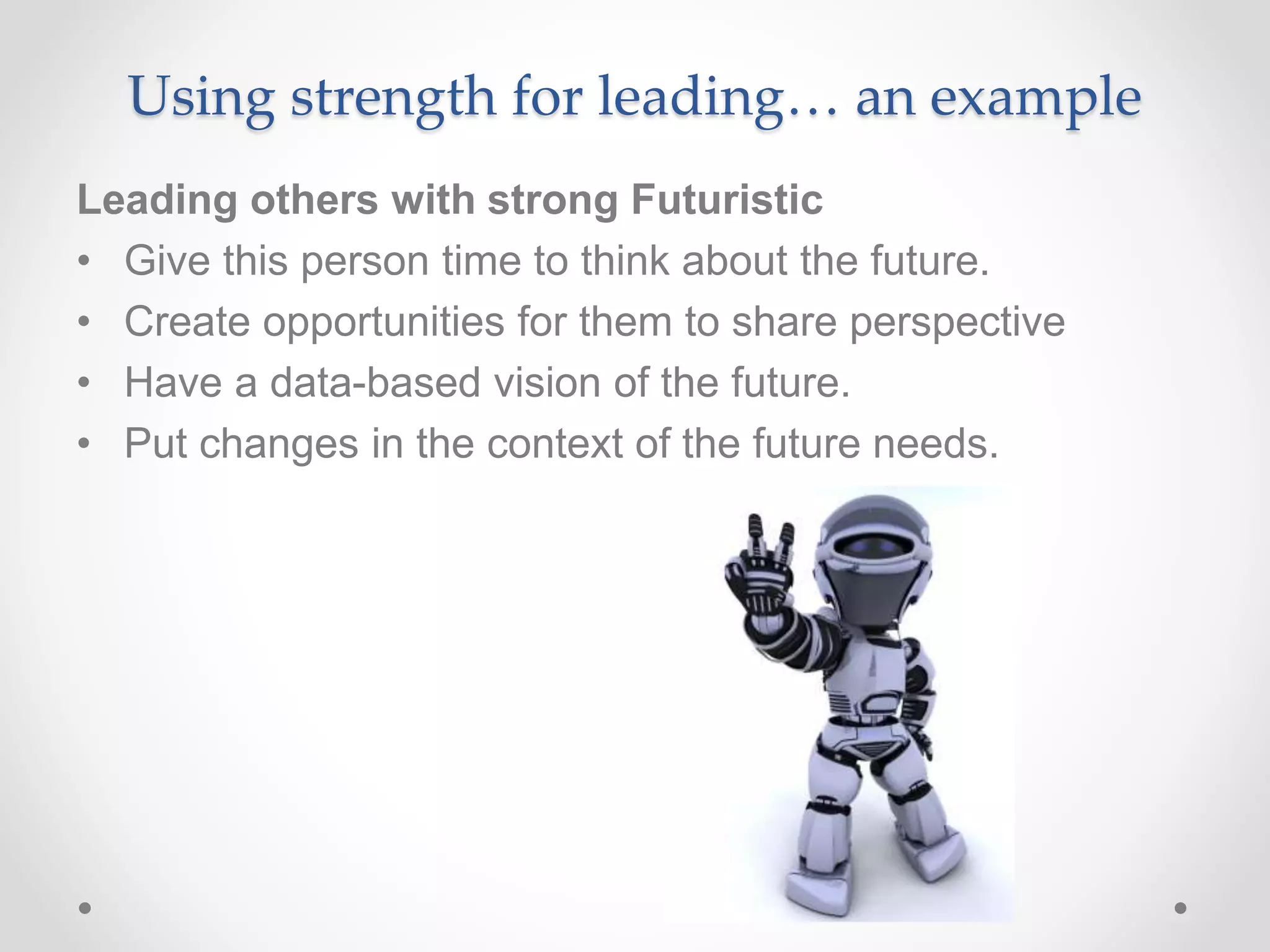
Leading others with strong Futuristic
• Give this person time to think about the future.
• Create opportunities for them to share perspective
• Have a data-based vision of the future.
• Put changes in the context of the future needs.
Fun Facts....... Our Team
Shyam Amrita Anjali Priyanka Kaushik Tripti Pravin Amit Manpreet
Futuristic Relator Ideation Achiever Strategic Maximizer Restorative Strategic Arranger
Maximizer Strategic Responsibility Responsibility Ideation Ideation Futuristic Command Consistency
Learner Achiever Individualization Deliberative Adaptability Activator Strategic Responsibility Adaptability
Input Learner Analytical Self assurance Activator Empathy Relator Futuristic Positivity
Ideation Restorative Deliberative Input Maximizer Achiever Belief Relator Relator
Analytical
Consistency Input
Arranger
Learner
Command
Belief
Futuristic
Deliberative
Restorative
Positivity
Ideation
Empathy
Achiever
Self Assurance
Adaptability
Activator
Relator Strategic
Responsibility Maximizer
Executing Influencing Relationship Building Strategic Thinking
Fun Facts......
Fun Facts.....
Executing
31%
Influencing
13%Relationship
Building
20%
Strategic
Thinking
36%
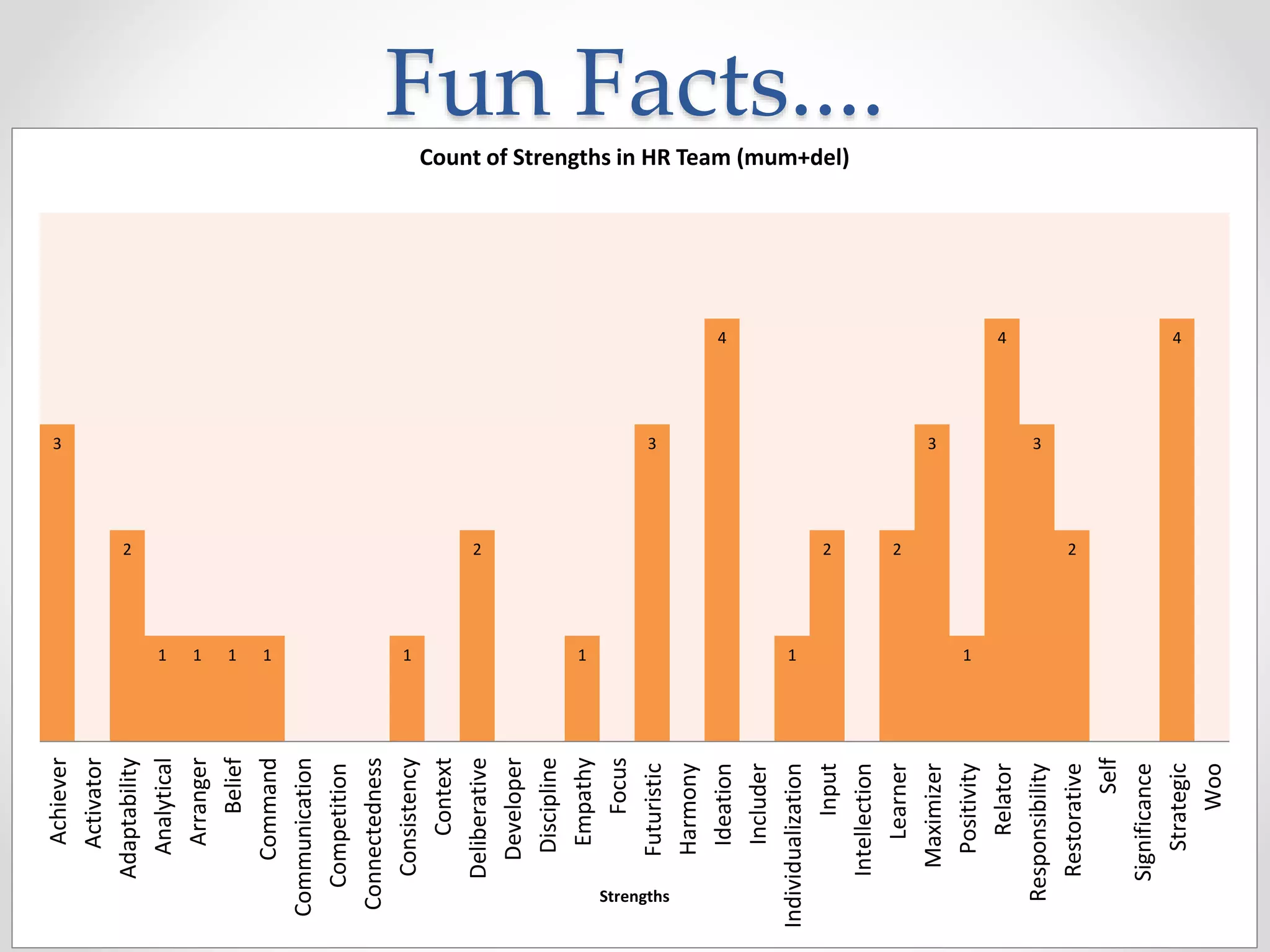
Fun Facts....
3
2
1 1 1 1 1
2
1
3
4
1
2 2
3
1
4
3
2
4
Achiever
Activator
Adaptability
Analytical
Arranger
Belief
Command
Communication
Competition
Connectedness
Consistency
Context
Deliberative
Developer
Discipline
Empathy
Focus
Futuristic
Harmony
Ideation
Includer
Individualization
Input
Intellection
Learner
Maximizer
Positivity
Relator
Responsibility
Restorative
Self
Significance
Strategic
Woo
Strengths
Count of Strengths in HR Team (mum+del)
THANK YOU..!!!

Gallup Strengths based leadership

  • 1.
    Gallup Strengths based Leadership& Maximizing Team Effectiveness Knowledge sharing with a lighter note -By Kaushik Iyer 4th Dec’14
  • 2.
    What is Strength??? Strengthis anything that you posses(…) in abundance, is useable at your will and can be of help to you when you need to draw on it!
  • 3.
    Discover your strengths… •Marcus Buckingham & Donald Clifton’s describes strength as Talent Themes/ attributes of an individual. • They listed 34 such attributes as strength • themes, each individual posses them but in varying degree of intensity and varying order of strengths. • Together these result into the individuals preferred style of behavior, tendency to develop skills and effectiveness of certain tasks.
  • 4.
    34 Themes… • Achiever- one with a constant drive for accomplishing tasks • Activator - one who acts to start things in motion • Adaptability - one who is especially adept at accommodating to changes in direction/plan • Analytical - one who requires data and/or proof to make sense of their circumstances • Arranger - one who enjoys orchestrating many tasks and variables to a successful outcome • Belief - one who strives to find some ultimate meaning behind everything they do • Command - one who steps up to positions of leadership without fear of confrontation • Communication - one who uses words to inspire action and education • Competition - one who thrives on comparison and competition to be successful • Connectedness - one who seeks to unite others through commonality • Consistency - one who believes in treating everyone the same to avoid unfair advantage • Context - one who is able to use the past to make better decisions in the present • Deliberative - one who proceeds with caution, seeking to always have a plan and know all of the details • Developer - one who sees the untapped potential in others • Discipline - one who seeks to make sense of the world by imposition of order • Empathy - one who is especially in tune with the emotions of others • Focus - one who requires a clear sense of direction to be successful
  • 5.
    34 Themes…• Futuristic- one who has a keen sense of using an eye towards the future to drive today's success • Harmony - one who seeks to avoid conflict and achieve success through consensus • Ideation - one who is adept at seeing underlying concepts that unite disparate ideas • Includer - one who instinctively works to include everyone • Individualization - one who draws upon the uniqueness of individuals to create successful teams • Input - one who is constantly collecting information or objects for future use • Intellection - one who enjoys thinking and thought-provoking conversation often for its own sake, and also can data compress complex concepts into simplified models • Learner - one who must constantly be challenged and learning new things to feel successful • Maximizer - one who seeks to take people and projects from great to excellent • Positivity - one who has a knack for bring the light-side to any situation • Relator - one who is most comfortable with fewer, deeper relationships • Responsibility - one who, inexplicably, must follow through on commitments • Restorative - one who thrives on solving difficult problems • Self-Assurance - one who stays true to their beliefs, judgments and is confident of his/her ability • Significance - one who seeks to be seen as significant by others • Strategic - one who is able to see a clear direction through the complexity of a situation • Woo - one who is able to easily persuade
  • 6.
  • 7.
    Strength based Leadership •Executing: Leaders who are dominant in the Executing dimension make things happen and get things done. These leaders work hard to turn ideas into reality. • Influencing: Leaders with strength in the Influencing dimension are able to take control, speak up, and make sure their team’s opinions are heard. These leaders sell their team’s ideas to a broader audience. • Relationship Building: Leaders whose strengths lie in the Relationship Building dimension are skilled at holding teams together. They are able to develop teams and organizations where individuals work together. • Strategic Thinking: Leaders with Strategic Thinking strengths are able to absorb and analyze information, thereby helping their teams make better decisions. They focus on what could be, and stretch others’ thinking.
  • 8.
    Executing • Turn ideas intoReality Influencing • Sell ideas to the audience Relationship Building • Develop Teams to perform Strategic Thinking • Analyze information & make better decision 4 Strength Dimensions
  • 10.
    Analytical (Strategic Thinking) -Analytical - Context - Futuristic - Ideation - Input - Intellection - Learner - Strategic Amiable (Relationship Building) - Adaptability - Developer - Connectedness - Empathy - Harmony - Includer - Individualization - Positivity - Relator Driver (Executing) - Achiever -Arranger - Belief - Consistency - Deliberative - Discipline - Focus - Responsibility - Restorative Expressive (Influencing) - Activator -Command - Communication - Competition - Maximizer - Self-Assurance - Significance - Woo Ask Tell Task People
  • 11.
    Your Leaderhip Strength •Sort your Top 5 strengths into the Leadership Dimensions Executing Influencing Relationship Building Strategic Thinking Maximizer Futuristic Learner Input Ideation Executing Influencing Relationship Building Strategic Thinking Activator Adaptability Strategic Maximizer Ideation
  • 12.
    What does aLeader Need??? • Build… • Show… • Provide…. • Create…. What Teams needs from a Leader? A Dream Team • Trust • Compassion • Stability • Hope
  • 14.
    Using strength forleading…an example • Futuristic: People strong in the Futuristic theme are inspired by the future and what could be. They can inspire others with their visions of the future. • Build Trust – Help them imagine, Provide as much details of the future, how can they be part of the future • Show Compassion – Make a connect, do dreaming for them, invest in their dreams. • Provide Stability – Help others stay calm in the present, remove anxiety of the future. • Create Hope – Play as a guide for their dreams, assure them you share their dreams.
  • 15.
    Using strength forleading… an example Leading others with strong Futuristic • Give this person time to think about the future. • Create opportunities for them to share perspective • Have a data-based vision of the future. • Put changes in the context of the future needs.
  • 16.
    Fun Facts....... OurTeam Shyam Amrita Anjali Priyanka Kaushik Tripti Pravin Amit Manpreet Futuristic Relator Ideation Achiever Strategic Maximizer Restorative Strategic Arranger Maximizer Strategic Responsibility Responsibility Ideation Ideation Futuristic Command Consistency Learner Achiever Individualization Deliberative Adaptability Activator Strategic Responsibility Adaptability Input Learner Analytical Self assurance Activator Empathy Relator Futuristic Positivity Ideation Restorative Deliberative Input Maximizer Achiever Belief Relator Relator
  • 17.
  • 18.
  • 19.
    Fun Facts.... 3 2 1 11 1 1 2 1 3 4 1 2 2 3 1 4 3 2 4 Achiever Activator Adaptability Analytical Arranger Belief Command Communication Competition Connectedness Consistency Context Deliberative Developer Discipline Empathy Focus Futuristic Harmony Ideation Includer Individualization Input Intellection Learner Maximizer Positivity Relator Responsibility Restorative Self Significance Strategic Woo Strengths Count of Strengths in HR Team (mum+del)
  • 20.