Global
Leptospirosis
Environmental
Action
Network
Strengthen the prevention and
outbreak control strategy
Eric Bertherat, MD, MPH, MSc
Pandemic and Epidemic Diseases
WHO Geneva

Health and Climate
Foundation
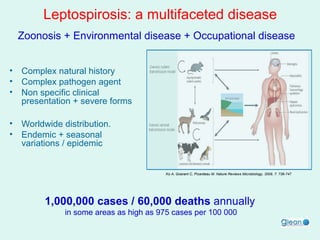
Leptospirosis: a multifaceted disease
Zoonosis + Environmental disease + Occupational disease
•
•
•

Complex natural history
Complex pathogen agent
Non specific clinical
presentation + severe forms

•
•

Worldwide distribution.
Endemic + seasonal
variations / epidemic

Ko A, Goarant C, Picardeau M. Nature Reviews Microbiology, 2009, 7: 736-747

1,000,000 cases / 60,000 deaths annually
in some areas as high as 975 cases per 100 000
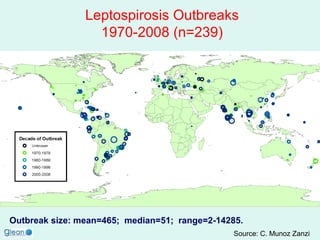
Leptospirosis Outbreaks
1970-2008 (n=239)

Outbreak size: mean=465; median=51; range=2-14285.
Source: C. Munoz Zanzi
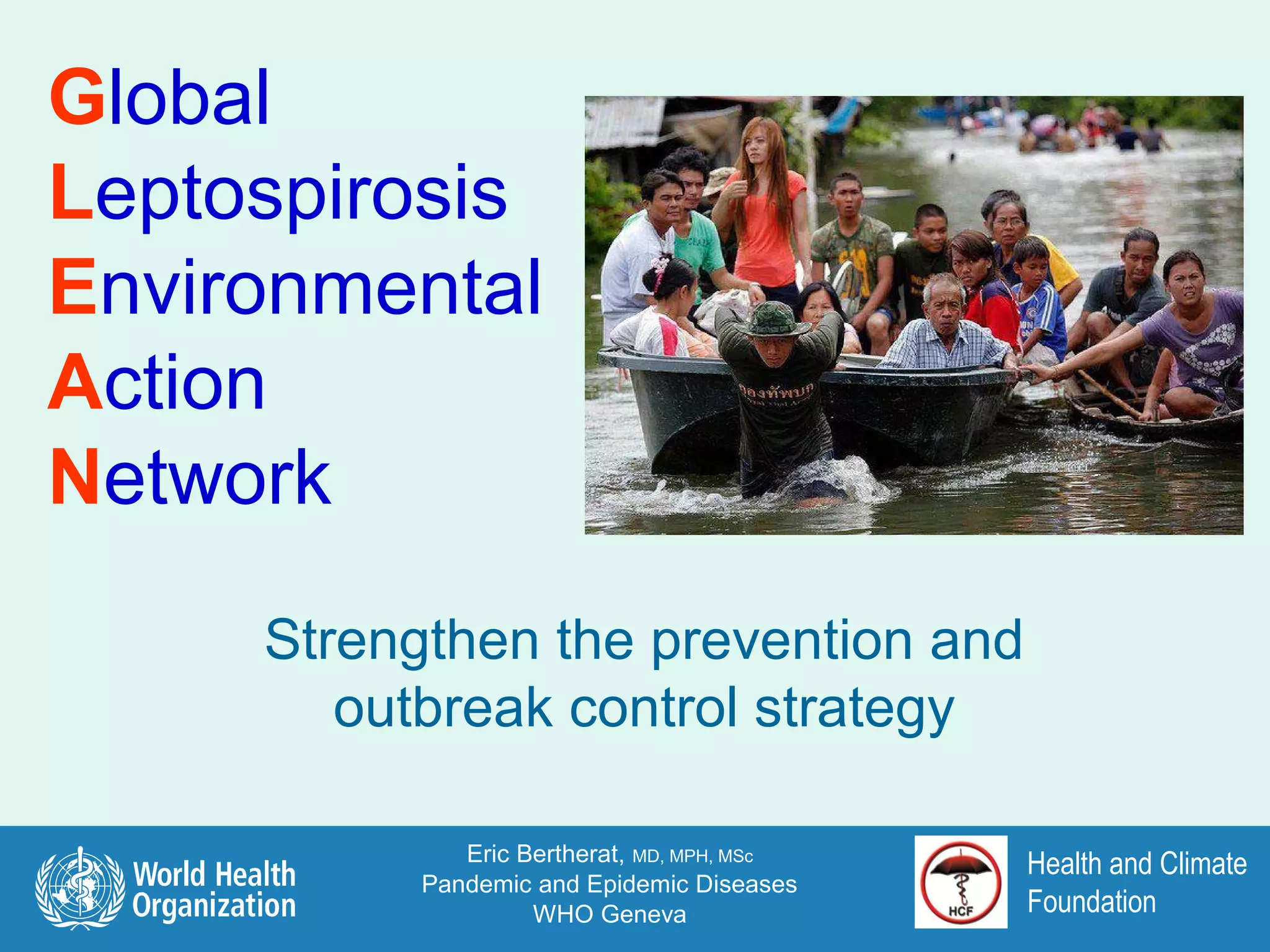
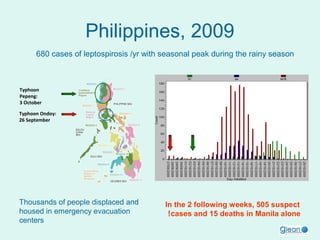
Philippines, 2009
680 cases of leptospirosis /yr with seasonal peak during the rainy season

Typhoon
Pepeng:
3 October
Typhoon Ondoy:
26 September

Thousands of people displaced and
housed in emergency evacuation
centers

In the 2 following weeks, 505 suspect
! cases and 15 deaths in Manila alone
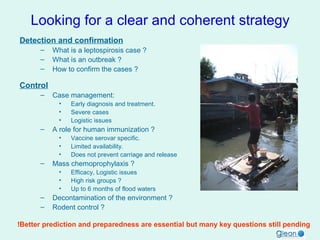
Looking for a clear and coherent strategy
Detection and confirmation
–
–
–

What is a leptospirosis case ?
What is an outbreak ?
How to confirm the cases ?

Control
–

Case management:
•
•
•

–

A role for human immunization ?
•
•
•

–

Vaccine serovar specific.
Limited availability.
Does not prevent carriage and release

Mass chemoprophylaxis ?
•
•
•

–
–

Early diagnosis and treatment.
Severe cases
Logistic issues

Efficacy, Logistic issues
High risk groups ?
Up to 6 months of flood waters

Decontamination of the environment ?
Rodent control ?

!Better prediction and preparedness are essential but many key questions still pending
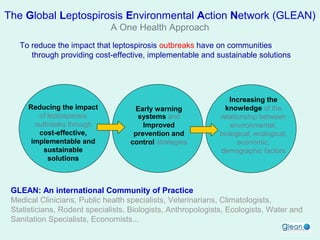
The Global Leptospirosis Environmental Action Network (GLEAN)
A One Health Approach
To reduce the impact that leptospirosis outbreaks have on communities
through providing cost-effective, implementable and sustainable solutions

Reducing the impact
of leptospirosis
outbreaks through
cost-effective,
implementable and
sustainable
solutions

Early warning
systems and
Improved
prevention and
control strategies

Increasing the
knowledge of the
relationship between
environmental,
biological, ecological,
economic,
demographic factors

GLEAN: An international Community of Practice
Medical Clinicians, Public health specialists, Veterinarians, Climatologists,
Statisticians, Rodent specialists, Biologists, Anthropologists, Ecologists, Water and
Sanitation Specialists, Economists...
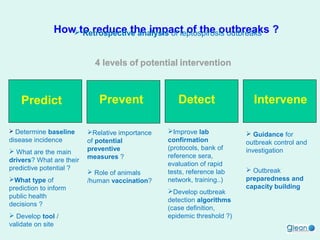
How to reduce the impact of the outbreaks ?
 Retrospective analysis of leptospirosis outbreaks

Predict
 Determine baseline

disease incidence
 What are the main
drivers? What are their
predictive potential ?
What type of
prediction to inform
public health
decisions ?
 Develop tool /
validate on site

Prevent

Detect

Relative importance
of potential
preventive
measures ?

Improve lab
confirmation
(protocols, bank of
reference sera,
evaluation of rapid
tests, reference lab
network, training..)

 Role of animals
/human vaccination?

Develop outbreak
detection algorithms
(case definition,
epidemic threshold ?)

Intervene
 Guidance for
outbreak control and
investigation
 Outbreak
preparedness and
capacity building
Thank you

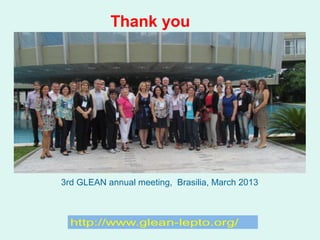
3rd GLEAN annual meeting, Brasilia, March 2013

Strengthen the prevention and outbreak control strategy

  • 1.
    Global Leptospirosis Environmental Action Network Strengthen the preventionand outbreak control strategy Eric Bertherat, MD, MPH, MSc Pandemic and Epidemic Diseases WHO Geneva Health and Climate Foundation
  • 2.
    Leptospirosis: a multifaceteddisease Zoonosis + Environmental disease + Occupational disease • • • Complex natural history Complex pathogen agent Non specific clinical presentation + severe forms • • Worldwide distribution. Endemic + seasonal variations / epidemic Ko A, Goarant C, Picardeau M. Nature Reviews Microbiology, 2009, 7: 736-747 1,000,000 cases / 60,000 deaths annually in some areas as high as 975 cases per 100 000
  • 3.
    Leptospirosis Outbreaks 1970-2008 (n=239) Outbreaksize: mean=465; median=51; range=2-14285. Source: C. Munoz Zanzi
  • 4.
    Philippines, 2009 680 casesof leptospirosis /yr with seasonal peak during the rainy season Typhoon Pepeng: 3 October Typhoon Ondoy: 26 September Thousands of people displaced and housed in emergency evacuation centers In the 2 following weeks, 505 suspect ! cases and 15 deaths in Manila alone
  • 5.
    Looking for aclear and coherent strategy Detection and confirmation – – – What is a leptospirosis case ? What is an outbreak ? How to confirm the cases ? Control – Case management: • • • – A role for human immunization ? • • • – Vaccine serovar specific. Limited availability. Does not prevent carriage and release Mass chemoprophylaxis ? • • • – – Early diagnosis and treatment. Severe cases Logistic issues Efficacy, Logistic issues High risk groups ? Up to 6 months of flood waters Decontamination of the environment ? Rodent control ? !Better prediction and preparedness are essential but many key questions still pending
  • 6.
    The Global LeptospirosisEnvironmental Action Network (GLEAN) A One Health Approach To reduce the impact that leptospirosis outbreaks have on communities through providing cost-effective, implementable and sustainable solutions Reducing the impact of leptospirosis outbreaks through cost-effective, implementable and sustainable solutions Early warning systems and Improved prevention and control strategies Increasing the knowledge of the relationship between environmental, biological, ecological, economic, demographic factors GLEAN: An international Community of Practice Medical Clinicians, Public health specialists, Veterinarians, Climatologists, Statisticians, Rodent specialists, Biologists, Anthropologists, Ecologists, Water and Sanitation Specialists, Economists...
  • 7.
    How to reducethe impact of the outbreaks ?  Retrospective analysis of leptospirosis outbreaks Predict  Determine baseline disease incidence  What are the main drivers? What are their predictive potential ? What type of prediction to inform public health decisions ?  Develop tool / validate on site Prevent Detect Relative importance of potential preventive measures ? Improve lab confirmation (protocols, bank of reference sera, evaluation of rapid tests, reference lab network, training..)  Role of animals /human vaccination? Develop outbreak detection algorithms (case definition, epidemic threshold ?) Intervene  Guidance for outbreak control and investigation  Outbreak preparedness and capacity building
  • 8.
    Thank you 3rd GLEANannual meeting, Brasilia, March 2013

Editor's Notes

  • #4 All quality levels