Strain improvement
The Science and technology of manipulating and improving microbial strains,
in order to enhance their metabolic capacities for biotechnological
applications, are referred to as strain improvement.
T
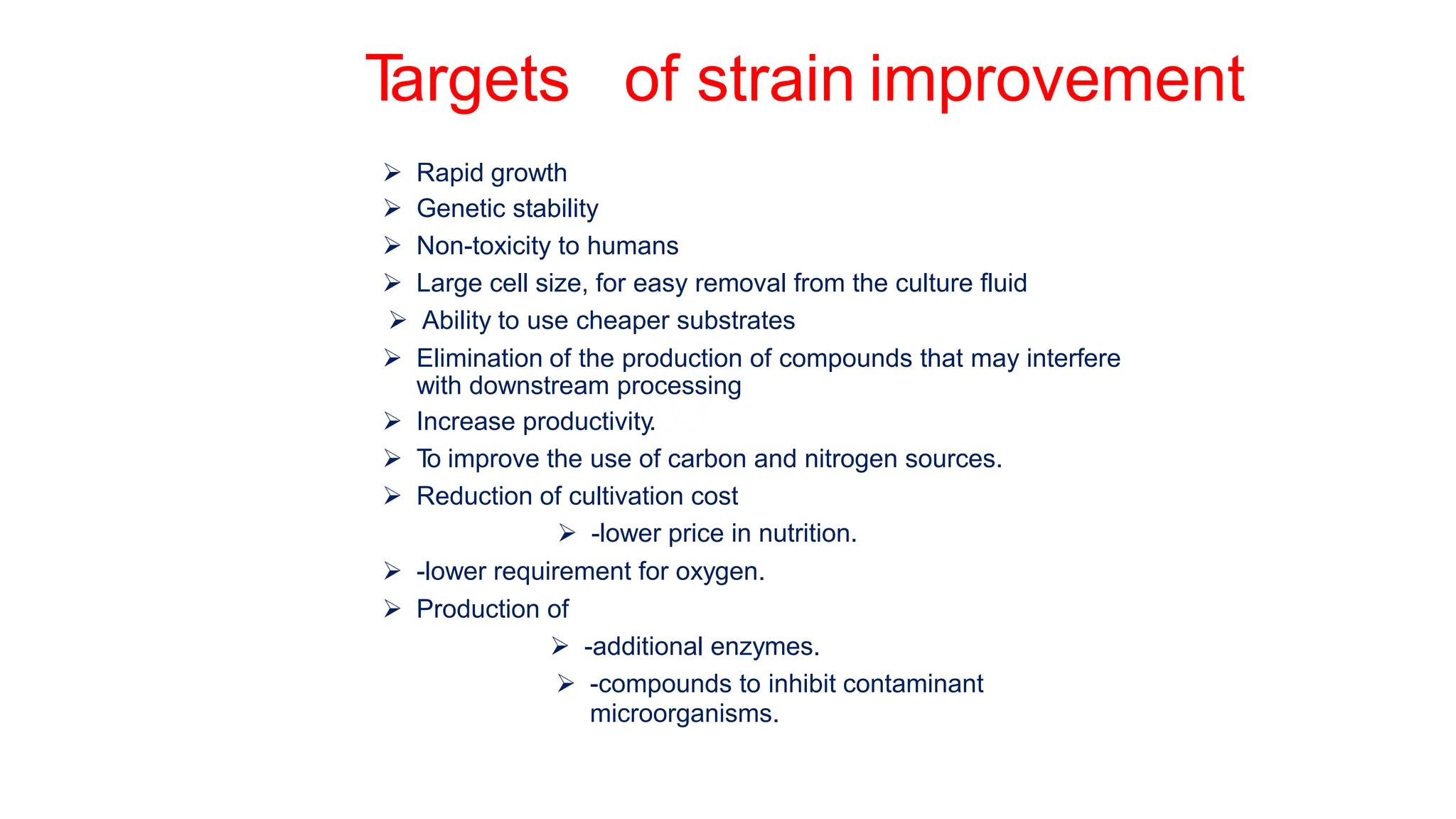
argets of strain improvement
 Rapid growth
 Genetic stability
 Non-toxicity to humans
 Large cell size, for easy removal from the culture fluid
 Ability to use cheaper substrates
 Elimination of the production of compounds that may interfere
with downstream processing
 Increase productivity.
 T
o improve the use of carbon and nitrogen sources.
 Reduction of cultivation cost
 -lower price in nutrition.
 -lower requirement for oxygen.
 Production of
 -additional enzymes.
 -compounds to inhibit contaminant
microorganisms.
– Candida utilis
marxianus
Proper strain used in Industry
Genetically regarded as safe
GRAS
– Bacillus subtilis
– Lactobacillus
bulgaricus
– Lactococcus lactis
Bacteria
– Leuconostoc oenos
Yeasts
– Kluyveromyces
– Kluyveromyces lactis
– Saccharomyces
cerevisiae
•Filamentous fungi
– Aspergillus niger
– Aspergillus oryzae
– Mucor javanicus
– Penicillium roqueforti
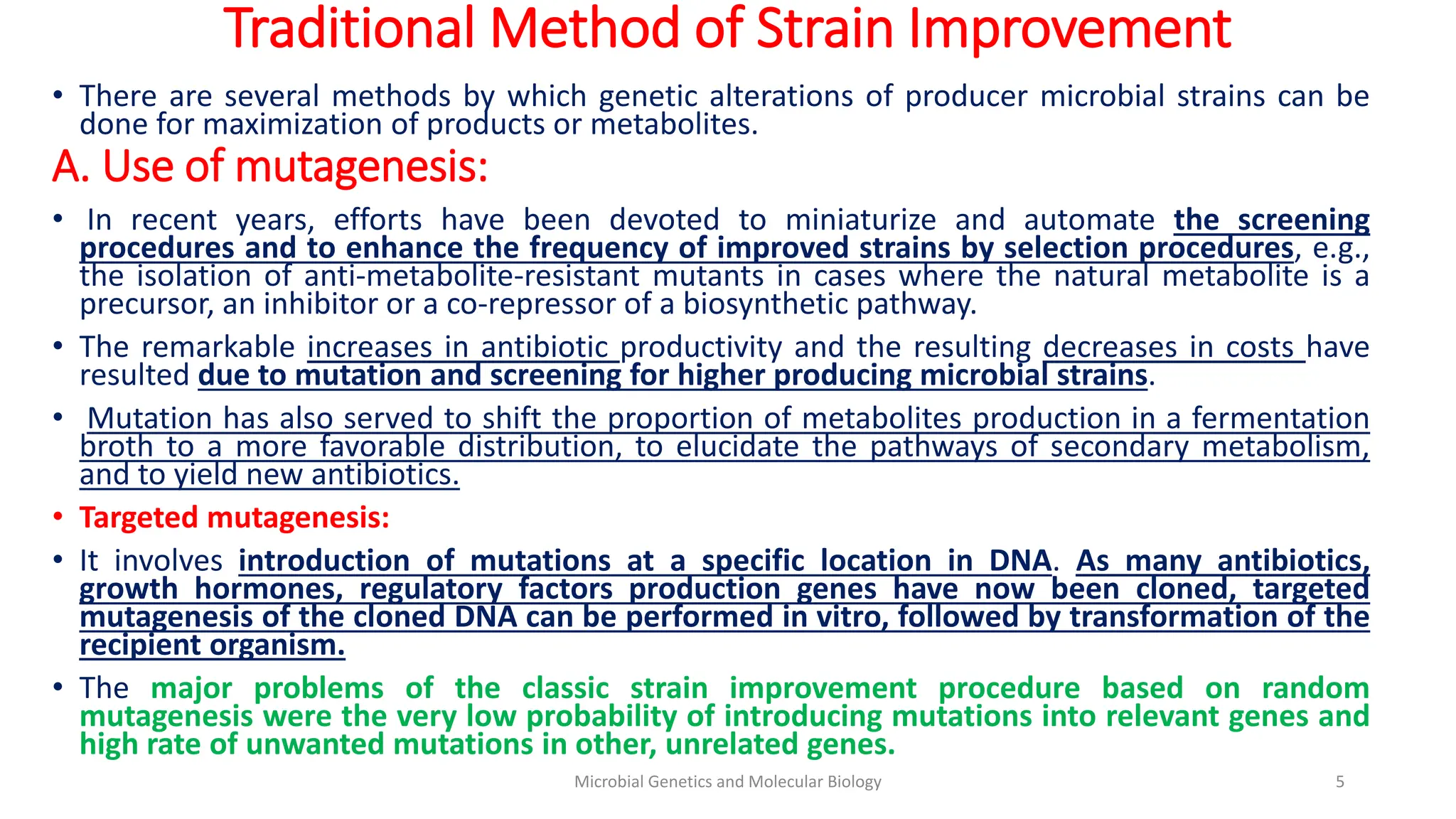
Traditional Method of Strain Improvement
• There are several methods by which genetic alterations of producer microbial strains can be
done for maximization of products or metabolites.
A. Use of mutagenesis:
• In recent years, efforts have been devoted to miniaturize and automate the screening
procedures and to enhance the frequency of improved strains by selection procedures, e.g.,
the isolation of anti-metabolite-resistant mutants in cases where the natural metabolite is a
precursor, an inhibitor or a co-repressor of a biosynthetic pathway.
• The remarkable increases in antibiotic productivity and the resulting decreases in costs have
resulted due to mutation and screening for higher producing microbial strains.
• Mutation has also served to shift the proportion of metabolites production in a fermentation
broth to a more favorable distribution, to elucidate the pathways of secondary metabolism,
and to yield new antibiotics.
• Targeted mutagenesis:
• It involves introduction of mutations at a specific location in DNA. As many antibiotics,
growth hormones, regulatory factors production genes have now been cloned, targeted
mutagenesis of the cloned DNA can be performed in vitro, followed by transformation of the
recipient organism.
• The major problems of the classic strain improvement procedure based on random
mutagenesis were the very low probability of introducing mutations into relevant genes and
high rate of unwanted mutations in other, unrelated genes.
Microbial Genetics and Molecular Biology 5
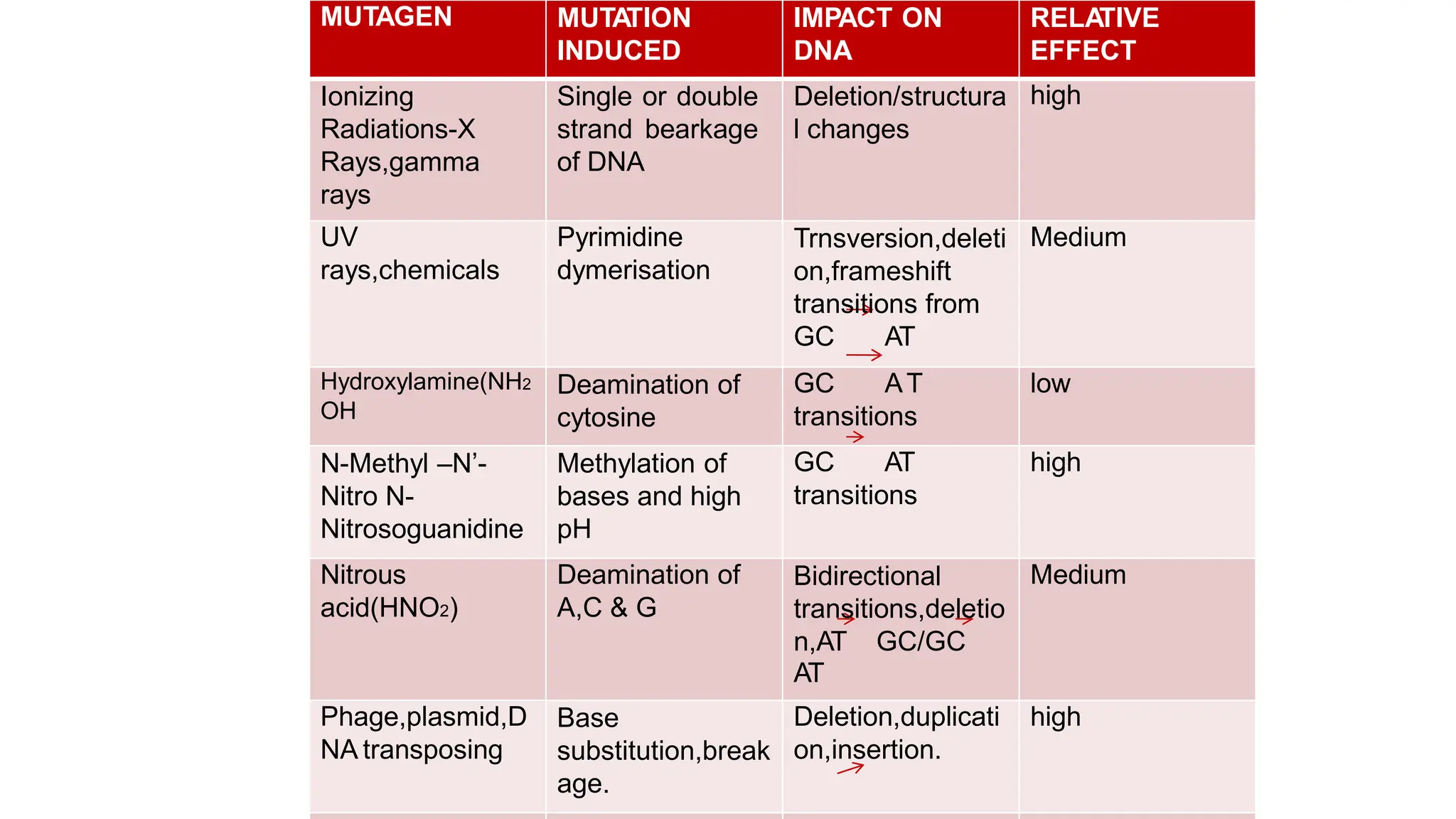
MUTAGEN MUTA
TION
INDUCED
IMPACT ON
DNA
RELA
TIVE
EFFECT
Ionizing
Radiations-X
Rays,gamma
rays
Single or double
strand bearkage
of DNA
Deletion/structura
l changes
high
UV
rays,chemicals
Pyrimidine
dymerisation
Trnsversion,deleti
on,frameshift
transitions from
GC AT
Medium
Hydroxylamine(NH2
OH
Deamination of
cytosine
GC AT
transitions
low
N-Methyl –N’-
Nitro N-
Nitrosoguanidine
Methylation of
bases and high
pH
GC AT
transitions
high
Nitrous
acid(HNO2)
Deamination of
A,C & G
Bidirectional
transitions,deletio
n,AT GC/GC
AT
Medium
Phage,plasmid,D
NA transposing
Base
substitution,break
age.
Deletion,duplicati
on,insertion.
high
B. Use of classical genetics
• The most effective use of classical genetics in the past was the backcrossing of
overproducing strains with parent strains to improve the vigor of mutant strains.
• After backcrossing such a strain with the wild type, progeny cells are produced that
have inherited the overproducing traits from the mutant parent and the wild-type
hardiness and vigor from the wild-type parent.
• Priorly this was not possible with Penicillium, which lacks a true sexual cycle.
• However, a parasexual cycle resulting in the production of heterokaryons was
discovered in Penicillium in 1958 and was used to improve the strains.
• Protoplast fusion is relatively a new versatile technique to induce or promote
genetic recombination in a variety of prokaryotic and eukaryotic cell especially,
industrially useful microorganisms such as Streptomyces ambofaciens, Micro-
monsporae chinospora, because it breaks the barriers to genetic exchange.
• Another use of protoplast fusion has been the recombination of different strains
from the same or different species to yield new antibiotics such as anthracyclines,
aminoglycosides and rifamycins.
• Protoplast fusion has also been useful in elimination of an undesirable component
from penicillin broths imposed by conventional mating systems
Microbial Genetics and Molecular Biology 7
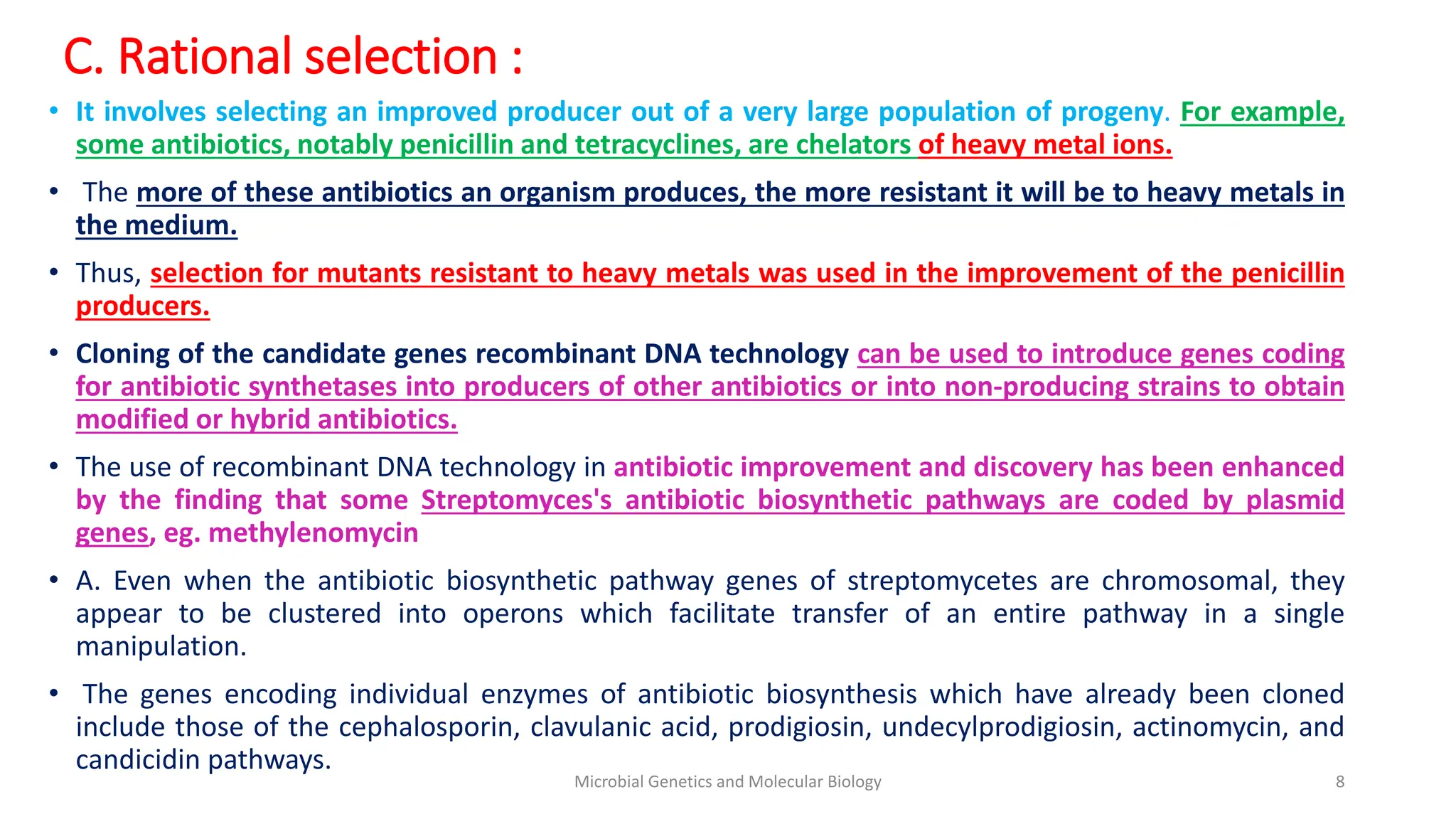
C. Rational selection :
• It involves selecting an improved producer out of a very large population of progeny. For example,
some antibiotics, notably penicillin and tetracyclines, are chelators of heavy metal ions.
• The more of these antibiotics an organism produces, the more resistant it will be to heavy metals in
the medium.
• Thus, selection for mutants resistant to heavy metals was used in the improvement of the penicillin
producers.
• Cloning of the candidate genes recombinant DNA technology can be used to introduce genes coding
for antibiotic synthetases into producers of other antibiotics or into non-producing strains to obtain
modified or hybrid antibiotics.
• The use of recombinant DNA technology in antibiotic improvement and discovery has been enhanced
by the finding that some Streptomyces's antibiotic biosynthetic pathways are coded by plasmid
genes, eg. methylenomycin
• A. Even when the antibiotic biosynthetic pathway genes of streptomycetes are chromosomal, they
appear to be clustered into operons which facilitate transfer of an entire pathway in a single
manipulation.
• The genes encoding individual enzymes of antibiotic biosynthesis which have already been cloned
include those of the cephalosporin, clavulanic acid, prodigiosin, undecylprodigiosin, actinomycin, and
candicidin pathways.
Microbial Genetics and Molecular Biology 8
The isopenicillin N synthetase ("CyClaSe") gene of Cephalosporium acremonium
has been cloned in Escherichia coli and expressed at a level of 20% of total cell
protein.
Cyclase gene of Penicillium chrysogenum and Streptomyces clavuligerus has also
been cloned in E.coli system.
The expandase/ hydroxylase gene of C. acremonium has been cloned in E. coli. The
protein accumulated as inclusion bodies in E. coli near to 15% of total cell protein
Similar to E.coli, now a days Bacillus subtilis, Pichia pastoris, Saccharomyces
cerevisiae have also emerged as a promising heterologous expression system for
prokaryotic and eukaryotic candidate genes.
There are several factors which govern the production of recombinant therapeutic
proteins in B. subtilis.
The factors are as follows: a) Well understood transcription and translation
machinery including different regulatory factors responsible for extracellular
product. b) Generation of stable recombinant plasmids. c) Development of novel
recombinant B. subtilis strains with reduced nuclease and protease contents. d)
Better systematic understanding of the protein secretion method to elucidate the
factors responsible for the secretion of intracellular proteins.
Microbial Genetics and Molecular Biology 9
To get the soluble extracellular protein product from the gene, it can be
linked to a DNA fragment coding for B. subtilis signal peptide for extra-
cellular secretion.
The signal sequence may be preceded by a efficient translation initiator
sequence or ribosome binding site (RBS) which is followed by mRNA
stability-enhancing sequences (SES) at 5’ end of mRNA.
The ‘strong’ promoter for this gene consist a cluster of other efficient
promoters which would be regulated temporally by the growth condition or
growth medium components.
Thus genes possess suitable properties not only for efficient transcription,
translation but would be under temporal control avoiding other exogenous
induction.
Thus generated mRNA would be stabilized by 3’SES which protects mRNA
from degradation by 3’ exonucleases.
 The protein product consists of a typical B. subtilis signal peptide linked to
N-terminus and have to be further processed with proteases to recover only
the desired portion.
Microbial Genetics and Molecular Biology 10
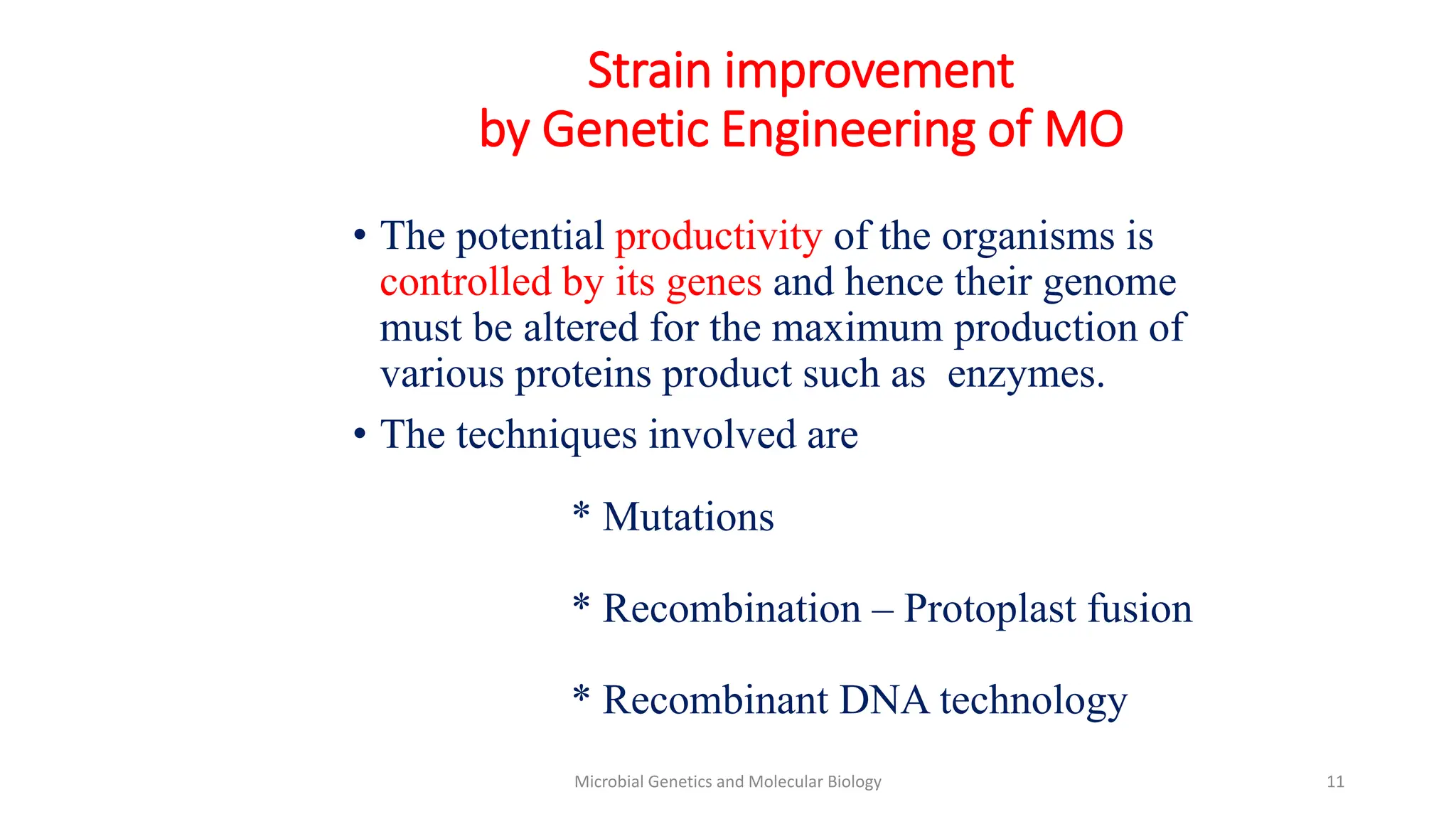
Strain improvement
by Genetic Engineering of MO
• The potential productivity of the organisms is
controlled by its genes and hence their genome
must be altered for the maximum production of
various proteins product such as enzymes.
• The techniques involved are
* Mutations
* Recombination – Protoplast fusion
* Recombinant DNA technology
Microbial Genetics and Molecular Biology 11
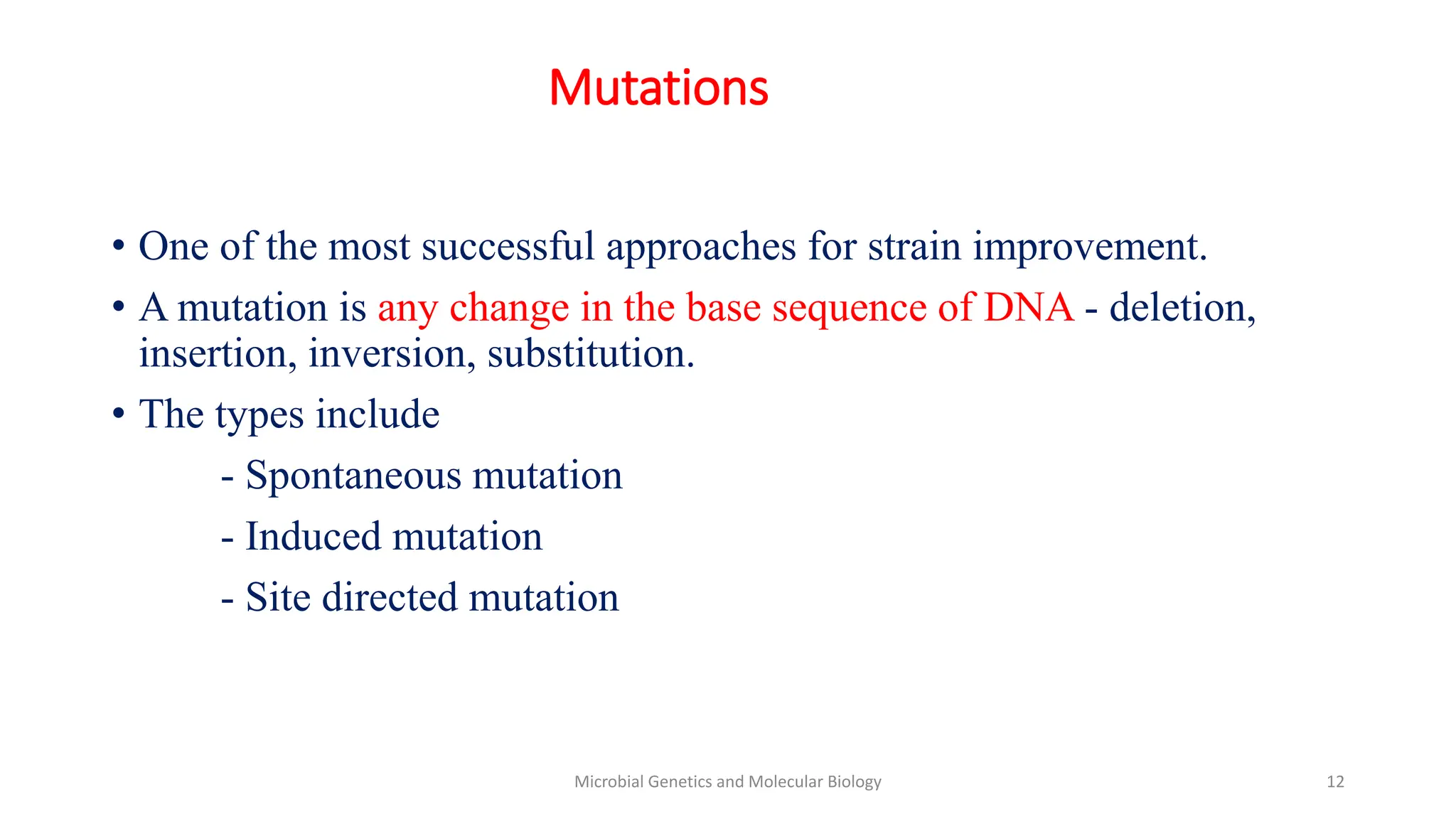
Mutations
• One of the most successful approaches for strain improvement.
• A mutation is any change in the base sequence of DNA - deletion,
insertion, inversion, substitution.
• The types include
- Spontaneous mutation
- Induced mutation
- Site directed mutation
Microbial Genetics and Molecular Biology 12
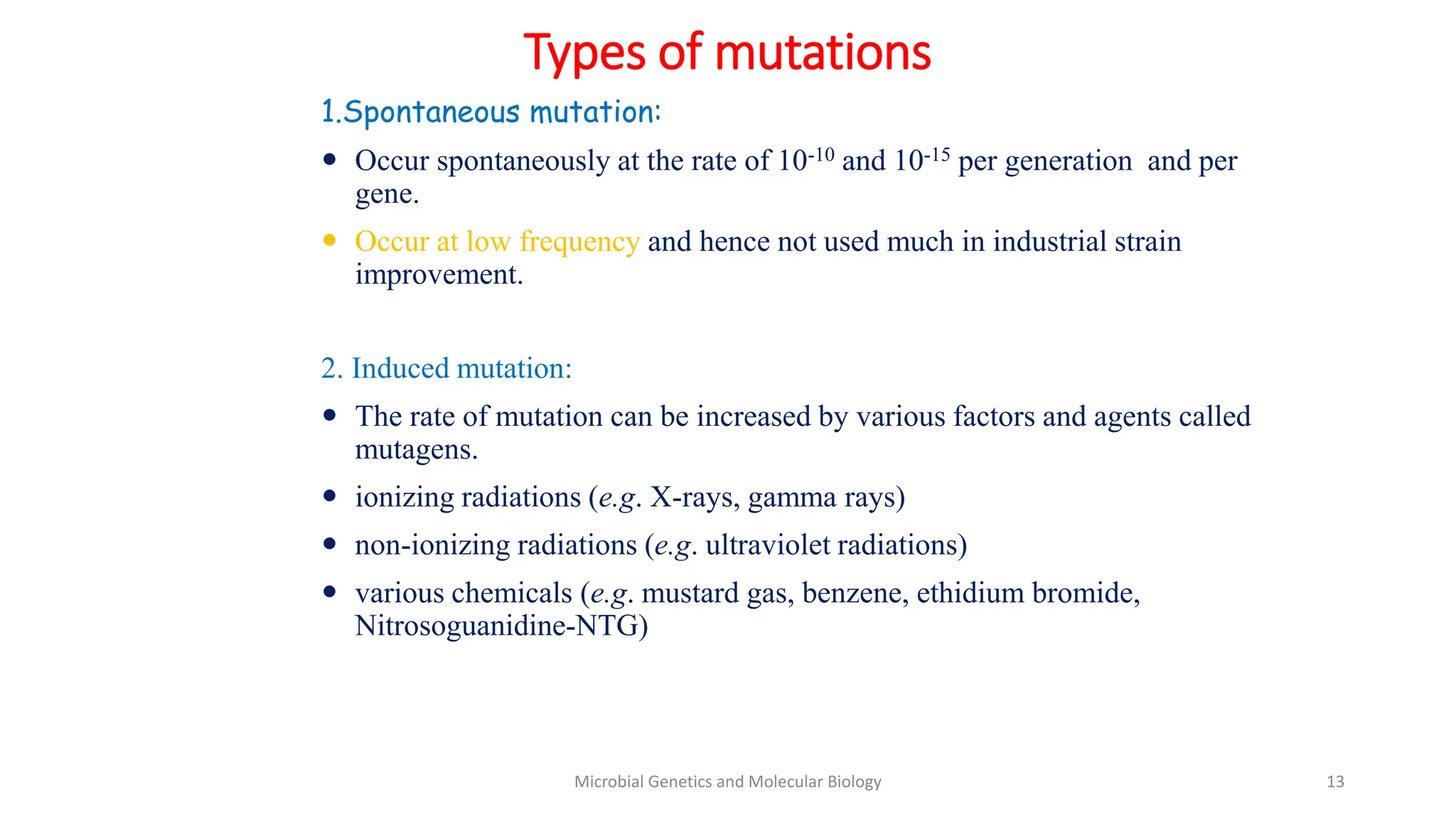
Types of mutations
1.Spontaneous mutation:
 Occur spontaneously at the rate of 10-10 and 10-15 per generation and per
gene.
 Occur at low frequency and hence not used much in industrial strain
improvement.
2. Induced mutation:
 The rate of mutation can be increased by various factors and agents called
mutagens.
 ionizing radiations (e.g. X-rays, gamma rays)
 non-ionizing radiations (e.g. ultraviolet radiations)
 various chemicals (e.g. mustard gas, benzene, ethidium bromide,
Nitrosoguanidine-NTG)
Microbial Genetics and Molecular Biology 13
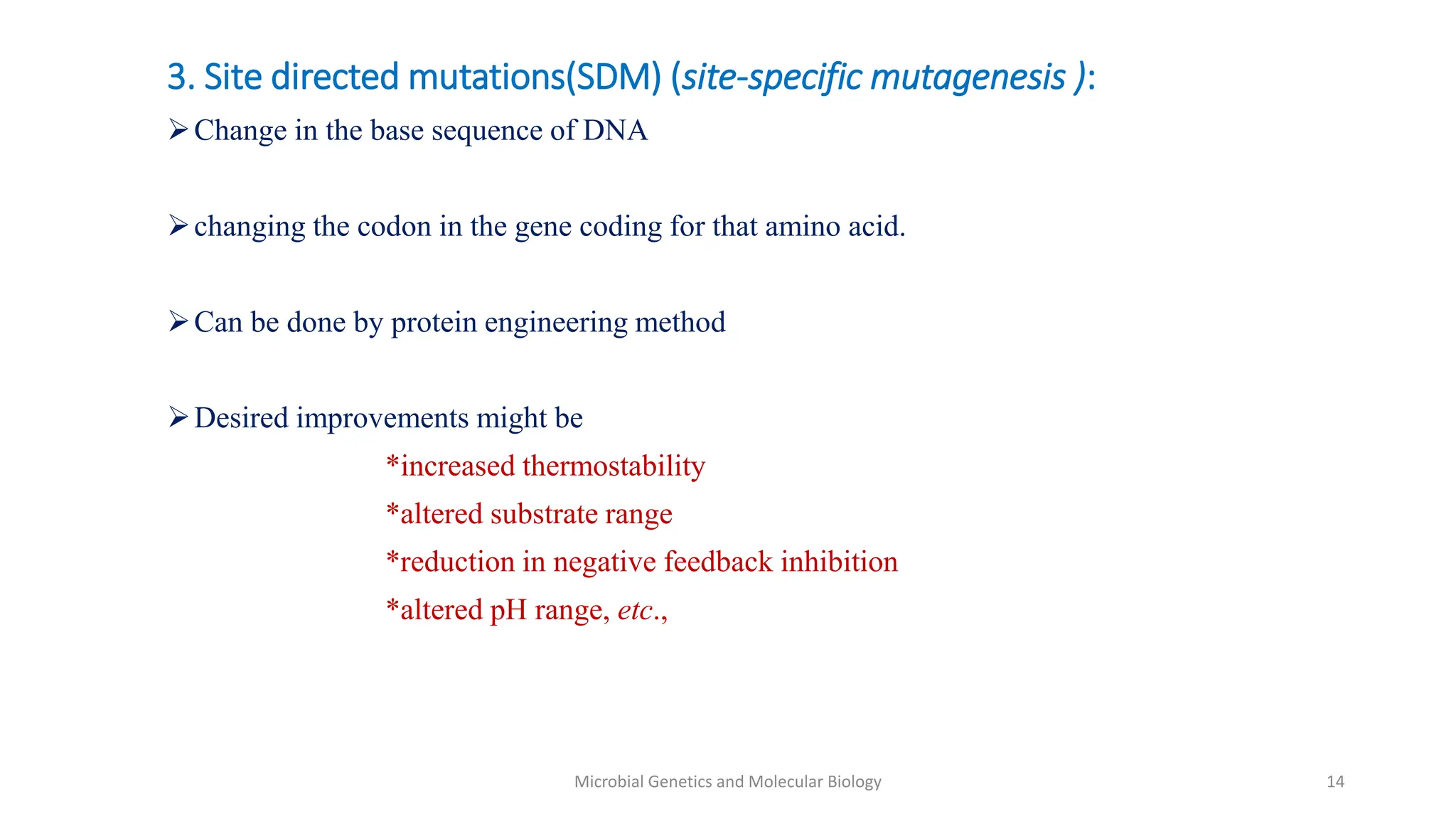
3. Site directed mutations(SDM) (site-specific mutagenesis ):
Change in the base sequence of DNA
changing the codon in the gene coding for that amino acid.
Can be done by protein engineering method
Desired improvements might be
*increased thermostability
*altered substrate range
*reduction in negative feedback inhibition
*altered pH range, etc.,
Microbial Genetics and Molecular Biology 14
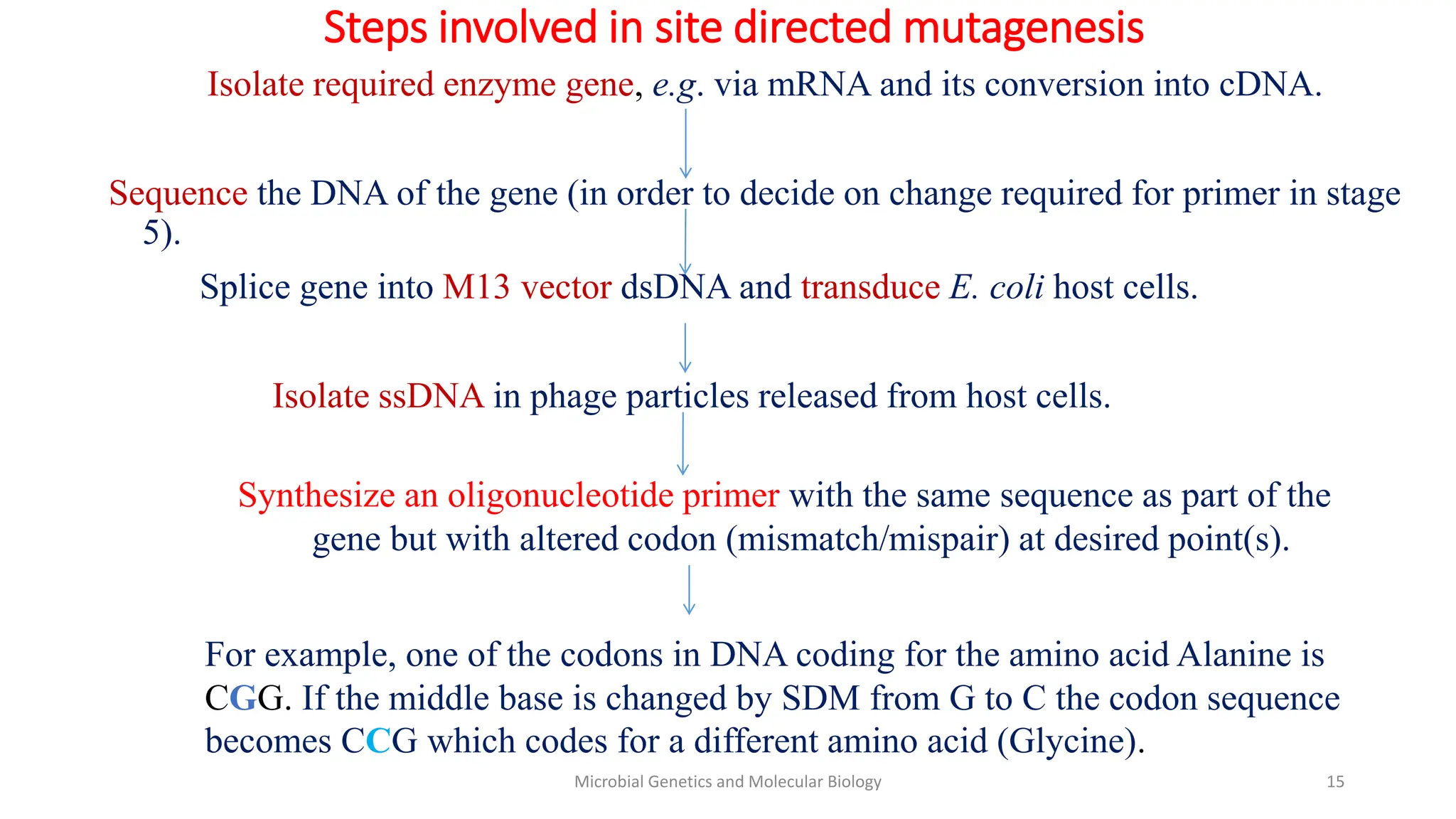
Steps involved in site directed mutagenesis
Isolate required enzyme gene, e.g. via mRNA and its conversion into cDNA.
Sequence the DNA of the gene (in order to decide on change required for primer in stage
5).
Splice gene into M13 vector dsDNA and transduce E. coli host cells.
Isolate ssDNA in phage particles released from host cells.
Microbial Genetics and Molecular Biology 15
Synthesize an oligonucleotide primer with the same sequence as part of the
gene but with altered codon (mismatch/mispair) at desired point(s).
For example, one of the codons in DNA coding for the amino acid Alanine is
CGG. If the middle base is changed by SDM from G to C the codon sequence
becomes CCG which codes for a different amino acid (Glycine).
Mix oligonucleotide with recombinant vector ssDNA.
Carried out at low temperature (0-10oC) and in high salt concentration to allow hybridization between
oligonucleotide and part of gene.
Use DNA polymerase to synthesize remainder of strand. (Oligonucleotide acts as a primer for the DNA
synthesis).
Then add ligase to join primer and new strand
dsDNA molecule.
Transform E. coli cells and allow them to replicate recombinant vector molecule.
DNA replication is semi-conservative, therefore two types of clone are produced each of which excretes phage
particles containing ssDNA:
 Type 1: contain the wild-type gene (i.e. unaltered)
 Type 2: contain the mutated gene!!!
Microbial Genetics and Molecular Biology 16
Microbial Genetics and Molecular Biology 17
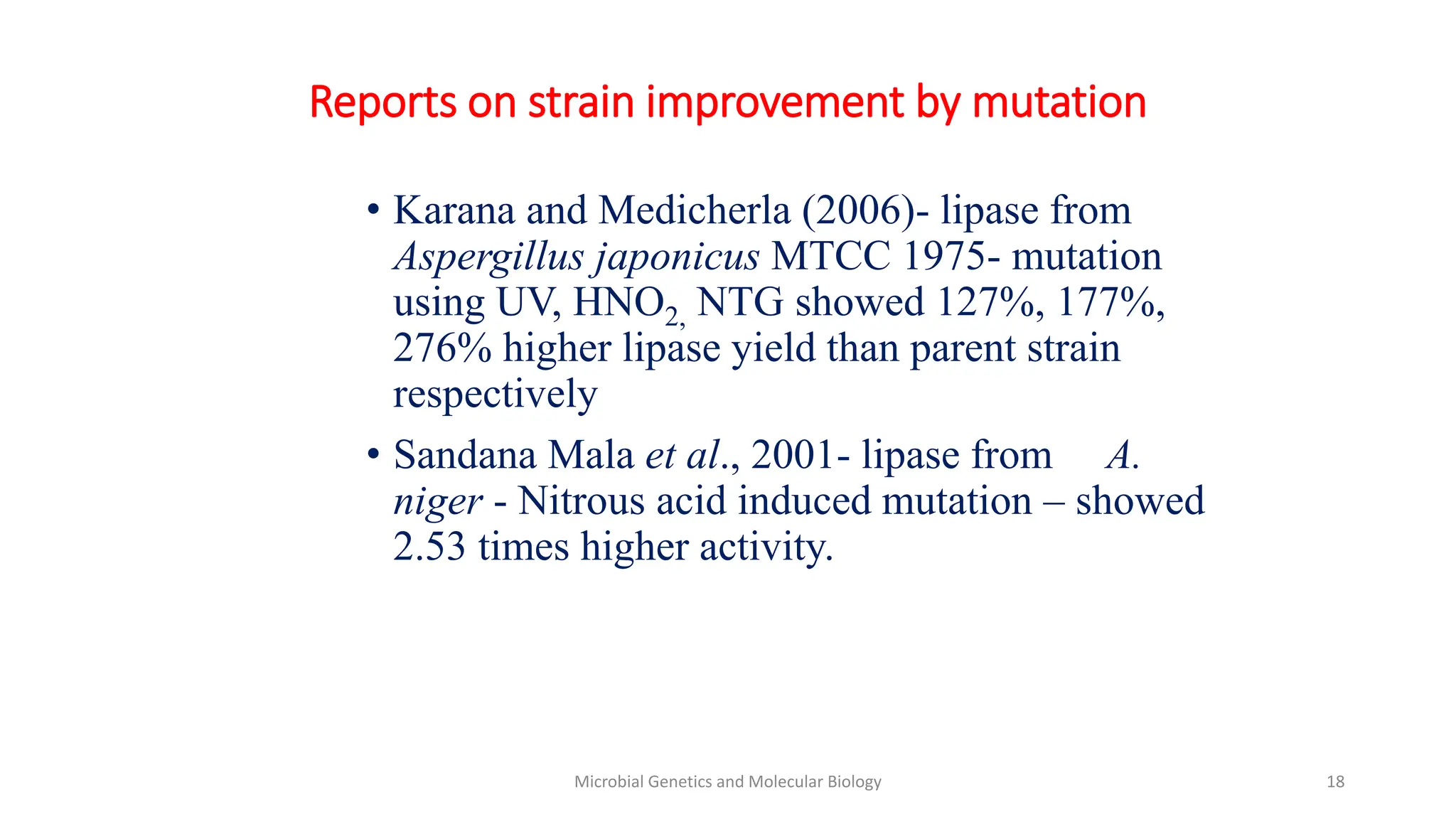
Reports on strain improvement by mutation
• Karana and Medicherla (2006)- lipase from
Aspergillus japonicus MTCC 1975- mutation
using UV, HNO2, NTG showed 127%, 177%,
276% higher lipase yield than parent strain
respectively
• Sandana Mala et al., 2001- lipase from A.
niger - Nitrous acid induced mutation – showed
2.53 times higher activity.
Microbial Genetics and Molecular Biology 18
Recombination – Protoplast fusion
Microbial Genetics and Molecular Biology 19
Protoplast fusion
Protoplast fusion depends on the following criteria-
 Lytic enzyme
 Osmotic stability
 Age of the mycelia
 Inoculation period
 Regeneration medium
 Regeneration frequency
 PEG concentration
 Osmotic stability
 Fusant formation
Microbial Genetics and Molecular Biology 20
Types of protoplast fusion
• Intraspecific hybridization
• Interspecific hybridization
• Intergeneric hybridization
oThe organism selected for fusion should be genetically related.
oAs the distance increases in genetic relationship between the
two mating isolates, the less successful protoplast fusion will be
(Anne and Peberdy, 1976).
Microbial Genetics and Molecular Biology 21
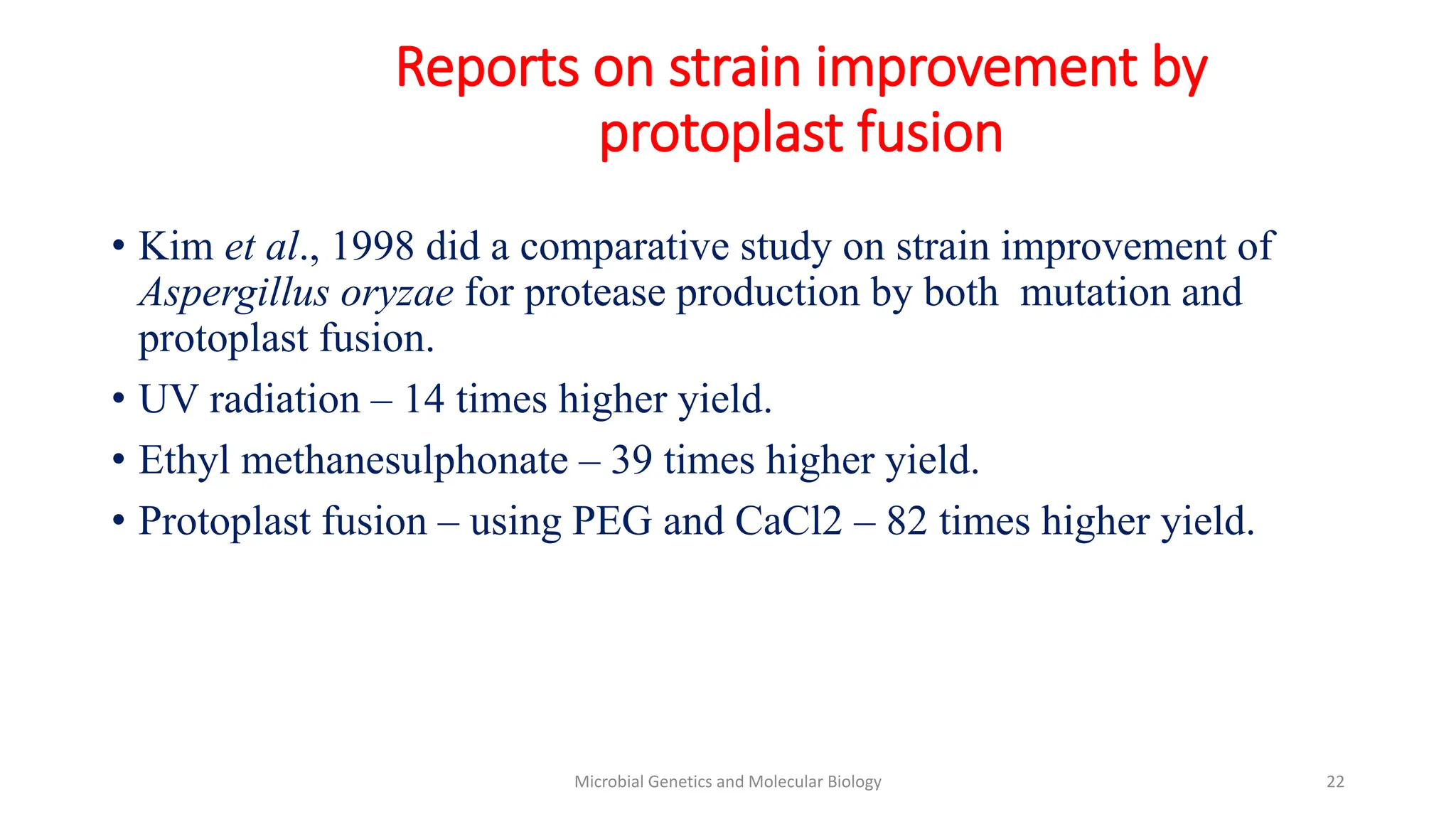
Reports on strain improvement by
protoplast fusion
• Kim et al., 1998 did a comparative study on strain improvement of
Aspergillus oryzae for protease production by both mutation and
protoplast fusion.
• UV radiation – 14 times higher yield.
• Ethyl methanesulphonate – 39 times higher yield.
• Protoplast fusion – using PEG and CaCl2 – 82 times higher yield.
Microbial Genetics and Molecular Biology 22
Recombinant DNA technology
• The more advanced method
• to increase the yields and consistencies of enzymes.
• Genetic material derived from one species may be incorporated into another where
it is expressed
• Increases the production of heterologous proteins by
- increasing the gene expression using strong promoters
- deletion of unwanted genes from the genome
- manipulation of metabolic pathways.
Microbial Genetics and Molecular Biology 23
Objectives
1. to get multiple copies of specific gene
2. to get high amounts of specific protein or product
3. to integrate gene of interest of one organism into another
Microbial Genetics and Molecular Biology 24
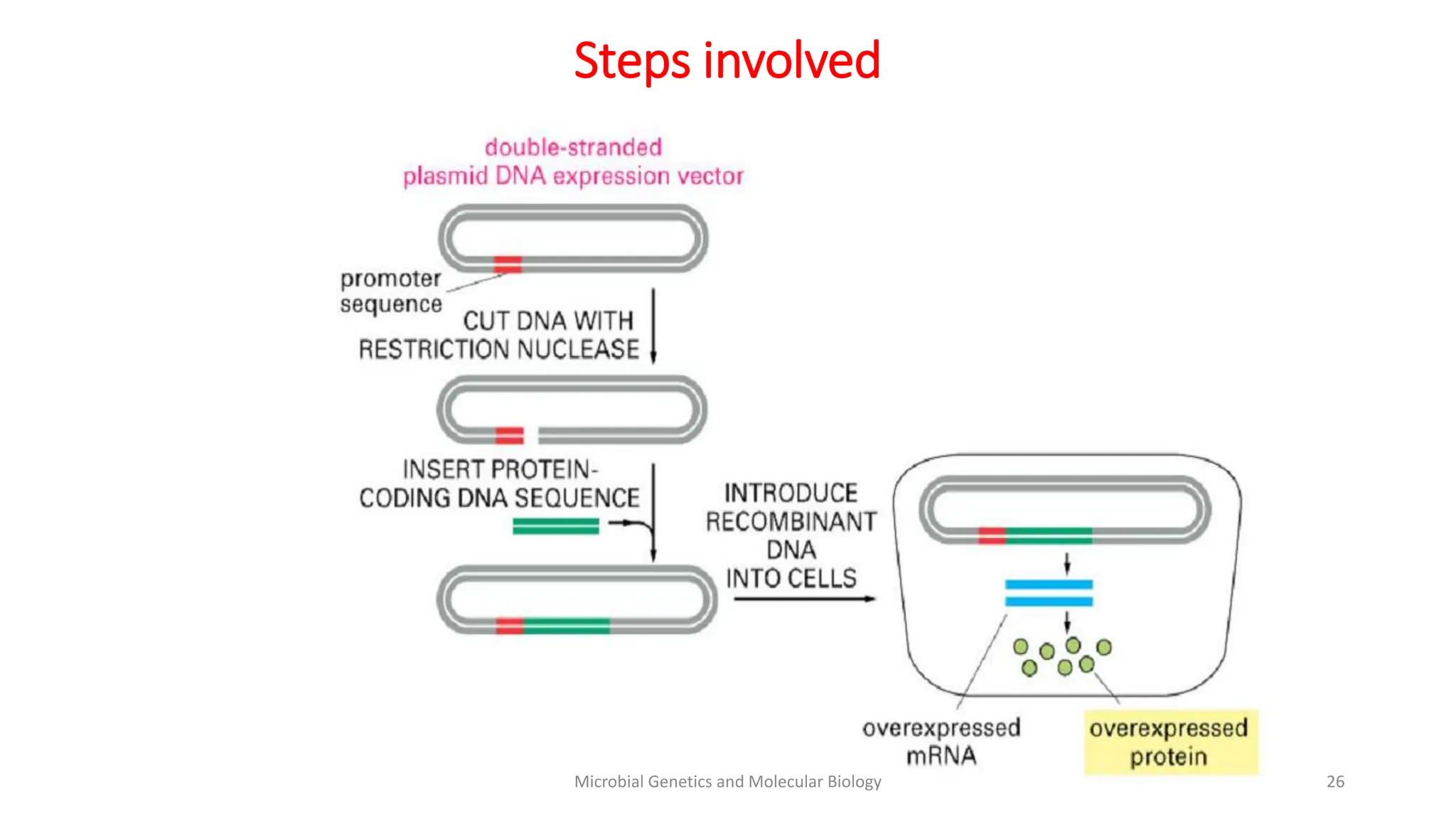
Steps involved in rDNA process
Steps involved:
Preparation of desired DNA
Insertion of desired DNA into vector DNA
Introduction of recombinant DNAs into host cells
Identification of recombinants
Expression of cloned genes
Microbial Genetics and Molecular Biology 25
Steps involved
Microbial Genetics and Molecular Biology 26
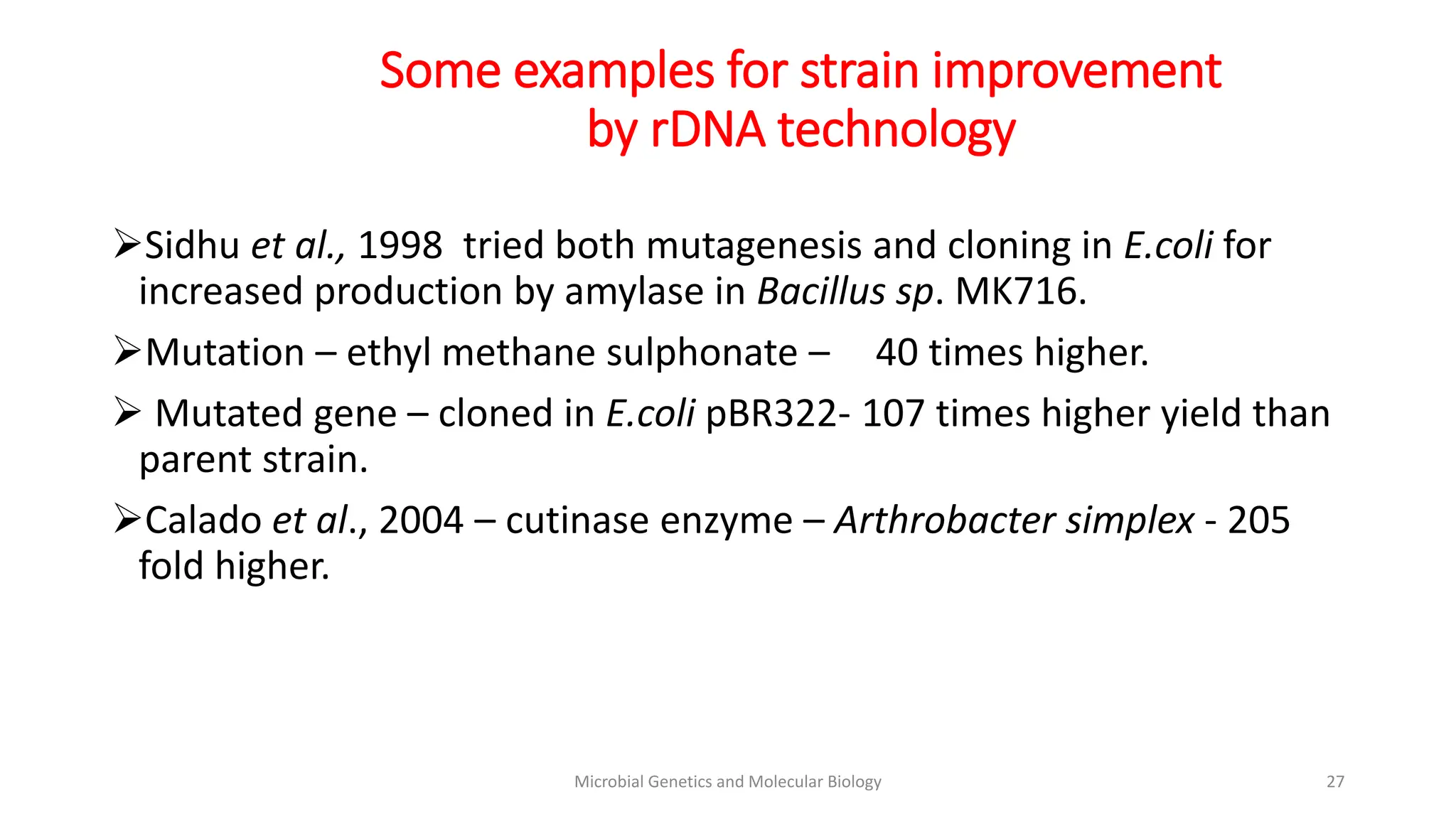
Some examples for strain improvement
by rDNA technology
Sidhu et al., 1998 tried both mutagenesis and cloning in E.coli for
increased production by amylase in Bacillus sp. MK716.
Mutation – ethyl methane sulphonate – 40 times higher.
 Mutated gene – cloned in E.coli pBR322- 107 times higher yield than
parent strain.
Calado et al., 2004 – cutinase enzyme – Arthrobacter simplex - 205
fold higher.
Microbial Genetics and Molecular Biology 27
Drawbacks of rDNA technology
• Genetic instability
• Genetical information of the industrially employed organism is
unknown
• Costlier than other methods
Microbial Genetics and Molecular Biology 28
Conclusion
• The task of both discovering new microbial compounds and improving
the synthesis of known ones have become more and more challenging.
• Newer genetic methods have been developed to obtain higher yields.
• The basic genetic information for all the organisms used industrially is
not available
• The steps have been taken by firms in order to gap the bridge between
basic knowledge and industrial application.
Microbial Genetics and Molecular Biology 29

Strain improvement in microbial genetics .pptx

  • 2.
    Strain improvement The Scienceand technology of manipulating and improving microbial strains, in order to enhance their metabolic capacities for biotechnological applications, are referred to as strain improvement.
  • 3.
    T argets of strainimprovement  Rapid growth  Genetic stability  Non-toxicity to humans  Large cell size, for easy removal from the culture fluid  Ability to use cheaper substrates  Elimination of the production of compounds that may interfere with downstream processing  Increase productivity.  T o improve the use of carbon and nitrogen sources.  Reduction of cultivation cost  -lower price in nutrition.  -lower requirement for oxygen.  Production of  -additional enzymes.  -compounds to inhibit contaminant microorganisms.
  • 4.
    – Candida utilis marxianus Properstrain used in Industry Genetically regarded as safe GRAS – Bacillus subtilis – Lactobacillus bulgaricus – Lactococcus lactis Bacteria – Leuconostoc oenos Yeasts – Kluyveromyces – Kluyveromyces lactis – Saccharomyces cerevisiae •Filamentous fungi – Aspergillus niger – Aspergillus oryzae – Mucor javanicus – Penicillium roqueforti
  • 5.
    Traditional Method ofStrain Improvement • There are several methods by which genetic alterations of producer microbial strains can be done for maximization of products or metabolites. A. Use of mutagenesis: • In recent years, efforts have been devoted to miniaturize and automate the screening procedures and to enhance the frequency of improved strains by selection procedures, e.g., the isolation of anti-metabolite-resistant mutants in cases where the natural metabolite is a precursor, an inhibitor or a co-repressor of a biosynthetic pathway. • The remarkable increases in antibiotic productivity and the resulting decreases in costs have resulted due to mutation and screening for higher producing microbial strains. • Mutation has also served to shift the proportion of metabolites production in a fermentation broth to a more favorable distribution, to elucidate the pathways of secondary metabolism, and to yield new antibiotics. • Targeted mutagenesis: • It involves introduction of mutations at a specific location in DNA. As many antibiotics, growth hormones, regulatory factors production genes have now been cloned, targeted mutagenesis of the cloned DNA can be performed in vitro, followed by transformation of the recipient organism. • The major problems of the classic strain improvement procedure based on random mutagenesis were the very low probability of introducing mutations into relevant genes and high rate of unwanted mutations in other, unrelated genes. Microbial Genetics and Molecular Biology 5
  • 6.
    MUTAGEN MUTA TION INDUCED IMPACT ON DNA RELA TIVE EFFECT Ionizing Radiations-X Rays,gamma rays Singleor double strand bearkage of DNA Deletion/structura l changes high UV rays,chemicals Pyrimidine dymerisation Trnsversion,deleti on,frameshift transitions from GC AT Medium Hydroxylamine(NH2 OH Deamination of cytosine GC AT transitions low N-Methyl –N’- Nitro N- Nitrosoguanidine Methylation of bases and high pH GC AT transitions high Nitrous acid(HNO2) Deamination of A,C & G Bidirectional transitions,deletio n,AT GC/GC AT Medium Phage,plasmid,D NA transposing Base substitution,break age. Deletion,duplicati on,insertion. high
  • 7.
    B. Use ofclassical genetics • The most effective use of classical genetics in the past was the backcrossing of overproducing strains with parent strains to improve the vigor of mutant strains. • After backcrossing such a strain with the wild type, progeny cells are produced that have inherited the overproducing traits from the mutant parent and the wild-type hardiness and vigor from the wild-type parent. • Priorly this was not possible with Penicillium, which lacks a true sexual cycle. • However, a parasexual cycle resulting in the production of heterokaryons was discovered in Penicillium in 1958 and was used to improve the strains. • Protoplast fusion is relatively a new versatile technique to induce or promote genetic recombination in a variety of prokaryotic and eukaryotic cell especially, industrially useful microorganisms such as Streptomyces ambofaciens, Micro- monsporae chinospora, because it breaks the barriers to genetic exchange. • Another use of protoplast fusion has been the recombination of different strains from the same or different species to yield new antibiotics such as anthracyclines, aminoglycosides and rifamycins. • Protoplast fusion has also been useful in elimination of an undesirable component from penicillin broths imposed by conventional mating systems Microbial Genetics and Molecular Biology 7
  • 8.
    C. Rational selection: • It involves selecting an improved producer out of a very large population of progeny. For example, some antibiotics, notably penicillin and tetracyclines, are chelators of heavy metal ions. • The more of these antibiotics an organism produces, the more resistant it will be to heavy metals in the medium. • Thus, selection for mutants resistant to heavy metals was used in the improvement of the penicillin producers. • Cloning of the candidate genes recombinant DNA technology can be used to introduce genes coding for antibiotic synthetases into producers of other antibiotics or into non-producing strains to obtain modified or hybrid antibiotics. • The use of recombinant DNA technology in antibiotic improvement and discovery has been enhanced by the finding that some Streptomyces's antibiotic biosynthetic pathways are coded by plasmid genes, eg. methylenomycin • A. Even when the antibiotic biosynthetic pathway genes of streptomycetes are chromosomal, they appear to be clustered into operons which facilitate transfer of an entire pathway in a single manipulation. • The genes encoding individual enzymes of antibiotic biosynthesis which have already been cloned include those of the cephalosporin, clavulanic acid, prodigiosin, undecylprodigiosin, actinomycin, and candicidin pathways. Microbial Genetics and Molecular Biology 8
  • 9.
    The isopenicillin Nsynthetase ("CyClaSe") gene of Cephalosporium acremonium has been cloned in Escherichia coli and expressed at a level of 20% of total cell protein. Cyclase gene of Penicillium chrysogenum and Streptomyces clavuligerus has also been cloned in E.coli system. The expandase/ hydroxylase gene of C. acremonium has been cloned in E. coli. The protein accumulated as inclusion bodies in E. coli near to 15% of total cell protein Similar to E.coli, now a days Bacillus subtilis, Pichia pastoris, Saccharomyces cerevisiae have also emerged as a promising heterologous expression system for prokaryotic and eukaryotic candidate genes. There are several factors which govern the production of recombinant therapeutic proteins in B. subtilis. The factors are as follows: a) Well understood transcription and translation machinery including different regulatory factors responsible for extracellular product. b) Generation of stable recombinant plasmids. c) Development of novel recombinant B. subtilis strains with reduced nuclease and protease contents. d) Better systematic understanding of the protein secretion method to elucidate the factors responsible for the secretion of intracellular proteins. Microbial Genetics and Molecular Biology 9
  • 10.
    To get thesoluble extracellular protein product from the gene, it can be linked to a DNA fragment coding for B. subtilis signal peptide for extra- cellular secretion. The signal sequence may be preceded by a efficient translation initiator sequence or ribosome binding site (RBS) which is followed by mRNA stability-enhancing sequences (SES) at 5’ end of mRNA. The ‘strong’ promoter for this gene consist a cluster of other efficient promoters which would be regulated temporally by the growth condition or growth medium components. Thus genes possess suitable properties not only for efficient transcription, translation but would be under temporal control avoiding other exogenous induction. Thus generated mRNA would be stabilized by 3’SES which protects mRNA from degradation by 3’ exonucleases.  The protein product consists of a typical B. subtilis signal peptide linked to N-terminus and have to be further processed with proteases to recover only the desired portion. Microbial Genetics and Molecular Biology 10
  • 11.
    Strain improvement by GeneticEngineering of MO • The potential productivity of the organisms is controlled by its genes and hence their genome must be altered for the maximum production of various proteins product such as enzymes. • The techniques involved are * Mutations * Recombination – Protoplast fusion * Recombinant DNA technology Microbial Genetics and Molecular Biology 11
  • 12.
    Mutations • One ofthe most successful approaches for strain improvement. • A mutation is any change in the base sequence of DNA - deletion, insertion, inversion, substitution. • The types include - Spontaneous mutation - Induced mutation - Site directed mutation Microbial Genetics and Molecular Biology 12
  • 13.
    Types of mutations 1.Spontaneousmutation:  Occur spontaneously at the rate of 10-10 and 10-15 per generation and per gene.  Occur at low frequency and hence not used much in industrial strain improvement. 2. Induced mutation:  The rate of mutation can be increased by various factors and agents called mutagens.  ionizing radiations (e.g. X-rays, gamma rays)  non-ionizing radiations (e.g. ultraviolet radiations)  various chemicals (e.g. mustard gas, benzene, ethidium bromide, Nitrosoguanidine-NTG) Microbial Genetics and Molecular Biology 13
  • 14.
    3. Site directedmutations(SDM) (site-specific mutagenesis ): Change in the base sequence of DNA changing the codon in the gene coding for that amino acid. Can be done by protein engineering method Desired improvements might be *increased thermostability *altered substrate range *reduction in negative feedback inhibition *altered pH range, etc., Microbial Genetics and Molecular Biology 14
  • 15.
    Steps involved insite directed mutagenesis Isolate required enzyme gene, e.g. via mRNA and its conversion into cDNA. Sequence the DNA of the gene (in order to decide on change required for primer in stage 5). Splice gene into M13 vector dsDNA and transduce E. coli host cells. Isolate ssDNA in phage particles released from host cells. Microbial Genetics and Molecular Biology 15 Synthesize an oligonucleotide primer with the same sequence as part of the gene but with altered codon (mismatch/mispair) at desired point(s). For example, one of the codons in DNA coding for the amino acid Alanine is CGG. If the middle base is changed by SDM from G to C the codon sequence becomes CCG which codes for a different amino acid (Glycine).
  • 16.
    Mix oligonucleotide withrecombinant vector ssDNA. Carried out at low temperature (0-10oC) and in high salt concentration to allow hybridization between oligonucleotide and part of gene. Use DNA polymerase to synthesize remainder of strand. (Oligonucleotide acts as a primer for the DNA synthesis). Then add ligase to join primer and new strand dsDNA molecule. Transform E. coli cells and allow them to replicate recombinant vector molecule. DNA replication is semi-conservative, therefore two types of clone are produced each of which excretes phage particles containing ssDNA:  Type 1: contain the wild-type gene (i.e. unaltered)  Type 2: contain the mutated gene!!! Microbial Genetics and Molecular Biology 16
  • 17.
    Microbial Genetics andMolecular Biology 17
  • 18.
    Reports on strainimprovement by mutation • Karana and Medicherla (2006)- lipase from Aspergillus japonicus MTCC 1975- mutation using UV, HNO2, NTG showed 127%, 177%, 276% higher lipase yield than parent strain respectively • Sandana Mala et al., 2001- lipase from A. niger - Nitrous acid induced mutation – showed 2.53 times higher activity. Microbial Genetics and Molecular Biology 18
  • 19.
    Recombination – Protoplastfusion Microbial Genetics and Molecular Biology 19
  • 20.
    Protoplast fusion Protoplast fusiondepends on the following criteria-  Lytic enzyme  Osmotic stability  Age of the mycelia  Inoculation period  Regeneration medium  Regeneration frequency  PEG concentration  Osmotic stability  Fusant formation Microbial Genetics and Molecular Biology 20
  • 21.
    Types of protoplastfusion • Intraspecific hybridization • Interspecific hybridization • Intergeneric hybridization oThe organism selected for fusion should be genetically related. oAs the distance increases in genetic relationship between the two mating isolates, the less successful protoplast fusion will be (Anne and Peberdy, 1976). Microbial Genetics and Molecular Biology 21
  • 22.
    Reports on strainimprovement by protoplast fusion • Kim et al., 1998 did a comparative study on strain improvement of Aspergillus oryzae for protease production by both mutation and protoplast fusion. • UV radiation – 14 times higher yield. • Ethyl methanesulphonate – 39 times higher yield. • Protoplast fusion – using PEG and CaCl2 – 82 times higher yield. Microbial Genetics and Molecular Biology 22
  • 23.
    Recombinant DNA technology •The more advanced method • to increase the yields and consistencies of enzymes. • Genetic material derived from one species may be incorporated into another where it is expressed • Increases the production of heterologous proteins by - increasing the gene expression using strong promoters - deletion of unwanted genes from the genome - manipulation of metabolic pathways. Microbial Genetics and Molecular Biology 23
  • 24.
    Objectives 1. to getmultiple copies of specific gene 2. to get high amounts of specific protein or product 3. to integrate gene of interest of one organism into another Microbial Genetics and Molecular Biology 24
  • 25.
    Steps involved inrDNA process Steps involved: Preparation of desired DNA Insertion of desired DNA into vector DNA Introduction of recombinant DNAs into host cells Identification of recombinants Expression of cloned genes Microbial Genetics and Molecular Biology 25
  • 26.
    Steps involved Microbial Geneticsand Molecular Biology 26
  • 27.
    Some examples forstrain improvement by rDNA technology Sidhu et al., 1998 tried both mutagenesis and cloning in E.coli for increased production by amylase in Bacillus sp. MK716. Mutation – ethyl methane sulphonate – 40 times higher.  Mutated gene – cloned in E.coli pBR322- 107 times higher yield than parent strain. Calado et al., 2004 – cutinase enzyme – Arthrobacter simplex - 205 fold higher. Microbial Genetics and Molecular Biology 27
  • 28.
    Drawbacks of rDNAtechnology • Genetic instability • Genetical information of the industrially employed organism is unknown • Costlier than other methods Microbial Genetics and Molecular Biology 28
  • 29.
    Conclusion • The taskof both discovering new microbial compounds and improving the synthesis of known ones have become more and more challenging. • Newer genetic methods have been developed to obtain higher yields. • The basic genetic information for all the organisms used industrially is not available • The steps have been taken by firms in order to gap the bridge between basic knowledge and industrial application. Microbial Genetics and Molecular Biology 29