Siliconization
   of Stoppers


  Aaron Mertens
Atec Pharmatechnik
  Sörup, Germany
Presentation Overview
• Stopper Types
• Stopper Processing Steps and
  Performance Requirements
• Stopper Processing Equipment Types
• Siliconization Process Details
• Challenges in Siliconization of Stoppers
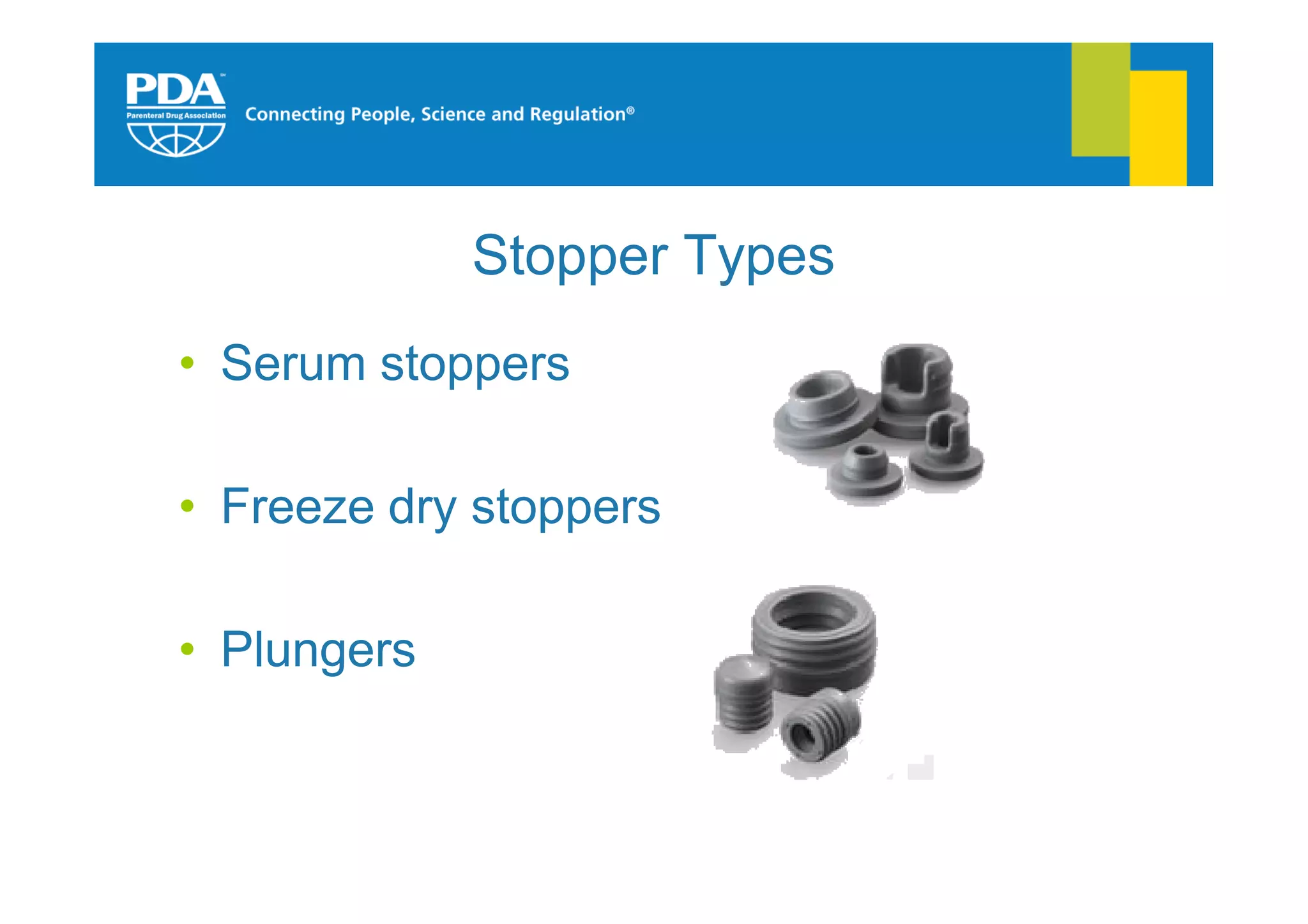
Stopper Types
• Serum stoppers

• Freeze dry stoppers

• Plungers
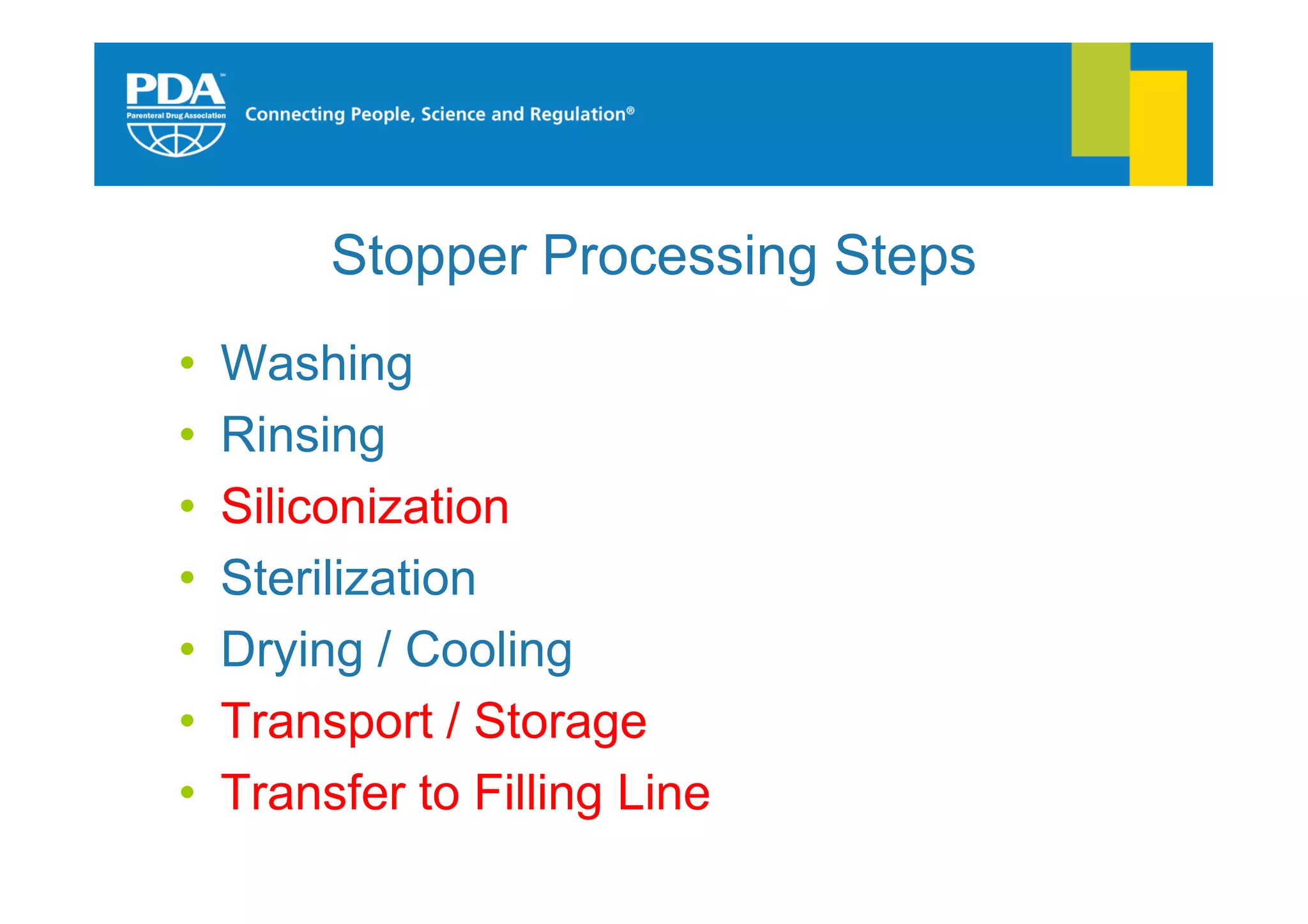
Stopper Processing Steps
•   Washing
•   Rinsing
•   Siliconization
•   Sterilization
•   Drying / Cooling
•   Transport / Storage
•   Transfer to Filling Line
Washing
• Goal: Endotoxin and particle reduction
• Process: Use WFI and detergent (if required)
  to remove contaminants.
• Performance Requirements (endotoxin):
  3 log reduction of endotoxin.
• Performance Requirements (particulate):
  Use USP limits for product particle levels.
Rinsing
• Goal: Remove residual detergent, final
  removal of endotoxin and particles.
• Process: Same as Washing, without
  detergent.
• Performance Requirements: Demonstrate
  complete removal of detergents from rinse
  water.
Siliconization
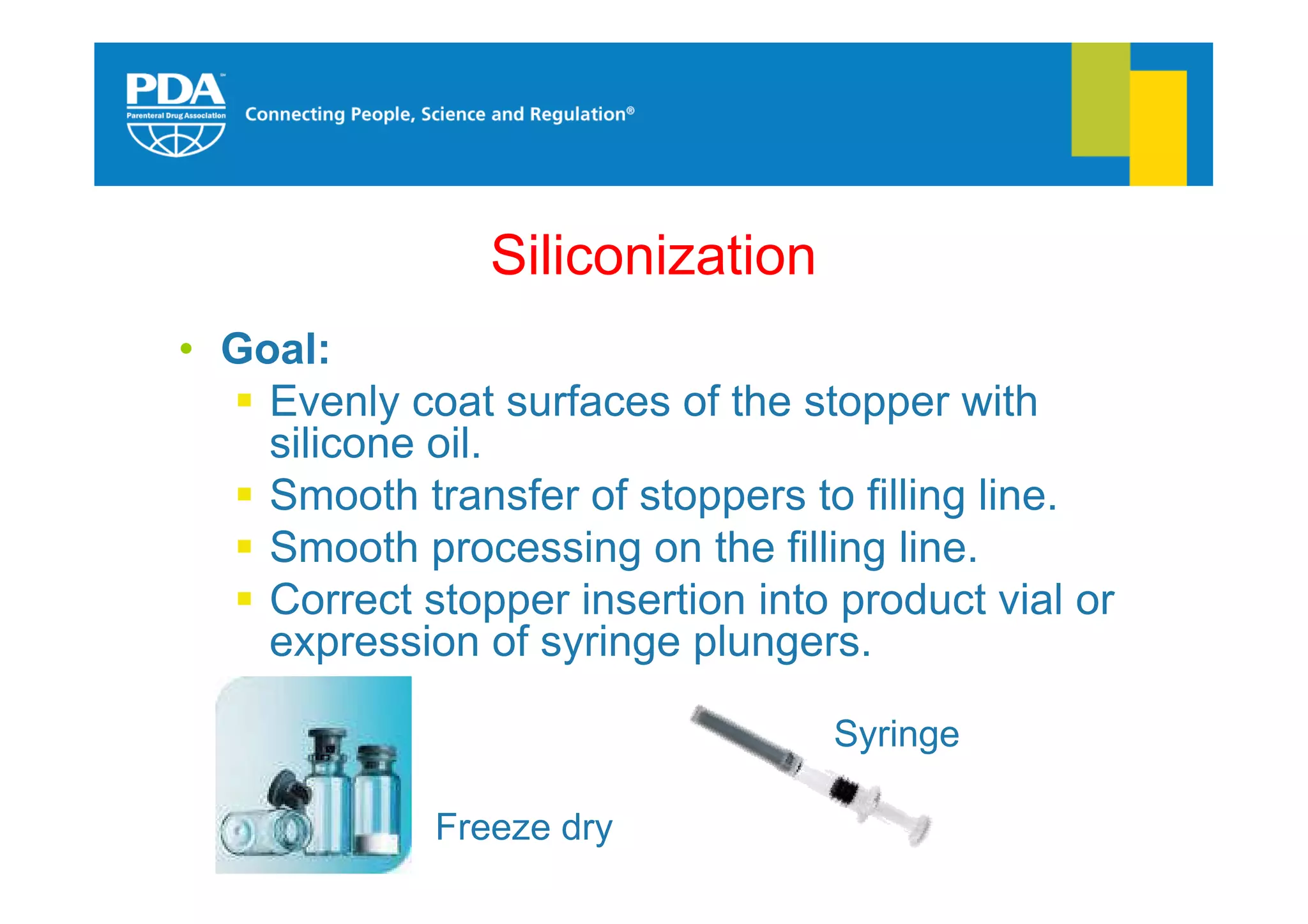
• Goal:
   Evenly coat surfaces of the stopper with
    silicone oil.
   Smooth transfer of stoppers to filling line.
   Smooth processing on the filling line.
   Correct stopper insertion into product vial or
    expression of syringe plungers.

                                   Syringe

             Freeze dry
Siliconization (cont)
• Processing Method 1:
   Silicone oil is measured and added directly
    to the stopper load.
   Addition to stoppers prior to filling with WFI.
   Addition during WFI filling.
   Rotation or tumbling of stoppers.
   Drain WFI and surplus silicone.
Siliconization (cont)
• Processing Method 2:
   Silicone oil and WFI are added to an
    intermediate vessel for mixing into an
    emulsion.
   Emulsion is added to the process and
    stoppers along with WFI.
   Sparge with pharmaceutical air (filtered) to
    agitate and move stoppers.
   Drain WFI and surplus silicone.
Siliconization (cont)
• Performance Requirements: Stoppers must work
  well on filling line. Stoppers must form a seal with
  container (pass Container/Closure Integrity Testing).
• Verification Testing:
    Line trials for stopper handling on the filling line.
    Container / Closure Integrity Testing.
    Extraction from stoppers using methyl isobutyl
     ketone and quantified using Atomic Absorption.
    Micro Flow Imaging (MFI)
    Infrared Spectroscopy
Sterilization
• Goal: Sterilize all surfaces of the stoppers.
  Sterilize piping used for drying and cooling of
  stoppers.
• Process: Saturated clean steam (temperature
  121-123°C) for 20 minutes is a typical cycle.
• Performance Requirements: Validated
  sterilization cycle for stoppers and piping, per
  standard regulatory requirements.
Drying
• Goal: Remove moisture from stoppers.
• Process: Alternating pulses of vacuum and
  pressure are used to dry the stoppers.
• Performance Requirements: Final moisture
  content of the stoppers depends on the final
  intended use.
Cooling
• Goal: Reduce the temperature of the stopper
  load.
• Process: Cold, sterile filtered air flows through
  the stopper mass until the target temperature
  is achieved.
• Performance Requirements: Typically the
  cooling process continues until a final
  temperature of 35 °C is achieved.
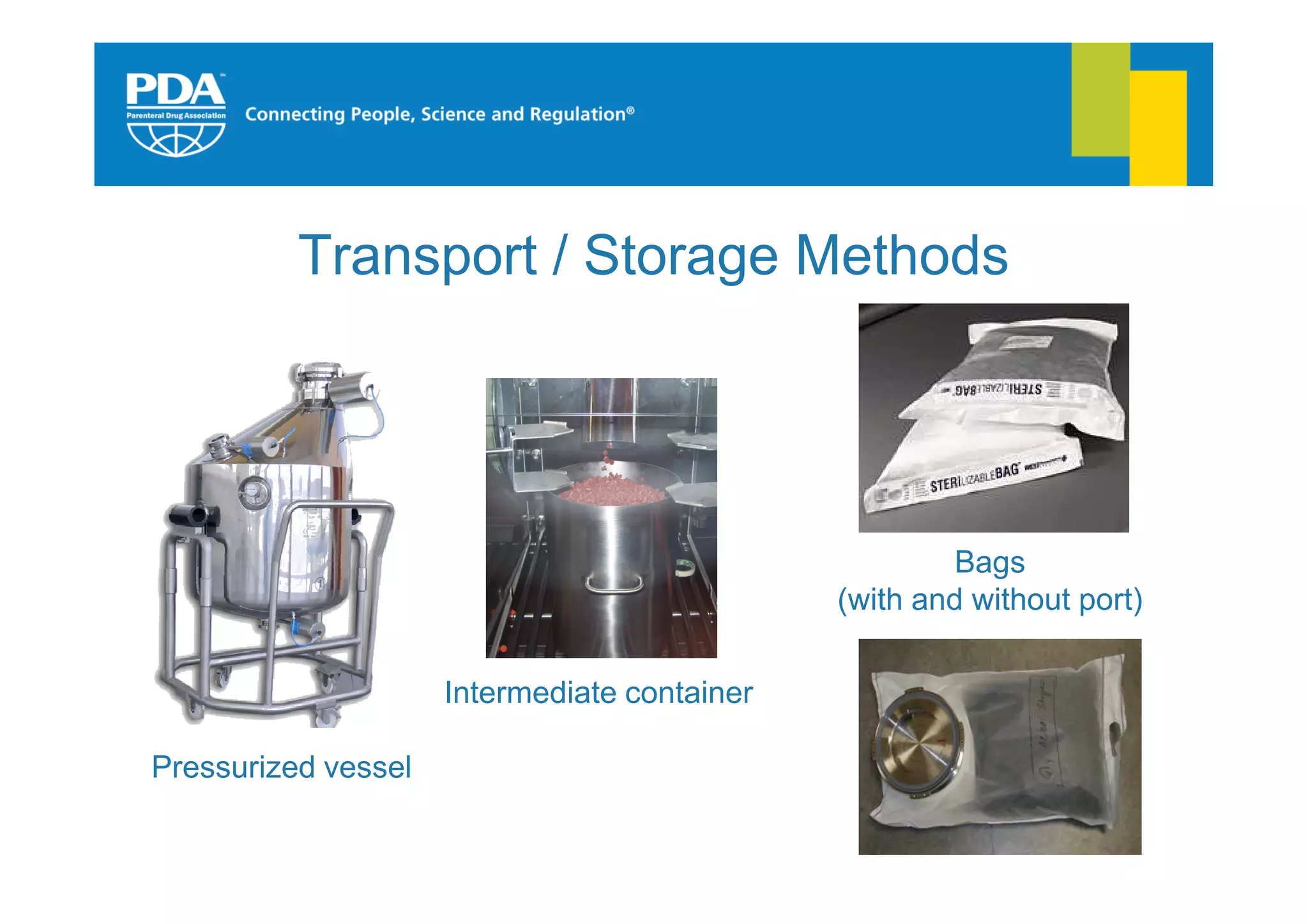
Transport / Storage
• Goal: To maintain the quality of the stoppers until time
  of use at the filling line.
• Methods: Depending on the stopper processing
  equipment used, different transport and storage
  methods are possible.
    Sealed vessel with overpressure
    Intermediate container
    Bags
• Performance Requirements:
    Stoppers must remain sterile and endotoxin free
     until insertion into vial.
    Minimal clumping / sticking
Transport / Storage Methods


                                                      Bags
                                              (with and without port)

                     Intermediate container

Pressurized vessel
Transfer to Filling Line
• Goal: Transfer stoppers to filling line (RABS or isolator) without
  introducing contaminants.
• Methods: Depending on the stopper processing equipment used,
  different transfer methods are possible.
    Through rapid transfer port (RTP)
    Pass through addition using intermediate container
    Manual addition to line through glove ports
• Performance Requirements:
    Stoppers must remain sterile and endotoxin free until insertion
      into vial.
    Stoppers must flow from storage container into filling line
Transfer Methods

                                          Transfer to filling line
                                              through RTP


                      Using glove ports

RTP docked vessel
Stopper Processing Equipment
• Autoclave – siliconization NOT possible
• Rotating Drum
• Process Station with Mobile Vessels
Rotating Drum


Processing System      Internal Drum
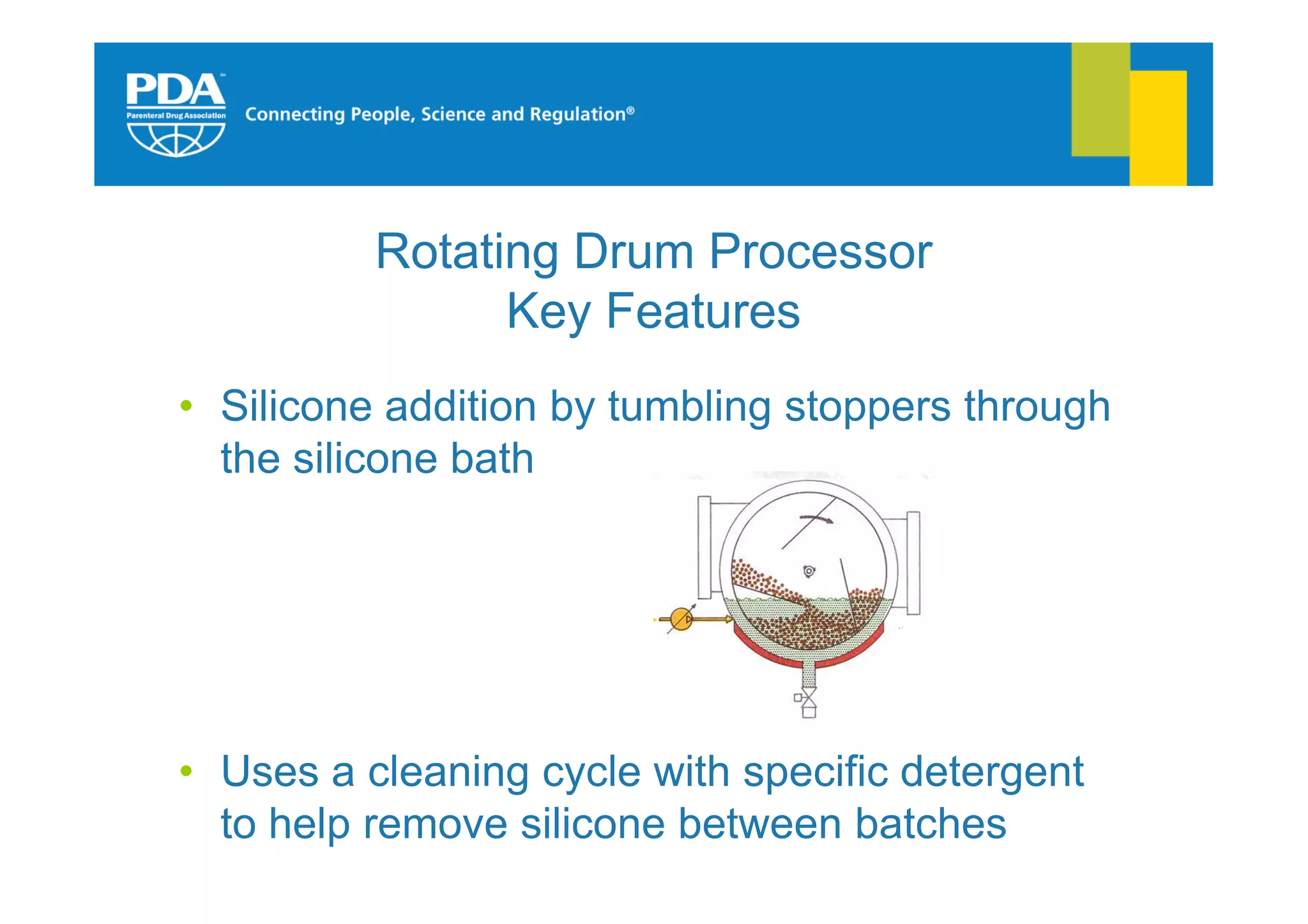
Rotating Drum Processor
                Key Features
• Silicone addition by tumbling stoppers through
  the silicone bath


• Uses a cleaning cycle with specific detergent
  to help remove silicone between batches
Process Station with Vessels


Process Station    Detachable / mobile
                    vessel on trolley
Process Station with Vessels
               Key Features
• Silicone emulsion
• Emulsion added to WFI supply during filling
• Uses a cleaning cycle with specific detergent
  to help remove silicone between batches
• Can dedicate vessels for siliconized and
  nonsiliconized stoppers
Silicone Process Detail
• Silicone dosing
   Pump and pressure switch
   Overpressure and flow meter
• Silicone mixing
• Silicone addition to stoppers
• Pharm air sparge
• Vessel rotation
• Draining
Siliconization Equipment (with pump)


 Storage Tank             Mixer

                         Emulsion Tank

                      Pressure switch
        Dosing Pump
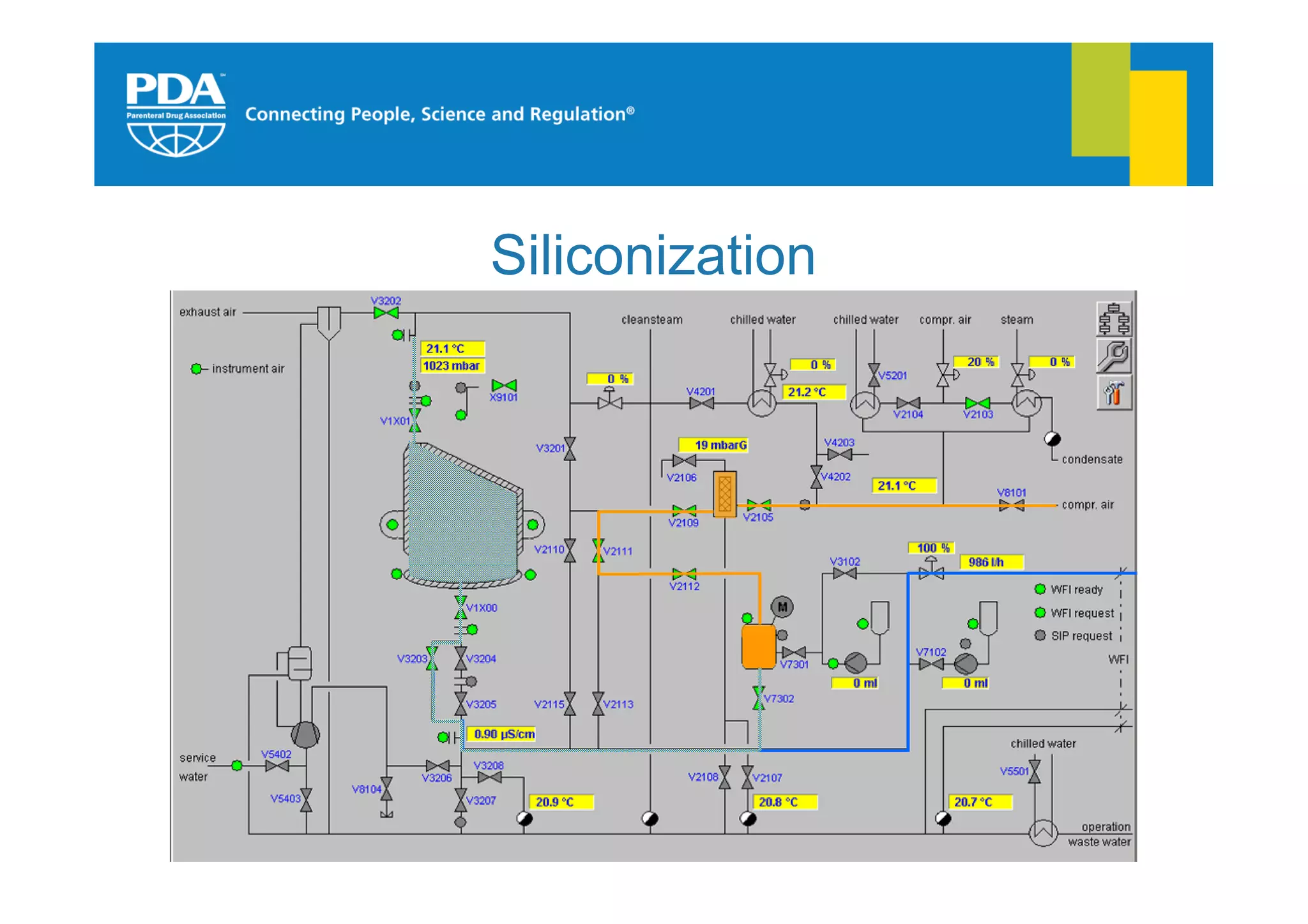
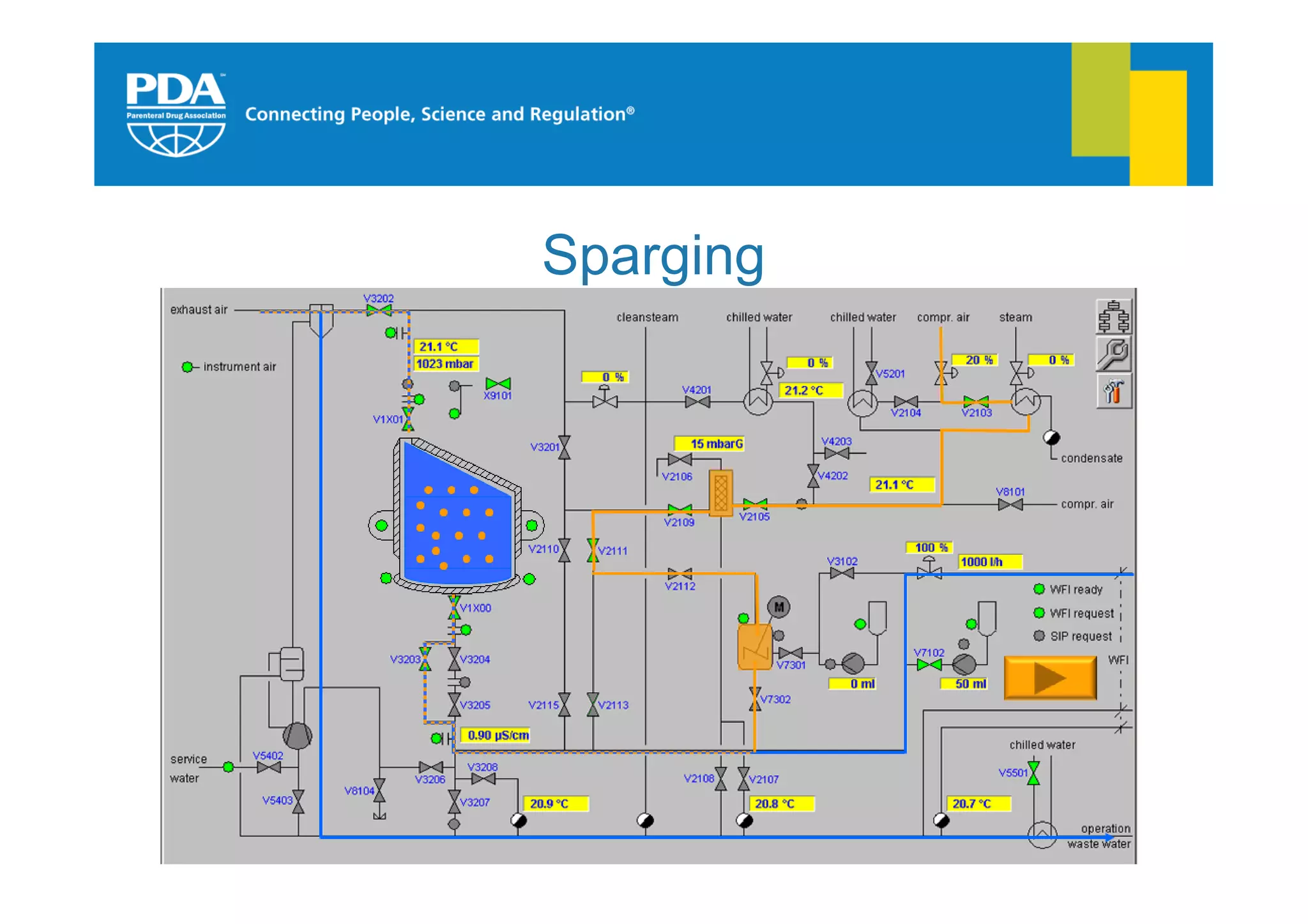
Silicone Dosing
Silicone Mixing
Siliconization
Sparging
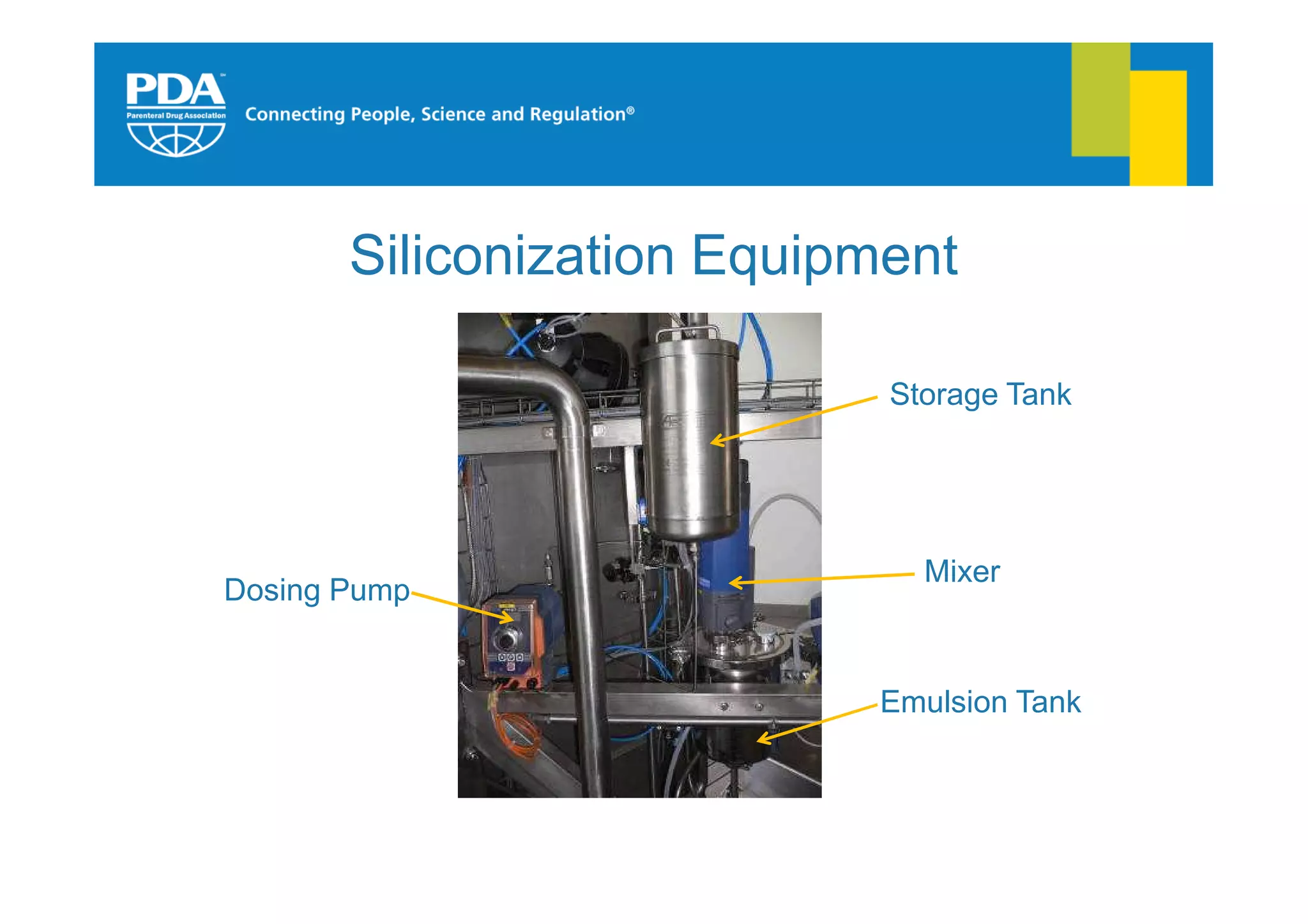
Siliconization Equipment

                            Storage Tank


                              Mixer
Dosing Pump


                           Emulsion Tank
Challenges
• Residual silicone remaining in the processing
  equipment
• Applying a consistent amount of silicone
    Distribution within a batch
    From one batch to the next
• Measuring siliconization effectiveness
    Positive correlation between silicone
     amount added to process and amount
     applied to stopper
Challenges (cont)
• Too much silicone
   Stoppers do not stay inserted
   Contamination of product
• Too little silicone
   Stoppers do not insert properly
   Clumping / stickiness
   Poor processing on filling line
Conclusions
• Stopper siliconization is part of an integrated
  process
• Stopper processing is regulated
• Siliconization is not regulated
• Siliconization process must be predictable
• Siliconization process must be reproducible
• Two types of stopper processing equipment
Questions?

Stopper Siliconization

  • 1.
    Siliconization of Stoppers Aaron Mertens Atec Pharmatechnik Sörup, Germany
  • 2.
    Presentation Overview • StopperTypes • Stopper Processing Steps and Performance Requirements • Stopper Processing Equipment Types • Siliconization Process Details • Challenges in Siliconization of Stoppers
  • 3.
    Stopper Types • Serumstoppers • Freeze dry stoppers • Plungers
  • 4.
    Stopper Processing Steps • Washing • Rinsing • Siliconization • Sterilization • Drying / Cooling • Transport / Storage • Transfer to Filling Line
  • 5.
    Washing • Goal: Endotoxinand particle reduction • Process: Use WFI and detergent (if required) to remove contaminants. • Performance Requirements (endotoxin): 3 log reduction of endotoxin. • Performance Requirements (particulate): Use USP limits for product particle levels.
  • 6.
    Rinsing • Goal: Removeresidual detergent, final removal of endotoxin and particles. • Process: Same as Washing, without detergent. • Performance Requirements: Demonstrate complete removal of detergents from rinse water.
  • 7.
    Siliconization • Goal:  Evenly coat surfaces of the stopper with silicone oil.  Smooth transfer of stoppers to filling line.  Smooth processing on the filling line.  Correct stopper insertion into product vial or expression of syringe plungers. Syringe Freeze dry
  • 8.
    Siliconization (cont) • ProcessingMethod 1:  Silicone oil is measured and added directly to the stopper load.  Addition to stoppers prior to filling with WFI.  Addition during WFI filling.  Rotation or tumbling of stoppers.  Drain WFI and surplus silicone.
  • 9.
    Siliconization (cont) • ProcessingMethod 2:  Silicone oil and WFI are added to an intermediate vessel for mixing into an emulsion.  Emulsion is added to the process and stoppers along with WFI.  Sparge with pharmaceutical air (filtered) to agitate and move stoppers.  Drain WFI and surplus silicone.
  • 10.
    Siliconization (cont) • PerformanceRequirements: Stoppers must work well on filling line. Stoppers must form a seal with container (pass Container/Closure Integrity Testing). • Verification Testing:  Line trials for stopper handling on the filling line.  Container / Closure Integrity Testing.  Extraction from stoppers using methyl isobutyl ketone and quantified using Atomic Absorption.  Micro Flow Imaging (MFI)  Infrared Spectroscopy
  • 11.
    Sterilization • Goal: Sterilizeall surfaces of the stoppers. Sterilize piping used for drying and cooling of stoppers. • Process: Saturated clean steam (temperature 121-123°C) for 20 minutes is a typical cycle. • Performance Requirements: Validated sterilization cycle for stoppers and piping, per standard regulatory requirements.
  • 12.
    Drying • Goal: Removemoisture from stoppers. • Process: Alternating pulses of vacuum and pressure are used to dry the stoppers. • Performance Requirements: Final moisture content of the stoppers depends on the final intended use.
  • 13.
    Cooling • Goal: Reducethe temperature of the stopper load. • Process: Cold, sterile filtered air flows through the stopper mass until the target temperature is achieved. • Performance Requirements: Typically the cooling process continues until a final temperature of 35 °C is achieved.
  • 14.
    Transport / Storage •Goal: To maintain the quality of the stoppers until time of use at the filling line. • Methods: Depending on the stopper processing equipment used, different transport and storage methods are possible.  Sealed vessel with overpressure  Intermediate container  Bags • Performance Requirements:  Stoppers must remain sterile and endotoxin free until insertion into vial.  Minimal clumping / sticking
  • 15.
    Transport / StorageMethods Bags (with and without port) Intermediate container Pressurized vessel
  • 16.
    Transfer to FillingLine • Goal: Transfer stoppers to filling line (RABS or isolator) without introducing contaminants. • Methods: Depending on the stopper processing equipment used, different transfer methods are possible.  Through rapid transfer port (RTP)  Pass through addition using intermediate container  Manual addition to line through glove ports • Performance Requirements:  Stoppers must remain sterile and endotoxin free until insertion into vial.  Stoppers must flow from storage container into filling line
  • 17.
    Transfer Methods Transfer to filling line through RTP Using glove ports RTP docked vessel
  • 18.
    Stopper Processing Equipment •Autoclave – siliconization NOT possible • Rotating Drum • Process Station with Mobile Vessels
  • 19.
  • 20.
    Rotating Drum Processor Key Features • Silicone addition by tumbling stoppers through the silicone bath • Uses a cleaning cycle with specific detergent to help remove silicone between batches
  • 21.
    Process Station withVessels Process Station Detachable / mobile vessel on trolley
  • 22.
    Process Station withVessels Key Features • Silicone emulsion • Emulsion added to WFI supply during filling • Uses a cleaning cycle with specific detergent to help remove silicone between batches • Can dedicate vessels for siliconized and nonsiliconized stoppers
  • 23.
    Silicone Process Detail •Silicone dosing  Pump and pressure switch  Overpressure and flow meter • Silicone mixing • Silicone addition to stoppers • Pharm air sparge • Vessel rotation • Draining
  • 24.
    Siliconization Equipment (withpump) Storage Tank Mixer Emulsion Tank Pressure switch Dosing Pump
  • 25.
  • 26.
  • 27.
  • 28.
  • 29.
    Siliconization Equipment Storage Tank Mixer Dosing Pump Emulsion Tank
  • 30.
    Challenges • Residual siliconeremaining in the processing equipment • Applying a consistent amount of silicone  Distribution within a batch  From one batch to the next • Measuring siliconization effectiveness  Positive correlation between silicone amount added to process and amount applied to stopper
  • 31.
    Challenges (cont) • Toomuch silicone  Stoppers do not stay inserted  Contamination of product • Too little silicone  Stoppers do not insert properly  Clumping / stickiness  Poor processing on filling line
  • 32.
    Conclusions • Stopper siliconizationis part of an integrated process • Stopper processing is regulated • Siliconization is not regulated • Siliconization process must be predictable • Siliconization process must be reproducible • Two types of stopper processing equipment
  • 33.