Liz Dannfald BSc CNS Stoma Care Southern General Glasgow
Caring for the Stoma Patient
Aim  To give an overview of the role of a Nurse Specialist in Stoma Care  To give an insight of stoma surgery Reasons for stoma formation How to change a stoma appliance
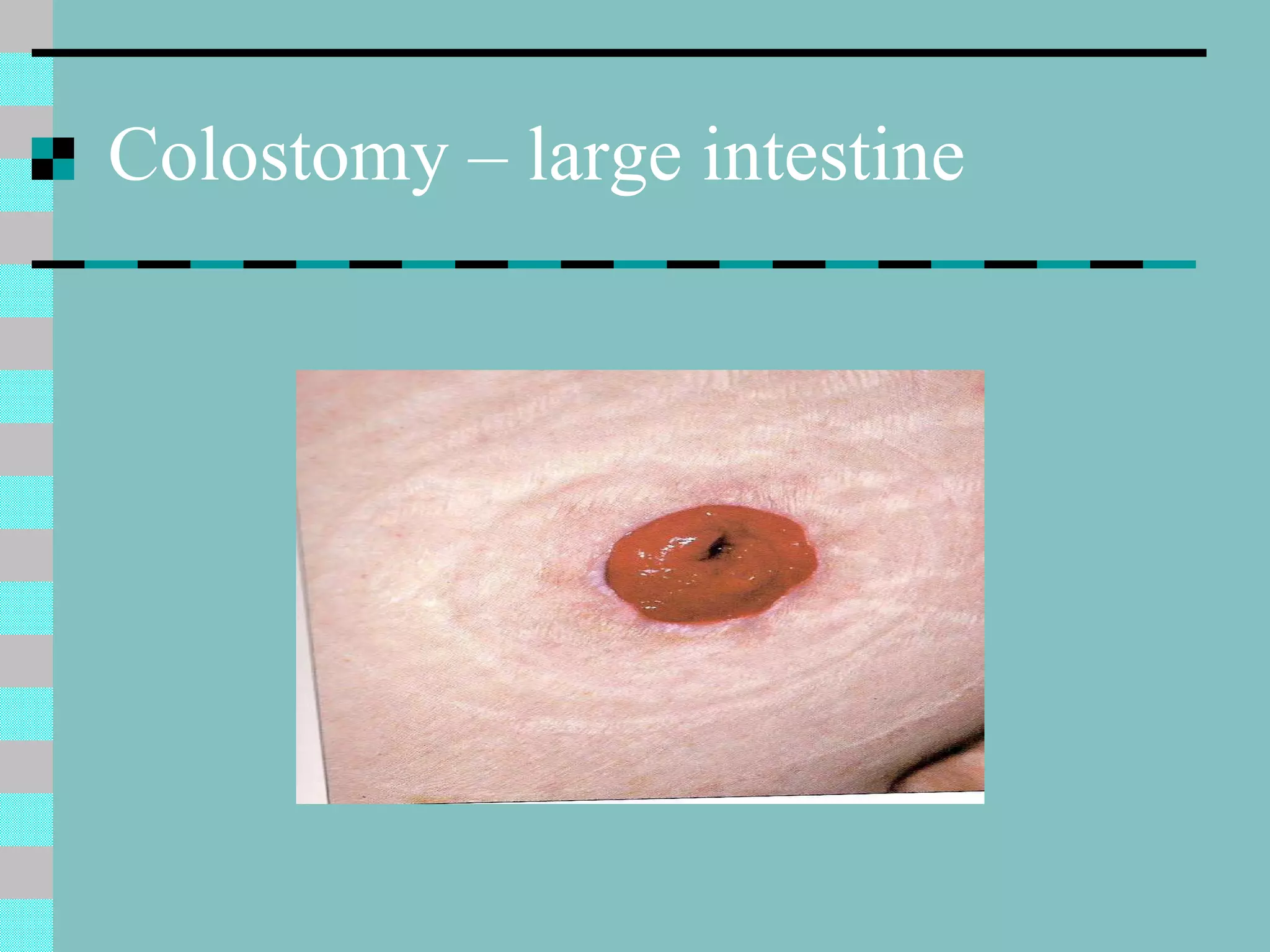
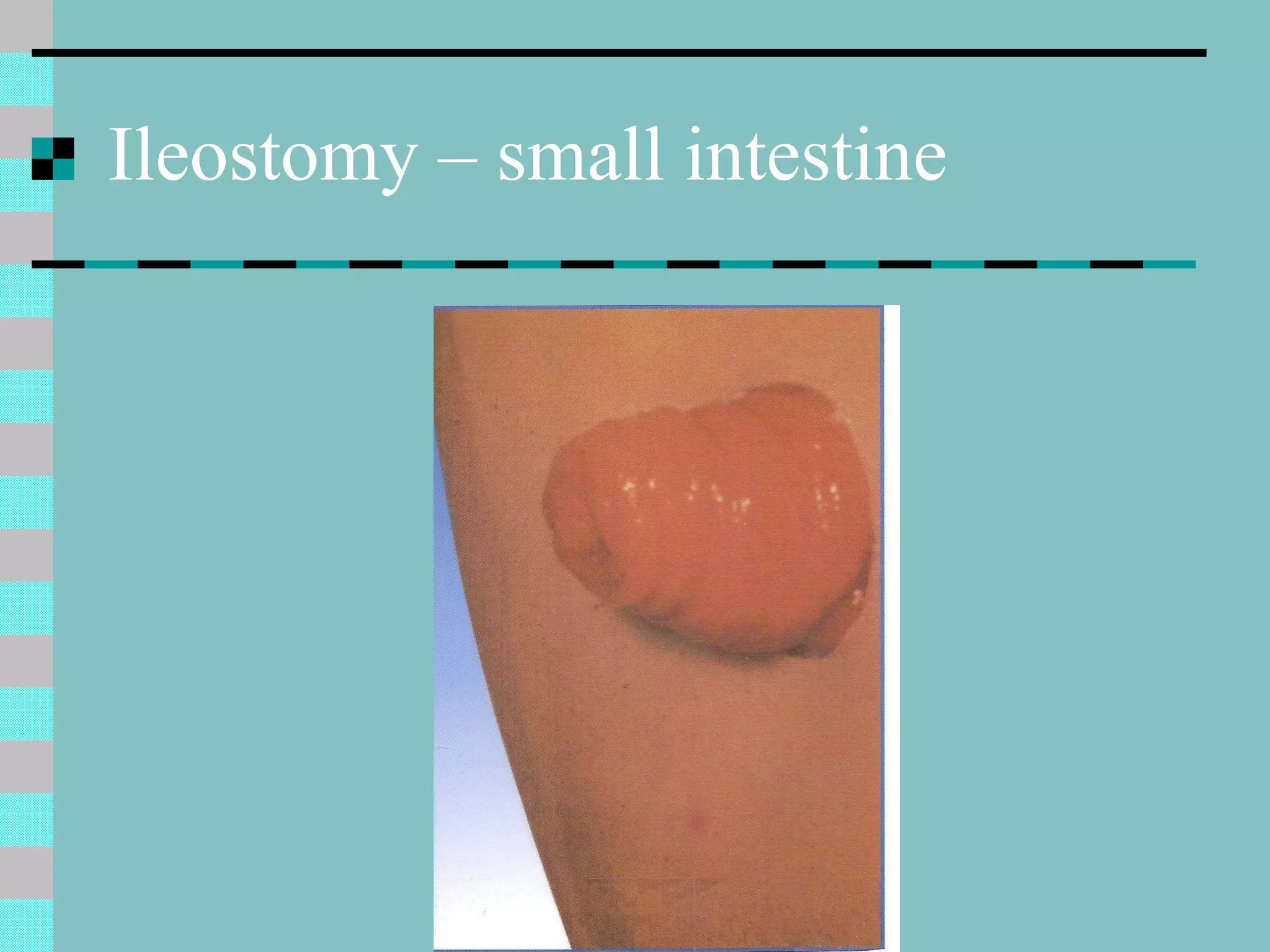
What is a stoma? Stoma is Greek for mouth or opening The most commonly formed stomas are Colostomy Ileostomy Urostomy
Colostomy – large intestine
Ileostomy – small intestine
Urostomy  - i leal conduit
Types of stomas Bowel or urinary Temporary or Permanent A Loop or an End Elective or Emergency
Reasons for Stoma Formation To divert faeces away from a a surgical anastamosis, to allow healing Removal of or damage to sphincters which control continence To aid in symptom control where surgery is not possible Bladder disease
Conditions which may result in stoma formation Inflammatory Bowel Disease- ( IBD) Crohn’s Disease,  Ulcerative Colitis Colorectal Cancer FAP- Familial Adenomatous Polyposis Diverticular Disease Anal Cancer Trauma
Some more conditions Spinal Injuries Incontinence Constipation Bladder Cancer Interstitial Cystitis Congenital Malformation Radiation Damage
Role Of The Stoma Nurse To provide holistic care for patients who require to have a stoma formed To educate patients/carers/staff in stoma care Wound and fistula management Research and audit  Dissemination of information to multidisciplinary colleagues Time management
Pre-operatively Information and literature given Shown appliances Stoma siting Offer voluntary visitor These patients may be emergency or elective
Post-operatively Patient teaching Preparation  for discharge Follow up-  House Calls Out –Patient Clinics Liaise with District Nurses and Home Care Team  Nursing Home/Hospice visits
Appliances One-piece Two-piece Drainable Closed Tap Clear Opaque Convex
Choice of appliance Depends on  Type of effluent Physique of patient Potential for skin problems Physical dexterity Patient preference
Accessories Belts  Adhesive Strips Cohesive Seals  Convex Rings Adhesive Removers Skin Protectors Fillers/Pastes Deodorising Sprays Gell Capsules
Day To Day Management  Appliances should be emptied/changed regularly When changing appliance things to get ready New appliance - Cut to correct size Warm Water Disposal Bag Wipes Any Accessories required
To change the appliance Empty if required Remove soiled appliance  Wash and dry stoma and surrounding skin Apply new appliance from bottom up.  Dispose of soiled equipment
Common problems Parastomal hernia Skin problems Constipation High Output Diarrhoea Excess flatus Stenosis Bleeding Prolapse
Conclusion Patients who have had stoma surgery can face many physical and psychological challenges. However, with the support of the healthcare team, both in hospital and the community, these challenges can be overcome and the patient can lead a normal lifestyle.

Stoma modules caring for the stoma patient

  • 1.
    Liz Dannfald BScCNS Stoma Care Southern General Glasgow
  • 2.
    Caring for theStoma Patient
  • 3.
    Aim Togive an overview of the role of a Nurse Specialist in Stoma Care To give an insight of stoma surgery Reasons for stoma formation How to change a stoma appliance
  • 4.
    What is astoma? Stoma is Greek for mouth or opening The most commonly formed stomas are Colostomy Ileostomy Urostomy
  • 5.
  • 6.
  • 7.
    Urostomy -i leal conduit
  • 8.
    Types of stomasBowel or urinary Temporary or Permanent A Loop or an End Elective or Emergency
  • 9.
    Reasons for StomaFormation To divert faeces away from a a surgical anastamosis, to allow healing Removal of or damage to sphincters which control continence To aid in symptom control where surgery is not possible Bladder disease
  • 10.
    Conditions which mayresult in stoma formation Inflammatory Bowel Disease- ( IBD) Crohn’s Disease, Ulcerative Colitis Colorectal Cancer FAP- Familial Adenomatous Polyposis Diverticular Disease Anal Cancer Trauma
  • 11.
    Some more conditionsSpinal Injuries Incontinence Constipation Bladder Cancer Interstitial Cystitis Congenital Malformation Radiation Damage
  • 12.
    Role Of TheStoma Nurse To provide holistic care for patients who require to have a stoma formed To educate patients/carers/staff in stoma care Wound and fistula management Research and audit Dissemination of information to multidisciplinary colleagues Time management
  • 13.
    Pre-operatively Information andliterature given Shown appliances Stoma siting Offer voluntary visitor These patients may be emergency or elective
  • 14.
    Post-operatively Patient teachingPreparation for discharge Follow up- House Calls Out –Patient Clinics Liaise with District Nurses and Home Care Team Nursing Home/Hospice visits
  • 15.
    Appliances One-piece Two-pieceDrainable Closed Tap Clear Opaque Convex
  • 16.
    Choice of applianceDepends on Type of effluent Physique of patient Potential for skin problems Physical dexterity Patient preference
  • 17.
    Accessories Belts Adhesive Strips Cohesive Seals Convex Rings Adhesive Removers Skin Protectors Fillers/Pastes Deodorising Sprays Gell Capsules
  • 18.
    Day To DayManagement Appliances should be emptied/changed regularly When changing appliance things to get ready New appliance - Cut to correct size Warm Water Disposal Bag Wipes Any Accessories required
  • 19.
    To change theappliance Empty if required Remove soiled appliance Wash and dry stoma and surrounding skin Apply new appliance from bottom up. Dispose of soiled equipment
  • 20.
    Common problems Parastomalhernia Skin problems Constipation High Output Diarrhoea Excess flatus Stenosis Bleeding Prolapse
  • 21.
    Conclusion Patients whohave had stoma surgery can face many physical and psychological challenges. However, with the support of the healthcare team, both in hospital and the community, these challenges can be overcome and the patient can lead a normal lifestyle.