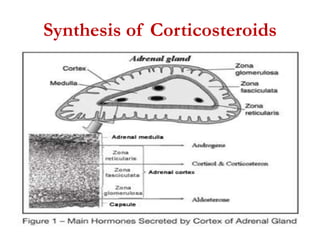
Synthesis of Corticosteroids
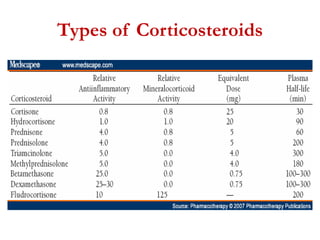
Types of Corticosteroids
Actions of Corticosteroids
• Metabolic
• Anti-inflammatory
• Immunosuppressive
Uses Of Steroids
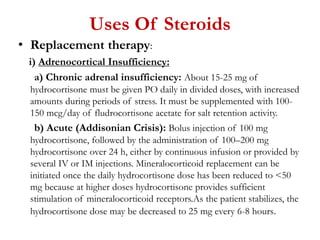
• Replacement therapy:
i) Adrenocortical Insufficiency:
a) Chronic adrenal insufficiency: About 15-25 mg of
hydrocortisone must be given PO daily in divided doses, with increased
amounts during periods of stress. It must be supplemented with 100-
150 mcg/day of fludrocortisone acetate for salt retention activity.
b) Acute (Addisonian Crisis): Bolus injection of 100 mg
hydrocortisone, followed by the administration of 100–200 mg
hydrocortisone over 24 h, either by continuous infusion or provided by
several IV or IM injections. Mineralocorticoid replacement can be
initiated once the daily hydrocortisone dose has been reduced to <50
mg because at higher doses hydrocortisone provides sufficient
stimulation of mineralocorticoid receptors.As the patient stabilizes, the
hydrocortisone dose may be decreased to 25 mg every 6-8 hours.
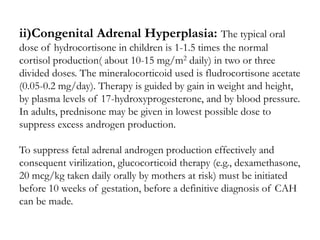
ii)Congenital Adrenal Hyperplasia: The typical oral
dose of hydrocortisone in children is 1-1.5 times the normal
cortisol production( about 10-15 mg/m2 daily) in two or three
divided doses. The mineralocorticoid used is fludrocortisone acetate
(0.05-0.2 mg/day). Therapy is guided by gain in weight and height,
by plasma levels of 17-hydroxyprogesterone, and by blood pressure.
In adults, prednisone may be given in lowest possible dose to
suppress excess androgen production.
To suppress fetal adrenal androgen production effectively and
consequent virilization, glucocorticoid therapy (e.g., dexamethasone,
20 mcg/kg taken daily orally by mothers at risk) must be initiated
before 10 weeks of gestation, before a definitive diagnosis of CAH
can be made.
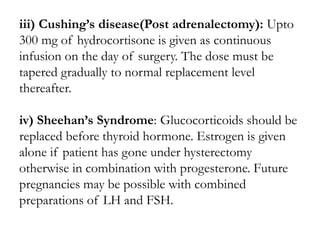
iii) Cushing’s disease(Post adrenalectomy): Upto
300 mg of hydrocortisone is given as continuous
infusion on the day of surgery. The dose must be
tapered gradually to normal replacement level
thereafter.
iv) Sheehan’s Syndrome: Glucocorticoids should be
replaced before thyroid hormone. Estrogen is given
alone if patient has gone under hysterectomy
otherwise in combination with progesterone. Future
pregnancies may be possible with combined
preparations of LH and FSH.
Non Endocrine Uses
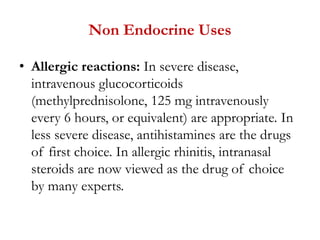
• Allergic reactions: In severe disease,
intravenous glucocorticoids
(methylprednisolone, 125 mg intravenously
every 6 hours, or equivalent) are appropriate. In
less severe disease, antihistamines are the drugs
of first choice. In allergic rhinitis, intranasal
steroids are now viewed as the drug of choice
by many experts.
•Bronchial Asthma: Intravenous administration
of 60-120 mg methylprednisolone (or equivalent)
every 6 hours is used initially for an acute attack.
Prednisone or pednisolone 30-45 mg PO once
daily for 5 -10 days is used thereafter.
Inhaled Corticosteroids(ICS) are the most
effective controllers for asthma ( mild persistent,
moderate persistent and severe persistent). Usual
dosing is 200 micro gram of beclomethasone
dipropionate or fluticasone twice daily.
•Chronic Obstructive Pulmonary
Diseases(COPD):
For stable patients: Available data suggest that
inhaled glucocorticoids reduce exacerbation
frequency by ~25%.
For Acute exacerbation: The GOLD guidelines
recommend 30-40 mg of oral prednisolone or its
equivalent for a period of 10-14 days.
•Stimulation of Lung Maturation in the
Fetus: Betamethasone (12 mg
intramuscularly every 24 hours for two
doses) or dexamethasone (6 mg
intramuscularly every 12 hours for four
doses) is administered to women with
definitive signs of premature labor between
26 and 34 weeks of gestation.
Connective Tissue Disorders:
• Rheumatoid Arthritis: Glucocorticoids may
serve in several ways to control disease activity
in RA. First, they may be administered in low to
moderate doses to achieve rapid disease control
before the onset of fully effective DMARD
therapy. Second, a 1-2 week burst of
glucocorticoids may be prescribed for the
management of acute disease flares .
Cont...
• Chronic administration of low doses(5-10
mg/d) of prednisone may also be warranted to
control disease activity in patients with an
inadequate response to DMARD therapy.
• In the setting of an acute exacerbation, higher
doses of glucocorticoids may be employed
(typically 20-40 mg/day of prednisone or
equivalent), with rapid taper thereafter.
Cont...
• Symptomatic effect of small reductions in dose
(decreases of perhaps 1 mg/day of prednisone every 2-
3 weeks) should be tested frequently while concurrent
therapy with other measures is continued, to maintain
the lowest possible prednisone dose.
• Alternatively, patients with major symptomatology
confined to one or a few joints may be treated with
intra-articular steroid injections. Depending on joint
size, typical doses are 5-20 mg of triamcinolone
acetonide or its equivalent.
• Systemic Lupus Erythematosus (SLE):
In non life threatening disease, if quality of life is
inadequate inspite of treatment with NSAIDS and
Hydroxychloroquine, treatment with low doses
(0.07-0.3mg/kg per day) of systemic
glucocorticoids may be necessary.
In life threatening SLE (proliferative form of
lupus nephritis), 0.5-1 mg/kg per day PO or
1000mg of methylprednisolone I/V daily for 3
days followed by 0.5-1 mg/kg of daily prednisone
or equivalent is given.
•Giant cell arteritis(Temporal Arteritis) and
Polymyalgia Rheumatica: Treatment begins with
prednisone 40-60 mg/day for ~ 1 month, followed by
gradual tapering. When ocular signs and symptoms occur,
consideration should be given for the use of
methylprednisolone 1000 mg daily for 3 days to protect
vision. Symptom recurrence during prednisone tapering
develops in 60-85% of pts, requiring a dose increase.
Patients with isolated polymyalgia rheumatica respond
promptly to prednisone, which can be started at a lower
dose of 10-20 mg/d.
Vasculitis syndromes
• Takayasu’s Arteritis: Although glucocorticoid therapy
in doses of 40-60 mg prednisone per day alleviates
symptoms, there are no convincing studies that indicate
that they increase survival.
• Idiopathic cutaneous vasculitis: therapy started as
prednisone 1 mg/kg per day with rapid tapering where
possible, either directly to discontinuation or by
conversion to an alternate day regimen followed by
ultimate discontinuation.
• Granulomatosis with polyangiitis(Wegener’s):
Along with Cyclophosphamide and Rituximab for
disease remission.
Cont...
• Churg Strauss Syndrome : Glucocorticoids alone appear
to be effective in many patients. Dosage tapering is often
limited by asthma, and many pts require low dose
prednisone for persistent asthma many years after clinical
recovery from vasculitis.
• Polyarteritis nodosa: In combination with
cyclophosphamide.
• Henoch – Schonlein Purpura: Prednisone 1mg/kg per
day and tapered according to clinical response has been
shown to be useful in decreasing tissue edema, arthralgias
and abdominal discomfort.
• Microscopic Polyangiitis: Similar to Wegener’s.
Behcet’s syndrome: Uveitis and CNS – Behcet’s syndrome
require systemic glucocorticoid therapy( prednisone, 1
mg/kg per day).
Relapsing Polychondritis: Prednisone 40-60 mg/d is
effective in suppressing disease activity. It is tapered
gradually once disease is controlled.
Systemic Sclerosis: Glucocorticoids may be useful for
alleviating stiffness ans aching in early stage diffuse
cutaneous SSc. Their use in high doses is associated with an
increased risk of scleroderma renal crisis.
Sarcoidosis: Corticosteroids are indicated therapy for
patients with debilitating symptoms or life-threatening
forms of sarcoidosis. Patients who are symptomatic
with multiple organs involvement are treated with 20-
40 mg per day of prednisone, or an equivalent dose of
alternative steroids, to induce remission.
Maintenance doses, which often are required for long
periods of time, is usually 5-10 mg/day of prednisone.
Osteoarthritis: Intraarticular injections of
glucocorticoids( triamcinolone acetonide) relieves
local inflammation and pain.
Acute Gouty arthritis: Glucocorticoids given
I/M or orally , e.g., prednisone 30-50 mg/day as
the initial dose and gradually tapered with the
resolution of the attack, can be effective in
polyarticular gout. For a single joint or a few
involved joints, intraarticular triamcinolone
acetonide, 20-40 mg, or methylprednisolone, 25-50
mg, have been effective and well tolerated.
Immune Thrombocytopenia: In immune thrombocytopenia,
prednisone (0.5 mg/kg) is used to decrease the bleeding
tendency. In more severe cases, and for initiation of treatment of
idiopathic thrombocytopenia, daily doses of prednisone (1-1.5
mg/kg) are employed. Patients with refractory idiopathic
thrombocytopenia may respond to pulsed high-dose
glucocorticoid therapy.
Autoimmune hemolytic anemia:Patients with autoimmune
destruction of erythrocytes (i.e., hemolytic anemia with a positive
Coombs test) are treated with prednisone (1 mg/kg per day). In
the setting of severe hemolysis, higher doses may be used, with
tapering as the anemia improves. Small maintenance doses may
be required for several months in patients who respond.
Skin Graft and Organ transplant: In organ transplantation,
high doses of prednisone (50-100 mg) are given at the time of
transplant surgery, in conjunction with other immunosuppressive
agents, and most patients are kept on a maintenance regimen that
includes lower doses of glucocorticoids.
Malignancies: Glucocorticoids are used in the chemotherapy of
ALL and lymphomas because of their antilymphocytic effects.
Most commonly, glucocorticoids are one component of
combination chemotherapy administered under scheduled
protocols. Glucocorticoids once were frequently employed in the
setting of hypercalcemia of malignancy, but more effective
agents, such as the bisphosphonates, now are the preferred
therapy.
Renal Diseases
• Nephrotic Syndrome: Patients with nephrotic syndrome
secondary to minimal change disease generally respond well
to steroid therapy, and glucocorticoids clearly are the first-
line treatment in both adults and children. Initial daily doses
of prednisone are 1-2 mg/kg for 6 weeks, followed by a
gradual tapering of the dose over 6-8 weeks, although some
nephrologists advocate alternate-day therapy. Objective
evidence of response, such as diminished proteinuria, is
seen within 2-3 weeks in 85% of patients, and >95% of
patients have remission within 3 months.
Cont...
• Studies with other forms of renal disease, such as
membranous and membranoproliferative
glomerulonephritis and focal sclerosis, have provided
conflicting data on the role of glucocorticoids. In
clinical practice, patients with these disorders often are
given a therapeutic trial of glucocorticoids with careful
monitoring of laboratory indices of response.
• In the case of membranous glomerulonephritis, many
nephrologists recommend a trial of alternate-day
glucocorticoids for 8-10 weeks (e.g., prednisone, 120
mg every other day), followed by a 1to 2 month period
of tapering.
Gastrointestinal diseases
• Inflammatory Bowel Diseases: Prednisone is usually
started at doses of 40-60 mg/d for active Ulcerative
Colitis that is unresponsive to 5-ASA therapy.
• Parenteral glucocorticoids may be administered as
hydrocortisone, 300mg/d or methylprednisolone, 40-60
mg/d.
• Topically applied glucocorticoids are also beneficial for
distal colitis and may serve as adjunct in those having
rectal involvement.
• Hydrocortisone enema or foam may control active
disease, although they have no proven role as
maintenance therapy.
Cont...
• Steroids are also effective for treatment of moderate to
severe Crohn’s disease and induce a 60-70 % remission.
• Controlled ileal-release budesonide has been nearly
equal to prednisone for ileocolonic CD. Budesonide is
used for 2-3 months at a dose of 9 mg/d, then tapered.
Budesonide 6 mg/d is effective in reducing relapse
rates.
• Once clinical remission has been induced, steroids
should be tapered usually at a rate of no more than 5
mg/week.
Hepatic Diseases
• Autoimmune Hepatitis: Therapy is initiated with
prednisone 60 mg/day. This dose is tapered
successively over the course of a month down to a
maintenance level of 20 mg/d according to fall in
serum transaminases levels. An alternative approach is
to begin with half the prednisone dose(30 mg/d) along
with azathioprine. Prednisone is then tapered over the
course of a month to 10 mg/d.
• Alcoholic Hepatitis: Pts with severe disease should be
given prednisone 40 mg/d or prednisolone 32 mg/d
for 4 weeks followed by tapering.
Neurological Diseases
1. Reduction of Cerebral Edema: Corticosteroids are
of value in the reduction or prevention of cerebral
edema associated with parasites( Neurocysticercosis)
and neoplasms.
• In Brain tumours, glucocorticoids are highly effective at
reducing perilesional edema and improving neurologic
function, often within hours of administration.
Dexamethasone has been the glucocorticoid of choice
because of its relatively low mineralocorticoid activity.
Initial doses are typically 12 mg to 16 mg a day in
divided doses given orally or IV (both are equivalent).
Consequently, a taper is indicated as definitive
treatment is administered and the patient improves
Cont...
• Acute Bacterial Meningitis: The rationale for giving
dexamethasone 20 min before antibiotic therapy is that
dexamethasone inhibits the production of TNF-alpha
by macrophages and microglia only if it is administered
before these cells are activated by endotoxin. Therapy
with dexamethasone should ideally be started 20 min
before, or not later than concurrent with, the first dose
of antibiotics.
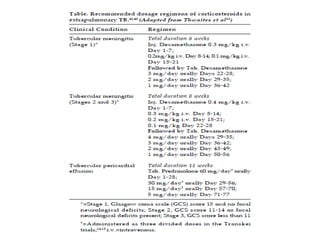
• Tuberculous Meningitis: Dexamethasone therapy is
recommended for HIV-negative patients with
tuberculous meningitis. The dose is 12–16 mg per day
for 3 weeks, then tapered over 3 weeks.
Cont...
• Multiple Sclerosis: For acute attacks or initial
demyelinating episodes, intravenous
methylprednisolone, 500–1000 mg/d for 3–5 days,
either without a taper or followed by a course of oral
prednisone beginning at a dose of 60–80 mg/d and
gradually tapered over 2 weeks is given.
• Bell’s Palsy : A course of glucocorticoids, given as
prednisone 60–80 mg daily during the first 5 days and
then tapered over the next 5 days, modestly shortens
the recovery period and improves the functional
outcome.
Cont...
• Chronic Inflammatory Demyelinating
Disease(CIDP) : 60–80 mg prednisone PO daily for
1–2 months, followed by a gradual dose reduction of
10 mg per month as tolerated.
• Myesthenia Gravis: The initial dose is relatively low
(15–25 mg/d) . The dose is increased stepwise, as
tolerated by the patient (usually by 5 mg/d at 2- to 3-
day intervals), until there is marked clinical
improvement or a dose of 50–60 mg/d is reached. This
dose is maintained for 1–3 months and then is
gradually modified to an alternate-day regimen over the
course of an additional 1–3 months
Cont...
• Spinal Cord Injury: A meta-analysis of several
randomized, controlled trials (Bracken, 2002)
demonstrated significant decreases in neurological
defects in patients with acute spinal cord injury treated
within 8 hours of injury with large doses of
methylprednisolone sodium succinate (30 mg/kg
initially followed by an infusion of 5.4 mg/kg per hour
for 23 hours).
• Duchene’s Muscular Dystrophy: Glucocorticoids,
administered as prednisone in a dose of 0.75 mg/kg
per day, significantly slow progression of Duchenne's
dystrophy for up to 3 years.
Infectious Diseases
• Septic shock: Hydrocortisone (50 mg IV every 6 h)
should be given; if clinical improvement occurs over 24–
48 h, most experts would continue hydrocortisone
therapy for 5–7 days before slowly tapering and
discontinuing it.
• In AIDS patients with Pneumocystis carinii pneumonia and
moderate to severe hypoxia, addition of glucocorticoids
to the antibiotic regimen increases oxygenation and
lowers the incidence of respiratory failure and mortality.
Similarly, glucocorticoids clearly decrease the incidence of
long-term neurological impairment associated with
Haemophilus influenzae type b meningitis in infants and
children 2 months of age.
Thyroid Disorders
• Thyrotoxicosis/thyroid storm : Dexamethasone, 2 mg
every 6 hrly .
• Malignant exophthalmos: High-dose glucocorticoids e.g.,
prednisone, 40–80 mg daily is given. Doses are tapered by 5
mg every 2 weeks. Pulse therapy with IV
methylprednisolone (e.g., 500–1000 mg of
methylprednisolone in 250 mL of saline infused over 2 h
daily for 1 week) followed by an oral regimen is also used.
• Subacute thyroiditis: The usual starting dose is 40–60 mg
prednisone, depending on severity. The dose is gradually
tapered over 6–8 weeks, in response to improvement in
symptoms and the ESR.
Skin Diseases
• Glucocorticoids are remarkably efficacious in the treatment
of a wide variety of inflammatory dermatoses. A typical
regimen for an eczematous eruption is 1% hydrocortisone
ointment applied locally twice daily.
• Glucocorticoids are administered systemically for severe
episodes of acute dermatological disorders and for
exacerbations of chronic disorders. The dose in these
settings is usually 40 mg/day of prednisone. Systemic
steroid administration can be lifesaving in pemphigus,
which may require daily doses of up to 120 mg of
prednisone.
Ocular Diseases
• Glucocorticoids frequently are used to suppress inflammation in
the eye and can preserve sight when used properly. They are
administered topically for diseases of the outer eye and anterior
segment and attain therapeutic concentrations in the aqueous
humor after instillation into the conjunctival sac.
• For diseases of the posterior segment, intraocular injection or
systemic administration is required. A typical prescription is
0.1% dexamethasone sodium phosphate solution (ophthalmic), 2
drops in the conjunctival sac every 4 hours while awake, and
0.05% dexamethasone sodium phosphate ointment (ophthalmic)
at bedtime.
• For inflammation of the posterior segment, typical doses are 30
mg of prednisone or equivalent per day, administered orally in
divided doses.
Uses Of Androgens
• Male hypogonadism: Testosterone esters are
administered typically at doses of 75–100 mg
intramuscularly every week or 150–200 mg every 2
weeks.
• As anabolic steroids
• Osteoporosis
• As growth stimulators in boys with delayed puberty
• Male Senescence
• Gynecological disorders like endometriosis and
breast tumours.
Anabolic Steroids
• Anabolic steroids or Anabolic-androgenic steroids (AASs) are
chemically modified analogues of testosterone.
• 17β-Esters of testosterone (cypionate, enanthate, heptylate,
propionate, oxandrolone, bucyclate)
• 17α-Alkyl derivatives of testosterone (methyltestosterone,
fluoxymesterone, oxadroline, stanozolol)
• 19-Nortestosterone (nandrolone)
• 17β-Esters of 19-nortestosterone (decanoate, phenpropionate)
• 19-Norandrostenedione
• 19-Norandrostenediol
• Tetrahydrogestrinone
Uses of Anabolic Steroids
1.Osteoporosis
2.Catabolic states
3.Renal insufficiency
4.Hereditary angioneurotic edema
5.Suboptimal growth in children
6.Hypoplastic , haemolytic and malignancy associated anemia
7.To enhance physical ability in athletes
Preparations Available and Relative Androgenic:
Anabolic Activity
• Testosterone 1:1
• Methandrostenolone 1:3Anabolex10Mg ( 100tabletsRs2,809)
• Oxandrolone 1:3–1:13Anavar 10mg (50Tablets Rs3,595)
• Nandrolone phenpropionate1:3–1:6Durabolin(inj 25mg 1ml Rs40.50)
• Nandrolone decanoate1:2.5–1:4Decadurabolin(inj100mg1mlRs214.50)
• Stanozolol 1:3–1:6 (Tanzol cap 2mg 10 cap Rs 27.00)
Uses of Estrogens and Progesterone
• Primary Hypogonadism: 0.3 mg conjugated
estrogens or 5-10 mcg ethinyl estradiol on days 1-21
each month, slowly increased to adult doses and
maintained until the age of menopause.
• Postmenopausal Replacement Therapy.
• Endometriosis
• Oral Contraceptive pills
• Postcoital contraceptives
Diagnostic Uses of Corticosteroids
• Dexamethasone is used as a first-line agent to diagnose
hypercortisolism and to differentiate among the different
causes of Cushing's syndrome.
• Overnight dexamethasone suppression test: Patients are
given 1 mg of dexamethasone orally at 11 P.M., and cortisol
is measured at 8 A.M. the following morning. Suppression
of plasma cortisol to <1.8 g/dL suggests strongly that the
patient does not have Cushing's syndrome. Following
determination of baseline cortisol levels for 48 hours,
dexamethasone (0.5 mg every 6 hours) is administered
orally for 48 hours.
Cont...
• In the high-dose phase of the test, dexamethasone
is administered orally at 2 mg every 6 hours for 48
hours.
• Patients with pituitary-dependent Cushing's
syndrome (i.e., Cushing's disease) generally respond
with decreased cortisol levels. In contrast, patients
with ectopic production of ACTH or with
adrenocortical tumors generally do not exhibit
decreased cortisol levels.
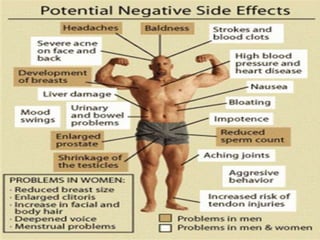
Adverse Effects of Steroids
• Altered distribution of fat
• Edema, hypokalemia and hypertension
• Suppression of HPA axis
• Osteoporosis and osteonecrosis
• Hyperglycemia and glycosuria
• Peptic ulcer
• Posterior subcapsular cataract and glaucoma.
• Myopathy and muscle wasting
• Susceptibilty to infections
• Reversible psychological disturbances
• Weight gain, menstrual irregularities, acne, anovulation
Steroid Abuse
• Use of anabolic steroids by atheletes and body builders to
increase efficiency during competitive events.
• Their use is referred to as doping and banned by all major
sporting bodies.
• Body weight may increase by 2–5 kg as a result of short-
term (<10 weeks) AAS use, which may be attributed mainly
to an increase of lean mass.
• The dose of AAS used by athletes varies considerably and
is often thought to exceed 10 to 40 times the recommended
therapeutic dose.
Dope test
• Doping by testosterone can be indirectly tested by measuring
the ratio of urinary testosterone to epitestosterone (T/E).
• Measurements of the T/E ratio and other metabolites in
urine by sensitive gas chromatography/mass spectrometry
methods are used to detect androgenic anabolic steroid
doping by competitive athletes.
• Administration of androgenic anabolic steroids suppresses the
production and clearance of epitestosterone relative to
testosterone, resulting in an elevated T/E ratio in urine.
• The World and United States Anti-Doping Agencies have set a
threshold T/E ratio of greater than 4 : 1 as suspicious for
anabolic steroid doping.
Most commonly detected anabolic
steroids
• Testing by International Olympic Committee
laboratories in 1993 revealed that the most commonly
detected steroids are:
• Testosterone (32.5%)
• Nandrolone (23.9%)
• Stanozolol (11.4%)
• Metandienone (10.7%)
• Methenolone preparations (7.7%).
Modes of Use
• Cycling
– set cycles that may have periods during which no
steroids are taken
– different anabolic steroids are rotated.
• Stacking
– Use more than one type at a time.
– Usually PO and IM
• Pyramid stacking
– Up-tapering or down-tapering doses of a steroid
Ground Reality of Sports
• Ben Johnson, Marion Jones and Tim Montgomery.
• Double Asian Games gold medallist Ashwini Akkunji
• Quarter-milers Mandeep Kaur and Sini Jose
• Arjuna Awardee wrestler Rajiv Tomar
• Commonwealth Games medal prospect shot putter
Saurav Vij
Sport personalities found guilty in
Dope Test
References
• Harrison’s Principles of Internal Medicine 18th edition
• Goodman’s and Gilman’s: The Pharmacological Basis
of Therapeutics, 12th Edition
• Katzung’s Basic and Clinical Pharmacology, 12th
Edition
• Essentials of Medical Pharmacology by KD Tripathi,
7th Edition
• Priciples of Pharmacology by Sharma & Sharma
• VK Grover et al. Steroid Therapy- Current Indications
in Practice. IJA 2007;51(5):389-93
Next Presentation
By Dr. Ashok
On “Role of NCV in Neurology”
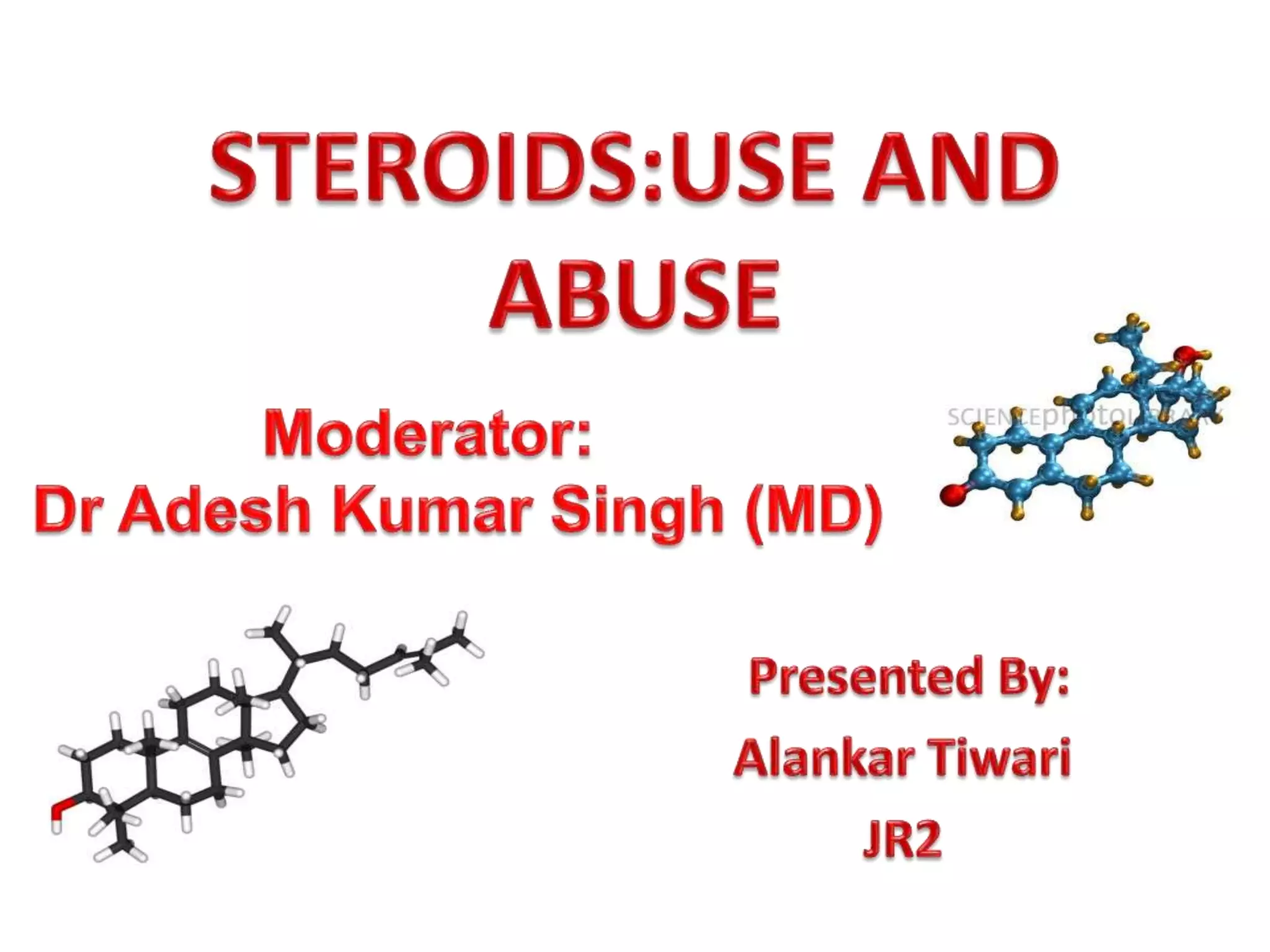
STEROIDS: USES AND ABUSE

STEROIDS: USES AND ABUSE

  • 2.
  • 3.
  • 4.
    Actions of Corticosteroids •Metabolic • Anti-inflammatory • Immunosuppressive
  • 5.
    Uses Of Steroids •Replacement therapy: i) Adrenocortical Insufficiency: a) Chronic adrenal insufficiency: About 15-25 mg of hydrocortisone must be given PO daily in divided doses, with increased amounts during periods of stress. It must be supplemented with 100- 150 mcg/day of fludrocortisone acetate for salt retention activity. b) Acute (Addisonian Crisis): Bolus injection of 100 mg hydrocortisone, followed by the administration of 100–200 mg hydrocortisone over 24 h, either by continuous infusion or provided by several IV or IM injections. Mineralocorticoid replacement can be initiated once the daily hydrocortisone dose has been reduced to <50 mg because at higher doses hydrocortisone provides sufficient stimulation of mineralocorticoid receptors.As the patient stabilizes, the hydrocortisone dose may be decreased to 25 mg every 6-8 hours.
  • 6.
    ii)Congenital Adrenal Hyperplasia:The typical oral dose of hydrocortisone in children is 1-1.5 times the normal cortisol production( about 10-15 mg/m2 daily) in two or three divided doses. The mineralocorticoid used is fludrocortisone acetate (0.05-0.2 mg/day). Therapy is guided by gain in weight and height, by plasma levels of 17-hydroxyprogesterone, and by blood pressure. In adults, prednisone may be given in lowest possible dose to suppress excess androgen production. To suppress fetal adrenal androgen production effectively and consequent virilization, glucocorticoid therapy (e.g., dexamethasone, 20 mcg/kg taken daily orally by mothers at risk) must be initiated before 10 weeks of gestation, before a definitive diagnosis of CAH can be made.
  • 7.
    iii) Cushing’s disease(Postadrenalectomy): Upto 300 mg of hydrocortisone is given as continuous infusion on the day of surgery. The dose must be tapered gradually to normal replacement level thereafter. iv) Sheehan’s Syndrome: Glucocorticoids should be replaced before thyroid hormone. Estrogen is given alone if patient has gone under hysterectomy otherwise in combination with progesterone. Future pregnancies may be possible with combined preparations of LH and FSH.
  • 8.
    Non Endocrine Uses •Allergic reactions: In severe disease, intravenous glucocorticoids (methylprednisolone, 125 mg intravenously every 6 hours, or equivalent) are appropriate. In less severe disease, antihistamines are the drugs of first choice. In allergic rhinitis, intranasal steroids are now viewed as the drug of choice by many experts.
  • 9.
    •Bronchial Asthma: Intravenousadministration of 60-120 mg methylprednisolone (or equivalent) every 6 hours is used initially for an acute attack. Prednisone or pednisolone 30-45 mg PO once daily for 5 -10 days is used thereafter. Inhaled Corticosteroids(ICS) are the most effective controllers for asthma ( mild persistent, moderate persistent and severe persistent). Usual dosing is 200 micro gram of beclomethasone dipropionate or fluticasone twice daily.
  • 10.
    •Chronic Obstructive Pulmonary Diseases(COPD): Forstable patients: Available data suggest that inhaled glucocorticoids reduce exacerbation frequency by ~25%. For Acute exacerbation: The GOLD guidelines recommend 30-40 mg of oral prednisolone or its equivalent for a period of 10-14 days.
  • 11.
    •Stimulation of LungMaturation in the Fetus: Betamethasone (12 mg intramuscularly every 24 hours for two doses) or dexamethasone (6 mg intramuscularly every 12 hours for four doses) is administered to women with definitive signs of premature labor between 26 and 34 weeks of gestation.
  • 12.
    Connective Tissue Disorders: •Rheumatoid Arthritis: Glucocorticoids may serve in several ways to control disease activity in RA. First, they may be administered in low to moderate doses to achieve rapid disease control before the onset of fully effective DMARD therapy. Second, a 1-2 week burst of glucocorticoids may be prescribed for the management of acute disease flares .
  • 13.
    Cont... • Chronic administrationof low doses(5-10 mg/d) of prednisone may also be warranted to control disease activity in patients with an inadequate response to DMARD therapy. • In the setting of an acute exacerbation, higher doses of glucocorticoids may be employed (typically 20-40 mg/day of prednisone or equivalent), with rapid taper thereafter.
  • 14.
    Cont... • Symptomatic effectof small reductions in dose (decreases of perhaps 1 mg/day of prednisone every 2- 3 weeks) should be tested frequently while concurrent therapy with other measures is continued, to maintain the lowest possible prednisone dose. • Alternatively, patients with major symptomatology confined to one or a few joints may be treated with intra-articular steroid injections. Depending on joint size, typical doses are 5-20 mg of triamcinolone acetonide or its equivalent.
  • 15.
    • Systemic LupusErythematosus (SLE): In non life threatening disease, if quality of life is inadequate inspite of treatment with NSAIDS and Hydroxychloroquine, treatment with low doses (0.07-0.3mg/kg per day) of systemic glucocorticoids may be necessary. In life threatening SLE (proliferative form of lupus nephritis), 0.5-1 mg/kg per day PO or 1000mg of methylprednisolone I/V daily for 3 days followed by 0.5-1 mg/kg of daily prednisone or equivalent is given.
  • 16.
    •Giant cell arteritis(TemporalArteritis) and Polymyalgia Rheumatica: Treatment begins with prednisone 40-60 mg/day for ~ 1 month, followed by gradual tapering. When ocular signs and symptoms occur, consideration should be given for the use of methylprednisolone 1000 mg daily for 3 days to protect vision. Symptom recurrence during prednisone tapering develops in 60-85% of pts, requiring a dose increase. Patients with isolated polymyalgia rheumatica respond promptly to prednisone, which can be started at a lower dose of 10-20 mg/d.
  • 17.
    Vasculitis syndromes • Takayasu’sArteritis: Although glucocorticoid therapy in doses of 40-60 mg prednisone per day alleviates symptoms, there are no convincing studies that indicate that they increase survival. • Idiopathic cutaneous vasculitis: therapy started as prednisone 1 mg/kg per day with rapid tapering where possible, either directly to discontinuation or by conversion to an alternate day regimen followed by ultimate discontinuation. • Granulomatosis with polyangiitis(Wegener’s): Along with Cyclophosphamide and Rituximab for disease remission.
  • 18.
    Cont... • Churg StraussSyndrome : Glucocorticoids alone appear to be effective in many patients. Dosage tapering is often limited by asthma, and many pts require low dose prednisone for persistent asthma many years after clinical recovery from vasculitis. • Polyarteritis nodosa: In combination with cyclophosphamide. • Henoch – Schonlein Purpura: Prednisone 1mg/kg per day and tapered according to clinical response has been shown to be useful in decreasing tissue edema, arthralgias and abdominal discomfort. • Microscopic Polyangiitis: Similar to Wegener’s.
  • 19.
    Behcet’s syndrome: Uveitisand CNS – Behcet’s syndrome require systemic glucocorticoid therapy( prednisone, 1 mg/kg per day). Relapsing Polychondritis: Prednisone 40-60 mg/d is effective in suppressing disease activity. It is tapered gradually once disease is controlled. Systemic Sclerosis: Glucocorticoids may be useful for alleviating stiffness ans aching in early stage diffuse cutaneous SSc. Their use in high doses is associated with an increased risk of scleroderma renal crisis.
  • 20.
    Sarcoidosis: Corticosteroids areindicated therapy for patients with debilitating symptoms or life-threatening forms of sarcoidosis. Patients who are symptomatic with multiple organs involvement are treated with 20- 40 mg per day of prednisone, or an equivalent dose of alternative steroids, to induce remission. Maintenance doses, which often are required for long periods of time, is usually 5-10 mg/day of prednisone.
  • 21.
    Osteoarthritis: Intraarticular injectionsof glucocorticoids( triamcinolone acetonide) relieves local inflammation and pain. Acute Gouty arthritis: Glucocorticoids given I/M or orally , e.g., prednisone 30-50 mg/day as the initial dose and gradually tapered with the resolution of the attack, can be effective in polyarticular gout. For a single joint or a few involved joints, intraarticular triamcinolone acetonide, 20-40 mg, or methylprednisolone, 25-50 mg, have been effective and well tolerated.
  • 22.
    Immune Thrombocytopenia: Inimmune thrombocytopenia, prednisone (0.5 mg/kg) is used to decrease the bleeding tendency. In more severe cases, and for initiation of treatment of idiopathic thrombocytopenia, daily doses of prednisone (1-1.5 mg/kg) are employed. Patients with refractory idiopathic thrombocytopenia may respond to pulsed high-dose glucocorticoid therapy. Autoimmune hemolytic anemia:Patients with autoimmune destruction of erythrocytes (i.e., hemolytic anemia with a positive Coombs test) are treated with prednisone (1 mg/kg per day). In the setting of severe hemolysis, higher doses may be used, with tapering as the anemia improves. Small maintenance doses may be required for several months in patients who respond.
  • 23.
    Skin Graft andOrgan transplant: In organ transplantation, high doses of prednisone (50-100 mg) are given at the time of transplant surgery, in conjunction with other immunosuppressive agents, and most patients are kept on a maintenance regimen that includes lower doses of glucocorticoids. Malignancies: Glucocorticoids are used in the chemotherapy of ALL and lymphomas because of their antilymphocytic effects. Most commonly, glucocorticoids are one component of combination chemotherapy administered under scheduled protocols. Glucocorticoids once were frequently employed in the setting of hypercalcemia of malignancy, but more effective agents, such as the bisphosphonates, now are the preferred therapy.
  • 24.
    Renal Diseases • NephroticSyndrome: Patients with nephrotic syndrome secondary to minimal change disease generally respond well to steroid therapy, and glucocorticoids clearly are the first- line treatment in both adults and children. Initial daily doses of prednisone are 1-2 mg/kg for 6 weeks, followed by a gradual tapering of the dose over 6-8 weeks, although some nephrologists advocate alternate-day therapy. Objective evidence of response, such as diminished proteinuria, is seen within 2-3 weeks in 85% of patients, and >95% of patients have remission within 3 months.
  • 25.
    Cont... • Studies withother forms of renal disease, such as membranous and membranoproliferative glomerulonephritis and focal sclerosis, have provided conflicting data on the role of glucocorticoids. In clinical practice, patients with these disorders often are given a therapeutic trial of glucocorticoids with careful monitoring of laboratory indices of response. • In the case of membranous glomerulonephritis, many nephrologists recommend a trial of alternate-day glucocorticoids for 8-10 weeks (e.g., prednisone, 120 mg every other day), followed by a 1to 2 month period of tapering.
  • 26.
    Gastrointestinal diseases • InflammatoryBowel Diseases: Prednisone is usually started at doses of 40-60 mg/d for active Ulcerative Colitis that is unresponsive to 5-ASA therapy. • Parenteral glucocorticoids may be administered as hydrocortisone, 300mg/d or methylprednisolone, 40-60 mg/d. • Topically applied glucocorticoids are also beneficial for distal colitis and may serve as adjunct in those having rectal involvement. • Hydrocortisone enema or foam may control active disease, although they have no proven role as maintenance therapy.
  • 27.
    Cont... • Steroids arealso effective for treatment of moderate to severe Crohn’s disease and induce a 60-70 % remission. • Controlled ileal-release budesonide has been nearly equal to prednisone for ileocolonic CD. Budesonide is used for 2-3 months at a dose of 9 mg/d, then tapered. Budesonide 6 mg/d is effective in reducing relapse rates. • Once clinical remission has been induced, steroids should be tapered usually at a rate of no more than 5 mg/week.
  • 28.
    Hepatic Diseases • AutoimmuneHepatitis: Therapy is initiated with prednisone 60 mg/day. This dose is tapered successively over the course of a month down to a maintenance level of 20 mg/d according to fall in serum transaminases levels. An alternative approach is to begin with half the prednisone dose(30 mg/d) along with azathioprine. Prednisone is then tapered over the course of a month to 10 mg/d. • Alcoholic Hepatitis: Pts with severe disease should be given prednisone 40 mg/d or prednisolone 32 mg/d for 4 weeks followed by tapering.
  • 29.
    Neurological Diseases 1. Reductionof Cerebral Edema: Corticosteroids are of value in the reduction or prevention of cerebral edema associated with parasites( Neurocysticercosis) and neoplasms. • In Brain tumours, glucocorticoids are highly effective at reducing perilesional edema and improving neurologic function, often within hours of administration. Dexamethasone has been the glucocorticoid of choice because of its relatively low mineralocorticoid activity. Initial doses are typically 12 mg to 16 mg a day in divided doses given orally or IV (both are equivalent). Consequently, a taper is indicated as definitive treatment is administered and the patient improves
  • 30.
    Cont... • Acute BacterialMeningitis: The rationale for giving dexamethasone 20 min before antibiotic therapy is that dexamethasone inhibits the production of TNF-alpha by macrophages and microglia only if it is administered before these cells are activated by endotoxin. Therapy with dexamethasone should ideally be started 20 min before, or not later than concurrent with, the first dose of antibiotics. • Tuberculous Meningitis: Dexamethasone therapy is recommended for HIV-negative patients with tuberculous meningitis. The dose is 12–16 mg per day for 3 weeks, then tapered over 3 weeks.
  • 32.
    Cont... • Multiple Sclerosis:For acute attacks or initial demyelinating episodes, intravenous methylprednisolone, 500–1000 mg/d for 3–5 days, either without a taper or followed by a course of oral prednisone beginning at a dose of 60–80 mg/d and gradually tapered over 2 weeks is given. • Bell’s Palsy : A course of glucocorticoids, given as prednisone 60–80 mg daily during the first 5 days and then tapered over the next 5 days, modestly shortens the recovery period and improves the functional outcome.
  • 33.
    Cont... • Chronic InflammatoryDemyelinating Disease(CIDP) : 60–80 mg prednisone PO daily for 1–2 months, followed by a gradual dose reduction of 10 mg per month as tolerated. • Myesthenia Gravis: The initial dose is relatively low (15–25 mg/d) . The dose is increased stepwise, as tolerated by the patient (usually by 5 mg/d at 2- to 3- day intervals), until there is marked clinical improvement or a dose of 50–60 mg/d is reached. This dose is maintained for 1–3 months and then is gradually modified to an alternate-day regimen over the course of an additional 1–3 months
  • 34.
    Cont... • Spinal CordInjury: A meta-analysis of several randomized, controlled trials (Bracken, 2002) demonstrated significant decreases in neurological defects in patients with acute spinal cord injury treated within 8 hours of injury with large doses of methylprednisolone sodium succinate (30 mg/kg initially followed by an infusion of 5.4 mg/kg per hour for 23 hours). • Duchene’s Muscular Dystrophy: Glucocorticoids, administered as prednisone in a dose of 0.75 mg/kg per day, significantly slow progression of Duchenne's dystrophy for up to 3 years.
  • 35.
    Infectious Diseases • Septicshock: Hydrocortisone (50 mg IV every 6 h) should be given; if clinical improvement occurs over 24– 48 h, most experts would continue hydrocortisone therapy for 5–7 days before slowly tapering and discontinuing it. • In AIDS patients with Pneumocystis carinii pneumonia and moderate to severe hypoxia, addition of glucocorticoids to the antibiotic regimen increases oxygenation and lowers the incidence of respiratory failure and mortality. Similarly, glucocorticoids clearly decrease the incidence of long-term neurological impairment associated with Haemophilus influenzae type b meningitis in infants and children 2 months of age.
  • 36.
    Thyroid Disorders • Thyrotoxicosis/thyroidstorm : Dexamethasone, 2 mg every 6 hrly . • Malignant exophthalmos: High-dose glucocorticoids e.g., prednisone, 40–80 mg daily is given. Doses are tapered by 5 mg every 2 weeks. Pulse therapy with IV methylprednisolone (e.g., 500–1000 mg of methylprednisolone in 250 mL of saline infused over 2 h daily for 1 week) followed by an oral regimen is also used. • Subacute thyroiditis: The usual starting dose is 40–60 mg prednisone, depending on severity. The dose is gradually tapered over 6–8 weeks, in response to improvement in symptoms and the ESR.
  • 37.
    Skin Diseases • Glucocorticoidsare remarkably efficacious in the treatment of a wide variety of inflammatory dermatoses. A typical regimen for an eczematous eruption is 1% hydrocortisone ointment applied locally twice daily. • Glucocorticoids are administered systemically for severe episodes of acute dermatological disorders and for exacerbations of chronic disorders. The dose in these settings is usually 40 mg/day of prednisone. Systemic steroid administration can be lifesaving in pemphigus, which may require daily doses of up to 120 mg of prednisone.
  • 38.
    Ocular Diseases • Glucocorticoidsfrequently are used to suppress inflammation in the eye and can preserve sight when used properly. They are administered topically for diseases of the outer eye and anterior segment and attain therapeutic concentrations in the aqueous humor after instillation into the conjunctival sac. • For diseases of the posterior segment, intraocular injection or systemic administration is required. A typical prescription is 0.1% dexamethasone sodium phosphate solution (ophthalmic), 2 drops in the conjunctival sac every 4 hours while awake, and 0.05% dexamethasone sodium phosphate ointment (ophthalmic) at bedtime. • For inflammation of the posterior segment, typical doses are 30 mg of prednisone or equivalent per day, administered orally in divided doses.
  • 39.
    Uses Of Androgens •Male hypogonadism: Testosterone esters are administered typically at doses of 75–100 mg intramuscularly every week or 150–200 mg every 2 weeks. • As anabolic steroids • Osteoporosis • As growth stimulators in boys with delayed puberty • Male Senescence • Gynecological disorders like endometriosis and breast tumours.
  • 40.
    Anabolic Steroids • Anabolicsteroids or Anabolic-androgenic steroids (AASs) are chemically modified analogues of testosterone. • 17β-Esters of testosterone (cypionate, enanthate, heptylate, propionate, oxandrolone, bucyclate) • 17α-Alkyl derivatives of testosterone (methyltestosterone, fluoxymesterone, oxadroline, stanozolol) • 19-Nortestosterone (nandrolone) • 17β-Esters of 19-nortestosterone (decanoate, phenpropionate) • 19-Norandrostenedione • 19-Norandrostenediol • Tetrahydrogestrinone
  • 41.
    Uses of AnabolicSteroids 1.Osteoporosis 2.Catabolic states 3.Renal insufficiency 4.Hereditary angioneurotic edema 5.Suboptimal growth in children 6.Hypoplastic , haemolytic and malignancy associated anemia 7.To enhance physical ability in athletes
  • 42.
    Preparations Available andRelative Androgenic: Anabolic Activity • Testosterone 1:1 • Methandrostenolone 1:3Anabolex10Mg ( 100tabletsRs2,809) • Oxandrolone 1:3–1:13Anavar 10mg (50Tablets Rs3,595) • Nandrolone phenpropionate1:3–1:6Durabolin(inj 25mg 1ml Rs40.50) • Nandrolone decanoate1:2.5–1:4Decadurabolin(inj100mg1mlRs214.50) • Stanozolol 1:3–1:6 (Tanzol cap 2mg 10 cap Rs 27.00)
  • 43.
    Uses of Estrogensand Progesterone • Primary Hypogonadism: 0.3 mg conjugated estrogens or 5-10 mcg ethinyl estradiol on days 1-21 each month, slowly increased to adult doses and maintained until the age of menopause. • Postmenopausal Replacement Therapy. • Endometriosis • Oral Contraceptive pills • Postcoital contraceptives
  • 44.
    Diagnostic Uses ofCorticosteroids • Dexamethasone is used as a first-line agent to diagnose hypercortisolism and to differentiate among the different causes of Cushing's syndrome. • Overnight dexamethasone suppression test: Patients are given 1 mg of dexamethasone orally at 11 P.M., and cortisol is measured at 8 A.M. the following morning. Suppression of plasma cortisol to <1.8 g/dL suggests strongly that the patient does not have Cushing's syndrome. Following determination of baseline cortisol levels for 48 hours, dexamethasone (0.5 mg every 6 hours) is administered orally for 48 hours.
  • 45.
    Cont... • In thehigh-dose phase of the test, dexamethasone is administered orally at 2 mg every 6 hours for 48 hours. • Patients with pituitary-dependent Cushing's syndrome (i.e., Cushing's disease) generally respond with decreased cortisol levels. In contrast, patients with ectopic production of ACTH or with adrenocortical tumors generally do not exhibit decreased cortisol levels.
  • 47.
    Adverse Effects ofSteroids • Altered distribution of fat • Edema, hypokalemia and hypertension • Suppression of HPA axis • Osteoporosis and osteonecrosis • Hyperglycemia and glycosuria • Peptic ulcer • Posterior subcapsular cataract and glaucoma. • Myopathy and muscle wasting • Susceptibilty to infections • Reversible psychological disturbances • Weight gain, menstrual irregularities, acne, anovulation
  • 48.
    Steroid Abuse • Useof anabolic steroids by atheletes and body builders to increase efficiency during competitive events. • Their use is referred to as doping and banned by all major sporting bodies. • Body weight may increase by 2–5 kg as a result of short- term (<10 weeks) AAS use, which may be attributed mainly to an increase of lean mass. • The dose of AAS used by athletes varies considerably and is often thought to exceed 10 to 40 times the recommended therapeutic dose.
  • 49.
    Dope test • Dopingby testosterone can be indirectly tested by measuring the ratio of urinary testosterone to epitestosterone (T/E). • Measurements of the T/E ratio and other metabolites in urine by sensitive gas chromatography/mass spectrometry methods are used to detect androgenic anabolic steroid doping by competitive athletes. • Administration of androgenic anabolic steroids suppresses the production and clearance of epitestosterone relative to testosterone, resulting in an elevated T/E ratio in urine. • The World and United States Anti-Doping Agencies have set a threshold T/E ratio of greater than 4 : 1 as suspicious for anabolic steroid doping.
  • 50.
    Most commonly detectedanabolic steroids • Testing by International Olympic Committee laboratories in 1993 revealed that the most commonly detected steroids are: • Testosterone (32.5%) • Nandrolone (23.9%) • Stanozolol (11.4%) • Metandienone (10.7%) • Methenolone preparations (7.7%).
  • 51.
    Modes of Use •Cycling – set cycles that may have periods during which no steroids are taken – different anabolic steroids are rotated. • Stacking – Use more than one type at a time. – Usually PO and IM • Pyramid stacking – Up-tapering or down-tapering doses of a steroid
  • 52.
    Ground Reality ofSports • Ben Johnson, Marion Jones and Tim Montgomery. • Double Asian Games gold medallist Ashwini Akkunji • Quarter-milers Mandeep Kaur and Sini Jose • Arjuna Awardee wrestler Rajiv Tomar • Commonwealth Games medal prospect shot putter Saurav Vij
  • 53.
    Sport personalities foundguilty in Dope Test

  • 56.
    References • Harrison’s Principlesof Internal Medicine 18th edition • Goodman’s and Gilman’s: The Pharmacological Basis of Therapeutics, 12th Edition • Katzung’s Basic and Clinical Pharmacology, 12th Edition • Essentials of Medical Pharmacology by KD Tripathi, 7th Edition • Priciples of Pharmacology by Sharma & Sharma • VK Grover et al. Steroid Therapy- Current Indications in Practice. IJA 2007;51(5):389-93
  • 57.
    Next Presentation By Dr.Ashok On “Role of NCV in Neurology”