Steps of the
Scientific Method


                    1
Put on your thinking caps!


                             2
What is the Scientific Method?


4 The scientific method is a series of steps
  that scientists use to answer questions
  and solve problems.
4 It is used to organize observations and
  keep your investigation focused.
4 The scientific method has several steps
  that must be followed (in the correct
  order) to help guide you through your
  scientific investigation.
                                               3
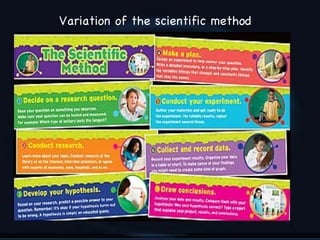
Variation of the scientific method


                                     4
History of the Scientific Method

4 The history of the scientific method is a
  fascinating and long one, covering thousands
  of years of history.
4 The development of the scientific method
  involves some great scientists and
  philosophers.
4 The Greeks are credited with developing
  the scientific method that we recognize and
  still use today.
                                              5
Ancient Greece


                 6
Aristotle

4 Aristotle is regarded as the father of science and
    was the first to realize the importance of an
    organized system to carry out scientific
    investigations.
4   Aristotle followed three steps in his version of the
    scientific method:
4   1. Study what others have written about the
    subject.
4   2. Look for similarities amongst those writings.
4   3. Perform an organized study and experimentation
    on everything related to the subject.
                                                           7
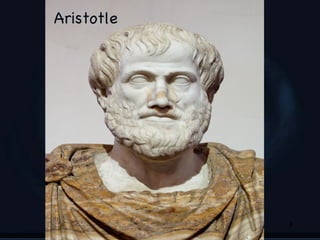
Aristotle


            8
Muslim Influence on the Scientific
                   Method
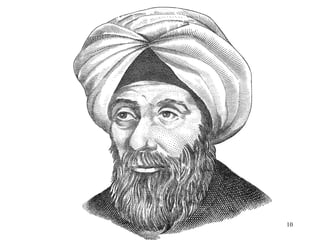
4 A great Islamic scholar by the name of Ibn al-
    Haytham took what Aristotle developed and built
    upon that.
4   He developed a scientific method that is very similar
    to the one we follow today.
4   Here are the steps Ibn followed in his scientific
    investigations:
4   1. State a problem based on observations and
    experimentations.
4   2. Test a hypothesis through experimentation.
4   3. Interpret the data from the experiment and come
    to a conclusion (using mathematics).
                                                        9
4   4. Publish the findings.
Ibn al-Haytham


                 10
Other Scientists

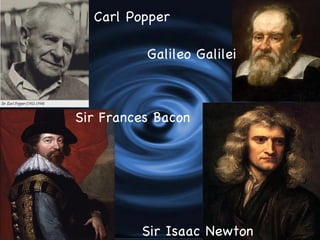
4 There were many other scientists that
  contributed to the development of the
  scientific method including Sir Frances
  Bacon, Galileo, Sir Isaac Newton, and Karl
  Popper.
4 Each either added, took away, or changed
  some steps of the early scientific method to
  eventually produce the modern scientific
  method that we use today.

                                             11
Carl Popper

          Galileo Galilei


Sir Frances Bacon


                            12
         Sir Isaac Newton
The Modern Scientific Method
4 There are 6 steps to the scientific method
  we use today.
4 Step 1: Ask a question.
4 Step 2: Form a hypothesis.
4 Step 3: Test the hypothesis.
4 Step 4: Analyze the results.
4 Step 5: Draw conclusions.
4 Step 6: Communicate results.
4 We will go over each step in detail in
  separate lessons.                        13
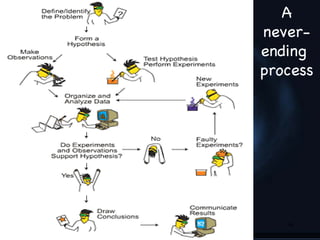
A
never-
ending
process


   14
Variations

4 Of course, as with most scientific methods
  and procedures there are variations of the
  scientific method that exist even today.
4 In the future you may have teachers that
  prefer to include additional steps or even
  leave some steps out all together.
4 For this class you will follow the 6 steps
  described above since all of the lessons will
  build on those steps.
                                               15
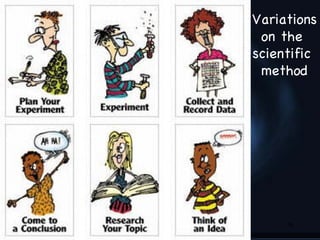
Variations
 on the
scientific
 method


     16

STEPS OF THE SCIENTIFIC METHOD

  • 1.
  • 2.
    Put on yourthinking caps! 2
  • 3.
    What is theScientific Method? 4 The scientific method is a series of steps that scientists use to answer questions and solve problems. 4 It is used to organize observations and keep your investigation focused. 4 The scientific method has several steps that must be followed (in the correct order) to help guide you through your scientific investigation. 3
  • 4.
    Variation of thescientific method 4
  • 5.
    History of theScientific Method 4 The history of the scientific method is a fascinating and long one, covering thousands of years of history. 4 The development of the scientific method involves some great scientists and philosophers. 4 The Greeks are credited with developing the scientific method that we recognize and still use today. 5
  • 6.
  • 7.
    Aristotle 4 Aristotle isregarded as the father of science and was the first to realize the importance of an organized system to carry out scientific investigations. 4 Aristotle followed three steps in his version of the scientific method: 4 1. Study what others have written about the subject. 4 2. Look for similarities amongst those writings. 4 3. Perform an organized study and experimentation on everything related to the subject. 7
  • 8.
  • 9.
    Muslim Influence onthe Scientific Method 4 A great Islamic scholar by the name of Ibn al- Haytham took what Aristotle developed and built upon that. 4 He developed a scientific method that is very similar to the one we follow today. 4 Here are the steps Ibn followed in his scientific investigations: 4 1. State a problem based on observations and experimentations. 4 2. Test a hypothesis through experimentation. 4 3. Interpret the data from the experiment and come to a conclusion (using mathematics). 9 4 4. Publish the findings.
  • 10.
  • 11.
    Other Scientists 4 Therewere many other scientists that contributed to the development of the scientific method including Sir Frances Bacon, Galileo, Sir Isaac Newton, and Karl Popper. 4 Each either added, took away, or changed some steps of the early scientific method to eventually produce the modern scientific method that we use today. 11
  • 12.
    Carl Popper Galileo Galilei Sir Frances Bacon 12 Sir Isaac Newton
  • 13.
    The Modern ScientificMethod 4 There are 6 steps to the scientific method we use today. 4 Step 1: Ask a question. 4 Step 2: Form a hypothesis. 4 Step 3: Test the hypothesis. 4 Step 4: Analyze the results. 4 Step 5: Draw conclusions. 4 Step 6: Communicate results. 4 We will go over each step in detail in separate lessons. 13
  • 14.
  • 15.
    Variations 4 Of course,as with most scientific methods and procedures there are variations of the scientific method that exist even today. 4 In the future you may have teachers that prefer to include additional steps or even leave some steps out all together. 4 For this class you will follow the 6 steps described above since all of the lessons will build on those steps. 15
  • 16.