Science Systematized body of knowledge From the Latin word “scientia” meaning knowledge  Greek word “scire” meaning to know Combination of processes and products
Technology From the Greek word  “technologia” “techno”  meaning  art and skill  and  “logia”  meaning  study of Applied science
Chemistry Branch of science that deals with the study of matter, its composition, properties and changes it undergo. Considered core or central science.
Who am I? I  determine the structure, composition, and nature of substances by examining and identifying their various elements or compounds.  ANALYTICAL CHEMIST
I  study the chemistry of the vast number of carbon compounds that make up all living things. ORGANIC CHEMIST
I  study compounds consisting mainly of elements other than carbon, such as those in electronic components INORGANIC CHEMIST
I  develop a fundamental understanding at the molecular and atomic level of how materials behave and how chemical reactions occur, knowledge that is relevant in nearly every area of chemistry. PHYSICAL CHEMIST
I  am identifying substances' chemical and physical properties in biological systems that is of great importance BIOCHEMIST
SCIENCE PROCESS SKILLS:  BASIC AND INTEGRATED Observing Communicating Classifying Measuring Inferring  Predicting Making a model Defining operationally Investigating * Asking a question * Collecting data * Reporting data * Comparing results * Making a conclusion
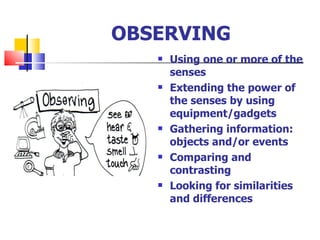
OBSERVING Using one or more of the senses Extending the power of the senses by using equipment/gadgets Gathering information: objects and/or events Comparing and contrasting Looking for similarities and differences
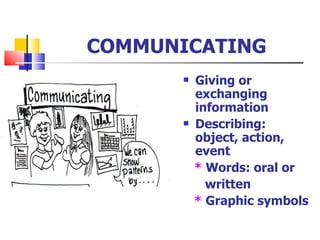
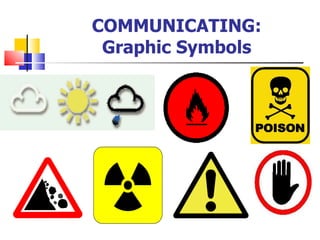
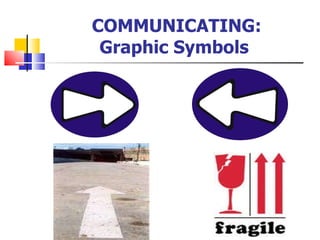
COMMUNICATING Giving or exchanging information Describing: object, action, event *  Words: oral or  written *  Graphic symbols
COMMUNICATING: Graphic Symbols Drawings Diagrams Maps Tables Charts Graphs
COMMUNICATING: Graphic Symbols
Activity 1 Using weather symbols, draw the following weather conditions. Rains with thunderstorms Mostly cloudy with scattered rain showers and  thunderstorms Partly sunny  Partly cloudy Sunny Windy
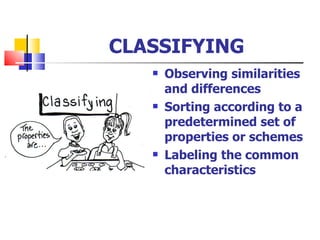
CLASSIFYING Observing similarities and differences Sorting according to a predetermined set of properties or schemes Labeling the common characteristics
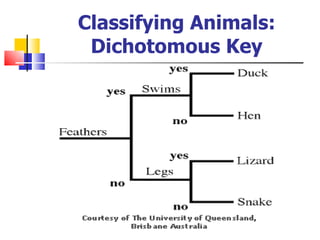
Classifying Animals: Dichotomous Key
Activity  2 Make a Dichotomous key to classify the following: Group 1 – clothes Group 2 – subjects Group 3 – shoes Group 4 – junk foods Group 5 – vegetables Group 6 – fruits
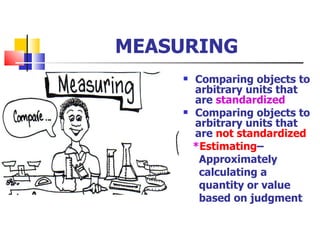
MEASURING Comparing objects to arbitrary units that are  standardized Comparing objects to arbitrary units that are  not standardized * Estimating –  Approximately  calculating a quantity or value based on judgment
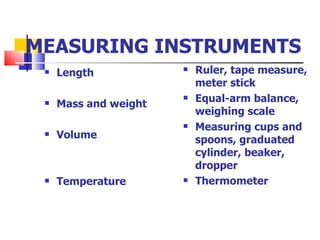
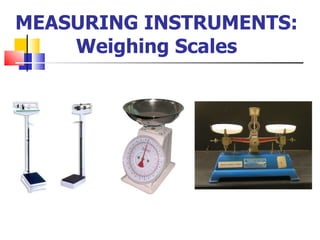
MEASURING INSTRUMENTS Length Mass and weight  Volume Temperature Ruler, tape measure, meter stick Equal-arm balance, weighing scale Measuring cups and spoons, graduated cylinder, beaker, dropper Thermometer
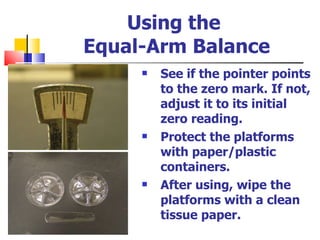
Using the  Equal-Arm Balance See if the pointer points to the zero mark. If not, adjust it to its initial zero reading.  Protect the platforms with paper/plastic containers. After using, wipe the platforms with a clean tissue paper.
MEASURING INSTRUMENTS: Weighing Scales
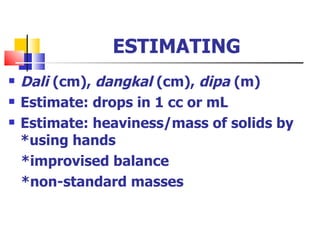
ESTIMATING Dali  (cm),  dangkal  (cm),  dipa  (m) Estimate: drops in 1 cc or mL Estimate: heaviness/mass of solids by *using hands *improvised balance *non-standard masses
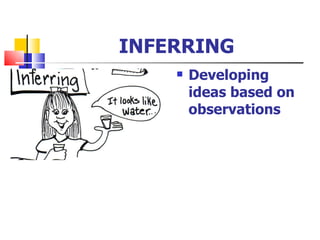
INFERRING Developing ideas based on observations
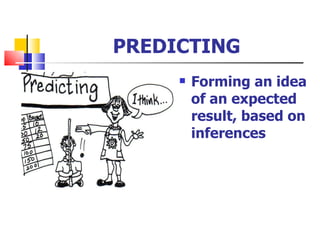
PREDICTING Forming an idea of an expected result, based on inferences
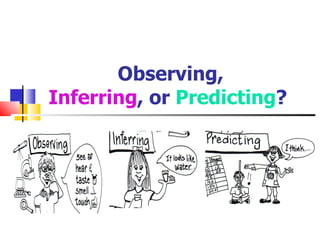
Observing, Inferring , or  Predicting ?
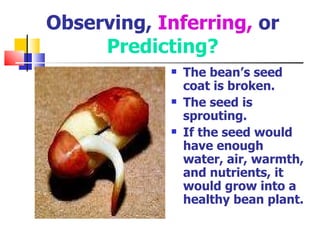
Observing,  Inferring,  or  Predicting? The bean’s seed coat is broken.  The seed is sprouting. If the seed would have enough water, air, warmth, and nutrients, it would grow into a healthy bean plant.
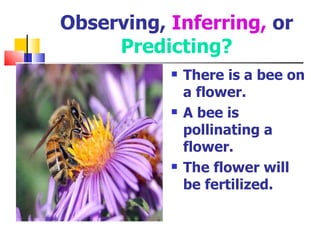
Observing,  Inferring,  or  Predicting? There is a bee on a flower. A bee is pollinating a flower. The flower will be fertilized.
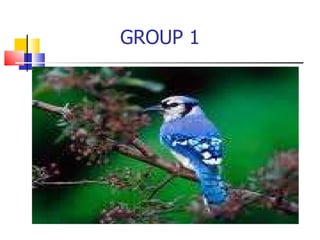
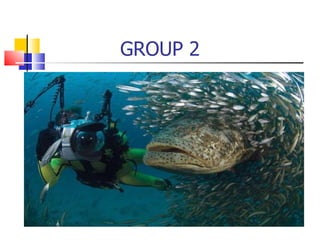
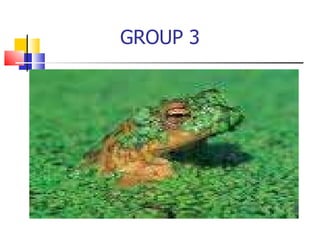
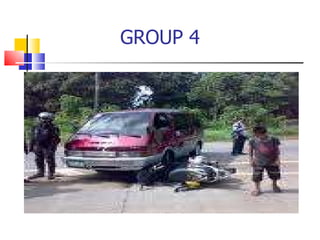
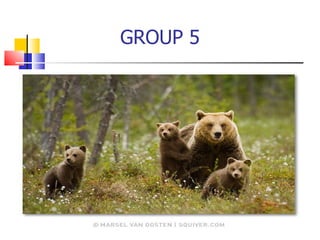
Activity 3 Using the pictures assigned to your group, give at least 2 (two) observation, inference and prediction. Be ready to present it to the class.
GROUP 1
GROUP 2
GROUP 3
GROUP 4
GROUP 5
GROUP 6
References BOOKS Ostlund, K. L. (1992).  Science process skills: Assessing hands-on student performance.  California: Addison Wesley.  Ostlund, K. L. and S. Mercier. (1996).  Rising to the challenge: National Science Education Standards (Grades 5-8).  California: S & K Associates. Tolman, M. N. (2006).  Hands-on life science activities for grades k-6 . 2 nd  ed. San Francisco:  John Wiley and Sons, Inc. UP NISMED. (1999).  Sourcebook on practical work for science teachers . Quezon City: UP NISMED. ________. (1995).  Science made easy: Teacher support materials . Vols 3-6. Quezon City: UP NISMED.
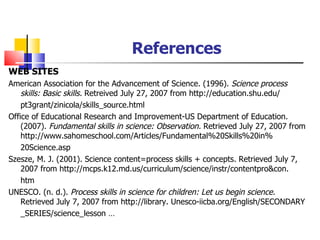
References WEB SITES American Association for the Advancement of Science. (1996).  Science process skills: Basic skills.  Retreived July 27, 2007 from http://education.shu.edu/ pt3grant/zinicola/skills_source.html Office of Educational Research and Improvement-US Department of Education. (2007).  Fundamental skills in science: Observation.  Retrieved July 27, 2007 from http://www.sahomeschool.com/Articles/Fundamental%20Skills%20in% 20Science.asp Szesze, M. J. (2001). Science content=process skills + concepts. Retrieved July 7, 2007 from http://mcps.k12.md.us/curriculum/science/instr/contentpro&con. htm UNESCO. (n. d.).  Process skills in science for children: Let us begin science.  Retrieved July 7, 2007 from http://library. Unesco-iicba.org/English/SECONDARY _SERIES/science_lesson …

(Science) SPS

  • 1.
    Science Systematized bodyof knowledge From the Latin word “scientia” meaning knowledge Greek word “scire” meaning to know Combination of processes and products
  • 2.
    Technology From theGreek word “technologia” “techno” meaning art and skill and “logia” meaning study of Applied science
  • 3.
    Chemistry Branch ofscience that deals with the study of matter, its composition, properties and changes it undergo. Considered core or central science.
  • 4.
    Who am I?I determine the structure, composition, and nature of substances by examining and identifying their various elements or compounds. ANALYTICAL CHEMIST
  • 5.
    I studythe chemistry of the vast number of carbon compounds that make up all living things. ORGANIC CHEMIST
  • 6.
    I studycompounds consisting mainly of elements other than carbon, such as those in electronic components INORGANIC CHEMIST
  • 7.
    I developa fundamental understanding at the molecular and atomic level of how materials behave and how chemical reactions occur, knowledge that is relevant in nearly every area of chemistry. PHYSICAL CHEMIST
  • 8.
    I amidentifying substances' chemical and physical properties in biological systems that is of great importance BIOCHEMIST
  • 9.
    SCIENCE PROCESS SKILLS: BASIC AND INTEGRATED Observing Communicating Classifying Measuring Inferring Predicting Making a model Defining operationally Investigating * Asking a question * Collecting data * Reporting data * Comparing results * Making a conclusion
  • 10.
    OBSERVING Using oneor more of the senses Extending the power of the senses by using equipment/gadgets Gathering information: objects and/or events Comparing and contrasting Looking for similarities and differences
  • 11.
    COMMUNICATING Giving orexchanging information Describing: object, action, event * Words: oral or written * Graphic symbols
  • 12.
    COMMUNICATING: Graphic SymbolsDrawings Diagrams Maps Tables Charts Graphs
  • 13.
  • 14.
  • 15.
    Activity 1 Usingweather symbols, draw the following weather conditions. Rains with thunderstorms Mostly cloudy with scattered rain showers and thunderstorms Partly sunny Partly cloudy Sunny Windy
  • 16.
    CLASSIFYING Observing similaritiesand differences Sorting according to a predetermined set of properties or schemes Labeling the common characteristics
  • 17.
  • 18.
    Activity 2Make a Dichotomous key to classify the following: Group 1 – clothes Group 2 – subjects Group 3 – shoes Group 4 – junk foods Group 5 – vegetables Group 6 – fruits
  • 19.
    MEASURING Comparing objectsto arbitrary units that are standardized Comparing objects to arbitrary units that are not standardized * Estimating – Approximately calculating a quantity or value based on judgment
  • 20.
    MEASURING INSTRUMENTS LengthMass and weight Volume Temperature Ruler, tape measure, meter stick Equal-arm balance, weighing scale Measuring cups and spoons, graduated cylinder, beaker, dropper Thermometer
  • 21.
    Using the Equal-Arm Balance See if the pointer points to the zero mark. If not, adjust it to its initial zero reading. Protect the platforms with paper/plastic containers. After using, wipe the platforms with a clean tissue paper.
  • 22.
  • 23.
    ESTIMATING Dali (cm), dangkal (cm), dipa (m) Estimate: drops in 1 cc or mL Estimate: heaviness/mass of solids by *using hands *improvised balance *non-standard masses
  • 24.
    INFERRING Developing ideasbased on observations
  • 25.
    PREDICTING Forming anidea of an expected result, based on inferences
  • 26.
    Observing, Inferring ,or Predicting ?
  • 27.
    Observing, Inferring, or Predicting? The bean’s seed coat is broken. The seed is sprouting. If the seed would have enough water, air, warmth, and nutrients, it would grow into a healthy bean plant.
  • 28.
    Observing, Inferring, or Predicting? There is a bee on a flower. A bee is pollinating a flower. The flower will be fertilized.
  • 29.
    Activity 3 Usingthe pictures assigned to your group, give at least 2 (two) observation, inference and prediction. Be ready to present it to the class.
  • 30.
  • 31.
  • 32.
  • 33.
  • 34.
  • 35.
  • 36.
    References BOOKS Ostlund,K. L. (1992). Science process skills: Assessing hands-on student performance. California: Addison Wesley. Ostlund, K. L. and S. Mercier. (1996). Rising to the challenge: National Science Education Standards (Grades 5-8). California: S & K Associates. Tolman, M. N. (2006). Hands-on life science activities for grades k-6 . 2 nd ed. San Francisco: John Wiley and Sons, Inc. UP NISMED. (1999). Sourcebook on practical work for science teachers . Quezon City: UP NISMED. ________. (1995). Science made easy: Teacher support materials . Vols 3-6. Quezon City: UP NISMED.
  • 37.
    References WEB SITESAmerican Association for the Advancement of Science. (1996). Science process skills: Basic skills. Retreived July 27, 2007 from http://education.shu.edu/ pt3grant/zinicola/skills_source.html Office of Educational Research and Improvement-US Department of Education. (2007). Fundamental skills in science: Observation. Retrieved July 27, 2007 from http://www.sahomeschool.com/Articles/Fundamental%20Skills%20in% 20Science.asp Szesze, M. J. (2001). Science content=process skills + concepts. Retrieved July 7, 2007 from http://mcps.k12.md.us/curriculum/science/instr/contentpro&con. htm UNESCO. (n. d.). Process skills in science for children: Let us begin science. Retrieved July 7, 2007 from http://library. Unesco-iicba.org/English/SECONDARY _SERIES/science_lesson …