SEMINAR PRESENTATION
BY
MIKA GHOSH
B.SC BIOTECHOLOGY (UG-1)
These are undifferentiated biological cells that
can differentiate into specialized cells and can
divide mitotically to produce more such cells.
WHAT IS A STEM CELL ?
It is the use of stem cells to treat or prevent a disease or
condition.
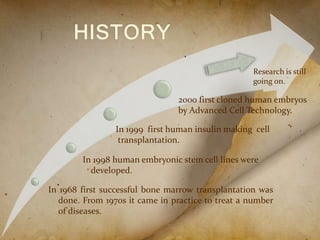
In 1998 human embryonic stem cell lines were
developed.
In 1999 first human insulin making cell
transplantation.
In 1968 first successful bone marrow transplantation was
done. From 1970s it came in practice to treat a number
of diseases.
2000 first cloned human embryos
by Advanced Cell Technology.
Research is still
going on.
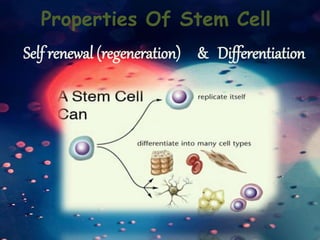
Self renewal (regeneration) & Differentiation
Properties Of Stem Cell
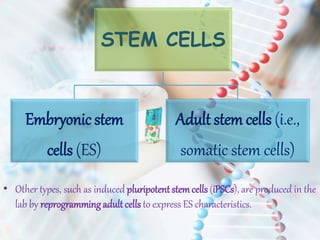
STEM CELLS
Embryonic stem
cells (ES)
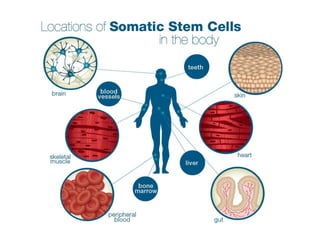
Adult stem cells (i.e.,
somatic stem cells)
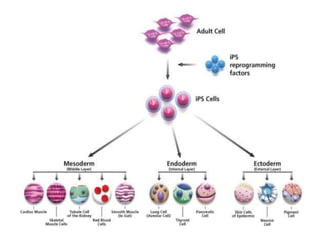
• Other types, such as induced pluripotentstemcells (iPSCs), are produced in the
lab by reprogramming adult cells to express ES characteristics.
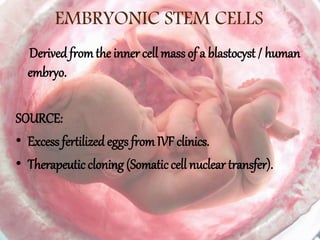
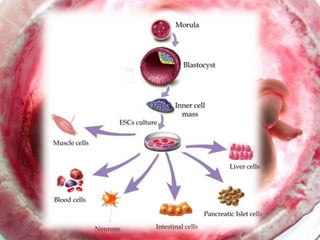
EMBRYONIC STEM CELLS
Derivedfromthe inner cell mass of a blastocyst / human
embryo.
SOURCE:
• Excess fertilizedeggs fromIVF clinics.
• Therapeutic cloning (Somaticcell nuclear transfer).
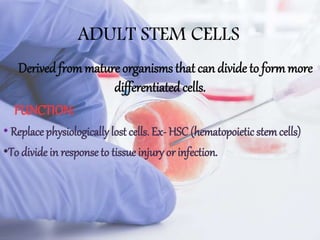
ADULT STEM CELLS
Derived frommature organisms that can divide to formmore
differentiatedcells.
FUNCTION:
• Replace physiologically lost cells. Ex- HSC (hematopoietic stemcells)
•To divide in response to tissue injury or infection.
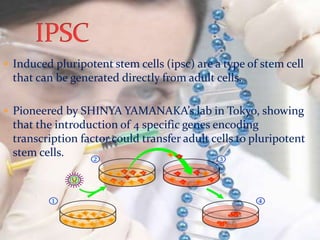
 Induced pluripotent stem cells (ipsc) are a type of stem cell
that can be generated directly from adult cells.
 Pioneered by SHINYA YAMANAKA’s lab in Tokyo, showing
that the introduction of 4 specific genes encoding
transcription factor could transfer adult cells to pluripotent
stem cells.
Cell potency is a cell's ability
to differentiate into other cell
types.
The more cell types a cell can
differentiate into, the greater its
potency.
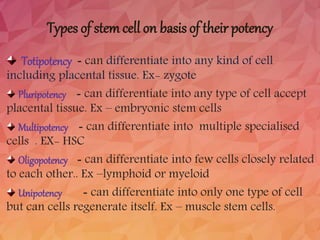
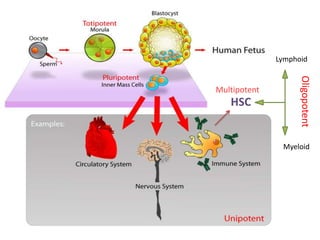
Types of stem cell on basis of their potency
Totipotency - can differentiate into any kind of cell
including placental tissue. Ex- zygote
Pluripotency - can differentiate into any type of cell accept
placental tissue. Ex – embryonic stem cells
Multipotency - can differentiate into multiple specialised
cells . EX- HSC
Oligopotency - can differentiate into few cells closely related
to each other.. Ex –lymphoid or myeloid
Unipotency - can differentiate into only one type of cell
but can cells regenerate itself. Ex – muscle stem cells.
Multipotent
HSC
Lymphoid
Myeloid
Oligopotent
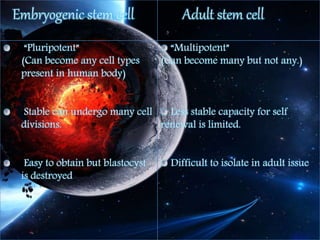
Embryogenic stem cell Adult stem cell
“Pluripotent”
(Can become any cell types
present in human body)
Stable can undergo many cell
divisions.
Easy to obtain but blastocyst
is destroyed
“Multipotent”
(Can become many but not any.)
Less stable capacity for self
renewal is limited.
Difficult to isolate in adult issue
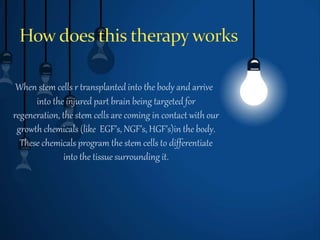
When stem cells r transplanted into the body and arrive
into the injured part brain being targeted for
regeneration, the stem cells are coming in contact with our
growth chemicals (like EGF’s, NGF’s, HGF’s)in the body.
These chemicals program the stem cells to differentiate
into the tissue surrounding it.
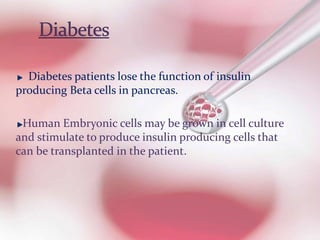
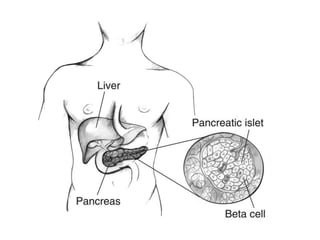
Diabetes patients lose the function of insulin
producing Beta cells in pancreas.
Human Embryonic cells may be grown in cell culture
and stimulate to produce insulin producing cells that
can be transplanted in the patient.
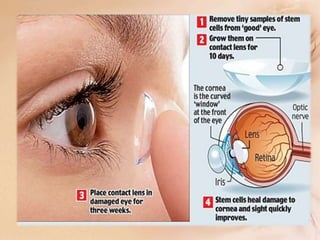
Corneal diseases blindness
Take stem cells from good healthy eye.
Grown into contact lenses in lab.
Lenses are worn by patients for 3 weeks.
Then Migration of stem cells from lens to human eye
and begin to repair process.
Does Heels the damaged cornea and improve vision.
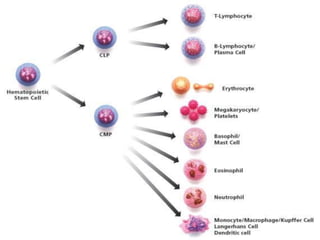
Hematopoietic stem cell
transplantation(HSCT)
 Stem cells that give rise to the lymphocytes and other cells of the
immune system, also makes blood cells, are called hematopoietic
stem cells and its transplantation is known as HSCT.
 To treat cancer patients with condition such as leukemia and
lymphoma, sickle cell anaemia, etc.
 Used in providing a functional immune system in a person with
SCID.
 In restoring the hematopoietic system.
Advantages
•This research can leadto the cure of number of human diseases.
• Scientist will be able to learn about how human cell works.
• It leads to the possibility of cell based therapy.
Disadvantages
•It is expensive.
• It is unethical.
• There is no assurance these cells will be compatible with
patient cells.
Stem cell therapy

Stem cell therapy

  • 1.
  • 3.
    These are undifferentiatedbiological cells that can differentiate into specialized cells and can divide mitotically to produce more such cells. WHAT IS A STEM CELL ?
  • 4.
    It is theuse of stem cells to treat or prevent a disease or condition.
  • 5.
    In 1998 humanembryonic stem cell lines were developed. In 1999 first human insulin making cell transplantation. In 1968 first successful bone marrow transplantation was done. From 1970s it came in practice to treat a number of diseases. 2000 first cloned human embryos by Advanced Cell Technology. Research is still going on.
  • 6.
    Self renewal (regeneration)& Differentiation Properties Of Stem Cell
  • 7.
    STEM CELLS Embryonic stem cells(ES) Adult stem cells (i.e., somatic stem cells) • Other types, such as induced pluripotentstemcells (iPSCs), are produced in the lab by reprogramming adult cells to express ES characteristics.
  • 8.
    EMBRYONIC STEM CELLS Derivedfromtheinner cell mass of a blastocyst / human embryo. SOURCE: • Excess fertilizedeggs fromIVF clinics. • Therapeutic cloning (Somaticcell nuclear transfer).
  • 10.
    ADULT STEM CELLS Derivedfrommature organisms that can divide to formmore differentiatedcells. FUNCTION: • Replace physiologically lost cells. Ex- HSC (hematopoietic stemcells) •To divide in response to tissue injury or infection.
  • 12.
     Induced pluripotentstem cells (ipsc) are a type of stem cell that can be generated directly from adult cells.  Pioneered by SHINYA YAMANAKA’s lab in Tokyo, showing that the introduction of 4 specific genes encoding transcription factor could transfer adult cells to pluripotent stem cells.
  • 14.
    Cell potency isa cell's ability to differentiate into other cell types. The more cell types a cell can differentiate into, the greater its potency.
  • 15.
    Types of stemcell on basis of their potency Totipotency - can differentiate into any kind of cell including placental tissue. Ex- zygote Pluripotency - can differentiate into any type of cell accept placental tissue. Ex – embryonic stem cells Multipotency - can differentiate into multiple specialised cells . EX- HSC Oligopotency - can differentiate into few cells closely related to each other.. Ex –lymphoid or myeloid Unipotency - can differentiate into only one type of cell but can cells regenerate itself. Ex – muscle stem cells.
  • 16.
  • 17.
    Embryogenic stem cellAdult stem cell “Pluripotent” (Can become any cell types present in human body) Stable can undergo many cell divisions. Easy to obtain but blastocyst is destroyed “Multipotent” (Can become many but not any.) Less stable capacity for self renewal is limited. Difficult to isolate in adult issue
  • 18.
    When stem cellsr transplanted into the body and arrive into the injured part brain being targeted for regeneration, the stem cells are coming in contact with our growth chemicals (like EGF’s, NGF’s, HGF’s)in the body. These chemicals program the stem cells to differentiate into the tissue surrounding it.
  • 20.
    Diabetes patients losethe function of insulin producing Beta cells in pancreas. Human Embryonic cells may be grown in cell culture and stimulate to produce insulin producing cells that can be transplanted in the patient.
  • 22.
    Corneal diseases blindness Takestem cells from good healthy eye. Grown into contact lenses in lab. Lenses are worn by patients for 3 weeks. Then Migration of stem cells from lens to human eye and begin to repair process. Does Heels the damaged cornea and improve vision.
  • 24.
    Hematopoietic stem cell transplantation(HSCT) Stem cells that give rise to the lymphocytes and other cells of the immune system, also makes blood cells, are called hematopoietic stem cells and its transplantation is known as HSCT.  To treat cancer patients with condition such as leukemia and lymphoma, sickle cell anaemia, etc.  Used in providing a functional immune system in a person with SCID.  In restoring the hematopoietic system.
  • 26.
    Advantages •This research canleadto the cure of number of human diseases. • Scientist will be able to learn about how human cell works. • It leads to the possibility of cell based therapy.
  • 27.
    Disadvantages •It is expensive. •It is unethical. • There is no assurance these cells will be compatible with patient cells.