Stem Cells Therapy
By
Professor.ir.Faisal
Lecture Outline
What are stem cells?
Different types of stem
cells/properties
Harvesting & propagation of stem
cells
Applications
Clinical Trials
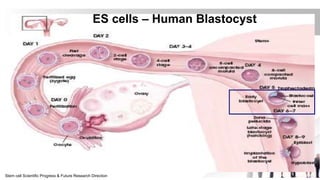
Stem cell Scientific Progress & Future Research Direction
ES cells – Human Blastocyst
What are stem cells?
• Stem cells are mother cells or “master cells “that generates all or many
different cells needed for development and function (i.e. blood cells,
fat cells, bone cells, muscle cells).
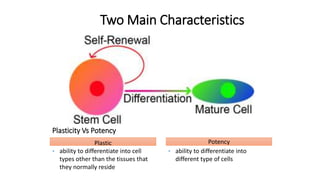
Stem cells have two main properties
Two Main Characteristics
Plastic
• ability to differentiate into cell
types other than the tissues that
they normally reside
• ability to differentiate into
different type of cells
Potency
Plasticity Vs Potency
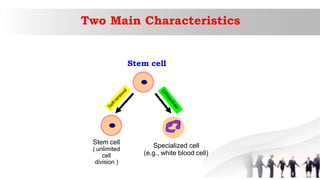
Two Main Characteristics
Stem cell
Stem cell
( unlimited
cell
division )
Specialized cell
(e.g., white blood cell)
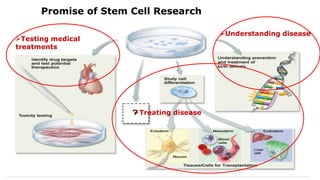
Testing medical
treatments
Understanding disease
Treating disease
Promise of Stem Cell Research
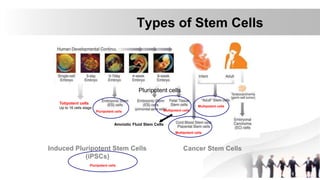
Types of Stem Cells
Totipotent cells
Up to 16 cells stage
Pluripotent cells Multipotent cells
Multipotent cells
Multipotent cells
Amniotic Fluid Stem Cells
Induced Pluripotent Stem Cells
(iPSCs)
Cancer Stem Cells
Pluripotent cells
Pluripotent cells
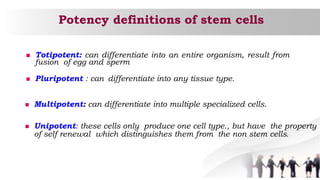
Potency definitions of stem cells
 Totipotent: can differentiate into an entire organism, result from
fusion of egg and sperm
 Pluripotent : can differentiate into any tissue type.
 Multipotent: can differentiate into multiple specialized cells.
 Unipotent: these cells only produce one cell type., but have the property
of self renewal which distinguishes them from the non stem cells.
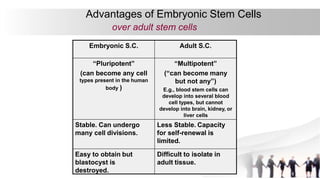
Embryonic S.C. Adult S.C.
“Pluripotent” “Multipotent”
(can become any cell
types present in the human
body )
(“can become many
but not any”)
E.g., blood stem cells can
develop into several blood
cell types, but cannot
develop into brain, kidney, or
liver cells
Stable. Can undergo
many cell divisions.
Less Stable. Capacity
for self-renewal is
limited.
Easy to obtain but
blastocyst is
destroyed.
Difficult to isolate in
adult tissue.
Advantages of Embryonic Stem Cells
over adult stem cells
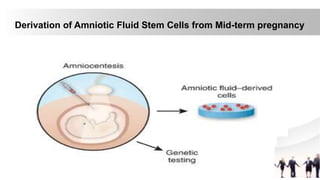
Derivation of Amniotic Fluid Stem Cells from Mid-term pregnancy
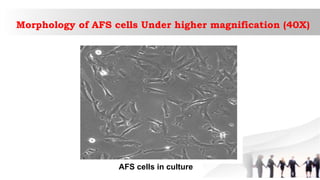
Morphology of AFS cells Under higher magnification (40X)
AFS cells in culture
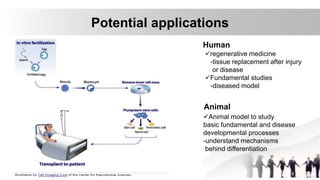
Potential applications
regenerative medicine
-tissue replacement after injury
or disease
Fundamental studies
-diseased model
Human
Animal
Animal model to study
basic fundamental and disease
developmental processes
-understand mechanisms
behind differentiation
Therapeutic applications
Potential in treating
Leukemia and aplastic anemia
Diabetes
traumatic spinal cord injury
Muscular dystrophy
Heart disease
vision and hearing loss
Baldness (hair absence)
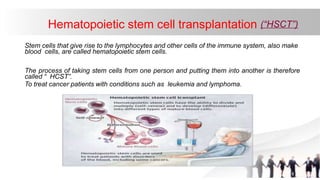
Hematopoietic stem cell transplantation (“HSCT”)
Stem cells that give rise to the lymphocytes and other cells of the immune system, also make
blood cells, are called hematopoietic stem cells.
The process of taking stem cells from one person and putting them into another is therefore
called “ HCST”.
To treat cancer patients with conditions such as leukemia and lymphoma.
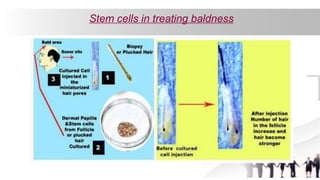
Stem cells in treating baldness
 As hair follicles contain stem cells,
 Take stem cells from existing hair follicles.
 Multiply them in cultures.
 Implant the new follicles into the scalp.
Stem cells in treating baldness
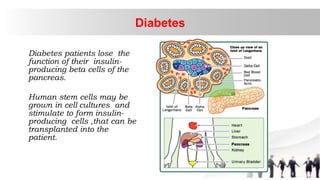
Diabetes patients lose the
function of their insulin-
producing beta cells of the
pancreas.
Human stem cells may be
grown in cell cultures and
stimulate to form insulin-
producing cells ,that can be
transplanted into the
patient.
Diabetes
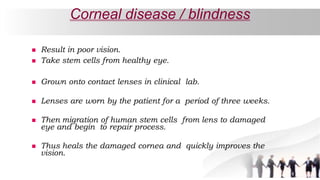
Corneal disease / blindness
 Result in poor vision.
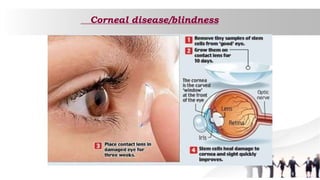
 Take stem cells from healthy eye.
 Grown onto contact lenses in clinical lab.
 Lenses are worn by the patient for a period of three weeks.
 Then migration of human stem cells from lens to damaged
eye and begin to repair process.
 Thus heals the damaged cornea and quickly improves the
vision.
Corneal disease/blindness
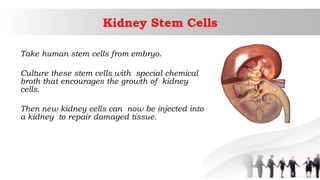
Take human stem cells from embryo.
Culture these stem cells with special chemical
broth that encourages the growth of kidney
cells.
Then new kidney cells can now be injected into
a kidney to repair damaged tissue.
Kidney Stem Cells
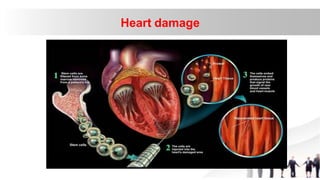
Heart damage
Problems with ES cells
 Ethical issues – destruction of embryos
 Contamination by the reagents used in tissue culture
 non-human molecules (xenoproteins)
 Donor-host rejection
 rejection of the differentiated cells derived from ES cells
 therapeutic cloning - creating embryonic stem cells that are
genetically identical to the patient.
Pop Quiz
Answer these questions in 5 minutes
1. Name two main properties of stem cells
2. Name one type of pluripotent stem cells.
3. Name 3 types of multipotent stem cells.
4. Can embryonic stem cells differentiate into liver?
5. Name 2 examples of adult stem cells.
Please submit both pre and post answers
THANK YOU FOR YOUR KIND
ATTENTION

Lecture stem Cells.pptx

  • 1.
  • 4.
    Lecture Outline What arestem cells? Different types of stem cells/properties Harvesting & propagation of stem cells Applications Clinical Trials
  • 5.
    Stem cell ScientificProgress & Future Research Direction ES cells – Human Blastocyst
  • 6.
    What are stemcells? • Stem cells are mother cells or “master cells “that generates all or many different cells needed for development and function (i.e. blood cells, fat cells, bone cells, muscle cells). Stem cells have two main properties
  • 7.
    Two Main Characteristics Plastic •ability to differentiate into cell types other than the tissues that they normally reside • ability to differentiate into different type of cells Potency Plasticity Vs Potency
  • 8.
    Two Main Characteristics Stemcell Stem cell ( unlimited cell division ) Specialized cell (e.g., white blood cell)
  • 9.
  • 10.
    Types of StemCells Totipotent cells Up to 16 cells stage Pluripotent cells Multipotent cells Multipotent cells Multipotent cells Amniotic Fluid Stem Cells Induced Pluripotent Stem Cells (iPSCs) Cancer Stem Cells Pluripotent cells Pluripotent cells
  • 11.
    Potency definitions ofstem cells  Totipotent: can differentiate into an entire organism, result from fusion of egg and sperm  Pluripotent : can differentiate into any tissue type.  Multipotent: can differentiate into multiple specialized cells.  Unipotent: these cells only produce one cell type., but have the property of self renewal which distinguishes them from the non stem cells.
  • 12.
    Embryonic S.C. AdultS.C. “Pluripotent” “Multipotent” (can become any cell types present in the human body ) (“can become many but not any”) E.g., blood stem cells can develop into several blood cell types, but cannot develop into brain, kidney, or liver cells Stable. Can undergo many cell divisions. Less Stable. Capacity for self-renewal is limited. Easy to obtain but blastocyst is destroyed. Difficult to isolate in adult tissue. Advantages of Embryonic Stem Cells over adult stem cells
  • 13.
    Derivation of AmnioticFluid Stem Cells from Mid-term pregnancy
  • 14.
    Morphology of AFScells Under higher magnification (40X) AFS cells in culture
  • 15.
    Potential applications regenerative medicine -tissuereplacement after injury or disease Fundamental studies -diseased model Human Animal Animal model to study basic fundamental and disease developmental processes -understand mechanisms behind differentiation
  • 16.
    Therapeutic applications Potential intreating Leukemia and aplastic anemia Diabetes traumatic spinal cord injury Muscular dystrophy Heart disease vision and hearing loss Baldness (hair absence)
  • 18.
    Hematopoietic stem celltransplantation (“HSCT”) Stem cells that give rise to the lymphocytes and other cells of the immune system, also make blood cells, are called hematopoietic stem cells. The process of taking stem cells from one person and putting them into another is therefore called “ HCST”. To treat cancer patients with conditions such as leukemia and lymphoma.
  • 19.
    Stem cells intreating baldness  As hair follicles contain stem cells,  Take stem cells from existing hair follicles.  Multiply them in cultures.  Implant the new follicles into the scalp.
  • 20.
    Stem cells intreating baldness
  • 21.
    Diabetes patients losethe function of their insulin- producing beta cells of the pancreas. Human stem cells may be grown in cell cultures and stimulate to form insulin- producing cells ,that can be transplanted into the patient. Diabetes
  • 22.
    Corneal disease /blindness  Result in poor vision.  Take stem cells from healthy eye.  Grown onto contact lenses in clinical lab.  Lenses are worn by the patient for a period of three weeks.  Then migration of human stem cells from lens to damaged eye and begin to repair process.  Thus heals the damaged cornea and quickly improves the vision.
  • 23.
  • 24.
    Take human stemcells from embryo. Culture these stem cells with special chemical broth that encourages the growth of kidney cells. Then new kidney cells can now be injected into a kidney to repair damaged tissue. Kidney Stem Cells
  • 25.
  • 26.
    Problems with EScells  Ethical issues – destruction of embryos  Contamination by the reagents used in tissue culture  non-human molecules (xenoproteins)  Donor-host rejection  rejection of the differentiated cells derived from ES cells  therapeutic cloning - creating embryonic stem cells that are genetically identical to the patient.
  • 27.
    Pop Quiz Answer thesequestions in 5 minutes 1. Name two main properties of stem cells 2. Name one type of pluripotent stem cells. 3. Name 3 types of multipotent stem cells. 4. Can embryonic stem cells differentiate into liver? 5. Name 2 examples of adult stem cells. Please submit both pre and post answers
  • 28.
    THANK YOU FORYOUR KIND ATTENTION