welcome
STEALTH  TECHNOLOGY Presented By   SUPREETH.S (4MH07ME047)  Mysore, karnataka
CONTENTS INTRODUCTION HISTORY CASE STUDY : F-117 NIGHTHAWK RADAR ABSORBING MATERIALS ADVANTAGES LIMITATIONS CONCLUSION  FUTURE STEALTH TECHNOLOGY REFERENCES /  BIBLIOGRAPHY
What is Stealth Technology ? Stealth is a technique in which we can make any object invisible. Stealth is an important technology which used in military operations. Stealth technology also known as LO technology (low observable technology) INTRODUCTION
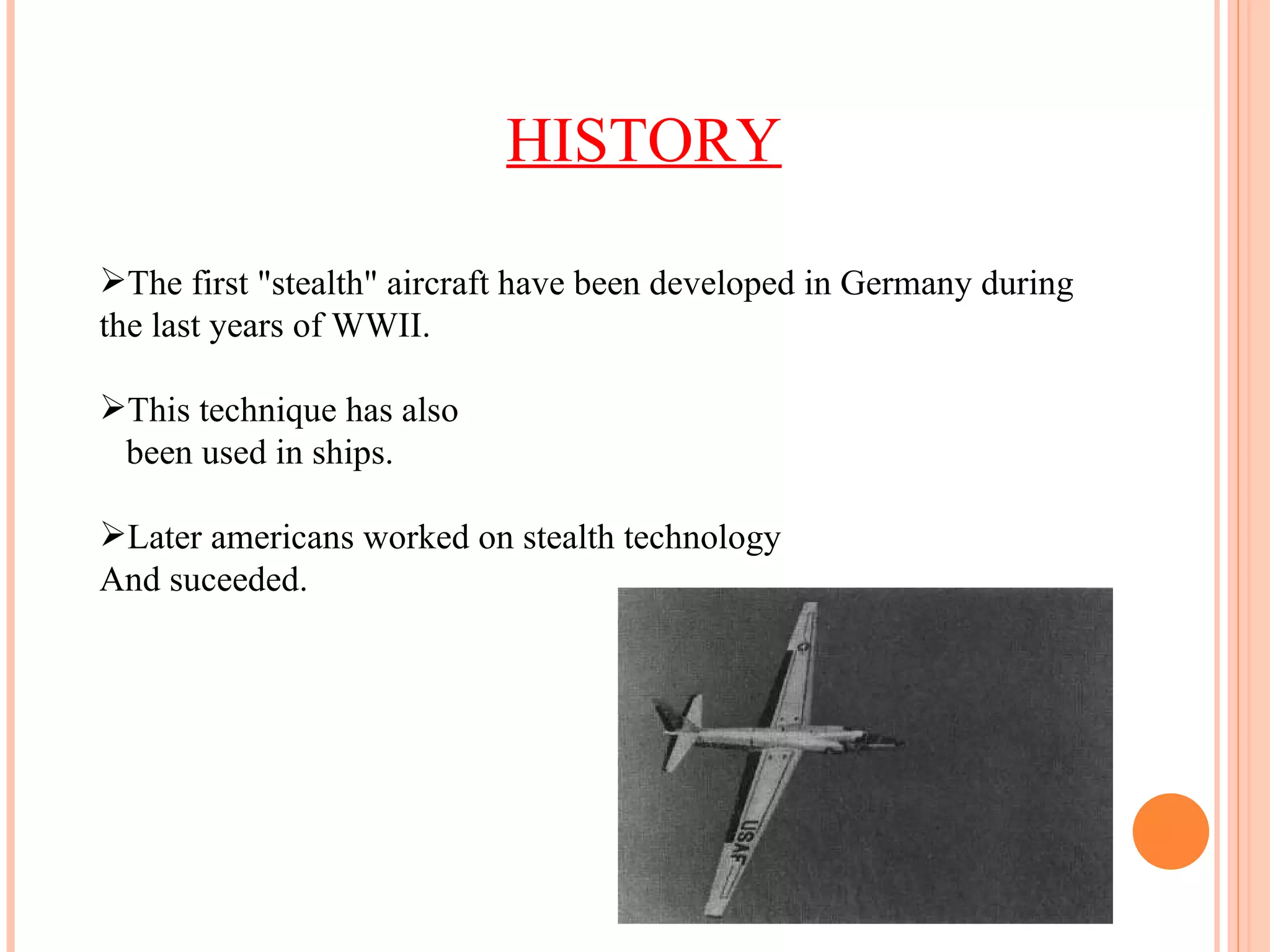
HISTORY The first "stealth" aircraft have been developed in Germany during the last years of WWII. This technique has also been used in ships. Later americans worked on stealth technology And suceeded.
RADAR CROSS-SECTION REDUCTIONS Almost since the invention of radar, various techniques have been tried to minimize detection. Some of the techniques used for this purpose are: 1. vehicle shape 2. radar absorbing material
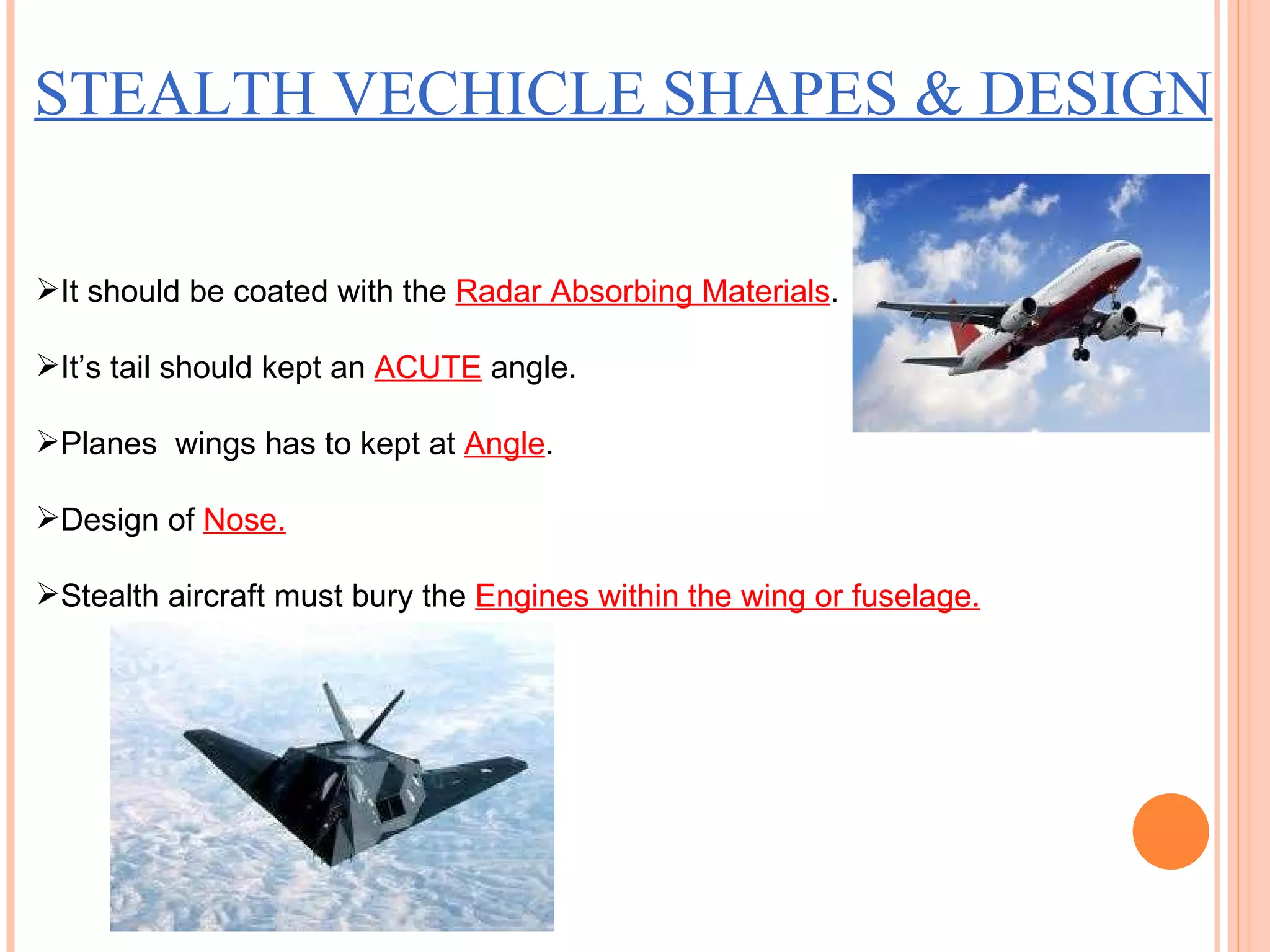
STEALTH VECHICLE SHAPES & DESIGN It should be coated with the  Radar Absorbing Materials . It’s tail should kept an  ACUTE  angle. Planes  wings has to kept at  Angle . Design of  Nose. Stealth aircraft must bury the  Engines within the wing or fuselage.
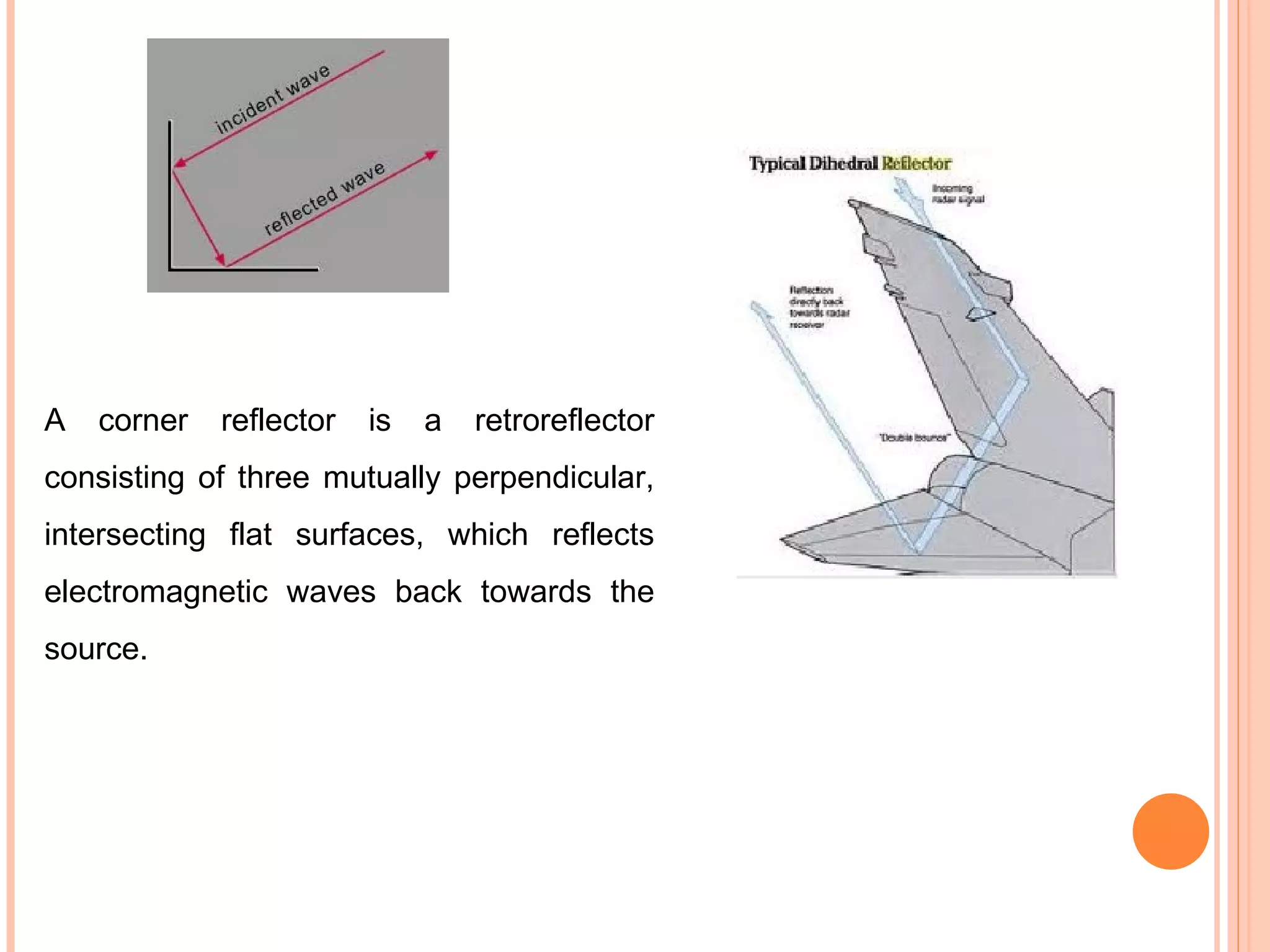
A corner reflector is a retroreflector consisting of three mutually perpendicular, intersecting flat surfaces, which reflects electromagnetic waves back towards the source.
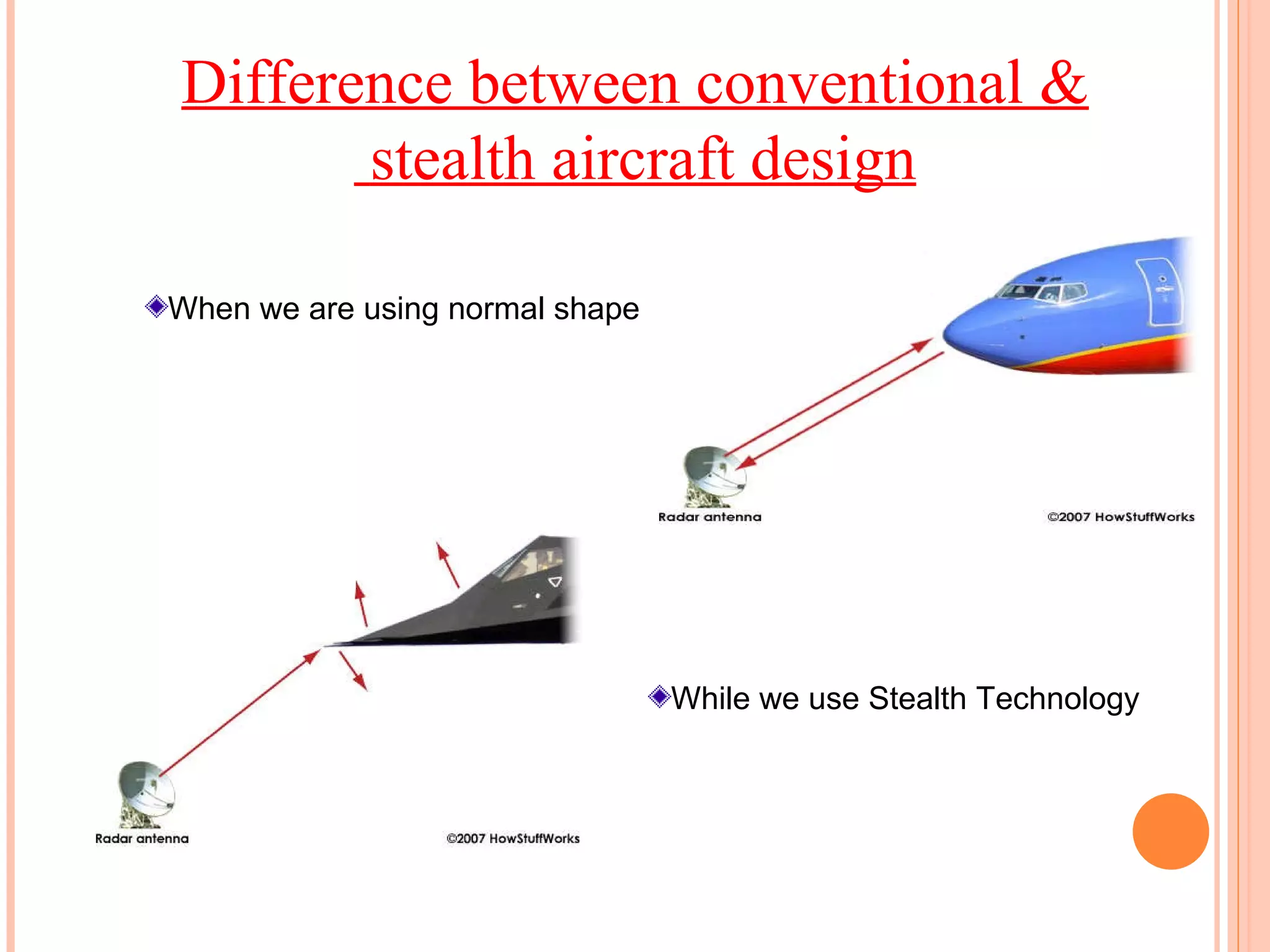
When we are using normal shape While we use Stealth Technology Difference between conventional & stealth aircraft design
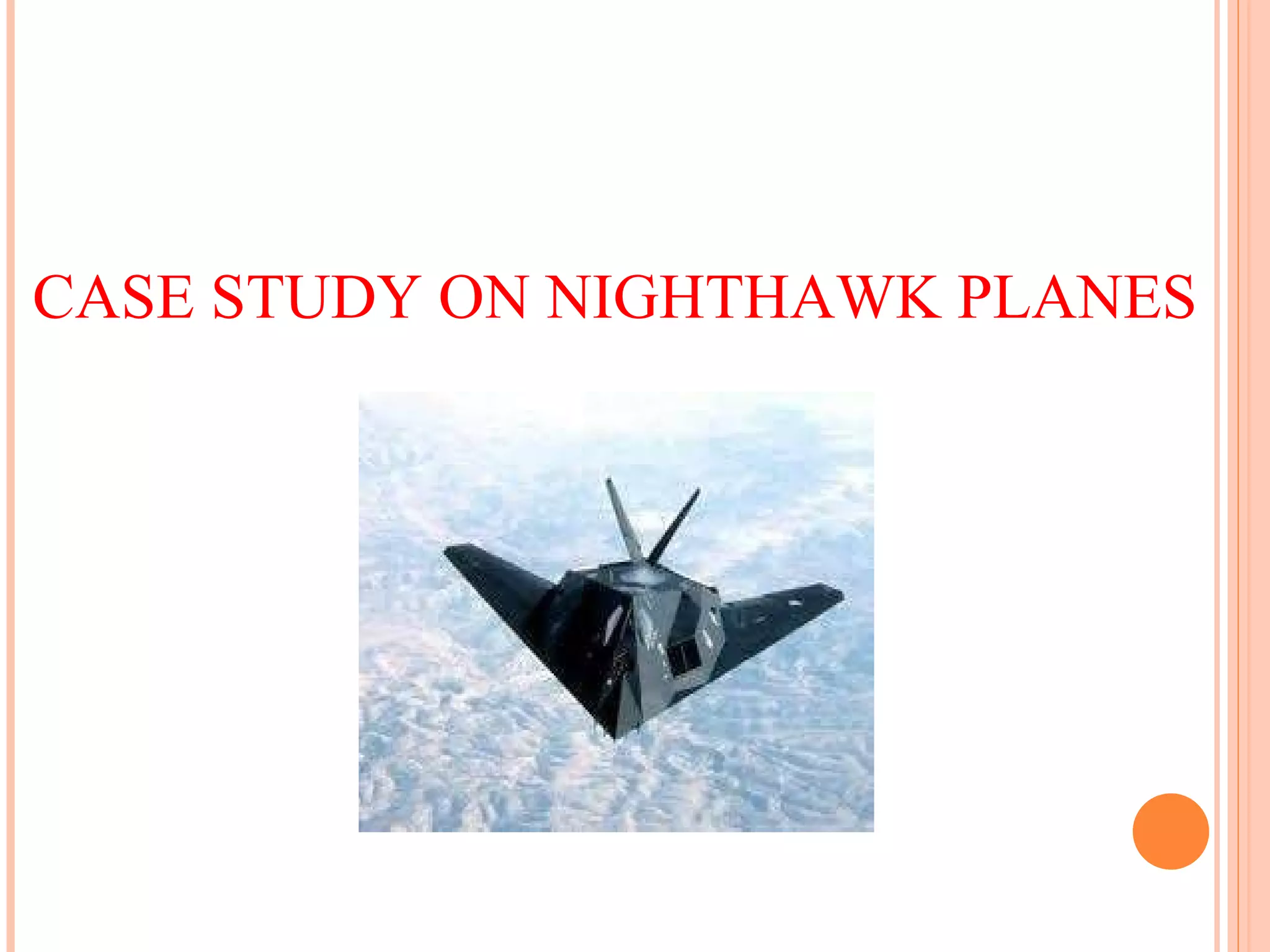
CASE STUDY ON NIGHTHAWK PLANES
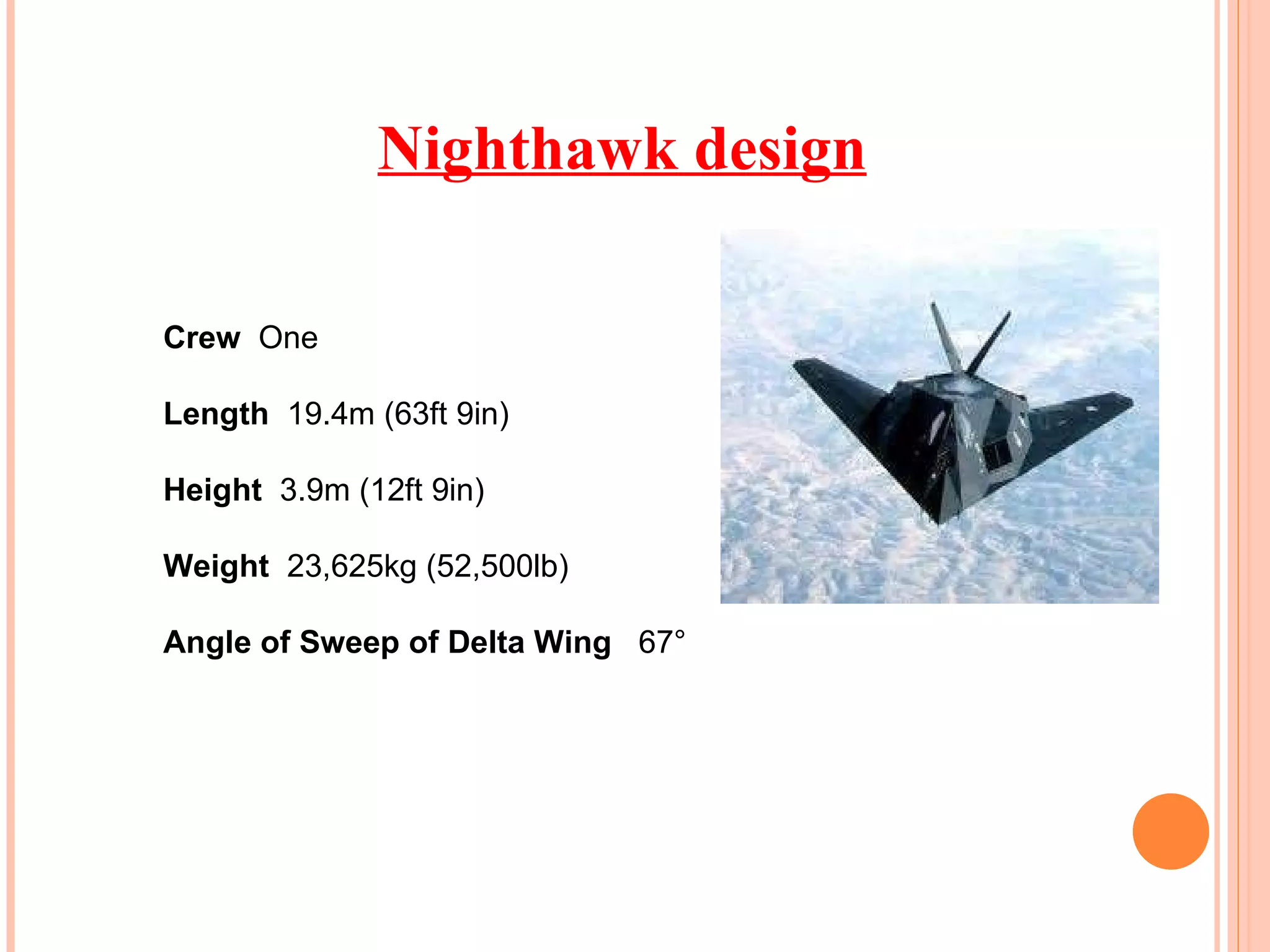
Nighthawk design Crew  One Length  19.4m (63ft 9in) Height  3.9m (12ft 9in) Weight  23,625kg (52,500lb) Angle of Sweep of Delta Wing  67°
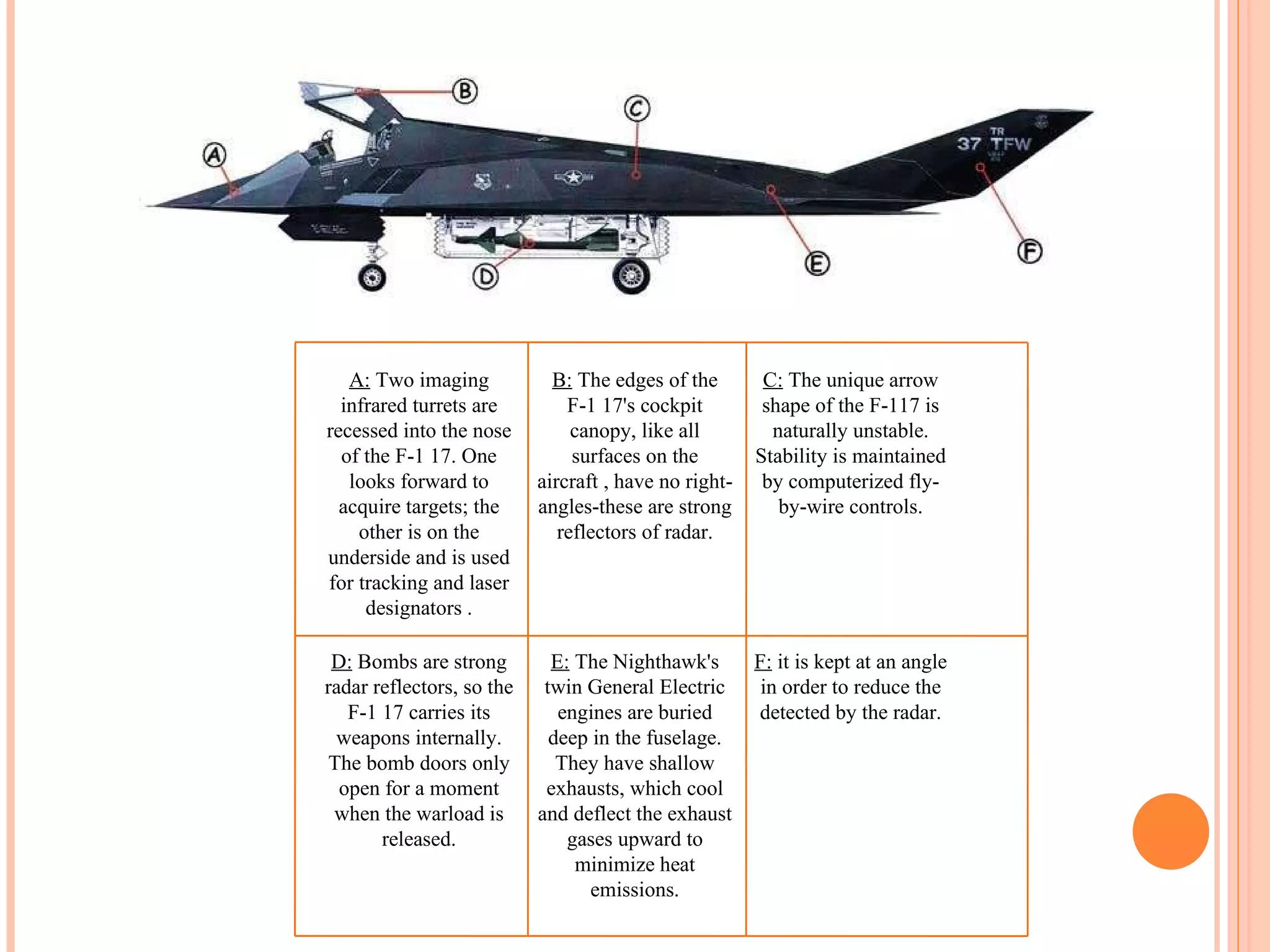
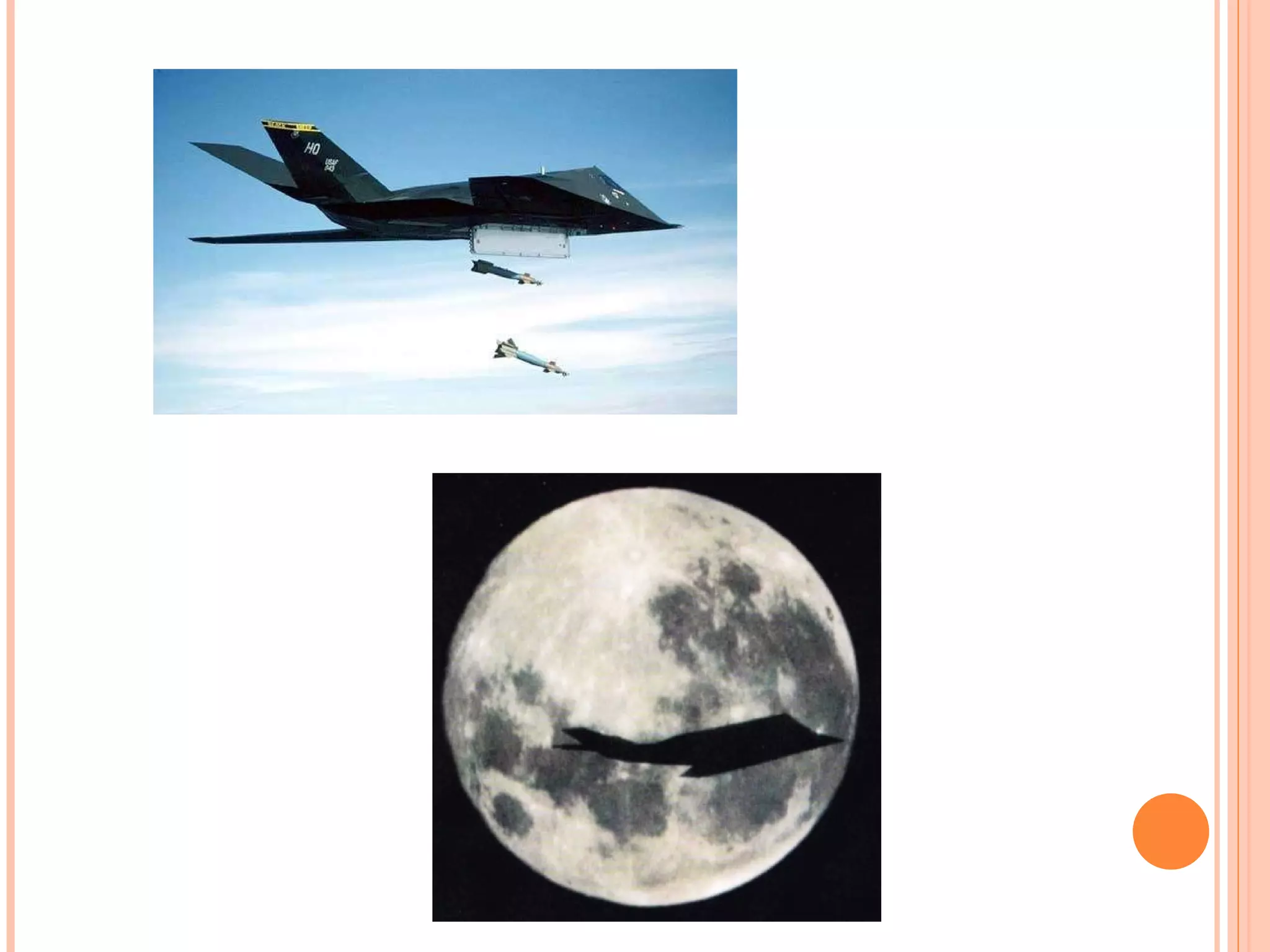
A:  Two imaging infrared turrets are recessed into the nose of the F-1 17. One looks forward to acquire targets; the other is on the underside and is used for tracking and laser designators . B:  The edges of the F-1 17's cockpit canopy, like all surfaces on the aircraft , have no right-angles-these are strong reflectors of radar. C:  The unique arrow shape of the F-117 is naturally unstable. Stability is maintained by computerized fly-by-wire controls. D:  Bombs are strong radar reflectors, so the F-1 17 carries its weapons internally. The bomb doors only open for a moment when the warload is released. E:  The Nighthawk's twin General Electric engines are buried deep in the fuselage. They have shallow exhausts, which cool and deflect the exhaust gases upward to minimize heat emissions. F:  it is kept at an angle in order to reduce the detected by the radar.
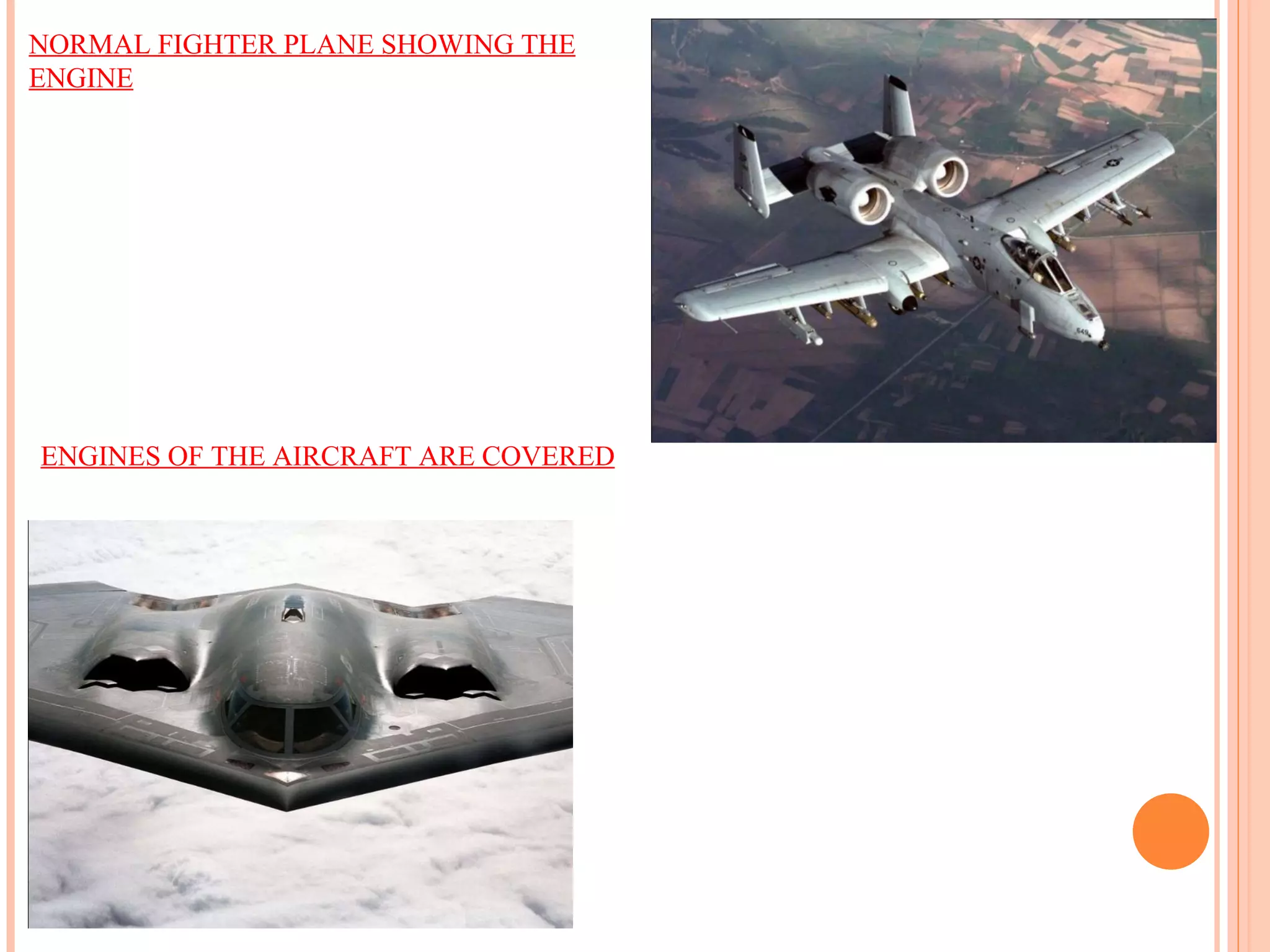
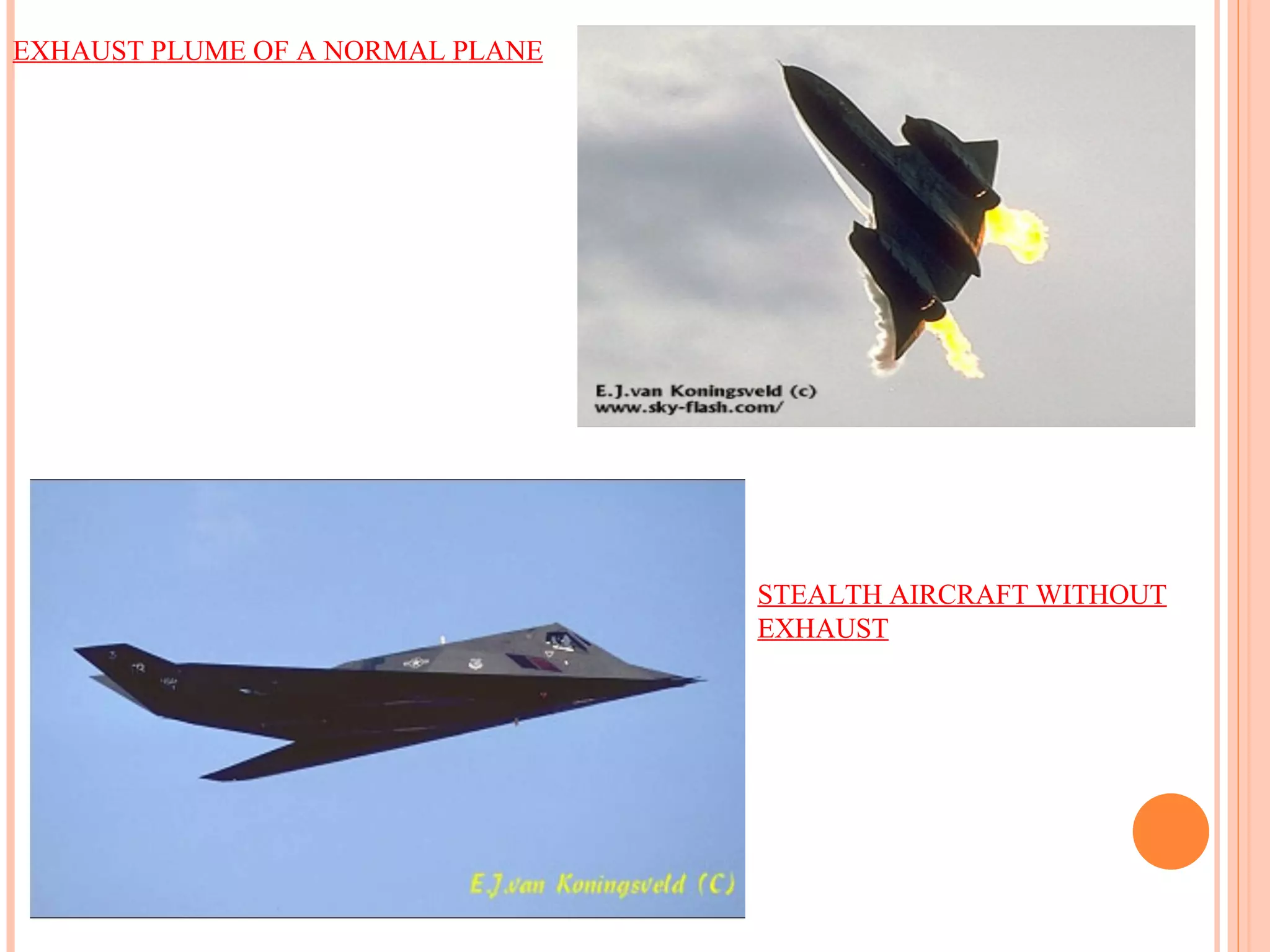
ENGINES OF THE AIRCRAFT ARE COVERED NORMAL FIGHTER PLANE SHOWING THE ENGINE
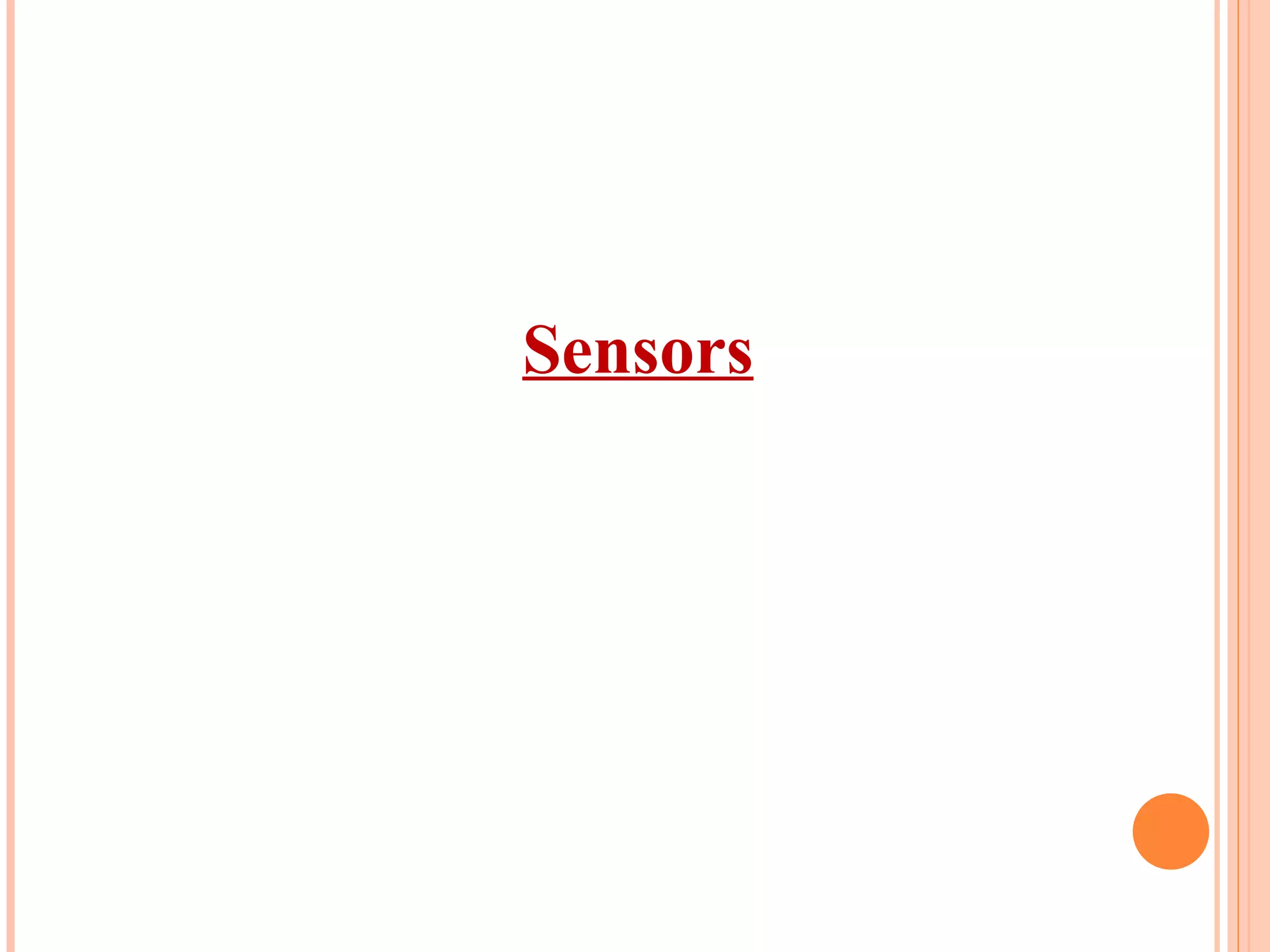
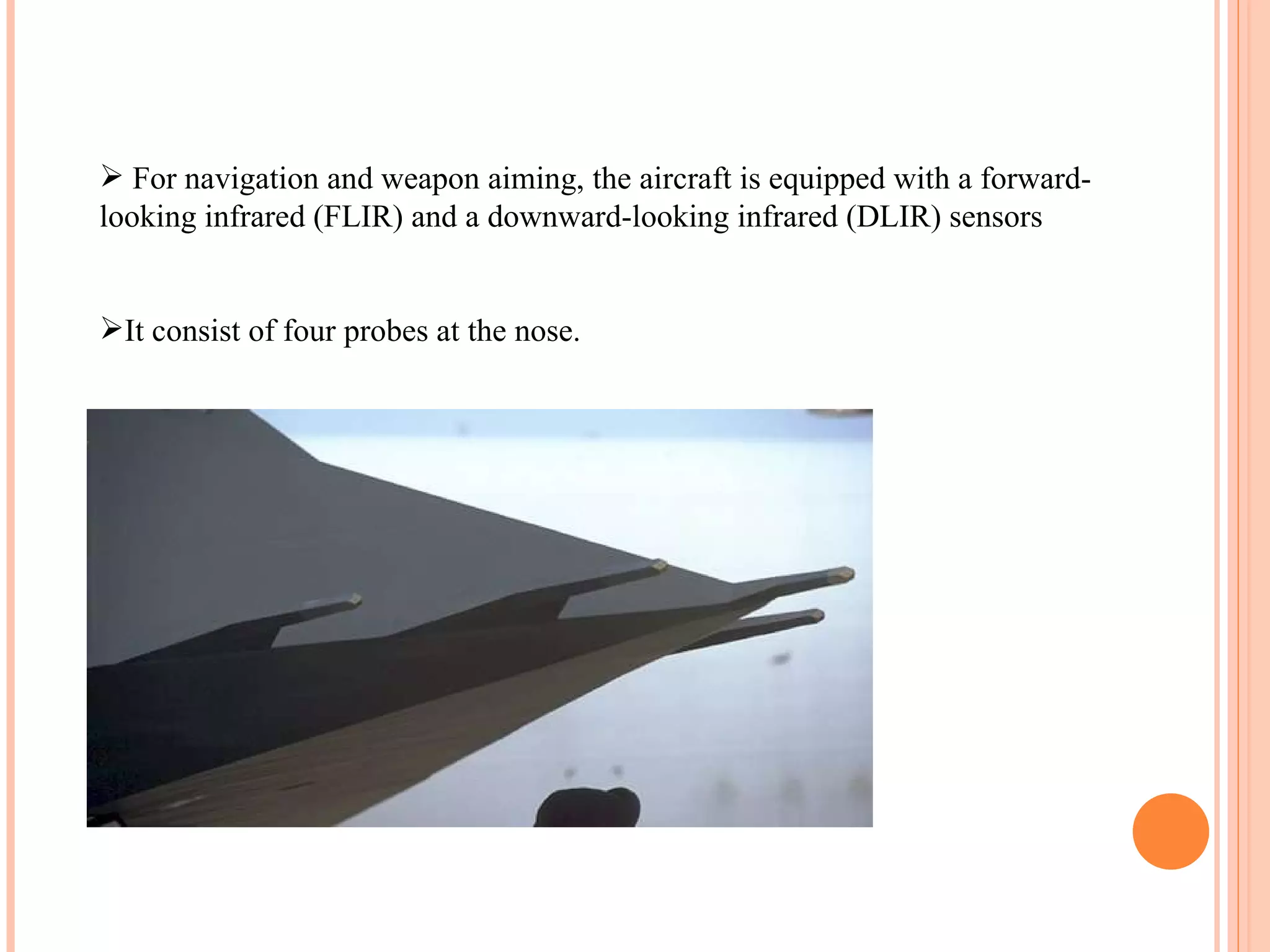
STEALTH AIRCRAFT WITHOUT EXHAUST EXHAUST PLUME OF A NORMAL PLANE
Sensors
For navigation and weapon aiming, the aircraft is equipped with a forward-looking infrared (FLIR) and a downward-looking infrared (DLIR) sensors It consist of four probes at the nose.
COCKPIT
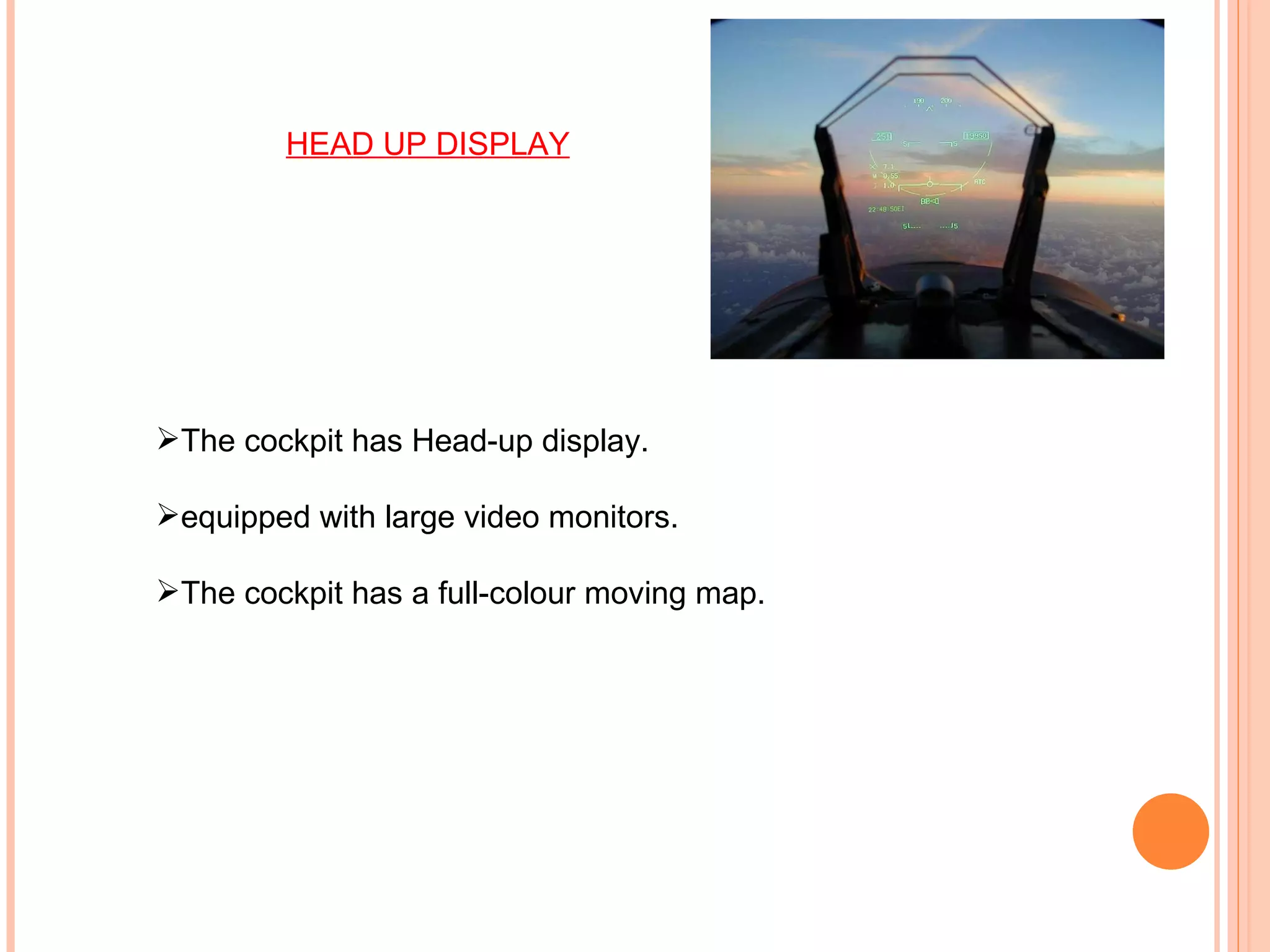
The cockpit has Head-up display.  equipped with large video monitors. The cockpit has a full-colour moving map. HEAD UP DISPLAY
FLIGHT MANAGEMENT
Before flight, mission data is downloaded on to the IBM AP-102 mission control computer, which integrates it with the navigation and flight controls to provide a fully automated flight management system.
 
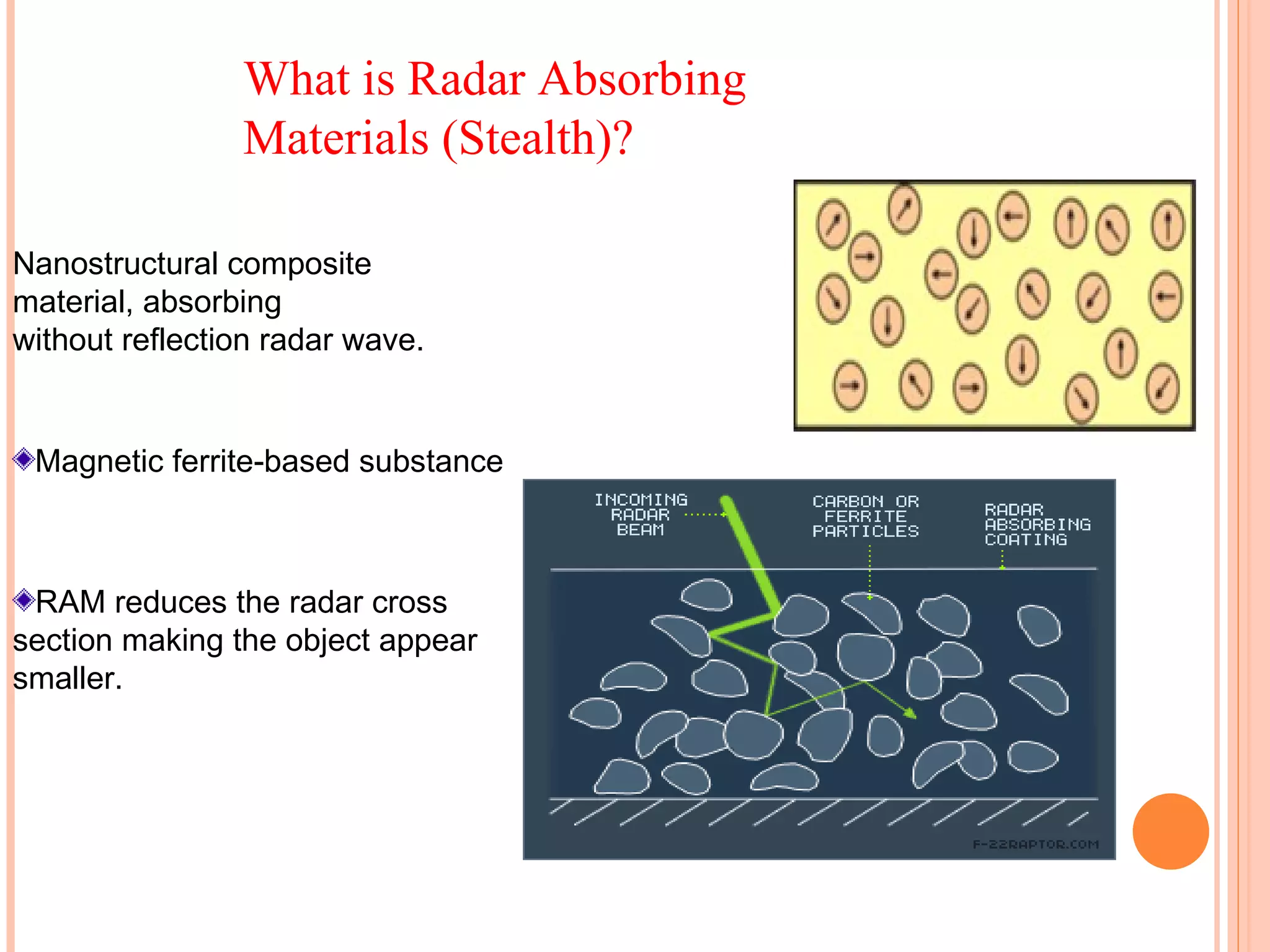
What is Radar Absorbing Materials (Stealth)?  Nanostructural composite  material, absorbing  without reflection radar wave. Magnetic ferrite-based substance   RAM reduces the radar cross section making the object appear smaller.
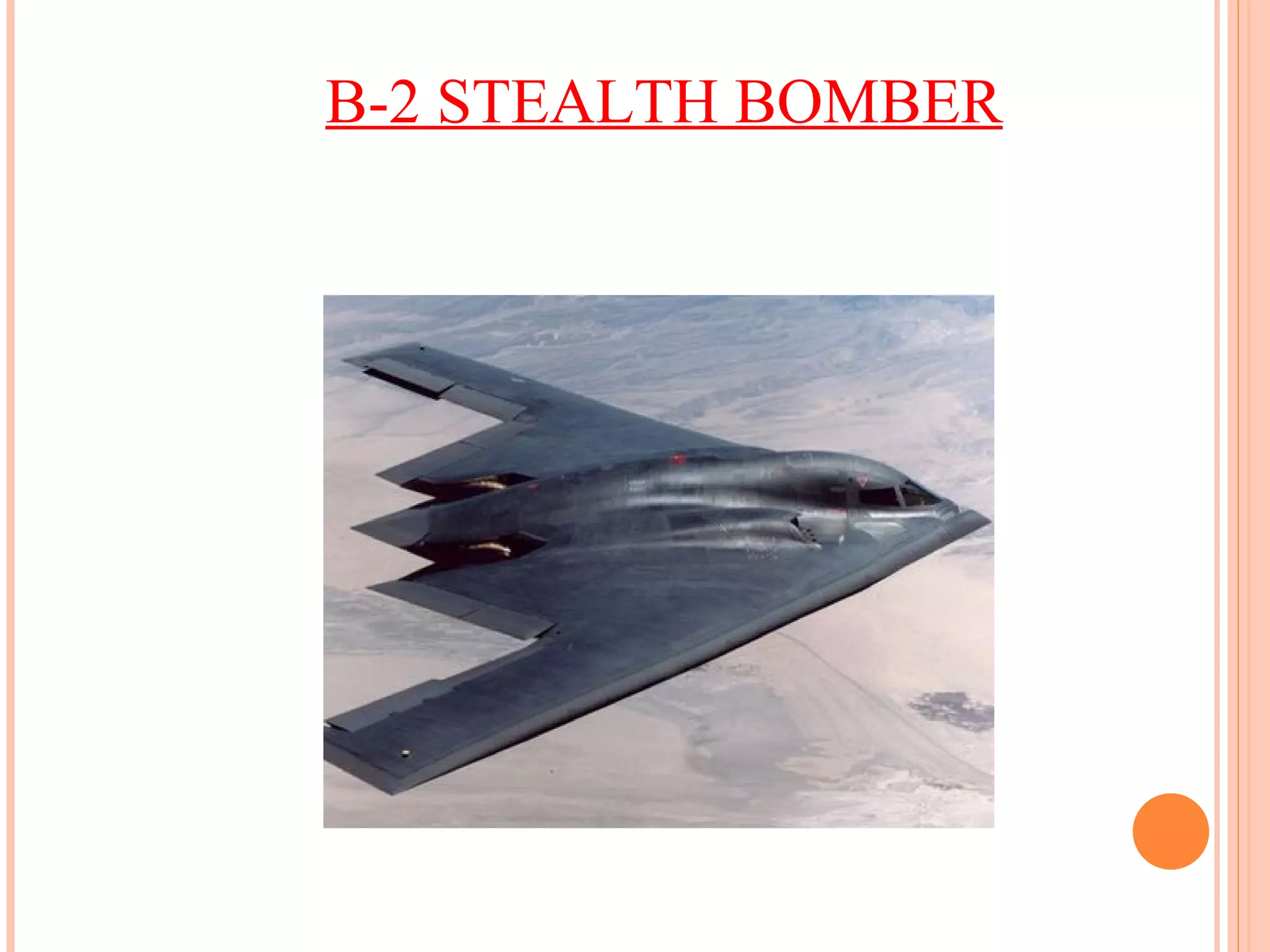
B-2 STEALTH BOMBER
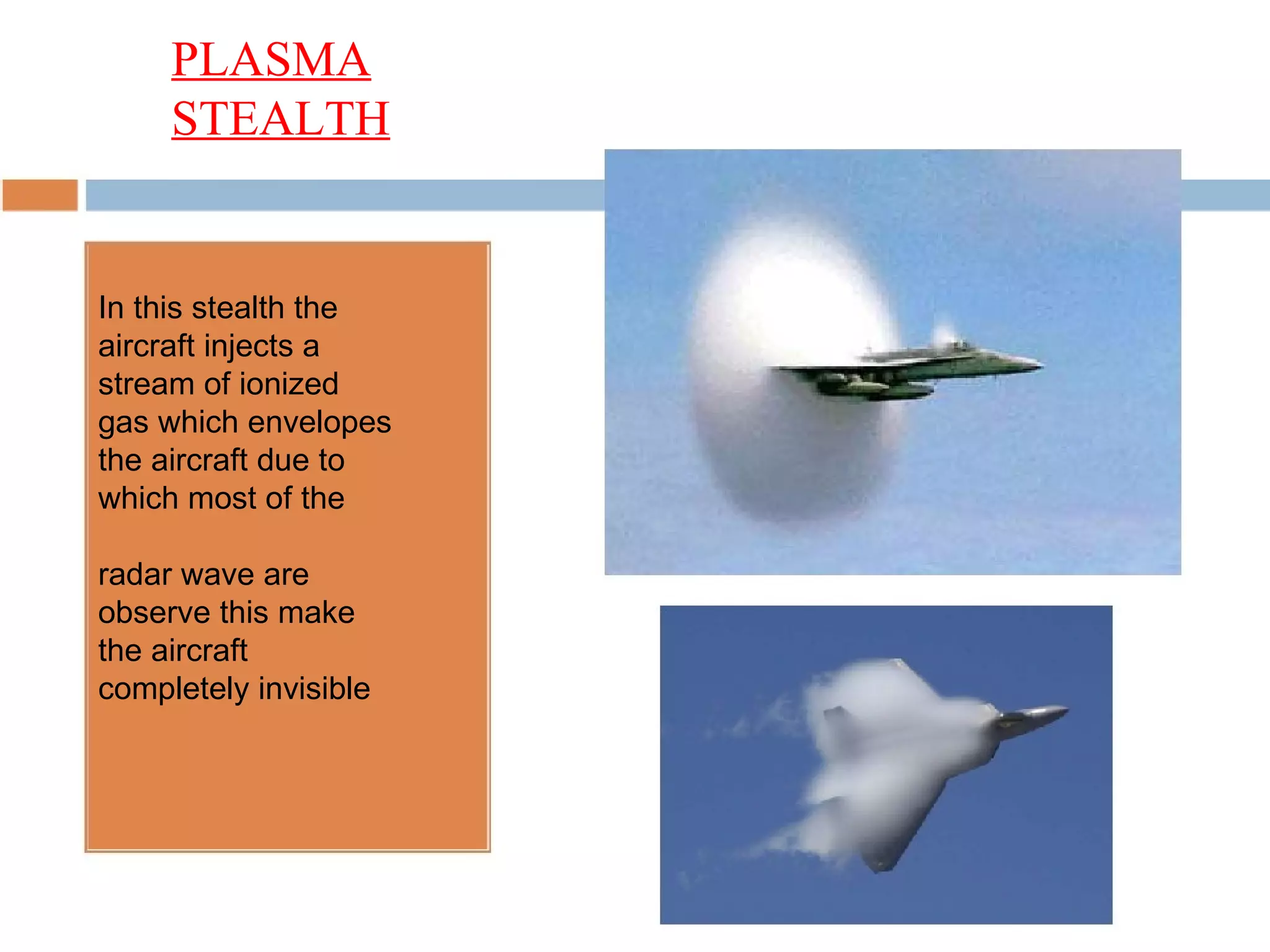
In this stealth the aircraft injects a stream of ionized gas which envelopes the aircraft due to which most of the radar wave are observe this make the aircraft completely invisible PLASMA STEALTH
ADVANTAGE Stealth aircraft are invisable to radar . Develop the military secretes . Saving military budget .
Stealth technology has its own disadvantages like other technologies. Stealth aircraft cannot fly as fast or is not maneuverable like conventional aircraft. Another serious disadvantage with the stealth aircraft is the reduced amount of payload it can carry. On the other hand a conventional aircraft can carry much more payload than any stealth aircraft of its class. Cost of maintenance DISADVANTAGE
CONCLUSION  Stealth technology is a techniques used with Aircrafts, ships order to make them less visible to radar.  Need of Stealth Technology very importance in military field.
REFERENCE: Future Flight: The Next Generation of Aircraft Technology, William D. Siuru , Jhon D. Busick, Published 1933 McGrew-Hill Professional, 194 pages, ISBN 0830643761 Have Blue and the F-117A: Evolution of “Stealth Fighter” , By David C. Aronstein, Albert C Piccirillo, Published 1997 American Institute of Aeronautics and Astronautics, 305 pages, ISBN 1563472457 Stealth technology: The Art of Back Magic , By J. Jones, Matt Thunder http://www.geocities.com/Area51/Shadowlands/6583/projects.html http://en.wikipedia.org/w/index.php?title=Stealth_aitcraft http://en.wikipedia.org/wiki/F-117_Nighthawk
ANY QUERIES
THANK YOU

Stealth tech

  • 1.
  • 2.
    STEALTH TECHNOLOGYPresented By   SUPREETH.S (4MH07ME047) Mysore, karnataka
  • 3.
    CONTENTS INTRODUCTION HISTORYCASE STUDY : F-117 NIGHTHAWK RADAR ABSORBING MATERIALS ADVANTAGES LIMITATIONS CONCLUSION FUTURE STEALTH TECHNOLOGY REFERENCES / BIBLIOGRAPHY
  • 4.
    What is StealthTechnology ? Stealth is a technique in which we can make any object invisible. Stealth is an important technology which used in military operations. Stealth technology also known as LO technology (low observable technology) INTRODUCTION
  • 5.
    HISTORY The first"stealth" aircraft have been developed in Germany during the last years of WWII. This technique has also been used in ships. Later americans worked on stealth technology And suceeded.
  • 6.
    RADAR CROSS-SECTION REDUCTIONSAlmost since the invention of radar, various techniques have been tried to minimize detection. Some of the techniques used for this purpose are: 1. vehicle shape 2. radar absorbing material
  • 7.
    STEALTH VECHICLE SHAPES& DESIGN It should be coated with the Radar Absorbing Materials . It’s tail should kept an ACUTE angle. Planes wings has to kept at Angle . Design of Nose. Stealth aircraft must bury the Engines within the wing or fuselage.
  • 8.
    A corner reflectoris a retroreflector consisting of three mutually perpendicular, intersecting flat surfaces, which reflects electromagnetic waves back towards the source.
  • 9.
    When we areusing normal shape While we use Stealth Technology Difference between conventional & stealth aircraft design
  • 10.
    CASE STUDY ONNIGHTHAWK PLANES
  • 11.
    Nighthawk design Crew One Length 19.4m (63ft 9in) Height 3.9m (12ft 9in) Weight 23,625kg (52,500lb) Angle of Sweep of Delta Wing 67°
  • 12.
    A:  Two imaginginfrared turrets are recessed into the nose of the F-1 17. One looks forward to acquire targets; the other is on the underside and is used for tracking and laser designators . B:  The edges of the F-1 17's cockpit canopy, like all surfaces on the aircraft , have no right-angles-these are strong reflectors of radar. C:  The unique arrow shape of the F-117 is naturally unstable. Stability is maintained by computerized fly-by-wire controls. D:  Bombs are strong radar reflectors, so the F-1 17 carries its weapons internally. The bomb doors only open for a moment when the warload is released. E:  The Nighthawk's twin General Electric engines are buried deep in the fuselage. They have shallow exhausts, which cool and deflect the exhaust gases upward to minimize heat emissions. F:  it is kept at an angle in order to reduce the detected by the radar.
  • 13.
    ENGINES OF THEAIRCRAFT ARE COVERED NORMAL FIGHTER PLANE SHOWING THE ENGINE
  • 14.
    STEALTH AIRCRAFT WITHOUTEXHAUST EXHAUST PLUME OF A NORMAL PLANE
  • 15.
  • 16.
    For navigation andweapon aiming, the aircraft is equipped with a forward-looking infrared (FLIR) and a downward-looking infrared (DLIR) sensors It consist of four probes at the nose.
  • 17.
  • 18.
    The cockpit hasHead-up display. equipped with large video monitors. The cockpit has a full-colour moving map. HEAD UP DISPLAY
  • 19.
  • 20.
    Before flight, missiondata is downloaded on to the IBM AP-102 mission control computer, which integrates it with the navigation and flight controls to provide a fully automated flight management system.
  • 21.
  • 22.
    What is RadarAbsorbing Materials (Stealth)? Nanostructural composite material, absorbing without reflection radar wave. Magnetic ferrite-based substance RAM reduces the radar cross section making the object appear smaller.
  • 23.
  • 24.
    In this stealththe aircraft injects a stream of ionized gas which envelopes the aircraft due to which most of the radar wave are observe this make the aircraft completely invisible PLASMA STEALTH
  • 25.
    ADVANTAGE Stealth aircraftare invisable to radar . Develop the military secretes . Saving military budget .
  • 26.
    Stealth technology hasits own disadvantages like other technologies. Stealth aircraft cannot fly as fast or is not maneuverable like conventional aircraft. Another serious disadvantage with the stealth aircraft is the reduced amount of payload it can carry. On the other hand a conventional aircraft can carry much more payload than any stealth aircraft of its class. Cost of maintenance DISADVANTAGE
  • 27.
    CONCLUSION  Stealthtechnology is a techniques used with Aircrafts, ships order to make them less visible to radar.  Need of Stealth Technology very importance in military field.
  • 28.
    REFERENCE: Future Flight:The Next Generation of Aircraft Technology, William D. Siuru , Jhon D. Busick, Published 1933 McGrew-Hill Professional, 194 pages, ISBN 0830643761 Have Blue and the F-117A: Evolution of “Stealth Fighter” , By David C. Aronstein, Albert C Piccirillo, Published 1997 American Institute of Aeronautics and Astronautics, 305 pages, ISBN 1563472457 Stealth technology: The Art of Back Magic , By J. Jones, Matt Thunder http://www.geocities.com/Area51/Shadowlands/6583/projects.html http://en.wikipedia.org/w/index.php?title=Stealth_aitcraft http://en.wikipedia.org/wiki/F-117_Nighthawk
  • 29.
  • 30.