Dr.V.NAGARJUNA
Fellow Critical Care
AWARE GLOBAL HOSPITAL
STATUS EPILEPTICUS
STATUS EPILEPTICUS
•Medical emergency
•Requires prompt intervention to
prevent irreversible brain
damage
DEFINITION
Seizure activity more than 30
minutes.
OR
Intermittent seizures with no
regaining of consciousness
between seizures
ACCEPTED DEFINITION
>5 minutes of continuous seizure activity.
or
2 or more discrete seizures with no intervening recovery of
consciousness
Seizures persisting beyond this duration are unlikely to cease
spontaneously & more likely to cause irreversible brain
damage
CLASSIFICATION OF STATUS
EPILEPTICUS
•Status epilepticus is classified in to
two categories
1.Generalized Convulsive Status
Epilepticus(GCSE)
2.Non Convulsive Status
Epilepticus(NCSE)
GCSE
•Seizures are primary or
secondarily generalised
•Patient has generalised tonic &/or
clonic convulsive movements with
loss of consciousness
NCSE
Altered consciousness and EEG
evidence of seizures without
convulsive movements
May evolve from GCSE when
electrical seizure activity continues
with loss of motor manifestations
PATHOPHYSIOLOGY
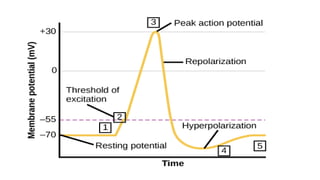
•Imbalance between inhibitory &
excitatory mechanisms
•GABA(A) receptor mediated
inhibition
•NMDA receptor mediated
excitation
INHIBITORY MECHANISM
Major inhibitory mechanism is
GABA acting on GABA(A) receptor
Causes:
Cl- influx
Hyperpolarization
EXCITATORY MECHANISM
•Major excitatory mechanism is
glutamine acting on N-methyl-D-
aspartate(NMDA) receptors
Causes:
Calcium influx
Depolarization
NEURONAL CIRCIUT INJURY
•Pathophysiological effects of
seizures on the brain are directly
due to excito- toxic effect &
mitochondrial dysfunction &
secondary to systemic
complications such as hypoxia ,
hyperthermia.
ETIOLOGY
•Status epilepticus may occur de
novo(approximately 60% of
presentations) or less commonly
in a previously diagnosed
epileptic.
CAUSES OF SE IN ADULTS
• Low antiepileptic drug levels
• Stroke-Ischemic/haemorrhagic
• Electrolyte
disturbances(Hyponatraemia,hypocalcemia,hypomagnesemia)
• Hypoglycaemia/Hyperglycaemia
• Cerebral hypoxia
• Alcohol-withdrawal
• Head trauma
• Organ failure-uraemia/hepatic encephalopathy
CAUES OF SE IN ADULTS
•Drug toxicity—
cephalosporins,isoniazid,tranexamic
acid,cocaine,theophylline)
•CNS tumors-primary/secondary
•Hypertensive encephalopathy/eclampsia
•Immunological disorders-Hashimotos
encephalopathy,cerebral lupus
GENERALISED CONVULSIVE STATUS
EPILEPTICUS
GCSE is the most common &
dangerous type accounts for
approximately 75%
GCSE CLINICAL PRESENTATION
•May range from overt GTCS to subtle convulsive
movements in a profoundly comatose patient
.May be tonic or clonic
Symmetrical or asymmetrical
.Late GCSE may show only small amplitude
twitching movements of the face ,hands , or feet
and also nystagmoid jerking of the eyes
EEG CHANGES
Predictable sequence of EEG changes during
untreated GCSE
1.Waxing & waning pattern
2.Continuous monomorphic discharges
3.Increasing periods of electrographic silence
4.Periodic epileptiform discharges on a
relatively flat background
PHYSIOLOGICAL EFFECTS IN GCSE
• Hypoxia
• Respiratory acidosis
• Lactic acidosis
• Hyperpyrexia
• Hypertension(early)/Hypotension (late)
• Hyperglycemia (Early)
• Hypoglycemia (Late)
• Tachycardia
• Intracranial hypertension
• Aspiration pneumonitis
• Rhabdomyolysis
• Neurogenic pulmonary edema
GCSE Vs PSEDOSEIZURES
•Differentiate between true
seizures & pseudoseizures
•Pseustatus misdiagnosed as true
SE is often refractory to initial
therapy & can lead to patients
receiving GA & MV
Features suggestive of pseudoseizures
.Lack of sustained convulsions(on-off)
.Increase in movement if restrained is applied
.Abolition of motor movements with reassurance or
suggestion
.Resistance to eye opening & gaze aversion
.Absence of pupillary dilatation
Normal tendon reflexes & plantar responses immediately
after convulsion
.Lack of metabolic consequences
NCSE
• Accounts for 25% of SE
• Diagnosis of NCSE requires an altered conscious state, no
overt seizure activity and EEG with epileptiform discharges
• A response to intravenous antiepileptic drugs(Eg:BZDs)
with clinical improvement & resolution EEG epileptic
activity is helpful in confirming the diagnosis
• NCSE should be considered in any patient with an
unexplained altered conscious state , particularly those
with CNS injury , metabolic disturbance , hepatic
encephalopathy or sepsis
DD of NCSE includes
•Metabolic encephalopathy
•Drug intoxication
•Cerebrovascular disease
•Psychiatric syndromes(Acute
psychosis)
•Post-ictal confusion
INVESTIGATIONS IN SE
•Initial studies include
glucose,electrolytes Na+,K+,calcium ,
magnesim),urea
ABG analysis
Anticonvulsant drug levels
Full blood count
Urine analysis
Further investigations after
stabilization
•LFT
•Lactate
•Creatine kinase
•Toxicology screen
•Lumbar puncture
•Electroencephalogram
•Brain imaging with CT or MRI
OTHER FORMS OF STATUS
EPILEPTICUS
•Refractory SE:Failure of initial therapy
such as BZDs & phenytoin, usually
necessitating treatment with agents
that induce general anaesthesia
•It develops in about 1 in 5 patients
with an SE
•Associated with a worse prognosis
OTHER FORMS OF SE
•SUPER REFRACTORY SE:
Continuation or recurrence of SE
beyond 24 hours of anaesthetic
therapy
MANAGEMENT
1.Initial resuscitation
Assess A,B,C,sensorium
Initial priority in an ongoing seizure patient is airway
protection
This can be achieved by proper positioning,oral suctioning &
oral/nasopharyngeal airway devices
If necessary, the patient should be intubated
Obtain IV access & draw blood for investigations
Blood glucose should be checked
MANAGEMENT
•If patient is hypoglycaemic give
glucose
•Adults: Give thiamine 100mg IV
& 100ml of 25% glucose IV
SEIZURE CONTROL
A.Give BZDs
Diazepam:0.2 mg/kg i.v at 5
mg/min
OR
Lorazepam:0.1 mg/kg i.v at
2mg/min
SEIZURE CONTROL
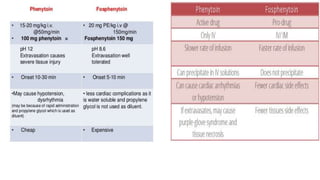
•If seizures persist:
Phenytoin:15-20mg/kg at
</=50mg/min
OR
Fosphenytoin:15-20mg/kg at
</=150mg/min
SEIZURE CONTROL
• If seizures persist(refractory SE) intubate & ventilate patient
Thiopental:Slow bolus 3-5mg/kg i.v followed by infusion 1-5mg/kg
per hour
OR
Propofol:Slow bolus 1-2mg/kg i.v followed by infusion 2-5mg/kg per
hour
Titrate doses based on clinical & electrographic evidence of seizures,
targeting electrographic suppression of seizures.
Monitor BP>maintain normo-tension by reducing infusion
rates/giving fluids/pressor agents if required
SEIZURE CONTROL
.Start reducing propofol or thiopental,

approximately 12 hours after resolution of
seizures
.Continuous EEG monitoring is required
Observe for further clinical /electrographic
seizures.If seizures recur,reinstate the infusion
as long as the patients seizures remain
refractory
In addition
•Look for & treat cause &
precipitant
•Look for & treat complications
like hypotension,hyperthermia
& rhabdomyolysis
SURGERY IN REFRACTORY SE
•Procedures based on standard
epilepsy surgery
Success has been reported with
focal resections,subpial
transections,corpus
callosotomy,hemispherectomy
OUT COME
•Depends on age,etiology,degree of
impairment of consciousness
•Refractory & super refractory>>worse
prognosis
•No irreversible brain damage>>Good
recovery is possible even after weeks
of Status epilepticus
THANK YOU

Status epilepticus

  • 1.
  • 2.
  • 3.
    STATUS EPILEPTICUS •Medical emergency •Requiresprompt intervention to prevent irreversible brain damage
  • 4.
    DEFINITION Seizure activity morethan 30 minutes. OR Intermittent seizures with no regaining of consciousness between seizures
  • 5.
    ACCEPTED DEFINITION >5 minutesof continuous seizure activity. or 2 or more discrete seizures with no intervening recovery of consciousness Seizures persisting beyond this duration are unlikely to cease spontaneously & more likely to cause irreversible brain damage
  • 6.
    CLASSIFICATION OF STATUS EPILEPTICUS •Statusepilepticus is classified in to two categories 1.Generalized Convulsive Status Epilepticus(GCSE) 2.Non Convulsive Status Epilepticus(NCSE)
  • 7.
    GCSE •Seizures are primaryor secondarily generalised •Patient has generalised tonic &/or clonic convulsive movements with loss of consciousness
  • 8.
    NCSE Altered consciousness andEEG evidence of seizures without convulsive movements May evolve from GCSE when electrical seizure activity continues with loss of motor manifestations
  • 9.
    PATHOPHYSIOLOGY •Imbalance between inhibitory& excitatory mechanisms •GABA(A) receptor mediated inhibition •NMDA receptor mediated excitation
  • 11.
    INHIBITORY MECHANISM Major inhibitorymechanism is GABA acting on GABA(A) receptor Causes: Cl- influx Hyperpolarization
  • 12.
    EXCITATORY MECHANISM •Major excitatorymechanism is glutamine acting on N-methyl-D- aspartate(NMDA) receptors Causes: Calcium influx Depolarization
  • 13.
    NEURONAL CIRCIUT INJURY •Pathophysiologicaleffects of seizures on the brain are directly due to excito- toxic effect & mitochondrial dysfunction & secondary to systemic complications such as hypoxia , hyperthermia.
  • 14.
    ETIOLOGY •Status epilepticus mayoccur de novo(approximately 60% of presentations) or less commonly in a previously diagnosed epileptic.
  • 15.
    CAUSES OF SEIN ADULTS • Low antiepileptic drug levels • Stroke-Ischemic/haemorrhagic • Electrolyte disturbances(Hyponatraemia,hypocalcemia,hypomagnesemia) • Hypoglycaemia/Hyperglycaemia • Cerebral hypoxia • Alcohol-withdrawal • Head trauma • Organ failure-uraemia/hepatic encephalopathy
  • 16.
    CAUES OF SEIN ADULTS •Drug toxicity— cephalosporins,isoniazid,tranexamic acid,cocaine,theophylline) •CNS tumors-primary/secondary •Hypertensive encephalopathy/eclampsia •Immunological disorders-Hashimotos encephalopathy,cerebral lupus
  • 17.
    GENERALISED CONVULSIVE STATUS EPILEPTICUS GCSEis the most common & dangerous type accounts for approximately 75%
  • 18.
    GCSE CLINICAL PRESENTATION •Mayrange from overt GTCS to subtle convulsive movements in a profoundly comatose patient .May be tonic or clonic Symmetrical or asymmetrical .Late GCSE may show only small amplitude twitching movements of the face ,hands , or feet and also nystagmoid jerking of the eyes
  • 19.
    EEG CHANGES Predictable sequenceof EEG changes during untreated GCSE 1.Waxing & waning pattern 2.Continuous monomorphic discharges 3.Increasing periods of electrographic silence 4.Periodic epileptiform discharges on a relatively flat background
  • 20.
    PHYSIOLOGICAL EFFECTS INGCSE • Hypoxia • Respiratory acidosis • Lactic acidosis • Hyperpyrexia • Hypertension(early)/Hypotension (late) • Hyperglycemia (Early) • Hypoglycemia (Late) • Tachycardia • Intracranial hypertension • Aspiration pneumonitis • Rhabdomyolysis • Neurogenic pulmonary edema
  • 21.
    GCSE Vs PSEDOSEIZURES •Differentiatebetween true seizures & pseudoseizures •Pseustatus misdiagnosed as true SE is often refractory to initial therapy & can lead to patients receiving GA & MV
  • 22.
    Features suggestive ofpseudoseizures .Lack of sustained convulsions(on-off) .Increase in movement if restrained is applied .Abolition of motor movements with reassurance or suggestion .Resistance to eye opening & gaze aversion .Absence of pupillary dilatation Normal tendon reflexes & plantar responses immediately after convulsion .Lack of metabolic consequences
  • 23.
    NCSE • Accounts for25% of SE • Diagnosis of NCSE requires an altered conscious state, no overt seizure activity and EEG with epileptiform discharges • A response to intravenous antiepileptic drugs(Eg:BZDs) with clinical improvement & resolution EEG epileptic activity is helpful in confirming the diagnosis • NCSE should be considered in any patient with an unexplained altered conscious state , particularly those with CNS injury , metabolic disturbance , hepatic encephalopathy or sepsis
  • 24.
    DD of NCSEincludes •Metabolic encephalopathy •Drug intoxication •Cerebrovascular disease •Psychiatric syndromes(Acute psychosis) •Post-ictal confusion
  • 25.
    INVESTIGATIONS IN SE •Initialstudies include glucose,electrolytes Na+,K+,calcium , magnesim),urea ABG analysis Anticonvulsant drug levels Full blood count Urine analysis
  • 26.
    Further investigations after stabilization •LFT •Lactate •Creatinekinase •Toxicology screen •Lumbar puncture •Electroencephalogram •Brain imaging with CT or MRI
  • 27.
    OTHER FORMS OFSTATUS EPILEPTICUS •Refractory SE:Failure of initial therapy such as BZDs & phenytoin, usually necessitating treatment with agents that induce general anaesthesia •It develops in about 1 in 5 patients with an SE •Associated with a worse prognosis
  • 28.
    OTHER FORMS OFSE •SUPER REFRACTORY SE: Continuation or recurrence of SE beyond 24 hours of anaesthetic therapy
  • 29.
    MANAGEMENT 1.Initial resuscitation Assess A,B,C,sensorium Initialpriority in an ongoing seizure patient is airway protection This can be achieved by proper positioning,oral suctioning & oral/nasopharyngeal airway devices If necessary, the patient should be intubated Obtain IV access & draw blood for investigations Blood glucose should be checked
  • 30.
    MANAGEMENT •If patient ishypoglycaemic give glucose •Adults: Give thiamine 100mg IV & 100ml of 25% glucose IV
  • 31.
    SEIZURE CONTROL A.Give BZDs Diazepam:0.2mg/kg i.v at 5 mg/min OR Lorazepam:0.1 mg/kg i.v at 2mg/min
  • 32.
    SEIZURE CONTROL •If seizurespersist: Phenytoin:15-20mg/kg at </=50mg/min OR Fosphenytoin:15-20mg/kg at </=150mg/min
  • 34.
    SEIZURE CONTROL • Ifseizures persist(refractory SE) intubate & ventilate patient Thiopental:Slow bolus 3-5mg/kg i.v followed by infusion 1-5mg/kg per hour OR Propofol:Slow bolus 1-2mg/kg i.v followed by infusion 2-5mg/kg per hour Titrate doses based on clinical & electrographic evidence of seizures, targeting electrographic suppression of seizures. Monitor BP>maintain normo-tension by reducing infusion rates/giving fluids/pressor agents if required
  • 35.
    SEIZURE CONTROL .Start reducingpropofol or thiopental, approximately 12 hours after resolution of seizures .Continuous EEG monitoring is required Observe for further clinical /electrographic seizures.If seizures recur,reinstate the infusion as long as the patients seizures remain refractory
  • 36.
    In addition •Look for& treat cause & precipitant •Look for & treat complications like hypotension,hyperthermia & rhabdomyolysis
  • 37.
    SURGERY IN REFRACTORYSE •Procedures based on standard epilepsy surgery Success has been reported with focal resections,subpial transections,corpus callosotomy,hemispherectomy
  • 38.
    OUT COME •Depends onage,etiology,degree of impairment of consciousness •Refractory & super refractory>>worse prognosis •No irreversible brain damage>>Good recovery is possible even after weeks of Status epilepticus
  • 39.