starch   Brad Ogden Brianna Sculley
Molecule Type:  Carbohydrate Chemical Formula:   C 6 H 10 O 5 Starches are polymers of glucose.
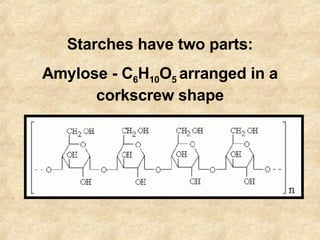
Starches have two parts: Amylose - C 6 H 10 O 5  arranged in a corkscrew shape
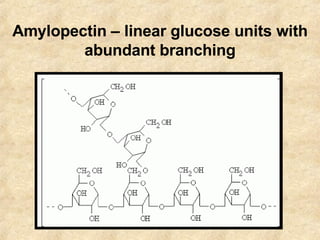
Amylopectin – linear glucose units with abundant branching
Functions of Starches - Plants Plant cells can change glucose (obtained from and during photosynthesis) into starch as a way for them to store sugar Plants tend to store it as starch during the day and sugar at night in the green leaves
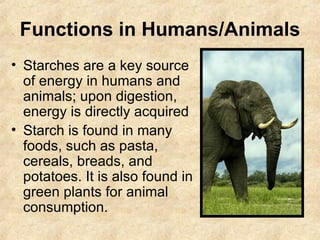
Functions in Humans/Animals Starches are a key source of energy in humans and animals; upon digestion, energy is directly acquired  Starch is found in many foods, such as pasta, cereals, breads, and potatoes. It is also found in green plants for animal consumption.
Functions of Starch in Society Starch is used to stiffen yarn, package products for shipping in a way that betters the environment, give a glossy look to fancy paper, and more Corn starch is a common ingredient in American cooking today
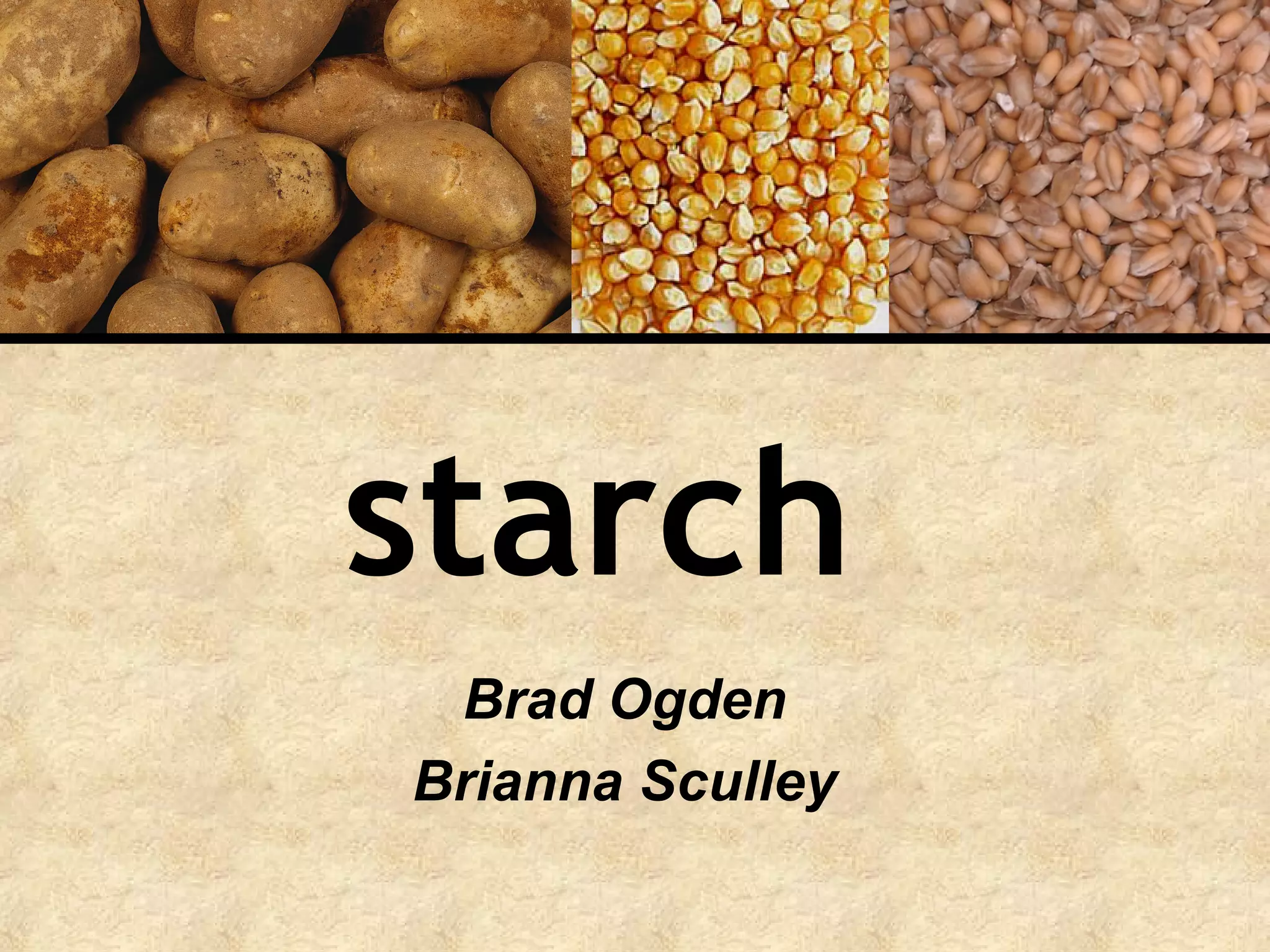
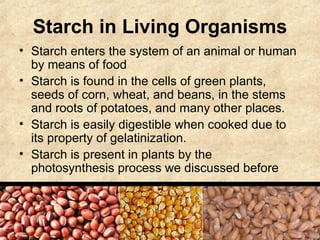
Starch in Living Organisms Starch enters the system of an animal or human by means of food Starch is found in the cells of green plants, seeds of corn, wheat, and beans, in the stems and roots of potatoes, and many other places.  Starch is easily digestible when cooked due to its property of gelatinization. Starch is present in plants by the photosynthesis process we discussed before
The Effect Starch energizes humans and animals, and is the way that plants can store glucose obtained from photosynthesis
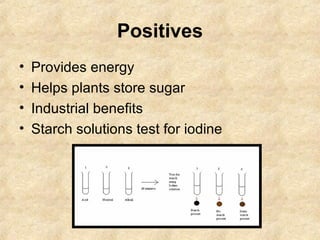
Positives Provides energy Helps plants store sugar Industrial benefits Starch solutions test for iodine
Negatives Hard to digest when uncooked Overall a very positive molecule!
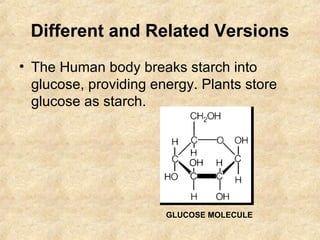
Different and Related Versions The Human body breaks starch into glucose, providing energy. Plants store glucose as starch. GLUCOSE MOLECULE
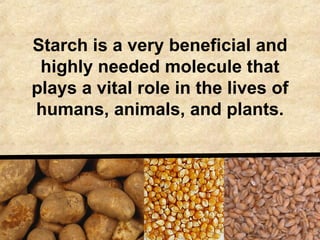
Starch is a very beneficial and highly needed molecule that plays a vital role in the lives of humans, animals, and plants.

Starch Pp

  • 1.
    starch Brad Ogden Brianna Sculley
  • 2.
    Molecule Type: Carbohydrate Chemical Formula: C 6 H 10 O 5 Starches are polymers of glucose.
  • 3.
    Starches have twoparts: Amylose - C 6 H 10 O 5 arranged in a corkscrew shape
  • 4.
    Amylopectin – linearglucose units with abundant branching
  • 5.
    Functions of Starches- Plants Plant cells can change glucose (obtained from and during photosynthesis) into starch as a way for them to store sugar Plants tend to store it as starch during the day and sugar at night in the green leaves
  • 6.
    Functions in Humans/AnimalsStarches are a key source of energy in humans and animals; upon digestion, energy is directly acquired Starch is found in many foods, such as pasta, cereals, breads, and potatoes. It is also found in green plants for animal consumption.
  • 7.
    Functions of Starchin Society Starch is used to stiffen yarn, package products for shipping in a way that betters the environment, give a glossy look to fancy paper, and more Corn starch is a common ingredient in American cooking today
  • 8.
    Starch in LivingOrganisms Starch enters the system of an animal or human by means of food Starch is found in the cells of green plants, seeds of corn, wheat, and beans, in the stems and roots of potatoes, and many other places. Starch is easily digestible when cooked due to its property of gelatinization. Starch is present in plants by the photosynthesis process we discussed before
  • 9.
    The Effect Starchenergizes humans and animals, and is the way that plants can store glucose obtained from photosynthesis
  • 10.
    Positives Provides energyHelps plants store sugar Industrial benefits Starch solutions test for iodine
  • 11.
    Negatives Hard todigest when uncooked Overall a very positive molecule!
  • 12.
    Different and RelatedVersions The Human body breaks starch into glucose, providing energy. Plants store glucose as starch. GLUCOSE MOLECULE
  • 13.
    Starch is avery beneficial and highly needed molecule that plays a vital role in the lives of humans, animals, and plants.