
STAPHYLOCOCCUS AUREUS
Infection
Amjad Khan Afridi
Lecturer,
Department of Health & Biological Sciences
Abasyn University Peshawar
Chapter # 4
STAPHYLOCOCCUS AUREUS BASIC CHARACTERISTICS
• Description
• The term ‘aureus’ is derived from Latin, which refers to the color of gold.
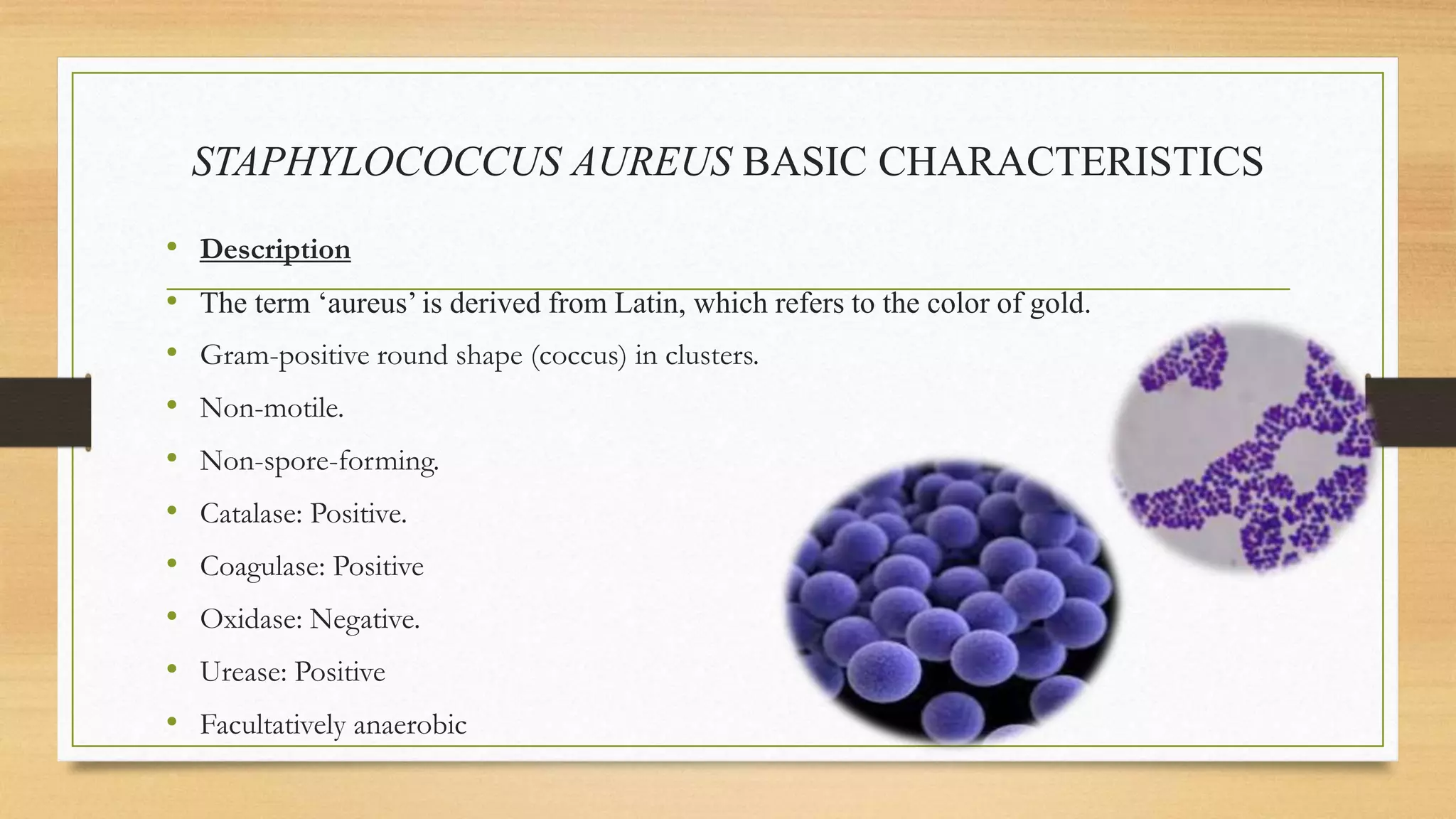
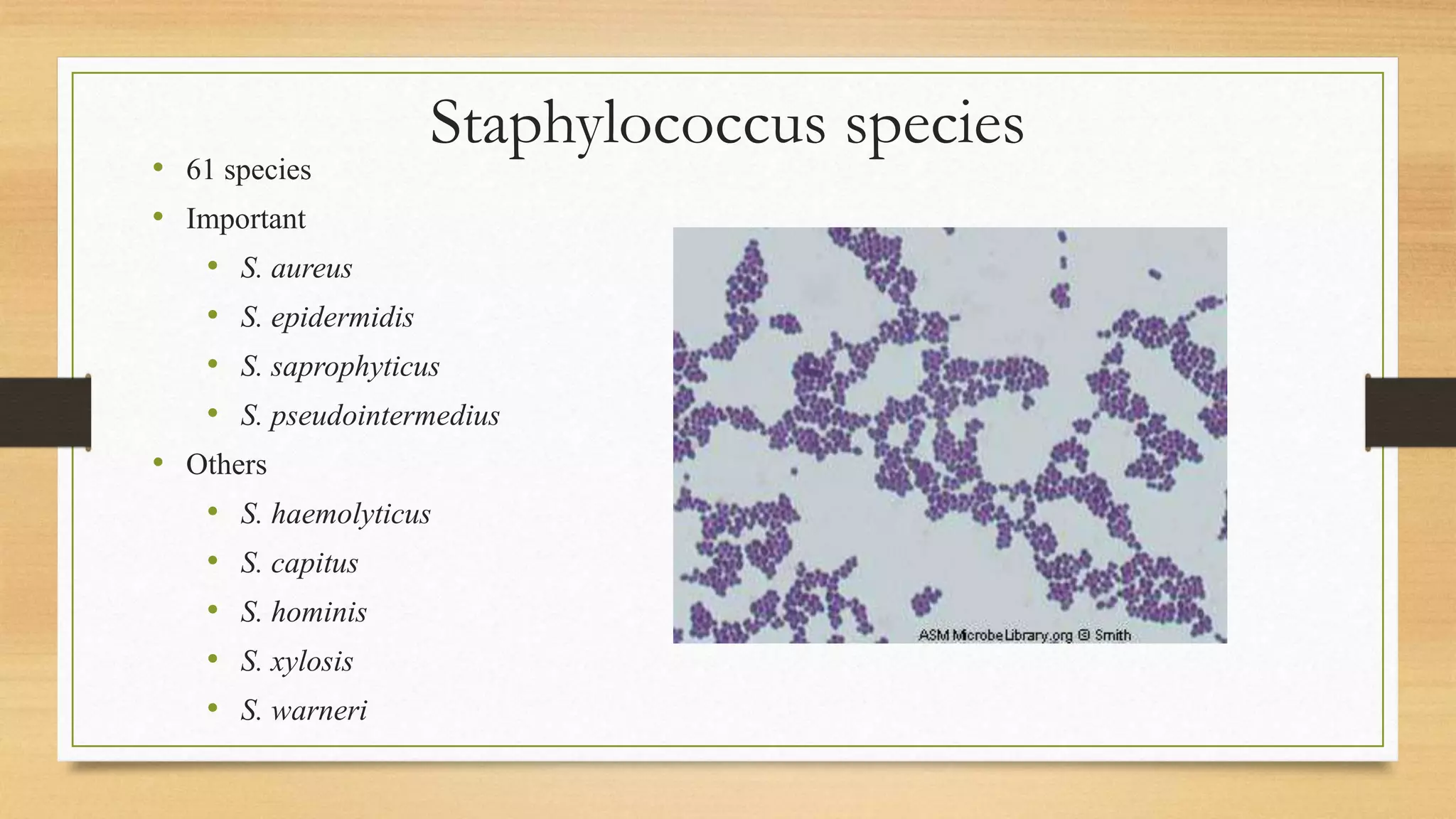
• Gram-positive round shape (coccus) in clusters.
• Non-motile.
• Non-spore-forming.
• Catalase: Positive.
• Coagulase: Positive
• Oxidase: Negative.
• Urease: Positive
• Facultatively anaerobic
Staphylococcus species
• 61 species
• Important
• S. aureus
• S. epidermidis
• S. saprophyticus
• S. pseudointermedius
• Others
• S. haemolyticus
• S. capitus
• S. hominis
• S. xylosis
• S. warneri
Ecology
• Staphylococcus aureus is a gram positive bacterium that is usually
found in the nasal passages, mouth, throat etc.
• And on the skin of 15 to 40% of healthy humans, but can also survive
in a wide variety of locations in the body.
• Commonly found in the environment (air, water & soil).
General cultural and biochemical characteristics
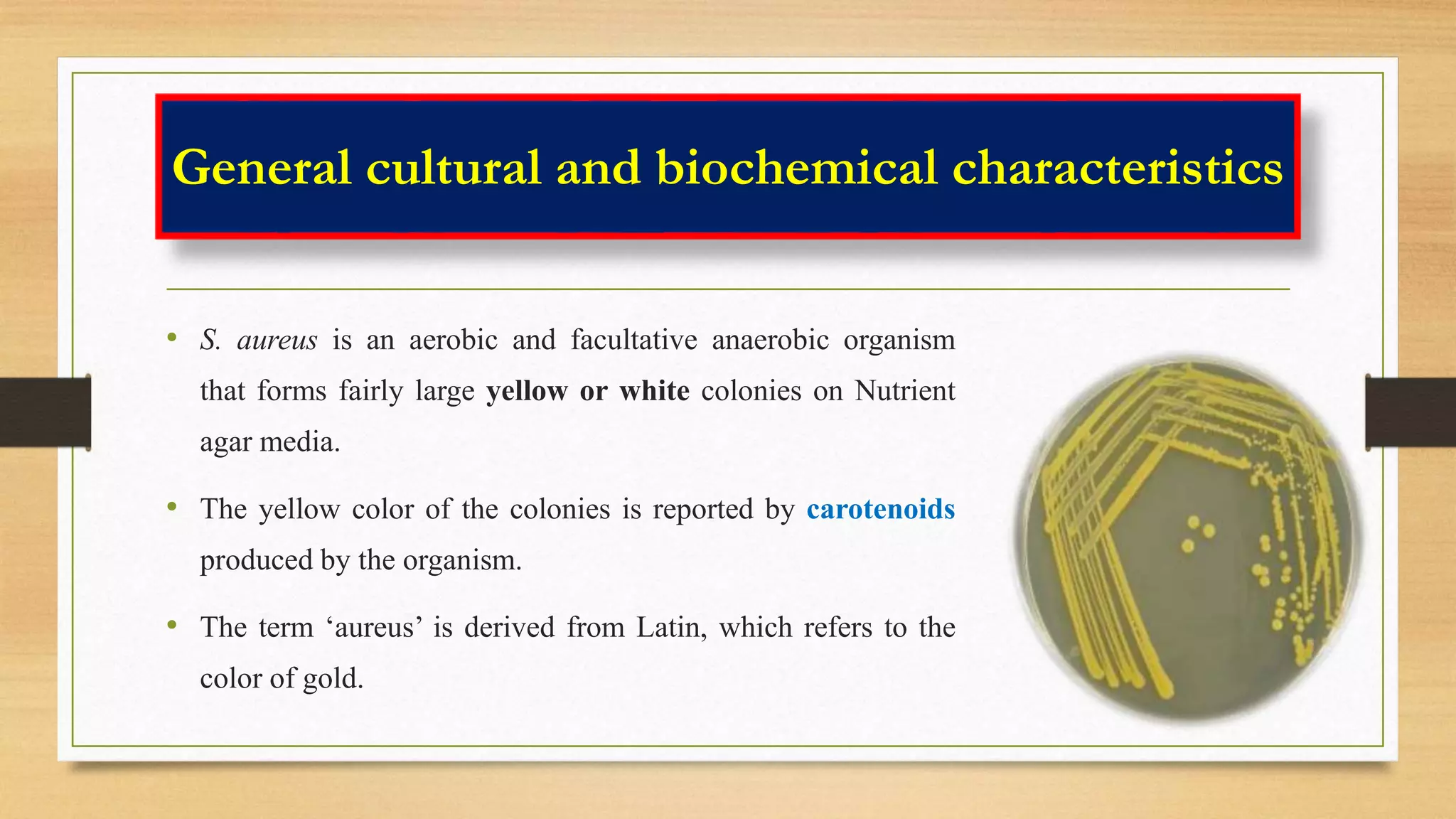
• S. aureus is an aerobic and facultative anaerobic organism
that forms fairly large yellow or white colonies on Nutrient
agar media.
• The yellow color of the colonies is reported by carotenoids
produced by the organism.
• The term ‘aureus’ is derived from Latin, which refers to the
color of gold.
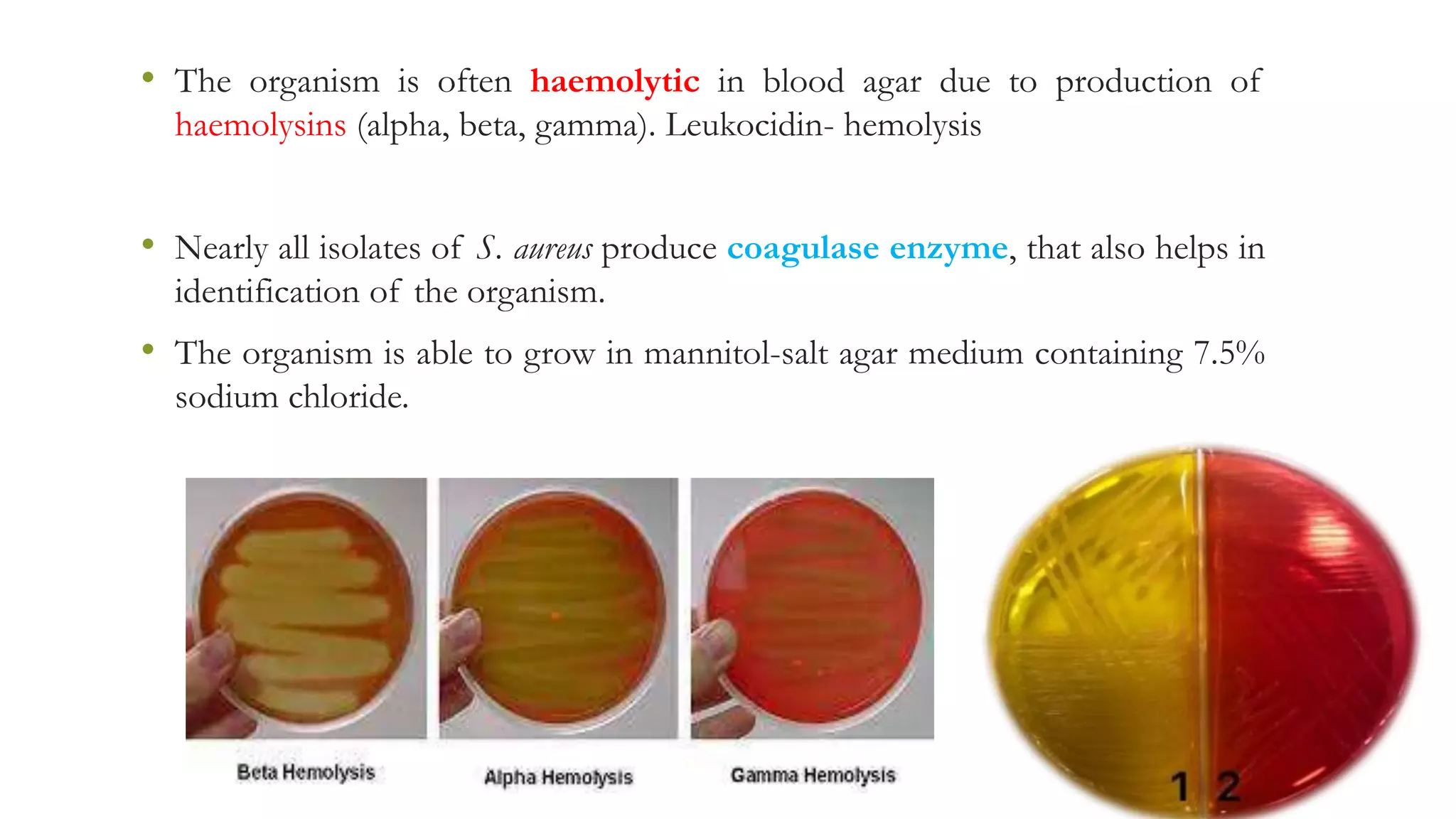
• The organism is often haemolytic in blood agar due to production of
haemolysins (alpha, beta, gamma). Leukocidin- hemolysis
• Nearly all isolates of S. aureus produce coagulase enzyme, that also helps in
identification of the organism.
• The organism is able to grow in mannitol-salt agar medium containing 7.5%
sodium chloride.
Epidemiology
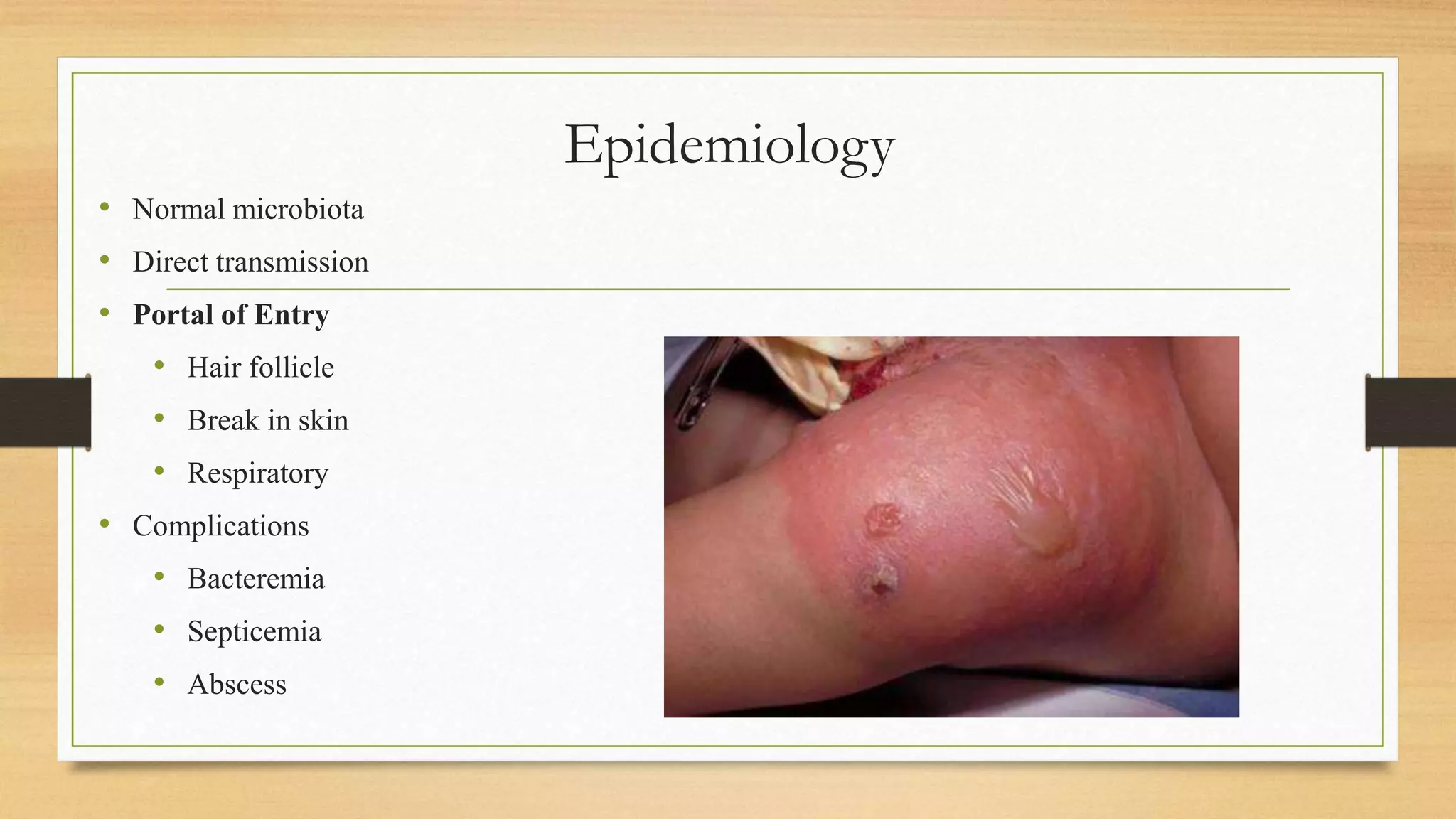
• Normal microbiota
• Direct transmission
• Portal of Entry
• Hair follicle
• Break in skin
• Respiratory
• Complications
• Bacteremia
• Septicemia
• Abscess
PATHOGENESIS
1. Adherence
• Attached to the damaged sites ( Skin, mucosa, tissue etc.)
• At these sites, bacteria evade defence mechanisms of the host in the result
colonize and cause tissue damaged.
• S. aureus produced disease by;
• 2. Entry
• 3. Multiplying in tissue
• 4. Releasing toxins
Clinical Syndromes
1. Cutaneous Infections
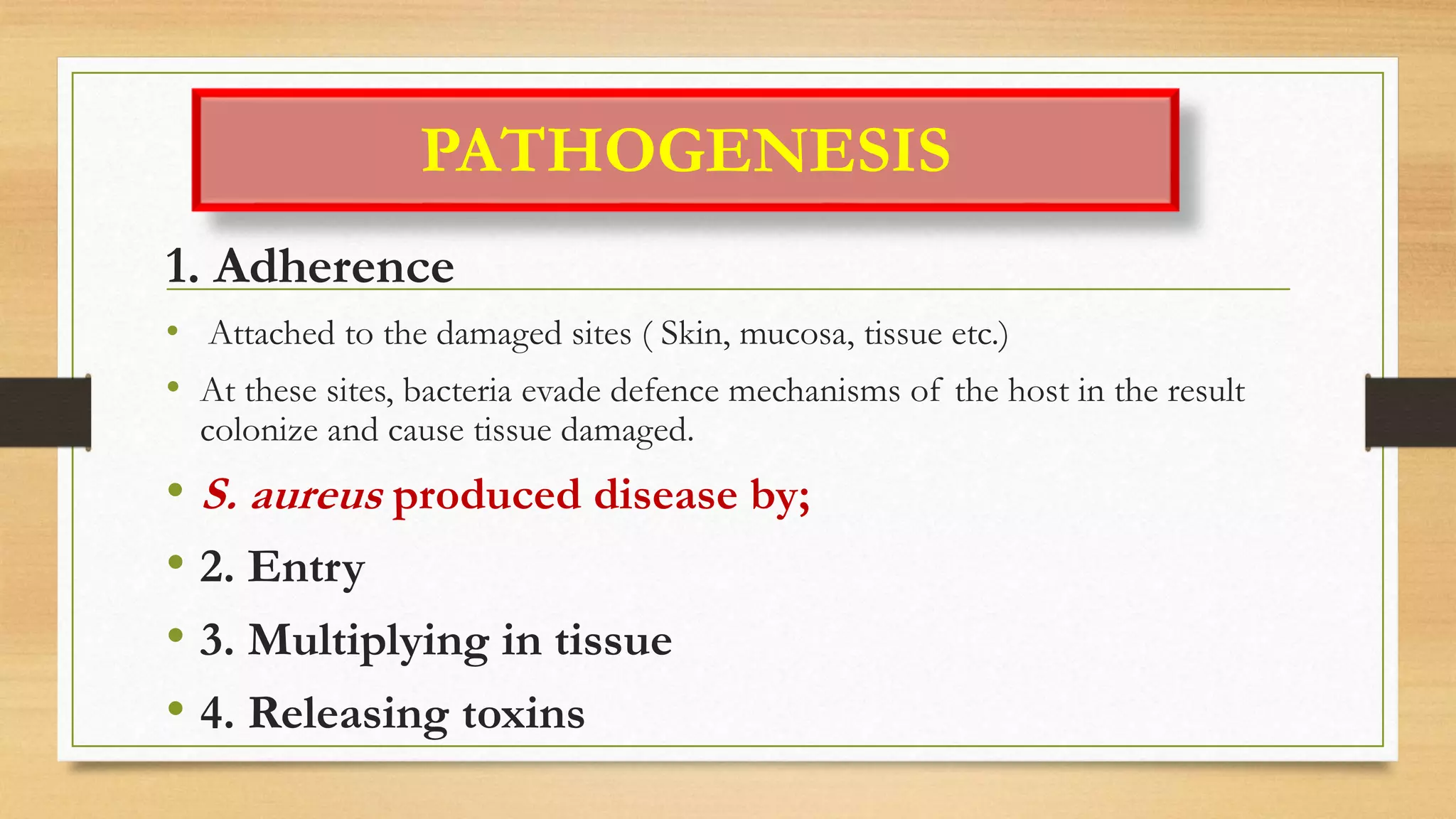
• Folliculitis
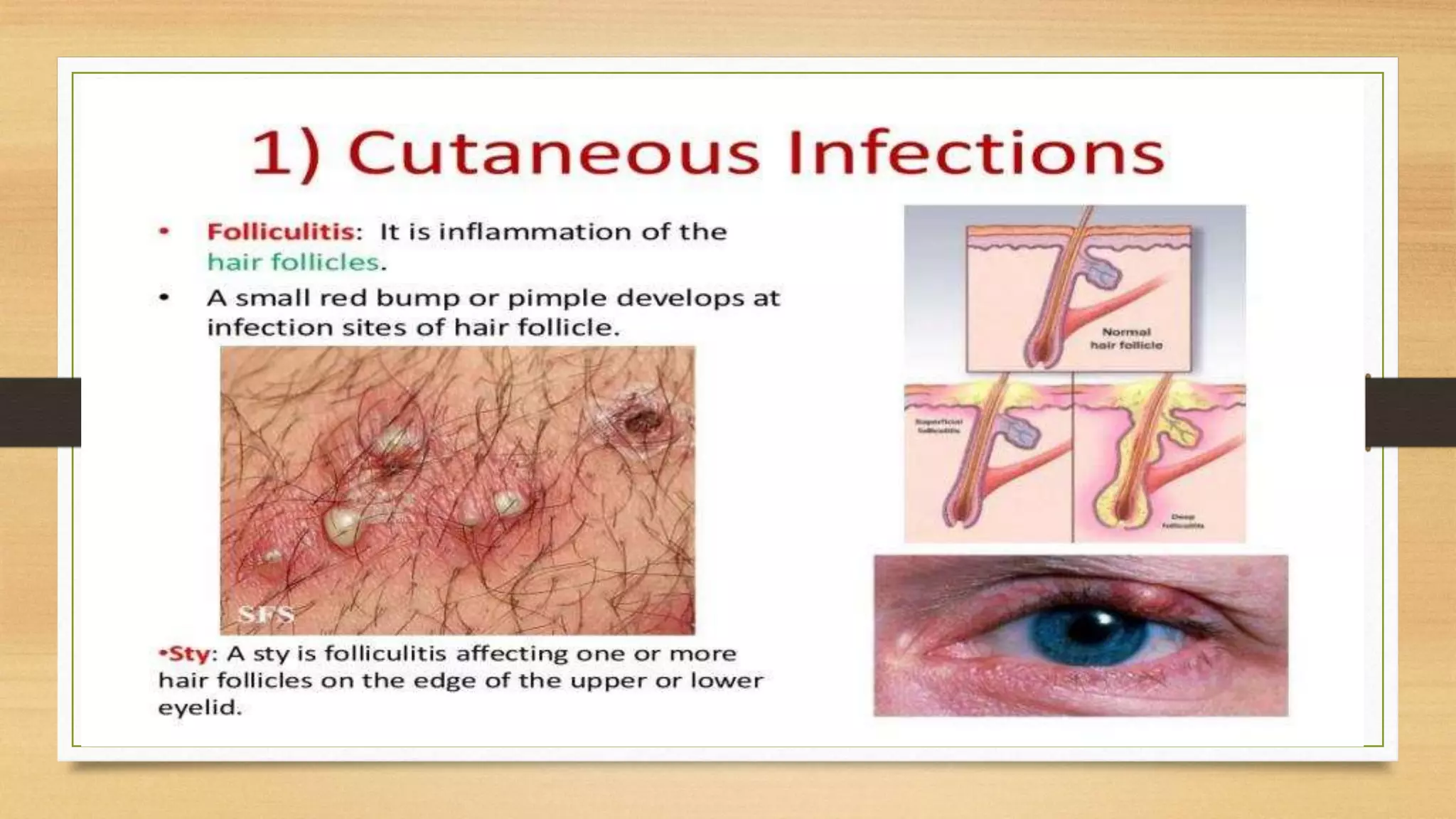
• Boils/Furuncles
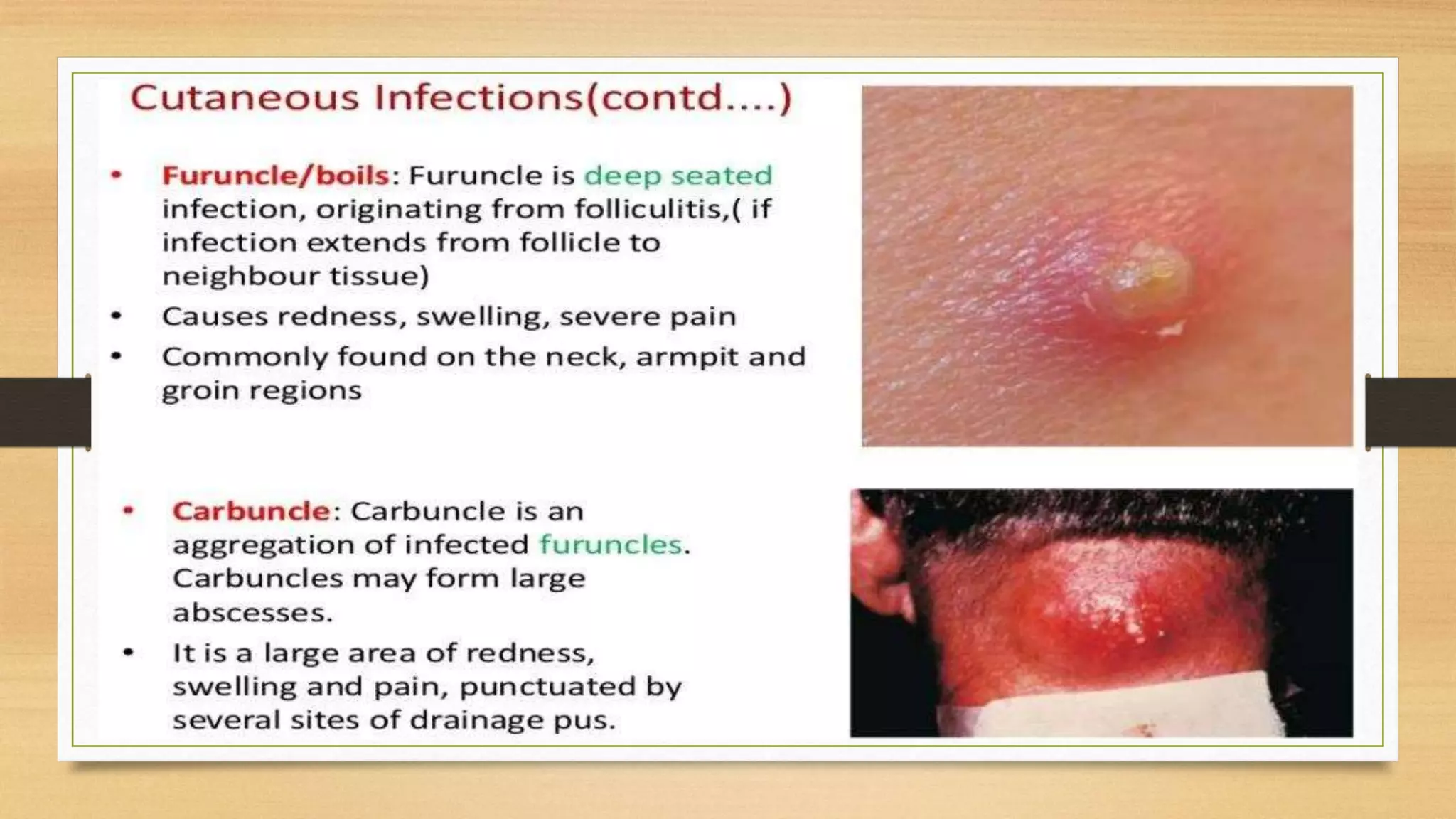
• Carbuncle
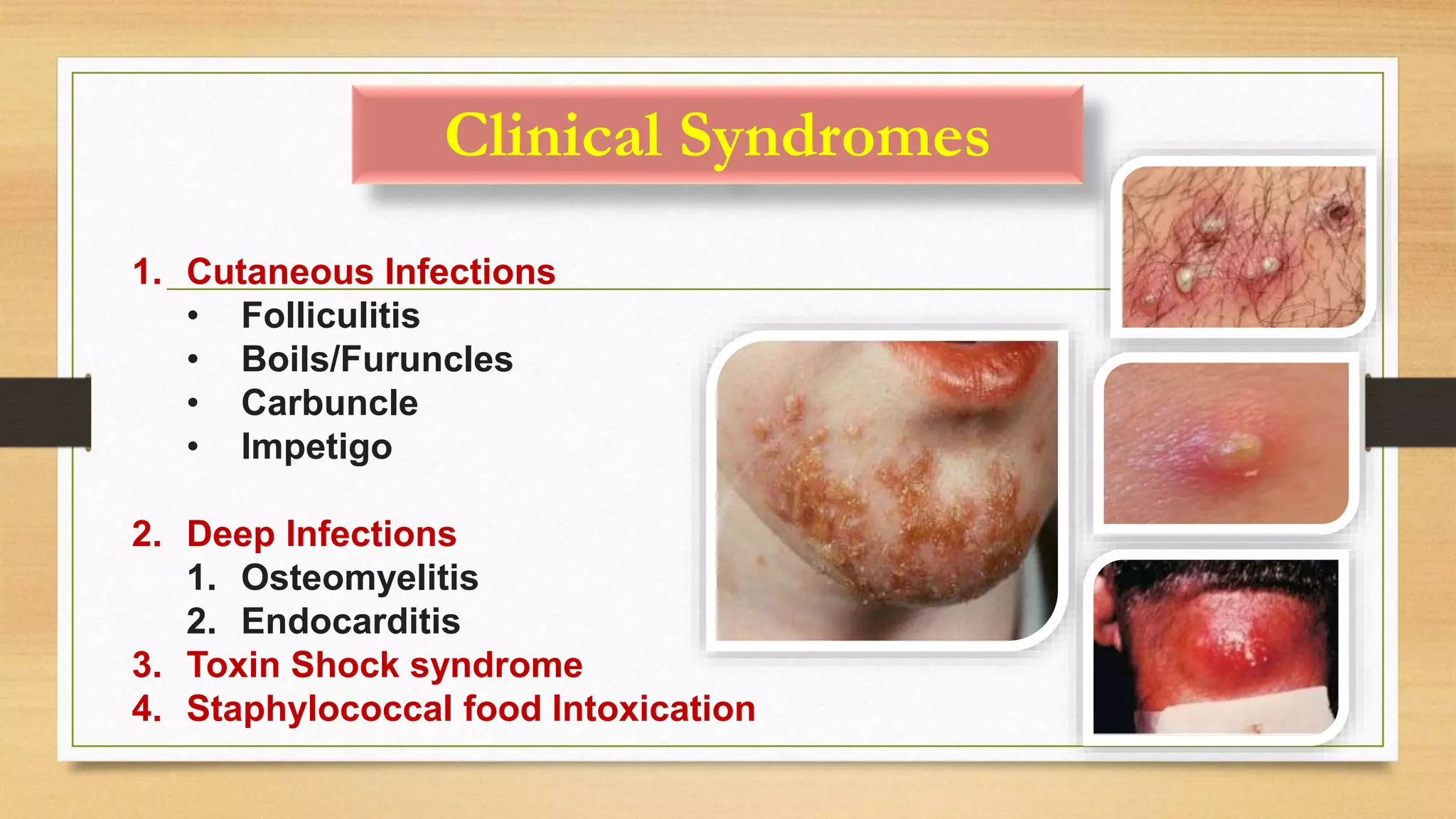
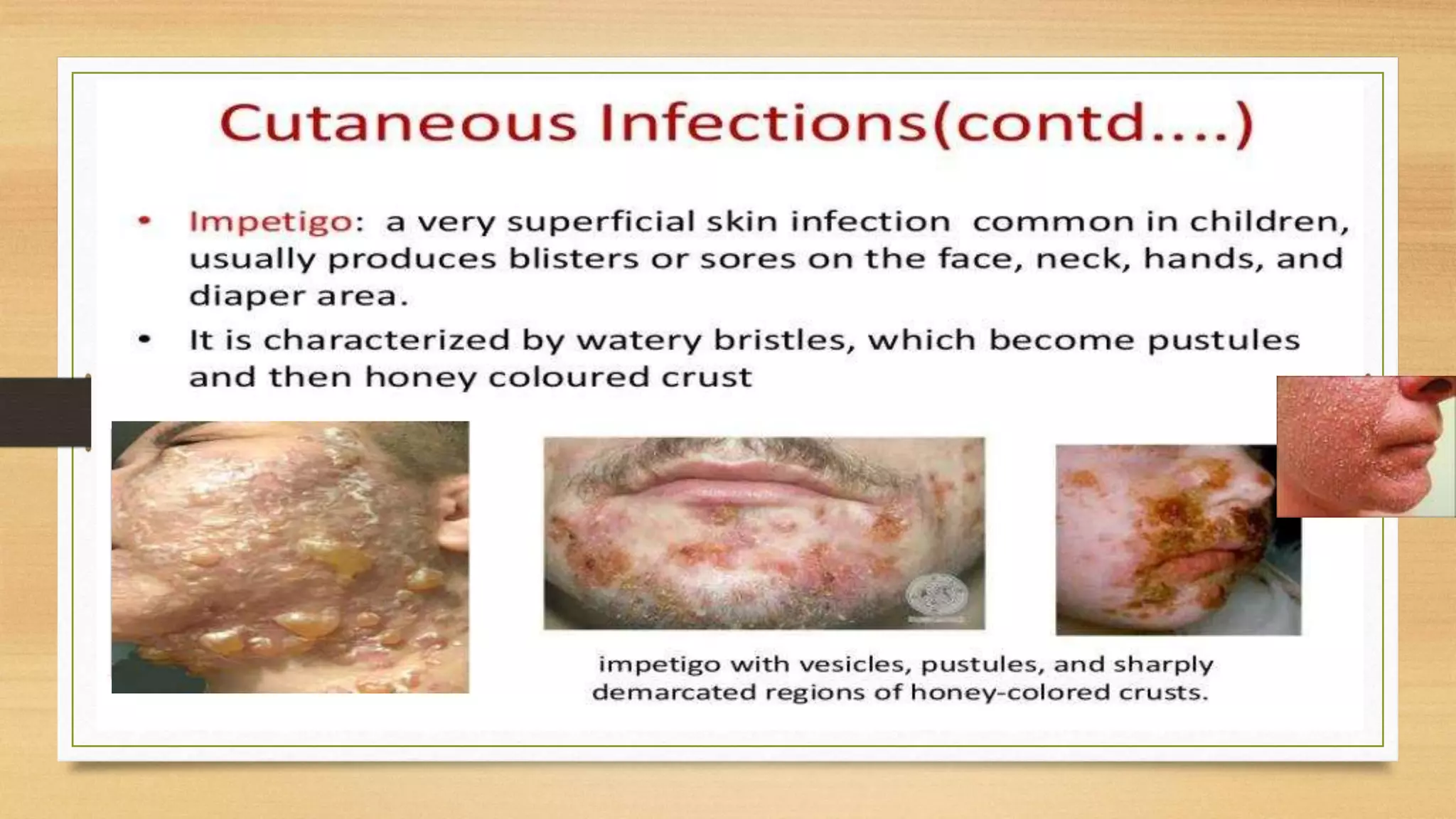
• Impetigo
2. Deep Infections
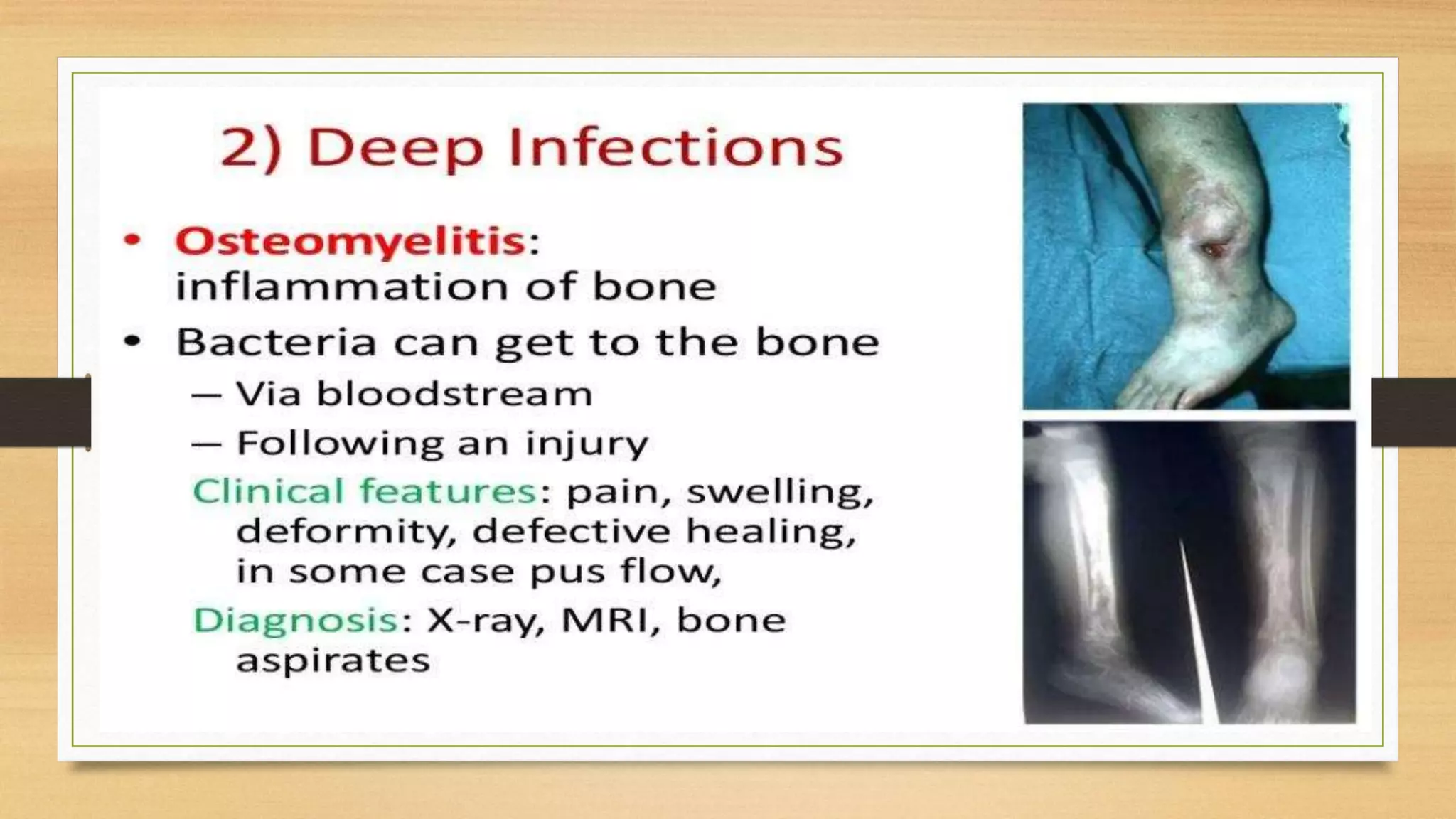
1. Osteomyelitis
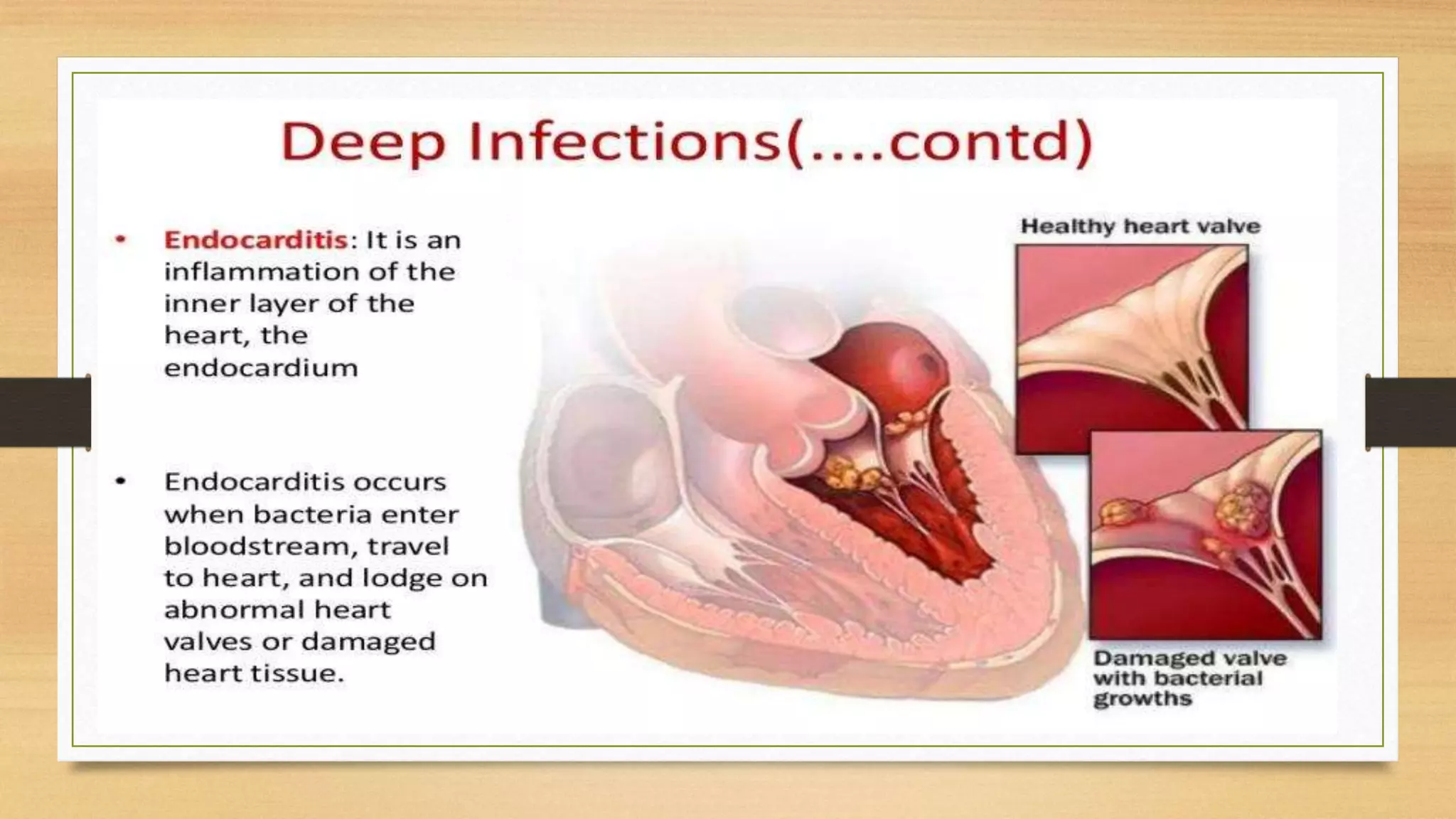
2. Endocarditis
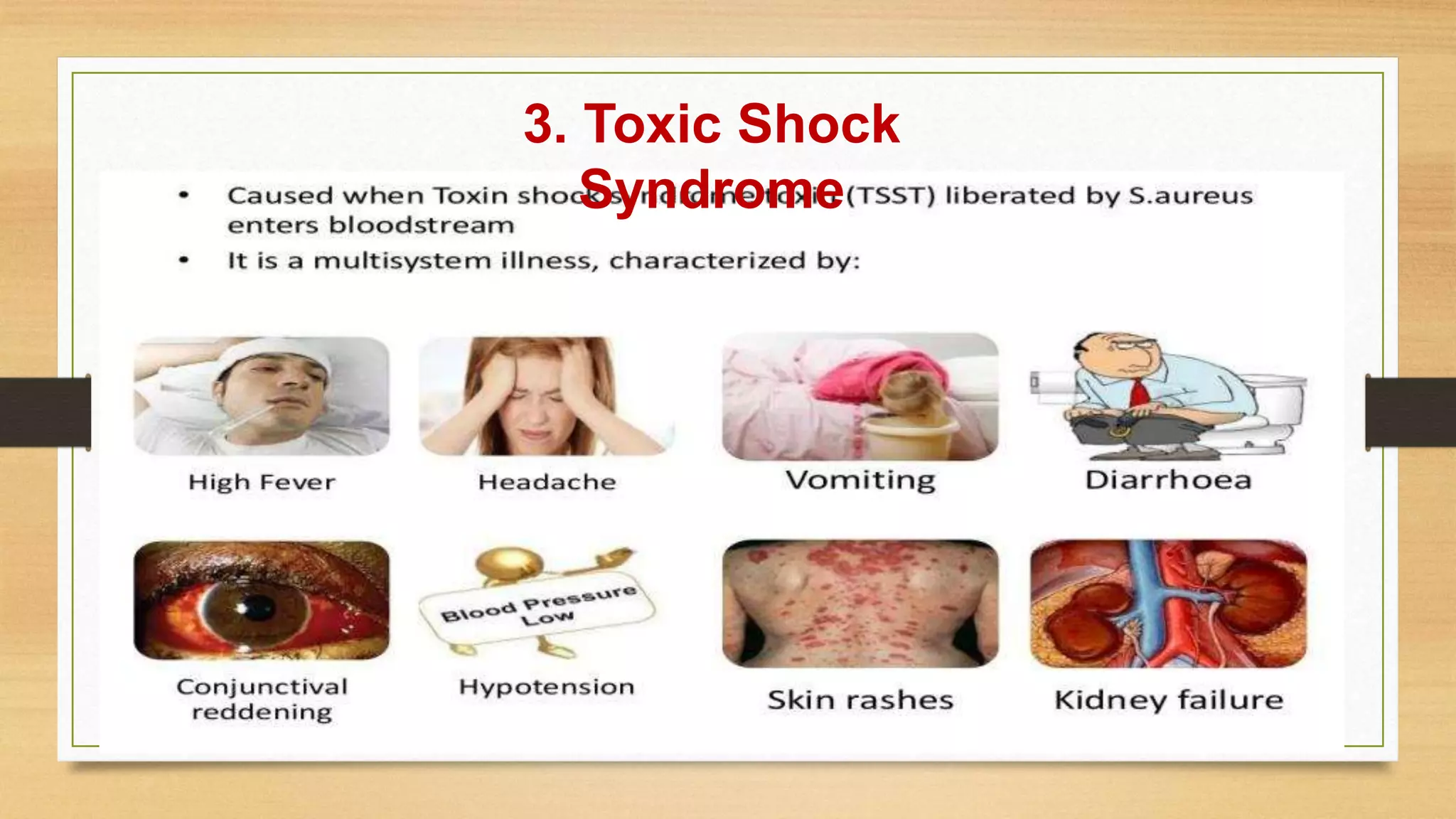
3. Toxin Shock syndrome
4. Staphylococcal food Intoxication
3. Toxic Shock
Syndrome
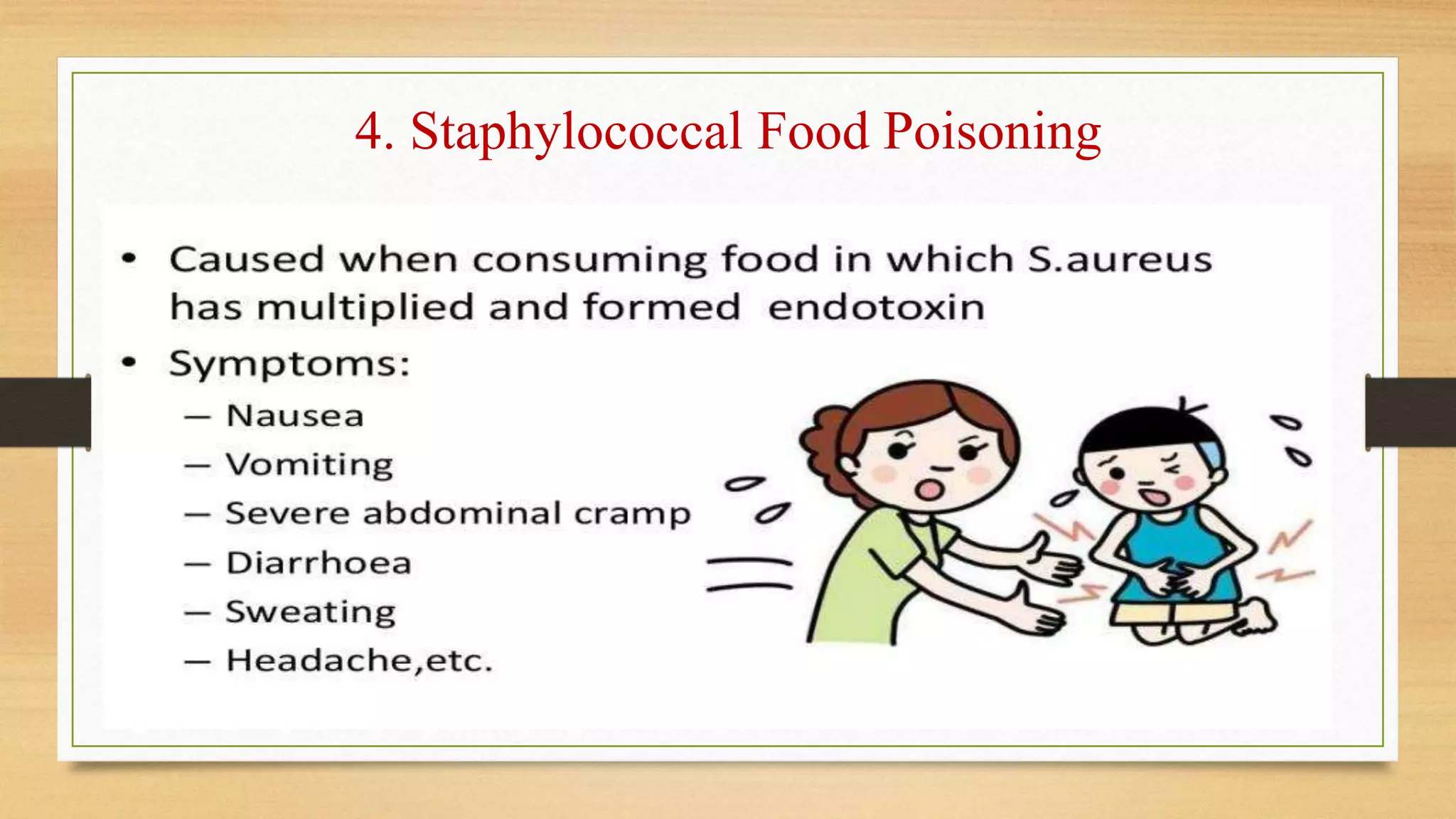
4. Staphylococcal Food Poisoning
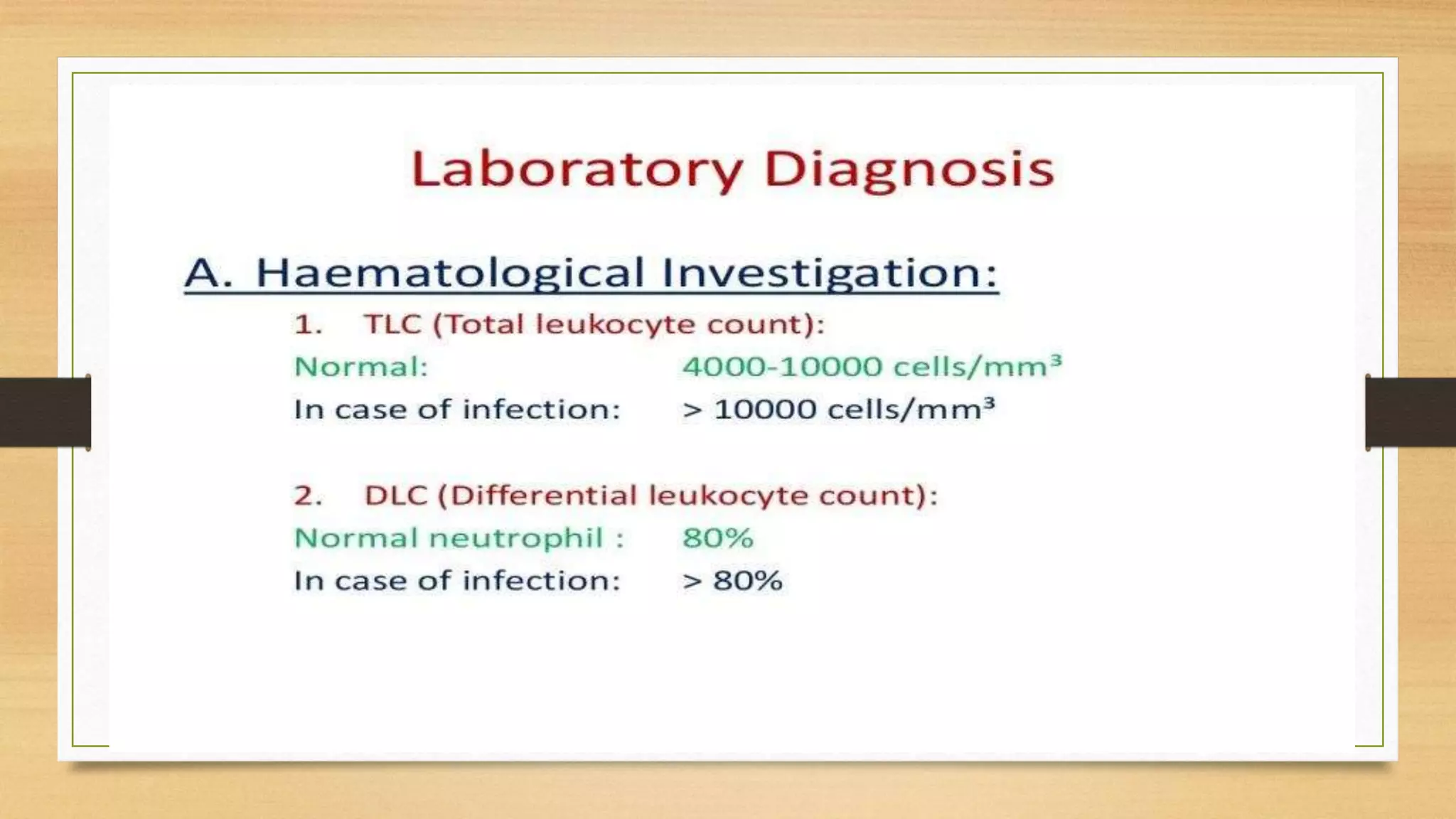
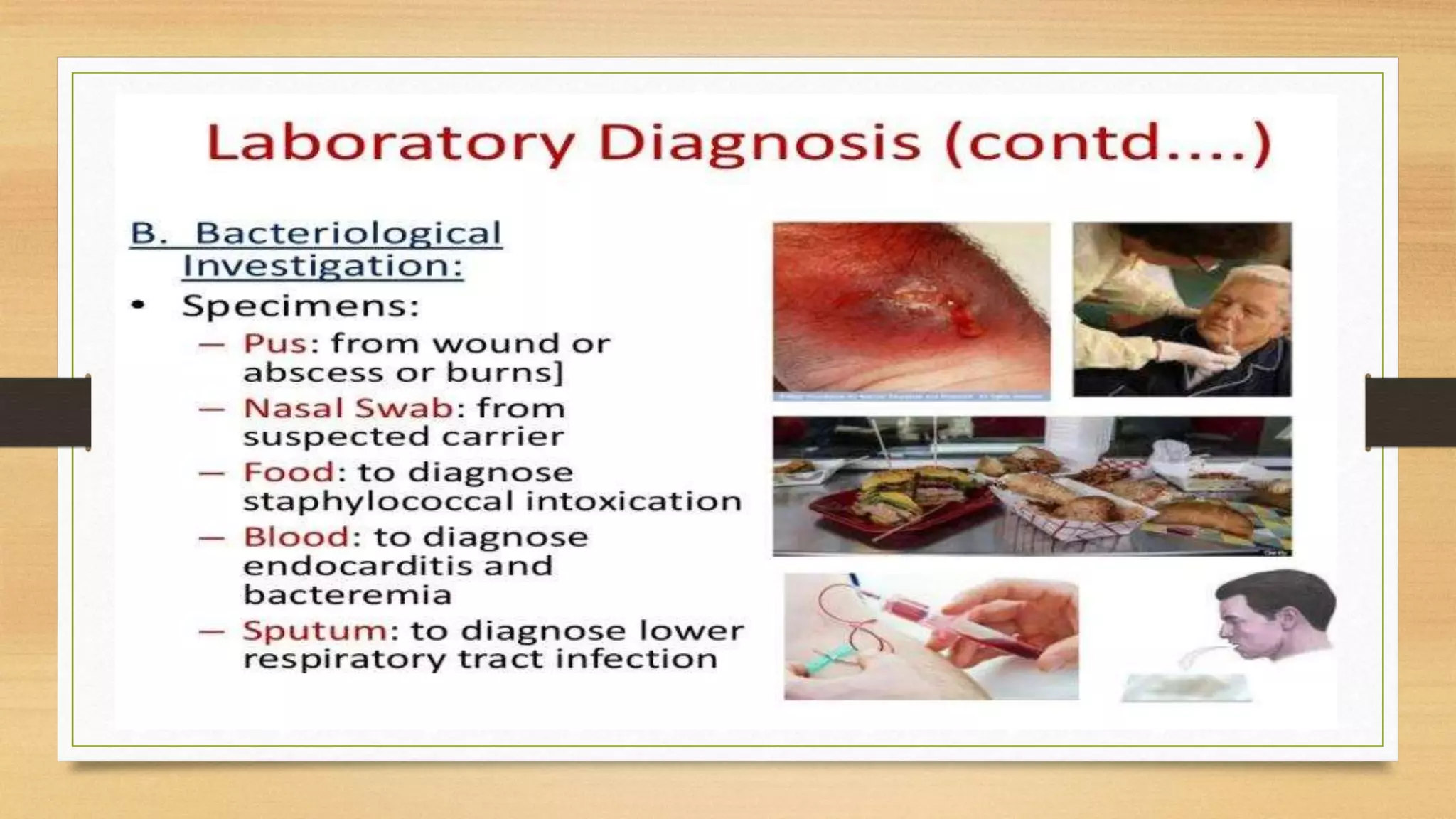
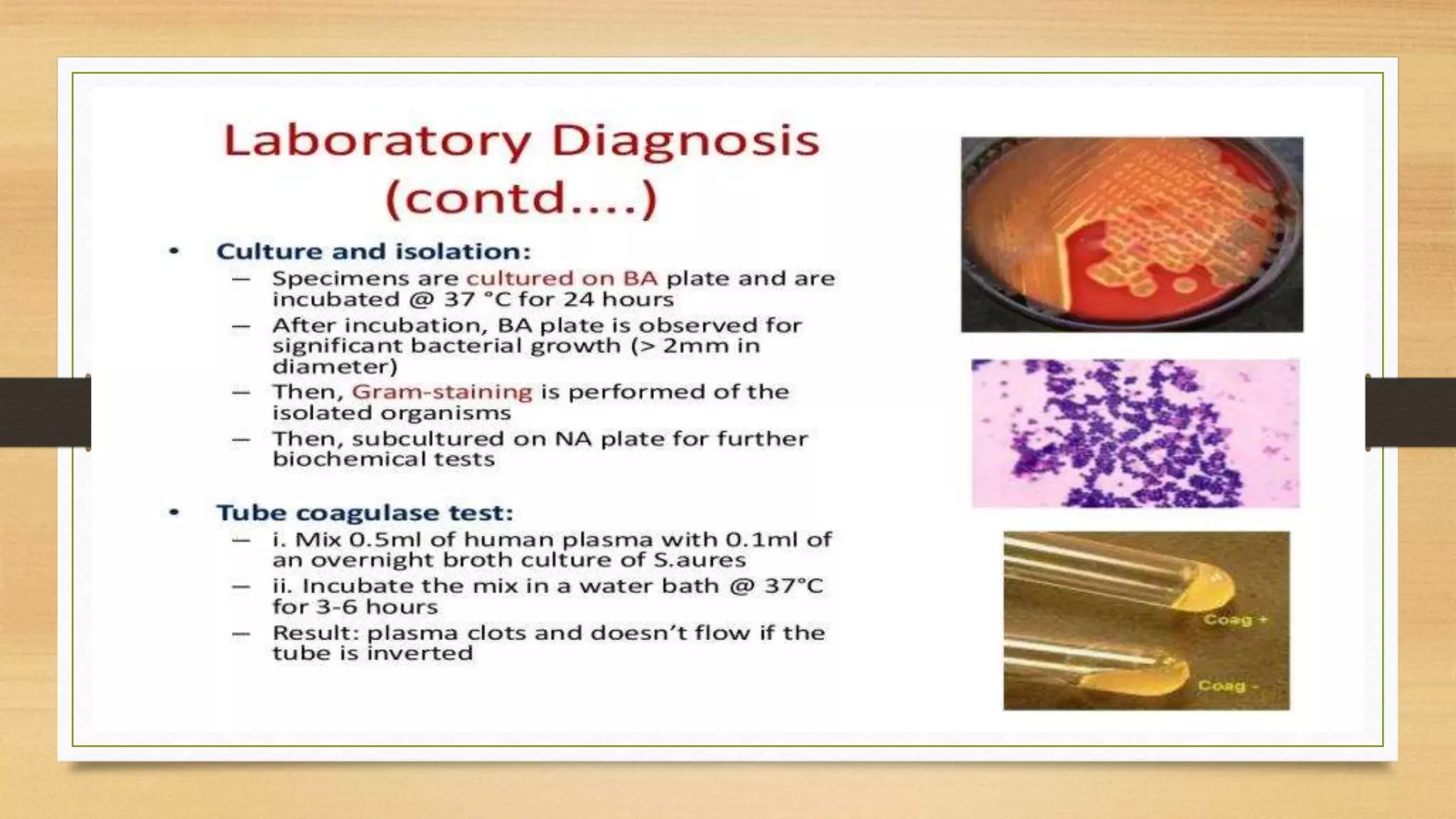
Laboratory Diagnosis
Thank You
6
th
April,
2022

STAPHYLOCOCCUS AUREUS Infection.pptx

  • 1.
    STAPHYLOCOCCUS AUREUS Infection Amjad KhanAfridi Lecturer, Department of Health & Biological Sciences Abasyn University Peshawar Chapter # 4
  • 3.
    STAPHYLOCOCCUS AUREUS BASICCHARACTERISTICS • Description • The term ‘aureus’ is derived from Latin, which refers to the color of gold. • Gram-positive round shape (coccus) in clusters. • Non-motile. • Non-spore-forming. • Catalase: Positive. • Coagulase: Positive • Oxidase: Negative. • Urease: Positive • Facultatively anaerobic
  • 4.
    Staphylococcus species • 61species • Important • S. aureus • S. epidermidis • S. saprophyticus • S. pseudointermedius • Others • S. haemolyticus • S. capitus • S. hominis • S. xylosis • S. warneri
  • 5.
    Ecology • Staphylococcus aureusis a gram positive bacterium that is usually found in the nasal passages, mouth, throat etc. • And on the skin of 15 to 40% of healthy humans, but can also survive in a wide variety of locations in the body. • Commonly found in the environment (air, water & soil).
  • 6.
    General cultural andbiochemical characteristics • S. aureus is an aerobic and facultative anaerobic organism that forms fairly large yellow or white colonies on Nutrient agar media. • The yellow color of the colonies is reported by carotenoids produced by the organism. • The term ‘aureus’ is derived from Latin, which refers to the color of gold.
  • 7.
    • The organismis often haemolytic in blood agar due to production of haemolysins (alpha, beta, gamma). Leukocidin- hemolysis • Nearly all isolates of S. aureus produce coagulase enzyme, that also helps in identification of the organism. • The organism is able to grow in mannitol-salt agar medium containing 7.5% sodium chloride.
  • 8.
    Epidemiology • Normal microbiota •Direct transmission • Portal of Entry • Hair follicle • Break in skin • Respiratory • Complications • Bacteremia • Septicemia • Abscess
  • 9.
    PATHOGENESIS 1. Adherence • Attachedto the damaged sites ( Skin, mucosa, tissue etc.) • At these sites, bacteria evade defence mechanisms of the host in the result colonize and cause tissue damaged. • S. aureus produced disease by; • 2. Entry • 3. Multiplying in tissue • 4. Releasing toxins
  • 10.
    Clinical Syndromes 1. CutaneousInfections • Folliculitis • Boils/Furuncles • Carbuncle • Impetigo 2. Deep Infections 1. Osteomyelitis 2. Endocarditis 3. Toxin Shock syndrome 4. Staphylococcal food Intoxication
  • 16.
  • 17.
  • 21.
  • 25.

Editor's Notes

  • #6 Amongst the more common toxins secreted by S. aureus are hemolysin, leukotoxin, exfoliative toxin, enterotoxin, and toxic-shock syndrome toxin-1 (TSST-1). Toxins produced by Staphylococcus aureus, Bacillus cereus, Streptococcus pyogenes, Bacillus anthrcis(Alpha-toxin, also known as alpha-hemolysin (Hla))
  • #8 Hemolytic anemia is a disorder in which red blood cells are destroyed faster than they can be made. Beta hemolysis, which is the complete lysis of red blood cells and hemoglobin.  This results in complete clearing of the blood around the colonies. S. aureus, S. pyogenes Alpha hemolysis refers to the partial lysis of red blood cells and hemoglobin.  This results in a greenish-grey discoloration of the blood around the colonies. Streptococcus Pneumoniae S. Mutans No hemolysis, sometimes called gamma hemolysis results in no change in the medium. Enterococcus faecalis
  • #9 Septicemia, or sepsis, is the clinical name for blood poisoning by bacteria.  An abscess is a painful collection of pus, usually caused by a bacterial infection.
  • #11 Folliculitis, Furuncles, Carbuncle , Impetigo
  • #13 Groin : The groin is an area of your hip between your stomach and thigh. It is located where your abdomen ends and your legs begin. The groin area has five muscles that work together to move your leg. These are called: adductor brevis.
  • #14  Impetigo is common in children infection which is characterized by watery bristles. Pustules and honey like colored crust formation occurred in Bristles pustules
  • #15 Bone aspirates : A procedure in which a small sample of bone marrow is removed, usually from the hip bone, breastbone, or thigh bone.
  • #16 endocardium
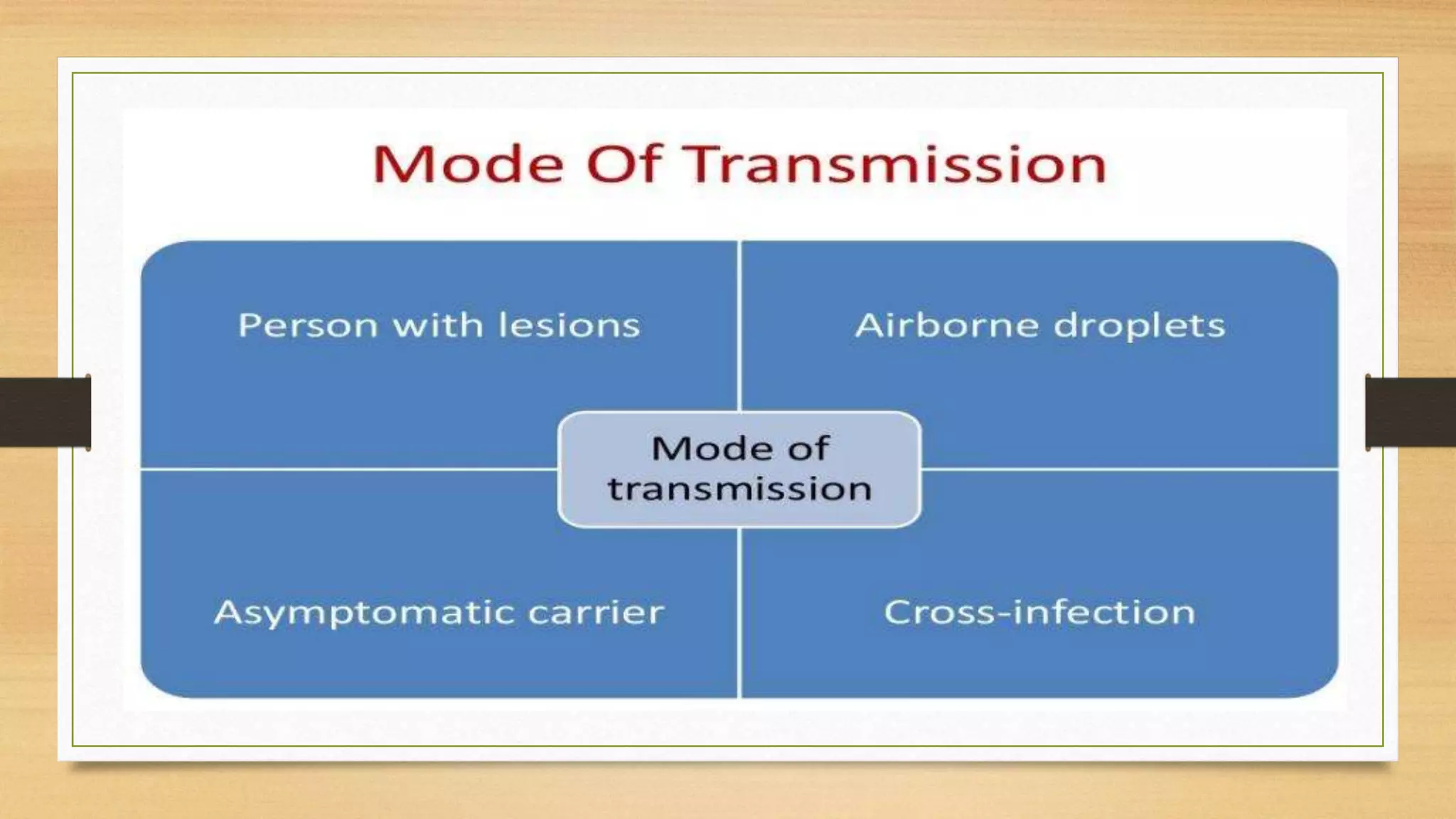
  • #19 Cross infection
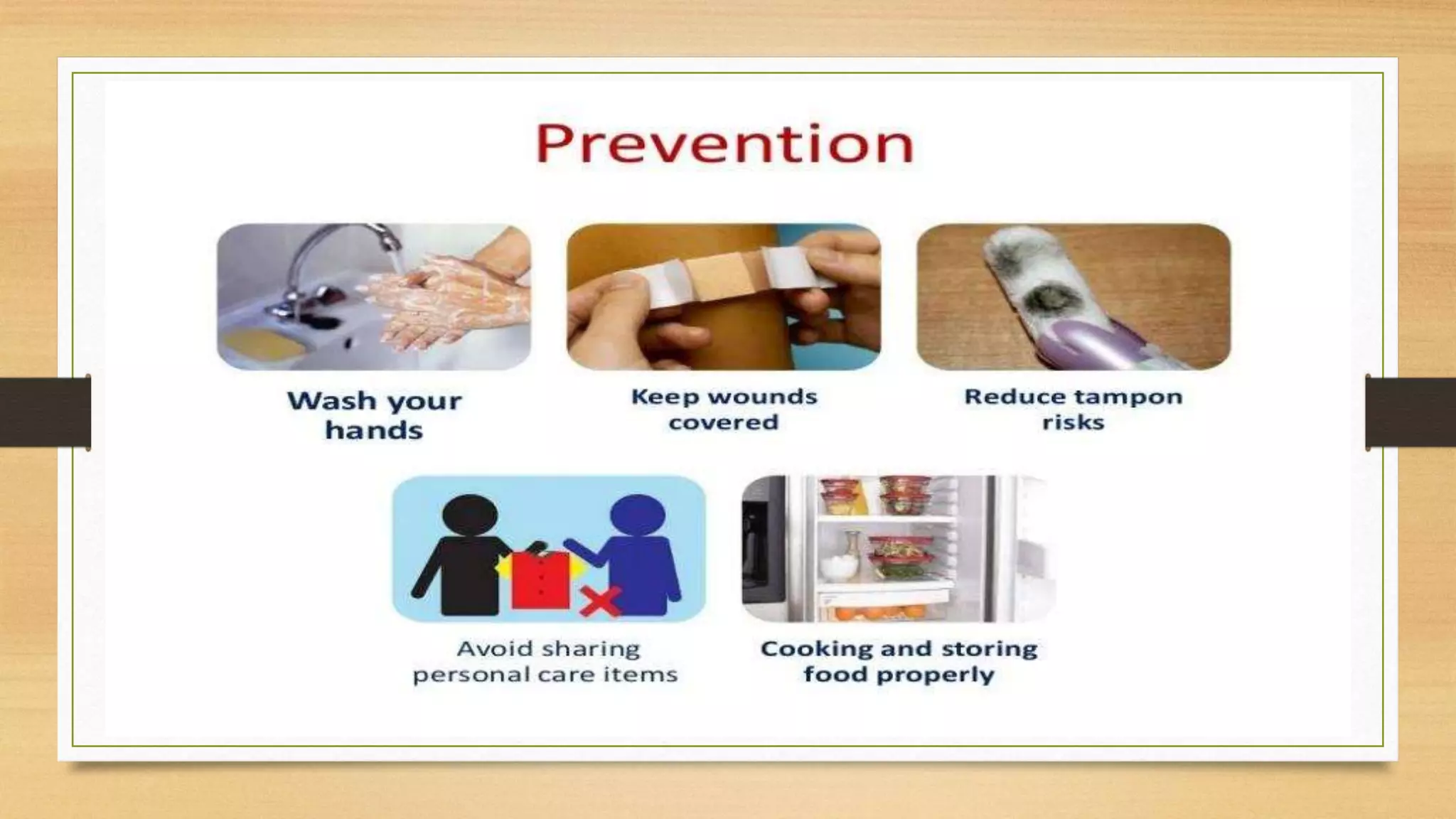
  • #20 Tampon risk
  • #23 Laboratory Diagnosis