TOPIC: STANDARDIZED TEST AND
ADVANTAGES/DISADVANTAGES OF STANDARDIZED
TEST, COMPARISON OF STANDARDIZED TEST WITH
CLASSROOM TEST
STANDARDIZED TEST:
A standardized test is any form of test that
1. Requires all test takers to answer the same questions, or a
selection of questions from common bank of questions, in the
same way.
2. Is scored in a “standard” or consistent manner, which makes it
possible to compare the relative performance of individual.
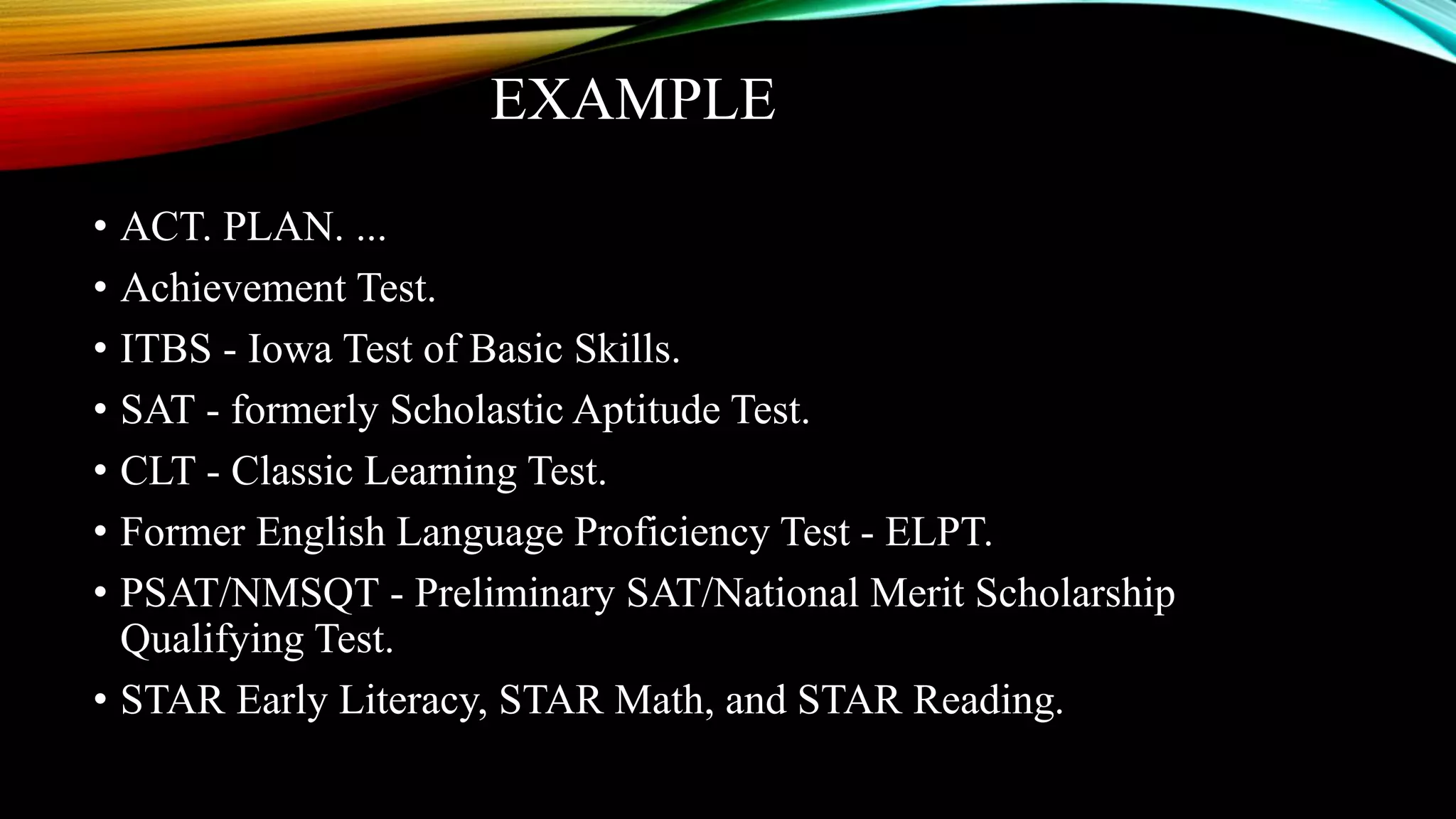
EXAMPLE
• ACT. PLAN. ...
• Achievement Test.
• ITBS - Iowa Test of Basic Skills.
• SAT - formerly Scholastic Aptitude Test.
• CLT - Classic Learning Test.
• Former English Language Proficiency Test - ELPT.
• PSAT/NMSQT - Preliminary SAT/National Merit Scholarship
Qualifying Test.
• STAR Early Literacy, STAR Math, and STAR Reading.
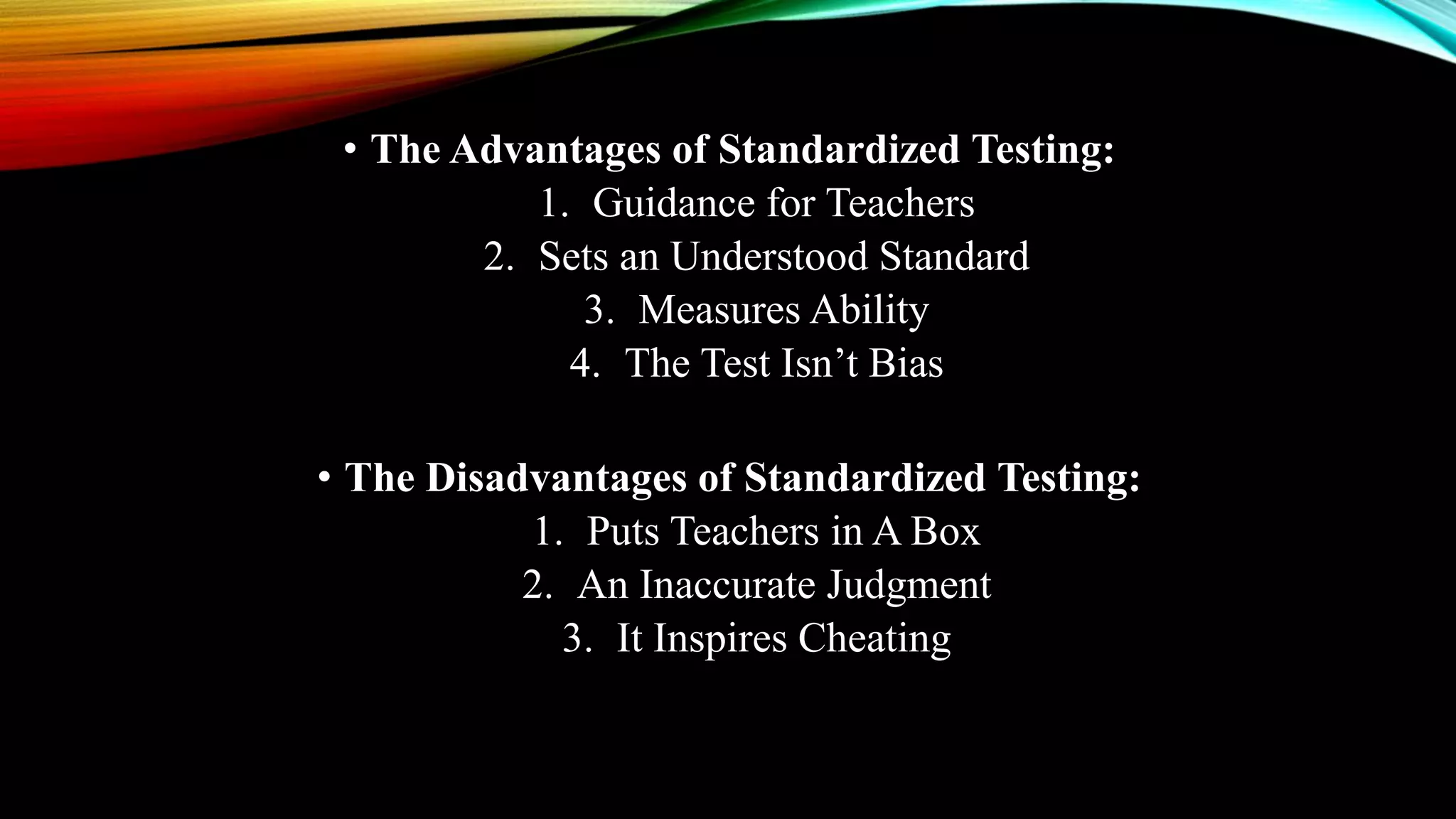
• The Advantages of Standardized Testing:
1. Guidance for Teachers
2. Sets an Understood Standard
3. Measures Ability
4. The Test Isn’t Bias
• The Disadvantages of Standardized Testing:
1. Puts Teachers in A Box
2. An Inaccurate Judgment
3. It Inspires Cheating
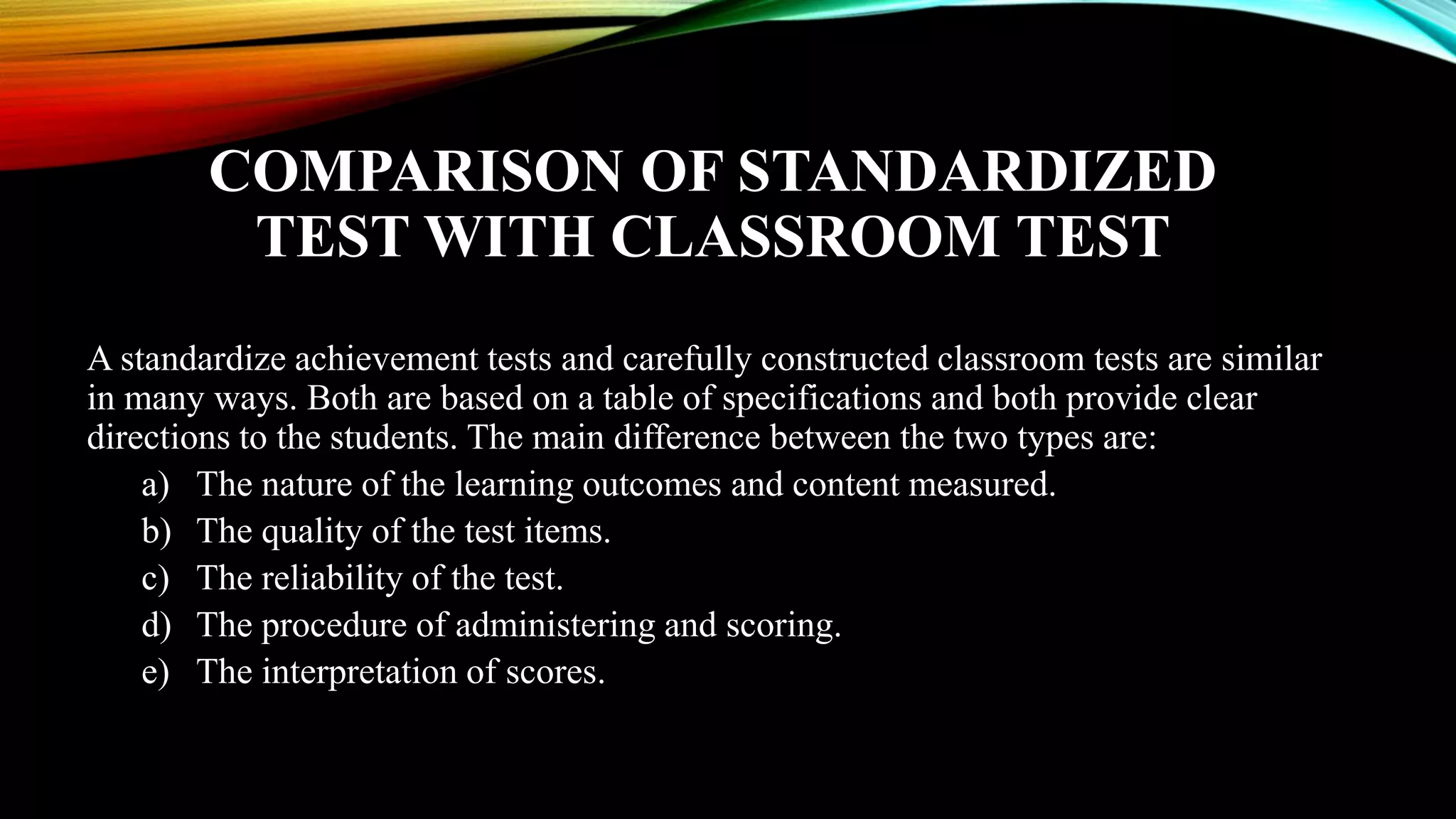
COMPARISON OF STANDARDIZED
TEST WITH CLASSROOM TEST
A standardize achievement tests and carefully constructed classroom tests are similar
in many ways. Both are based on a table of specifications and both provide clear
directions to the students. The main difference between the two types are:
a) The nature of the learning outcomes and content measured.
b) The quality of the test items.
c) The reliability of the test.
d) The procedure of administering and scoring.
e) The interpretation of scores.
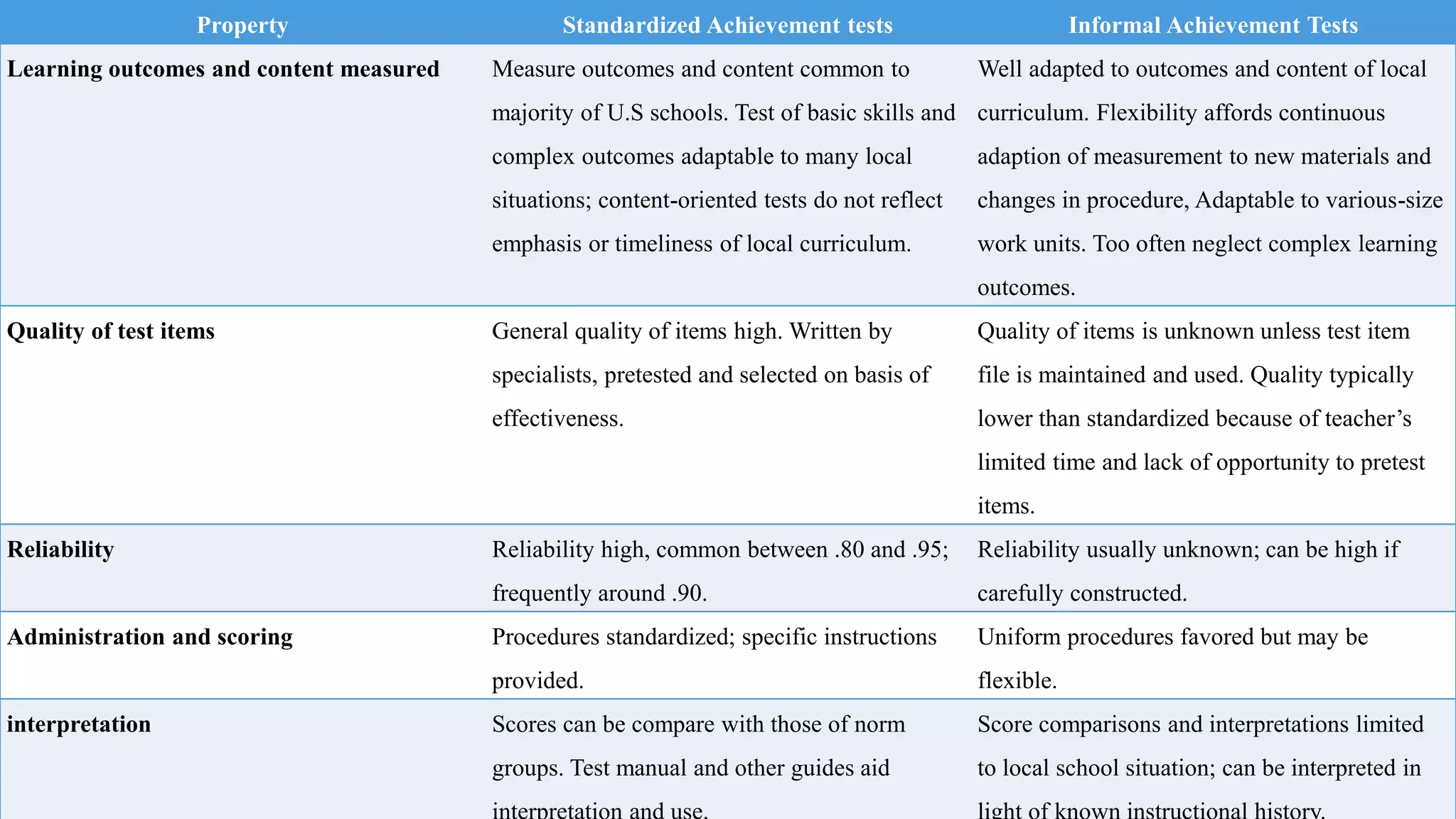
Property Standardized Achievement tests Informal Achievement Tests
Learning outcomes and content measured Measure outcomes and content common to
majority of U.S schools. Test of basic skills and
complex outcomes adaptable to many local
situations; content-oriented tests do not reflect
emphasis or timeliness of local curriculum.
Well adapted to outcomes and content of local
curriculum. Flexibility affords continuous
adaption of measurement to new materials and
changes in procedure, Adaptable to various-size
work units. Too often neglect complex learning
outcomes.
Quality of test items General quality of items high. Written by
specialists, pretested and selected on basis of
effectiveness.
Quality of items is unknown unless test item
file is maintained and used. Quality typically
lower than standardized because of teacher’s
limited time and lack of opportunity to pretest
items.
Reliability Reliability high, common between .80 and .95;
frequently around .90.
Reliability usually unknown; can be high if
carefully constructed.
Administration and scoring Procedures standardized; specific instructions
provided.
Uniform procedures favored but may be
flexible.
interpretation Scores can be compare with those of norm
groups. Test manual and other guides aid
Score comparisons and interpretations limited
to local school situation; can be interpreted in
Standardized testsand classroom test

Standardized testsand classroom test

  • 1.
    TOPIC: STANDARDIZED TESTAND ADVANTAGES/DISADVANTAGES OF STANDARDIZED TEST, COMPARISON OF STANDARDIZED TEST WITH CLASSROOM TEST
  • 2.
    STANDARDIZED TEST: A standardizedtest is any form of test that 1. Requires all test takers to answer the same questions, or a selection of questions from common bank of questions, in the same way. 2. Is scored in a “standard” or consistent manner, which makes it possible to compare the relative performance of individual.
  • 4.
    EXAMPLE • ACT. PLAN.... • Achievement Test. • ITBS - Iowa Test of Basic Skills. • SAT - formerly Scholastic Aptitude Test. • CLT - Classic Learning Test. • Former English Language Proficiency Test - ELPT. • PSAT/NMSQT - Preliminary SAT/National Merit Scholarship Qualifying Test. • STAR Early Literacy, STAR Math, and STAR Reading.
  • 5.
    • The Advantagesof Standardized Testing: 1. Guidance for Teachers 2. Sets an Understood Standard 3. Measures Ability 4. The Test Isn’t Bias • The Disadvantages of Standardized Testing: 1. Puts Teachers in A Box 2. An Inaccurate Judgment 3. It Inspires Cheating
  • 6.
    COMPARISON OF STANDARDIZED TESTWITH CLASSROOM TEST A standardize achievement tests and carefully constructed classroom tests are similar in many ways. Both are based on a table of specifications and both provide clear directions to the students. The main difference between the two types are: a) The nature of the learning outcomes and content measured. b) The quality of the test items. c) The reliability of the test. d) The procedure of administering and scoring. e) The interpretation of scores.
  • 7.
    Property Standardized Achievementtests Informal Achievement Tests Learning outcomes and content measured Measure outcomes and content common to majority of U.S schools. Test of basic skills and complex outcomes adaptable to many local situations; content-oriented tests do not reflect emphasis or timeliness of local curriculum. Well adapted to outcomes and content of local curriculum. Flexibility affords continuous adaption of measurement to new materials and changes in procedure, Adaptable to various-size work units. Too often neglect complex learning outcomes. Quality of test items General quality of items high. Written by specialists, pretested and selected on basis of effectiveness. Quality of items is unknown unless test item file is maintained and used. Quality typically lower than standardized because of teacher’s limited time and lack of opportunity to pretest items. Reliability Reliability high, common between .80 and .95; frequently around .90. Reliability usually unknown; can be high if carefully constructed. Administration and scoring Procedures standardized; specific instructions provided. Uniform procedures favored but may be flexible. interpretation Scores can be compare with those of norm groups. Test manual and other guides aid Score comparisons and interpretations limited to local school situation; can be interpreted in