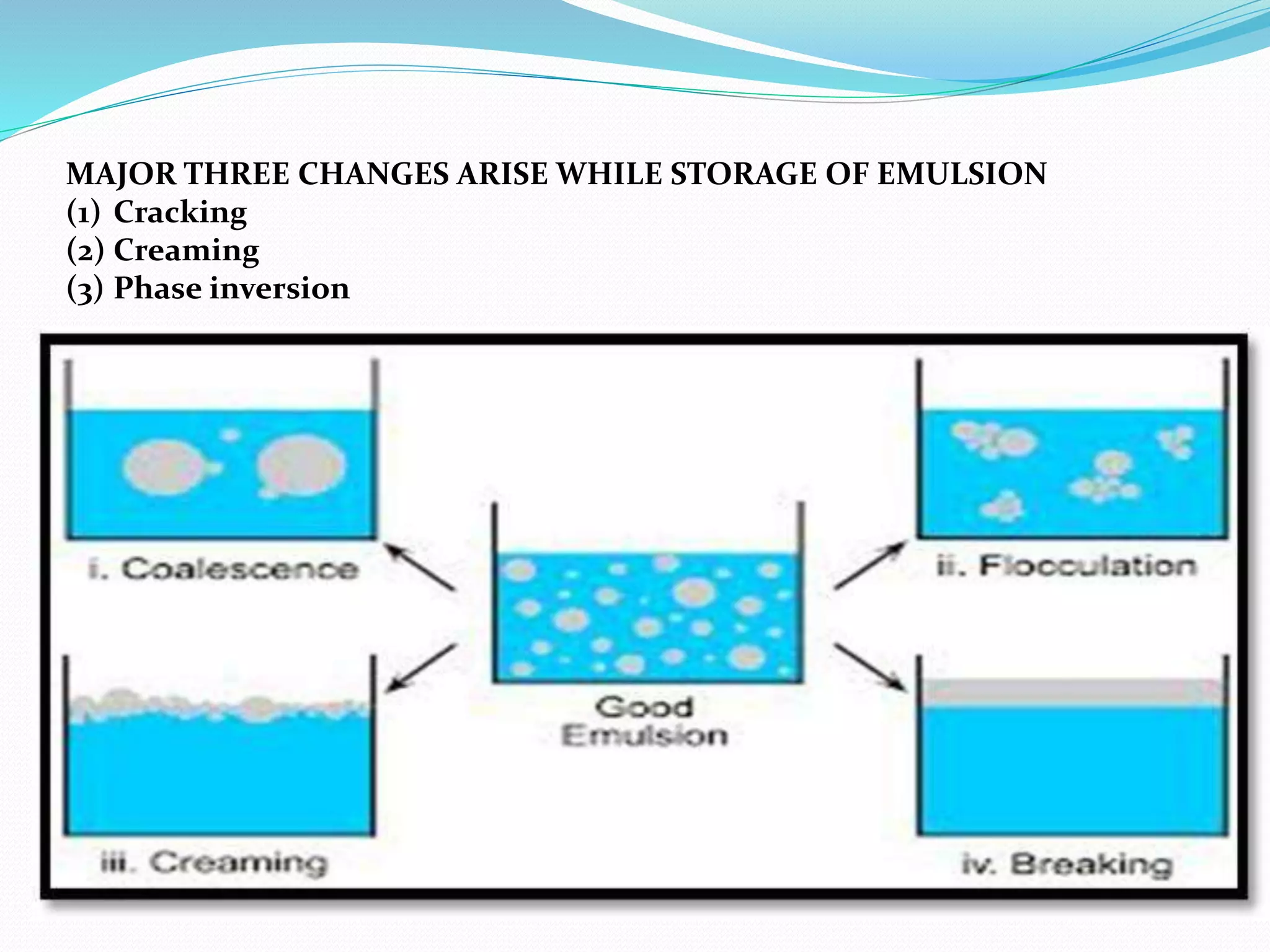
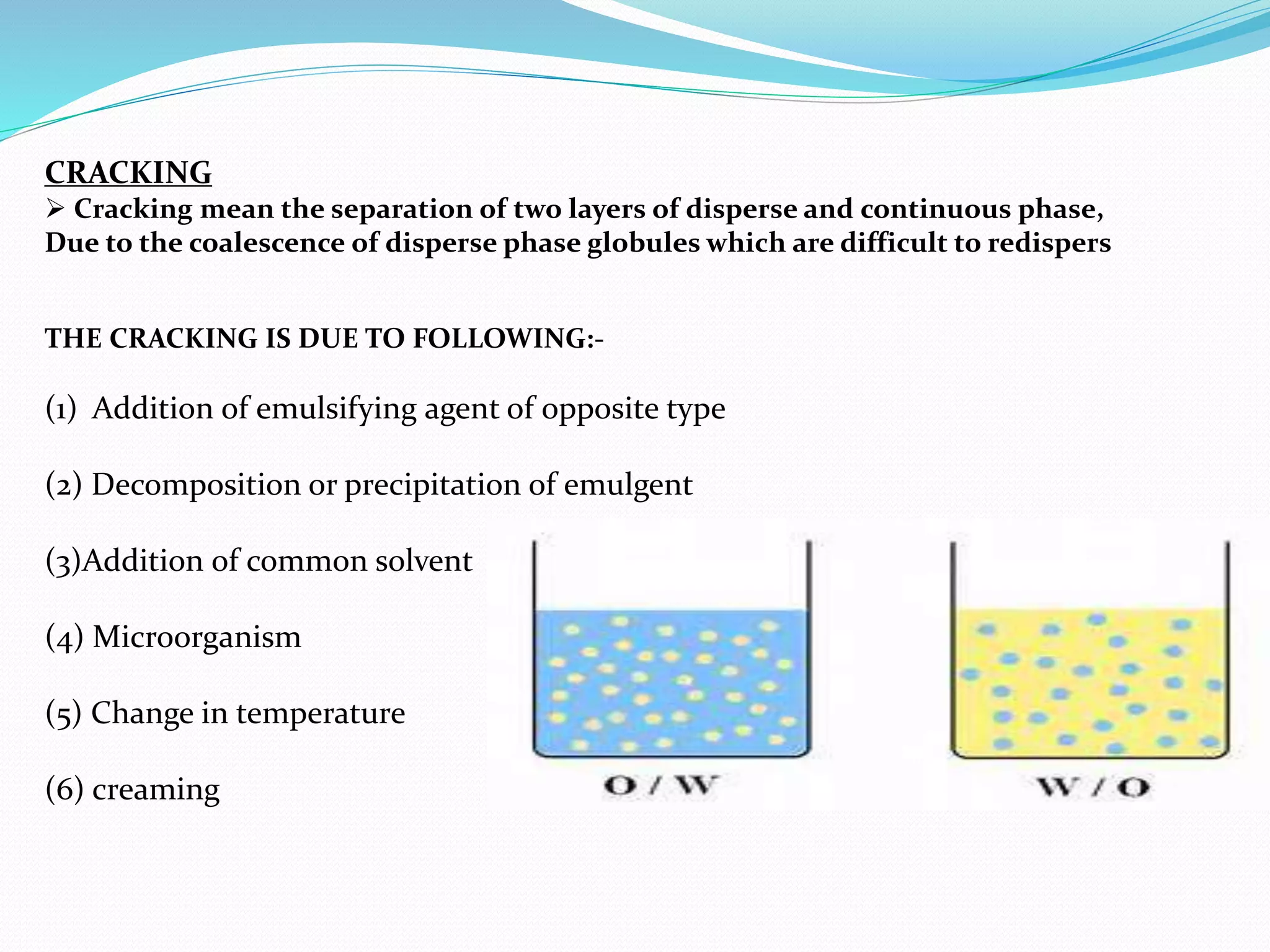
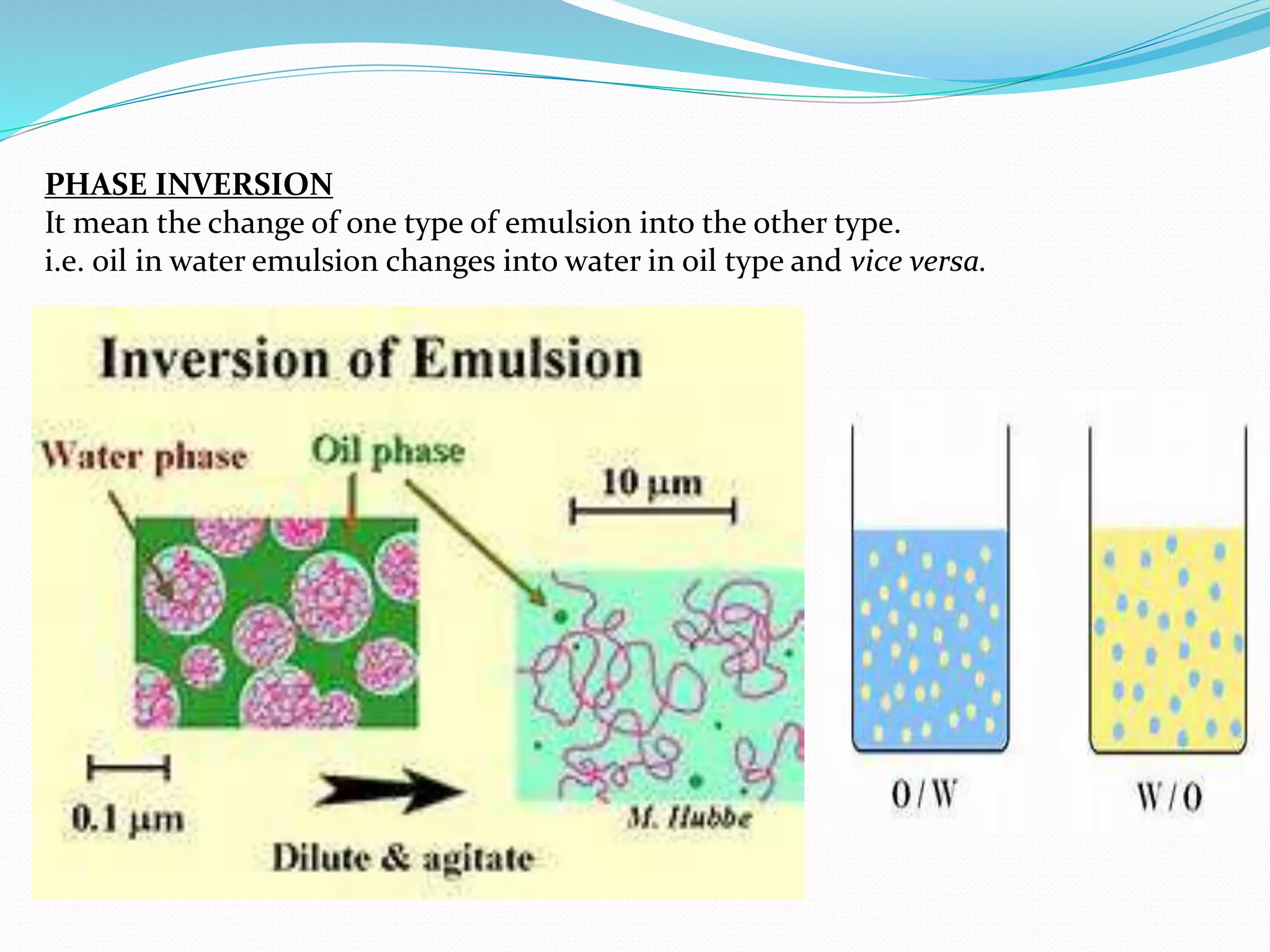
This document discusses factors that can cause instability in emulsions over time during storage. The three main changes that can occur are cracking, creaming, and phase inversion. Cracking is the separation of phases and can result from changes in emulsifying agents, solvents, microbes, temperature, or creaming. Creaming is the upward movement of dispersed globules, which depends on globule size, density differences, viscosity, and storage temperature. Phase inversion is a change from one emulsion type to the other, such as oil-in-water to water-in-oil, brought on by electrolytes, phase volume ratios, temperature, or emulsifying agents. Proper packaging, labeling, and storage conditions can help promote emulsion