化學工程概論
  Introduction to Chemical Engineering

  陳奇中
  ctchen@fcu.edu.tw

製程設計、分析、模擬、最適化
與控制
Process
Design, Analysis, Simulation, Optimization
and Control
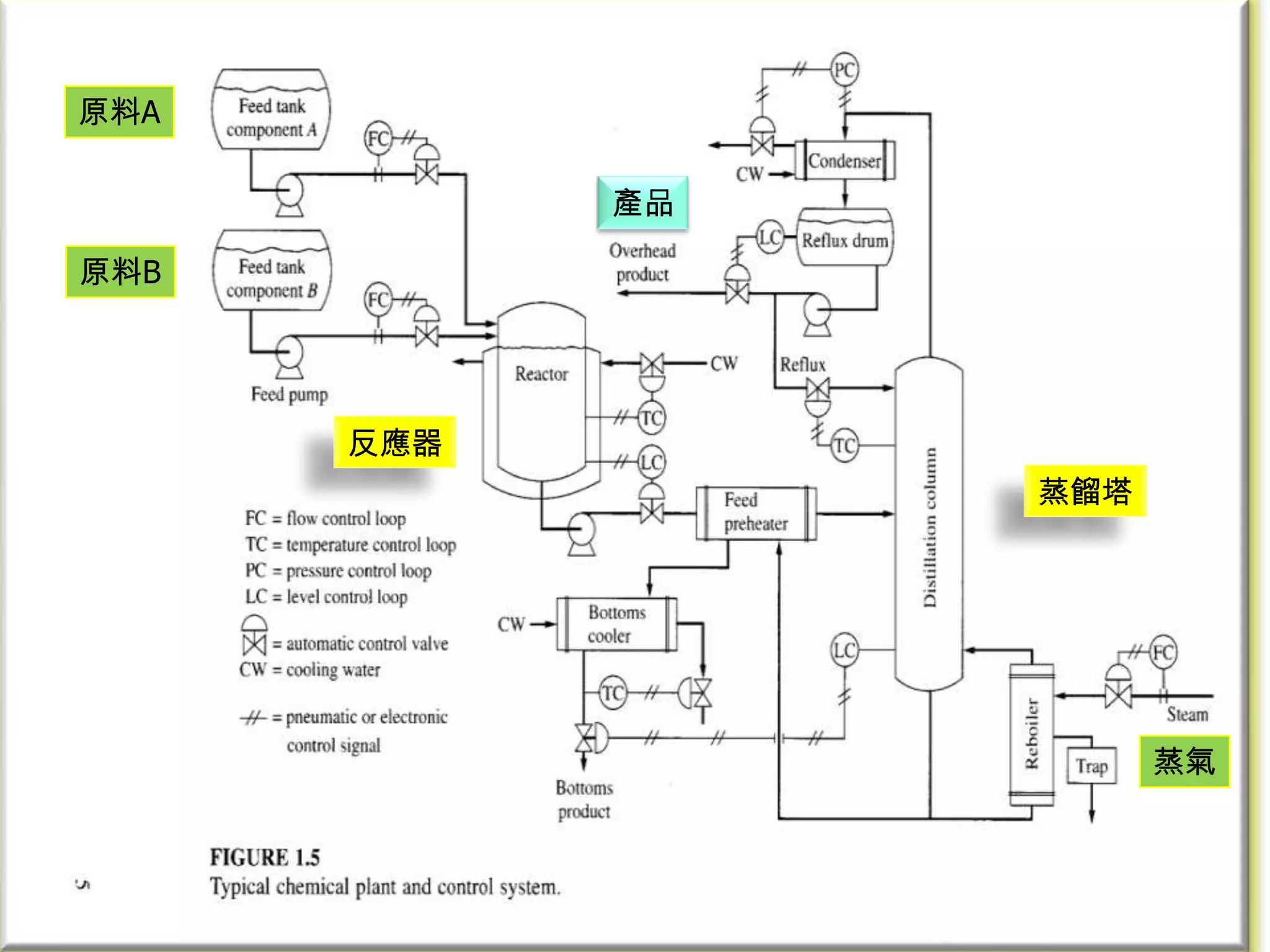
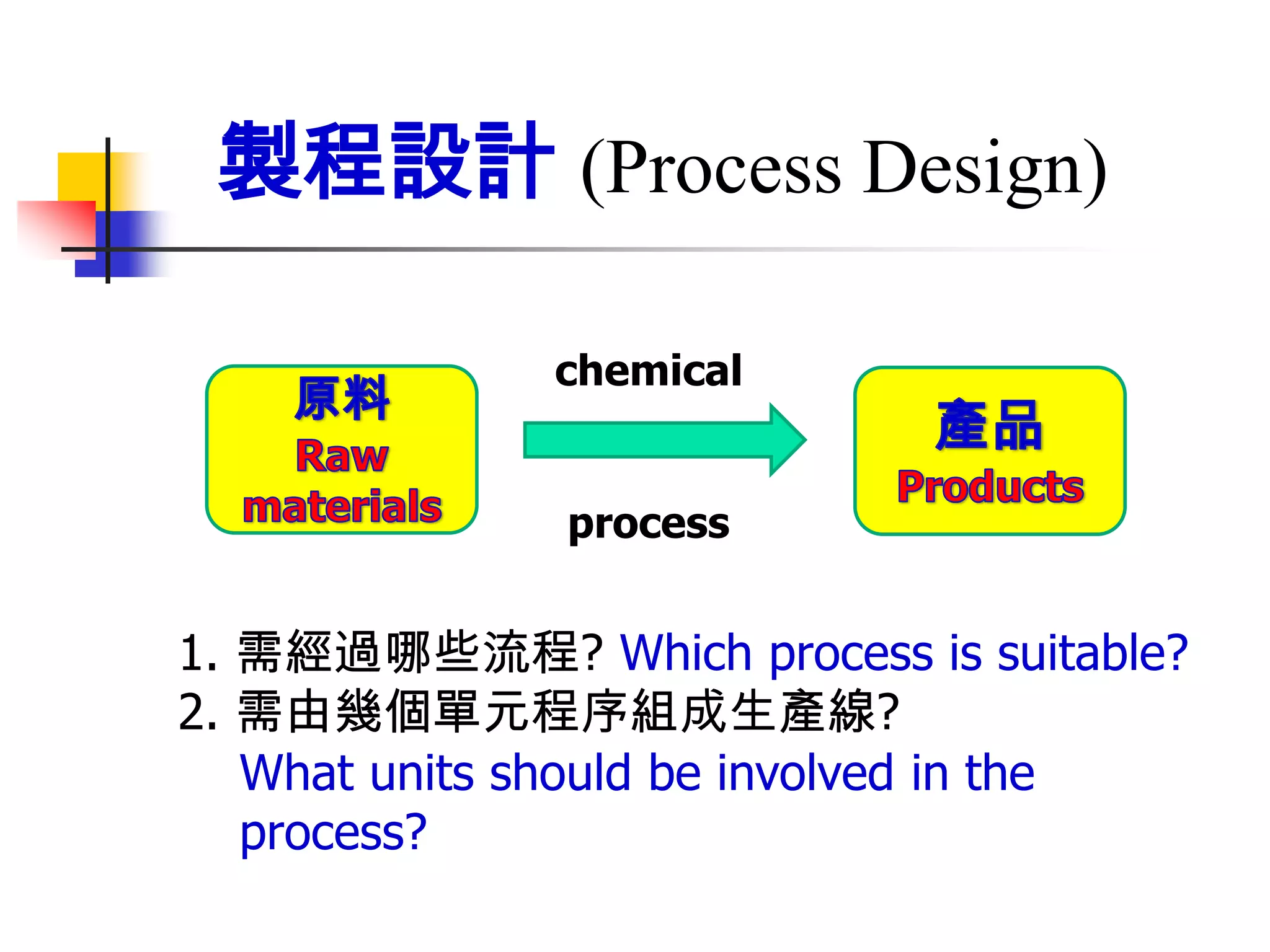
製程設計 (Process Design)

              chemical


               process


1. 需經過哪些流程? Which process is suitable?
2. 需由幾個單元程序組成生產線?
   What units should be involved in the
   process?
原料A

              產品

原料B


      反應器
                                        蒸餾塔


                                              蒸氣


            (Luyben and Luyben, 1997)
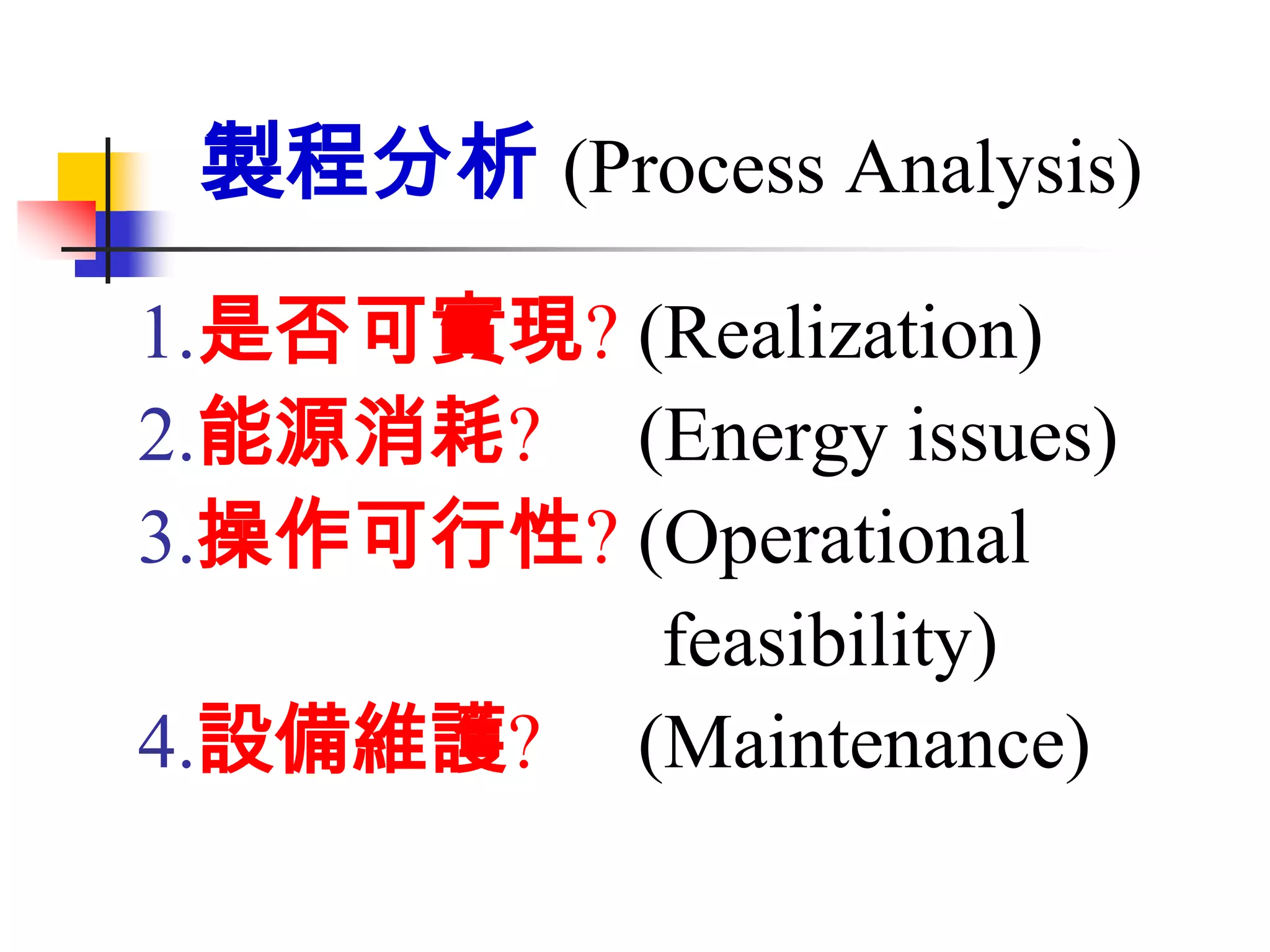
製程分析 (Process Analysis)
1.是否可實現? (Realization)
2.能源消耗? (Energy issues)
3.操作可行性? (Operational
          feasibility)
4.設備維護? (Maintenance)
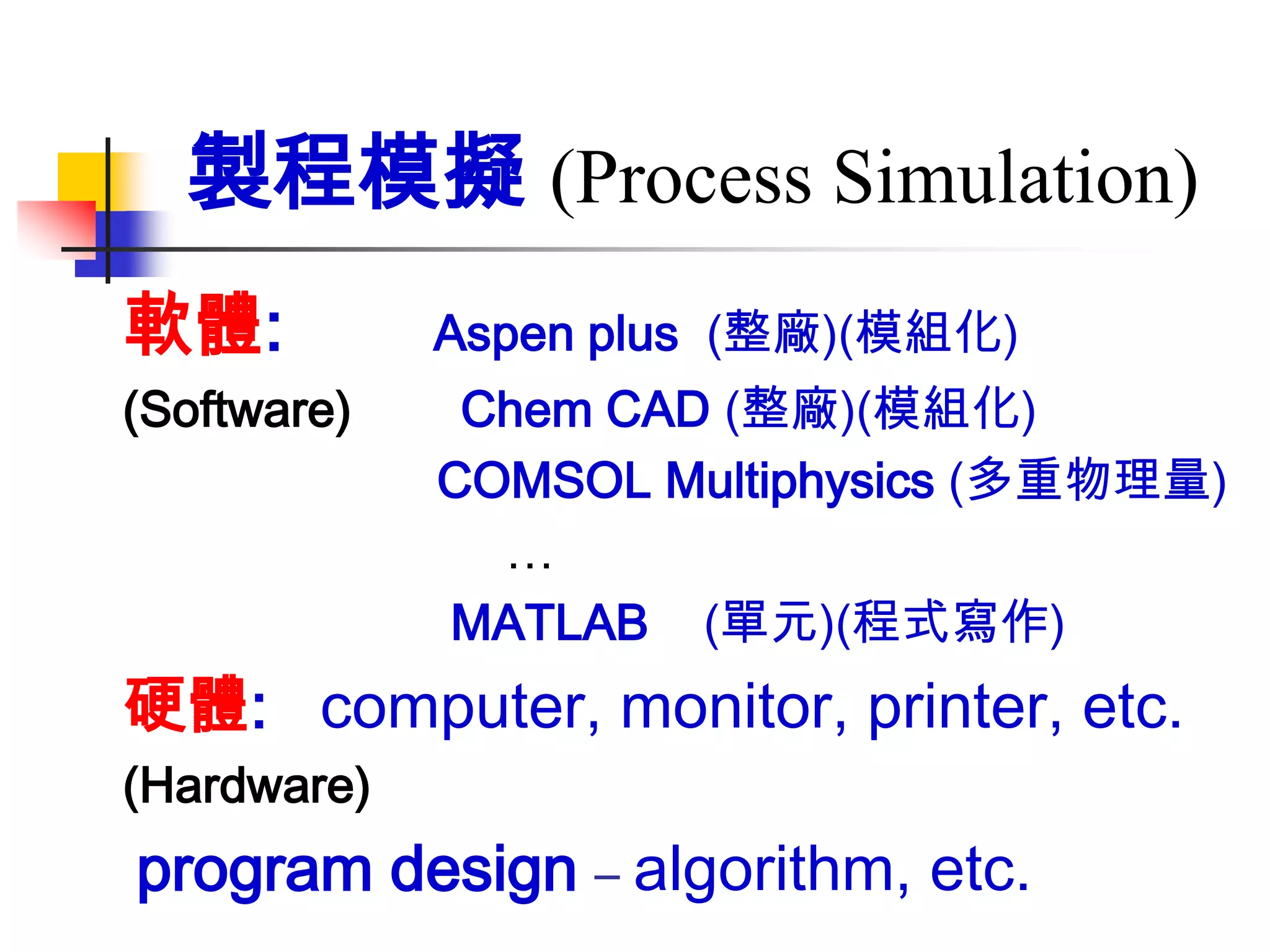
製程模擬 (Process Simulation)
軟體:          Aspen plus (整廠)(模組化)
(Software)    Chem CAD (整廠)(模組化)
             COMSOL Multiphysics (多重物理量)
               …
             MATLAB (單元)(程式寫作)
硬體: computer, monitor, printer, etc.
(Hardware)
program design – algorithm, etc.
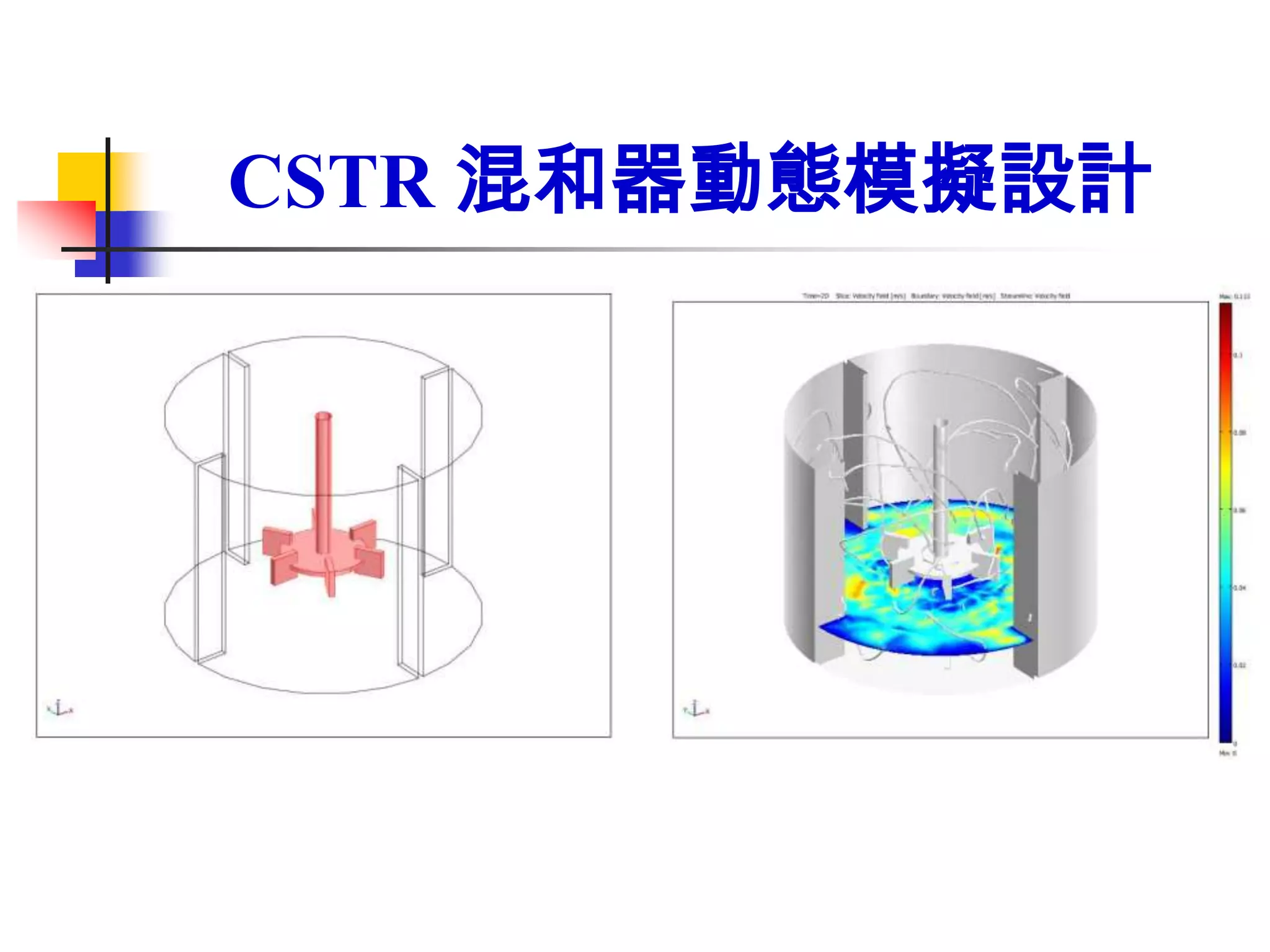
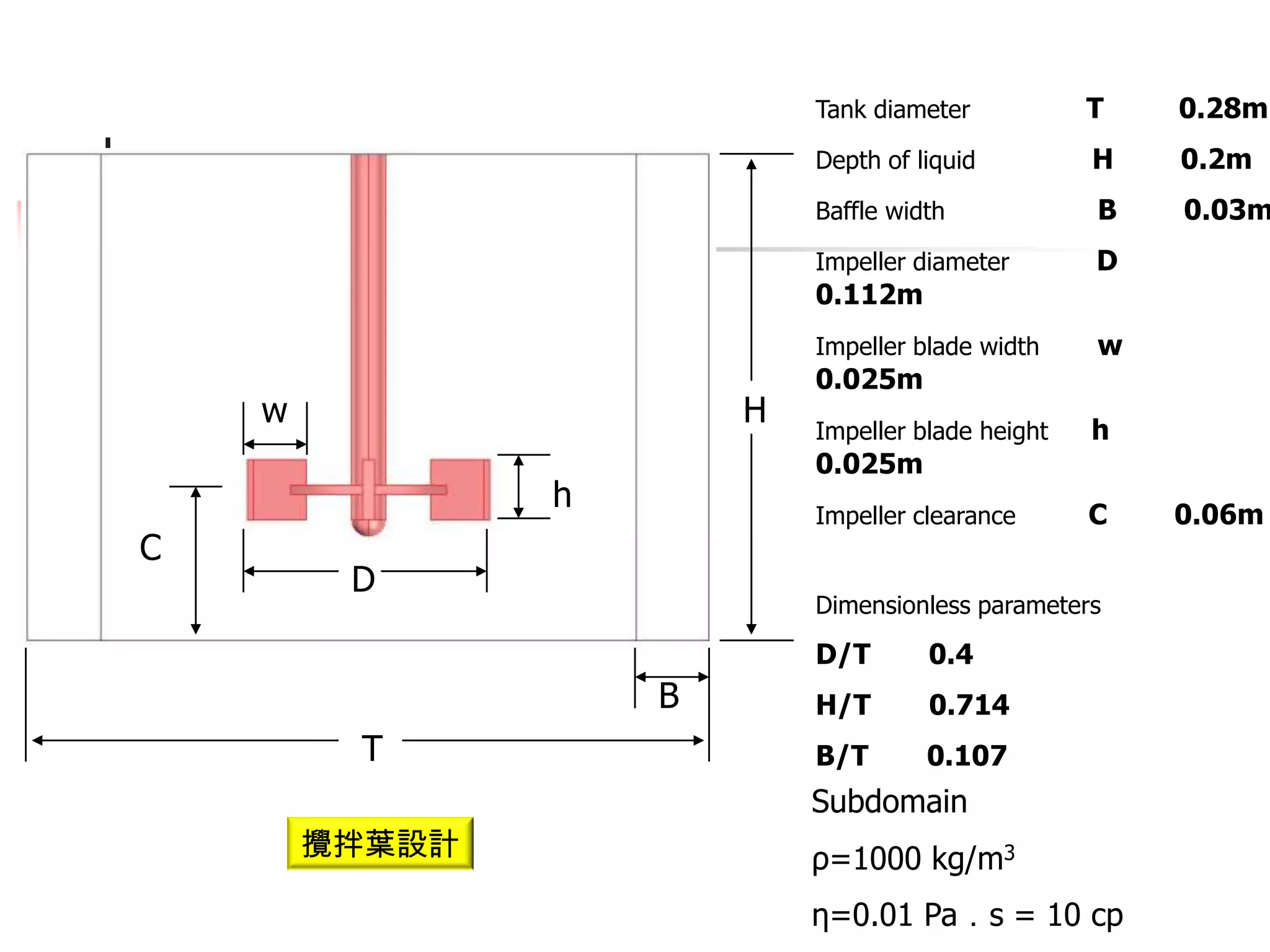
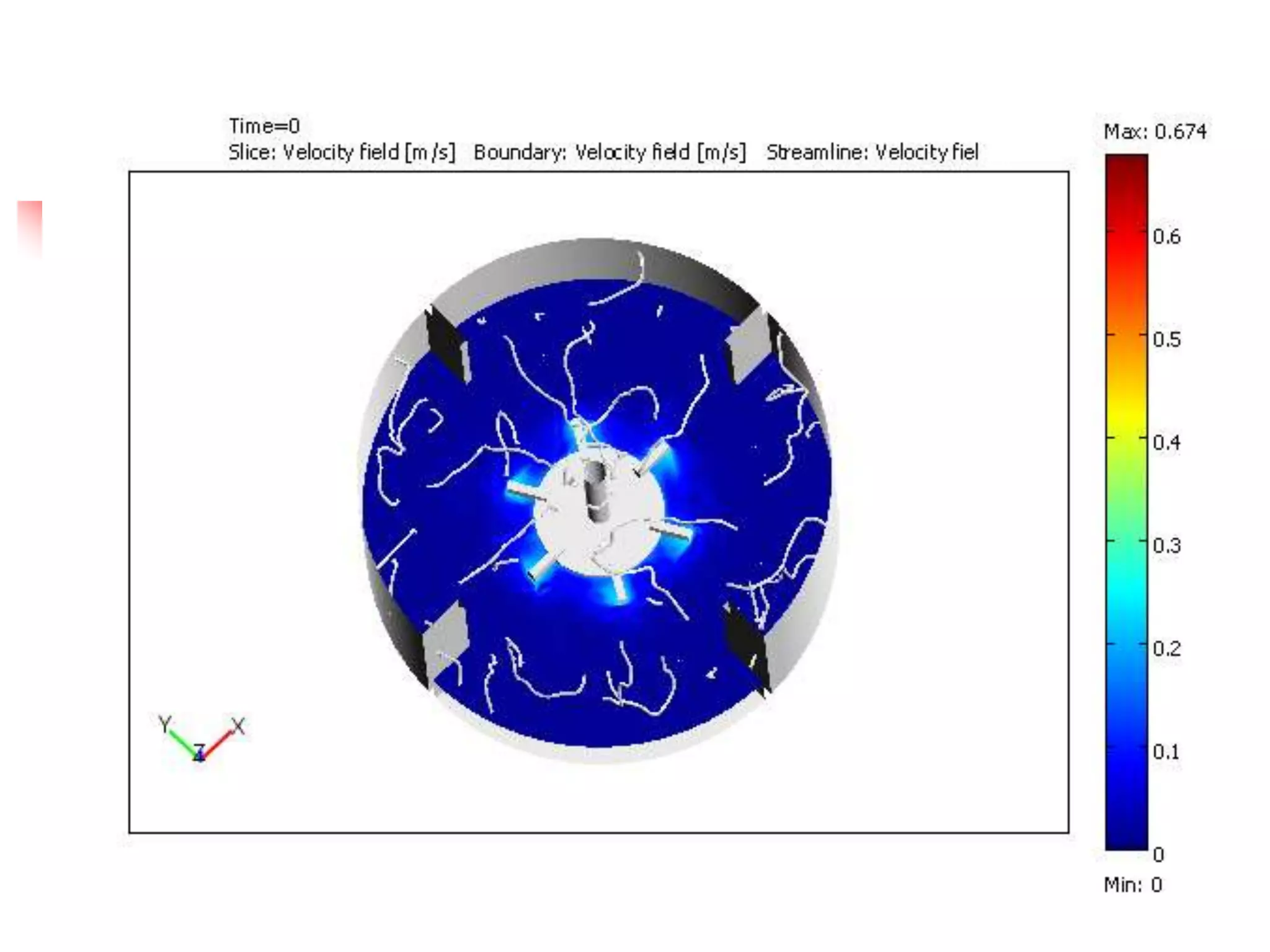
CSTR 混和器動態模擬設計
Tank diameter           T   0.28m
                            Depth of liquid         H   0.2m
                            Baffle width            B   0.03m
                            Impeller diameter       D
                            0.112m
                            Impeller blade width    w
                            0.025m
    w                   H   Impeller blade height   h
                            0.025m
                h           Impeller clearance      C   0.06m
C
         D
                            Dimensionless parameters

                            D/T       0.4
                    B       H/T       0.714
         T                  B/T       0.107
                            Subdomain
        攪拌葉設計               ρ=1000 kg/m3
                            η=0.01 Pa.s = 10 cp
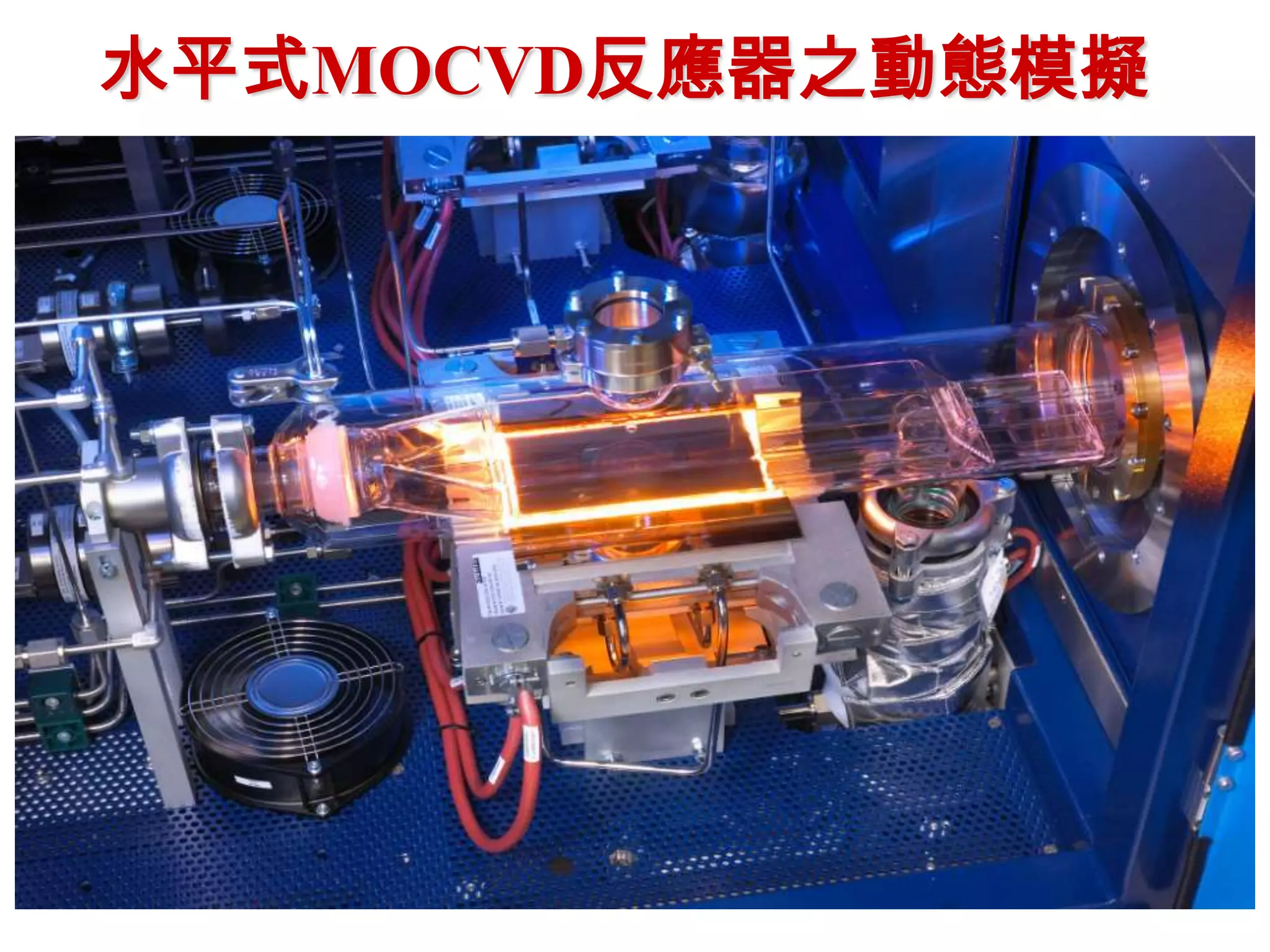
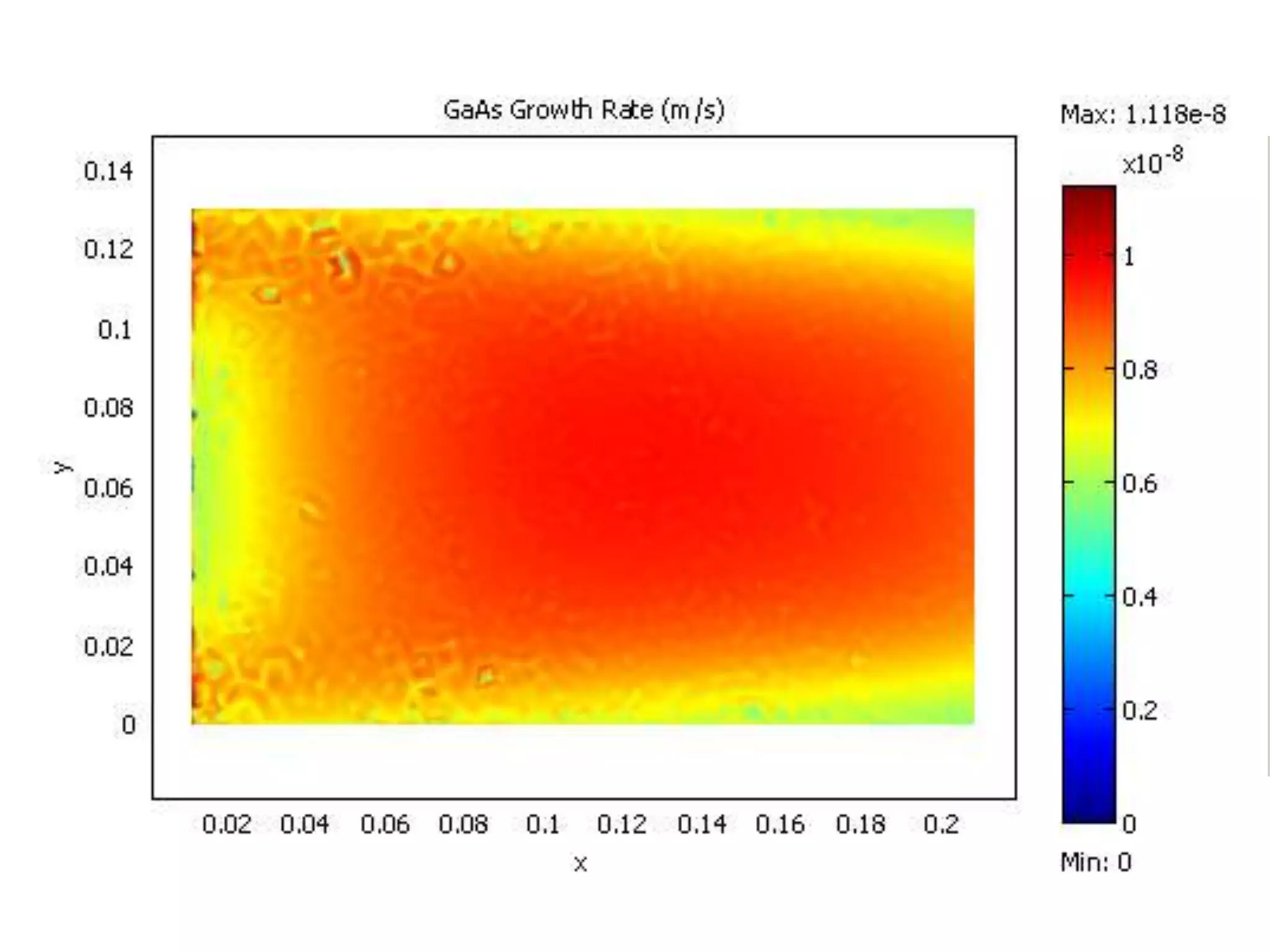
水平式MOCVD反應器之動態模擬
   AIXTRON, AIX200/4 水平式MOCVD反應器


上口端進料 III: trimethylgallium, TMGa (三甲基鎵)
                                              GaAs
下口端進料 V: tertiary- butylarsine, TBAs (叔丁基砷)
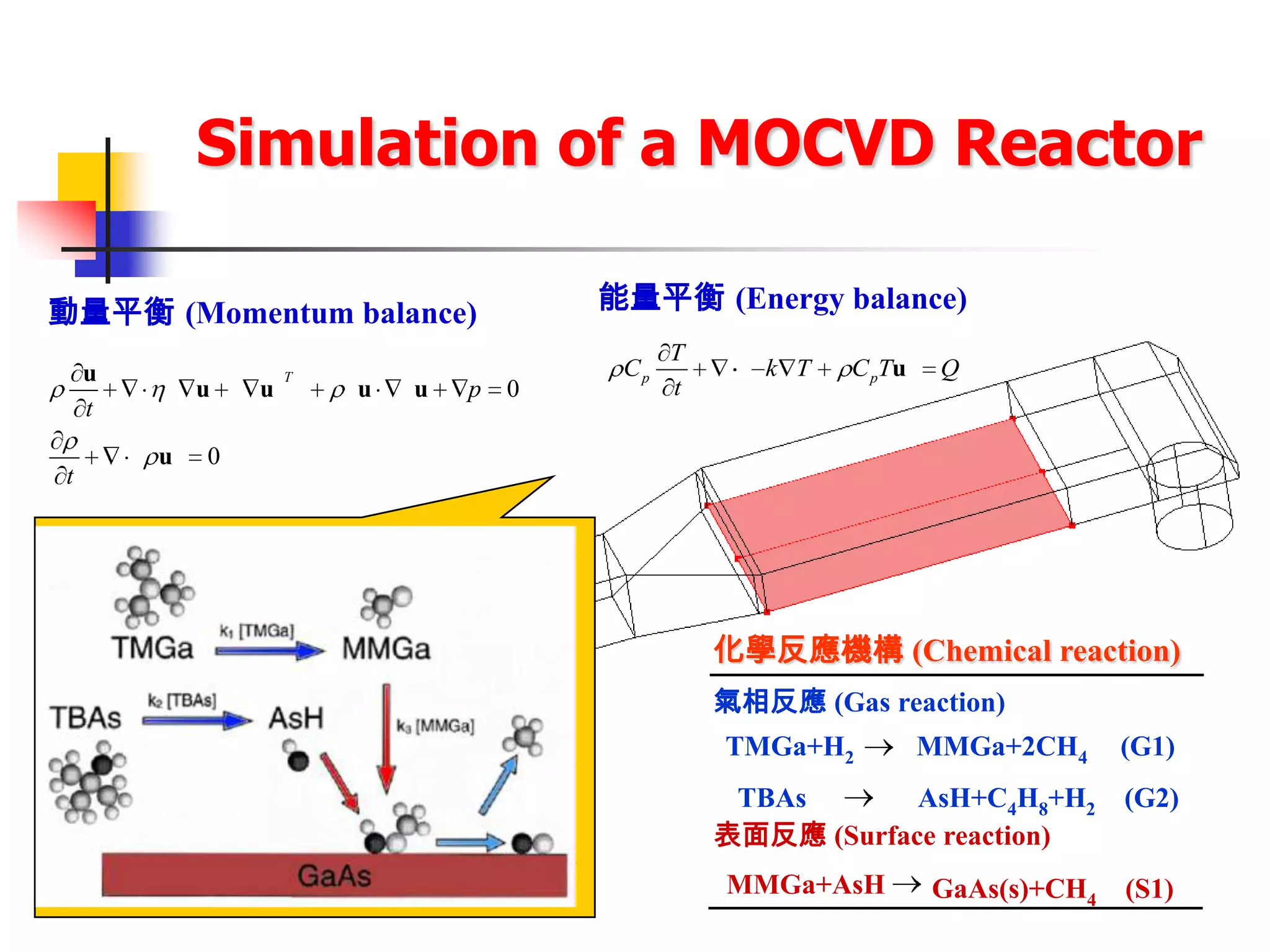
Simulation of a MOCVD Reactor

動量平衡 (Momentum balance)                                    能量平衡 (Energy balance)
                                                                 T
     u                T                                     Cp          k T   C pTu    Q
             u    u          u      u      p     0               t
     t
         u   0
 t


                  VIII,in

                                                                     化學反應機構 (Chemical reaction)
                           VV,in                                     氣相反應 (Gas reaction)
                                                                     TMGa+H2          MMGa+2CH4     (G1)
                 質量平衡 (Mass balance)
                                                                      TBAs       AsH+C4H8+H2        (G2)
                      ci
                                   Di ci       ci u   Ri             表面反應 (Surface reaction)
                      t
                                                                     MMGa+AsH         GaAs(s)+CH4   (S1)
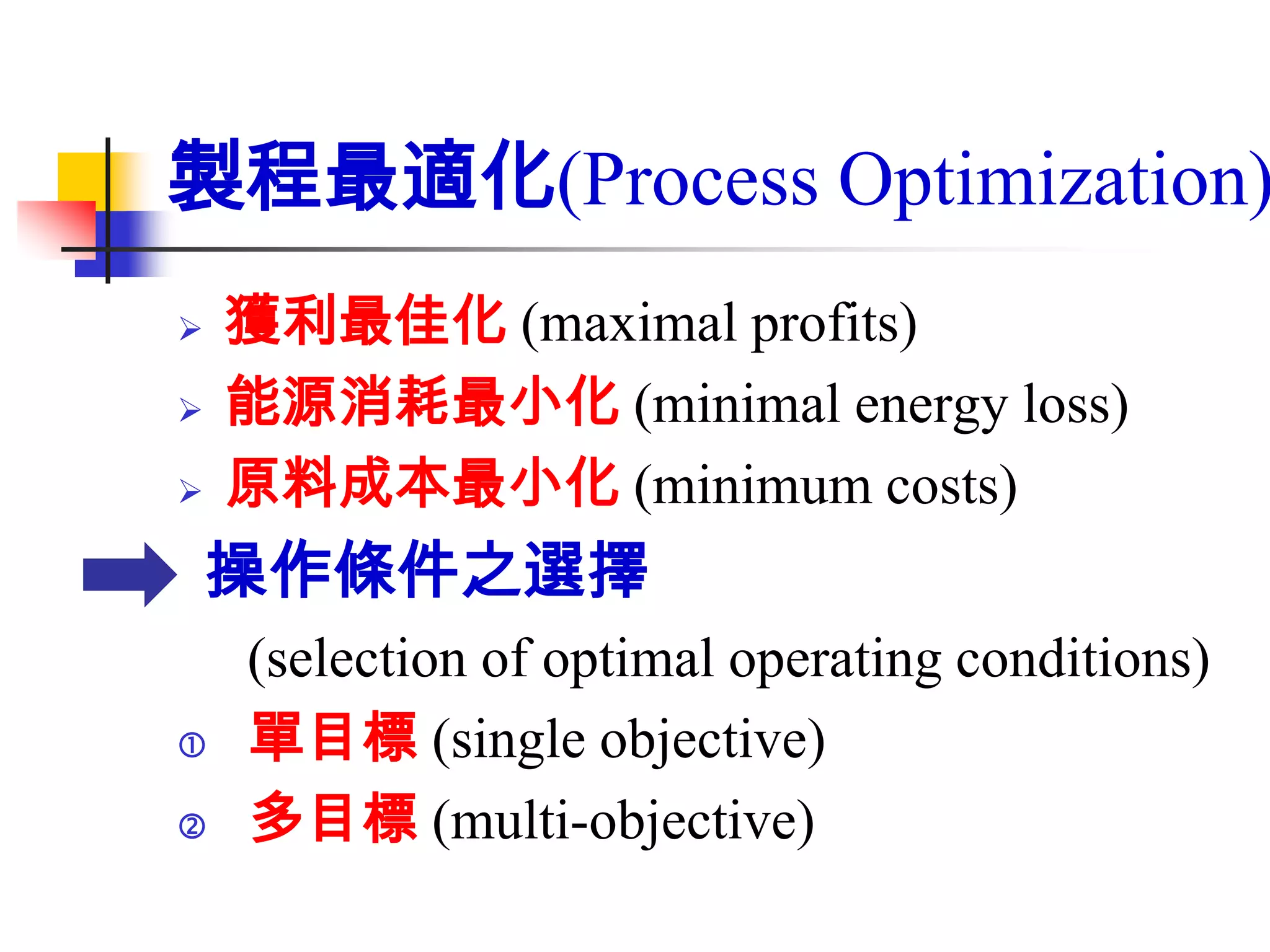
製程最適化(Process Optimization)
   獲利最佳化 (maximal profits)
   能源消耗最小化 (minimal energy loss)
   原料成本最小化 (minimum costs)
    操作條件之選擇
    (selection of optimal operating conditions)
   單目標 (single objective)
   多目標 (multi-objective)
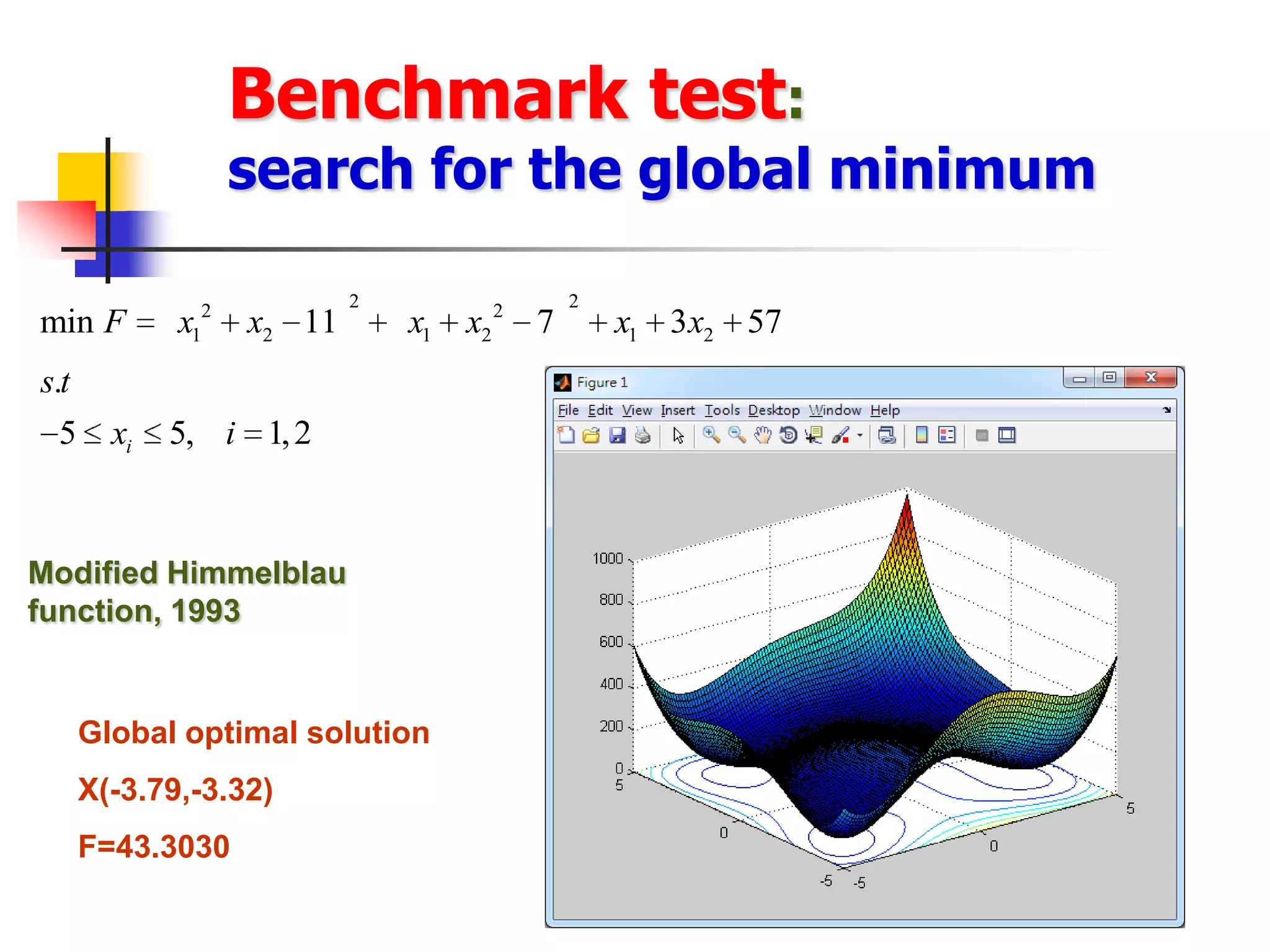
Where is the global minimum?
Benchmark test:
                   search for the global minimum

               2           2             2       2
min F        x1    x2 11       x1   x2       7       x1 3x2 57
s.t
 5      xi   5, i 1, 2


Modified Himmelblau function,
1993


      Global optimal solution
      X(-3.79,-3.32)
      F=43.3030
Convergence of the solution
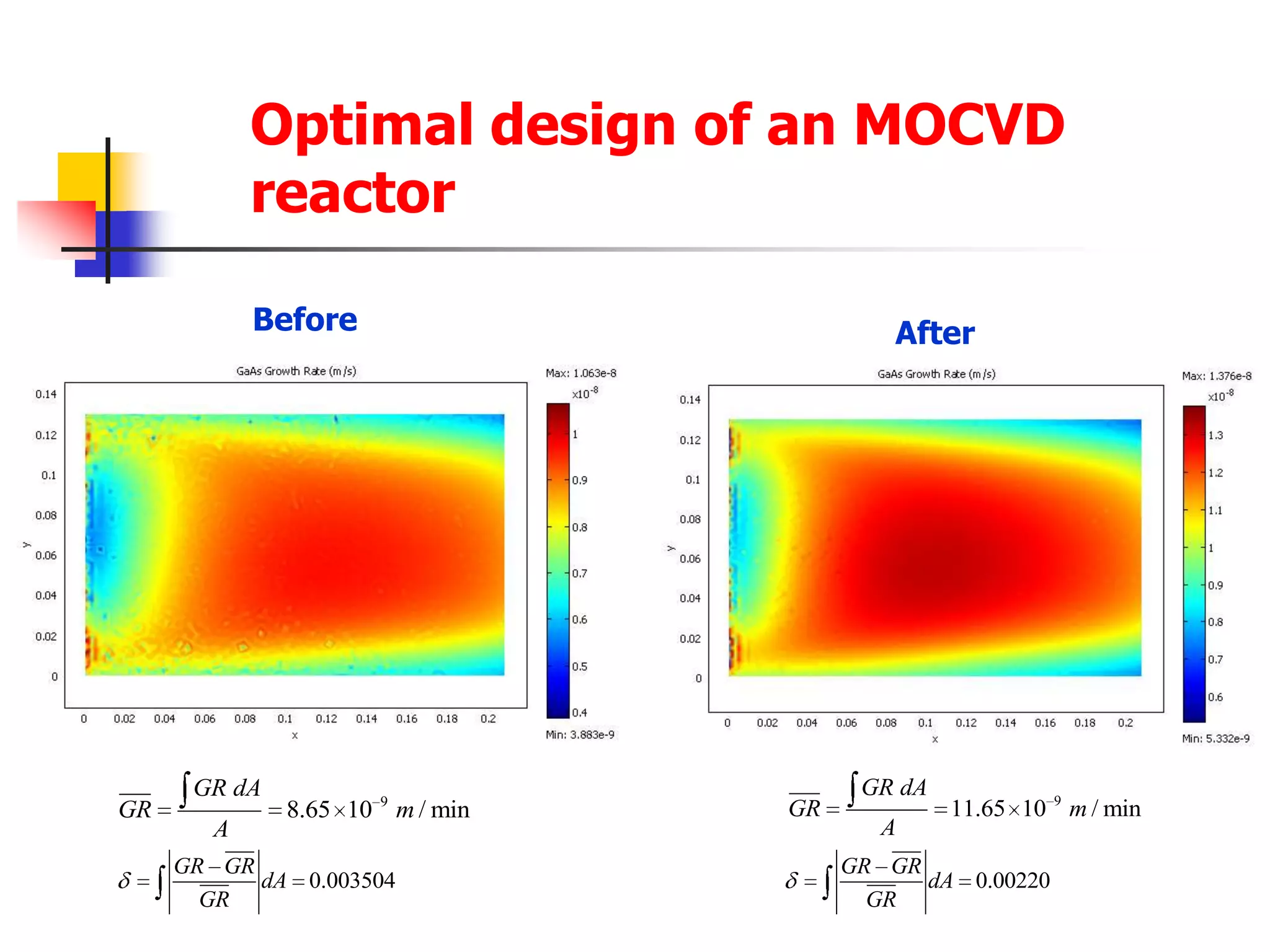
Optimal design of an MOCVD
            reactor

            Before                         After


      GR dA                             GR dA
GR            8.65 10 9 m / min   GR            11.65 10 9 m / min
        A                                 A
     GR GR                             GR GR
           dA 0.003504                       dA 0.00220
       GR                                GR
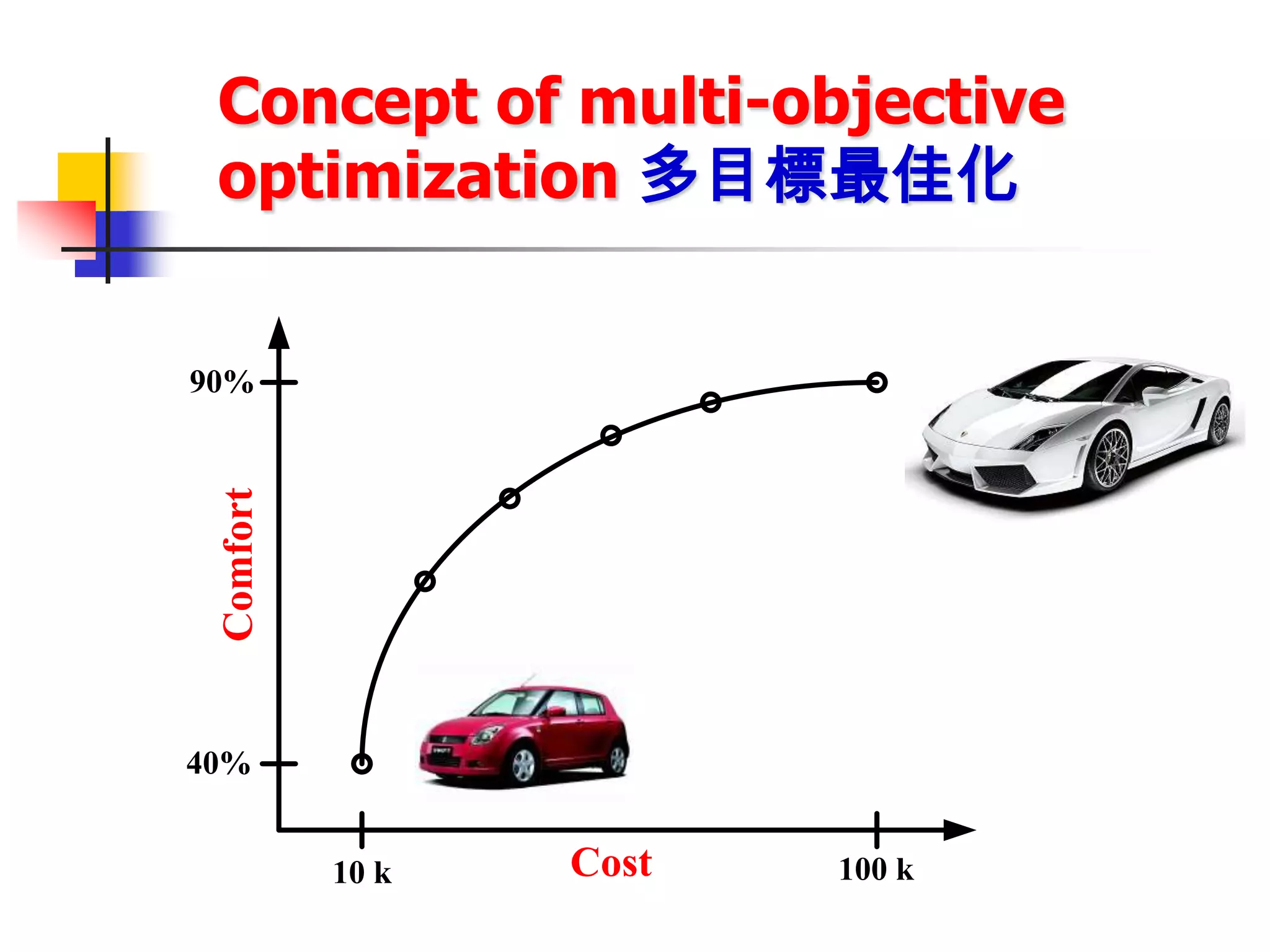
Concept of multi-objective
 optimization 多目標最佳化


90%
 Comfort


40%


           10 k   Cost   100 k
Concept of Pareto-optimal
         solutions : non-dominated (Goldberg, 1989)
                         Feasible objective space
                                                    B dominate A
                                    A               C dominate A
                                                    B, C non-dominated
                     B
                                                    D, E non-dominated
f2


                                    Second level
                              C                     E dominate A, B, C
           D
                                                    D dominate A, B

                    E
     Pareto-optimal front


                               f1
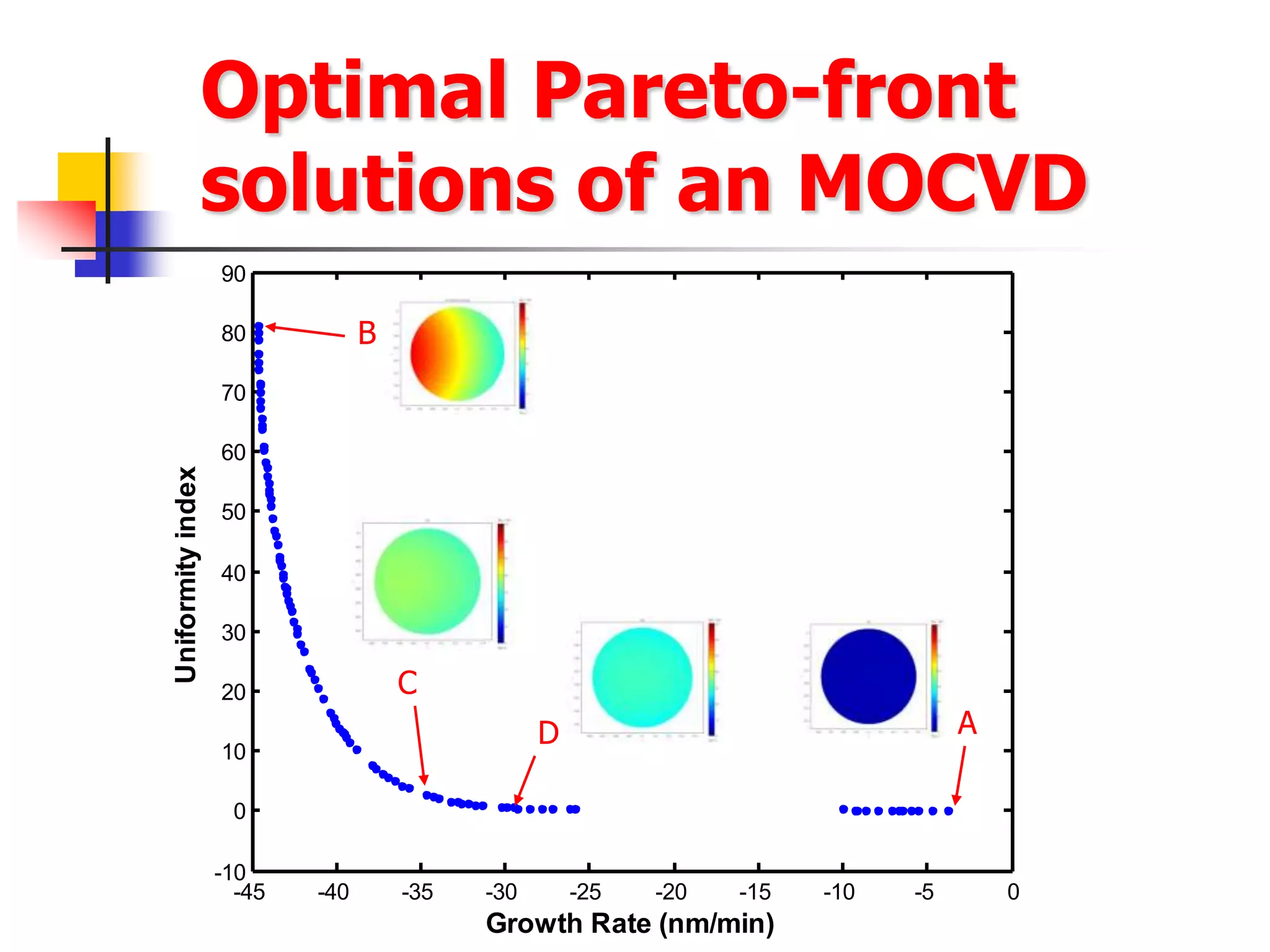
Optimal Pareto-front
               solutions of an MOCVD
                   90

                   80            B
                   70

                   60
Uniformity index


                   50

                   40

                   30

                   20                C
                                                 D                                A
                   10

                    0

                   -10
                     -45   -40       -35   -30       -25   -20   -15   -10   -5       0
                                           Growth Rate (nm/min)
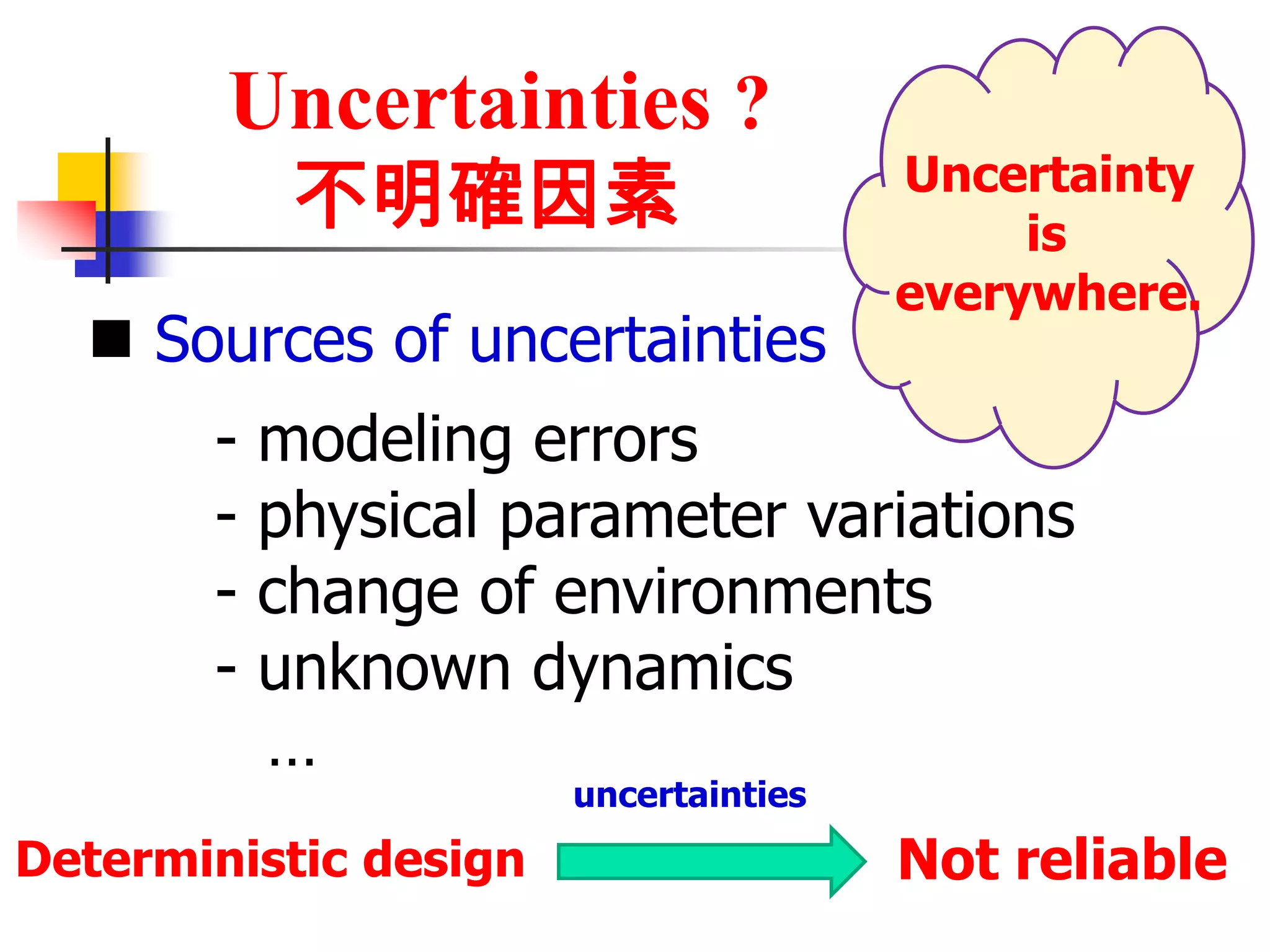
Uncertainties ?
            不明確因素                      Uncertainty
                                            is
                                       everywhere.
   Sources of uncertainties
       -   modeling errors
       -   physical parameter variations
       -   change of environments
       -   unknown dynamics
           …
                       uncertainties
Deterministic design                   Not reliable
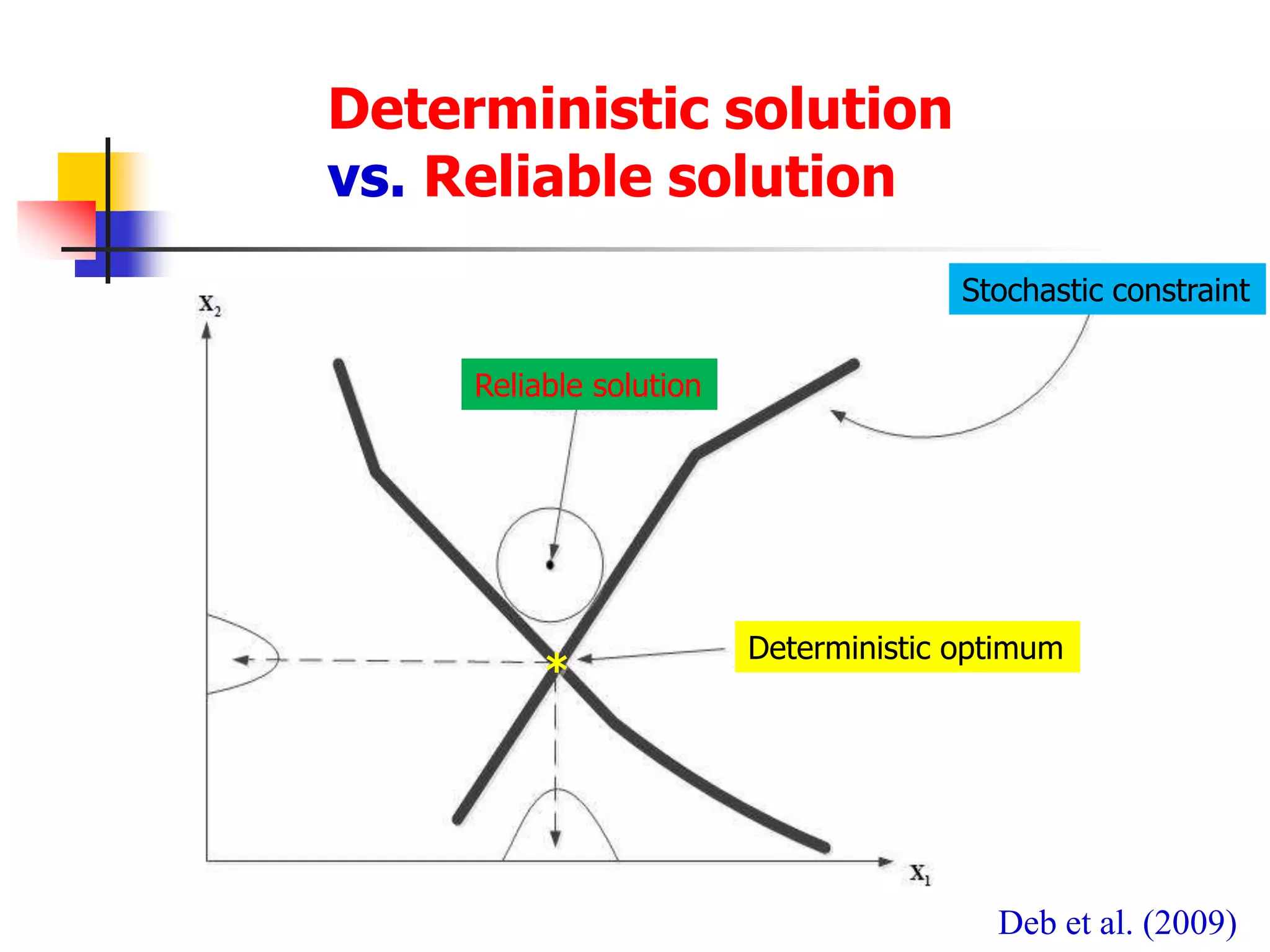
Deterministic solution
vs. Reliable solution
                                       Stochastic constraint


     Reliable solution


                         Deterministic optimum
          *


                                         Deb et al. (2009)
Solution cells with different
     reliability indices (0, 0.5, 1, 1.5, 3)
                          Example 4.2
    10


     9


     8


     7


     6
2


     5


     4


     3


     2


     1


     0
      0      2        4                 6   8   10
                               1
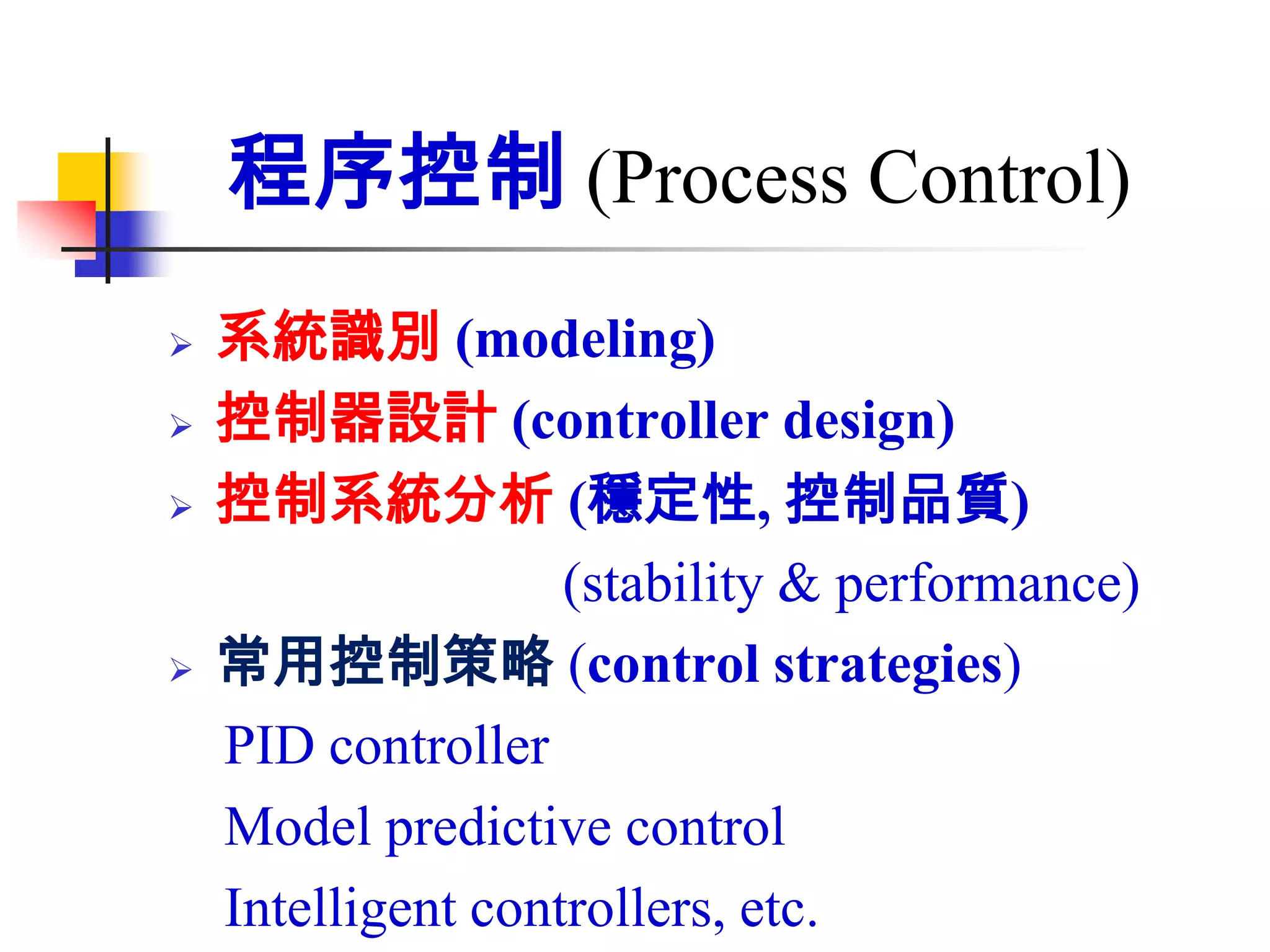
程序控制 (Process Control)
   系統識別 (modeling)
   控制器設計 (controller design)
   控制系統分析 (穩定性, 控制品質)
                    (stability & performance)
   常用控制策略 (control strategies)
    PID controller
    Model predictive control
    Intelligent controllers, etc.
CSTR反應器之PI控制
                                                             Simulink


dx1                                        x2
          x1 Da (1 x1 ) exp
dt                                       1 x2
dx2                                                 x2
          (1    ) x2     BDa (1 x1 ) exp                 u
 dt                                               1 x2

                              1    t
 u (t )   Kc ( x2 s    x2 )            ( x2 s   x2 )dt
                              TI   0
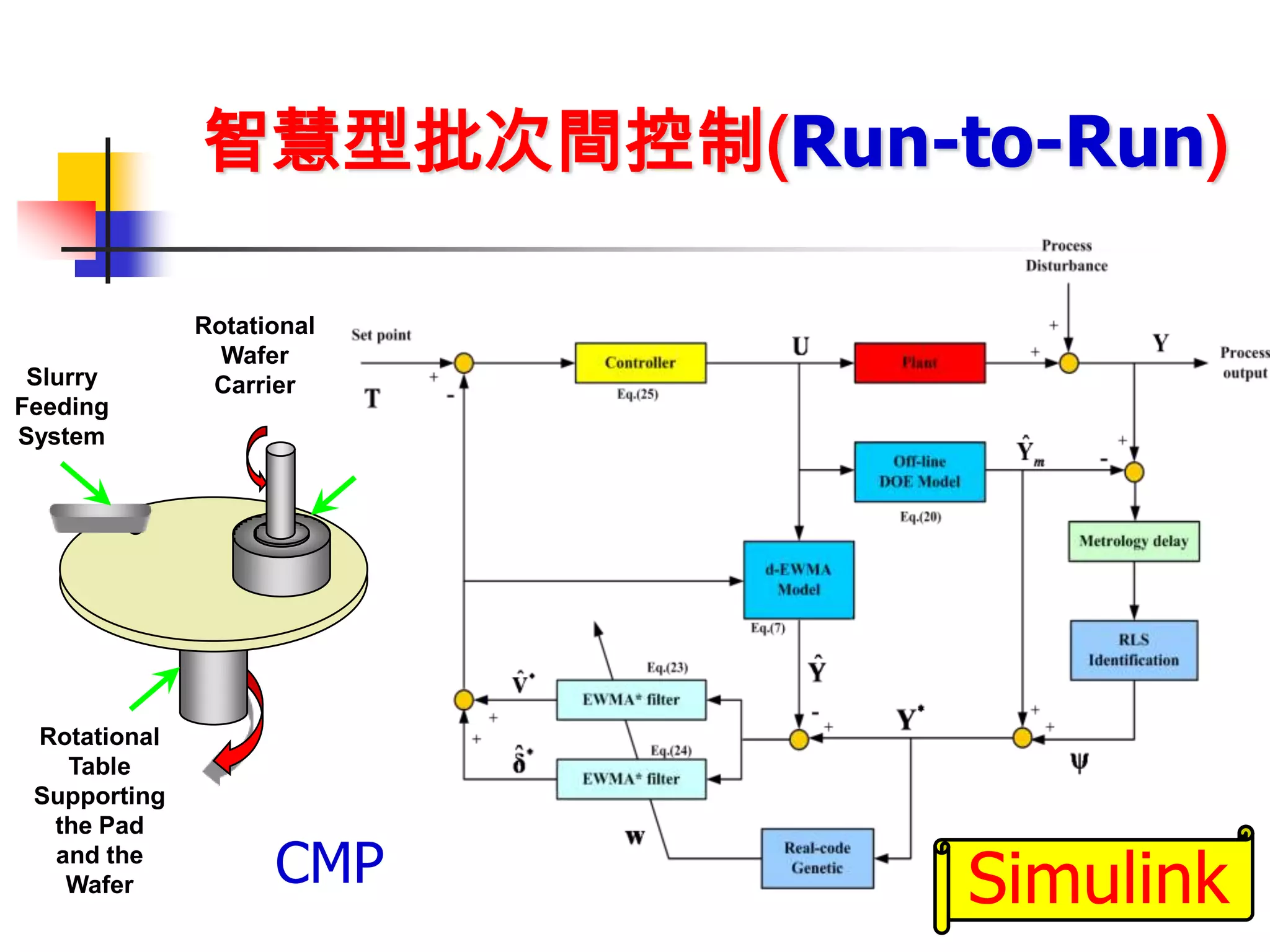
智慧型批次間控制(Run-to-Run)

              Rotational
                Wafer
 Slurry        Carrier
Feeding
System


 Rotational
   Table
 Supporting
  the Pad
  and the
   Wafer            CMP     Simulink
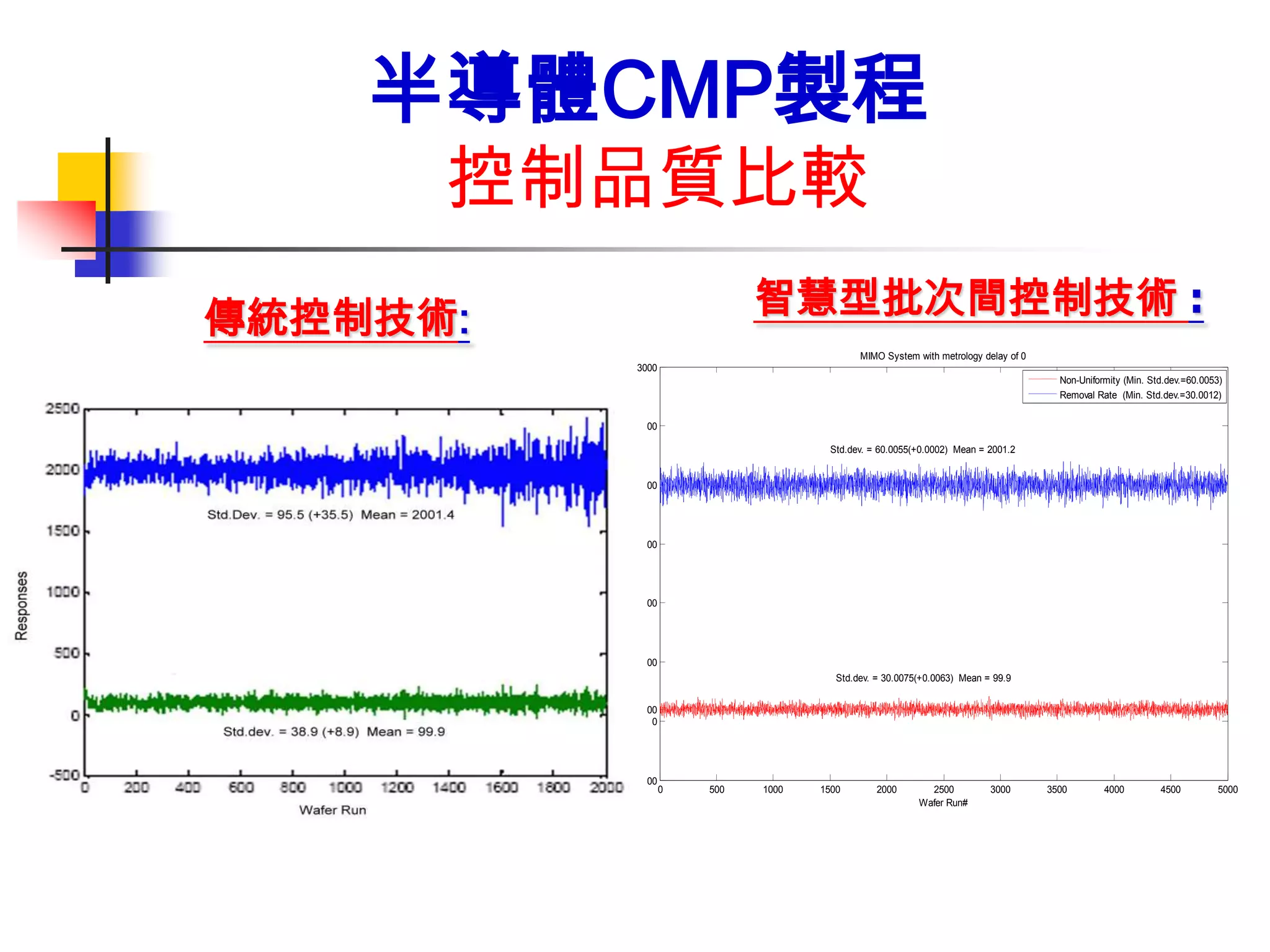
半導體CMP製程
      控制品質比較
傳統控制技術:                                智慧型批次間控制技術 :
                                                      MIMO System with metrology delay of 0
                      3000
                                                                                                Non-Uniformity (Min. Std.dev.=60.0053)
                                                                                                Removal Rate (Min. Std.dev.=30.0012)


                      2500

                                               Std.dev. = 60.0055(+0.0002) Mean = 2001.2


                      2000


                      1500


          Responses
                      1000


                      500
                                                 Std.dev. = 30.0075(+0.0063) Mean = 99.9


                      100
                        0


                      -500
                             0   500   1000   1500        2000       2500          3000       3500        4000         4500          5000
                                                                   Wafer Run#
結語 (Summary)
製程設計、分析、模擬、最適化與
控制
Process
Design, Analysis, Simulation, Optimization
and Control


   高效率、低耗能、零汙染的
   綠色新製程 (Green Process)
Quiz (1/3)
1.   What are the main parts of a green
     process? (1) high efficiency (2) low
     pollution (3) low material and energy
     consumptions (4) all the above.
2.   Why a process should be operated at
     its optimum condition? (1) low cost
     and energy loss (2) high productivity
     (3) high profit (4) all the above.
Quiz (2/3)
3.   Why a control system is necessary in a
     chemical process? (1) stable operation
     (2) disturbance rejection (3) low
     product variations (4) all the above.
4.   Why a simulation tool is necessary for
     process design? (1) low cost (2)
     reliability (3) be able to achieve a
     better design (4) all the above.
Quiz (3/3)
5.   What are the main issues of process
     analysis? (1) realization and operational
     feasibility (2) maintenance (3) energy
     consumptions (4) all the above.
化工概論: 製程分析模擬最適化與控制_陳奇中教授演講投影片

  • 1.
    化學工程概論 Introductionto Chemical Engineering 陳奇中 ctchen@fcu.edu.tw 製程設計、分析、模擬、最適化 與控制 Process Design, Analysis, Simulation, Optimization and Control
  • 2.
    製程設計 (Process Design) chemical process 1. 需經過哪些流程? Which process is suitable? 2. 需由幾個單元程序組成生產線? What units should be involved in the process?
  • 3.
    原料A 產品 原料B 反應器 蒸餾塔 蒸氣 (Luyben and Luyben, 1997)
  • 4.
    製程分析 (Process Analysis) 1.是否可實現?(Realization) 2.能源消耗? (Energy issues) 3.操作可行性? (Operational feasibility) 4.設備維護? (Maintenance)
  • 5.
    製程模擬 (Process Simulation) 軟體: Aspen plus (整廠)(模組化) (Software) Chem CAD (整廠)(模組化) COMSOL Multiphysics (多重物理量) … MATLAB (單元)(程式寫作) 硬體: computer, monitor, printer, etc. (Hardware) program design – algorithm, etc.
  • 6.
  • 7.
    Tank diameter T 0.28m Depth of liquid H 0.2m Baffle width B 0.03m Impeller diameter D 0.112m Impeller blade width w 0.025m w H Impeller blade height h 0.025m h Impeller clearance C 0.06m C D Dimensionless parameters D/T 0.4 B H/T 0.714 T B/T 0.107 Subdomain 攪拌葉設計 ρ=1000 kg/m3 η=0.01 Pa.s = 10 cp
  • 10.
    水平式MOCVD反應器之動態模擬  AIXTRON, AIX200/4 水平式MOCVD反應器 上口端進料 III: trimethylgallium, TMGa (三甲基鎵) GaAs 下口端進料 V: tertiary- butylarsine, TBAs (叔丁基砷)
  • 11.
    Simulation of aMOCVD Reactor 動量平衡 (Momentum balance) 能量平衡 (Energy balance) T u T Cp k T C pTu Q u u u u p 0 t t u 0 t VIII,in 化學反應機構 (Chemical reaction) VV,in 氣相反應 (Gas reaction) TMGa+H2 MMGa+2CH4 (G1) 質量平衡 (Mass balance) TBAs AsH+C4H8+H2 (G2) ci Di ci ci u Ri 表面反應 (Surface reaction) t MMGa+AsH GaAs(s)+CH4 (S1)
  • 13.
    製程最適化(Process Optimization)  獲利最佳化 (maximal profits)  能源消耗最小化 (minimal energy loss)  原料成本最小化 (minimum costs) 操作條件之選擇 (selection of optimal operating conditions)  單目標 (single objective)  多目標 (multi-objective)
  • 14.
    Where is theglobal minimum?
  • 15.
    Benchmark test: search for the global minimum 2 2 2 2 min F x1 x2 11 x1 x2 7 x1 3x2 57 s.t 5 xi 5, i 1, 2 Modified Himmelblau function, 1993 Global optimal solution X(-3.79,-3.32) F=43.3030
  • 16.
  • 17.
    Optimal design ofan MOCVD reactor Before After GR dA GR dA GR 8.65 10 9 m / min GR 11.65 10 9 m / min A A GR GR GR GR dA 0.003504 dA 0.00220 GR GR
  • 18.
    Concept of multi-objective optimization 多目標最佳化 90% Comfort 40% 10 k Cost 100 k
  • 19.
    Concept of Pareto-optimal solutions : non-dominated (Goldberg, 1989) Feasible objective space B dominate A A C dominate A B, C non-dominated B D, E non-dominated f2 Second level C E dominate A, B, C D D dominate A, B E Pareto-optimal front f1
  • 20.
    Optimal Pareto-front solutions of an MOCVD 90 80 B 70 60 Uniformity index 50 40 30 20 C D A 10 0 -10 -45 -40 -35 -30 -25 -20 -15 -10 -5 0 Growth Rate (nm/min)
  • 21.
    Uncertainties ? 不明確因素 Uncertainty is everywhere.  Sources of uncertainties - modeling errors - physical parameter variations - change of environments - unknown dynamics … uncertainties Deterministic design Not reliable
  • 22.
    Deterministic solution vs. Reliablesolution Stochastic constraint Reliable solution Deterministic optimum * Deb et al. (2009)
  • 23.
    Solution cells withdifferent reliability indices (0, 0.5, 1, 1.5, 3) Example 4.2 10 9 8 7 6 2 5 4 3 2 1 0 0 2 4 6 8 10 1
  • 24.
    程序控制 (Process Control)  系統識別 (modeling)  控制器設計 (controller design)  控制系統分析 (穩定性, 控制品質) (stability & performance)  常用控制策略 (control strategies) PID controller Model predictive control Intelligent controllers, etc.
  • 25.
    CSTR反應器之PI控制 Simulink dx1 x2 x1 Da (1 x1 ) exp dt 1 x2 dx2 x2 (1 ) x2 BDa (1 x1 ) exp u dt 1 x2 1 t u (t ) Kc ( x2 s x2 ) ( x2 s x2 )dt TI 0
  • 26.
    智慧型批次間控制(Run-to-Run) Rotational Wafer Slurry Carrier Feeding System Rotational Table Supporting the Pad and the Wafer CMP Simulink
  • 27.
    半導體CMP製程 控制品質比較 傳統控制技術: 智慧型批次間控制技術 : MIMO System with metrology delay of 0 3000 Non-Uniformity (Min. Std.dev.=60.0053) Removal Rate (Min. Std.dev.=30.0012) 2500 Std.dev. = 60.0055(+0.0002) Mean = 2001.2 2000 1500 Responses 1000 500 Std.dev. = 30.0075(+0.0063) Mean = 99.9 100 0 -500 0 500 1000 1500 2000 2500 3000 3500 4000 4500 5000 Wafer Run#
  • 28.
    結語 (Summary) 製程設計、分析、模擬、最適化與 控制 Process Design, Analysis,Simulation, Optimization and Control 高效率、低耗能、零汙染的 綠色新製程 (Green Process)
  • 30.
    Quiz (1/3) 1. What are the main parts of a green process? (1) high efficiency (2) low pollution (3) low material and energy consumptions (4) all the above. 2. Why a process should be operated at its optimum condition? (1) low cost and energy loss (2) high productivity (3) high profit (4) all the above.
  • 31.
    Quiz (2/3) 3. Why a control system is necessary in a chemical process? (1) stable operation (2) disturbance rejection (3) low product variations (4) all the above. 4. Why a simulation tool is necessary for process design? (1) low cost (2) reliability (3) be able to achieve a better design (4) all the above.
  • 32.
    Quiz (3/3) 5. What are the main issues of process analysis? (1) realization and operational feasibility (2) maintenance (3) energy consumptions (4) all the above.