SPM-UNIT III
RISK MANAGEMENT
RESOURCE ALLOCATION
Prof. Kanchana Devi
Resource Allocation- Introduction
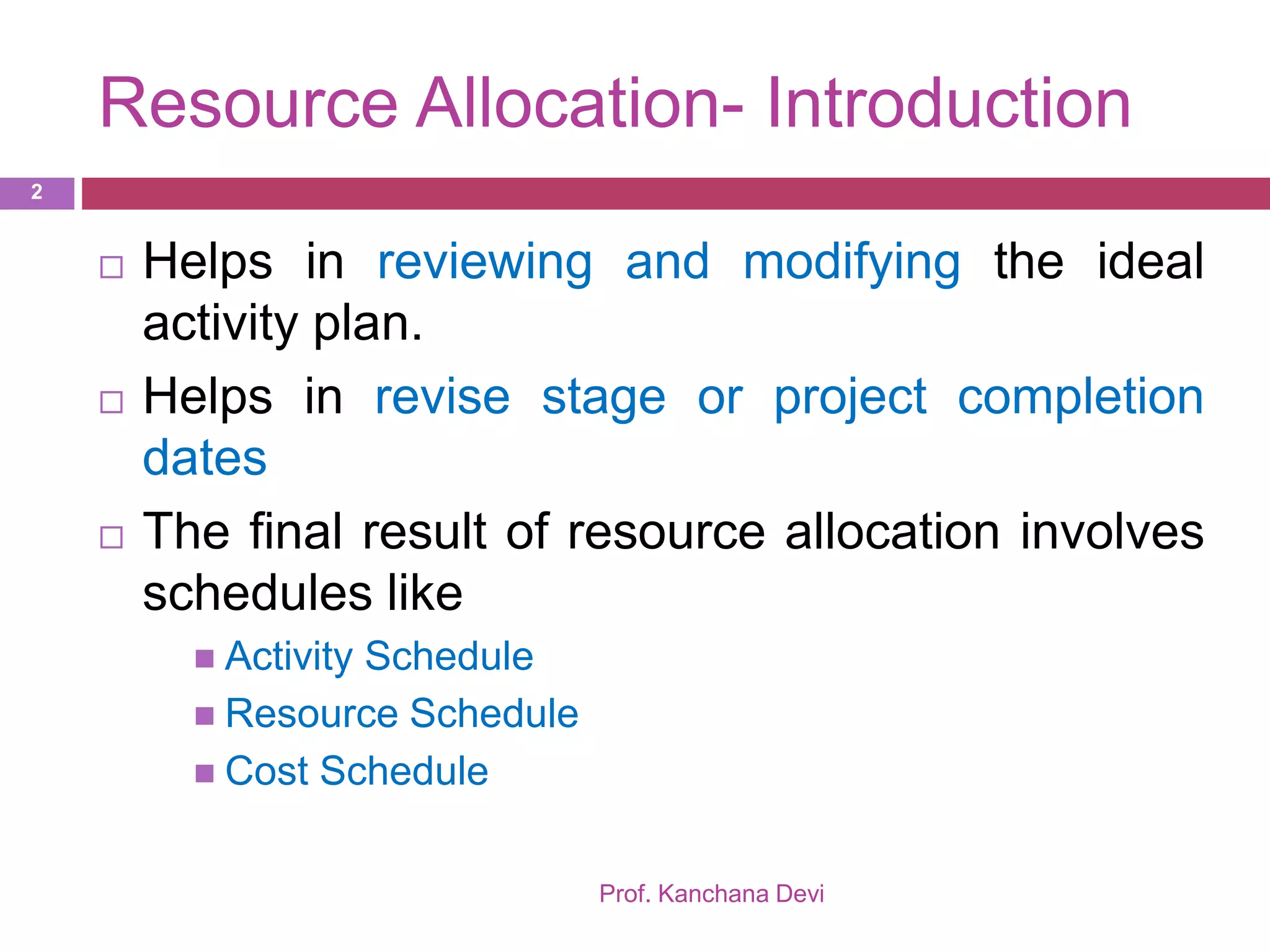
 Helps in reviewing and modifying the ideal
activity plan.
 Helps in revise stage or project completion
dates
 The final result of resource allocation involves
schedules like
 Activity Schedule
 Resource Schedule
 Cost Schedule
2
Prof. Kanchana Devi
Nature of Resources
Prof. Kanchana Devi
3
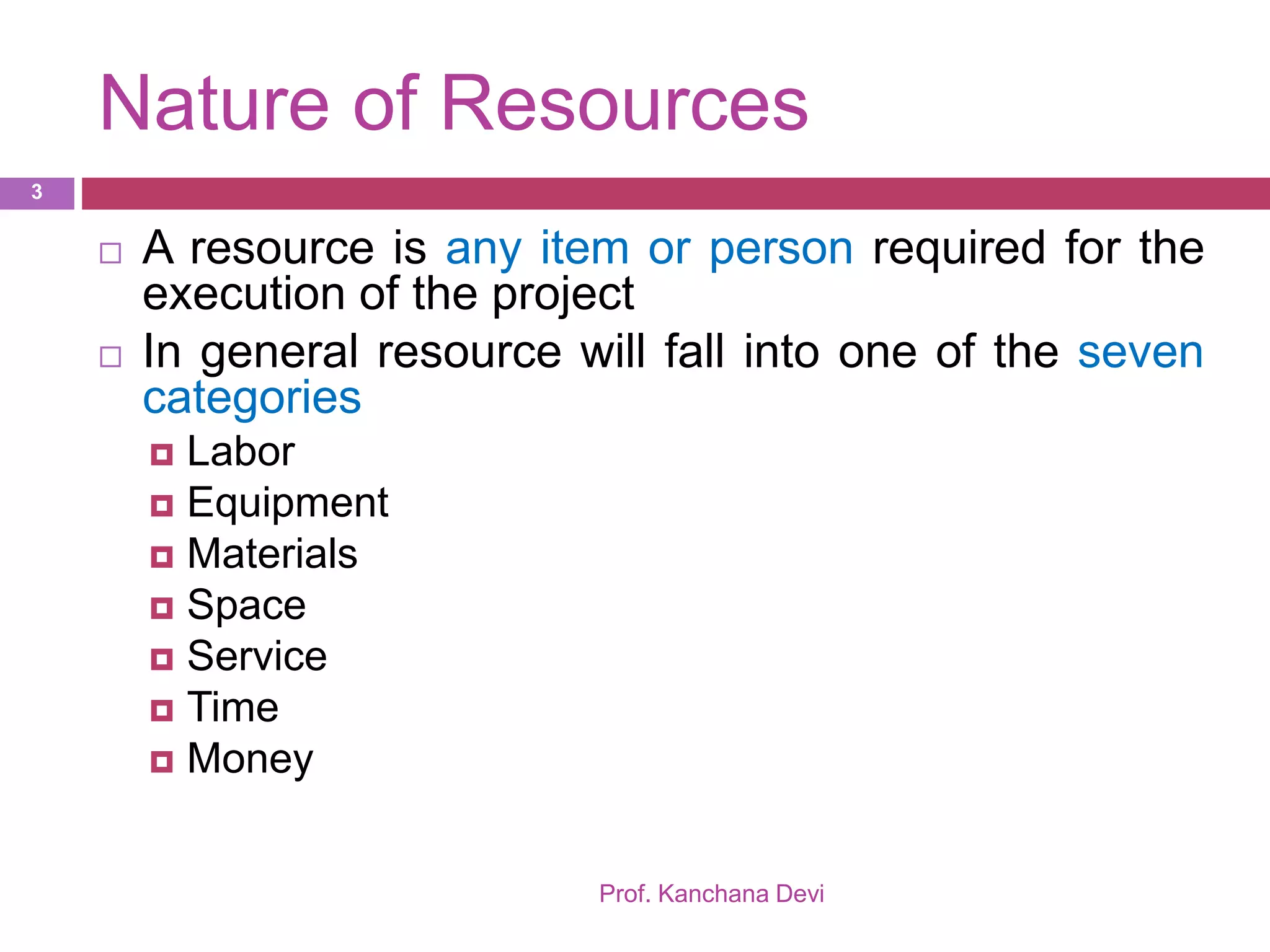
 A resource is any item or person required for the
execution of the project
 In general resource will fall into one of the seven
categories
 Labor
 Equipment
 Materials
 Space
 Service
 Time
 Money
Identifying Resource Requirements
Prof. Kanchana Devi
4
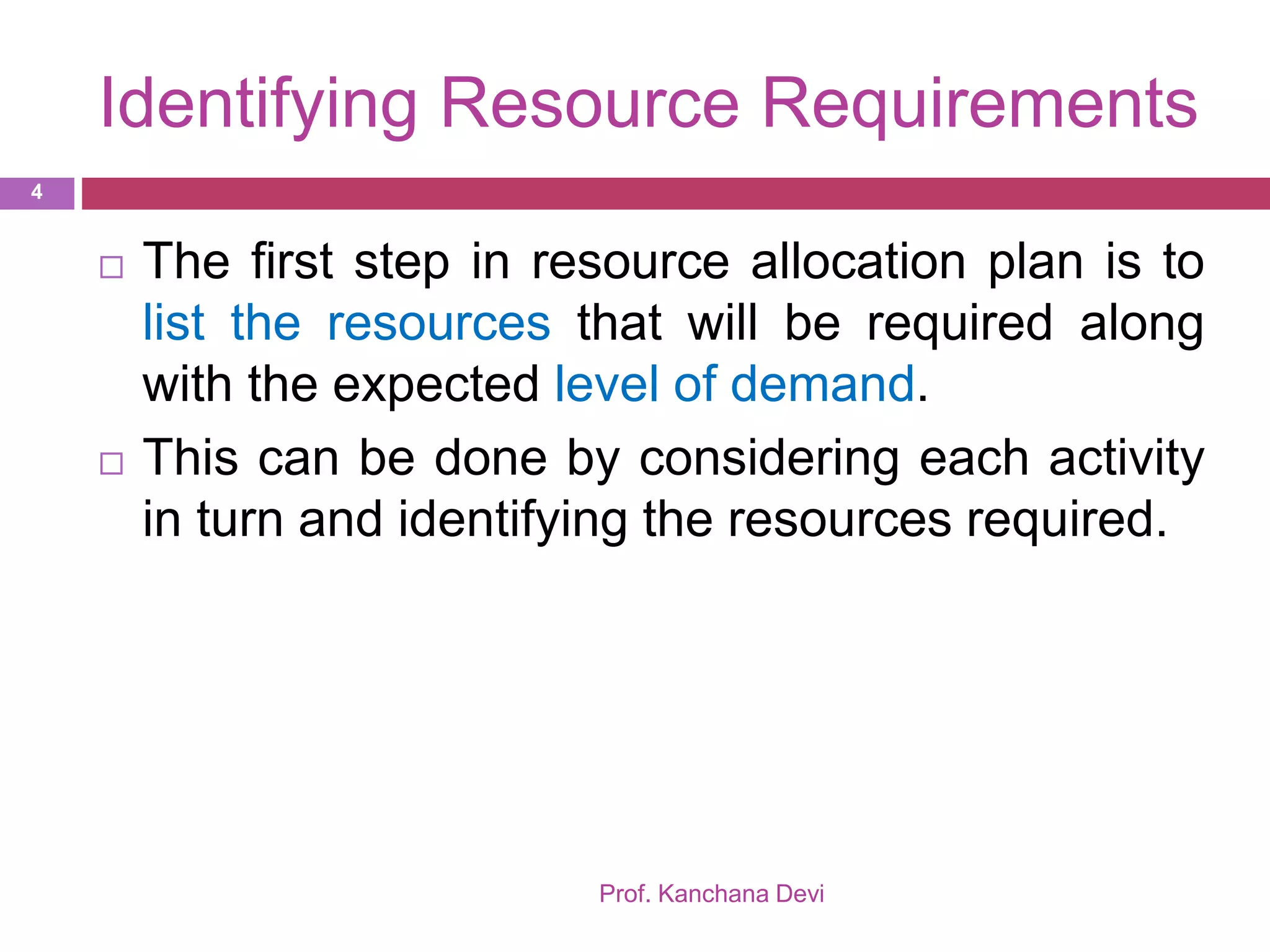
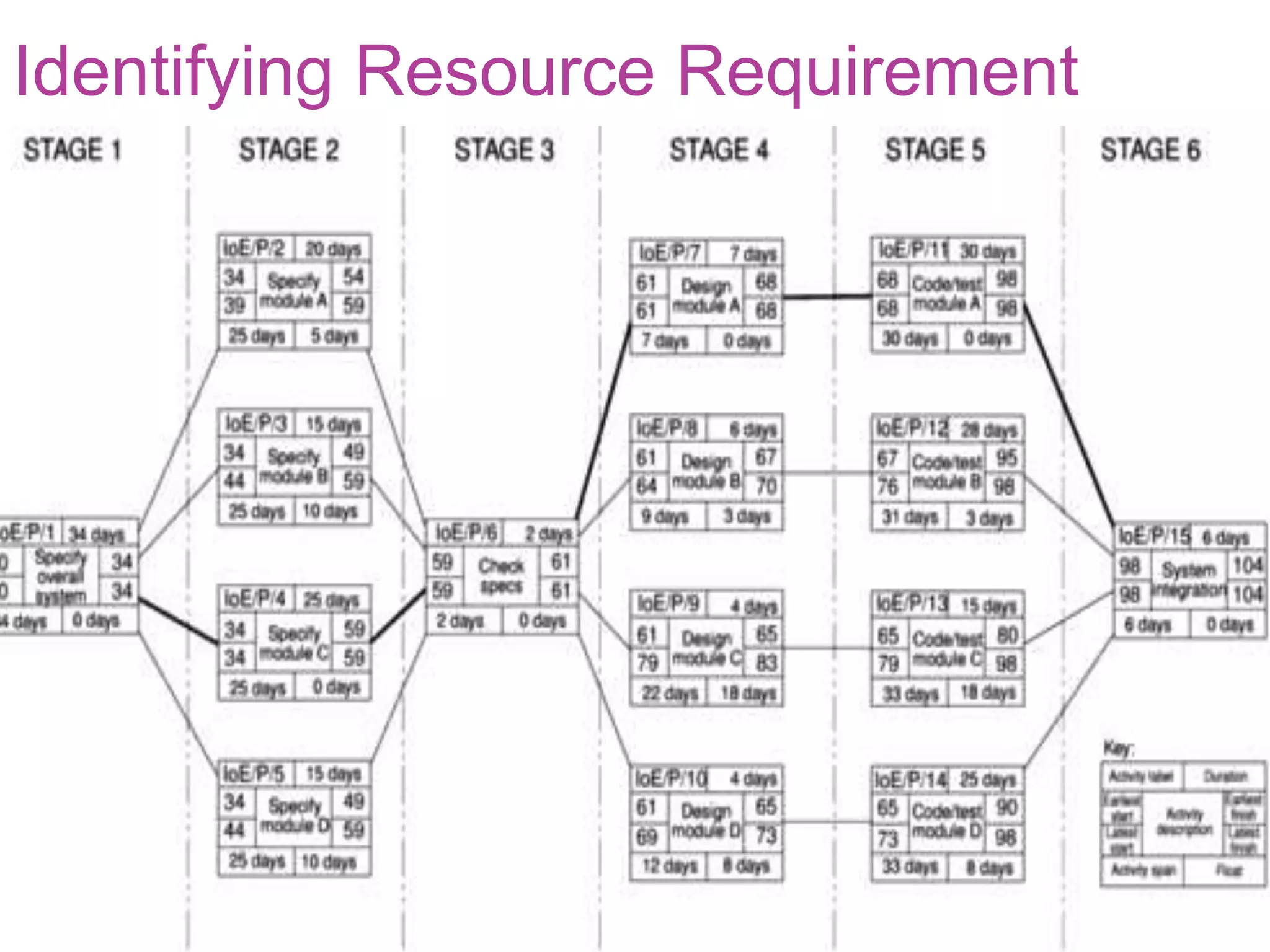
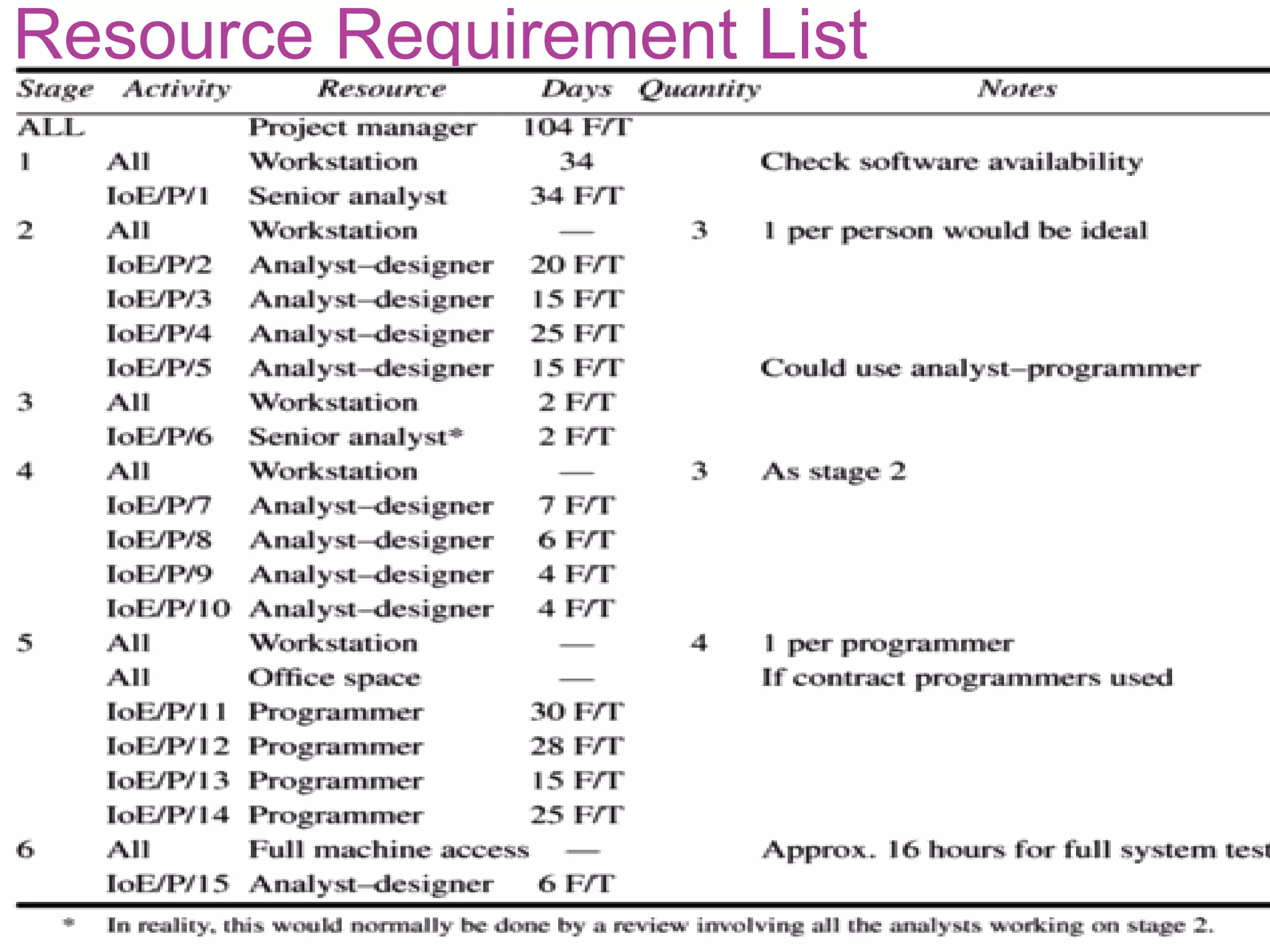
 The first step in resource allocation plan is to
list the resources that will be required along
with the expected level of demand.
 This can be done by considering each activity
in turn and identifying the resources required.
Identifying Resource Requirement
Prof. Kanchana Devi
5
Resource Requirement List
Prof. Kanchana Devi
6
Scheduling Resources
Prof. Kanchana Devi
7
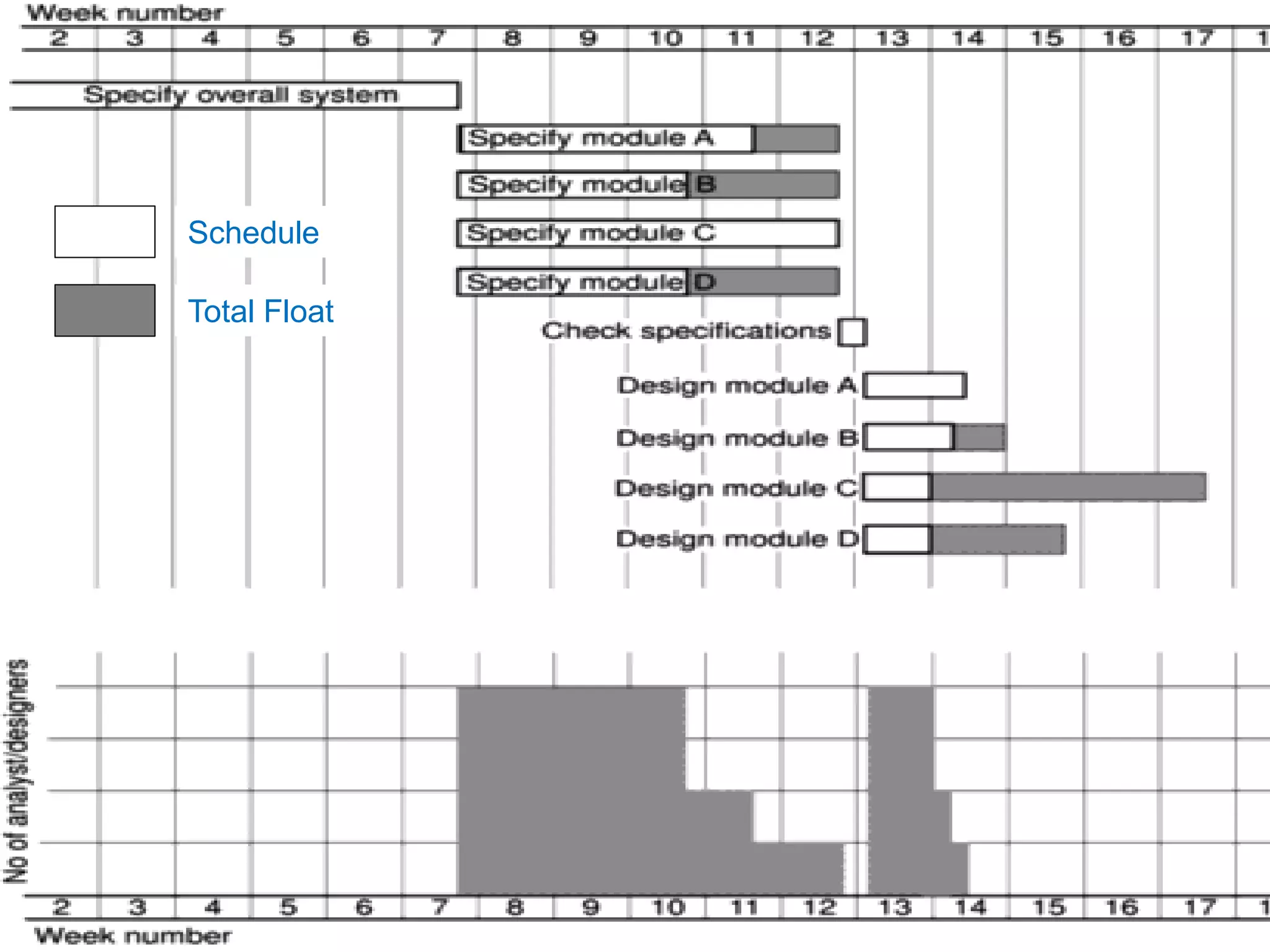
 After identifying resource requirement list, next
is to map this list to activity plan to assess the
distribution of resources required over the
duration of the project.
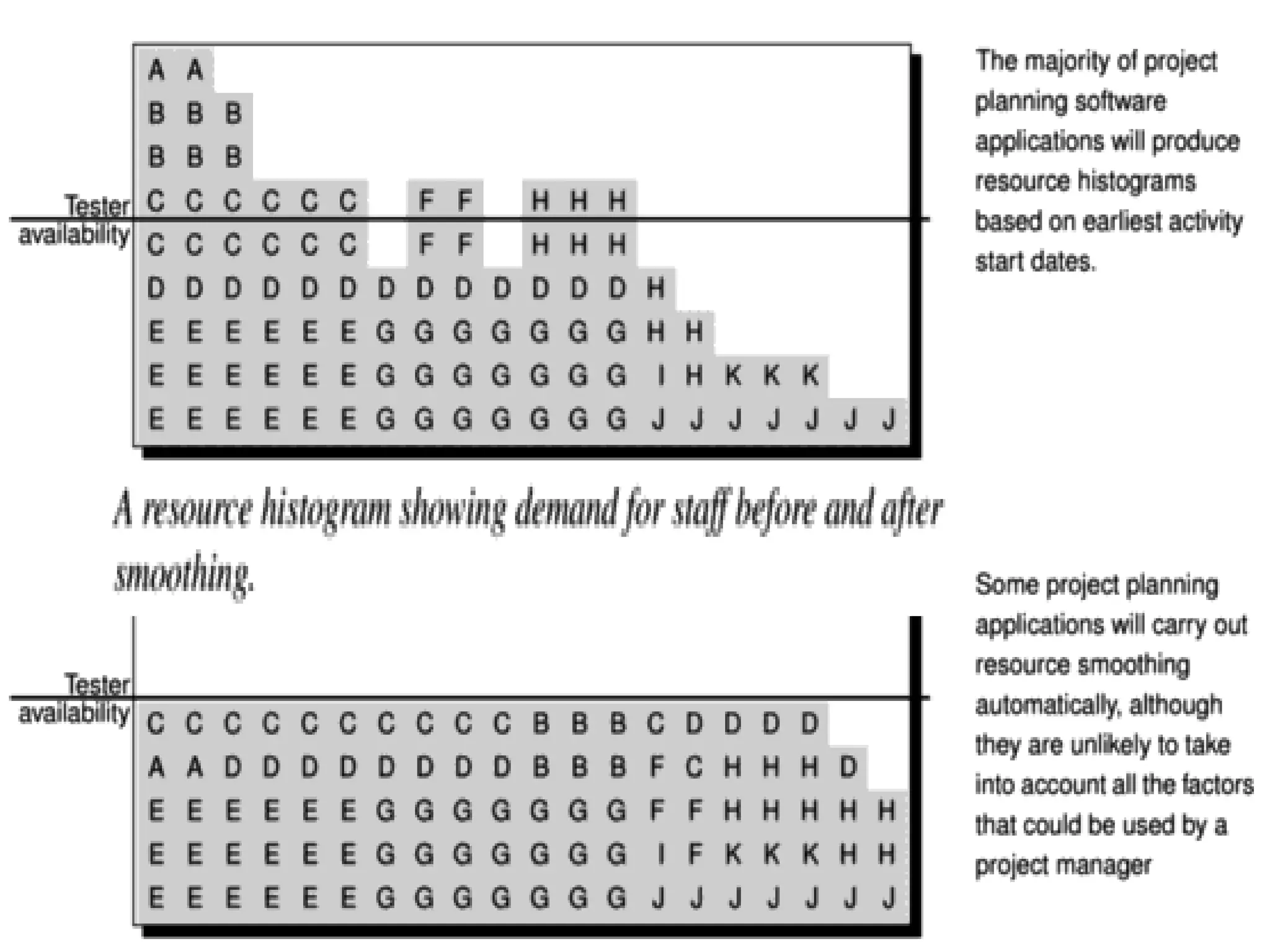
 Can be done by representing the activity plan
as a bar chart and produce a histogram for
each resource.
Prof. Kanchana Devi
8
Schedule
Total Float
Problem
Prof. Kanchana Devi
9
 It causes two analyst/designers to be idle for
twelve days
 One for seven days
 One for two days between specification and
design
 Another problem in uneven histogram is it is
that more likely to call for levels of resource
beyond those available.
Prof. Kanchana Devi
10
Smoothing
Prof. Kanchana Devi
11
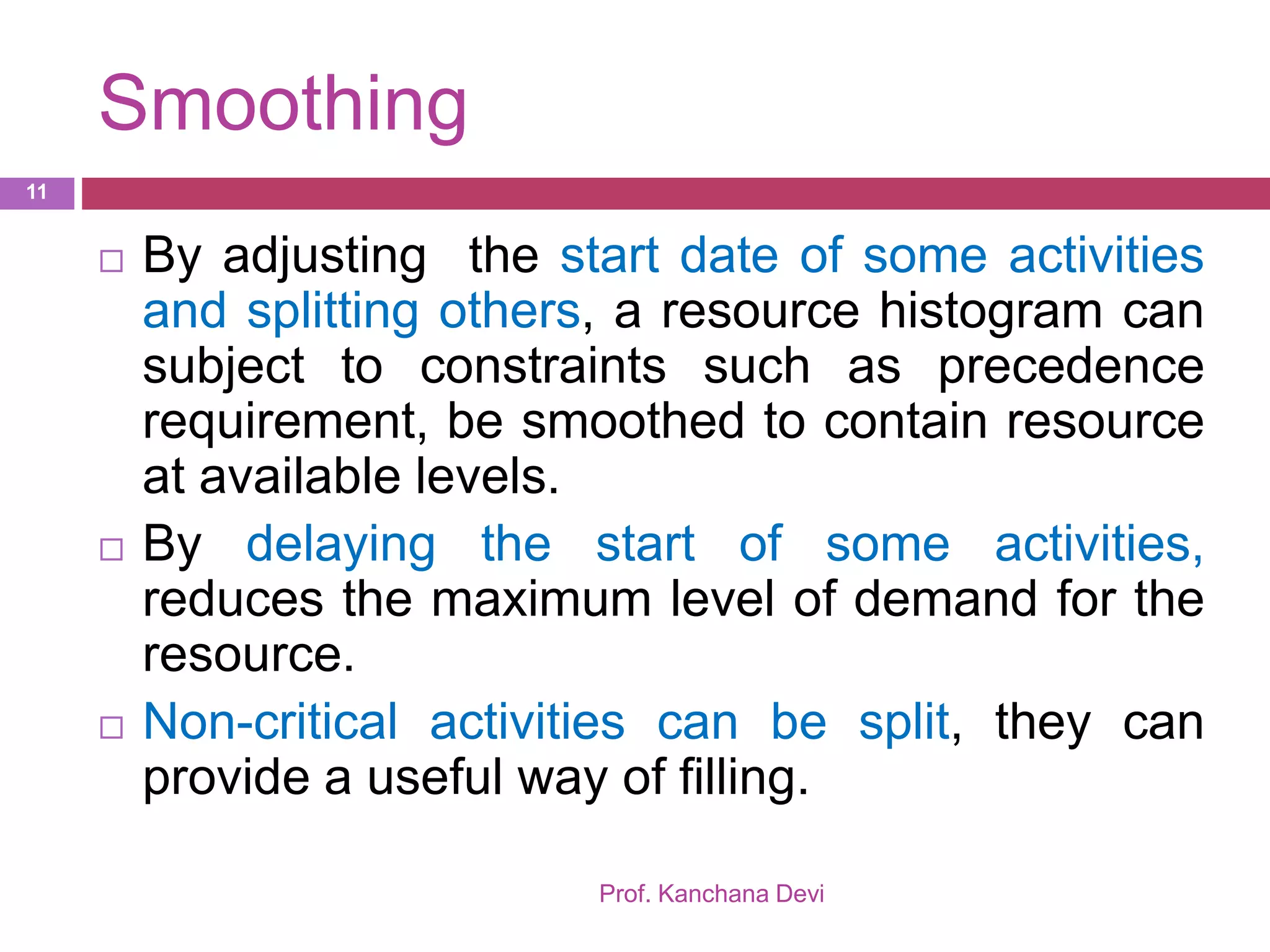
 By adjusting the start date of some activities
and splitting others, a resource histogram can
subject to constraints such as precedence
requirement, be smoothed to contain resource
at available levels.
 By delaying the start of some activities,
reduces the maximum level of demand for the
resource.
 Non-critical activities can be split, they can
provide a useful way of filling.
Two ways of prioritizing
Prof. Kanchana Devi
12
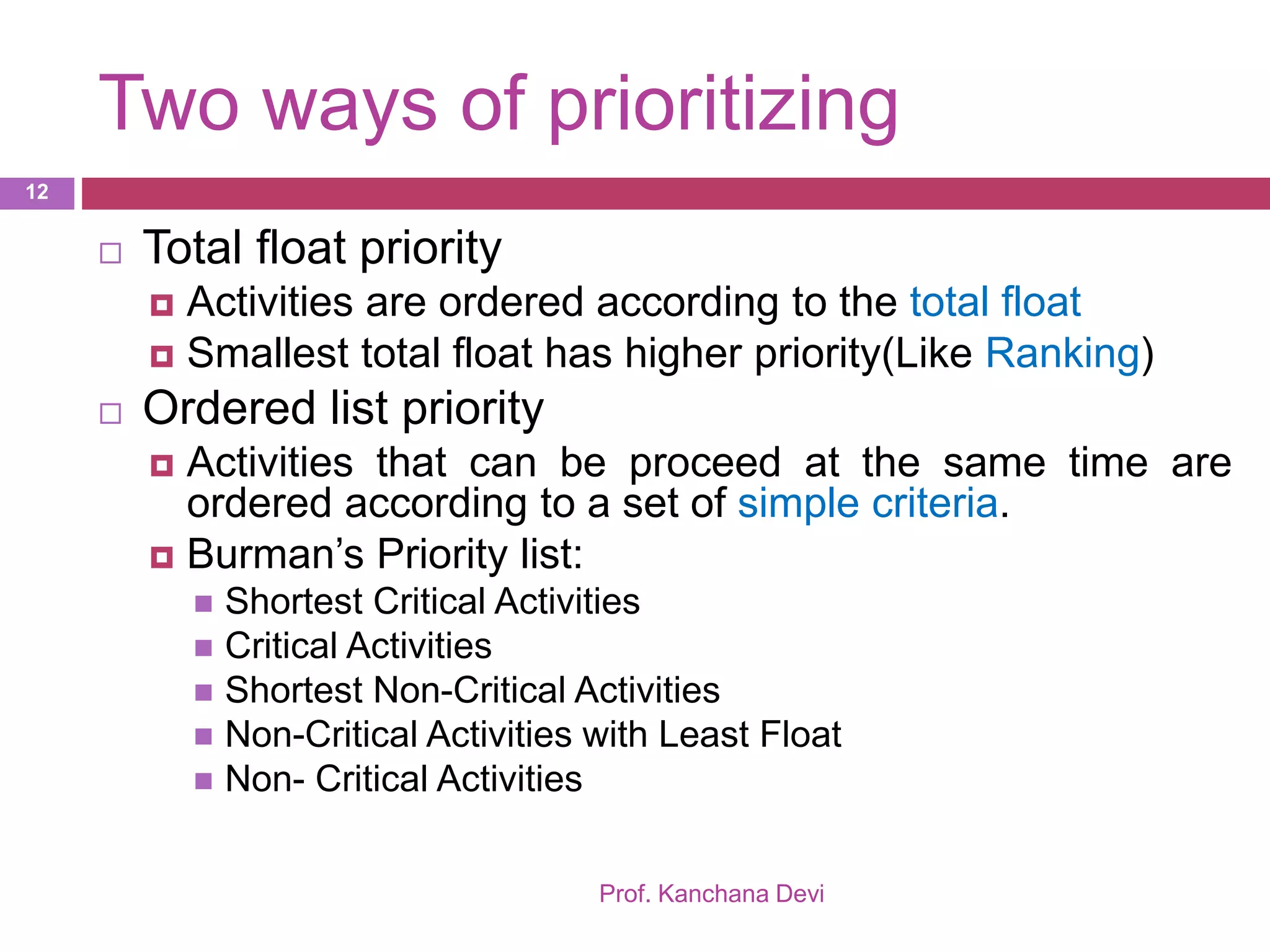
 Total float priority
 Activities are ordered according to the total float
 Smallest total float has higher priority(Like Ranking)
 Ordered list priority
 Activities that can be proceed at the same time are
ordered according to a set of simple criteria.
 Burman’s Priority list:
 Shortest Critical Activities
 Critical Activities
 Shortest Non-Critical Activities
 Non-Critical Activities with Least Float
 Non- Critical Activities
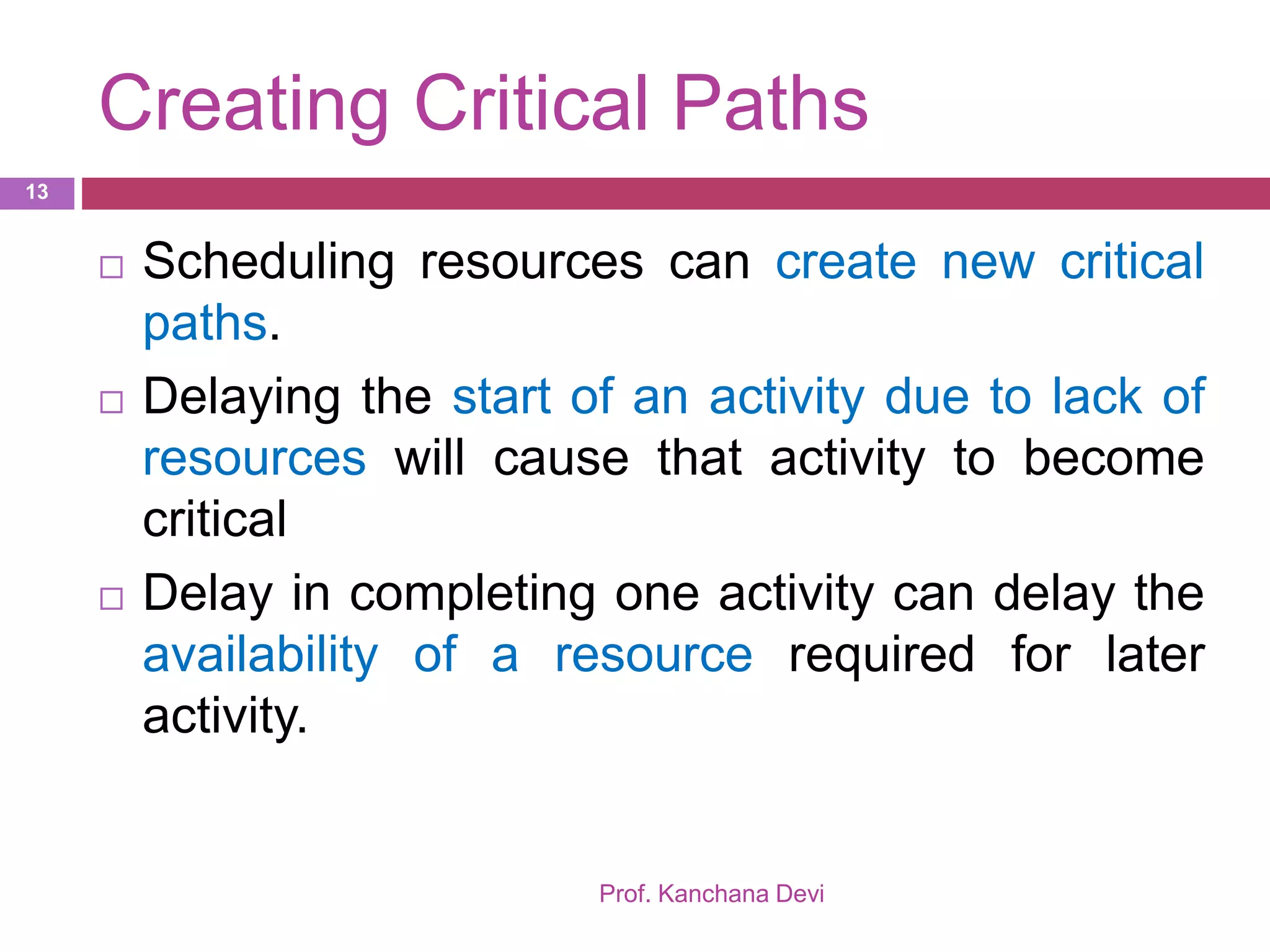
Creating Critical Paths
Prof. Kanchana Devi
13
 Scheduling resources can create new critical
paths.
 Delaying the start of an activity due to lack of
resources will cause that activity to become
critical
 Delay in completing one activity can delay the
availability of a resource required for later
activity.
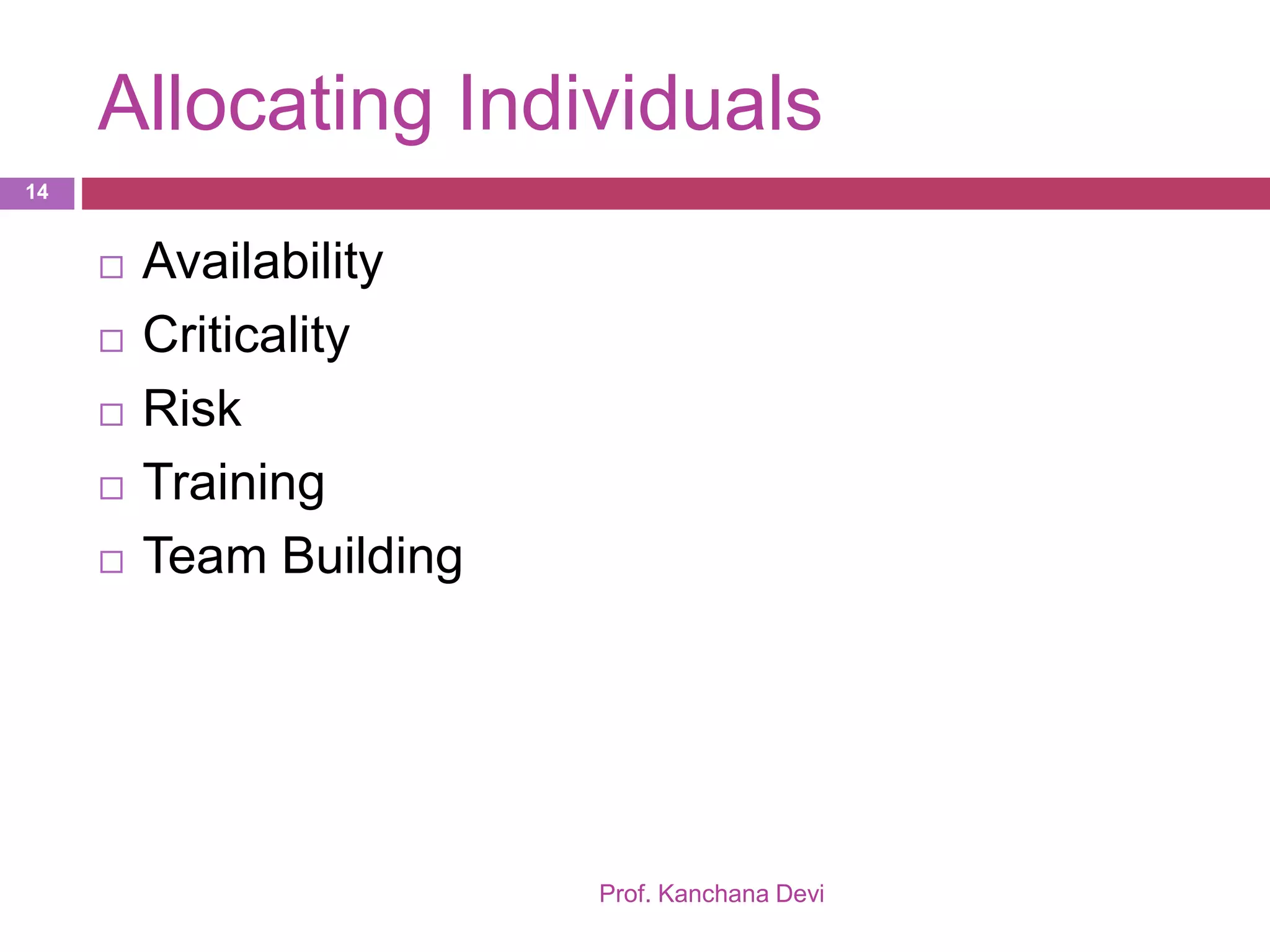
Allocating Individuals
Prof. Kanchana Devi
14
 Availability
 Criticality
 Risk
 Training
 Team Building
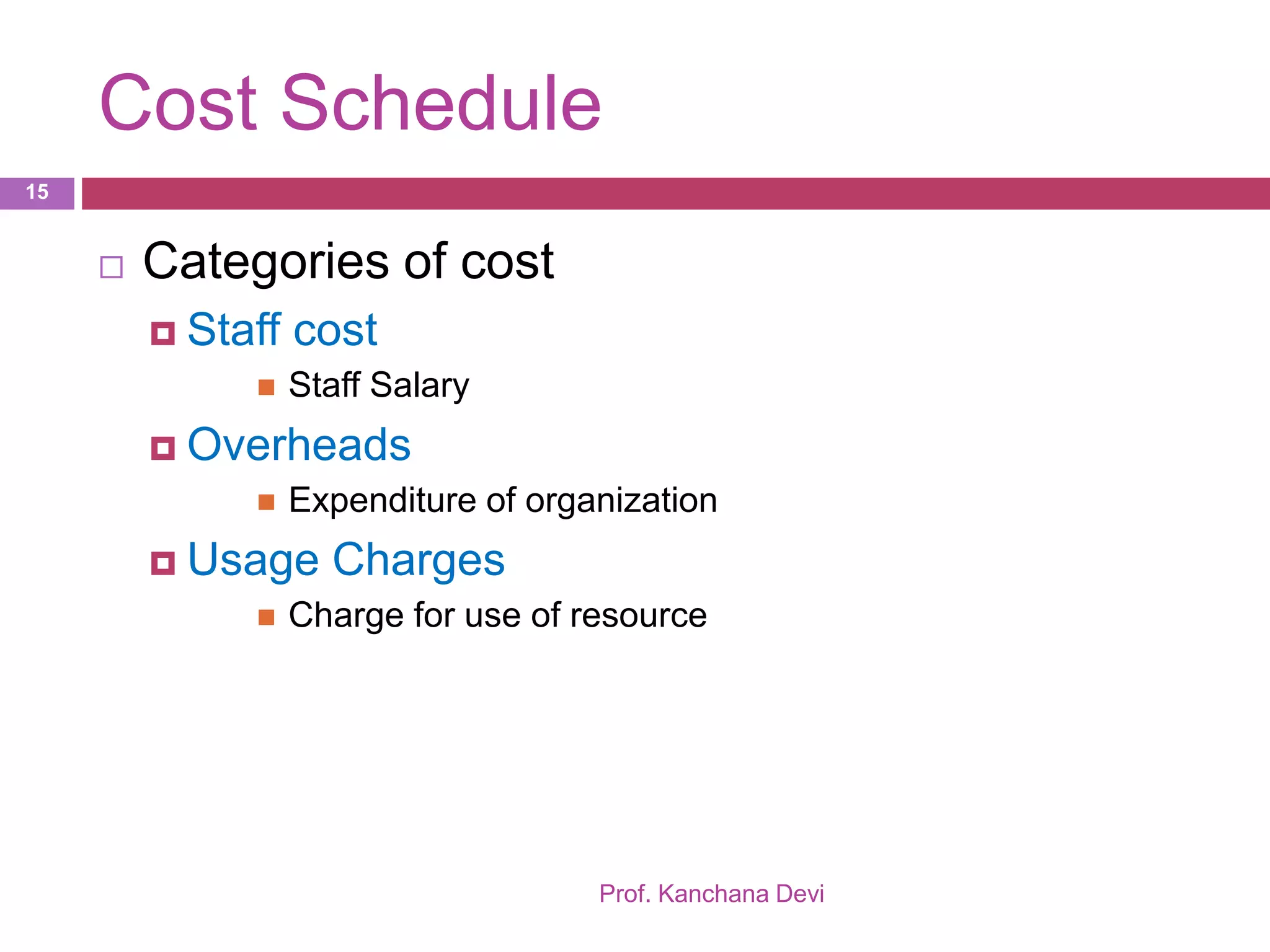
Cost Schedule
Prof. Kanchana Devi
15
 Categories of cost
 Staff cost
 Staff Salary
 Overheads
 Expenditure of organization
 Usage Charges
 Charge for use of resource

Spm unit iii-risk-resource allocation

  • 1.
    SPM-UNIT III RISK MANAGEMENT RESOURCEALLOCATION Prof. Kanchana Devi
  • 2.
    Resource Allocation- Introduction Helps in reviewing and modifying the ideal activity plan.  Helps in revise stage or project completion dates  The final result of resource allocation involves schedules like  Activity Schedule  Resource Schedule  Cost Schedule 2 Prof. Kanchana Devi
  • 3.
    Nature of Resources Prof.Kanchana Devi 3  A resource is any item or person required for the execution of the project  In general resource will fall into one of the seven categories  Labor  Equipment  Materials  Space  Service  Time  Money
  • 4.
    Identifying Resource Requirements Prof.Kanchana Devi 4  The first step in resource allocation plan is to list the resources that will be required along with the expected level of demand.  This can be done by considering each activity in turn and identifying the resources required.
  • 5.
  • 6.
  • 7.
    Scheduling Resources Prof. KanchanaDevi 7  After identifying resource requirement list, next is to map this list to activity plan to assess the distribution of resources required over the duration of the project.  Can be done by representing the activity plan as a bar chart and produce a histogram for each resource.
  • 8.
  • 9.
    Problem Prof. Kanchana Devi 9 It causes two analyst/designers to be idle for twelve days  One for seven days  One for two days between specification and design  Another problem in uneven histogram is it is that more likely to call for levels of resource beyond those available.
  • 10.
  • 11.
    Smoothing Prof. Kanchana Devi 11 By adjusting the start date of some activities and splitting others, a resource histogram can subject to constraints such as precedence requirement, be smoothed to contain resource at available levels.  By delaying the start of some activities, reduces the maximum level of demand for the resource.  Non-critical activities can be split, they can provide a useful way of filling.
  • 12.
    Two ways ofprioritizing Prof. Kanchana Devi 12  Total float priority  Activities are ordered according to the total float  Smallest total float has higher priority(Like Ranking)  Ordered list priority  Activities that can be proceed at the same time are ordered according to a set of simple criteria.  Burman’s Priority list:  Shortest Critical Activities  Critical Activities  Shortest Non-Critical Activities  Non-Critical Activities with Least Float  Non- Critical Activities
  • 13.
    Creating Critical Paths Prof.Kanchana Devi 13  Scheduling resources can create new critical paths.  Delaying the start of an activity due to lack of resources will cause that activity to become critical  Delay in completing one activity can delay the availability of a resource required for later activity.
  • 14.
    Allocating Individuals Prof. KanchanaDevi 14  Availability  Criticality  Risk  Training  Team Building
  • 15.
    Cost Schedule Prof. KanchanaDevi 15  Categories of cost  Staff cost  Staff Salary  Overheads  Expenditure of organization  Usage Charges  Charge for use of resource