SPIRAL
CURRICULUM
BY: JEROME BRUNNER
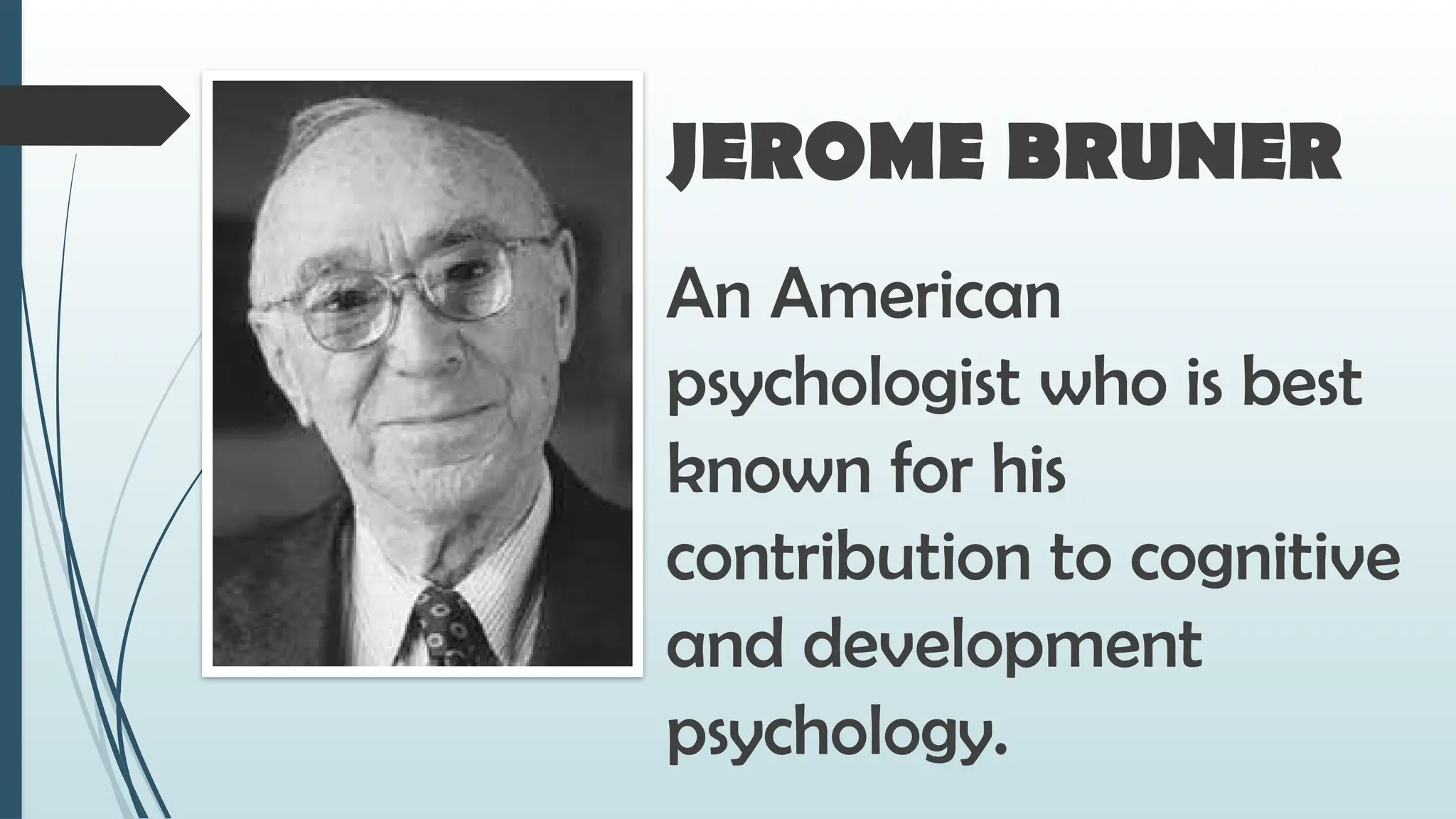
JEROME BRUNER
An American
psychologist who is best
known for his
contribution to cognitive
and development
psychology.
WHAT IS SPIRAL CURRICULUM?
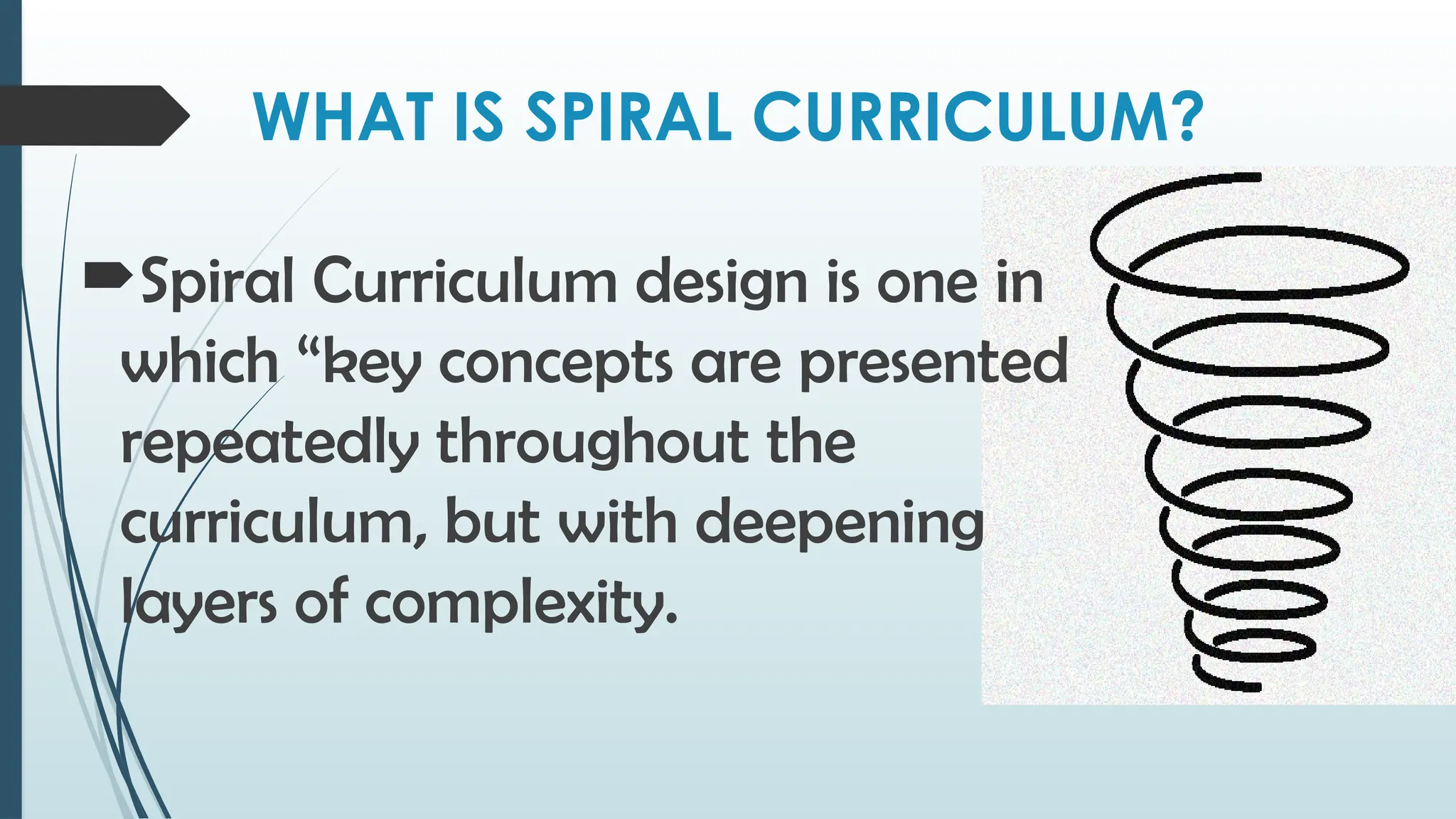
Spiral Curriculum design is one in
which “key concepts are presented
repeatedly throughout the
curriculum, but with deepening
layers of complexity.
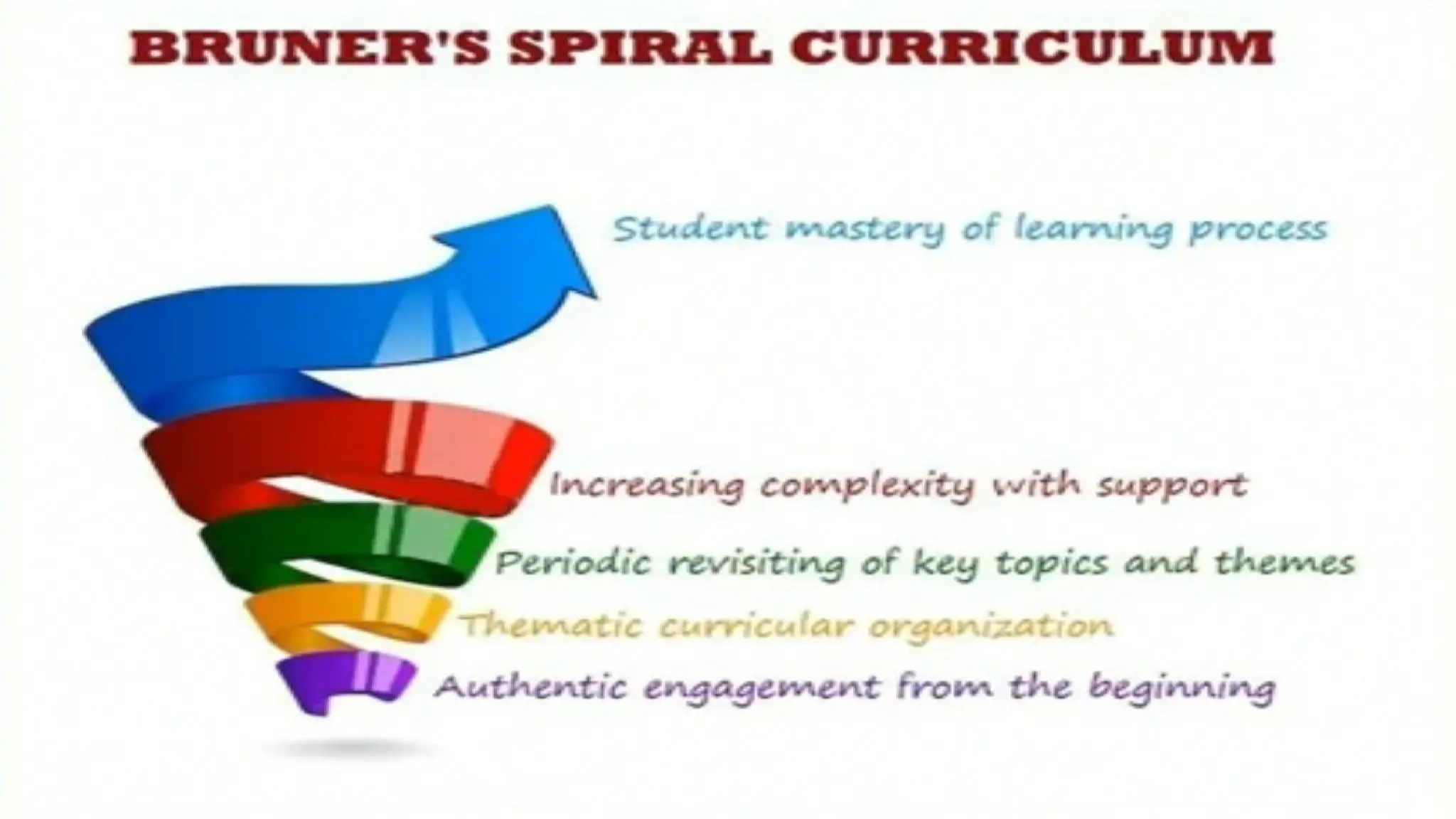
Bruner’s spiral curriculum is an
approach to education that
involves regularly re-visiting the
same educational topics over the
course of a students education.
Each time the content is
revisited, the students gains
deeper knowledge and
understanding of the topic.
Bruner’s concept of spiral
Curriculum says that young
children need to learn different
concepts by structuring the ideas
rather than simply memorizing
their related facts and data.
Bruner believed that teaching
and learning process of any
subjects at an early age should
be designed according to the
child’s intuitive grasping of
ideas.
The best curriculum should revisit
earlier learned ideas, expanding
upon them until a child reaches a
more complete understanding of
ideas and how they relate to one
another. Bruner called this as the “
Spiral Curriculum”.
THREE KEY PRINCIPLES OF SPIRAL
CURRICULUM
CYCLICAL- students should return to the same topic
again and again for several times throughout their
school career
INCREASING DEPTH- Each time when a students returns
to the topic, it should be learned at a deeper level and
explore the topic more complexity.
PRIOR KNOWLEDGE- A students prior knowledge and
understanding of the particular topic should be utilized
when it is returned to so that they build from their
foundations rather than starting it anew.
SPIRAL CURRICULUM IN SOCIAL
STUDIES
SPIRAL CURRICULUM
Bruner stated that ‘any
subject can be taught to
any child at any age in
some form that is honest.
SPIRAL CURRICULUM
Bruner also believes that learning
should be spurred by interest in the
material rather than test or
punishment, since one learns best
when one finds the acquired
knowledge appealing.
WHAT IS SPIRAL LEARNING IN EDUCATION?
Spiral learning is a teaching
method based on the premise
that a students learns more
about a subject each time the
topic is reviewed or
encountered.
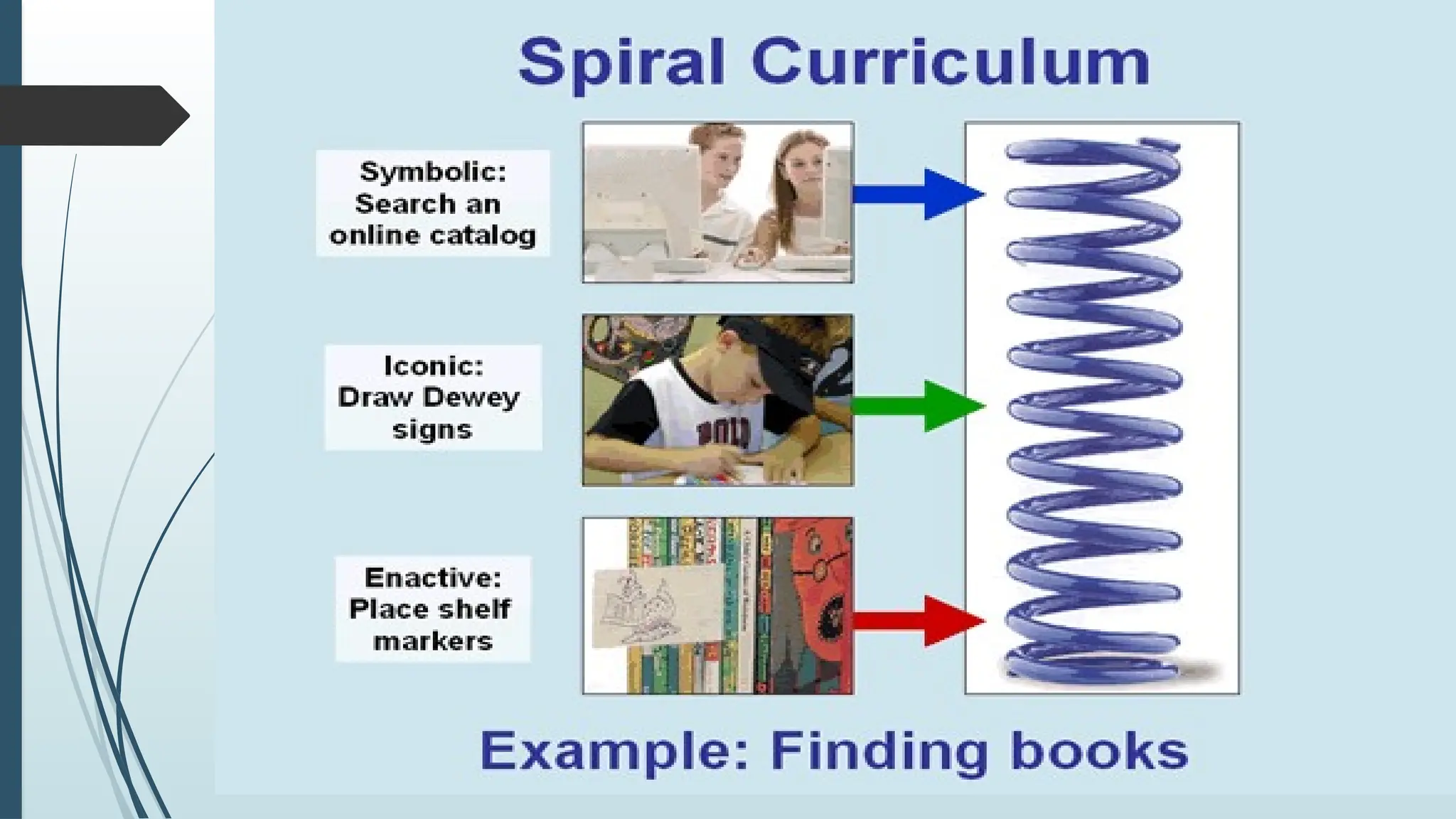
BRUNER’S 3 STEPS OF LEARNING IN A
SPIRAL CURRICULUM
1. ENACTIVE –which is the representation
of knowledge through actions.
(0-1 year)
2. ICONIC- which is the visual
summarization of images.
(1-6 years)
3. SYMBOLIC- which is the use of
words and other symbols to
describe experiences.
(7years onwards)
SPIRAL-CURRICULUM BY JEROME BRUNER An American psychologist who is best known for his contribution to cognitive and development psychology.

SPIRAL-CURRICULUM BY JEROME BRUNER An American psychologist who is best known for his contribution to cognitive and development psychology.

  • 1.
  • 3.
    JEROME BRUNER An American psychologistwho is best known for his contribution to cognitive and development psychology.
  • 4.
    WHAT IS SPIRALCURRICULUM? Spiral Curriculum design is one in which “key concepts are presented repeatedly throughout the curriculum, but with deepening layers of complexity.
  • 5.
    Bruner’s spiral curriculumis an approach to education that involves regularly re-visiting the same educational topics over the course of a students education.
  • 6.
    Each time thecontent is revisited, the students gains deeper knowledge and understanding of the topic.
  • 7.
    Bruner’s concept ofspiral Curriculum says that young children need to learn different concepts by structuring the ideas rather than simply memorizing their related facts and data.
  • 8.
    Bruner believed thatteaching and learning process of any subjects at an early age should be designed according to the child’s intuitive grasping of ideas.
  • 9.
    The best curriculumshould revisit earlier learned ideas, expanding upon them until a child reaches a more complete understanding of ideas and how they relate to one another. Bruner called this as the “ Spiral Curriculum”.
  • 10.
    THREE KEY PRINCIPLESOF SPIRAL CURRICULUM CYCLICAL- students should return to the same topic again and again for several times throughout their school career INCREASING DEPTH- Each time when a students returns to the topic, it should be learned at a deeper level and explore the topic more complexity. PRIOR KNOWLEDGE- A students prior knowledge and understanding of the particular topic should be utilized when it is returned to so that they build from their foundations rather than starting it anew.
  • 11.
    SPIRAL CURRICULUM INSOCIAL STUDIES
  • 12.
    SPIRAL CURRICULUM Bruner statedthat ‘any subject can be taught to any child at any age in some form that is honest.
  • 13.
    SPIRAL CURRICULUM Bruner alsobelieves that learning should be spurred by interest in the material rather than test or punishment, since one learns best when one finds the acquired knowledge appealing.
  • 14.
    WHAT IS SPIRALLEARNING IN EDUCATION? Spiral learning is a teaching method based on the premise that a students learns more about a subject each time the topic is reviewed or encountered.
  • 15.
    BRUNER’S 3 STEPSOF LEARNING IN A SPIRAL CURRICULUM 1. ENACTIVE –which is the representation of knowledge through actions. (0-1 year) 2. ICONIC- which is the visual summarization of images. (1-6 years)
  • 16.
    3. SYMBOLIC- whichis the use of words and other symbols to describe experiences. (7years onwards)