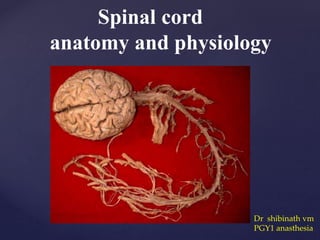
Spinal cord
anatomy and physiology
Dr shibinath vm
PGY1 anasthesia
The CSF
Volume 150 ml
Pressure 8-15mmHg or 100 -180mm H2O
25ml in subarachnoid space
Baricity 1.003 to 1.008 at 37* celcius
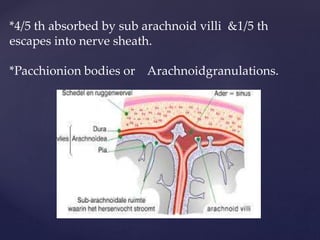
*4/5 th absorbed by sub arachnoid villi &1/5 th
escapes into nerve sheath.
*Pacchionion bodies or Arachnoidgranulations.
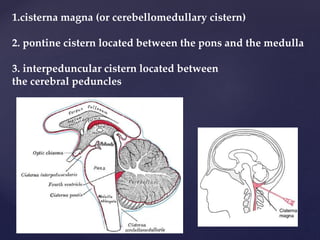
1.cisterna magna (or cerebellomedullary cistern)
2. pontine cistern located between the pons and the medulla
3. interpeduncular cistern located between
the cerebral peduncles
*Constant but slow circulation
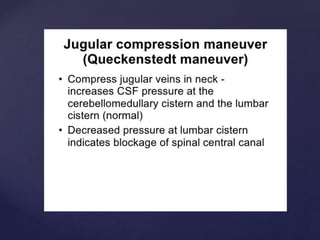
*queckenstedts test
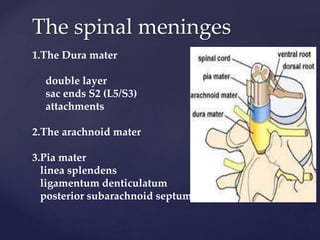
The spinal meninges
1.The Dura mater
double layer
sac ends S2 (L5/S3)
attachments
2.The arachnoid mater
3.Pia mater
linea splendens
ligamentum denticulatum
posterior subarachnoid septum
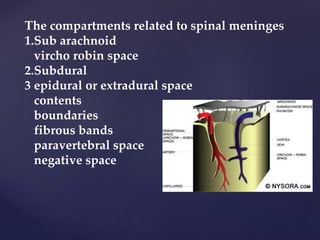
The compartments related to spinal meninges
1.Sub arachnoid
vircho robin space
2.Subdural
3 epidural or extradural space
contents
boundaries
fibrous bands
paravertebral space
negative space
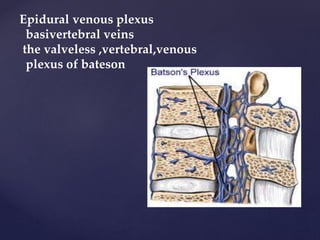
Epidural venous plexus
basivertebral veins
the valveless ,vertebral,venous
plexus of bateson
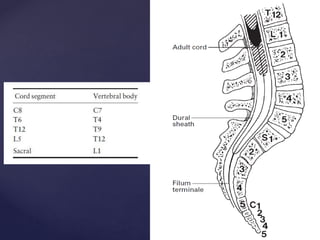
SPINAL CORD
*45CM length
*Cervical and lumbar
enlargements
*Conus medullaris
*Filum terminale
*cauda equina
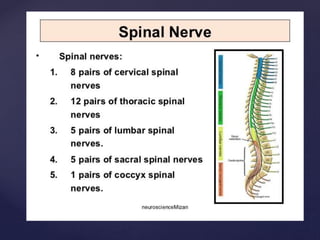
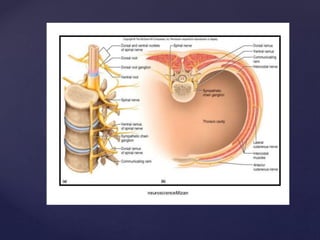
31 pairs of spinal nerves attached to it by
anterior and posterior roots
Blood supply
1.Anterior spinal artery
2.Posterior spinal artery
4.Segmental spinal arteries
3. Artery of adamkiewicz or radicularis magna
Plexus of anterior and posterior vein
Venous drainage
Cordotomy for intractable unilateral
Lowerlimb , trunk,pelvic, cancer pain
{
The interpeduncular cistern (basal cistern or Fossa interpeduncular
is a wide cavity where the arachnoid extends
across between the two temporal lobes.
It encloses the cerebral peduncles and
the structures contained in the interpeduncular fossa,
and contains the arterial circle of Willis
which produces an increase in venous blood in
the cranial cavity, with concomitant reduction in
space for the cerebrospinal fluid

spinal cord

  • 1.
    Spinal cord anatomy andphysiology Dr shibinath vm PGY1 anasthesia
  • 2.
    The CSF Volume 150ml Pressure 8-15mmHg or 100 -180mm H2O 25ml in subarachnoid space Baricity 1.003 to 1.008 at 37* celcius
  • 3.
    *4/5 th absorbedby sub arachnoid villi &1/5 th escapes into nerve sheath. *Pacchionion bodies or Arachnoidgranulations.
  • 4.
    1.cisterna magna (orcerebellomedullary cistern) 2. pontine cistern located between the pons and the medulla 3. interpeduncular cistern located between the cerebral peduncles
  • 5.
    *Constant but slowcirculation *queckenstedts test
  • 7.
    The spinal meninges 1.TheDura mater double layer sac ends S2 (L5/S3) attachments 2.The arachnoid mater 3.Pia mater linea splendens ligamentum denticulatum posterior subarachnoid septum
  • 8.
    The compartments relatedto spinal meninges 1.Sub arachnoid vircho robin space 2.Subdural 3 epidural or extradural space contents boundaries fibrous bands paravertebral space negative space
  • 10.
    Epidural venous plexus basivertebralveins the valveless ,vertebral,venous plexus of bateson
  • 11.
    SPINAL CORD *45CM length *Cervicaland lumbar enlargements *Conus medullaris *Filum terminale *cauda equina
  • 14.
    31 pairs ofspinal nerves attached to it by anterior and posterior roots
  • 27.
    Blood supply 1.Anterior spinalartery 2.Posterior spinal artery 4.Segmental spinal arteries 3. Artery of adamkiewicz or radicularis magna
  • 29.
    Plexus of anteriorand posterior vein Venous drainage
  • 31.
    Cordotomy for intractableunilateral Lowerlimb , trunk,pelvic, cancer pain
  • 32.
    { The interpeduncular cistern(basal cistern or Fossa interpeduncular is a wide cavity where the arachnoid extends across between the two temporal lobes. It encloses the cerebral peduncles and the structures contained in the interpeduncular fossa, and contains the arterial circle of Willis
  • 33.
    which produces anincrease in venous blood in the cranial cavity, with concomitant reduction in space for the cerebrospinal fluid