Sphingolipidoses
Dr.S.Sethupathy, M.D.,Ph.D.,
Department of Biochemistry,
Rajah Muthiah Medical College,
Annamalai University
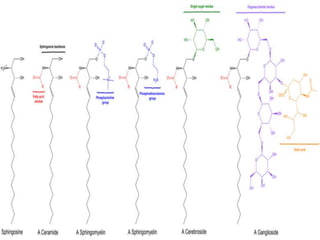
Sphingolipids
The sphingolipids a complex range of
lipids in which fatty acids are linked via
amide bonds to a long-chain base or
sphingoid.
They are also found in a few bacterial
genera -
Sphingomonas and Sphingobacterium.
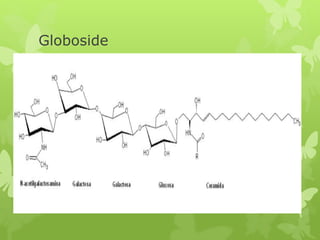
Globoside
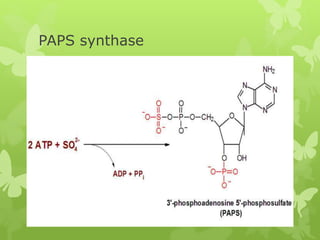
PAPS synthase
Lysosomal storage diseases
The lysosomal storage diseases are
a rare class of neurometabolic
disorders.
Metabolites of complex lipids
accumulate within neurons.
Mostly autosomal recessive fashion
For genetic counseling and for
monitoring future pregnancies.
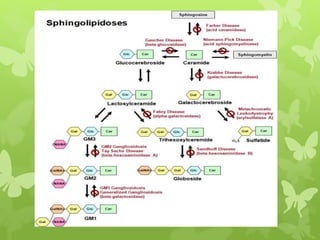
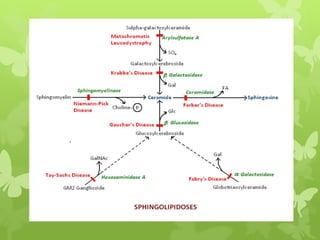
Sphingolipidoses
They are characterized by a
progressive degenerative disease of
the nervous system, with blindness,
dementia, epilepsy, ataxia,
paralysis, and hyperreflexia.
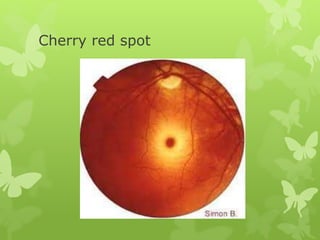
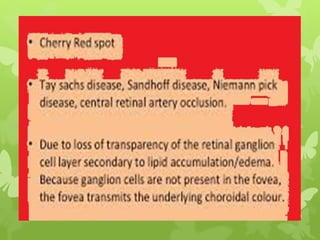
A cherry-red spot at the macula and
optic atrophy are the most common
signs
Ophthalmologic examination - an
important clue to the diagnosis.
Cherry red spot
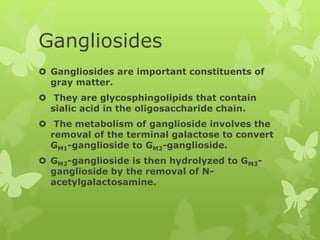
Gangliosides
 Gangliosides are important constituents of
gray matter.
 They are glycosphingolipids that contain
sialic acid in the oligosaccharide chain.
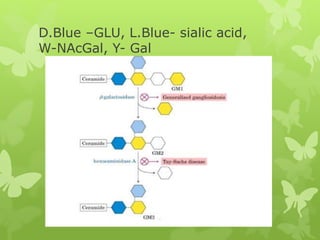
 The metabolism of ganglioside involves the
removal of the terminal galactose to convert
GM1-ganglioside to GM2-ganglioside.
 GM2-ganglioside is then hydrolyzed to GM3-
ganglioside by the removal of N-
acetylgalactosamine.
D.Blue –GLU, L.Blue- sialic acid,
W-NAcGal, Y- Gal
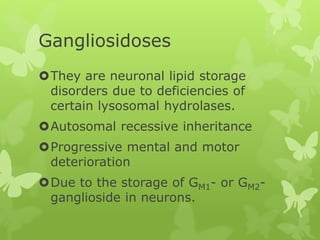
Gangliosidoses
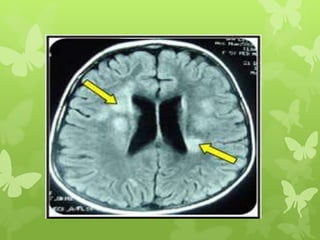
They are neuronal lipid storage
disorders due to deficiencies of
certain lysosomal hydrolases.
Autosomal recessive inheritance
Progressive mental and motor
deterioration
Due to the storage of GM1- or GM2-
ganglioside in neurons.
Prognosis
 Lysosomal storage diseases are ultimately
fatal
 There is no effective treatment.
 Almost all the disorders diagnosed by
enzyme analysis.
 Leukocytes and cultured skin fibroblasts or
serum can be assayed for enzyme activity
 Prenatal diagnosis is also possible.
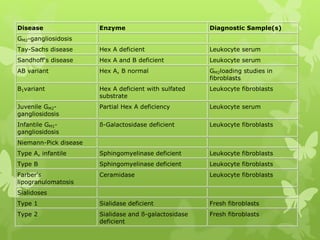
Disease Enzyme Diagnostic Sample(s)
GM2-gangliosidosis
Tay-Sachs disease Hex A deficient Leukocyte serum
Sandhoff's disease Hex A and B deficient Leukocyte serum
AB variant Hex A, B normal GM2loading studies in
fibroblasts
B1variant Hex A deficient with sulfated
substrate
Leukocyte fibroblasts
Juvenile GM2-
gangliosidosis
Partial Hex A deficiency Leukocyte serum
Infantile GM1-
gangliosidosis
ß-Galactosidase deficient Leukocyte fibroblasts
Niemann-Pick disease
Type A, infantile Sphingomyelinase deficient Leukocyte fibroblasts
Type B Sphingomyelinase deficient Leukocyte fibroblasts
Farber's
lipogranulomatosis
Ceramidase Leukocyte fibroblasts
Sialidoses
Type 1 Sialidase deficient Fresh fibroblasts
Type 2 Sialidase and ß-galactosidase
deficient
Fresh fibroblasts
Sphingolipidoses

Sphingolipidoses

  • 1.
    Sphingolipidoses Dr.S.Sethupathy, M.D.,Ph.D., Department ofBiochemistry, Rajah Muthiah Medical College, Annamalai University
  • 2.
    Sphingolipids The sphingolipids acomplex range of lipids in which fatty acids are linked via amide bonds to a long-chain base or sphingoid. They are also found in a few bacterial genera - Sphingomonas and Sphingobacterium.
  • 5.
  • 6.
  • 7.
    Lysosomal storage diseases Thelysosomal storage diseases are a rare class of neurometabolic disorders. Metabolites of complex lipids accumulate within neurons. Mostly autosomal recessive fashion For genetic counseling and for monitoring future pregnancies.
  • 8.
    Sphingolipidoses They are characterizedby a progressive degenerative disease of the nervous system, with blindness, dementia, epilepsy, ataxia, paralysis, and hyperreflexia. A cherry-red spot at the macula and optic atrophy are the most common signs Ophthalmologic examination - an important clue to the diagnosis.
  • 9.
  • 13.
    Gangliosides  Gangliosides areimportant constituents of gray matter.  They are glycosphingolipids that contain sialic acid in the oligosaccharide chain.  The metabolism of ganglioside involves the removal of the terminal galactose to convert GM1-ganglioside to GM2-ganglioside.  GM2-ganglioside is then hydrolyzed to GM3- ganglioside by the removal of N- acetylgalactosamine.
  • 14.
    D.Blue –GLU, L.Blue-sialic acid, W-NAcGal, Y- Gal
  • 15.
    Gangliosidoses They are neuronallipid storage disorders due to deficiencies of certain lysosomal hydrolases. Autosomal recessive inheritance Progressive mental and motor deterioration Due to the storage of GM1- or GM2- ganglioside in neurons.
  • 20.
    Prognosis  Lysosomal storagediseases are ultimately fatal  There is no effective treatment.  Almost all the disorders diagnosed by enzyme analysis.  Leukocytes and cultured skin fibroblasts or serum can be assayed for enzyme activity  Prenatal diagnosis is also possible.
  • 21.
    Disease Enzyme DiagnosticSample(s) GM2-gangliosidosis Tay-Sachs disease Hex A deficient Leukocyte serum Sandhoff's disease Hex A and B deficient Leukocyte serum AB variant Hex A, B normal GM2loading studies in fibroblasts B1variant Hex A deficient with sulfated substrate Leukocyte fibroblasts Juvenile GM2- gangliosidosis Partial Hex A deficiency Leukocyte serum Infantile GM1- gangliosidosis ß-Galactosidase deficient Leukocyte fibroblasts Niemann-Pick disease Type A, infantile Sphingomyelinase deficient Leukocyte fibroblasts Type B Sphingomyelinase deficient Leukocyte fibroblasts Farber's lipogranulomatosis Ceramidase Leukocyte fibroblasts Sialidoses Type 1 Sialidase deficient Fresh fibroblasts Type 2 Sialidase and ß-galactosidase deficient Fresh fibroblasts