5/9/2016 Hematology 1
Presented by:
Mostafa Zamani
Master of Sciences in Hematology
Lipid Storage Diseases
5/9/2016 Hematology 2
Lipids
• Lipids are fat-like substances that are important parts of the membranes
found within and between each cell and in the myelin sheath that coats and
protects the nerves.
• Lipids include oils, fatty acids, waxes, steroids (such as cholesterol and
estrogen), and other related compounds.
5/9/2016 Hematology 3
5/9/2016 Hematology 4
Why LipidsAre Important?
1. Important constituent of the cell membranes
2. Helps in the absorptionof fat soluble vitamins
3. Maintains membrane fluidity
4. Acts as a thermal insulator and cellular metabolic regulator
5. Hormone synthesis
6. Organ padding
5/9/2016 Hematology 5
Lipid Storage Diseases
• Lipid storage diseases, or lipidoses, are a group of inherited metabolic
disorders in which harmful amounts of fatty materials called lipids
accumulate in some of the body's cells and tissues.
• People with these disorders either do not produce enough of one of the
enzymes needed to metabolize lipids, or they produce enzymes that do not
work properly.
• Over time, this excessive storage of fats can cause permanent cellular and
tissue damage, particularly in the brain, peripheral nervous system, liver,
spleen, and bone marrow.
5/9/2016 Hematology 6
Inheritance
1. Autosomal recessive: inheritance occurs when both parents carry and
pass on a copy of the faulty but none of the parents show symptoms of
disease.
2. X-Linked recessive: (or sex linked) inheritance occurs when the mother
carries the affected gene on the X chromosome that determines the child’s
gender and passes it to her son.
5/9/2016 Hematology 7
Pathophysiology
• Because glycosphingolipids are essential components of all cell
membranes, inability to degrade these substances and their subsequent
accumulation results in physiologic and morphologic alterations of specific
tissues and organs that lead to characteristic clinical manifestations.
• In particular, progressive lysosomal accumulation of glycosphingolipids in
the central nervous system can lead to a neurodegenerative course.
• whereas, storage in visceral cells can lead to organomegaly, skeletal
abnormalities, bone marrow dysfunction, pulmonary infiltration, and other
manifestations.
5/9/2016 Hematology 8
Types of lipid storage diseases
• Gaucher Disease
• Niemann-Pick Disease
• Fabry Disease
• Farber’s Disease
• Krabbe Disease
• Metachromatic Leukodystrophy
• Gangliosidosis
5/9/2016 Hematology 9
5/9/2016 Hematology 10
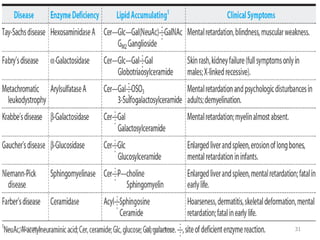
Gaucher disease
• most common of the lipid storage diseasescaused by a deficiency of
the enzyme glucocerebrosidase
• Resulting in accumulation of glucocereboside in spleen, liver,
kidneys, lungs, brain and bone marrow
Consists of three types:
1) Type 1: non neuropathicform
2) Type 2: acute infantileneuropathic
3) Type 3: chronic neuropathic
5/9/2016 Hematology 11
Type 1 (non neuropathic form )
Clinical Features
• May be asymptomatic
• Begin early in life
• Bruise easily
• Fatigue
• Hepatomegally
• Spleenomegally
• Brain not affected
5/9/2016 Hematology 12
Type 2 (acute infantile neuropathic )
Clinical Features
• Begins within three months of birth
• Poor ability to suck and swallow
• Abnormal eye movements
• Extensive and progressive brain damage
• Spasticity, Seizures and Limb rigidity
• Hepatomegally
• Splenomegally
5/9/2016 Hematology 13
Type 3 (chronic neuropathic )
Clinical features
• neurologic symptoms
• Respiratory problems
• Anemia
• Skeletal problems
5/9/2016 Hematology 14
Treatment
• For type 1 and most type 3 patients, enzyme replacement treatment given
• intravenously every two weeks can dramatically decrease liver and spleen
size, reduce skeletal abnormalities and other manifestations.
• bone marrow transplantation cures the non-neurological manifestations
• Blood transfusion for anemia
• Splenectomy (rarely)
• No effective treatment for brain damage
Prognosis
1) Type 1: may live well into adulthood
2) Type 2: usuallyo teen age die before age two
3) Type 3: live to teen age
5/9/2016 Hematology 15
Niemann-Pick disease
• Niemann-Pick types A and B result from accumulation of the fatty
substance called sphingomyelin, due to deficiency of an enzyme called
sphingomyelinase.
• Resulting in accumulation of sphingomyelin in liver,spleen, bone
marrow,lungs and in some patients in brain.
5/9/2016 Hematology 16
TypeA
Infants are normal at birth but at age of six years develop:
• Anemia
• Susceptible to recurrent infections
• Splenomegally
• Hepatomegally
• Swollen lymph nodes
• Profound brain damage (atraxia,spasticity,slurred
speech,loss of muscle tone )
5/9/2016 Hematology 17
Type B
• enlargement of the liver and spleen characteristically occurs in the
pre-teen years
• Most patients also develop ataxia, peripheral neuropathy, and
pulmonary difficulties progress with age.
• Brain is generally not affected.
Treatment
• There is currently no cure for Niemann-Pick disease. Treatment is
supportive.
5/9/2016 Hematology 18
Fabry Disease
• The only X-linked lipid storage disease
• Predominantly affecting males
• Deficiency of enzyme alpha galactosidase.
• Resulting in accumulation of globosides innervous tissue, eyes,
kidneysand cardiovascular system.
5/9/2016 Hematology 19
Clinical features
• Burning pain in arms and legs
• Cardiomegally
• Fever
• Renal impairment
• Angiokeratomas (small, non cancerous, reddish purple elevated spots
on skin ) on lower part of trunk.
Treatment
• Enzyme replacement therapy
• Phenytoin or carbamazepine for pain
• Dialysis or renal transplant
5/9/2016 Hematology 20
Angiokeratomas
5/9/2016 Hematology 21
Farber’s Disease
Cause
• Deficiency of the enzyme called ceramidase
• Resulting in accumulation of ceramide in joints , tissues and central nervous system
Clinical features
• Dyspnea
• Dysphagia
• Vomiting
• Arthritis
• Horseness
• Xenthemas
Treatment
• no specific treatment for Farber’s disease
• Most children with the disease die by age 2
• Joint contractures
5/9/2016 Hematology 22
Krabbe Disease
Cause
• deficiencyof the enzyme beta galactactosidase
• Resulting in accumulation of galactocerebrosides in white matter of
CNS and peripheral nerves
Clinical features
• Onset usually before age 6 months
• Hypertonia
• Seizures
• Spasticity
• Irritability
• Optic atrophy and blindness
5/9/2016 Hematology 23
Diagnosis
• Characteristic grouping of cells into globoid bodies inwhite matter
of brain
• Demyelination of nerves and degenerationand destruction of brain
cells
Treatment
• No specific treatment
• Bone marrow tranasplantationhelpful in some patients
5/9/2016 Hematology 24
Metachromatic Leukodystrophy
Cause
• Due to deficiency of enzyme arylsulfataseA
• Resulting in accumulation of sulfatides in CNS, peripheral nerves and kidneys
Clinical features
• Normal at birth
• Develop difficulty in walking and tendency to fall followed by intermittent pain in arms
and legs
• Progressive loss of vision leading to blindness
• Developmental delays
• Dementia
Treatment
• Treatment is symptomatic and supportive
• Bone marrow transplantation may delay progression of the disease in some casses
5/9/2016 Hematology 25
Gangliosidosis
GM1 Gangliosidosis
Cause
• Due to deficiency of enzyme beta galactosidase
• Resulting in abnormal storage of acidic lipid materials particularly in nerve cells of
central and periphel nervous system
• Consists of two types:
1) Infantile
2) Adult type
GM 2 Gangliosidosis
Cause
• Due to deficiency of enzyme beta hexosaminidase
• Consists of two types:
1) Tay-Sachs disease
2) Sandhoff disease
5/9/2016 Hematology 26
Infantile
Clinical features
• Neurodegeration
• Seizures
• Hepatosplenomegally
• Coarsning of fascial features
• Skeletal irregularites
• Distended abdomen
• Deafness, Blindness
5/9/2016 Hematology 27
Adult type
Clinical features
• Atrophy
• Dystonia
• Corneal clouding
• Angiokeratomas on lower part of trunk
5/9/2016 Hematology 28
Tay-Sachs disease
Cause
• Due to deficiency of enzymebeta hexosaminidaseA
• Resulting in accumulation of gangliosides in nerve cells
Clinical features
• Initially normal , Sign and symptoms begin at age of six months
• Rapid and progressive neurodegeneration
• Cherry red spots in retinas
• Dementia
• Deafness, Blindness
• Seizures
Treatment
• No specific treatment
• Symptomatic and supportive
• Anticonvulsants for seizuress
5/9/2016 Hematology 29
Sandhoff disease
Cause
• Due to deficiency of enzyme beta hexosaminidaseAand B
• Resulting in accumulation of gangliosides and globosides in nerve cells
Clinical features
• Same asTay-sachs disease plus visceral involvementhepatosplenomegally
Diagnosis
• Diagnosis is made through clinical examination, biopsy, genetic testing, molecular
analysis of cells or tissues, and enzyme assays (testing a variety of cells or body fluids for
enzyme deficiency)
• In some forms of the disorder, a urine analysis can identify the presence of stored material
Treatment
• Same asTay-sachs disease
5/9/2016 Hematology 30
5/9/2016 Hematology 31
5/9/2016 Hematology 32

LSD

  • 1.
  • 2.
    Presented by: Mostafa Zamani Masterof Sciences in Hematology Lipid Storage Diseases 5/9/2016 Hematology 2
  • 3.
    Lipids • Lipids arefat-like substances that are important parts of the membranes found within and between each cell and in the myelin sheath that coats and protects the nerves. • Lipids include oils, fatty acids, waxes, steroids (such as cholesterol and estrogen), and other related compounds. 5/9/2016 Hematology 3
  • 4.
  • 5.
    Why LipidsAre Important? 1.Important constituent of the cell membranes 2. Helps in the absorptionof fat soluble vitamins 3. Maintains membrane fluidity 4. Acts as a thermal insulator and cellular metabolic regulator 5. Hormone synthesis 6. Organ padding 5/9/2016 Hematology 5
  • 6.
    Lipid Storage Diseases •Lipid storage diseases, or lipidoses, are a group of inherited metabolic disorders in which harmful amounts of fatty materials called lipids accumulate in some of the body's cells and tissues. • People with these disorders either do not produce enough of one of the enzymes needed to metabolize lipids, or they produce enzymes that do not work properly. • Over time, this excessive storage of fats can cause permanent cellular and tissue damage, particularly in the brain, peripheral nervous system, liver, spleen, and bone marrow. 5/9/2016 Hematology 6
  • 7.
    Inheritance 1. Autosomal recessive:inheritance occurs when both parents carry and pass on a copy of the faulty but none of the parents show symptoms of disease. 2. X-Linked recessive: (or sex linked) inheritance occurs when the mother carries the affected gene on the X chromosome that determines the child’s gender and passes it to her son. 5/9/2016 Hematology 7
  • 8.
    Pathophysiology • Because glycosphingolipidsare essential components of all cell membranes, inability to degrade these substances and their subsequent accumulation results in physiologic and morphologic alterations of specific tissues and organs that lead to characteristic clinical manifestations. • In particular, progressive lysosomal accumulation of glycosphingolipids in the central nervous system can lead to a neurodegenerative course. • whereas, storage in visceral cells can lead to organomegaly, skeletal abnormalities, bone marrow dysfunction, pulmonary infiltration, and other manifestations. 5/9/2016 Hematology 8
  • 9.
    Types of lipidstorage diseases • Gaucher Disease • Niemann-Pick Disease • Fabry Disease • Farber’s Disease • Krabbe Disease • Metachromatic Leukodystrophy • Gangliosidosis 5/9/2016 Hematology 9
  • 10.
  • 11.
    Gaucher disease • mostcommon of the lipid storage diseasescaused by a deficiency of the enzyme glucocerebrosidase • Resulting in accumulation of glucocereboside in spleen, liver, kidneys, lungs, brain and bone marrow Consists of three types: 1) Type 1: non neuropathicform 2) Type 2: acute infantileneuropathic 3) Type 3: chronic neuropathic 5/9/2016 Hematology 11
  • 12.
    Type 1 (nonneuropathic form ) Clinical Features • May be asymptomatic • Begin early in life • Bruise easily • Fatigue • Hepatomegally • Spleenomegally • Brain not affected 5/9/2016 Hematology 12
  • 13.
    Type 2 (acuteinfantile neuropathic ) Clinical Features • Begins within three months of birth • Poor ability to suck and swallow • Abnormal eye movements • Extensive and progressive brain damage • Spasticity, Seizures and Limb rigidity • Hepatomegally • Splenomegally 5/9/2016 Hematology 13
  • 14.
    Type 3 (chronicneuropathic ) Clinical features • neurologic symptoms • Respiratory problems • Anemia • Skeletal problems 5/9/2016 Hematology 14
  • 15.
    Treatment • For type1 and most type 3 patients, enzyme replacement treatment given • intravenously every two weeks can dramatically decrease liver and spleen size, reduce skeletal abnormalities and other manifestations. • bone marrow transplantation cures the non-neurological manifestations • Blood transfusion for anemia • Splenectomy (rarely) • No effective treatment for brain damage Prognosis 1) Type 1: may live well into adulthood 2) Type 2: usuallyo teen age die before age two 3) Type 3: live to teen age 5/9/2016 Hematology 15
  • 16.
    Niemann-Pick disease • Niemann-Picktypes A and B result from accumulation of the fatty substance called sphingomyelin, due to deficiency of an enzyme called sphingomyelinase. • Resulting in accumulation of sphingomyelin in liver,spleen, bone marrow,lungs and in some patients in brain. 5/9/2016 Hematology 16
  • 17.
    TypeA Infants are normalat birth but at age of six years develop: • Anemia • Susceptible to recurrent infections • Splenomegally • Hepatomegally • Swollen lymph nodes • Profound brain damage (atraxia,spasticity,slurred speech,loss of muscle tone ) 5/9/2016 Hematology 17
  • 18.
    Type B • enlargementof the liver and spleen characteristically occurs in the pre-teen years • Most patients also develop ataxia, peripheral neuropathy, and pulmonary difficulties progress with age. • Brain is generally not affected. Treatment • There is currently no cure for Niemann-Pick disease. Treatment is supportive. 5/9/2016 Hematology 18
  • 19.
    Fabry Disease • Theonly X-linked lipid storage disease • Predominantly affecting males • Deficiency of enzyme alpha galactosidase. • Resulting in accumulation of globosides innervous tissue, eyes, kidneysand cardiovascular system. 5/9/2016 Hematology 19
  • 20.
    Clinical features • Burningpain in arms and legs • Cardiomegally • Fever • Renal impairment • Angiokeratomas (small, non cancerous, reddish purple elevated spots on skin ) on lower part of trunk. Treatment • Enzyme replacement therapy • Phenytoin or carbamazepine for pain • Dialysis or renal transplant 5/9/2016 Hematology 20
  • 21.
  • 22.
    Farber’s Disease Cause • Deficiencyof the enzyme called ceramidase • Resulting in accumulation of ceramide in joints , tissues and central nervous system Clinical features • Dyspnea • Dysphagia • Vomiting • Arthritis • Horseness • Xenthemas Treatment • no specific treatment for Farber’s disease • Most children with the disease die by age 2 • Joint contractures 5/9/2016 Hematology 22
  • 23.
    Krabbe Disease Cause • deficiencyofthe enzyme beta galactactosidase • Resulting in accumulation of galactocerebrosides in white matter of CNS and peripheral nerves Clinical features • Onset usually before age 6 months • Hypertonia • Seizures • Spasticity • Irritability • Optic atrophy and blindness 5/9/2016 Hematology 23
  • 24.
    Diagnosis • Characteristic groupingof cells into globoid bodies inwhite matter of brain • Demyelination of nerves and degenerationand destruction of brain cells Treatment • No specific treatment • Bone marrow tranasplantationhelpful in some patients 5/9/2016 Hematology 24
  • 25.
    Metachromatic Leukodystrophy Cause • Dueto deficiency of enzyme arylsulfataseA • Resulting in accumulation of sulfatides in CNS, peripheral nerves and kidneys Clinical features • Normal at birth • Develop difficulty in walking and tendency to fall followed by intermittent pain in arms and legs • Progressive loss of vision leading to blindness • Developmental delays • Dementia Treatment • Treatment is symptomatic and supportive • Bone marrow transplantation may delay progression of the disease in some casses 5/9/2016 Hematology 25
  • 26.
    Gangliosidosis GM1 Gangliosidosis Cause • Dueto deficiency of enzyme beta galactosidase • Resulting in abnormal storage of acidic lipid materials particularly in nerve cells of central and periphel nervous system • Consists of two types: 1) Infantile 2) Adult type GM 2 Gangliosidosis Cause • Due to deficiency of enzyme beta hexosaminidase • Consists of two types: 1) Tay-Sachs disease 2) Sandhoff disease 5/9/2016 Hematology 26
  • 27.
    Infantile Clinical features • Neurodegeration •Seizures • Hepatosplenomegally • Coarsning of fascial features • Skeletal irregularites • Distended abdomen • Deafness, Blindness 5/9/2016 Hematology 27
  • 28.
    Adult type Clinical features •Atrophy • Dystonia • Corneal clouding • Angiokeratomas on lower part of trunk 5/9/2016 Hematology 28
  • 29.
    Tay-Sachs disease Cause • Dueto deficiency of enzymebeta hexosaminidaseA • Resulting in accumulation of gangliosides in nerve cells Clinical features • Initially normal , Sign and symptoms begin at age of six months • Rapid and progressive neurodegeneration • Cherry red spots in retinas • Dementia • Deafness, Blindness • Seizures Treatment • No specific treatment • Symptomatic and supportive • Anticonvulsants for seizuress 5/9/2016 Hematology 29
  • 30.
    Sandhoff disease Cause • Dueto deficiency of enzyme beta hexosaminidaseAand B • Resulting in accumulation of gangliosides and globosides in nerve cells Clinical features • Same asTay-sachs disease plus visceral involvementhepatosplenomegally Diagnosis • Diagnosis is made through clinical examination, biopsy, genetic testing, molecular analysis of cells or tissues, and enzyme assays (testing a variety of cells or body fluids for enzyme deficiency) • In some forms of the disorder, a urine analysis can identify the presence of stored material Treatment • Same asTay-sachs disease 5/9/2016 Hematology 30
  • 31.
  • 32.