ANDHRA UNIVERSITY
Department of Zoology
SEMINAR
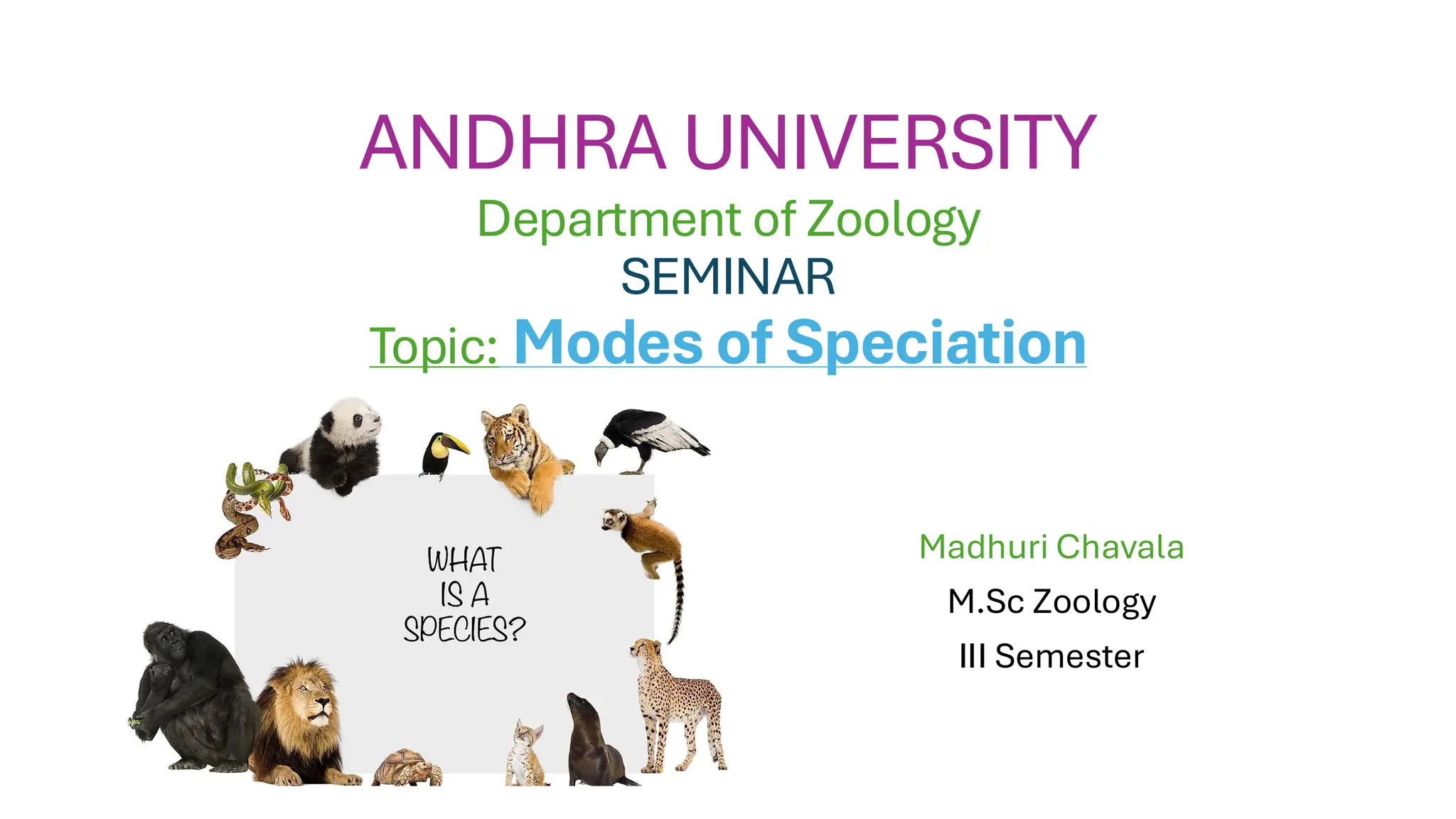
Topic: Modes of Speciation
Madhuri Chavala
M.Sc Zoology
III Semester
INTRODUCTION
• DEFINITION:
• Speciation is the evolutionary process by which populations of a
single species diverge and develop into distinct, reproductively
isolated species(reproductive isolation).
• This process involves the accumulation of genetic differences
between populations, often due to factors like geographic
isolation, environmental differences, or changes in mating
behaviors, leading to the inability of members of the diverging
populations to interbreed and produce fertile offspring.
• The key to speciation is the evolution of genetic differences between
the incipient species.
• For a lineage to split once and for all, the two incipient species must
have genetic differences that are expressed in some way that causes
matings between them to either not happen or to be unsuccessful.
• These need not be huge genetic differences.
• A small change in the timing, location, or rituals of mating could be
enough. But still, some difference is necessary.
• This change might evolve by natural selection or genetic drift.(Genetic
drift is a mechanism of evolution that refers to random changes in the
frequency of alleles within a population.)
• Reduced gene flow probably plays a critical role in speciation.
• Evolution is the successive modification of inherited traits over a huge
span of time, usually over generations.
• The theory of evolution was first proposed by an English biologist named
Charles Darwin. In 1859, he mentioned evolution in his book ‘The Origin of
Species’.
• Charles Darwin noted that living organisms change their physical and
anatomical structure over a long period of time for better adaptations to
the changing environment.
• The change is by natural process and those organisms which do not
adjust to it, find it difficult to survive.
• This put forward the concept of natural selection and Darwin called it
‘Survival of the fittest’.
• Speciation is an evolutionary process that resulted in natural selection.
MODES OF SPECIATION
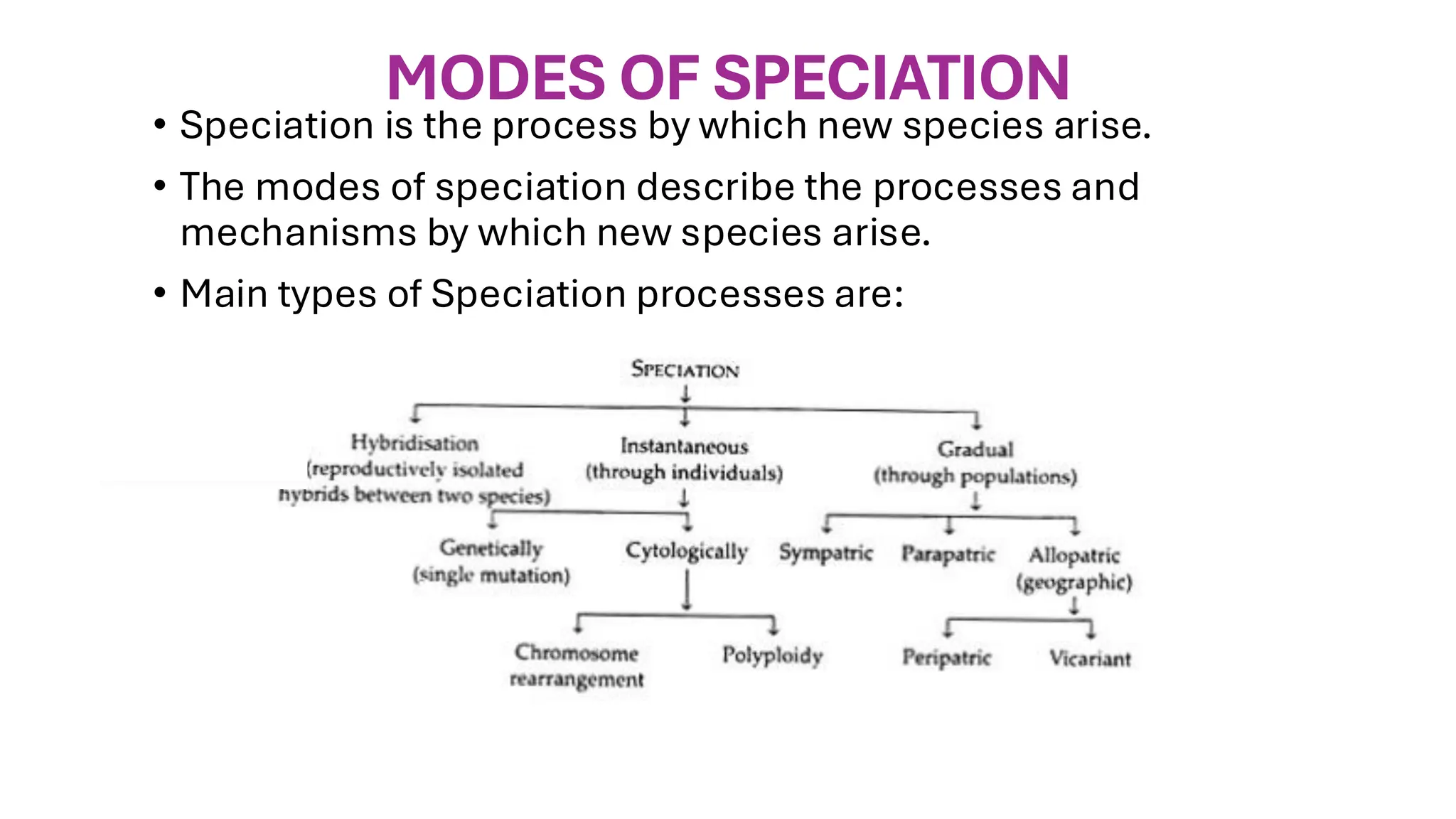
• Speciation is the process by which new species arise.
• The modes of speciation describe the processes and
mechanisms by which new species arise.
• Main types of Speciation processes are:
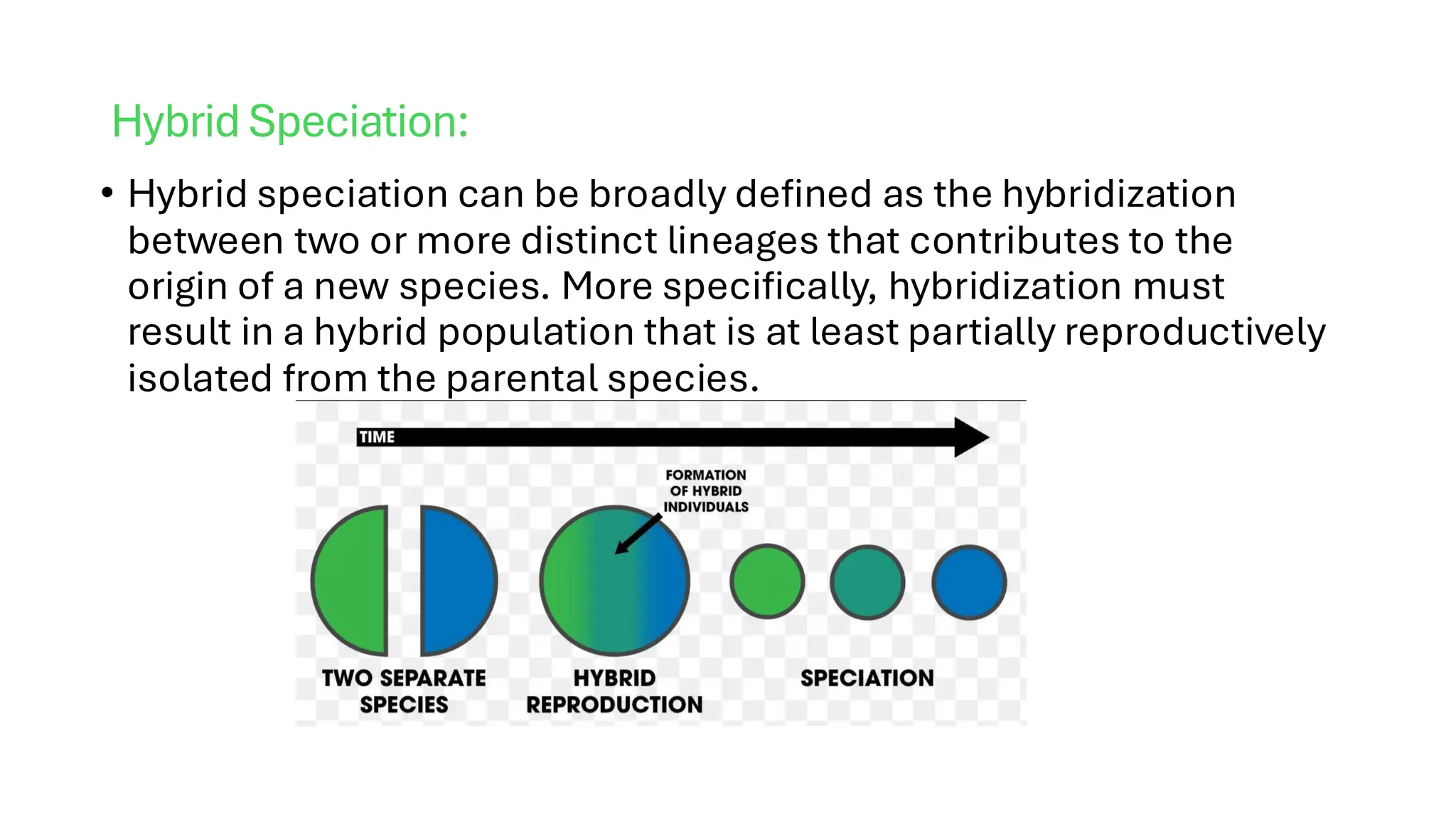
Hybrid Speciation:
• Hybrid speciation can be broadly defined as the hybridization
between two or more distinct lineages that contributes to the
origin of a new species. More specifically, hybridization must
result in a hybrid population that is at least partially reproductively
isolated from the parental species.
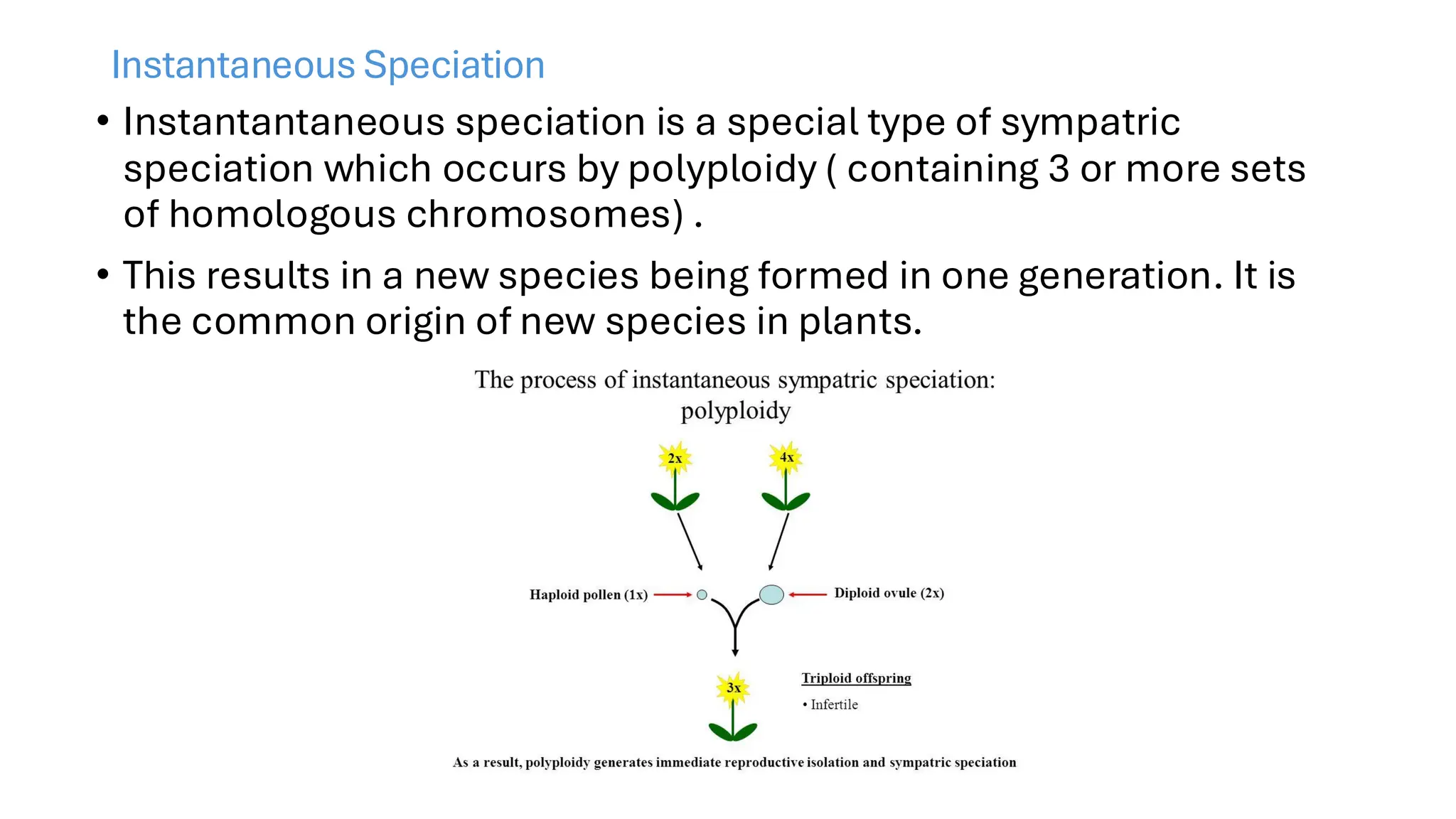
Instantaneous Speciation
• Instantantaneous speciation is a special type of sympatric
speciation which occurs by polyploidy ( containing 3 or more sets
of homologous chromosomes) .
• This results in a new species being formed in one generation. It is
the common origin of new species in plants.
• Instantaneous Speciation occur in two ways:
• 1.Genetically(single mutation)
• 2. Cytologically . It is again of two ways
• *Chromosome rearrangement .
• *Polyploidy.
Gradual Speciation:
• Gradual speciation is a model that describes how species slowly
diverge over time in small steps, accumulating enough differences to
become distinct species.
• This process is based on variations within populations adapting to
unique selection pressures. It’s a key concept for understanding
biodiversity on Earth.
• Gradual Speciation occurs mainly in 4 ways:
• 1.Sympatric
• 2.Parapatric
• 3.Allopatric
• 4.Peripatric
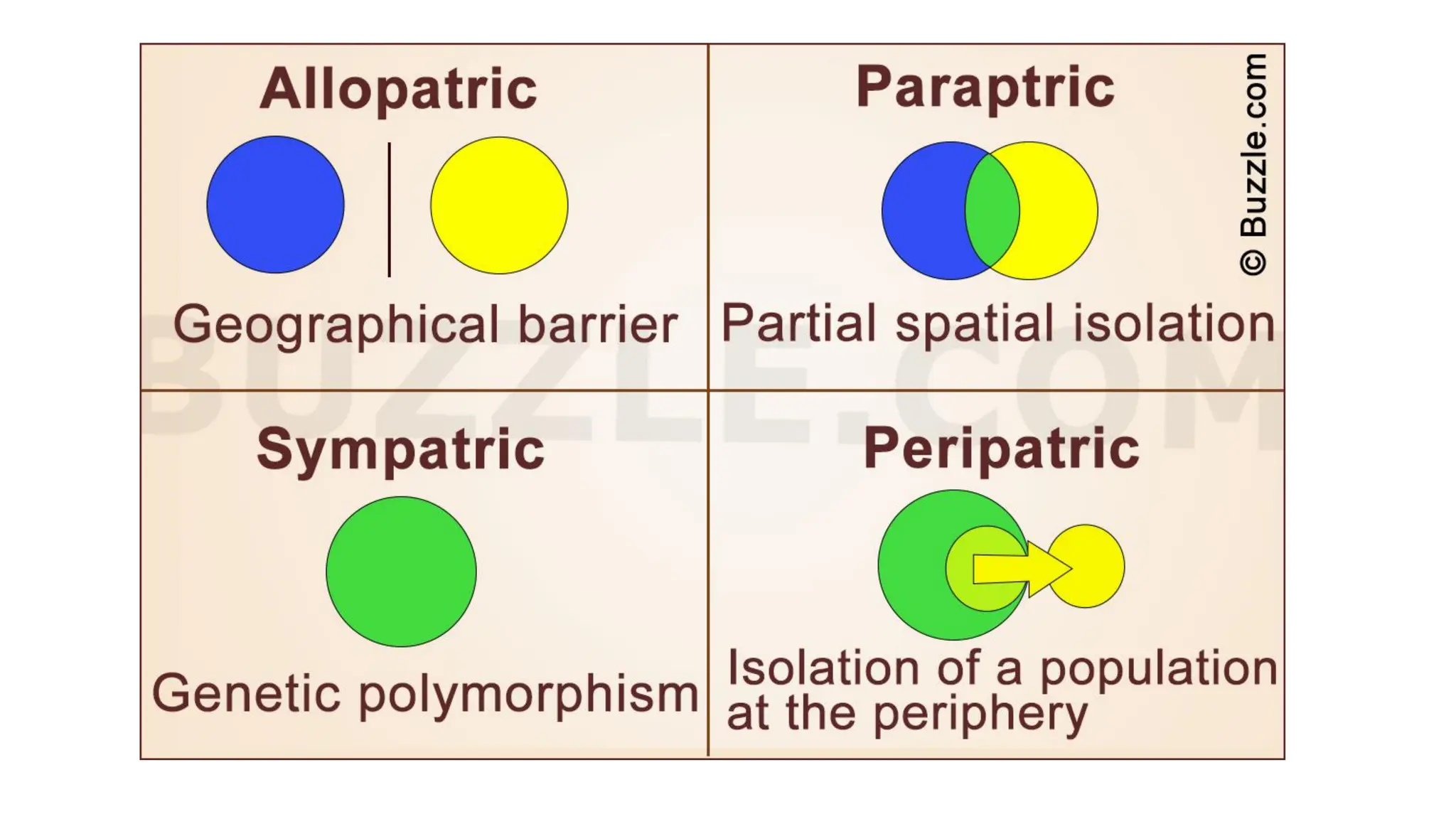
1.Sympatric Speciation:
• Sympatric speciation occurs when a population becomes two new species
without a geographic barrier.
• Sympatric speciation is controversial and not all scientists believe evidence
of its existence.
• Sympatric speciation is thought to occur when two groups within a
population seem to evolve different behaviors within the same environment
and over time become different species.
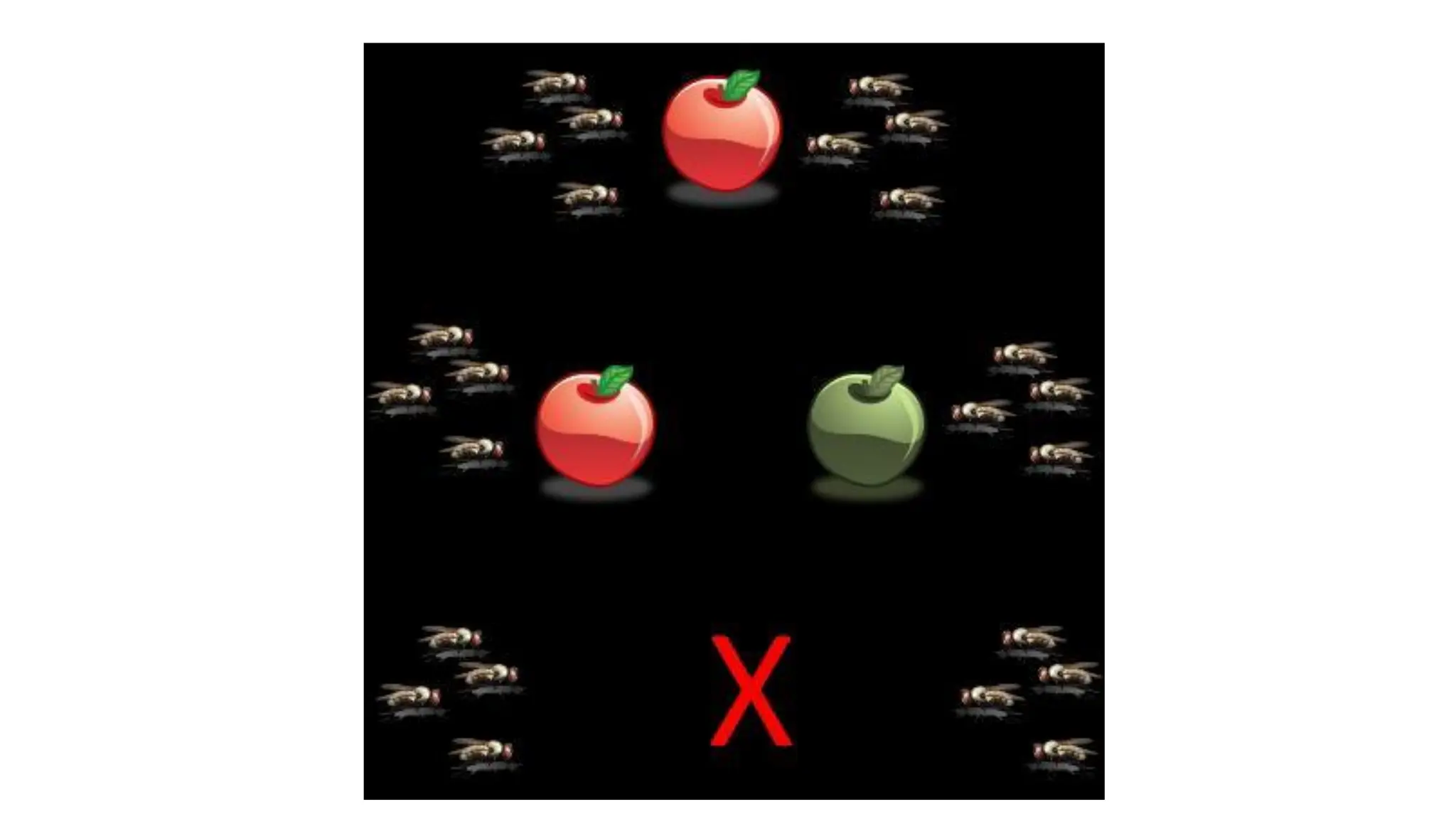
• One example of this is the apple maggot, a species of flies that lays their
eggs inside apples.
• Originally, the organism only laid its eggs inside a fruit called a Hawthorn.
But, in the 18th century, apples were introduced to North America and a small
subsection of the flies began to lay their eggs inside apples instead.
• Although these are not two different species, scientists believe sympatric
speciation may be happening.
2.Parapatric Speciation:
• Parapatric’ derives from‘para’ meaning‘near’and ‘patria’ meaning
‘country.
• ‘ Parapatric speciation thus occurs when a smaller local
population(Deme) is isolated, usually at the periphery of a larger group,
because it’s members experience different selection pressures than
other members of the population and becomes differentiated to the
point of becoming a new species.
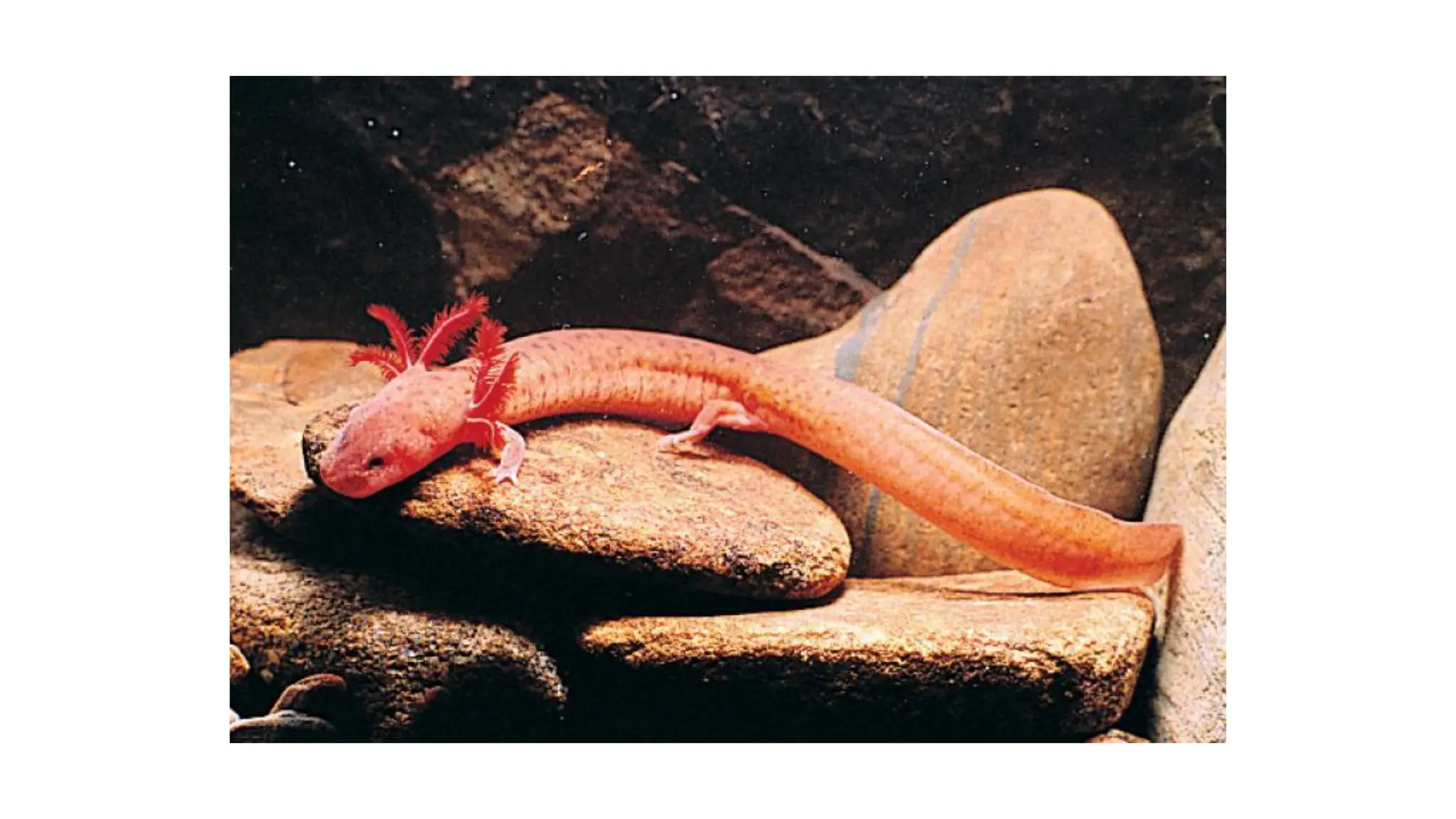
• One example of parapatric speciation is the Tennessee cave
salamander which exists both in surface and cave-dwelling varieties.
• The migration between these two species allows for some gene flow,
producing hybrids, but they are able to remain two distinct species.
3.Allopatric Speciation:
• Allopatric speciation occurs when one population is physically
separated by a geographic barrier and slowly evolves into two separate
species.
• With separation into different environments comes different
environmental pressures that shape natural selection, the survival of
the most fit organisms in the environment.
• These different environments allow for different traits to be selected.
• Over time, the selection can create entirely new species.
• Many biologists believe that allopatric speciation is the most common
kind of speciation.
Example:
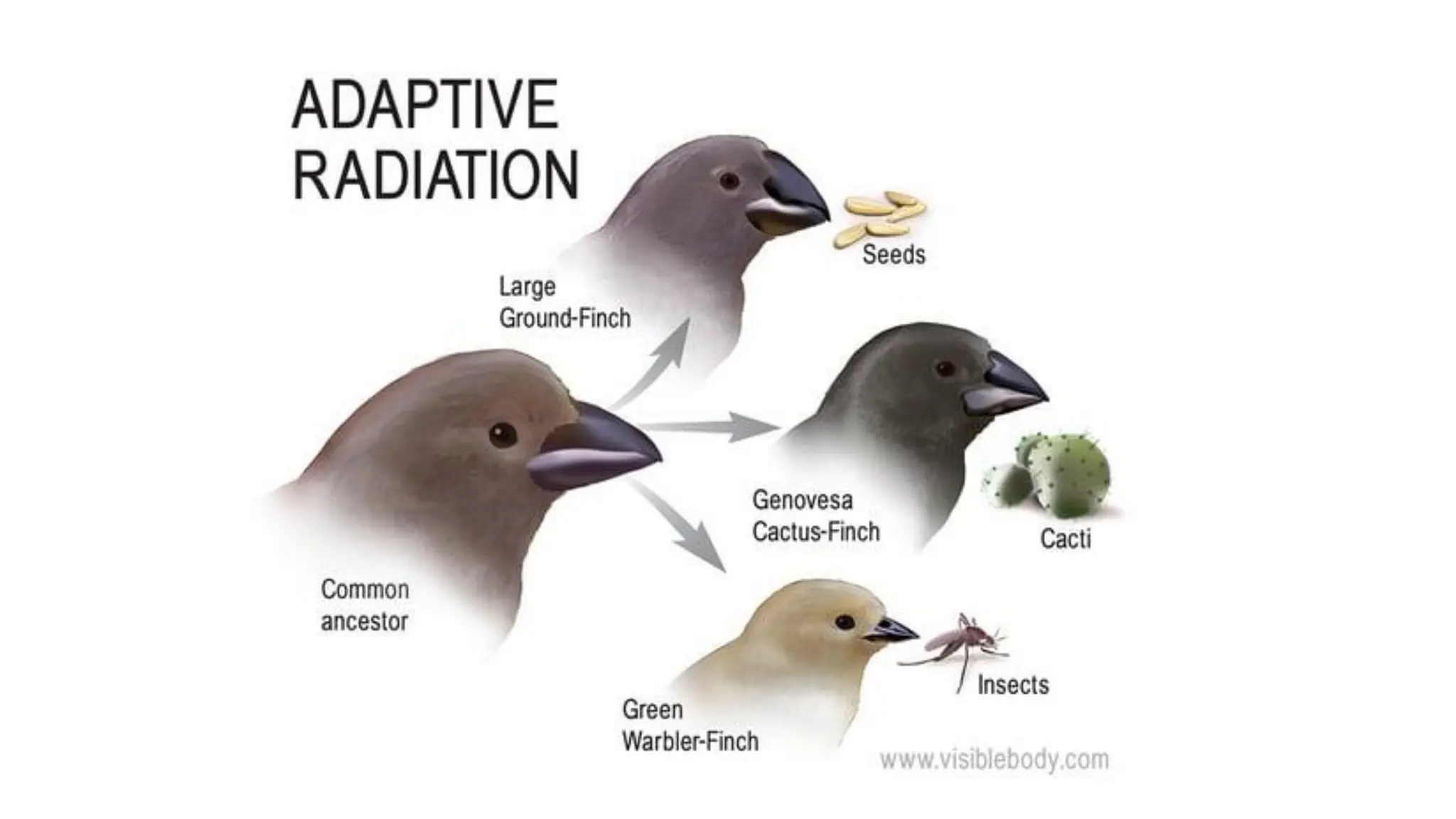
• The classic example of allopatric speciation is that of
Darwin’s finches.
• The divergent populations of finches inhabiting the
Galapagos Islands were observed to have differences in
features such as body size, color, and beak length or shape.
• The differences resulted because of the different types of
food available in various Islands.
• Another example is of Grand Canyon Squirrels which were
separated during the formation of the Grand Canyon and
resulted in two different species of squirrels.
4.Peripatric Speciation:
• Peripatric speciation is a form of speciation (the formation of new and distinct species in
the course of evolution) that occurs when a small population of a species becomes
isolated at the edge of the larger population’s geographic range.
• This small group, often separated by a geographic barrier such as a mountain range or a
body of water, experiences different environmental conditions and selective pressures
compared to the main population.
• Because the isolated population is small, genetic drift (random changes in allele
frequencies) can play a significant role in its evolution.
• Over time, the combination of natural selection and genetic drift can lead to significant
genetic differences between the isolated population and the parent population.
• If these differences become large enough, members of the isolated population may no
longer be able to interbreed with the original population, even if they come back into
contact.
• This reproductive isolation marks the completion of the speciation process, resulting in
the emergence of a new species.
• Peripatric and allopatric speciation are both types of speciation that
occur due to geographic isolation, but they differ primarily in the size of
the populations involved and the mechanisms driving the speciation
process.
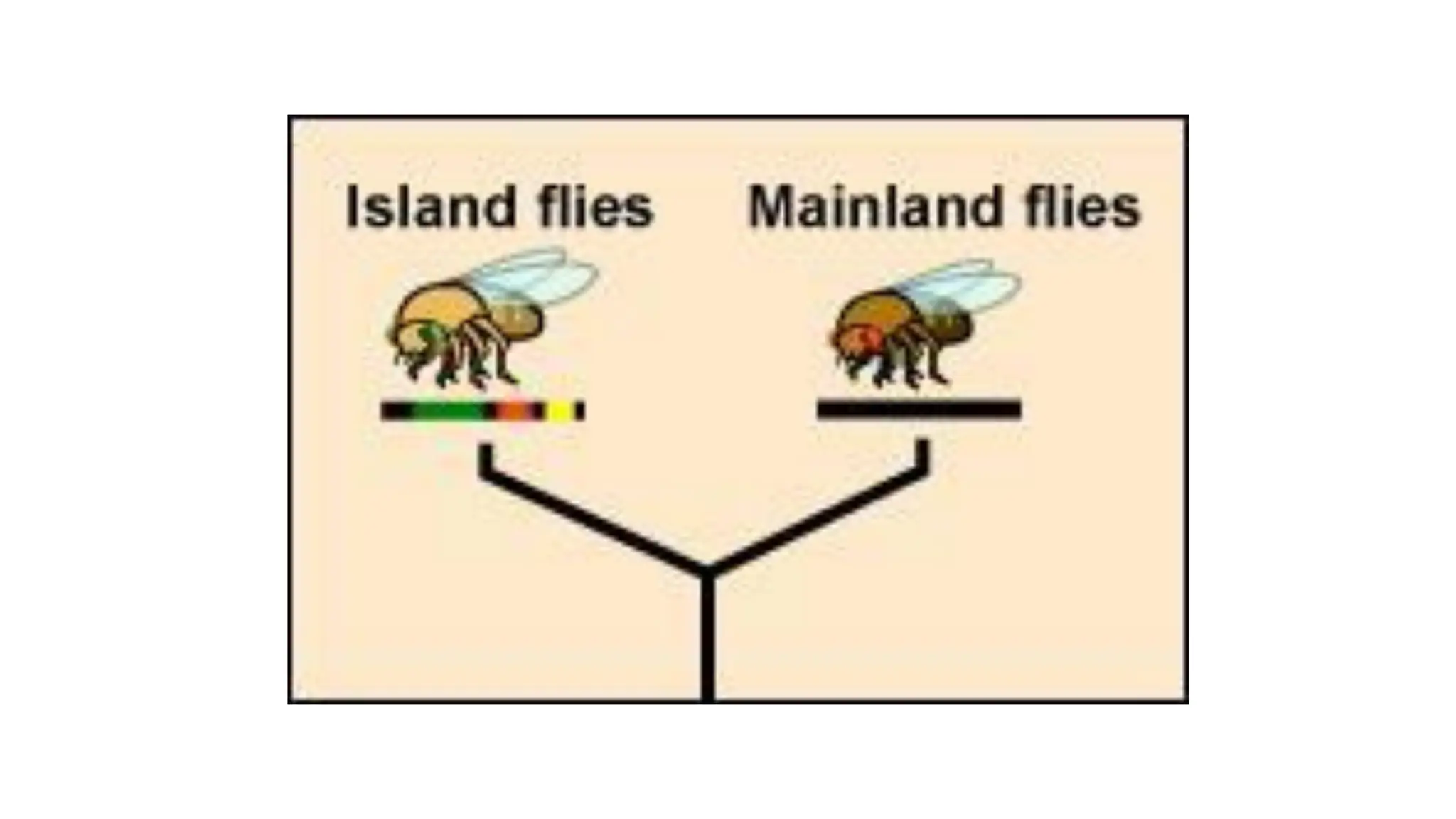
• Example
• A classic example of peripatric speciation is the evolution of new
species of fruit flies (Drosophila) on the Hawaiian Islands. A small
group of flies might migrate to a new, isolated island.
• Over time, the environmental conditions and selective pressures on
that island would differ from those on the original island, leading to the
divergence of the new population into a separate species.
Factors Affecting Speciation:
• Speciation occurs as a result of several factors which are:
• Natural selection
• As explained by Charles Darwin, different individuals in a species might develop specific
distinct characteristics which are advantageous and affect the genetic makeup of the
individual.
• Under such conditions, these characteristics will be conserved, and over time, new species
might be formed.
• However, in this case, the essential aspect of this factor is that speciation occurs only when
a single species splits into several species resulting in the multiplication of species.
• Genetic drift
• Genetic drift is the change in the allele frequencies in a population as a result of“sampling
error”while selecting the alleles for the next generation from the gene pool of the current
population.
• It has been, however, argued that genetic drift doesn’t result in speciation and just results in
evolution, that is, change from one species to another, which cannot be considered
speciation.
• Migration
• When a certain number of species from a population migrate from one
geographical region to another, the species might accumulate characteristics
which are different from that of the original population.
• Migration usually results in geographical isolation and ultimately leads to
speciation.
• Chromosomal Mutations
• Chromosomal mutations have the potential to serve as (or contribute to)
isolating mechanisms, and the locking up and protection of a particularly
favorable gene complement through a chromosomal mutation.
• These mutations, when preserved from one generation to another, might
result in the formation of new species.
• Natural causes
• Sometimes, natural events imposed by the environment like a river or a
mountain range might cause the separation of what once a continuous
population is divided into two or smaller populations.
• These events result in geographical isolation of the incipient species
followed by reproductive isolation leading to speciation.
• Reduction of gene flow
• Speciation might also occur in the absence of some extrinsic physical
barriers.
• There might be a reduced gene flow over a broad geographical range
where individuals in the far east would have zero chance of mating with
individuals in the far western end of the range.
Reference:
Miller and Harley (Zoology)
Monroe W.Strickberger,(Evolution)
Study.com,Microbe notes
About modes of Speciation and examples and factors influencing it

About modes of Speciation and examples and factors influencing it

  • 1.
    ANDHRA UNIVERSITY Department ofZoology SEMINAR Topic: Modes of Speciation Madhuri Chavala M.Sc Zoology III Semester
  • 2.
    INTRODUCTION • DEFINITION: • Speciationis the evolutionary process by which populations of a single species diverge and develop into distinct, reproductively isolated species(reproductive isolation). • This process involves the accumulation of genetic differences between populations, often due to factors like geographic isolation, environmental differences, or changes in mating behaviors, leading to the inability of members of the diverging populations to interbreed and produce fertile offspring.
  • 3.
    • The keyto speciation is the evolution of genetic differences between the incipient species. • For a lineage to split once and for all, the two incipient species must have genetic differences that are expressed in some way that causes matings between them to either not happen or to be unsuccessful. • These need not be huge genetic differences. • A small change in the timing, location, or rituals of mating could be enough. But still, some difference is necessary. • This change might evolve by natural selection or genetic drift.(Genetic drift is a mechanism of evolution that refers to random changes in the frequency of alleles within a population.) • Reduced gene flow probably plays a critical role in speciation.
  • 4.
    • Evolution isthe successive modification of inherited traits over a huge span of time, usually over generations. • The theory of evolution was first proposed by an English biologist named Charles Darwin. In 1859, he mentioned evolution in his book ‘The Origin of Species’. • Charles Darwin noted that living organisms change their physical and anatomical structure over a long period of time for better adaptations to the changing environment. • The change is by natural process and those organisms which do not adjust to it, find it difficult to survive. • This put forward the concept of natural selection and Darwin called it ‘Survival of the fittest’. • Speciation is an evolutionary process that resulted in natural selection.
  • 5.
    MODES OF SPECIATION •Speciation is the process by which new species arise. • The modes of speciation describe the processes and mechanisms by which new species arise. • Main types of Speciation processes are:
  • 6.
    Hybrid Speciation: • Hybridspeciation can be broadly defined as the hybridization between two or more distinct lineages that contributes to the origin of a new species. More specifically, hybridization must result in a hybrid population that is at least partially reproductively isolated from the parental species.
  • 7.
    Instantaneous Speciation • Instantantaneousspeciation is a special type of sympatric speciation which occurs by polyploidy ( containing 3 or more sets of homologous chromosomes) . • This results in a new species being formed in one generation. It is the common origin of new species in plants.
  • 8.
    • Instantaneous Speciationoccur in two ways: • 1.Genetically(single mutation) • 2. Cytologically . It is again of two ways • *Chromosome rearrangement . • *Polyploidy.
  • 9.
    Gradual Speciation: • Gradualspeciation is a model that describes how species slowly diverge over time in small steps, accumulating enough differences to become distinct species. • This process is based on variations within populations adapting to unique selection pressures. It’s a key concept for understanding biodiversity on Earth. • Gradual Speciation occurs mainly in 4 ways: • 1.Sympatric • 2.Parapatric • 3.Allopatric • 4.Peripatric
  • 10.
    1.Sympatric Speciation: • Sympatricspeciation occurs when a population becomes two new species without a geographic barrier. • Sympatric speciation is controversial and not all scientists believe evidence of its existence. • Sympatric speciation is thought to occur when two groups within a population seem to evolve different behaviors within the same environment and over time become different species. • One example of this is the apple maggot, a species of flies that lays their eggs inside apples. • Originally, the organism only laid its eggs inside a fruit called a Hawthorn. But, in the 18th century, apples were introduced to North America and a small subsection of the flies began to lay their eggs inside apples instead. • Although these are not two different species, scientists believe sympatric speciation may be happening.
  • 12.
    2.Parapatric Speciation: • Parapatric’derives from‘para’ meaning‘near’and ‘patria’ meaning ‘country. • ‘ Parapatric speciation thus occurs when a smaller local population(Deme) is isolated, usually at the periphery of a larger group, because it’s members experience different selection pressures than other members of the population and becomes differentiated to the point of becoming a new species. • One example of parapatric speciation is the Tennessee cave salamander which exists both in surface and cave-dwelling varieties. • The migration between these two species allows for some gene flow, producing hybrids, but they are able to remain two distinct species.
  • 14.
    3.Allopatric Speciation: • Allopatricspeciation occurs when one population is physically separated by a geographic barrier and slowly evolves into two separate species. • With separation into different environments comes different environmental pressures that shape natural selection, the survival of the most fit organisms in the environment. • These different environments allow for different traits to be selected. • Over time, the selection can create entirely new species. • Many biologists believe that allopatric speciation is the most common kind of speciation.
  • 15.
    Example: • The classicexample of allopatric speciation is that of Darwin’s finches. • The divergent populations of finches inhabiting the Galapagos Islands were observed to have differences in features such as body size, color, and beak length or shape. • The differences resulted because of the different types of food available in various Islands. • Another example is of Grand Canyon Squirrels which were separated during the formation of the Grand Canyon and resulted in two different species of squirrels.
  • 17.
    4.Peripatric Speciation: • Peripatricspeciation is a form of speciation (the formation of new and distinct species in the course of evolution) that occurs when a small population of a species becomes isolated at the edge of the larger population’s geographic range. • This small group, often separated by a geographic barrier such as a mountain range or a body of water, experiences different environmental conditions and selective pressures compared to the main population. • Because the isolated population is small, genetic drift (random changes in allele frequencies) can play a significant role in its evolution. • Over time, the combination of natural selection and genetic drift can lead to significant genetic differences between the isolated population and the parent population. • If these differences become large enough, members of the isolated population may no longer be able to interbreed with the original population, even if they come back into contact. • This reproductive isolation marks the completion of the speciation process, resulting in the emergence of a new species.
  • 18.
    • Peripatric andallopatric speciation are both types of speciation that occur due to geographic isolation, but they differ primarily in the size of the populations involved and the mechanisms driving the speciation process. • Example • A classic example of peripatric speciation is the evolution of new species of fruit flies (Drosophila) on the Hawaiian Islands. A small group of flies might migrate to a new, isolated island. • Over time, the environmental conditions and selective pressures on that island would differ from those on the original island, leading to the divergence of the new population into a separate species.
  • 21.
    Factors Affecting Speciation: •Speciation occurs as a result of several factors which are: • Natural selection • As explained by Charles Darwin, different individuals in a species might develop specific distinct characteristics which are advantageous and affect the genetic makeup of the individual. • Under such conditions, these characteristics will be conserved, and over time, new species might be formed. • However, in this case, the essential aspect of this factor is that speciation occurs only when a single species splits into several species resulting in the multiplication of species. • Genetic drift • Genetic drift is the change in the allele frequencies in a population as a result of“sampling error”while selecting the alleles for the next generation from the gene pool of the current population. • It has been, however, argued that genetic drift doesn’t result in speciation and just results in evolution, that is, change from one species to another, which cannot be considered speciation.
  • 22.
    • Migration • Whena certain number of species from a population migrate from one geographical region to another, the species might accumulate characteristics which are different from that of the original population. • Migration usually results in geographical isolation and ultimately leads to speciation. • Chromosomal Mutations • Chromosomal mutations have the potential to serve as (or contribute to) isolating mechanisms, and the locking up and protection of a particularly favorable gene complement through a chromosomal mutation. • These mutations, when preserved from one generation to another, might result in the formation of new species.
  • 23.
    • Natural causes •Sometimes, natural events imposed by the environment like a river or a mountain range might cause the separation of what once a continuous population is divided into two or smaller populations. • These events result in geographical isolation of the incipient species followed by reproductive isolation leading to speciation. • Reduction of gene flow • Speciation might also occur in the absence of some extrinsic physical barriers. • There might be a reduced gene flow over a broad geographical range where individuals in the far east would have zero chance of mating with individuals in the far western end of the range. Reference: Miller and Harley (Zoology) Monroe W.Strickberger,(Evolution) Study.com,Microbe notes