by,
Aditya G1
Sathvik A S1,
Kakumanu Venkata Sai Sumanth1,
GrandhiPavan Kumar1,
Alfhan1
Under the guidance of
Asst Prof.Pradeep Raja K P2,
Prof. Revanasiddappa M3
1Department of Electronics and Communication Engineering, 2Department of Civil Engineering,
3Department of Engineering Chemistry,
Hosur Road, PESIT Bangalore South Campus, Bangalore 560 100
Outline of Presentation
• Objective
• Study Area
• Parameters under monitoring
– Electrical Conductance
– Total Hardness
– pH
– Chemical Oxygen Demand(COD)
 Conclusion
Objective
 To study ground water quality of Jnanabharathi ward
no.129 area using GIS software
 To analyze systematically for physio-chemical
parameters such as pH, Total Hardness, Electrical
Conductivity and Chemical Oxygen Demand (COD).
 Generate Ground Water Quality Map based on all
the above factors.
Introduction
• Ground water is an essential renewable resource which we rely on since
centuries without estimating its fate in terms of quality and quantity. The
ground water is considered as pollution free and cleaner than surface
water due to its hideous nature underneath the surface. Industries,
residential, municipal, agricultural and commercial activities adversely
affect the quality of ground water.
• In India, ground water is considered to be the major source for most of the
population especially for drinking purposes. Though groundwater is
believed to be clean and free from pollution as compared to the surface
water, it is being contaminated by natural or numerous types of human
activities such as commercial, industrial, agricultural etc.
What is GIS?
• GIS(Geographic Information Systems) is one of the most effective
tools for mapping of groundwater quality and plays a vital role in
monitoring the environmental changes. GIS is being used to map
the classification of groundwater quality, based on correlating the
values of TDS (Total Dissolved Solids) with some aquifer
characteristics. GIS is also used as a database system in preparing
maps of water quality based on the concentration values of
different chemical constituents. In such surveys, GIS is utilized to
trace the groundwater quality zones suitable for different usages
such as irrigation and domestic. Babiker et al. proposed a GIS-based
groundwater quality index method which synthesizes different
available water quality data by indexing them numerically relative
to the WHO standards. Thus, the use of GIS technology has greatly
simplified the assessment of natural resources and environmental
concerns, including groundwater.
What is GIS?
• In groundwater studies, GIS is commonly used for site
suitability analysis, managing site inventory data,
estimation of groundwater vulnerability to contamination,
groundwater flow modeling, modeling solute transport and
leaching, and integrating groundwater quality assessment
models with spatial data to create spatial decision support
systems . Barber et al carried out a GIS based study to
determine the effect of urbanization on groundwater
quality in relation to land-use changes. Using GIS, Nas and
Berktay have mapped urban groundwater quality in Koyna,
Turkey. Ground water quality map is important for any city
to estimate the water safeness for drinking and irrigation
purposes. It is also helpful as a precautionary indication of
potential environmental health problems.
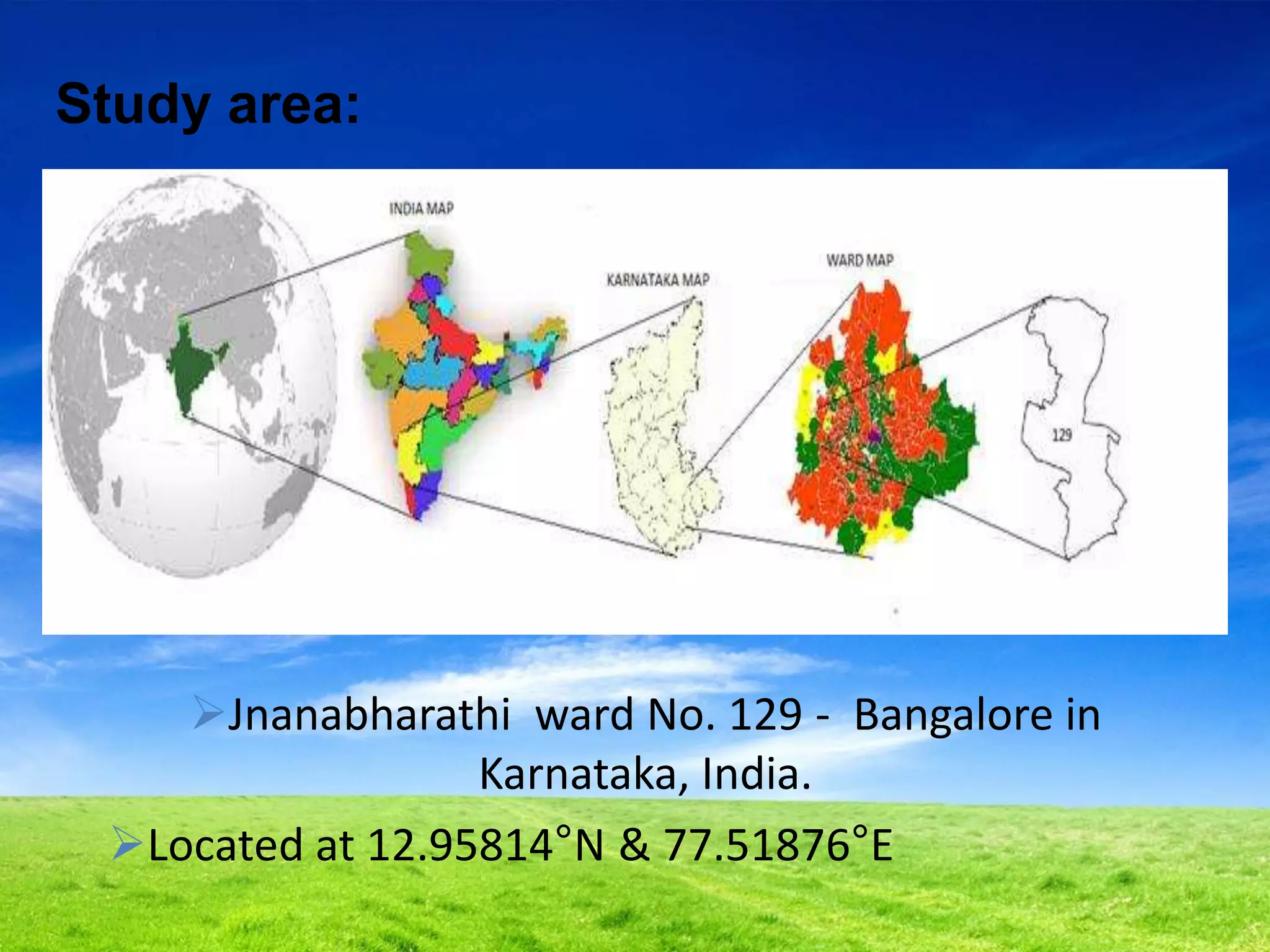
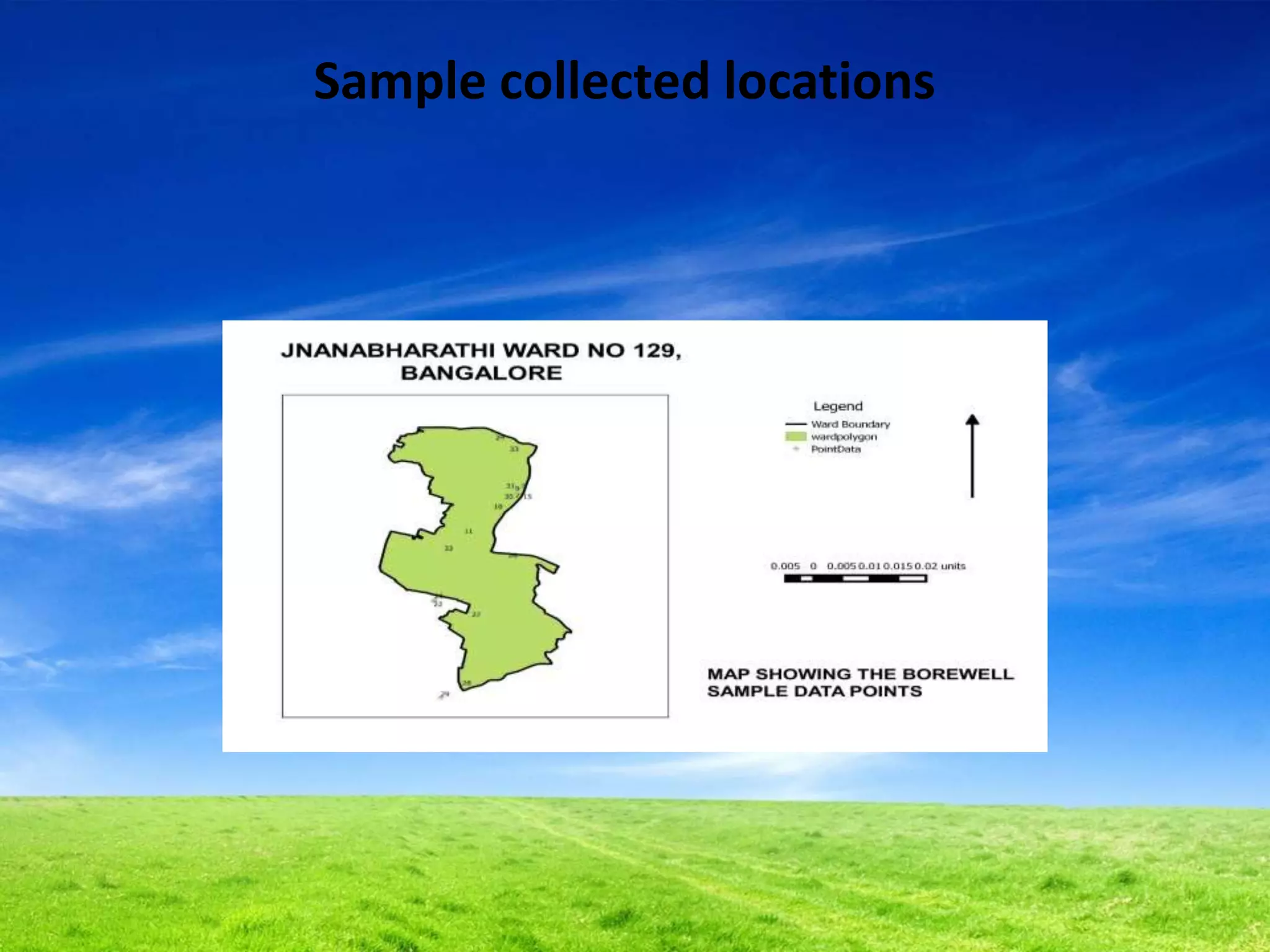
Study area:
Jnanabharathi ward No. 129 - Bangalore in
Karnataka, India.
Located at 12.95814°N & 77.51876°E
Parameters under monitoring
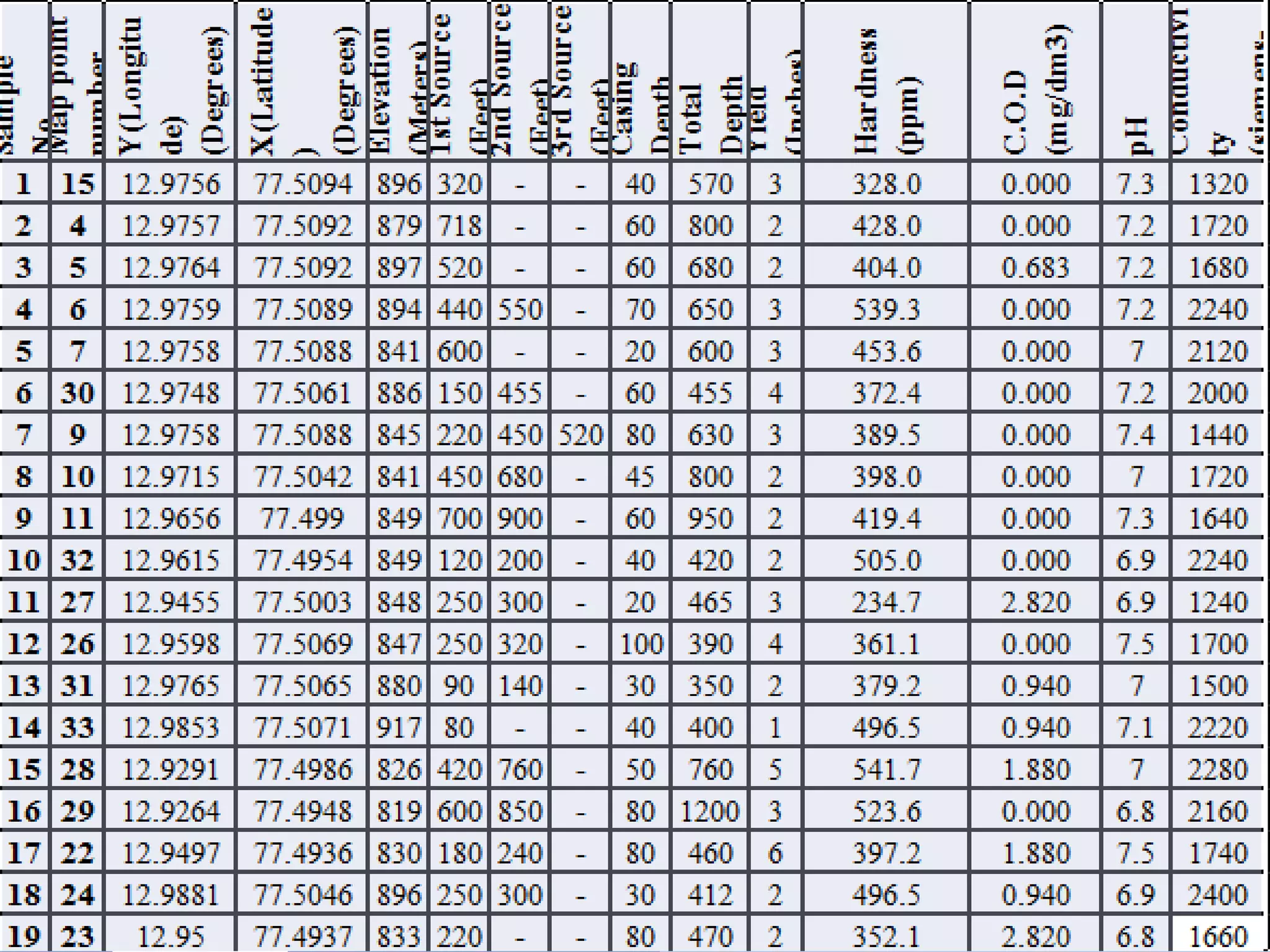
Ground water sample were collected from 19 bore
wells.
Samples were analyzed by using physical and
chemical parameters using standard procedures.
Samples were analyzed for various parameters
such as Electrical Conductance, total hardness, pH,
COD.
Results and Discussion
Sample collected locations
Electrical Conductance
• It is the ability of a medium to conduct
electricity.
• Greater conductance makes water unfit for
drinking.
• The conductance of the ground water is
generally more than the permissible limit due
to the inclusion of different salts present in the
soil.
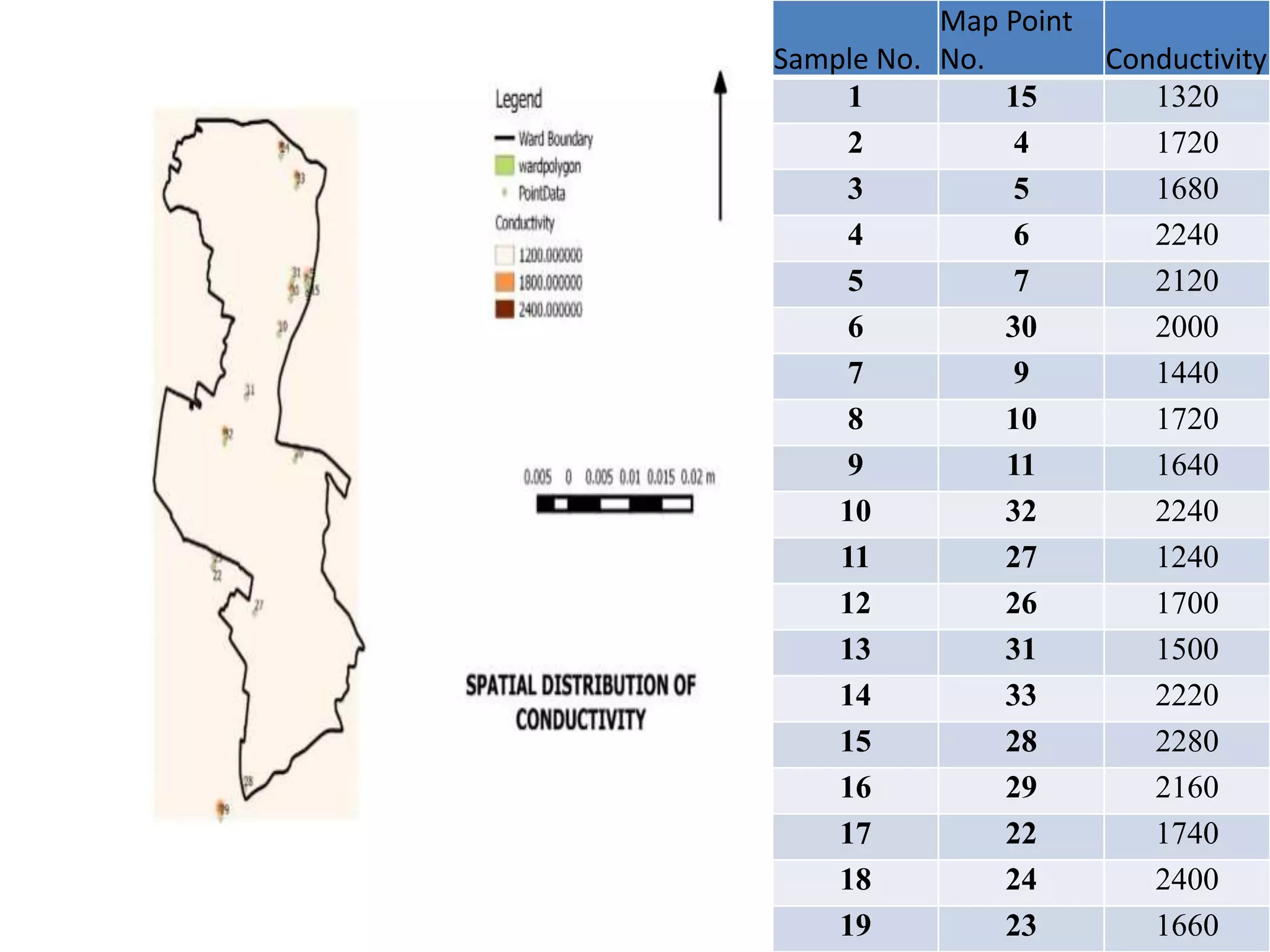
Sample No.
Map Point
No. Conductivity
1 15 1320
2 4 1720
3 5 1680
4 6 2240
5 7 2120
6 30 2000
7 9 1440
8 10 1720
9 11 1640
10 32 2240
11 27 1240
12 26 1700
13 31 1500
14 33 2220
15 28 2280
16 29 2160
17 22 1740
18 24 2400
19 23 1660
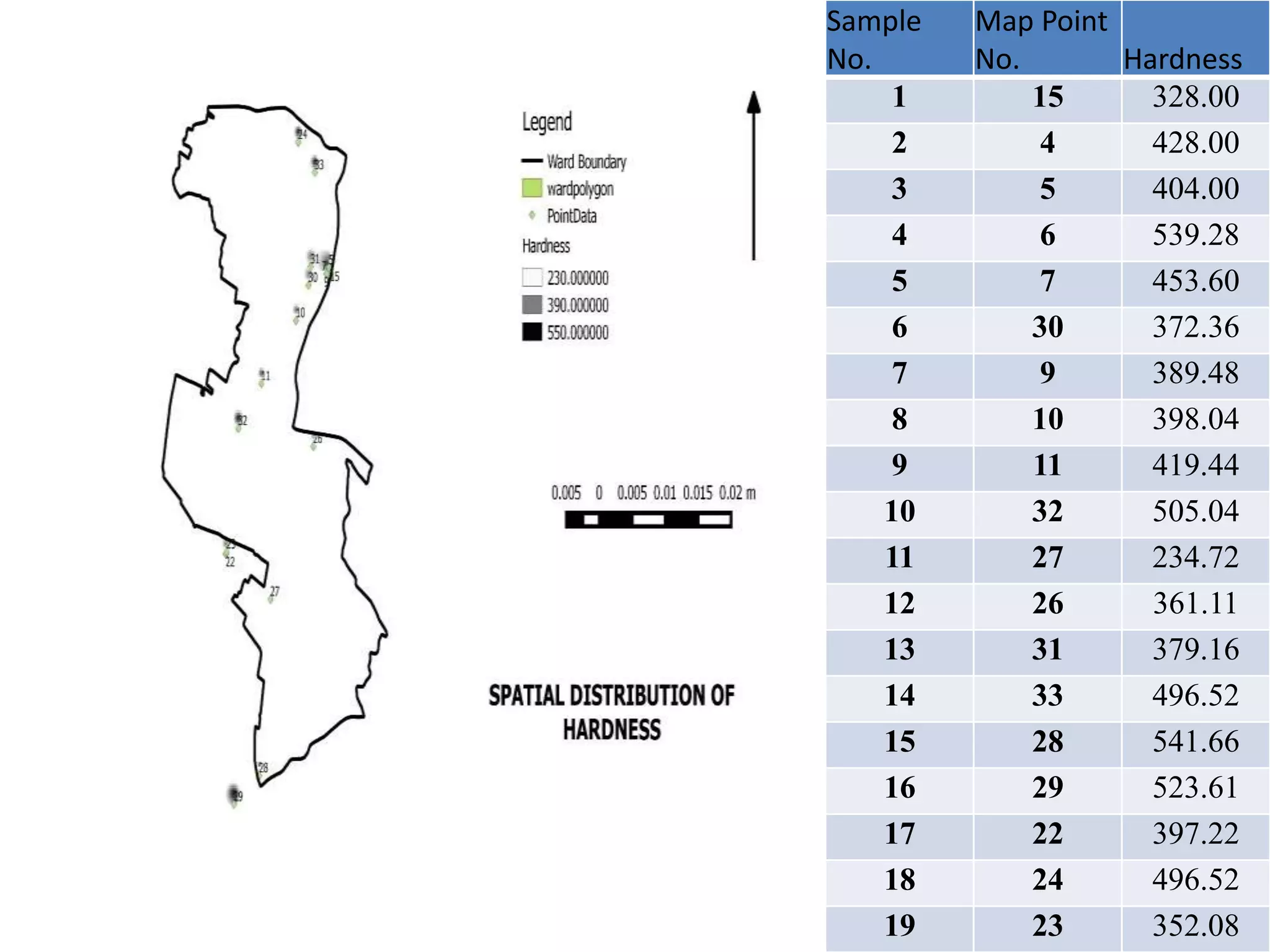
Hardness
• Hardness in water is especially due to
presence of carbonates and bicarbonates
of Calcium and Magnesium including
sulphates, chlorides and nitrates.
• Based on the ranges of above contents
total hardness is classified into
i) <300 mg/litre (permissible limit )
ii) 300-600 mg/litre (acceptable limit)
iii) >600 mg/litre (exceeding limit)
Sample
No.
Map Point
No. Hardness
1 15 328.00
2 4 428.00
3 5 404.00
4 6 539.28
5 7 453.60
6 30 372.36
7 9 389.48
8 10 398.04
9 11 419.44
10 32 505.04
11 27 234.72
12 26 361.11
13 31 379.16
14 33 496.52
15 28 541.66
16 29 523.61
17 22 397.22
18 24 496.52
19 23 352.08
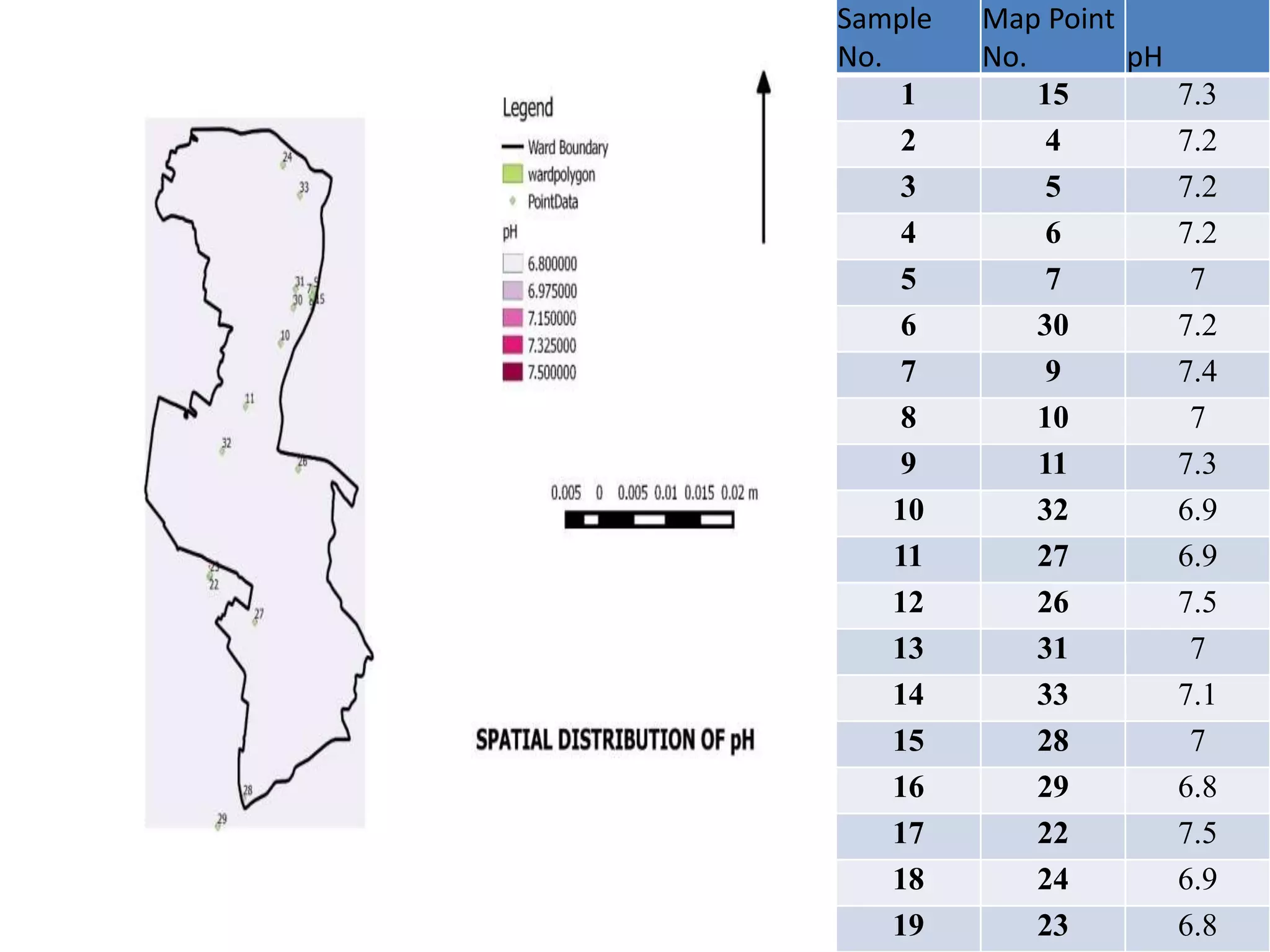
pH
• pH is defined as negative logarithm of
concentration of [H+] ions in a liquid.
• It ranges from 1 to 14. pH of pure water is 7.
• If it is <7, then it is acidic, else it is basic.
• Lesser the pH value, greater the acidity of a
liquid.
• According to the WHO permissible limit of
drinking water is 6.5 to 7.5.
Sample
No.
Map Point
No. pH
1 15 7.3
2 4 7.2
3 5 7.2
4 6 7.2
5 7 7
6 30 7.2
7 9 7.4
8 10 7
9 11 7.3
10 32 6.9
11 27 6.9
12 26 7.5
13 31 7
14 33 7.1
15 28 7
16 29 6.8
17 22 7.5
18 24 6.9
19 23 6.8
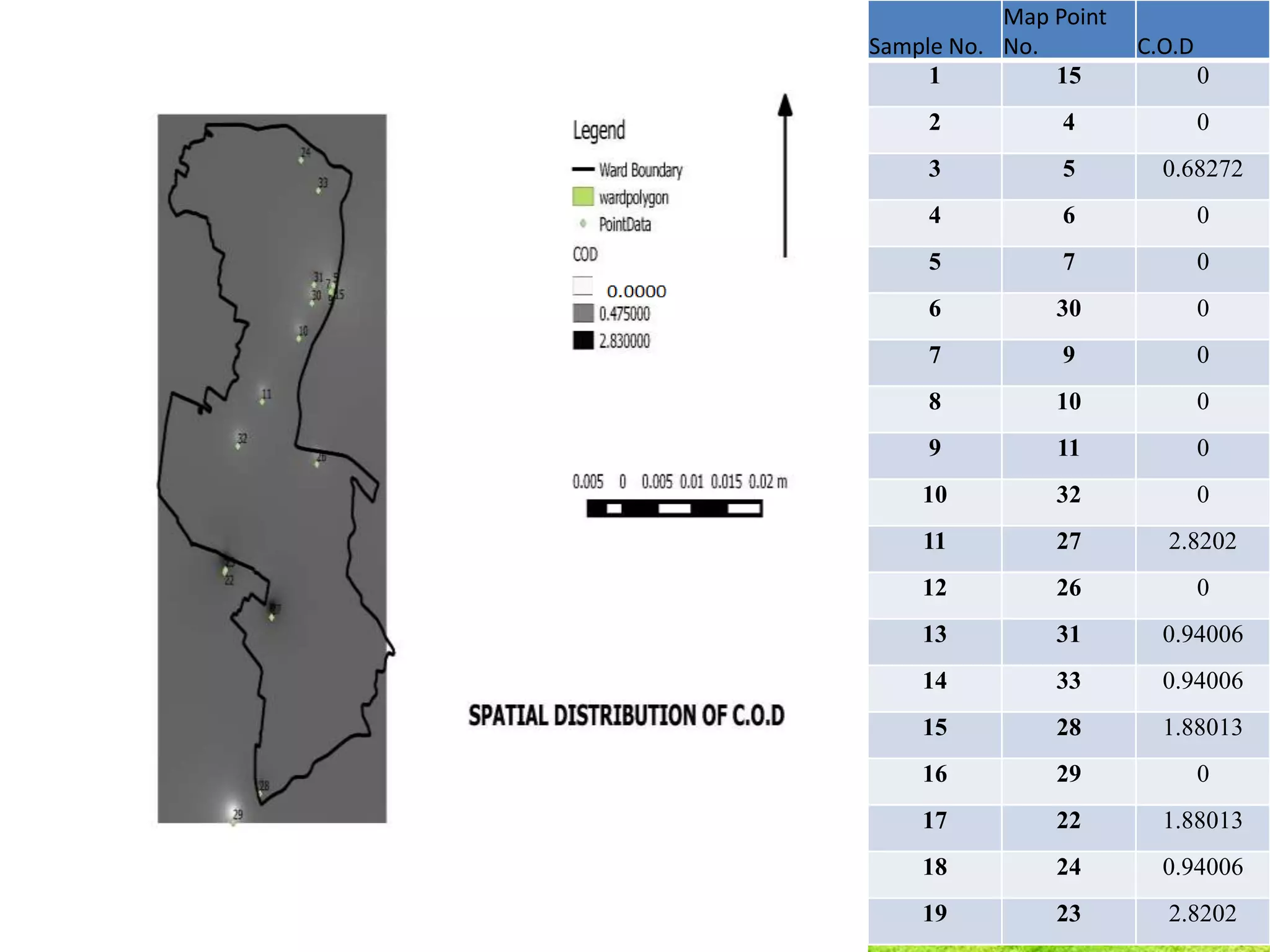
Chemical Oxygen Demand (COD)
• It is amount of oxygen required for the
complete chemical oxidation of both organic
and inorganic matter present in the sample of
water by a strong chemical oxidizing agent such
as acidified potassium dichromate.
• Greater the COD, greater contamination of
water.
Sample No.
Map Point
No. C.O.D
1 15 0
2 4 0
3 5 0.68272
4 6 0
5 7 0
6 30 0
7 9 0
8 10 0
9 11 0
10 32 0
11 27 2.8202
12 26 0
13 31 0.94006
14 33 0.94006
15 28 1.88013
16 29 0
17 22 1.88013
18 24 0.94006
19 23 2.8202
Conclusion
• This study has described the significance of GIS in analyzing the
quality of ground water at various locations in Jnanabharathi
ward.no 129.
• The spatial distribution map of hardness concentration illustrates
that 64 percent of the groundwater samples contain total hardness
within the limit, 28 percent within the permissible limit and 8
percent exceeding the limit.
• About 11 percent of electrical conductance of groundwater samples
in the study area exceeds the maximum permissible limit and 5
percent alone in the potable range.
• Thus spatial distribution maps of various quality parameters are
used to demarcate the location distribution of water quality in a
comprehensive manner and help in suggesting groundwater suitable
for domestic purposes.
Thank you,

Spatial analysis of groundwater quality using GIS system

  • 1.
    by, Aditya G1 Sathvik AS1, Kakumanu Venkata Sai Sumanth1, GrandhiPavan Kumar1, Alfhan1 Under the guidance of Asst Prof.Pradeep Raja K P2, Prof. Revanasiddappa M3 1Department of Electronics and Communication Engineering, 2Department of Civil Engineering, 3Department of Engineering Chemistry, Hosur Road, PESIT Bangalore South Campus, Bangalore 560 100
  • 2.
    Outline of Presentation •Objective • Study Area • Parameters under monitoring – Electrical Conductance – Total Hardness – pH – Chemical Oxygen Demand(COD)  Conclusion
  • 3.
    Objective  To studyground water quality of Jnanabharathi ward no.129 area using GIS software  To analyze systematically for physio-chemical parameters such as pH, Total Hardness, Electrical Conductivity and Chemical Oxygen Demand (COD).  Generate Ground Water Quality Map based on all the above factors.
  • 4.
    Introduction • Ground wateris an essential renewable resource which we rely on since centuries without estimating its fate in terms of quality and quantity. The ground water is considered as pollution free and cleaner than surface water due to its hideous nature underneath the surface. Industries, residential, municipal, agricultural and commercial activities adversely affect the quality of ground water. • In India, ground water is considered to be the major source for most of the population especially for drinking purposes. Though groundwater is believed to be clean and free from pollution as compared to the surface water, it is being contaminated by natural or numerous types of human activities such as commercial, industrial, agricultural etc.
  • 5.
    What is GIS? •GIS(Geographic Information Systems) is one of the most effective tools for mapping of groundwater quality and plays a vital role in monitoring the environmental changes. GIS is being used to map the classification of groundwater quality, based on correlating the values of TDS (Total Dissolved Solids) with some aquifer characteristics. GIS is also used as a database system in preparing maps of water quality based on the concentration values of different chemical constituents. In such surveys, GIS is utilized to trace the groundwater quality zones suitable for different usages such as irrigation and domestic. Babiker et al. proposed a GIS-based groundwater quality index method which synthesizes different available water quality data by indexing them numerically relative to the WHO standards. Thus, the use of GIS technology has greatly simplified the assessment of natural resources and environmental concerns, including groundwater.
  • 6.
    What is GIS? •In groundwater studies, GIS is commonly used for site suitability analysis, managing site inventory data, estimation of groundwater vulnerability to contamination, groundwater flow modeling, modeling solute transport and leaching, and integrating groundwater quality assessment models with spatial data to create spatial decision support systems . Barber et al carried out a GIS based study to determine the effect of urbanization on groundwater quality in relation to land-use changes. Using GIS, Nas and Berktay have mapped urban groundwater quality in Koyna, Turkey. Ground water quality map is important for any city to estimate the water safeness for drinking and irrigation purposes. It is also helpful as a precautionary indication of potential environmental health problems.
  • 7.
    Study area: Jnanabharathi wardNo. 129 - Bangalore in Karnataka, India. Located at 12.95814°N & 77.51876°E
  • 8.
    Parameters under monitoring Groundwater sample were collected from 19 bore wells. Samples were analyzed by using physical and chemical parameters using standard procedures. Samples were analyzed for various parameters such as Electrical Conductance, total hardness, pH, COD.
  • 9.
  • 10.
  • 11.
    Electrical Conductance • Itis the ability of a medium to conduct electricity. • Greater conductance makes water unfit for drinking. • The conductance of the ground water is generally more than the permissible limit due to the inclusion of different salts present in the soil.
  • 12.
    Sample No. Map Point No.Conductivity 1 15 1320 2 4 1720 3 5 1680 4 6 2240 5 7 2120 6 30 2000 7 9 1440 8 10 1720 9 11 1640 10 32 2240 11 27 1240 12 26 1700 13 31 1500 14 33 2220 15 28 2280 16 29 2160 17 22 1740 18 24 2400 19 23 1660
  • 13.
    Hardness • Hardness inwater is especially due to presence of carbonates and bicarbonates of Calcium and Magnesium including sulphates, chlorides and nitrates. • Based on the ranges of above contents total hardness is classified into i) <300 mg/litre (permissible limit ) ii) 300-600 mg/litre (acceptable limit) iii) >600 mg/litre (exceeding limit)
  • 14.
    Sample No. Map Point No. Hardness 115 328.00 2 4 428.00 3 5 404.00 4 6 539.28 5 7 453.60 6 30 372.36 7 9 389.48 8 10 398.04 9 11 419.44 10 32 505.04 11 27 234.72 12 26 361.11 13 31 379.16 14 33 496.52 15 28 541.66 16 29 523.61 17 22 397.22 18 24 496.52 19 23 352.08
  • 15.
    pH • pH isdefined as negative logarithm of concentration of [H+] ions in a liquid. • It ranges from 1 to 14. pH of pure water is 7. • If it is <7, then it is acidic, else it is basic. • Lesser the pH value, greater the acidity of a liquid. • According to the WHO permissible limit of drinking water is 6.5 to 7.5.
  • 16.
    Sample No. Map Point No. pH 115 7.3 2 4 7.2 3 5 7.2 4 6 7.2 5 7 7 6 30 7.2 7 9 7.4 8 10 7 9 11 7.3 10 32 6.9 11 27 6.9 12 26 7.5 13 31 7 14 33 7.1 15 28 7 16 29 6.8 17 22 7.5 18 24 6.9 19 23 6.8
  • 17.
    Chemical Oxygen Demand(COD) • It is amount of oxygen required for the complete chemical oxidation of both organic and inorganic matter present in the sample of water by a strong chemical oxidizing agent such as acidified potassium dichromate. • Greater the COD, greater contamination of water.
  • 18.
    Sample No. Map Point No.C.O.D 1 15 0 2 4 0 3 5 0.68272 4 6 0 5 7 0 6 30 0 7 9 0 8 10 0 9 11 0 10 32 0 11 27 2.8202 12 26 0 13 31 0.94006 14 33 0.94006 15 28 1.88013 16 29 0 17 22 1.88013 18 24 0.94006 19 23 2.8202
  • 20.
    Conclusion • This studyhas described the significance of GIS in analyzing the quality of ground water at various locations in Jnanabharathi ward.no 129. • The spatial distribution map of hardness concentration illustrates that 64 percent of the groundwater samples contain total hardness within the limit, 28 percent within the permissible limit and 8 percent exceeding the limit. • About 11 percent of electrical conductance of groundwater samples in the study area exceeds the maximum permissible limit and 5 percent alone in the potable range. • Thus spatial distribution maps of various quality parameters are used to demarcate the location distribution of water quality in a comprehensive manner and help in suggesting groundwater suitable for domestic purposes.
  • 21.