SPARK AND COMPRESSION
IGNITION ENGINES
 The internal combustion engines are classified based
on method of ignition of the fuel in the engine
cylinder:
 Spark ignition engine (petrol engine)
and
 Compression ignition engine (diesel engine)
Spark ignition engine (Petrol engine)
 In this type of engine, a device called carburetor,
which atomizes and mixes fuel with air in correct
proportion and send the mixture to the engine
cylinder during the suction stroke.
 Some times these engines are also regarded as
carburetor type engine.
 It is an engine designed to convert chemical energy
of heavier fuel into mechanical energy.
 The injected fuel is ignited by the heat of the air
which is compressed by the piston within the
cylinder.
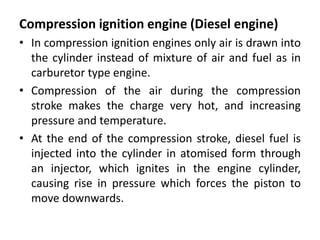
Compression ignition engine (Diesel engine)
• In compression ignition engines only air is drawn into
the cylinder instead of mixture of air and fuel as in
carburetor type engine.
• Compression of the air during the compression
stroke makes the charge very hot, and increasing
pressure and temperature.
• At the end of the compression stroke, diesel fuel is
injected into the cylinder in atomised form through
an injector, which ignites in the engine cylinder,
causing rise in pressure which forces the piston to
move downwards.
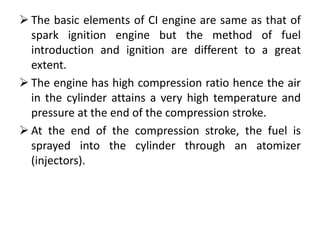
 The basic elements of CI engine are same as that of
spark ignition engine but the method of fuel
introduction and ignition are different to a great
extent.
 The engine has high compression ratio hence the air
in the cylinder attains a very high temperature and
pressure at the end of the compression stroke.
 At the end of the compression stroke, the fuel is
sprayed into the cylinder through an atomizer
(injectors).
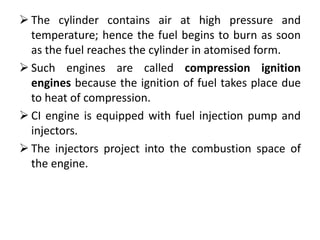
 The cylinder contains air at high pressure and
temperature; hence the fuel begins to burn as soon
as the fuel reaches the cylinder in atomised form.
 Such engines are called compression ignition
engines because the ignition of fuel takes place due
to heat of compression.
 CI engine is equipped with fuel injection pump and
injectors.
 The injectors project into the combustion space of
the engine.
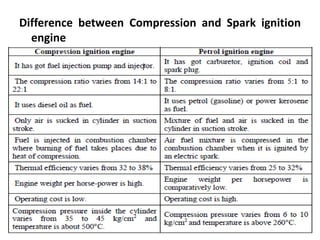
Difference between Compression and Spark ignition
engine
COOLING SYSTEM
 Fuel is burnt inside the cylinder of an internal
combustion engine to produce power and hence
large amount of heat is produced inside the engine
cylinder.
 This raises the temperature of the cylinder, piston
and valves.
 The temperature may reach 1600 ᵒC, which is above
the melting point of the engine parts in contact.
 Because of heat the lubricating oil is also gets
oxidized.
 So the cooling system is necessary for the engine to
remove the excess heat from the engine block and to
maintain the temperature of the components within
the limit.
 It is estimated that about 40% of the total heat
produced in the engine cylinder is passed to the
atmosphere by the exhaust gases, 30% is removed by
cooling system and only about 30% is used to
produce useful power.
 For satisfactory performance of the engine, neither
overheating nor over-cooling is desirable.
 Experiments have shown that best operating
temperature of Internal combustion engine lies
between 60°C to 93°C, depending upon types of
engines and load conditions.
Effect of high temperature in the engine
 Cylinder and piston may expand to such an extent
that the piston would seize in the cylinder and stop
the engine.
 Lubricating quality of the oil inside the cylinder
would be reduced due to high temperature and
resulting poor sucking of air in the cylinder.
 Pre-ignition of fuel mixture would take place and
cause engine knocking as well as loss of power.
Purpose of cooling
 The main purpose of cooling are :
To maintain optimum temperature of engine for
efficient operation under all conditions.
To remove excess heat for protection of engine
components like cylinder, cylinder head, piston,
piston rings and valves.
To maintain the lubricating property of the oil inside
the engine cylinder for normal functioning of the
engine.

Spark and Compression Ignition Engines.pptx

  • 1.
  • 2.
     The internalcombustion engines are classified based on method of ignition of the fuel in the engine cylinder:  Spark ignition engine (petrol engine) and  Compression ignition engine (diesel engine)
  • 3.
    Spark ignition engine(Petrol engine)  In this type of engine, a device called carburetor, which atomizes and mixes fuel with air in correct proportion and send the mixture to the engine cylinder during the suction stroke.  Some times these engines are also regarded as carburetor type engine.  It is an engine designed to convert chemical energy of heavier fuel into mechanical energy.  The injected fuel is ignited by the heat of the air which is compressed by the piston within the cylinder.
  • 4.
    Compression ignition engine(Diesel engine) • In compression ignition engines only air is drawn into the cylinder instead of mixture of air and fuel as in carburetor type engine. • Compression of the air during the compression stroke makes the charge very hot, and increasing pressure and temperature. • At the end of the compression stroke, diesel fuel is injected into the cylinder in atomised form through an injector, which ignites in the engine cylinder, causing rise in pressure which forces the piston to move downwards.
  • 5.
     The basicelements of CI engine are same as that of spark ignition engine but the method of fuel introduction and ignition are different to a great extent.  The engine has high compression ratio hence the air in the cylinder attains a very high temperature and pressure at the end of the compression stroke.  At the end of the compression stroke, the fuel is sprayed into the cylinder through an atomizer (injectors).
  • 6.
     The cylindercontains air at high pressure and temperature; hence the fuel begins to burn as soon as the fuel reaches the cylinder in atomised form.  Such engines are called compression ignition engines because the ignition of fuel takes place due to heat of compression.  CI engine is equipped with fuel injection pump and injectors.  The injectors project into the combustion space of the engine.
  • 7.
    Difference between Compressionand Spark ignition engine
  • 8.
  • 9.
     Fuel isburnt inside the cylinder of an internal combustion engine to produce power and hence large amount of heat is produced inside the engine cylinder.  This raises the temperature of the cylinder, piston and valves.  The temperature may reach 1600 ᵒC, which is above the melting point of the engine parts in contact.  Because of heat the lubricating oil is also gets oxidized.  So the cooling system is necessary for the engine to remove the excess heat from the engine block and to maintain the temperature of the components within the limit.
  • 10.
     It isestimated that about 40% of the total heat produced in the engine cylinder is passed to the atmosphere by the exhaust gases, 30% is removed by cooling system and only about 30% is used to produce useful power.  For satisfactory performance of the engine, neither overheating nor over-cooling is desirable.  Experiments have shown that best operating temperature of Internal combustion engine lies between 60°C to 93°C, depending upon types of engines and load conditions.
  • 11.
    Effect of hightemperature in the engine  Cylinder and piston may expand to such an extent that the piston would seize in the cylinder and stop the engine.  Lubricating quality of the oil inside the cylinder would be reduced due to high temperature and resulting poor sucking of air in the cylinder.  Pre-ignition of fuel mixture would take place and cause engine knocking as well as loss of power.
  • 12.
    Purpose of cooling The main purpose of cooling are : To maintain optimum temperature of engine for efficient operation under all conditions. To remove excess heat for protection of engine components like cylinder, cylinder head, piston, piston rings and valves. To maintain the lubricating property of the oil inside the engine cylinder for normal functioning of the engine.