More on Verbs: Perfect Infinitives
 and Unusual Uses of Ser/Estar
              E. Siler
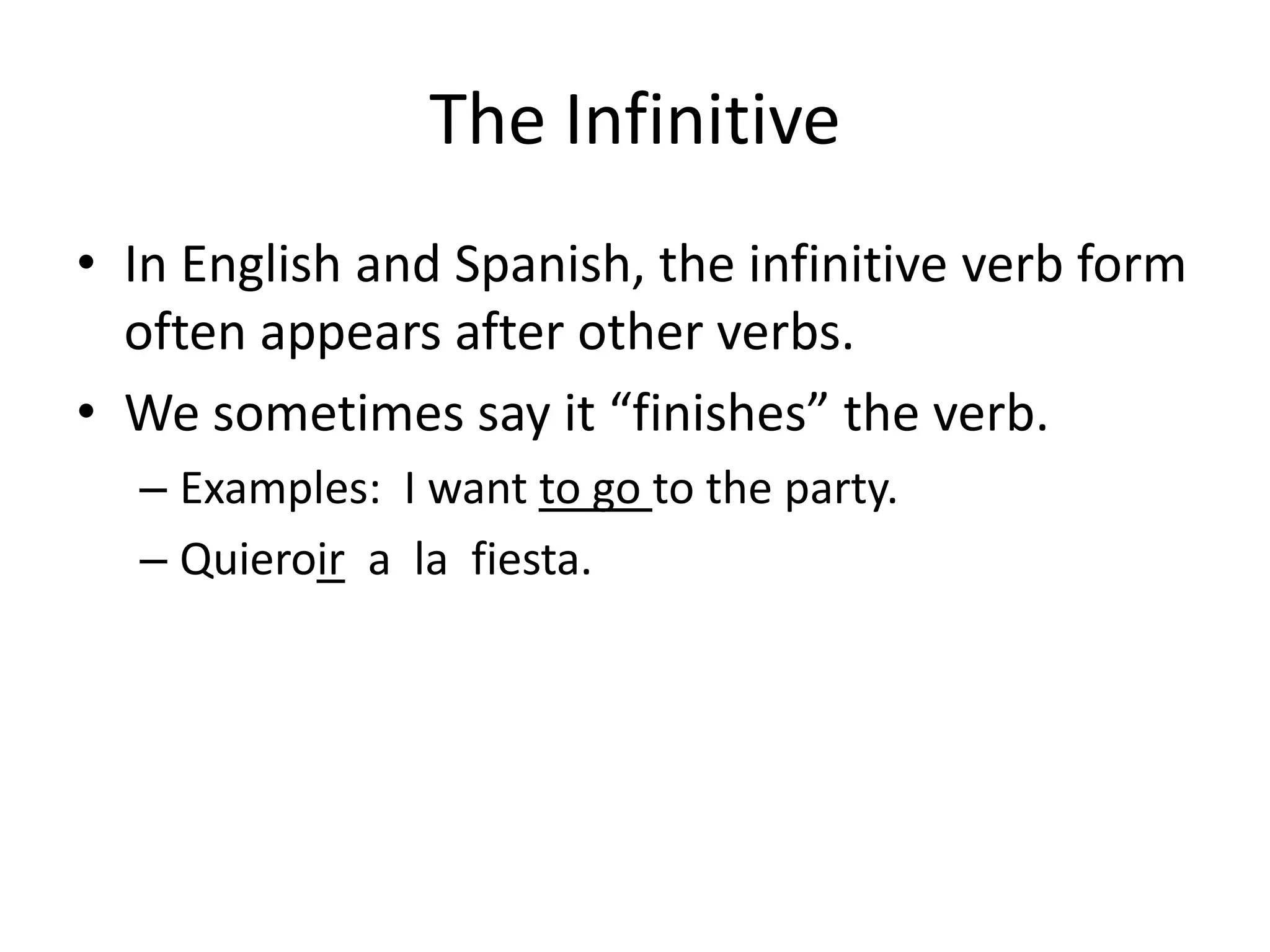
The Infinitive
• In English and Spanish, the infinitive verb form
  often appears after other verbs.
• We sometimes say it “finishes” the verb.
  – Examples: I want to go to the party.
  – Quieroir a la fiesta.
The Perfect Infinitive: English
• In English, we form the perfect infinitive with
  the infinitive of the verb “to have” and the
  past participle. Ex: to have known
• We use this to express the idea that the verbal
  activity conveyed by the infinitive happened in
  the past.
More on the Perfect Infinitive
• The perfect infinitive phrase can be used as a
  type of subject of a verb or it can occur behind
  a verb.
• The verb in front of the infinitive can be in
  either past or present tense.
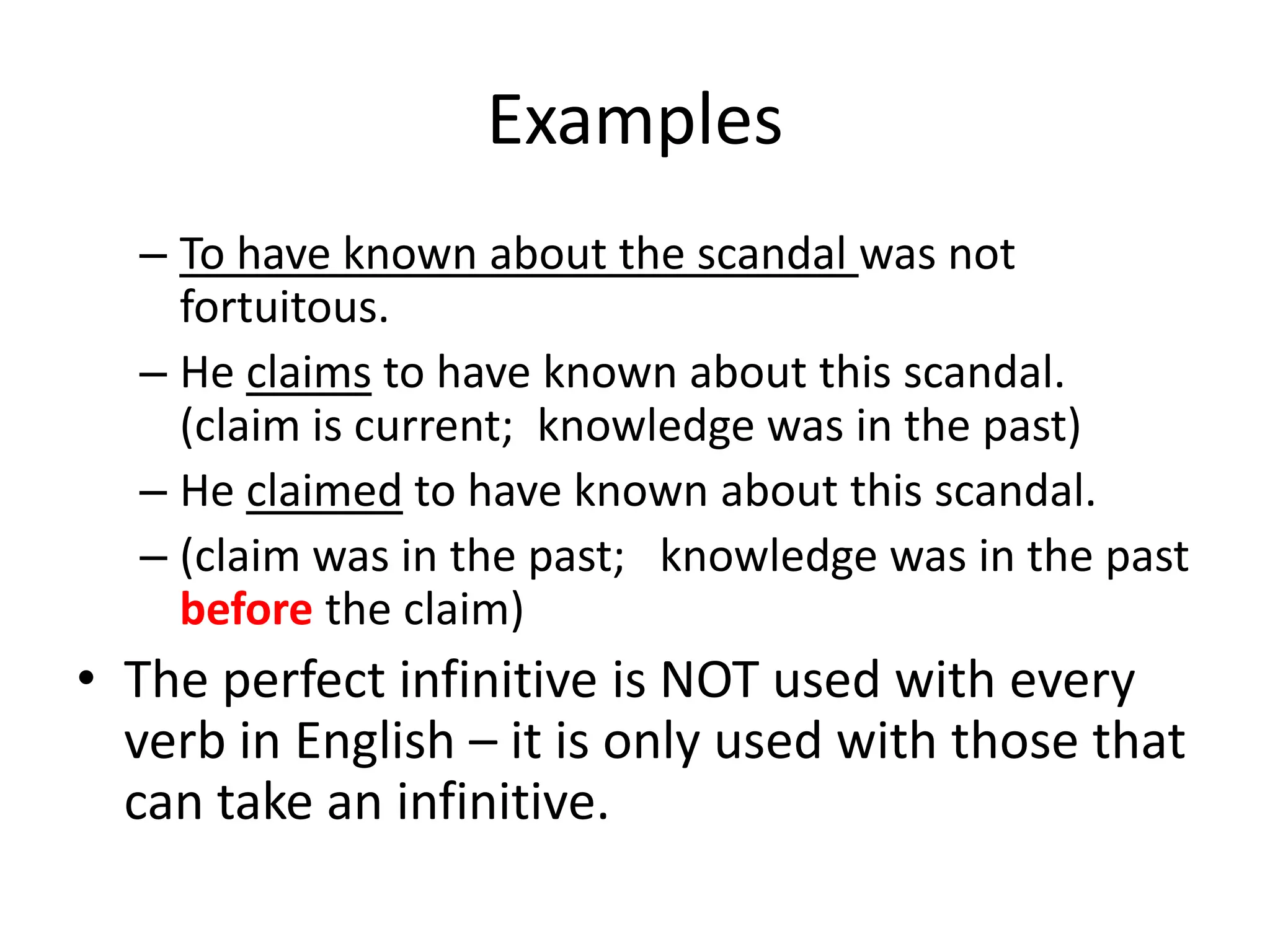
Examples
  – To have known about the scandal was not
    fortuitous.
  – He claims to have known about this scandal.
    (claim is current; knowledge was in the past)
  – He claimed to have known about this scandal.
  – (claim was in the past; knowledge was in the past
    before the claim)
• The perfect infinitive is NOT used with every
  verb in English – it is only used with those that
  can take an infinitive.
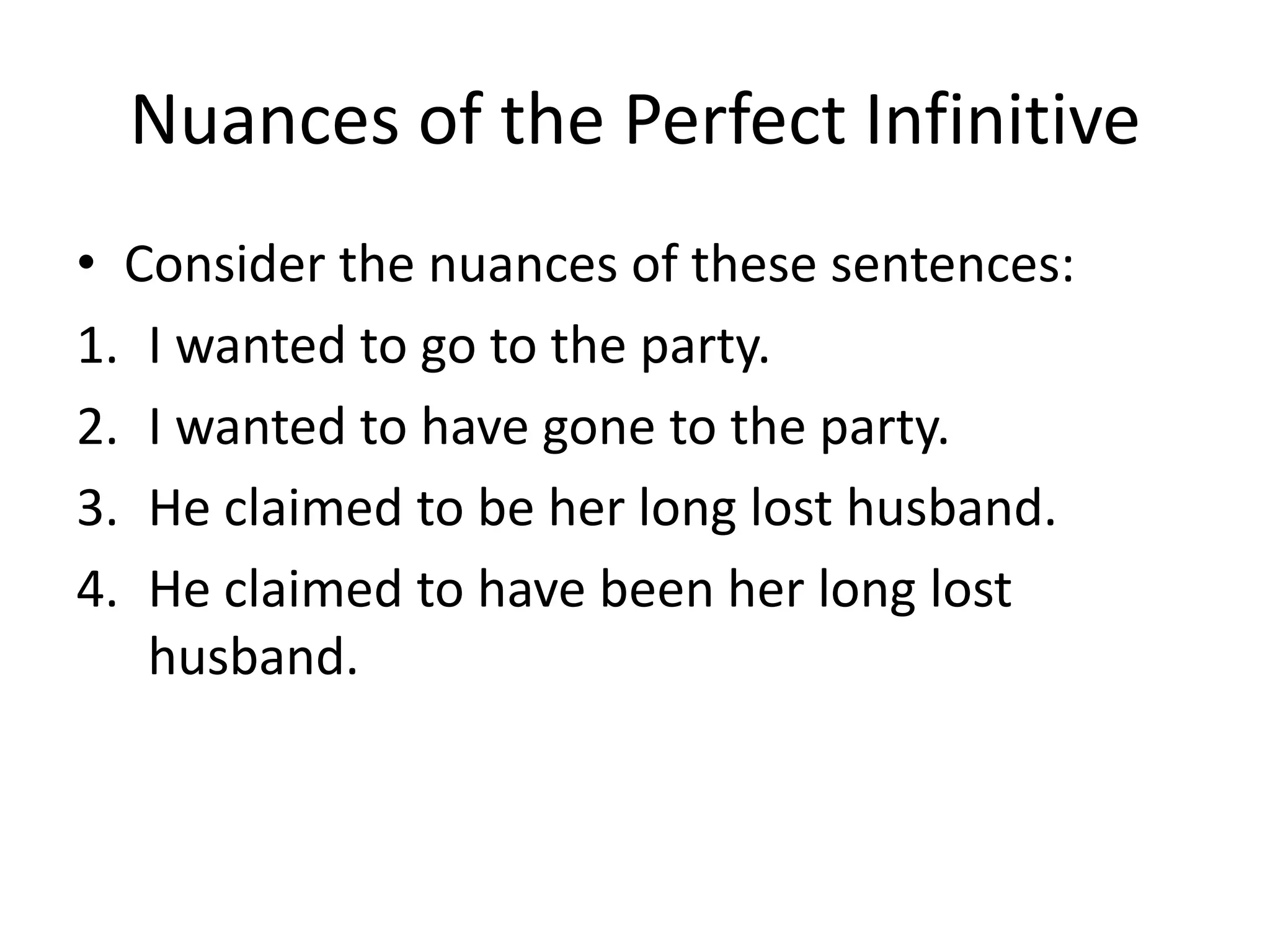
Nuances of the Perfect Infinitive
• Consider the nuances of these sentences:
1. I wanted to go to the party.
2. I wanted to have gone to the party.
3. He claimed to be her long lost husband.
4. He claimed to have been her long lost
   husband.
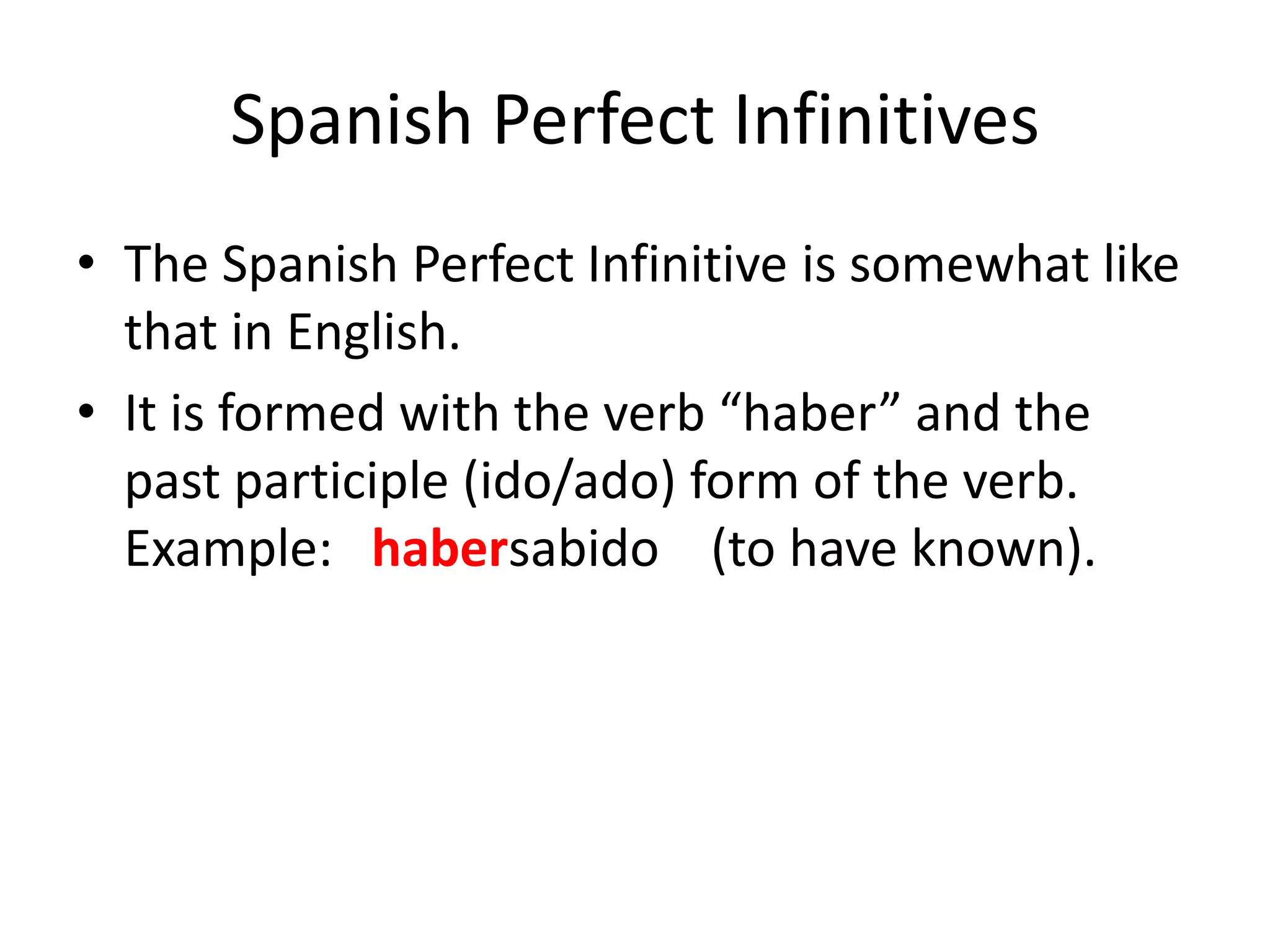
Spanish Perfect Infinitives
• The Spanish Perfect Infinitive is somewhat like
  that in English.
• It is formed with the verb “haber” and the
  past participle (ido/ado) form of the verb.
  Example: habersabido (to have known).
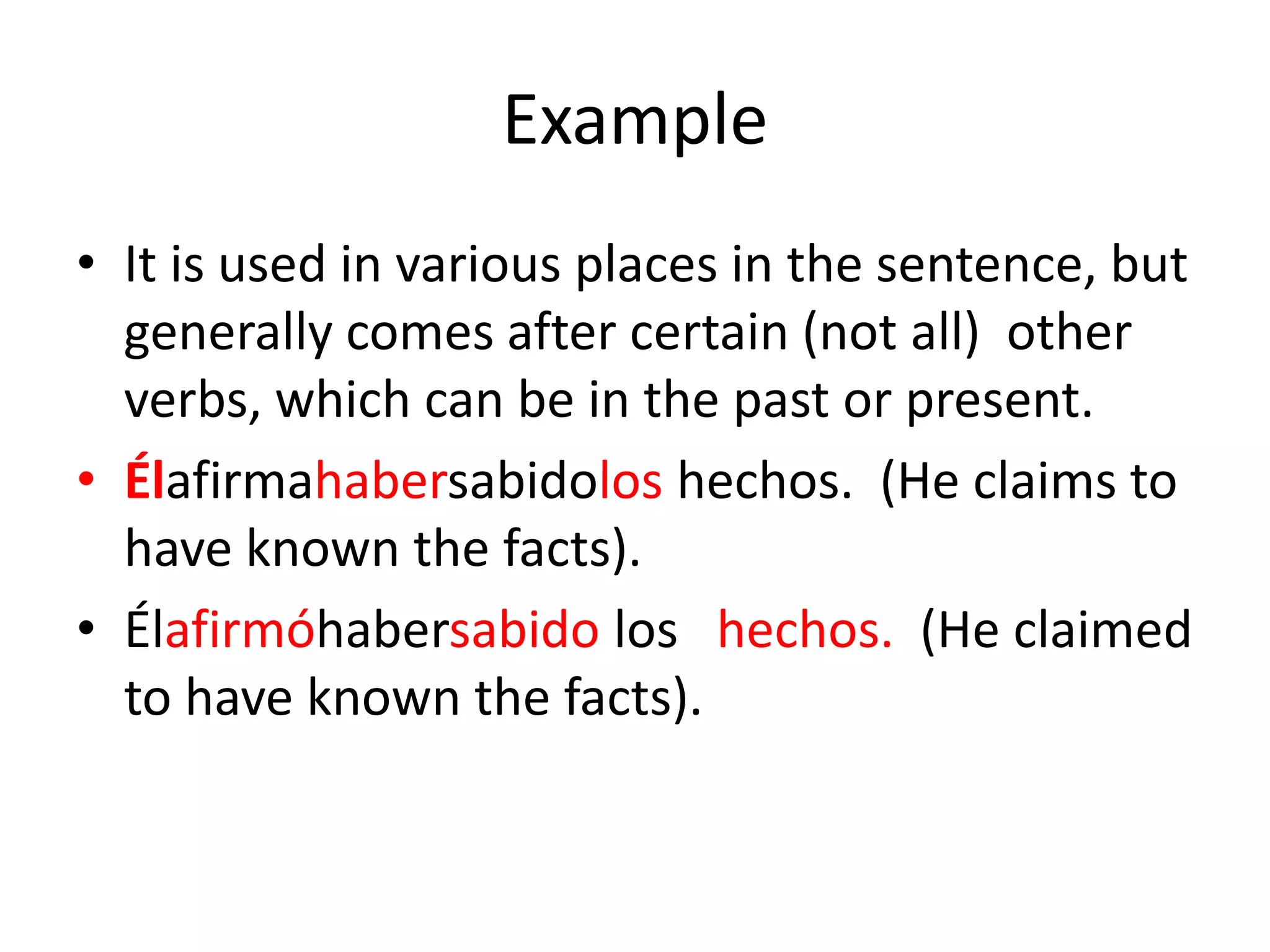
Example
• It is used in various places in the sentence, but
  generally comes after certain (not all) other
  verbs, which can be in the past or present.
• Élafirmahabersabidolos hechos. (He claims to
  have known the facts).
• Élafirmóhabersabido los hechos. (He claimed
  to have known the facts).
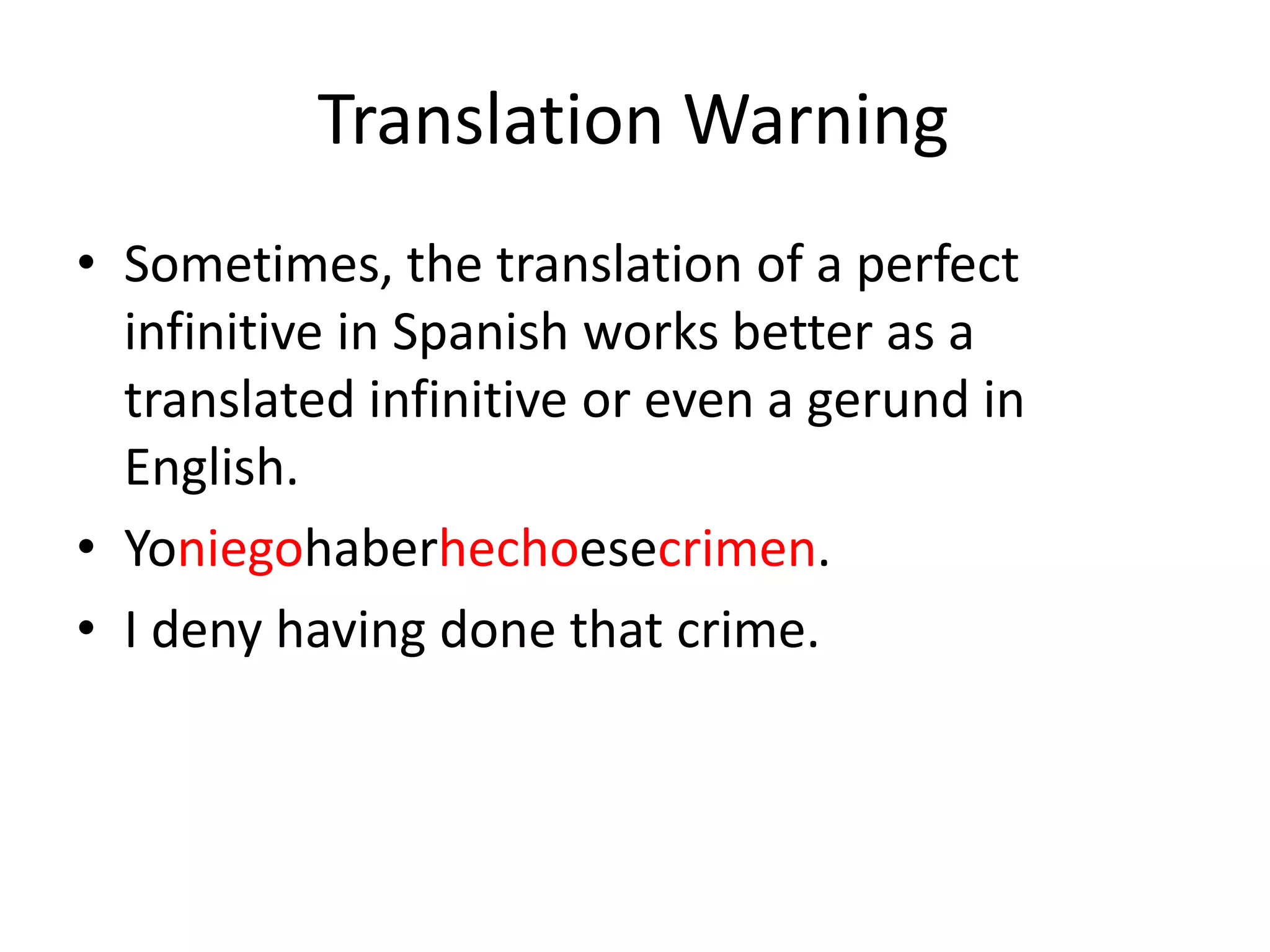
Translation Warning
• Sometimes, the translation of a perfect
  infinitive in Spanish works better as a
  translated infinitive or even a gerund in
  English.
• Yoniegohaberhechoesecrimen.
• I deny having done that crime.
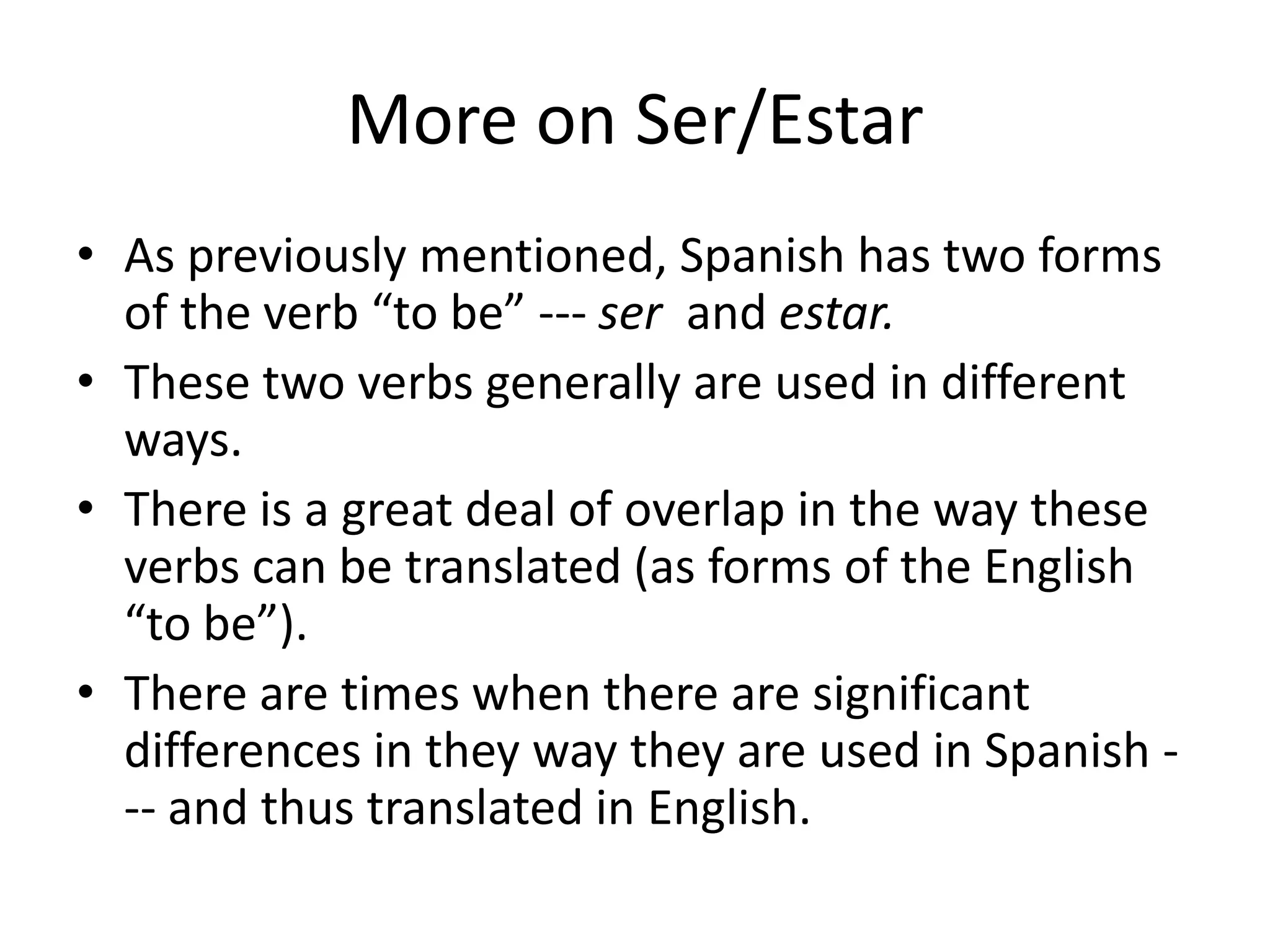
More on Ser/Estar
• As previously mentioned, Spanish has two forms
  of the verb “to be” --- ser and estar.
• These two verbs generally are used in different
  ways.
• There is a great deal of overlap in the way these
  verbs can be translated (as forms of the English
  “to be”).
• There are times when there are significant
  differences in they way they are used in Spanish -
  -- and thus translated in English.
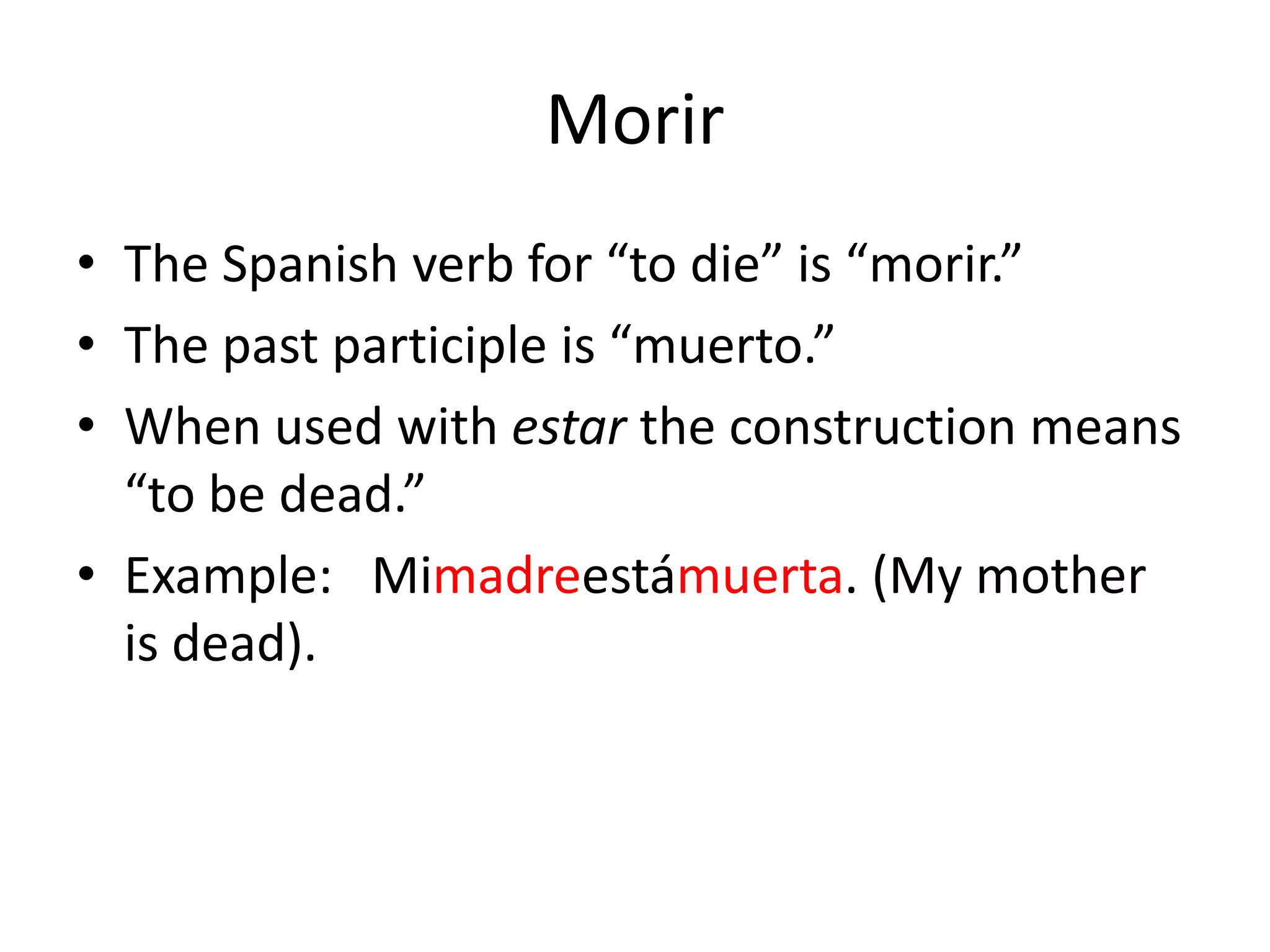
Morir
• The Spanish verb for “to die” is “morir.”
• The past participle is “muerto.”
• When used with estar the construction means
  “to be dead.”
• Example: Mimadreestámuerta. (My mother
  is dead).
Examples
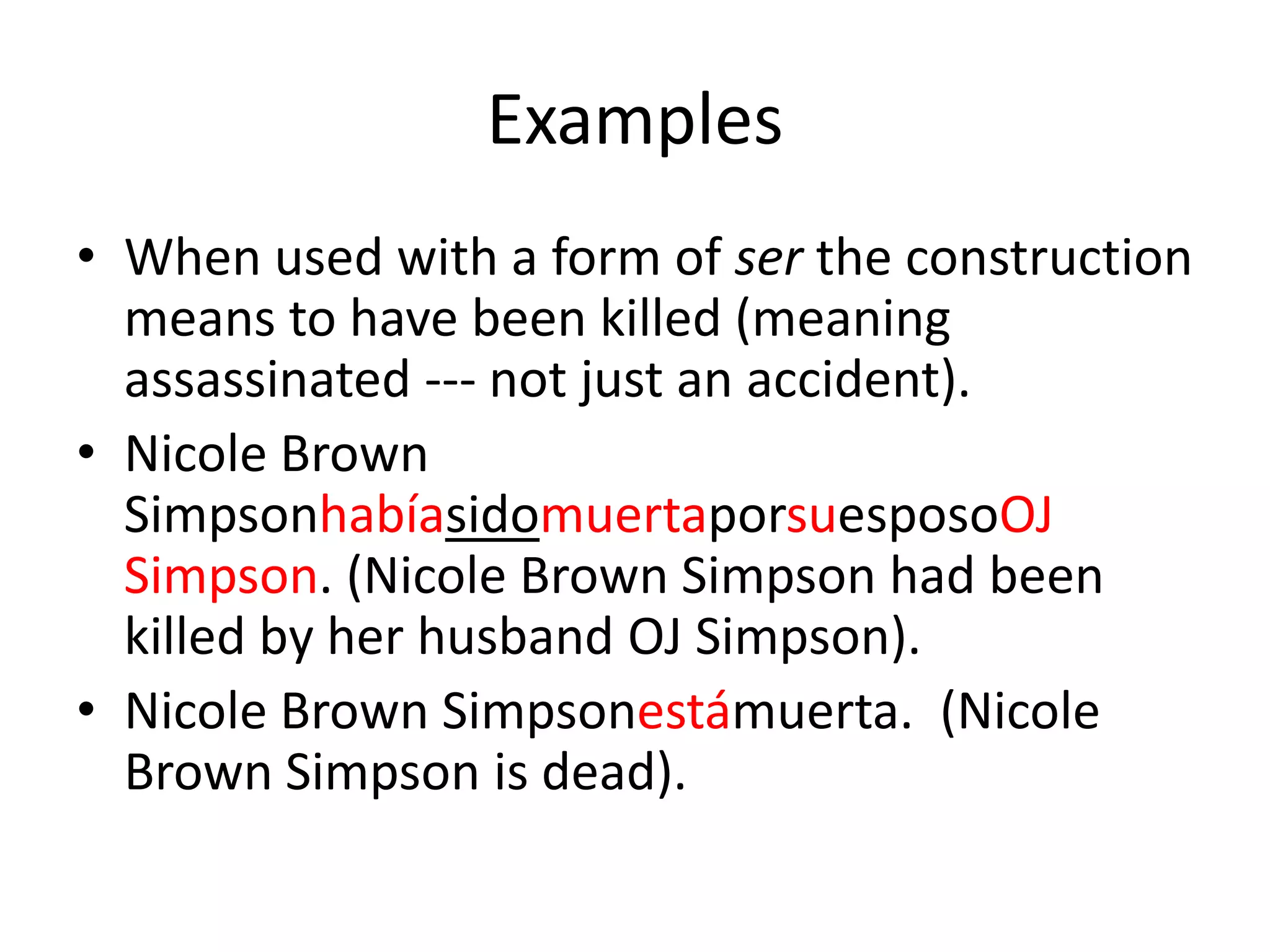
• When used with a form of ser the construction
  means to have been killed (meaning
  assassinated --- not just an accident).
• Nicole Brown
  SimpsonhabíasidomuertaporsuesposoOJ
  Simpson. (Nicole Brown Simpson had been
  killed by her husband OJ Simpson).
• Nicole Brown Simpsonestámuerta. (Nicole
  Brown Simpson is dead).

Spanish12c

  • 1.
    More on Verbs:Perfect Infinitives and Unusual Uses of Ser/Estar E. Siler
  • 2.
    The Infinitive • InEnglish and Spanish, the infinitive verb form often appears after other verbs. • We sometimes say it “finishes” the verb. – Examples: I want to go to the party. – Quieroir a la fiesta.
  • 3.
    The Perfect Infinitive:English • In English, we form the perfect infinitive with the infinitive of the verb “to have” and the past participle. Ex: to have known • We use this to express the idea that the verbal activity conveyed by the infinitive happened in the past.
  • 4.
    More on thePerfect Infinitive • The perfect infinitive phrase can be used as a type of subject of a verb or it can occur behind a verb. • The verb in front of the infinitive can be in either past or present tense.
  • 5.
    Examples –To have known about the scandal was not fortuitous. – He claims to have known about this scandal. (claim is current; knowledge was in the past) – He claimed to have known about this scandal. – (claim was in the past; knowledge was in the past before the claim) • The perfect infinitive is NOT used with every verb in English – it is only used with those that can take an infinitive.
  • 6.
    Nuances of thePerfect Infinitive • Consider the nuances of these sentences: 1. I wanted to go to the party. 2. I wanted to have gone to the party. 3. He claimed to be her long lost husband. 4. He claimed to have been her long lost husband.
  • 7.
    Spanish Perfect Infinitives •The Spanish Perfect Infinitive is somewhat like that in English. • It is formed with the verb “haber” and the past participle (ido/ado) form of the verb. Example: habersabido (to have known).
  • 8.
    Example • It isused in various places in the sentence, but generally comes after certain (not all) other verbs, which can be in the past or present. • Élafirmahabersabidolos hechos. (He claims to have known the facts). • Élafirmóhabersabido los hechos. (He claimed to have known the facts).
  • 9.
    Translation Warning • Sometimes,the translation of a perfect infinitive in Spanish works better as a translated infinitive or even a gerund in English. • Yoniegohaberhechoesecrimen. • I deny having done that crime.
  • 10.
    More on Ser/Estar •As previously mentioned, Spanish has two forms of the verb “to be” --- ser and estar. • These two verbs generally are used in different ways. • There is a great deal of overlap in the way these verbs can be translated (as forms of the English “to be”). • There are times when there are significant differences in they way they are used in Spanish - -- and thus translated in English.
  • 11.
    Morir • The Spanishverb for “to die” is “morir.” • The past participle is “muerto.” • When used with estar the construction means “to be dead.” • Example: Mimadreestámuerta. (My mother is dead).
  • 12.
    Examples • When usedwith a form of ser the construction means to have been killed (meaning assassinated --- not just an accident). • Nicole Brown SimpsonhabíasidomuertaporsuesposoOJ Simpson. (Nicole Brown Simpson had been killed by her husband OJ Simpson). • Nicole Brown Simpsonestámuerta. (Nicole Brown Simpson is dead).