Verbs 12: The Passive
Materials by Liz Siler
The passive
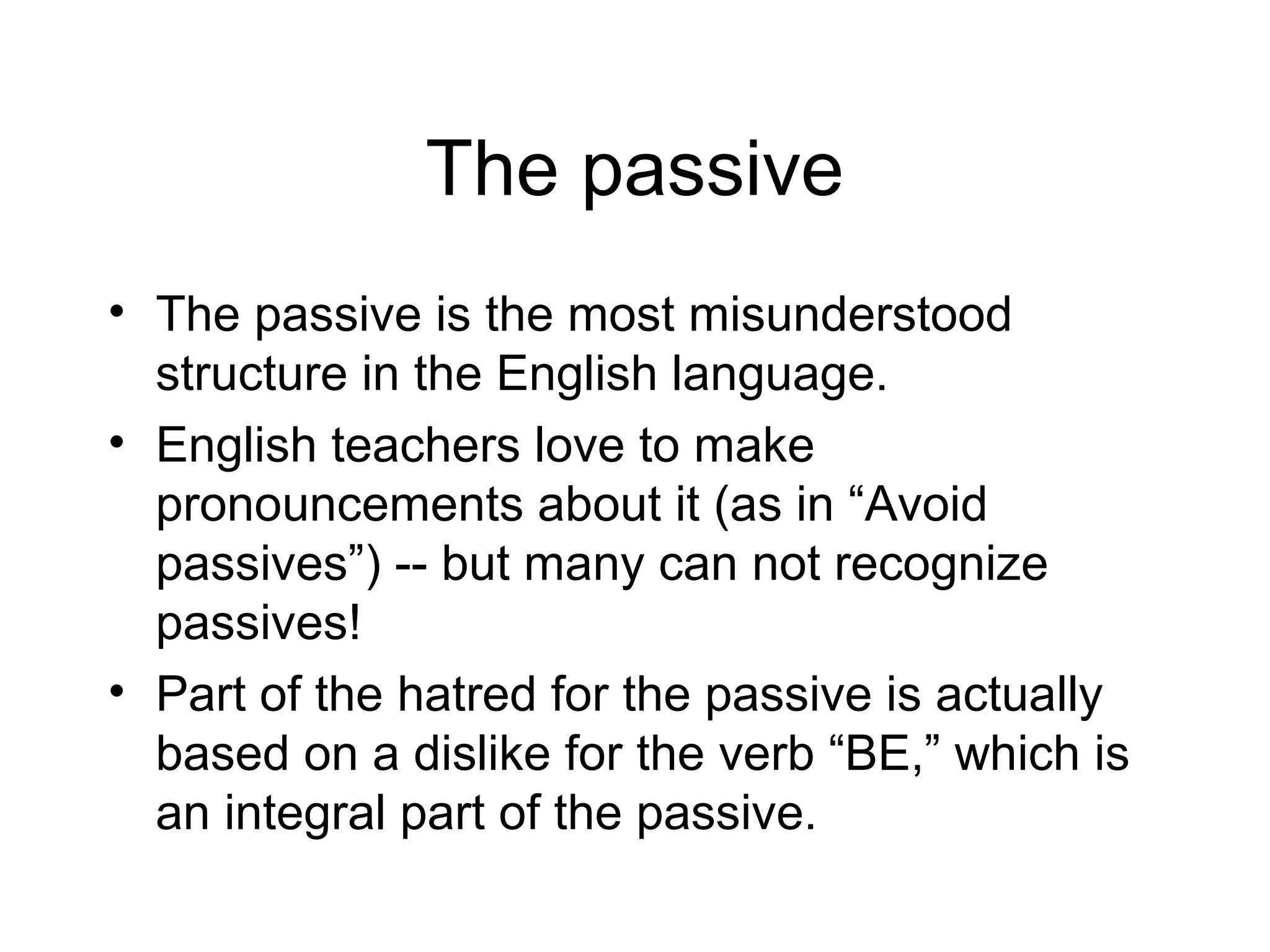
• The passive is the most misunderstood
structure in the English language.
• English teachers love to make
pronouncements about it (as in “Avoid
passives”) -- but many can not recognize
passives!
• Part of the hatred for the passive is actually
based on a dislike for the verb “BE,” which is
an integral part of the passive.
Recognizing a Passive
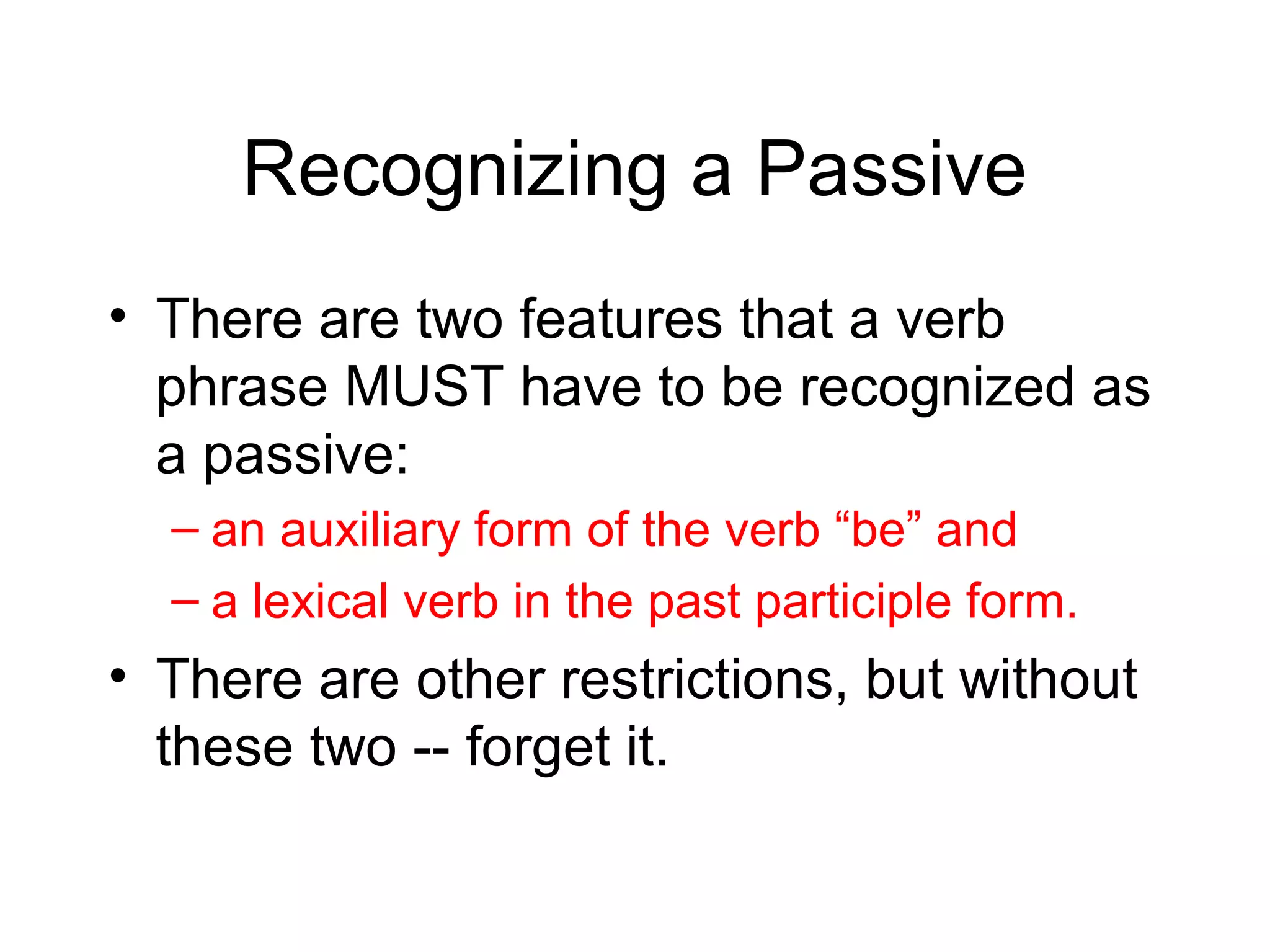
• There are two features that a verb
phrase MUST have to be recognized as
a passive:
– an auxiliary form of the verb “be” and
– a lexical verb in the past participle form.

• There are other restrictions, but without
these two -- forget it.
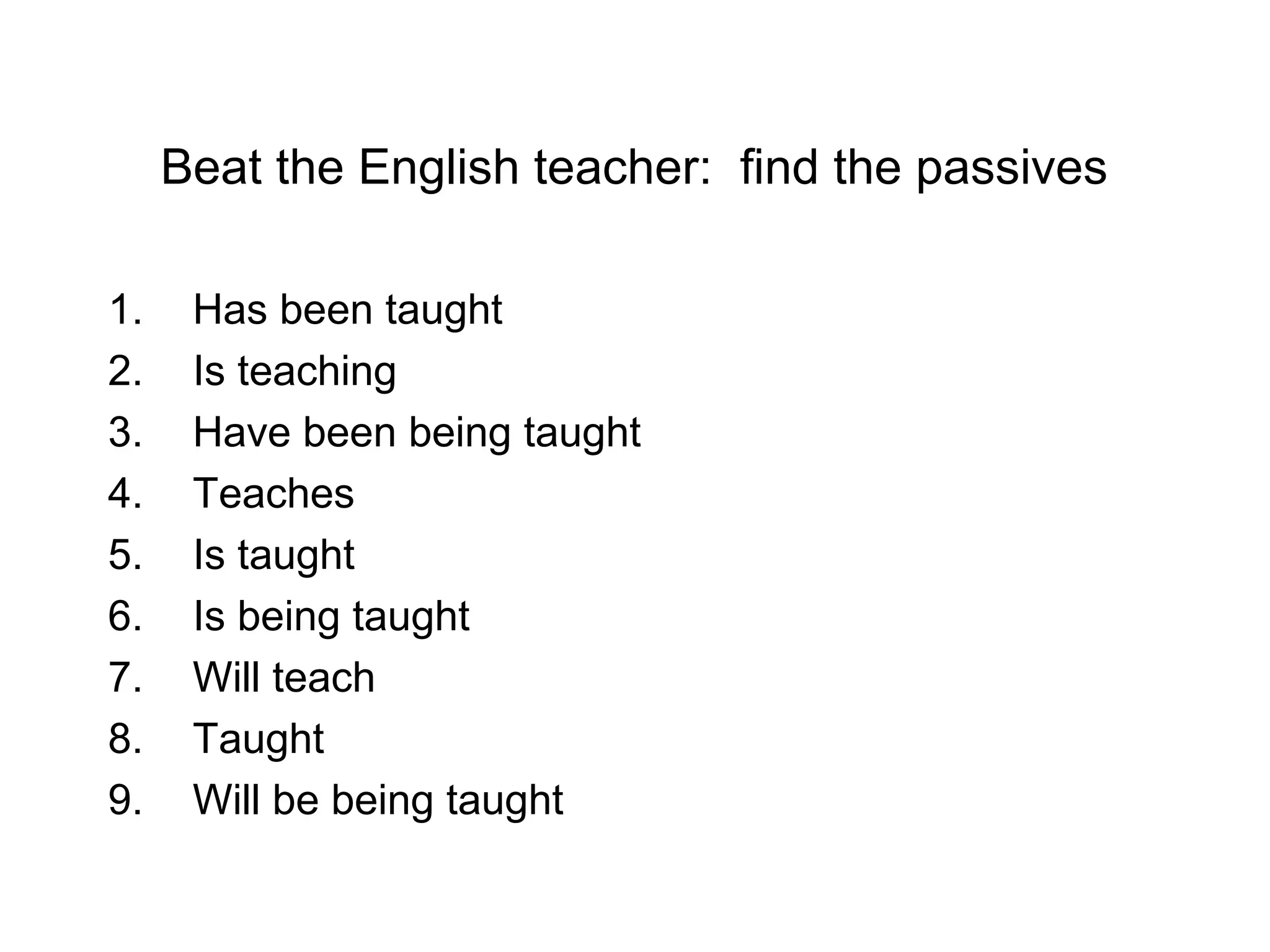
Beat the English teacher: find the passives
1.
2.
3.
4.
5.
6.
7.
8.
9.

Has been taught
Is teaching
Have been being taught
Teaches
Is taught
Is being taught
Will teach
Taught
Will be being taught
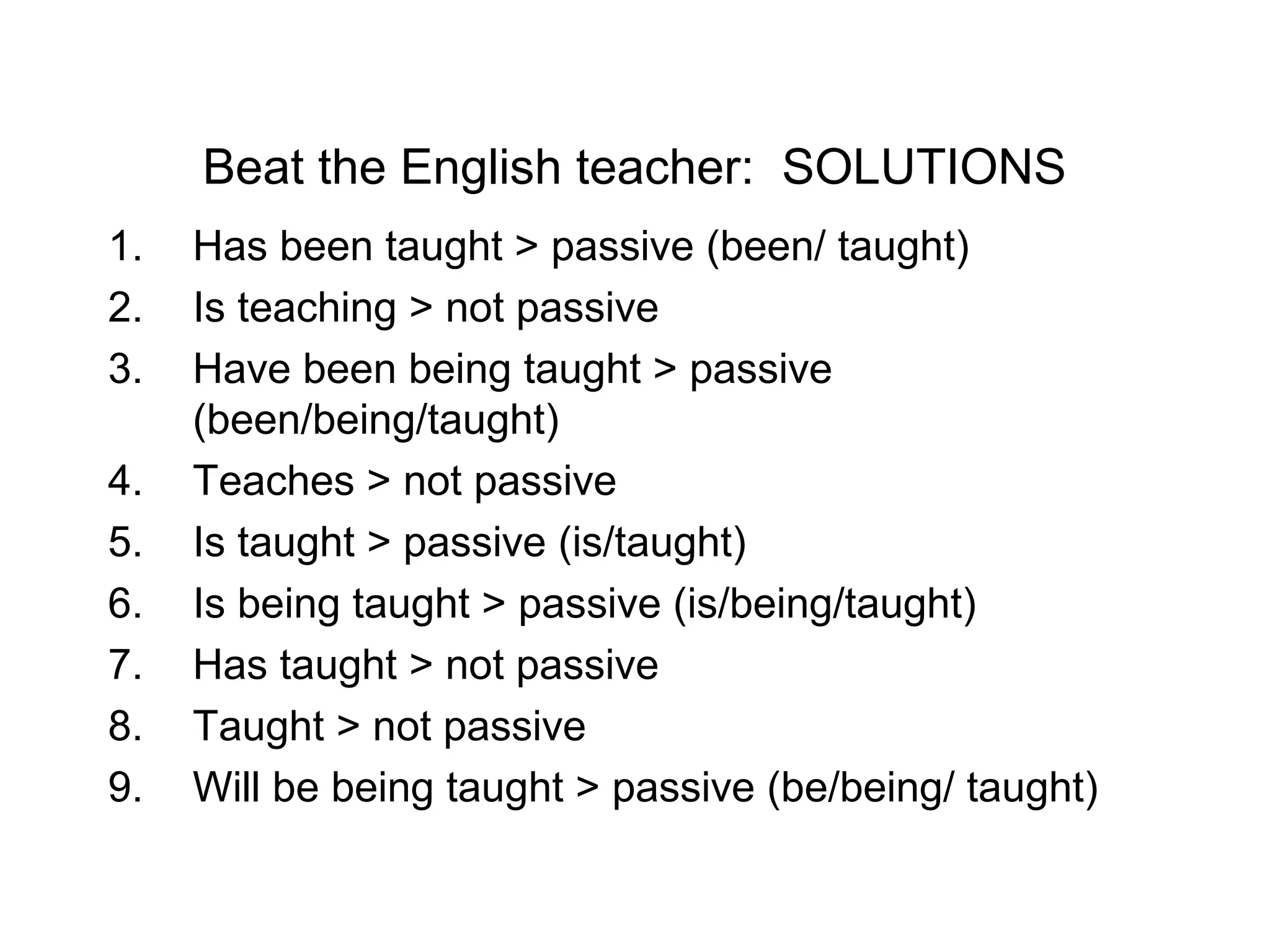
Beat the English teacher: SOLUTIONS
1.
2.
3.
4.
5.
6.
7.
8.
9.

Has been taught > passive (been/ taught)
Is teaching > not passive
Have been being taught > passive
(been/being/taught)
Teaches > not passive
Is taught > passive (is/taught)
Is being taught > passive (is/being/taught)
Has taught > not passive
Taught > not passive
Will be being taught > passive (be/being/ taught)
“Avoid Passives”
•

•
•
•

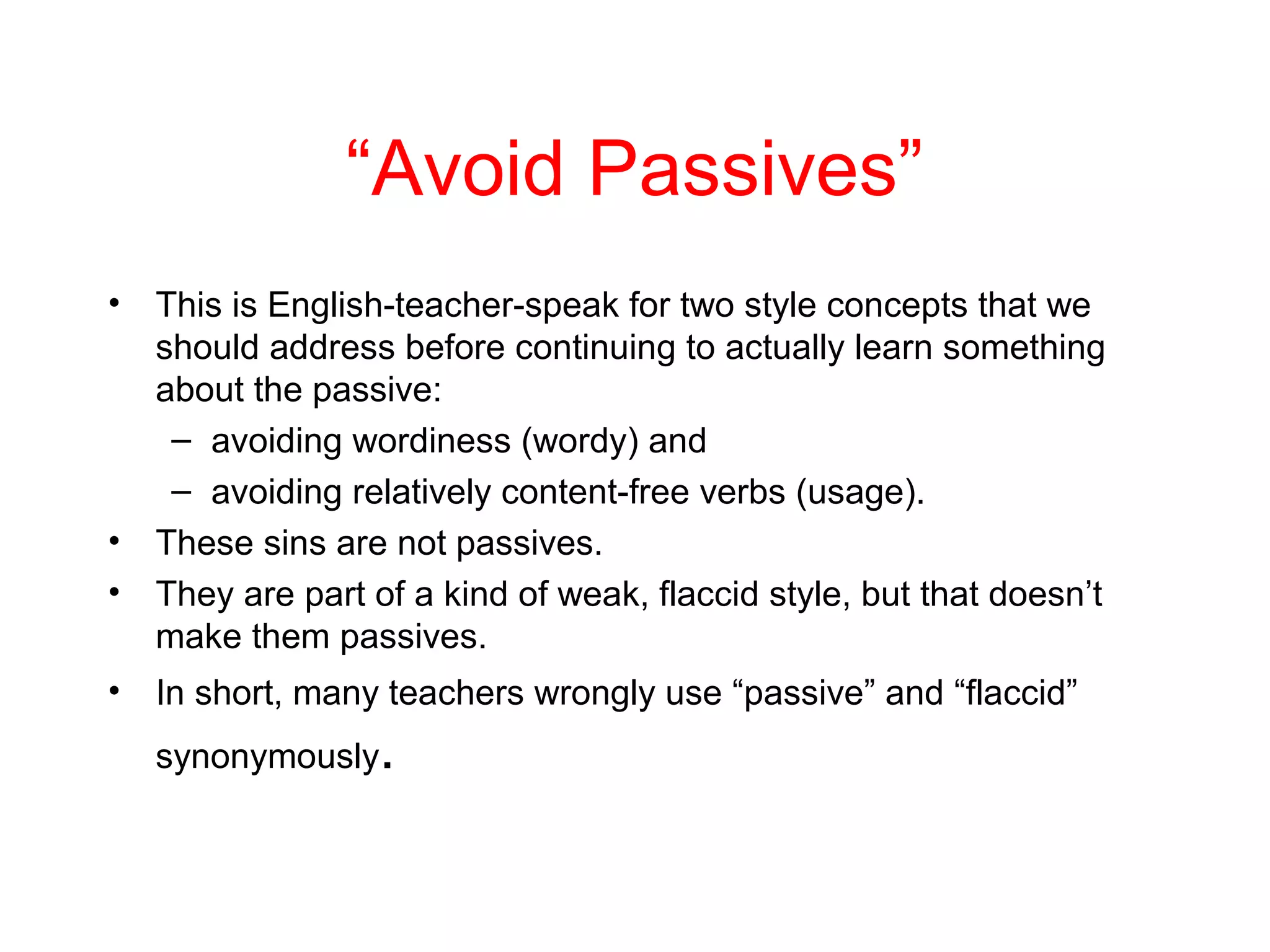
This is English-teacher-speak for two style concepts that we
should address before continuing to actually learn something
about the passive:
– avoiding wordiness (wordy) and
– avoiding relatively content-free verbs (usage).
These sins are not passives.
They are part of a kind of weak, flaccid style, but that doesn’t
make them passives.
In short, many teachers wrongly use “passive” and “flaccid”
synonymously

.
Wordiness: (wordy)
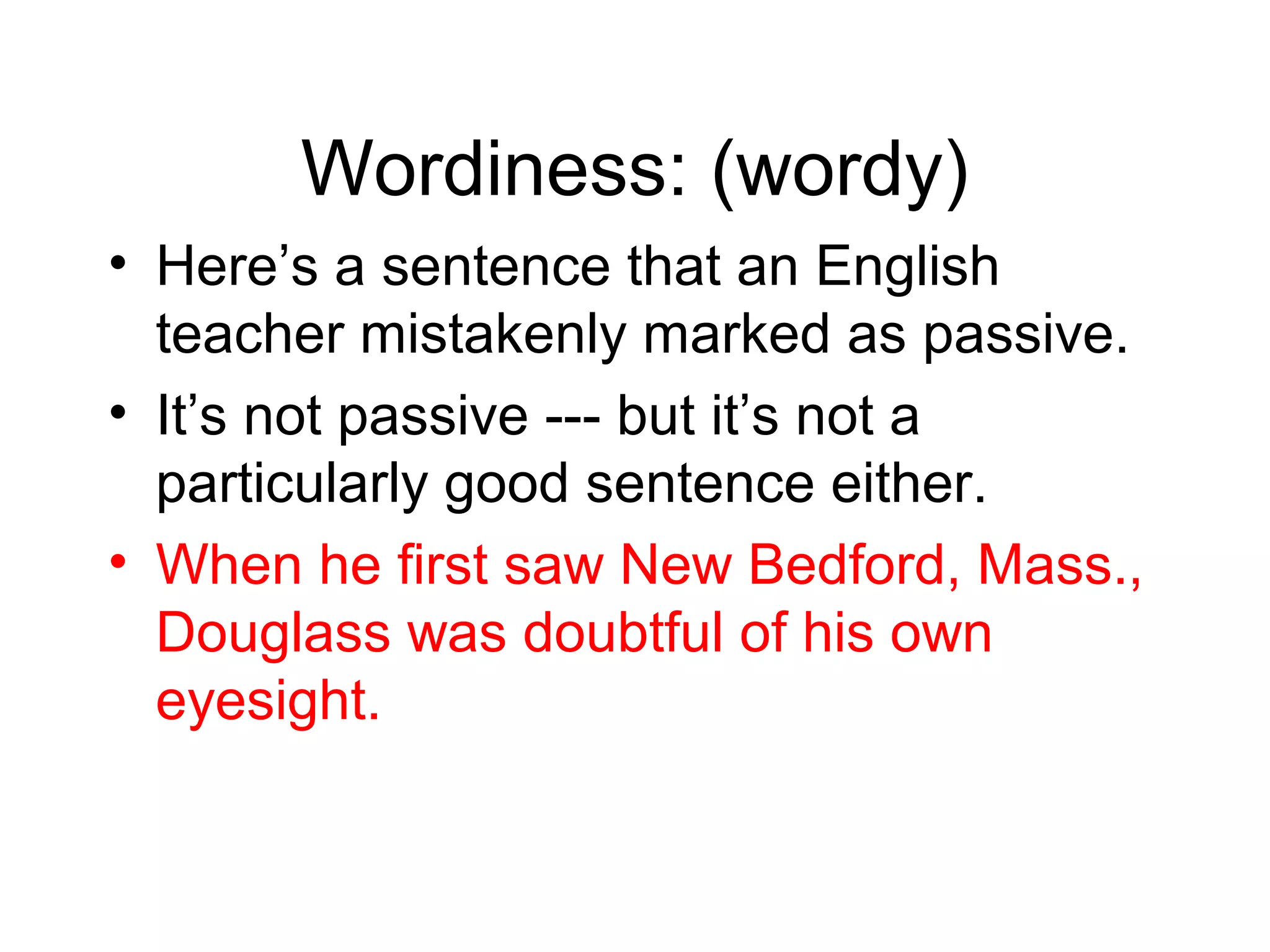
• Here’s a sentence that an English
teacher mistakenly marked as passive.
• It’s not passive --- but it’s not a
particularly good sentence either.
• When he first saw New Bedford, Mass.,
Douglass was doubtful of his own
eyesight.
Wordiness Described
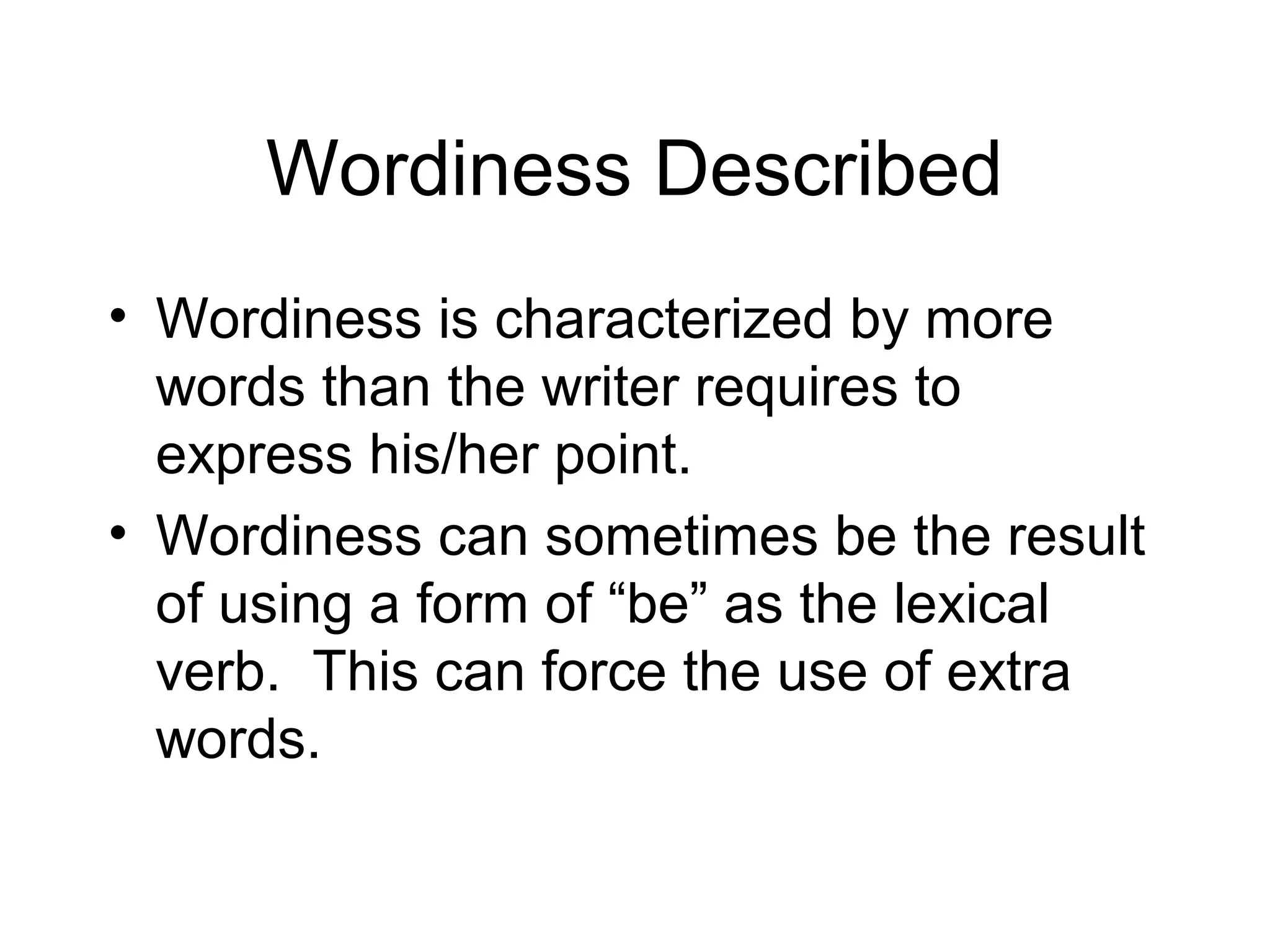
• Wordiness is characterized by more
words than the writer requires to
express his/her point.
• Wordiness can sometimes be the result
of using a form of “be” as the lexical
verb. This can force the use of extra
words.
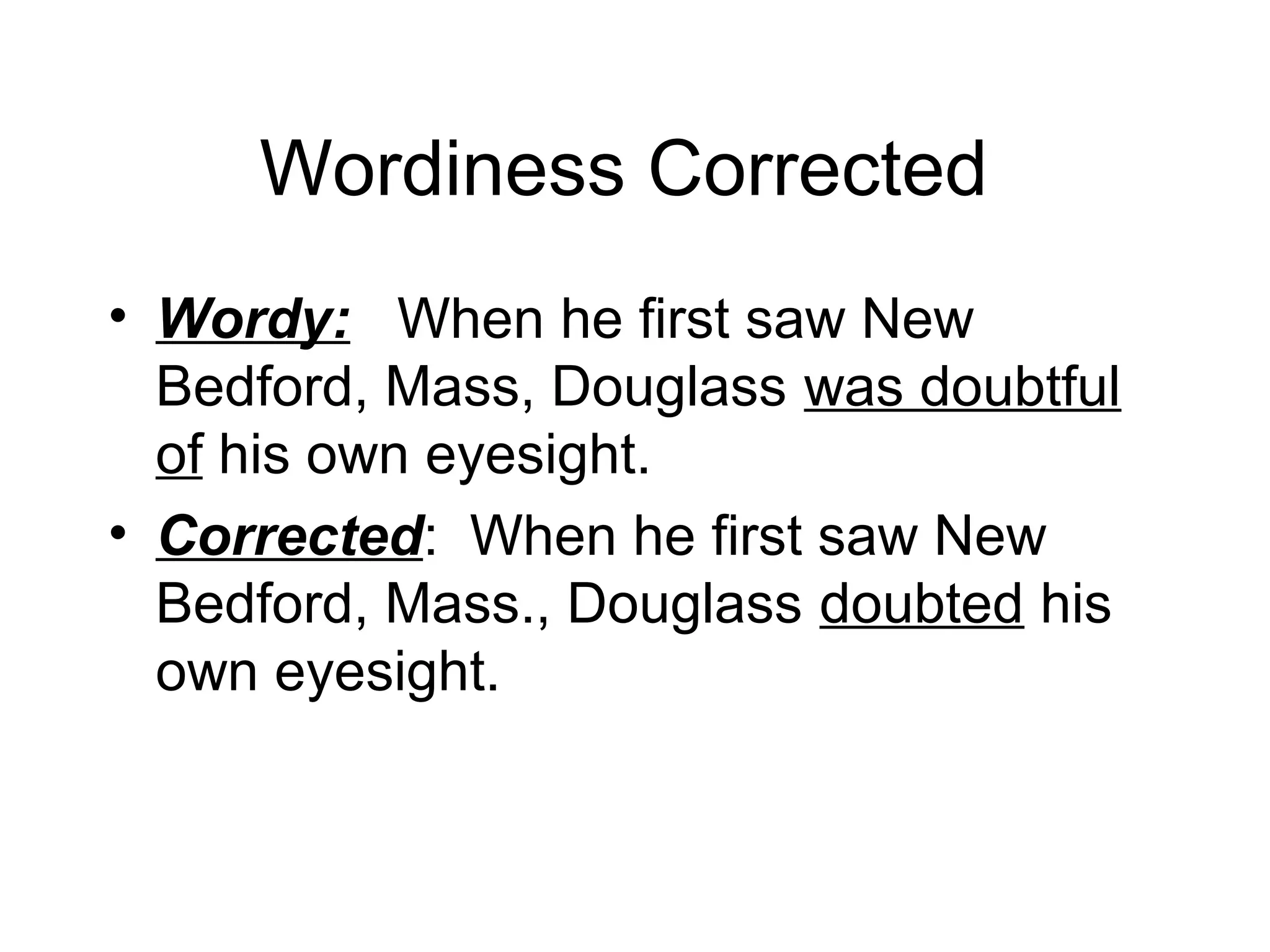
Wordiness Corrected
• Wordy: When he first saw New
Bedford, Mass, Douglass was doubtful
of his own eyesight.
• Corrected: When he first saw New
Bedford, Mass., Douglass doubted his
own eyesight.
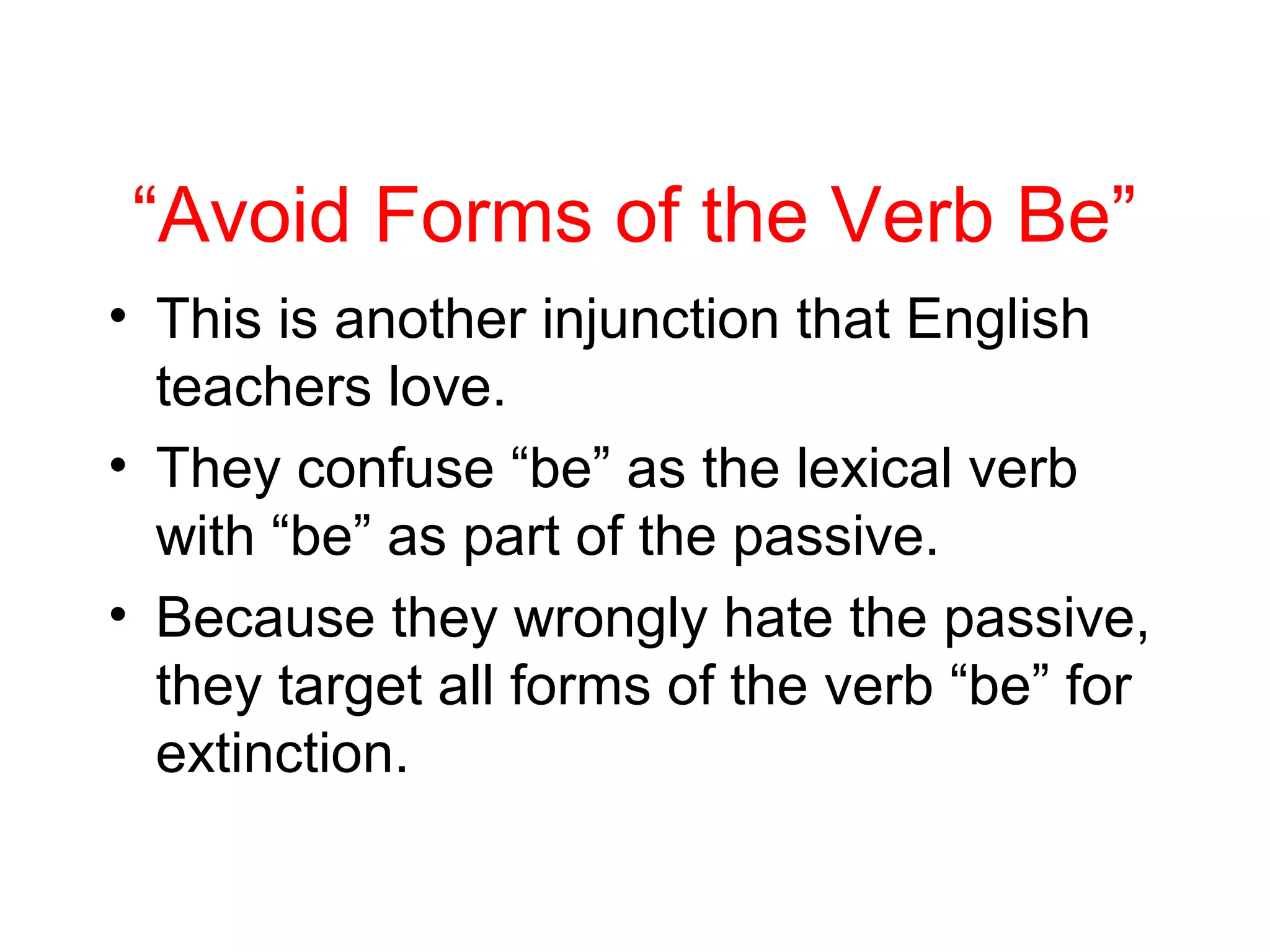
“Avoid Forms of the Verb Be”
• This is another injunction that English
teachers love.
• They confuse “be” as the lexical verb
with “be” as part of the passive.
• Because they wrongly hate the passive,
they target all forms of the verb “be” for
extinction.
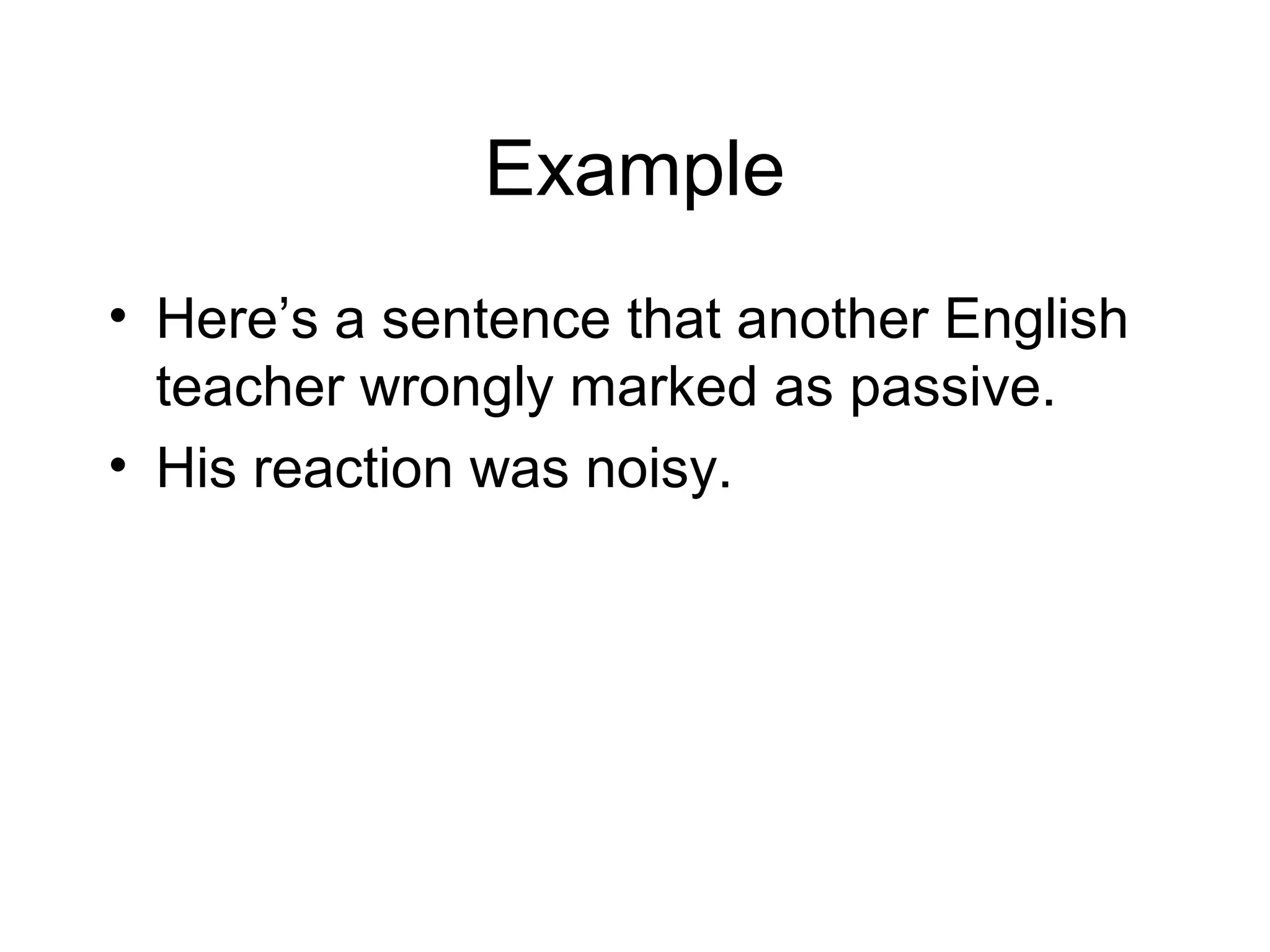
Example
• Here’s a sentence that another English
teacher wrongly marked as passive.
• His reaction was noisy.
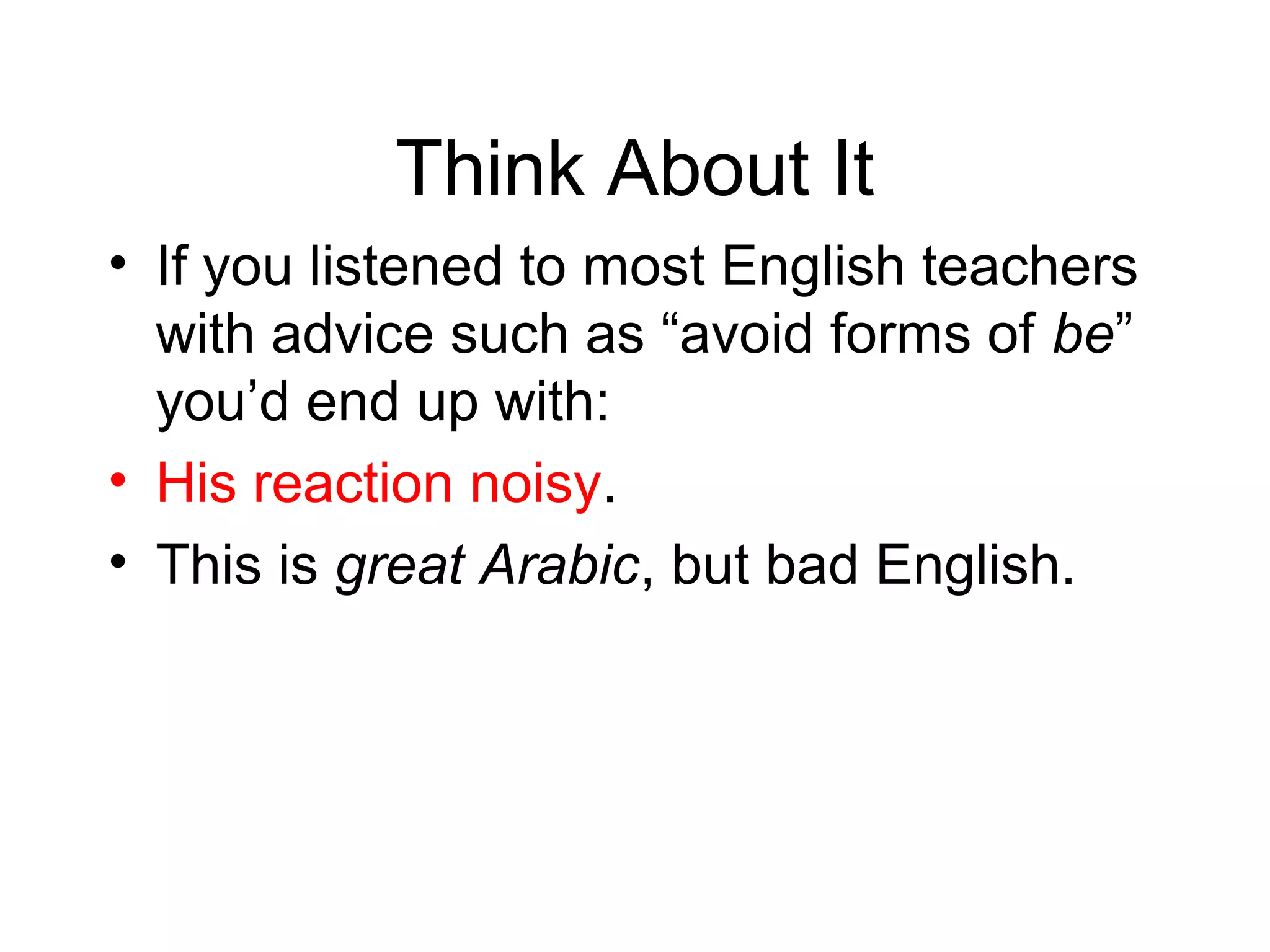
Think About It
• If you listened to most English teachers
with advice such as “avoid forms of be”
you’d end up with:
• His reaction noisy.
• This is great Arabic, but bad English.
Correction
• Instead English teachers should say:
• “If possible restate sentences in which
‘be’ is the lexical verb. Choose a verb
that has nuances and more precise
meaning.”
• He reacted noisily.

Verbs12

  • 1.
    Verbs 12: ThePassive Materials by Liz Siler
  • 2.
    The passive • Thepassive is the most misunderstood structure in the English language. • English teachers love to make pronouncements about it (as in “Avoid passives”) -- but many can not recognize passives! • Part of the hatred for the passive is actually based on a dislike for the verb “BE,” which is an integral part of the passive.
  • 3.
    Recognizing a Passive •There are two features that a verb phrase MUST have to be recognized as a passive: – an auxiliary form of the verb “be” and – a lexical verb in the past participle form. • There are other restrictions, but without these two -- forget it.
  • 4.
    Beat the Englishteacher: find the passives 1. 2. 3. 4. 5. 6. 7. 8. 9. Has been taught Is teaching Have been being taught Teaches Is taught Is being taught Will teach Taught Will be being taught
  • 5.
    Beat the Englishteacher: SOLUTIONS 1. 2. 3. 4. 5. 6. 7. 8. 9. Has been taught > passive (been/ taught) Is teaching > not passive Have been being taught > passive (been/being/taught) Teaches > not passive Is taught > passive (is/taught) Is being taught > passive (is/being/taught) Has taught > not passive Taught > not passive Will be being taught > passive (be/being/ taught)
  • 6.
    “Avoid Passives” • • • • This isEnglish-teacher-speak for two style concepts that we should address before continuing to actually learn something about the passive: – avoiding wordiness (wordy) and – avoiding relatively content-free verbs (usage). These sins are not passives. They are part of a kind of weak, flaccid style, but that doesn’t make them passives. In short, many teachers wrongly use “passive” and “flaccid” synonymously .
  • 7.
    Wordiness: (wordy) • Here’sa sentence that an English teacher mistakenly marked as passive. • It’s not passive --- but it’s not a particularly good sentence either. • When he first saw New Bedford, Mass., Douglass was doubtful of his own eyesight.
  • 8.
    Wordiness Described • Wordinessis characterized by more words than the writer requires to express his/her point. • Wordiness can sometimes be the result of using a form of “be” as the lexical verb. This can force the use of extra words.
  • 9.
    Wordiness Corrected • Wordy:When he first saw New Bedford, Mass, Douglass was doubtful of his own eyesight. • Corrected: When he first saw New Bedford, Mass., Douglass doubted his own eyesight.
  • 10.
    “Avoid Forms ofthe Verb Be” • This is another injunction that English teachers love. • They confuse “be” as the lexical verb with “be” as part of the passive. • Because they wrongly hate the passive, they target all forms of the verb “be” for extinction.
  • 11.
    Example • Here’s asentence that another English teacher wrongly marked as passive. • His reaction was noisy.
  • 12.
    Think About It •If you listened to most English teachers with advice such as “avoid forms of be” you’d end up with: • His reaction noisy. • This is great Arabic, but bad English.
  • 13.
    Correction • Instead Englishteachers should say: • “If possible restate sentences in which ‘be’ is the lexical verb. Choose a verb that has nuances and more precise meaning.” • He reacted noisily.