DEPARTMENT OF CHEMISTRY
TKMM COLLEGE
NANGIARKULANGARA
SONOCHEMISTRY
SONOCHEMISTRY
 Application of ultrasound to chemical reactions and
processes
 Ultrasound is the part of sonic spectrum (20KHz-
10Mhz),can be divided into 3 regions
 Low frequency ,high power ultra sond (20-100KHz)
 High frequency ,medium power ultra sound (100KHz-
1MHz)
 High frequency ,low power ultra sound (1-10MHz)
SONOCHEMISTRY
 Understanding of the effect of sonic waves
and wave properties on chemical system
 The influence of sonic waves travelling
through liquids was first reported by
Robert William Wood and Alfred Lee
Loomis (1927)
 Sonochemistry experienced a renaissance
in 1980’s with the advent of inexpensive
and reliable generators of high intensity
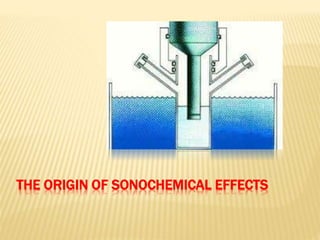
THE ORIGIN OF SONOCHEMICAL EFFECTS
 Origin of sonochemical effects in liquids ---Acoustic
cavitation
 Acoustic energy is mechanical energy ,is not
absorbed by molecules
 Ultrasound is transmitted through a medium via
pressure waves
 This induces vibrational motion of the molecules
 This alternately compress and stretch the molecular
structure of medium due to time –varying pressure
 The distance among the molecules vary as they
 If the intensity of ultrasound in a liquid is
increased ,a point is reached at which the
intramolecular forces are not able to hold the
molecular structure intact and it breaks down and
a cavity is formed
 This cavity is called cavitation bubble and this
process is called cavitation
 These bubbles finally collapse
 Cavitation is the formation,growth and implosive
collapse of bubble irradiated with sound is the
THEORIES ABOUT CAVITATION
 The hot- spot theory
 The electrical theory
 The plasma theory
 The most popular one is the hot-spot
SONOCHEMICAL EFFECTS
 Cavitational collapse creates drastic conditions inside the cavity
in the medium for an extremeley short time
 temperature 2000-5000K
 pressure upto 1800 atm
 A remarkable event durig cavitational collapse is the emission of
light under certain conditions - Sonoluminescence
 The cavitational collapse causes a couple of strong physical
effects outside the bubble - shear forces, jet and shock waves
 The cavitation induced effects can cause physical ,chemical and
biological effects
 Thus ultrasound found applications in chemistry, material and
life sciences and medicine
BENEFICIAL SONOCHEMICAL EFFECTS IN
CHEMIAL REACTIONS AND PROCESSES
 Decrease of reaction time and/or increase of
yield
 Possible switching of reaction pathway
 Use of less or avoidance of phase transfer
catalyst
 Activation of metals and solids
DEPARTMENT OF CHEMISTRY
TKMM COLLEGE
NANGIARKULANGARA

Sonochemistry

  • 1.
    DEPARTMENT OF CHEMISTRY TKMMCOLLEGE NANGIARKULANGARA
  • 2.
  • 3.
    SONOCHEMISTRY  Application ofultrasound to chemical reactions and processes  Ultrasound is the part of sonic spectrum (20KHz- 10Mhz),can be divided into 3 regions  Low frequency ,high power ultra sond (20-100KHz)  High frequency ,medium power ultra sound (100KHz- 1MHz)  High frequency ,low power ultra sound (1-10MHz)
  • 4.
    SONOCHEMISTRY  Understanding ofthe effect of sonic waves and wave properties on chemical system  The influence of sonic waves travelling through liquids was first reported by Robert William Wood and Alfred Lee Loomis (1927)  Sonochemistry experienced a renaissance in 1980’s with the advent of inexpensive and reliable generators of high intensity
  • 5.
    THE ORIGIN OFSONOCHEMICAL EFFECTS
  • 6.
    THE ORIGIN OFSONOCHEMICAL EFFECTS  Origin of sonochemical effects in liquids ---Acoustic cavitation  Acoustic energy is mechanical energy ,is not absorbed by molecules  Ultrasound is transmitted through a medium via pressure waves  This induces vibrational motion of the molecules  This alternately compress and stretch the molecular structure of medium due to time –varying pressure  The distance among the molecules vary as they
  • 7.
     If theintensity of ultrasound in a liquid is increased ,a point is reached at which the intramolecular forces are not able to hold the molecular structure intact and it breaks down and a cavity is formed  This cavity is called cavitation bubble and this process is called cavitation  These bubbles finally collapse  Cavitation is the formation,growth and implosive collapse of bubble irradiated with sound is the
  • 8.
    THEORIES ABOUT CAVITATION The hot- spot theory  The electrical theory  The plasma theory  The most popular one is the hot-spot
  • 9.
    SONOCHEMICAL EFFECTS  Cavitationalcollapse creates drastic conditions inside the cavity in the medium for an extremeley short time  temperature 2000-5000K  pressure upto 1800 atm  A remarkable event durig cavitational collapse is the emission of light under certain conditions - Sonoluminescence  The cavitational collapse causes a couple of strong physical effects outside the bubble - shear forces, jet and shock waves  The cavitation induced effects can cause physical ,chemical and biological effects  Thus ultrasound found applications in chemistry, material and life sciences and medicine
  • 10.
    BENEFICIAL SONOCHEMICAL EFFECTSIN CHEMIAL REACTIONS AND PROCESSES  Decrease of reaction time and/or increase of yield  Possible switching of reaction pathway  Use of less or avoidance of phase transfer catalyst  Activation of metals and solids
  • 11.
    DEPARTMENT OF CHEMISTRY TKMMCOLLEGE NANGIARKULANGARA