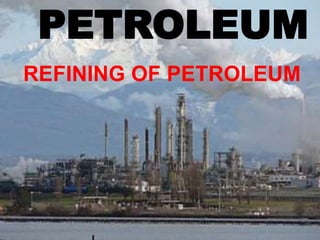

PETROLEUM
REFINING OF PETROLEUM
PETROLEUM
 Prtra- rock oleum-oil
 Dark coloured oily liquid found below earth
crust
 Obtained by mining-mineral oil/crude oil
 Gas accompanying petroleum- natural gas
 Decomposition product of the remains of
marine organisms and plants over the ages, by
action of bacteria and under the action of
earth’s heat and pressure
PETROLEUM
 Petroleum is a viscous oily liquid
 Mixture of aliphatic hydrocarbons(alkanes C1-
C40) with mucher lesser amount of cyclo
alkanes and aromatic compounds
 Small amounts of organic compounds of
sulphur and nitrogen
 Actual composition of petroleum varies with the
place of orgin
 Natural gas is always found along with
petroleum
REFINING OF PETROLEUM
 Aliphatic hydrocarbons from
petroleum
 The process of separating petroleum
into useful fractions and the removal of
undesirable impurities
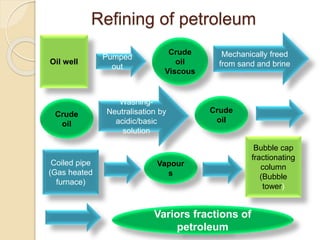
Refining of petroleum
Oil well
Pumped
out
Crude
oil
Viscous
Mechanically freed
from sand and brine
Crude
oil
Washing-
Neutralisation by
acidic/basic
solution
Crude
oil
Coiled pipe
(Gas heated
furnace)
Vapour
s
Bubble cap
fractionating
column
(Bubble
tower)
Variors fractions of
petroleum
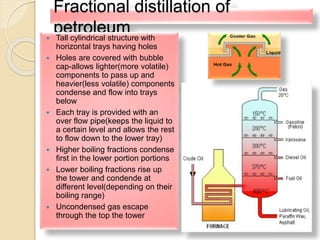
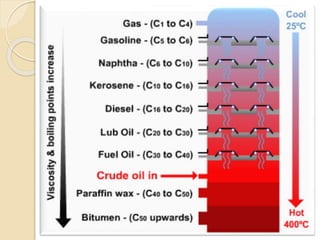
Fractional distillation of
petroleum Tall cylindrical structure with
horizontal trays having holes
 Holes are covered with bubble
cap-allows lighter(more volatile)
components to pass up and
heavier(less volatile) components
condense and flow into trays
below
 Each tray is provided with an
over flow pipe(keeps the liquid to
a certain level and allows the rest
to flow down to the lower tray)
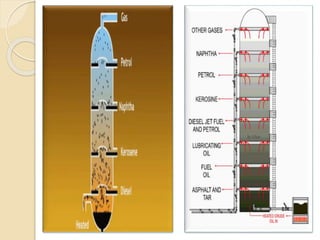
 Higher boiling fractions condense
first in the lower portion portions
 Lower boiling fractions rise up
the tower and condende at
different level(depending on their
boiling range)
 Uncondensed gas escape
through the top the tower
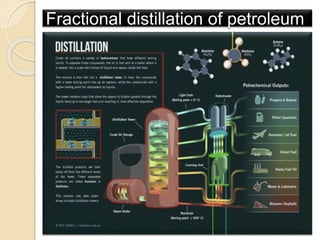
Fractional distillation of petroleum
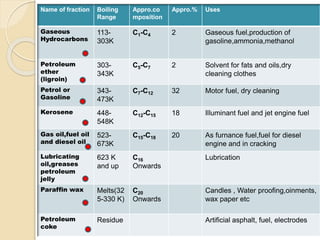
Name of fraction Boiling
Range
Appro.co
mposition
Appro.% Uses
Gaseous
Hydrocarbons
113-
303K
C1-C4 2 Gaseous fuel,production of
gasoline,ammonia,methanol
Petroleum
ether
(ligroin)
303-
343K
C5-C7 2 Solvent for fats and oils,dry
cleaning clothes
Petrol or
Gasoline
343-
473K
C7-C12 32 Motor fuel, dry cleaning
Kerosene 448-
548K
C12-C15 18 Illuminant fuel and jet engine fuel
Gas oil,fuel oil
and diesel oil
523-
673K
C15-C18 20 As furnance fuel,fuel for diesel
engine and in cracking
Lubricating
oil,greases
petroleum
jelly
623 K
and up
C16
Onwards
Lubrication
Paraffin wax Melts(32
5-330 K)
C20
Onwards
Candles , Water proofing,oinments,
wax paper etc
Petroleum
coke
Residue Artificial asphalt, fuel, electrodes
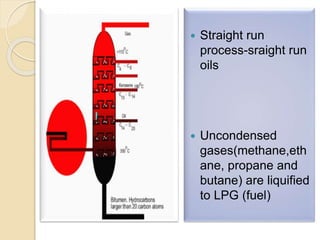
 Straight run
process-sraight run
oils
 Uncondensed
gases(methane,eth
ane, propane and
butane) are liquified
to LPG (fuel)
THANK YOU FOR
YOUR KIND
ATTENTION

Petroleum

  • 1.
  • 2.
    PETROLEUM  Prtra- rockoleum-oil  Dark coloured oily liquid found below earth crust  Obtained by mining-mineral oil/crude oil  Gas accompanying petroleum- natural gas  Decomposition product of the remains of marine organisms and plants over the ages, by action of bacteria and under the action of earth’s heat and pressure
  • 3.
    PETROLEUM  Petroleum isa viscous oily liquid  Mixture of aliphatic hydrocarbons(alkanes C1- C40) with mucher lesser amount of cyclo alkanes and aromatic compounds  Small amounts of organic compounds of sulphur and nitrogen  Actual composition of petroleum varies with the place of orgin  Natural gas is always found along with petroleum
  • 4.
    REFINING OF PETROLEUM Aliphatic hydrocarbons from petroleum  The process of separating petroleum into useful fractions and the removal of undesirable impurities
  • 5.
    Refining of petroleum Oilwell Pumped out Crude oil Viscous Mechanically freed from sand and brine Crude oil Washing- Neutralisation by acidic/basic solution Crude oil Coiled pipe (Gas heated furnace) Vapour s Bubble cap fractionating column (Bubble tower) Variors fractions of petroleum
  • 6.
    Fractional distillation of petroleumTall cylindrical structure with horizontal trays having holes  Holes are covered with bubble cap-allows lighter(more volatile) components to pass up and heavier(less volatile) components condense and flow into trays below  Each tray is provided with an over flow pipe(keeps the liquid to a certain level and allows the rest to flow down to the lower tray)  Higher boiling fractions condense first in the lower portion portions  Lower boiling fractions rise up the tower and condende at different level(depending on their boiling range)  Uncondensed gas escape through the top the tower
  • 7.
  • 10.
    Name of fractionBoiling Range Appro.co mposition Appro.% Uses Gaseous Hydrocarbons 113- 303K C1-C4 2 Gaseous fuel,production of gasoline,ammonia,methanol Petroleum ether (ligroin) 303- 343K C5-C7 2 Solvent for fats and oils,dry cleaning clothes Petrol or Gasoline 343- 473K C7-C12 32 Motor fuel, dry cleaning Kerosene 448- 548K C12-C15 18 Illuminant fuel and jet engine fuel Gas oil,fuel oil and diesel oil 523- 673K C15-C18 20 As furnance fuel,fuel for diesel engine and in cracking Lubricating oil,greases petroleum jelly 623 K and up C16 Onwards Lubrication Paraffin wax Melts(32 5-330 K) C20 Onwards Candles , Water proofing,oinments, wax paper etc Petroleum coke Residue Artificial asphalt, fuel, electrodes
  • 11.
     Straight run process-sraightrun oils  Uncondensed gases(methane,eth ane, propane and butane) are liquified to LPG (fuel)
  • 12.
    THANK YOU FOR YOURKIND ATTENTION