By Tyler Ray
Product Research Scientist
     Sonix IV Corp.
   Defined as process of using high frequency
    ultasound to clean/disinfect
   Creates powerful micro-jet implosions
   Resulting from pressure differential on either
    side of a surface in solution
   Overcome adhesion/cohesion forces
   Destroy microorganism membranes
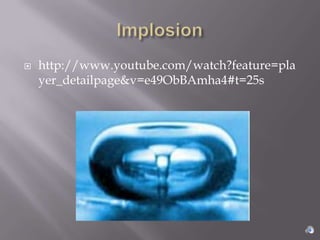
   http://www.youtube.com/watch?feature=pla
    yer_detailpage&v=e49ObBAmha4#t=25s
   Higher frequency =
    Shorter cycle
   Industry defines 90%
    removal as clean
   Sonix IV clean: 3 min.
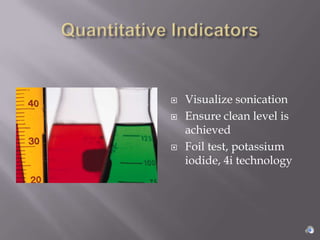
   Visualize sonication
   Ensure clean level is
    achieved
   Foil test, potassium
    iodide, 4i technology
   Enzyme solutions = soak-rinse ONLY
   Sonication denatures enzyme deeming it
    incapable of functioning.
   Surfactant solutions = soap = faster clean cycle
   Sonix IV solutions are Eco-Friendly and
    specially formulated with optimal cavitaional
    properties
   No significant difference in using
    enzyme, soap, or tap water solutions
   Sonication is doing the cleaning
   Use eco-friendly
    solutions sparingly
   Save Green while
    going green!
Juschke, M. and C. Koch. 2012. Model processes and cavitation indicators for a
         quantitative description of an ultrasonic cleaning vessel: Part I:
         Experimental         results. Ultrasonics Sonochemistry, 19, 4, 787-795.

Luo, H., Schmid, F., Grbin, P. R., and V. Jiranek. 2012. Viability of common wine
         spoilage organisms after exposure to high power ultrasonics. Ultrasonics
         Sonochemistry, 19, 3, 415-420.

Sala, F. A., Burgos, J., Condon, S., Lopez, P., and J. Razo. (1995). Effect of heat and
          utrasound on microorganisms and enzymes. New Methods of Food
          Preservation, Chapter 9, Chapman & Hall: New York.

Wambura, P., Tegete, H., and M. Verghese. 2012. Application of high-power
      ultrasound to improve adhesion of honey on roasted peanuts to improve
                 oxidative stability. Food and Bioprocess Technology, 5, 5, 2012-2016.

Sonix 4 Sonication and Solutions

  • 1.
    By Tyler Ray ProductResearch Scientist Sonix IV Corp.
  • 2.
    Defined as process of using high frequency ultasound to clean/disinfect  Creates powerful micro-jet implosions  Resulting from pressure differential on either side of a surface in solution  Overcome adhesion/cohesion forces  Destroy microorganism membranes
  • 3.
    http://www.youtube.com/watch?feature=pla yer_detailpage&v=e49ObBAmha4#t=25s
  • 4.
    Higher frequency = Shorter cycle  Industry defines 90% removal as clean  Sonix IV clean: 3 min.
  • 5.
    Visualize sonication  Ensure clean level is achieved  Foil test, potassium iodide, 4i technology
  • 6.
    Enzyme solutions = soak-rinse ONLY  Sonication denatures enzyme deeming it incapable of functioning.  Surfactant solutions = soap = faster clean cycle  Sonix IV solutions are Eco-Friendly and specially formulated with optimal cavitaional properties  No significant difference in using enzyme, soap, or tap water solutions  Sonication is doing the cleaning
  • 7.
    Use eco-friendly solutions sparingly  Save Green while going green!
  • 8.
    Juschke, M. andC. Koch. 2012. Model processes and cavitation indicators for a quantitative description of an ultrasonic cleaning vessel: Part I: Experimental results. Ultrasonics Sonochemistry, 19, 4, 787-795. Luo, H., Schmid, F., Grbin, P. R., and V. Jiranek. 2012. Viability of common wine spoilage organisms after exposure to high power ultrasonics. Ultrasonics Sonochemistry, 19, 3, 415-420. Sala, F. A., Burgos, J., Condon, S., Lopez, P., and J. Razo. (1995). Effect of heat and utrasound on microorganisms and enzymes. New Methods of Food Preservation, Chapter 9, Chapman & Hall: New York. Wambura, P., Tegete, H., and M. Verghese. 2012. Application of high-power ultrasound to improve adhesion of honey on roasted peanuts to improve oxidative stability. Food and Bioprocess Technology, 5, 5, 2012-2016.