GREEN CLOUD COMPUTING
-A Data Center Approach
Sukhpal Singh Gill
PhD Research Scholar
Thapar University, Patiala
1
 Basics of Green & Cloud Computing
 Green Cloud Computing-A Data Center Perspective
 Green Cloud Computing in Developing Regions
 Balancing Energy in Data Centers
 Energy Aware Data Center Management
 Power Usage Effectiveness
 Case Studies :- Senegal & South Africa
 Indian Scenario
 Go Green
 References
E-Journey
2
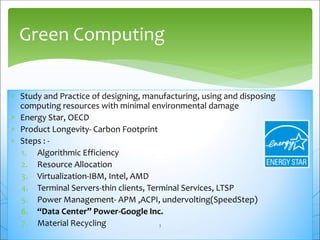
Green Computing
 Study and Practice of designing, manufacturing, using and disposing
computing resources with minimal environmental damage
 Energy Star, OECD
 Product Longevity- Carbon Footprint
 Steps : -
1. Algorithmic Efficiency
2. Resource Allocation
3. Virtualization-IBM, Intel, AMD
4. Terminal Servers-thin clients, Terminal Services, LTSP
5. Power Management- APM ,ACPI, undervolting(SpeedStep)
6. “Data Center” Power-Google Inc.
7. Material Recycling 3
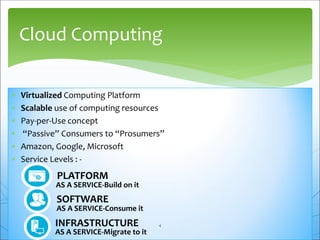
 Virtualized Computing Platform
 Scalable use of computing resources
 Pay-per-Use concept
 “Passive” Consumers to “Prosumers”
 Amazon, Google, Microsoft
 Service Levels : -
Cloud Computing
SOFTWARE
AS A SERVICE-Consume it
PLATFORM
AS A SERVICE-Build on it
INFRASTRUCTURE
AS A SERVICE-Migrate to it
4
5
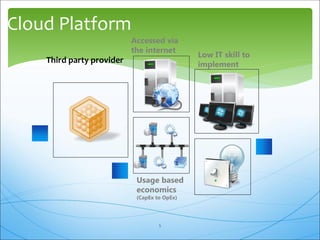
Cloud Platform
Usage based
economics
(CapEx to OpEx)
Low IT skill to
implement
Accessed via
the internet
Third party provider
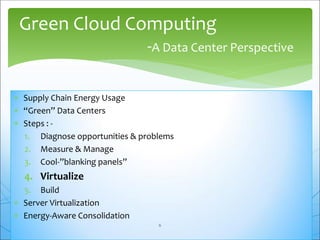
 Supply Chain Energy Usage
 “Green” Data Centers
 Steps : -
1. Diagnose opportunities & problems
2. Measure & Manage
3. Cool-”blanking panels”
4. Virtualize
5. Build
 Server Virtualization
 Energy-Aware Consolidation
Green Cloud Computing
-A Data Center Perspective
6
 Development of ICT
 Moving Processor and Data closer to the User
 Public Policy measures-Germany example, PPP
 Locating Data Centers in the developing world
 Economic Growth
Green IT in developing regions
-Introduction
7
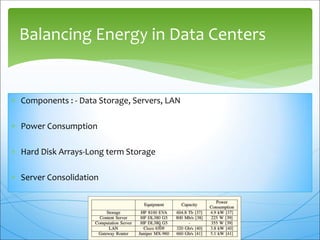
Balancing Energy in Data Centers
 Components : - Data Storage, Servers, LAN
 Power Consumption
 Hard Disk Arrays-Long term Storage
 Server Consolidation
8
 OLPC Project
 Low Power Computing Platforms- Modern Data Centers
 “Managing” computing load
 Prioritization
 Virtualization technologies for Data Centers
 Cooling Data Centers- “42%”
 Used in Solar PV Systems
Energy Aware Data Center Management
9
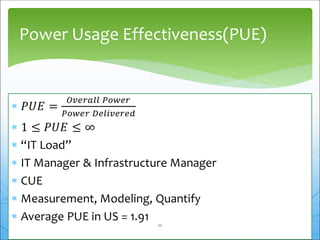
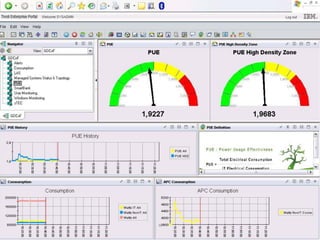
Power Usage Effectiveness(PUE)
10
11
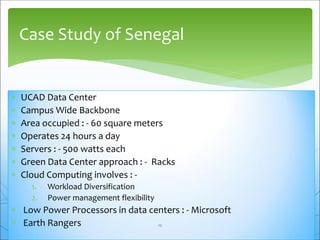
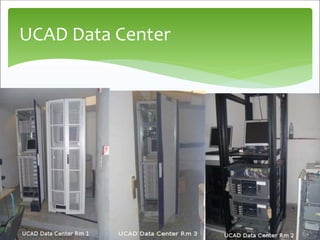
 UCAD Data Center
 Campus Wide Backbone
 Area occupied : - 60 square meters
 Operates 24 hours a day
 Servers : - 500 watts each
 Green Data Center approach : - Racks
 Cloud Computing involves : -
1. Workload Diversification
2. Power management flexibility
 Low Power Processors in data centers : - Microsoft
 Earth Rangers
Case Study of Senegal
12
UCAD Data Center
13
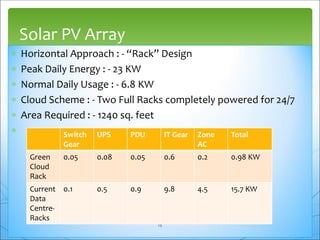
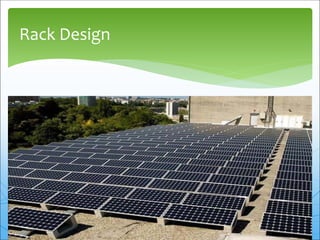
 Horizontal Approach : - “Rack” Design
 Peak Daily Energy : - 23 KW
 Normal Daily Usage : - 6.8 KW
 Cloud Scheme : - Two Full Racks completely powered for 24/7
 Area Required : - 1240 sq. feet

Solar PV Array
Switch
Gear
UPS PDU IT Gear Zone
AC
Total
Green
Cloud
Rack
0.05 0.08 0.05 0.6 0.2 0.98 KW
Current
Data
Centre-
Racks
0.1 0.5 0.9 9.8 4.5 15.7 KW
14
Rack Design
15
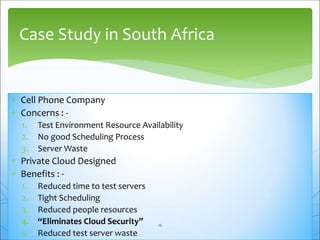
 Cell Phone Company
 Concerns : -
1. Test Environment Resource Availability
2. No good Scheduling Process
3. Server Waste
 Private Cloud Designed
 Benefits : -
1. Reduced time to test servers
2. Tight Scheduling
3. Reduced people resources
4. “Eliminates Cloud Security”
5. Reduced test server waste
Case Study in South Africa
16
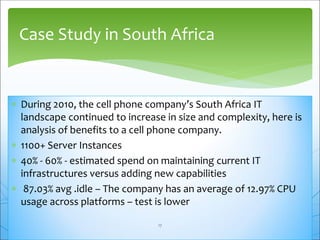
 During 2010, the cell phone company’s South Africa IT
landscape continued to increase in size and complexity, here is
analysis of benefits to a cell phone company.
 1100+ Server Instances
 40% - 60% - estimated spend on maintaining current IT
infrastructures versus adding new capabilities
 87.03% avg .idle – The company has an average of 12.97% CPU
usage across platforms – test is lower
Case Study in South Africa
17
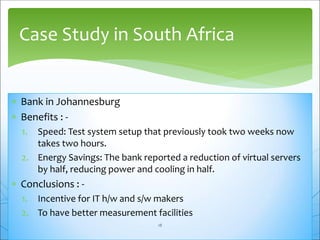
 Bank in Johannesburg
 Benefits : -
1. Speed: Test system setup that previously took two weeks now
takes two hours.
2. Energy Savings: The bank reported a reduction of virtual servers
by half, reducing power and cooling in half.
 Conclusions : -
1. Incentive for IT h/w and s/w makers
2. To have better measurement facilities
Case Study in South Africa
18
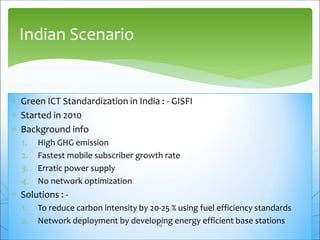
 Green ICT Standardization in India : - GISFI
 Started in 2010
 Background info
1. High GHG emission
2. Fastest mobile subscriber growth rate
3. Erratic power supply
4. No network optimization
 Solutions : -
1. To reduce carbon intensity by 20-25 % using fuel efficiency standards
2. Network deployment by developing energy efficient base stations
Indian Scenario
19
 Data Centers:
 As of 2007, 14% of all ICT emission is caused by Data Centers
 Roughly 50% of the emission due to data centers is due to
power system losses and cooling loads
 Rapid Growth in use of IPTV, VOIP, enterprise IT
 Use of both Corporate and Internet Data Centers.
Indian Scenario
20
 Examples mentioned will help in harnessing energy
 Lots of research to be carried out
 Maximizing Efficiency of Green Data Centers
 Developing Regions to benefit the most
Go Green!!!
21
THANK YOU
&
ANY Questions?
Wish u a Green Day
22

GREEN CLOUD COMPUTING-A Data Center Approach

  • 1.
    GREEN CLOUD COMPUTING -AData Center Approach Sukhpal Singh Gill PhD Research Scholar Thapar University, Patiala 1
  • 2.
     Basics ofGreen & Cloud Computing  Green Cloud Computing-A Data Center Perspective  Green Cloud Computing in Developing Regions  Balancing Energy in Data Centers  Energy Aware Data Center Management  Power Usage Effectiveness  Case Studies :- Senegal & South Africa  Indian Scenario  Go Green  References E-Journey 2
  • 3.
    Green Computing  Studyand Practice of designing, manufacturing, using and disposing computing resources with minimal environmental damage  Energy Star, OECD  Product Longevity- Carbon Footprint  Steps : - 1. Algorithmic Efficiency 2. Resource Allocation 3. Virtualization-IBM, Intel, AMD 4. Terminal Servers-thin clients, Terminal Services, LTSP 5. Power Management- APM ,ACPI, undervolting(SpeedStep) 6. “Data Center” Power-Google Inc. 7. Material Recycling 3
  • 4.
     Virtualized ComputingPlatform  Scalable use of computing resources  Pay-per-Use concept  “Passive” Consumers to “Prosumers”  Amazon, Google, Microsoft  Service Levels : - Cloud Computing SOFTWARE AS A SERVICE-Consume it PLATFORM AS A SERVICE-Build on it INFRASTRUCTURE AS A SERVICE-Migrate to it 4
  • 5.
    5 Cloud Platform Usage based economics (CapExto OpEx) Low IT skill to implement Accessed via the internet Third party provider
  • 6.
     Supply ChainEnergy Usage  “Green” Data Centers  Steps : - 1. Diagnose opportunities & problems 2. Measure & Manage 3. Cool-”blanking panels” 4. Virtualize 5. Build  Server Virtualization  Energy-Aware Consolidation Green Cloud Computing -A Data Center Perspective 6
  • 7.
     Development ofICT  Moving Processor and Data closer to the User  Public Policy measures-Germany example, PPP  Locating Data Centers in the developing world  Economic Growth Green IT in developing regions -Introduction 7
  • 8.
    Balancing Energy inData Centers  Components : - Data Storage, Servers, LAN  Power Consumption  Hard Disk Arrays-Long term Storage  Server Consolidation 8
  • 9.
     OLPC Project Low Power Computing Platforms- Modern Data Centers  “Managing” computing load  Prioritization  Virtualization technologies for Data Centers  Cooling Data Centers- “42%”  Used in Solar PV Systems Energy Aware Data Center Management 9
  • 10.
  • 11.
  • 12.
     UCAD DataCenter  Campus Wide Backbone  Area occupied : - 60 square meters  Operates 24 hours a day  Servers : - 500 watts each  Green Data Center approach : - Racks  Cloud Computing involves : - 1. Workload Diversification 2. Power management flexibility  Low Power Processors in data centers : - Microsoft  Earth Rangers Case Study of Senegal 12
  • 13.
  • 14.
     Horizontal Approach: - “Rack” Design  Peak Daily Energy : - 23 KW  Normal Daily Usage : - 6.8 KW  Cloud Scheme : - Two Full Racks completely powered for 24/7  Area Required : - 1240 sq. feet  Solar PV Array Switch Gear UPS PDU IT Gear Zone AC Total Green Cloud Rack 0.05 0.08 0.05 0.6 0.2 0.98 KW Current Data Centre- Racks 0.1 0.5 0.9 9.8 4.5 15.7 KW 14
  • 15.
  • 16.
     Cell PhoneCompany  Concerns : - 1. Test Environment Resource Availability 2. No good Scheduling Process 3. Server Waste  Private Cloud Designed  Benefits : - 1. Reduced time to test servers 2. Tight Scheduling 3. Reduced people resources 4. “Eliminates Cloud Security” 5. Reduced test server waste Case Study in South Africa 16
  • 17.
     During 2010,the cell phone company’s South Africa IT landscape continued to increase in size and complexity, here is analysis of benefits to a cell phone company.  1100+ Server Instances  40% - 60% - estimated spend on maintaining current IT infrastructures versus adding new capabilities  87.03% avg .idle – The company has an average of 12.97% CPU usage across platforms – test is lower Case Study in South Africa 17
  • 18.
     Bank inJohannesburg  Benefits : - 1. Speed: Test system setup that previously took two weeks now takes two hours. 2. Energy Savings: The bank reported a reduction of virtual servers by half, reducing power and cooling in half.  Conclusions : - 1. Incentive for IT h/w and s/w makers 2. To have better measurement facilities Case Study in South Africa 18
  • 19.
     Green ICTStandardization in India : - GISFI  Started in 2010  Background info 1. High GHG emission 2. Fastest mobile subscriber growth rate 3. Erratic power supply 4. No network optimization  Solutions : - 1. To reduce carbon intensity by 20-25 % using fuel efficiency standards 2. Network deployment by developing energy efficient base stations Indian Scenario 19
  • 20.
     Data Centers: As of 2007, 14% of all ICT emission is caused by Data Centers  Roughly 50% of the emission due to data centers is due to power system losses and cooling loads  Rapid Growth in use of IPTV, VOIP, enterprise IT  Use of both Corporate and Internet Data Centers. Indian Scenario 20
  • 21.
     Examples mentionedwill help in harnessing energy  Lots of research to be carried out  Maximizing Efficiency of Green Data Centers  Developing Regions to benefit the most Go Green!!! 21
  • 22.