POLYMERIZATI 
ON 
TECHNIQUES 
Prepared by Biochemistry branch students 
Under super vision 
Dr/ Omima Fawzy
POLYMERIZATION TECHNIQUES 
1. Addition polymerization 
Bulk polymerization 
Solution polymerization 
Suspension polymerization 
Emulsion polymerization 
1. Condensation polymerization 
Melt polycondensation 
Solution polycondensation
SOLUTION POLYMERIZATION 
 Some disadvantages of bulk polymerization are 
eliminated in solution polymerization. 
Monomer along with initiator dissolved in solvent, 
formed polymer stays dissolved. 
 The mixture is kept at polymerizaion temperature & 
constantly agitated. 
Depending on concentration of monomer the viscosity 
of solution does not increase.
SOLUTION POLYMERIZATION 
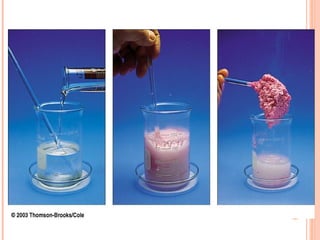
After the reaction is over, the polymer is used as such 
in the form of polymer solution or the polymer is 
isolated by evaporating the solvent. 
 Polymer so formed can be used for surface coating. 
 It is used for the production of Polyacrylonitrile, PVC, 
Polyacrylic acid, Polyacrylamide, Polyvinyl alcohol, 
PMMA, Polybutadiene, etc
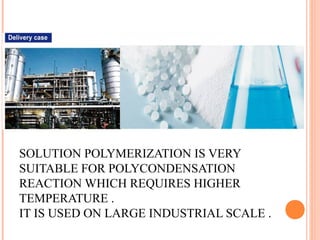
SOLUTION POLYMERIZATION IS VERY 
SUITABLE FOR POLYCONDENSATION 
REACTION WHICH REQUIRES HIGHER 
TEMPERATURE . 
IT IS USED ON LARGE INDUSTRIAL SCALE .
Advantages 
• The solvent acts as a diluent & helps in facilitating 
continuous transfer of heat of polymerization. 
Therefore temperature control is easy. 
• The solvent allows easy stirring as it decreases the 
viscosity of reaction mixture. 
• Solvent also facilitates the ease of removal of polymer 
from the reactor. 
• Viscosity build up is negligible.
Disadvantages 
• To get pure polymer, evaporation of solvent is required 
additional technology, so it is essential to separate & 
recover the solvent. 
• The method is costly since it uses costly solvents. 
• Polymers of high molecular weight polymers cannot be 
formed as the solvent molecules may act as chain 
terminators. 
• The technique gives a smaller yield of polymer per 
reactor volume, as the solvent waste the reactor space. 
• The purity of product is also not as high as that of bulk 
polymerization. Removal of last traces of solvent is 
difficult.
THANK YOU

Solution polymerization technique

  • 1.
    POLYMERIZATI ON TECHNIQUES Prepared by Biochemistry branch students Under super vision Dr/ Omima Fawzy
  • 2.
    POLYMERIZATION TECHNIQUES 1.Addition polymerization Bulk polymerization Solution polymerization Suspension polymerization Emulsion polymerization 1. Condensation polymerization Melt polycondensation Solution polycondensation
  • 3.
    SOLUTION POLYMERIZATION Some disadvantages of bulk polymerization are eliminated in solution polymerization. Monomer along with initiator dissolved in solvent, formed polymer stays dissolved.  The mixture is kept at polymerizaion temperature & constantly agitated. Depending on concentration of monomer the viscosity of solution does not increase.
  • 4.
    SOLUTION POLYMERIZATION Afterthe reaction is over, the polymer is used as such in the form of polymer solution or the polymer is isolated by evaporating the solvent.  Polymer so formed can be used for surface coating.  It is used for the production of Polyacrylonitrile, PVC, Polyacrylic acid, Polyacrylamide, Polyvinyl alcohol, PMMA, Polybutadiene, etc
  • 7.
    SOLUTION POLYMERIZATION ISVERY SUITABLE FOR POLYCONDENSATION REACTION WHICH REQUIRES HIGHER TEMPERATURE . IT IS USED ON LARGE INDUSTRIAL SCALE .
  • 8.
    Advantages • Thesolvent acts as a diluent & helps in facilitating continuous transfer of heat of polymerization. Therefore temperature control is easy. • The solvent allows easy stirring as it decreases the viscosity of reaction mixture. • Solvent also facilitates the ease of removal of polymer from the reactor. • Viscosity build up is negligible.
  • 9.
    Disadvantages • Toget pure polymer, evaporation of solvent is required additional technology, so it is essential to separate & recover the solvent. • The method is costly since it uses costly solvents. • Polymers of high molecular weight polymers cannot be formed as the solvent molecules may act as chain terminators. • The technique gives a smaller yield of polymer per reactor volume, as the solvent waste the reactor space. • The purity of product is also not as high as that of bulk polymerization. Removal of last traces of solvent is difficult.
  • 10.