BY
RAMESH
13ML15F
A SEMINAR ON
CONTENTS
• Introduction
• Comparison between conventional and
Controlled Radical Polymerization
• RAFT mechanism
• RAFT outcomes
INTRODUCTION
• The discovery and Development of controlled free
radical polymerization (CRP) techniques
 Stable free radical polymerization (SFRP)
 Atom transfer radical polymerization (ATRP)
 Reversible addition fragmentation chain transfer
(RAFT)
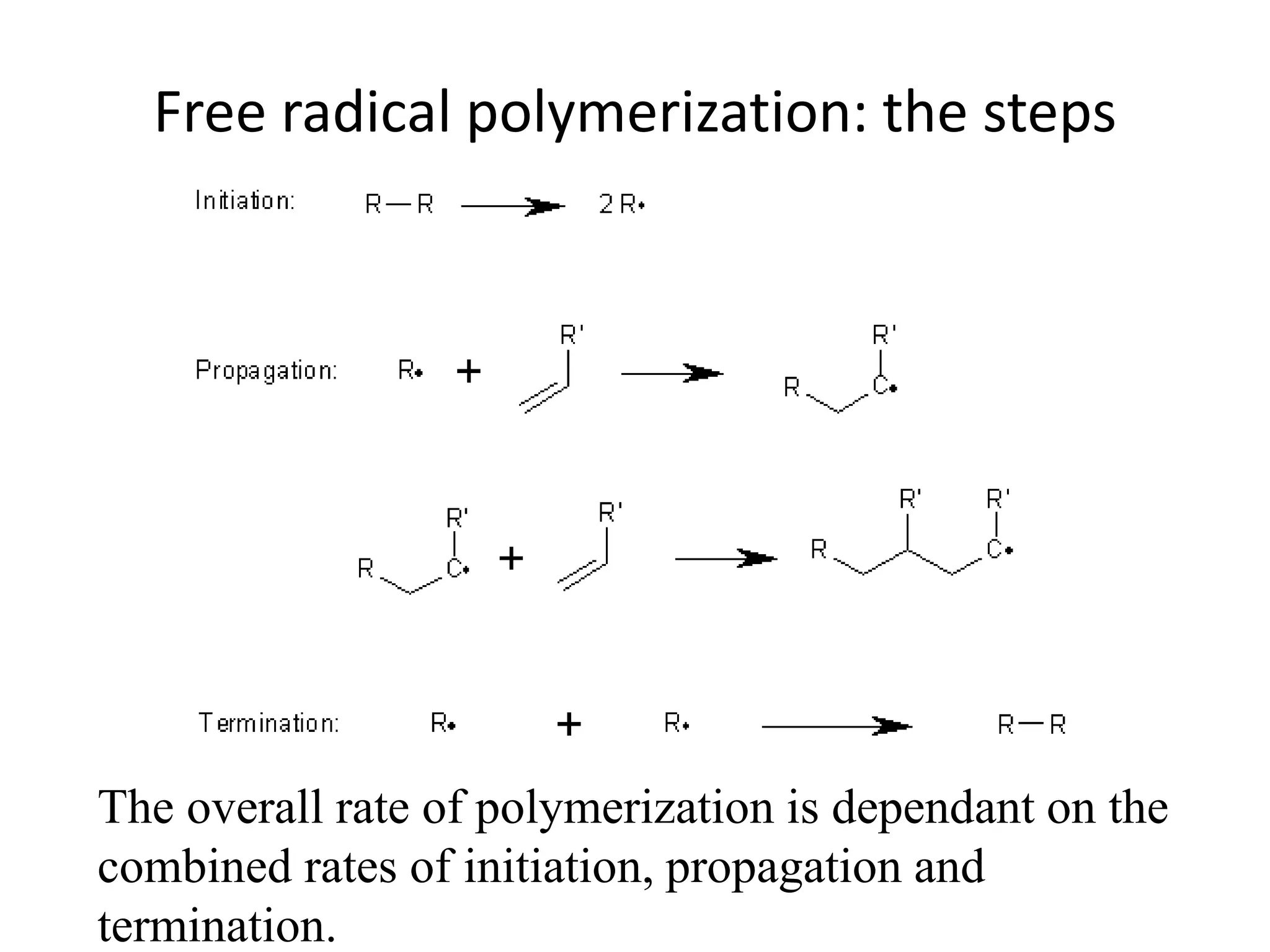
The overall rate of polymerization is dependant on the
combined rates of initiation, propagation and
termination.
Free radical polymerization: the steps
1.The lifetime of growing chains is extended from
~1 s in RP to more than 1 h in CRP through the
participation of dormant species and intermittent
reversible activation.
2.Initiation is slow and free radical initiator is often
left unconsumed at the end of a conventional RP. In
most CRP systems, initiation is very fast and near
instantaneous growth of all chains can be achieved,
which ultimately enables control over chain
architecture.
3.Nearly all chains are dead in RP, whereas in CRP
the proportion of dead chains is usually of 10%.
Differences b/n RP and CRP
4. Polymerization in CRP is often slower than in RP.
However, the rates may be comparable in certain cases
(e.g., when the targeted MW
in CRP is relatively low).
5.Termination usually occurs between long chains and
constantly generated new chains in RP. In CRP systems,
all chains are short at the early stages of the reaction and
become progressively longer; thus, the termination rate
significantly decreases with time.
6.In degenerative transfer (DT) processes, new chains
are constantly generated by a small amount of
conventional initiator, and therefore termination is more
likely throughout the reaction
WHY CRP??
• Free radical polymerization essentially could not
control MW or MWD
• Radical polymerization (RP) could not yield block
copolymers due to the very short lifetime of the
growing chains (1 s)
• At the end of a polymerization, unreacted initiator is
often left in the reaction mixture
• No pure block copolymers and essentially no
polymers with controlled architecture can be
produced by conventional RP.
• RAFT (Reversible Addition-Fragmentation chain
Transfer) technology is a form of controlled free
radical polymerization
• RAFT (Reversible Addition-Fragmentation chain
Transfer) is a form of living radical polymerization
involving conventional free radical polymerization of
a substituted monomer in the presence of a suitable
chain transfer (RAFT) reagent
• operates on the principle of degenerative chain
transfer
WHAT IS RAFT??
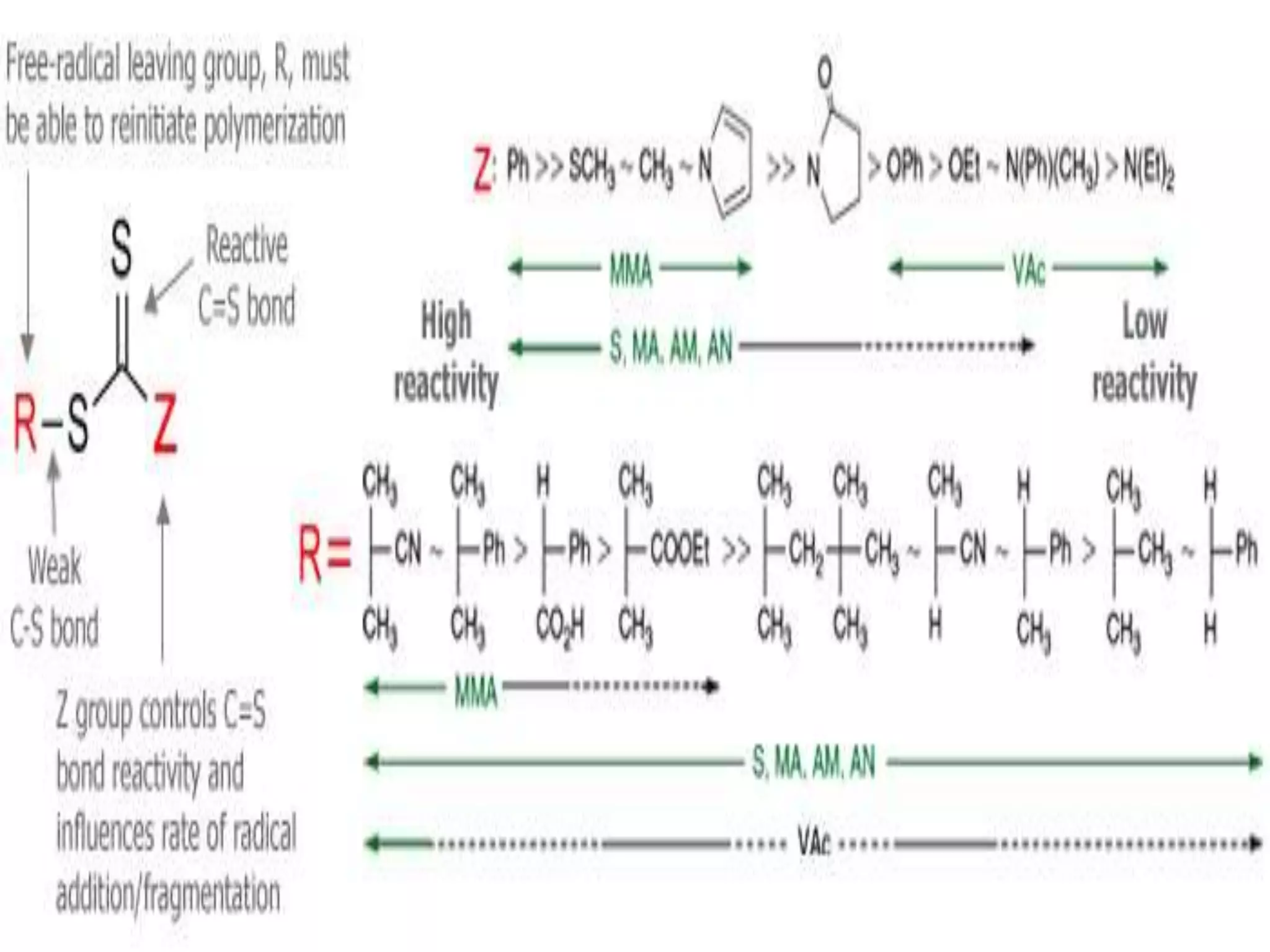
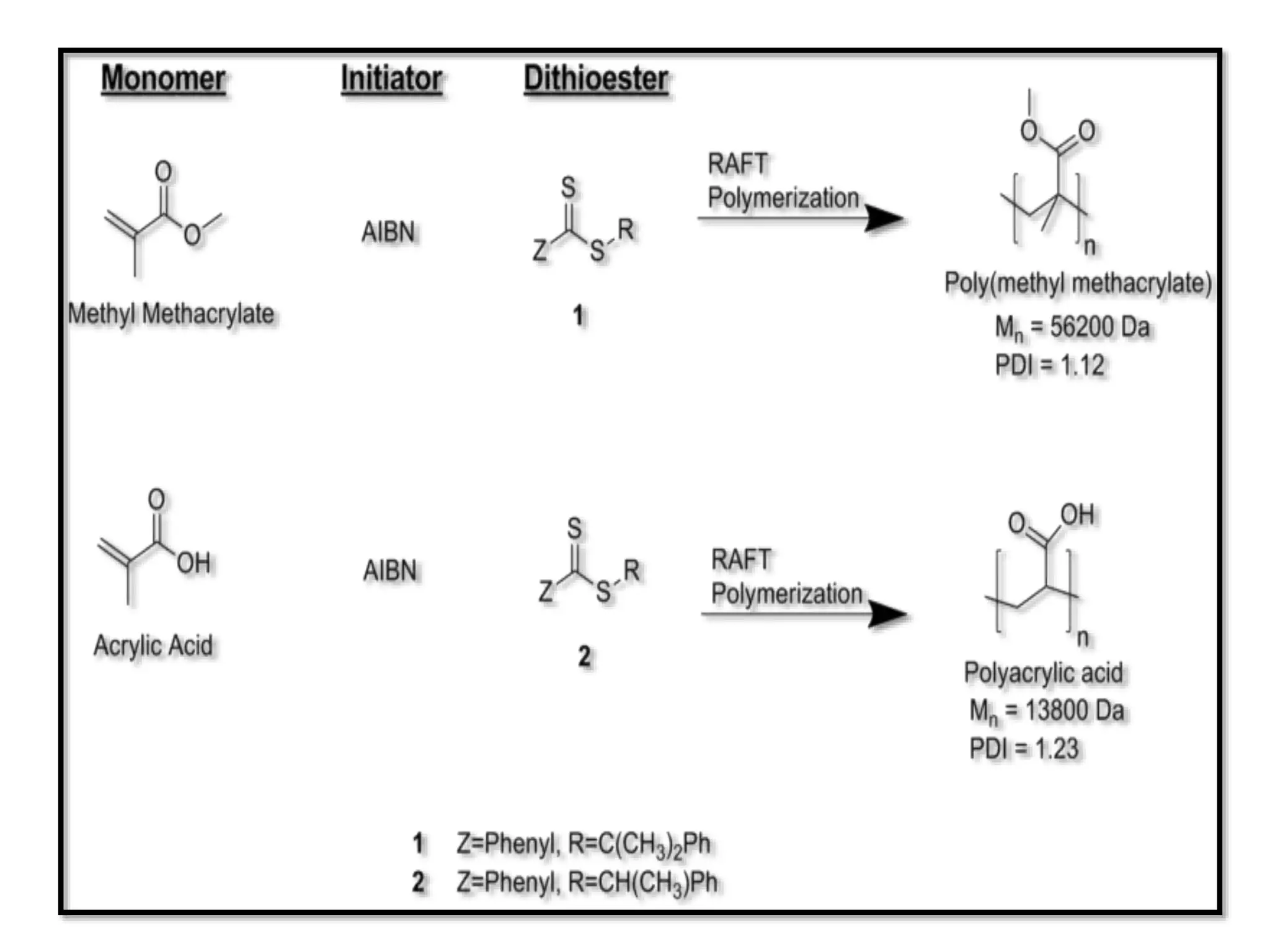
RAFT AGENT
• A small organic molecule that is responsible for
controlling growth.
• Suitable selection of RAFT agent is needed , because
intermediate radicals may participate in some side
reactions, such as cross-termination.
• The key to the RAFT polymerization process is the
RAFT Agent.
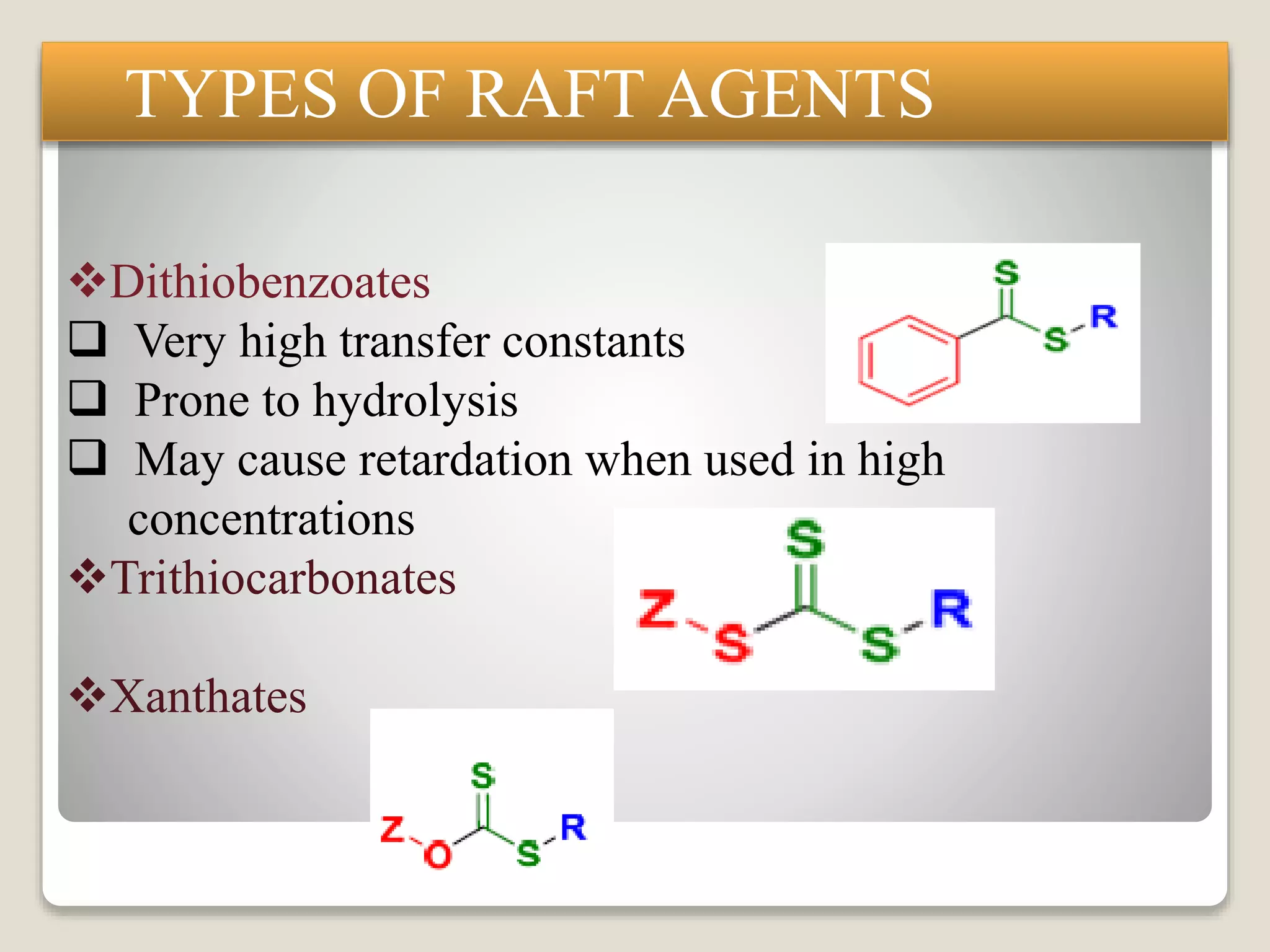
TYPES OF RAFT AGENTS
Dithiobenzoates
 Very high transfer constants
 Prone to hydrolysis
 May cause retardation when used in high
concentrations
Trithiocarbonates
Xanthates
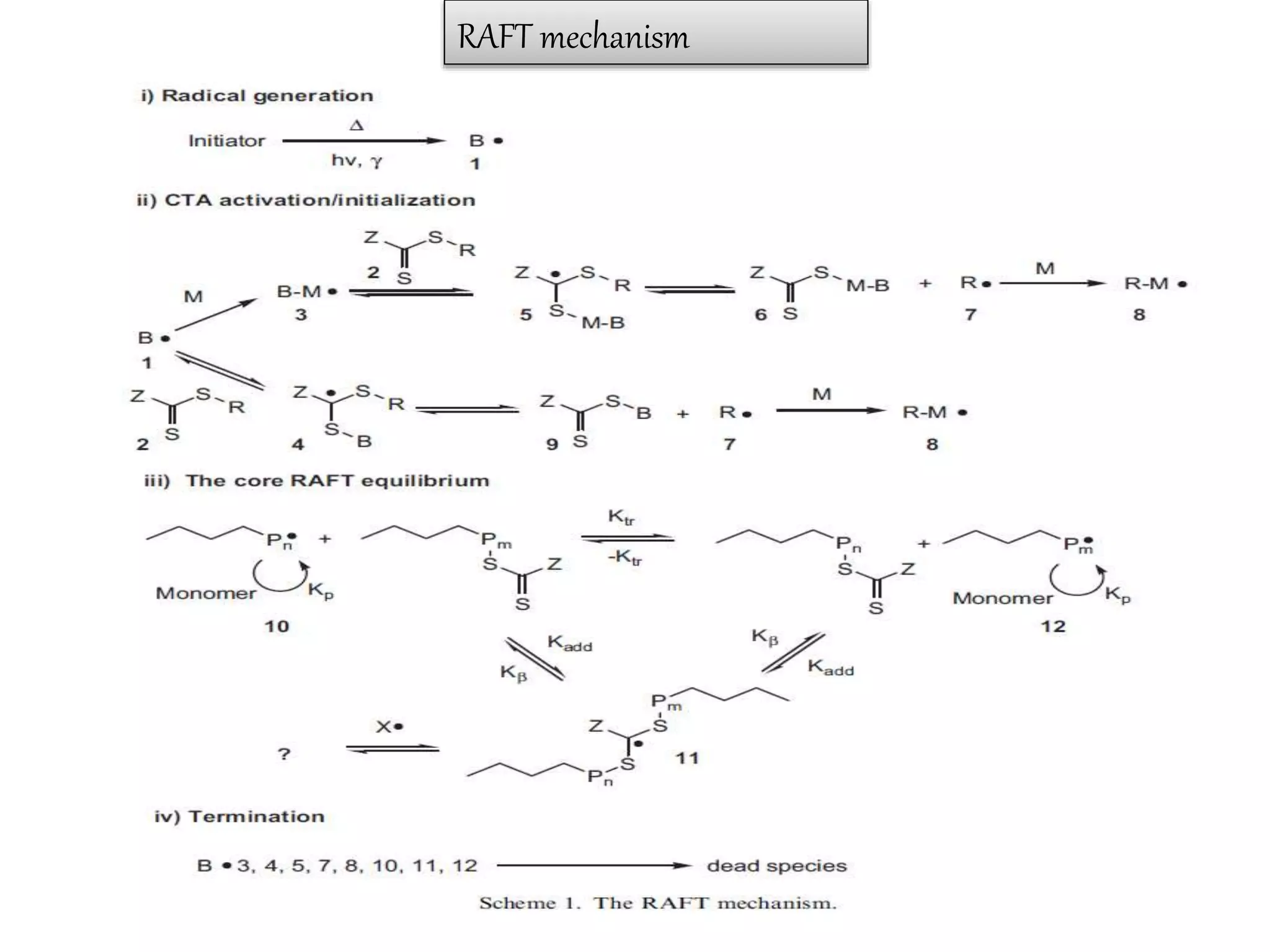
RAFT mechanism
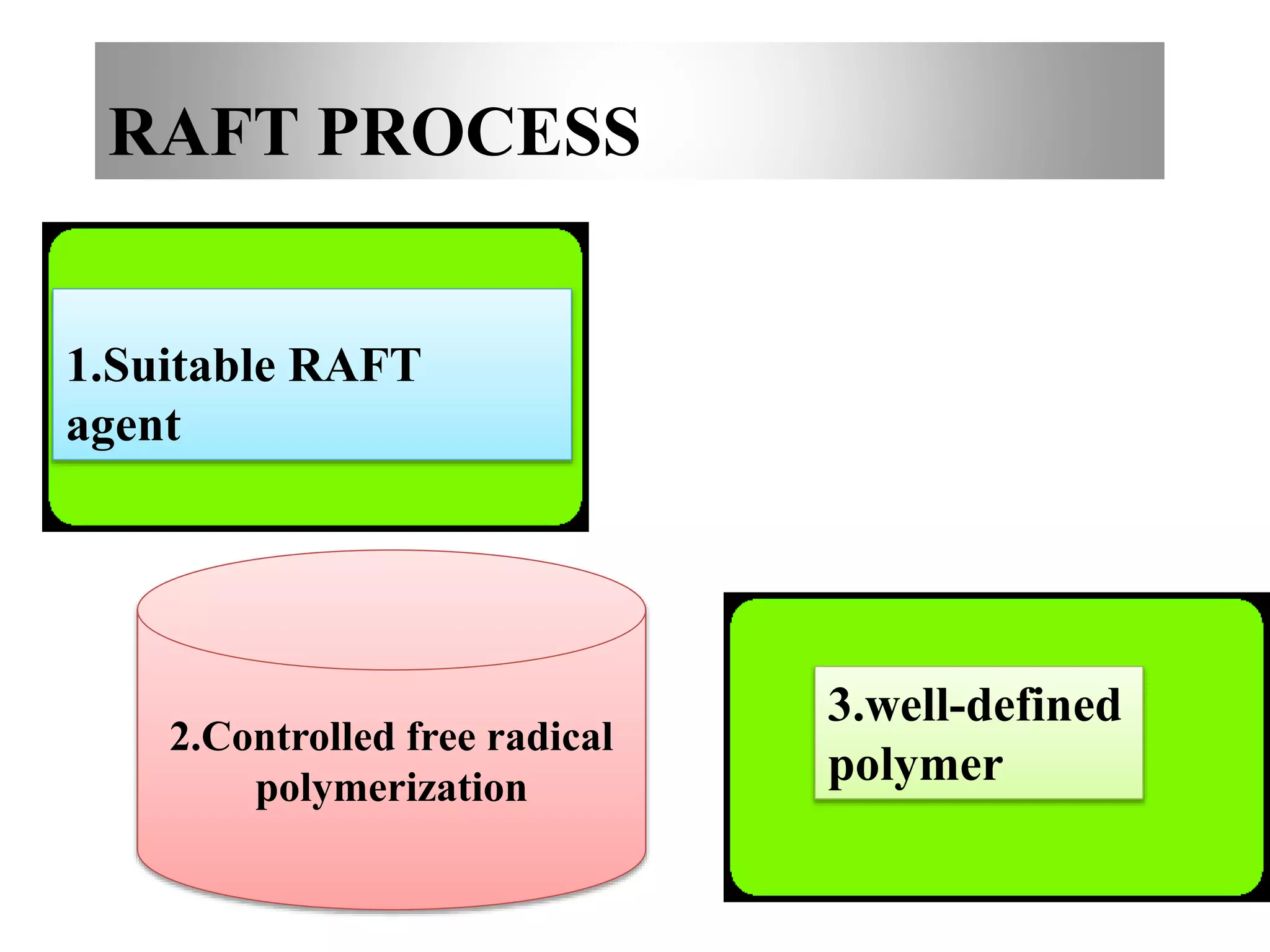
1.Suitable RAFT
agent
2.Controlled free radical
polymerization
3.well-defined
polymer
RAFT PROCESS
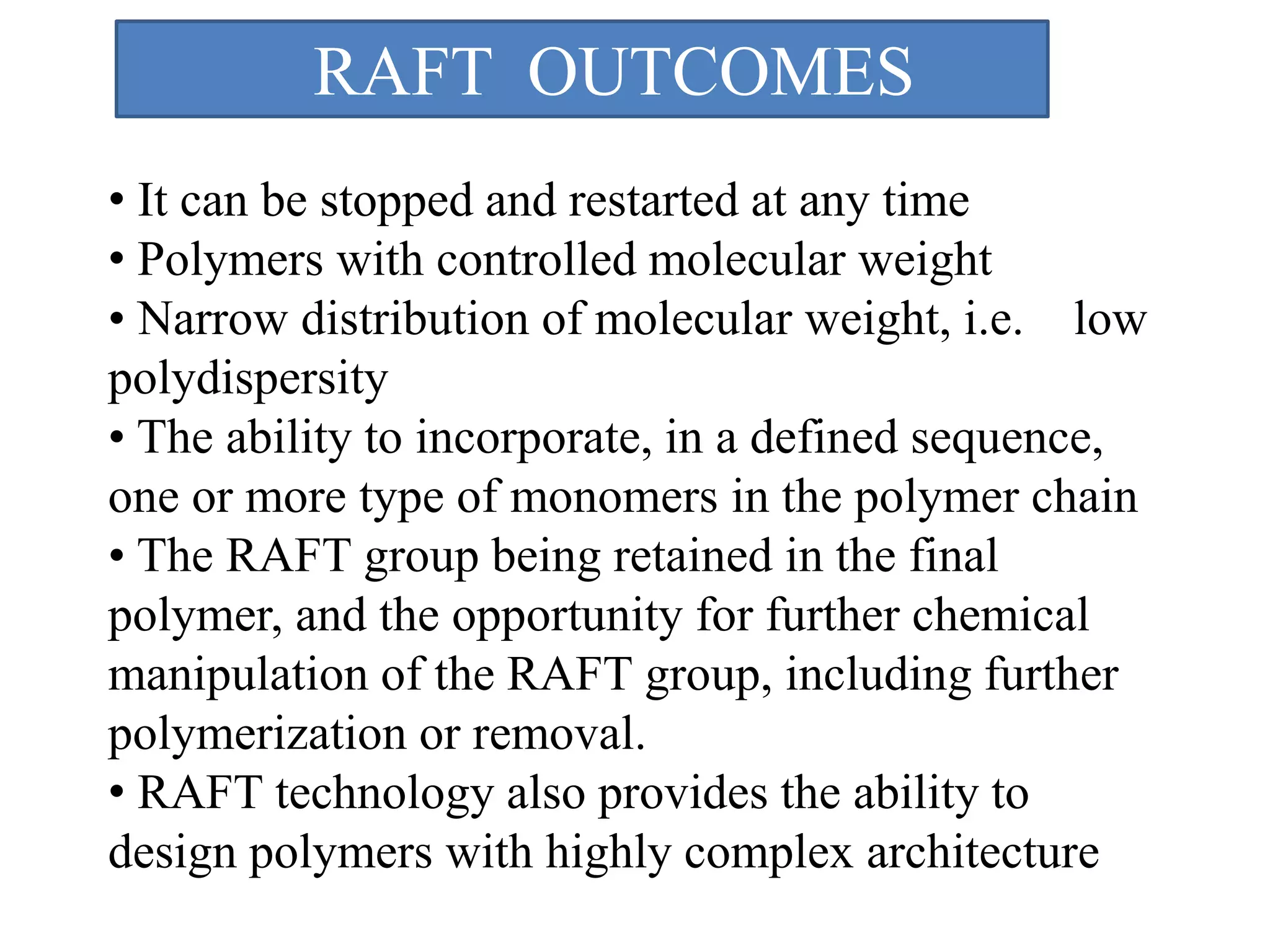
• It can be stopped and restarted at any time
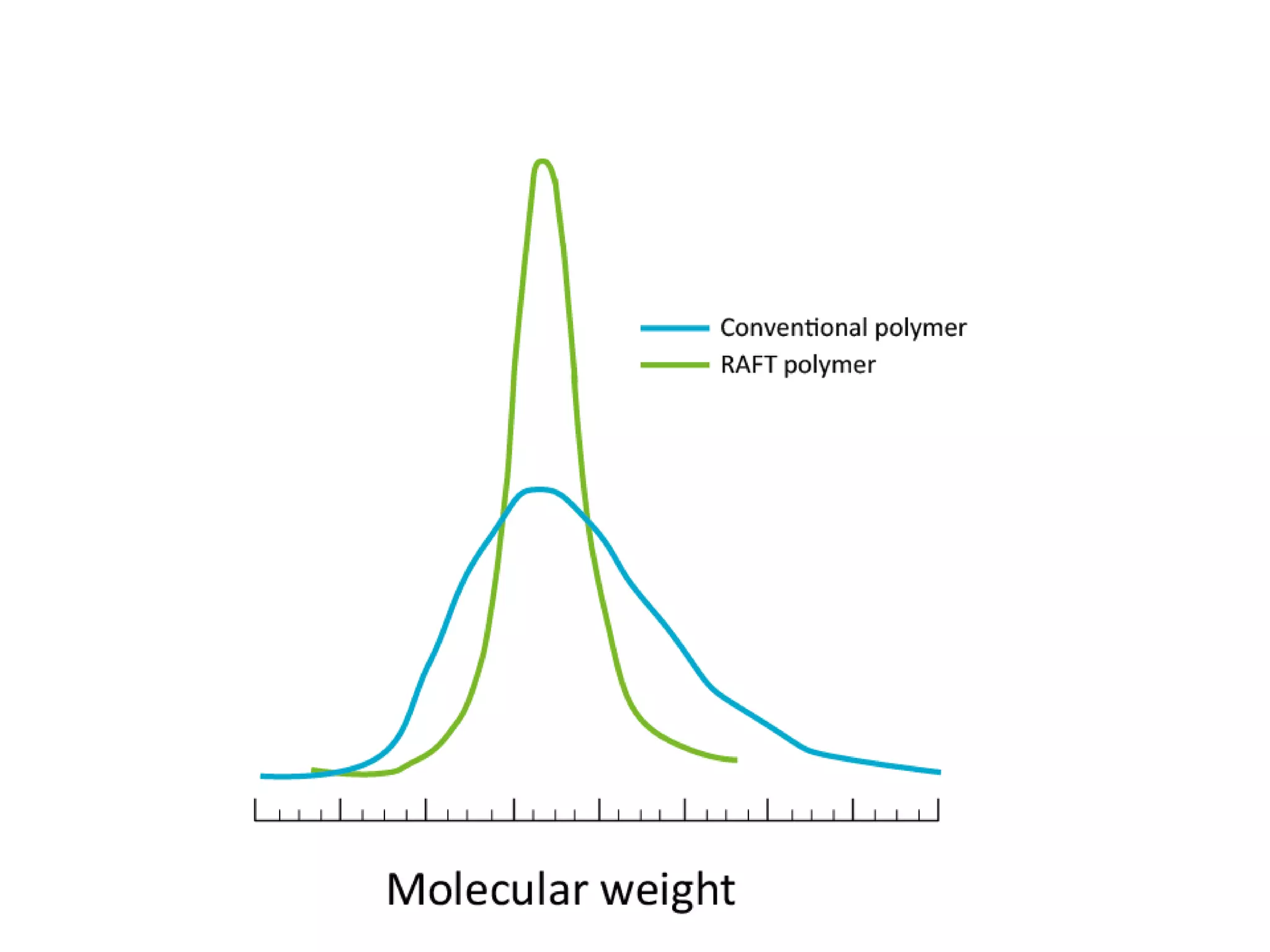
• Polymers with controlled molecular weight
• Narrow distribution of molecular weight, i.e. low
polydispersity
• The ability to incorporate, in a defined sequence,
one or more type of monomers in the polymer chain
• The RAFT group being retained in the final
polymer, and the opportunity for further chemical
manipulation of the RAFT group, including further
polymerization or removal.
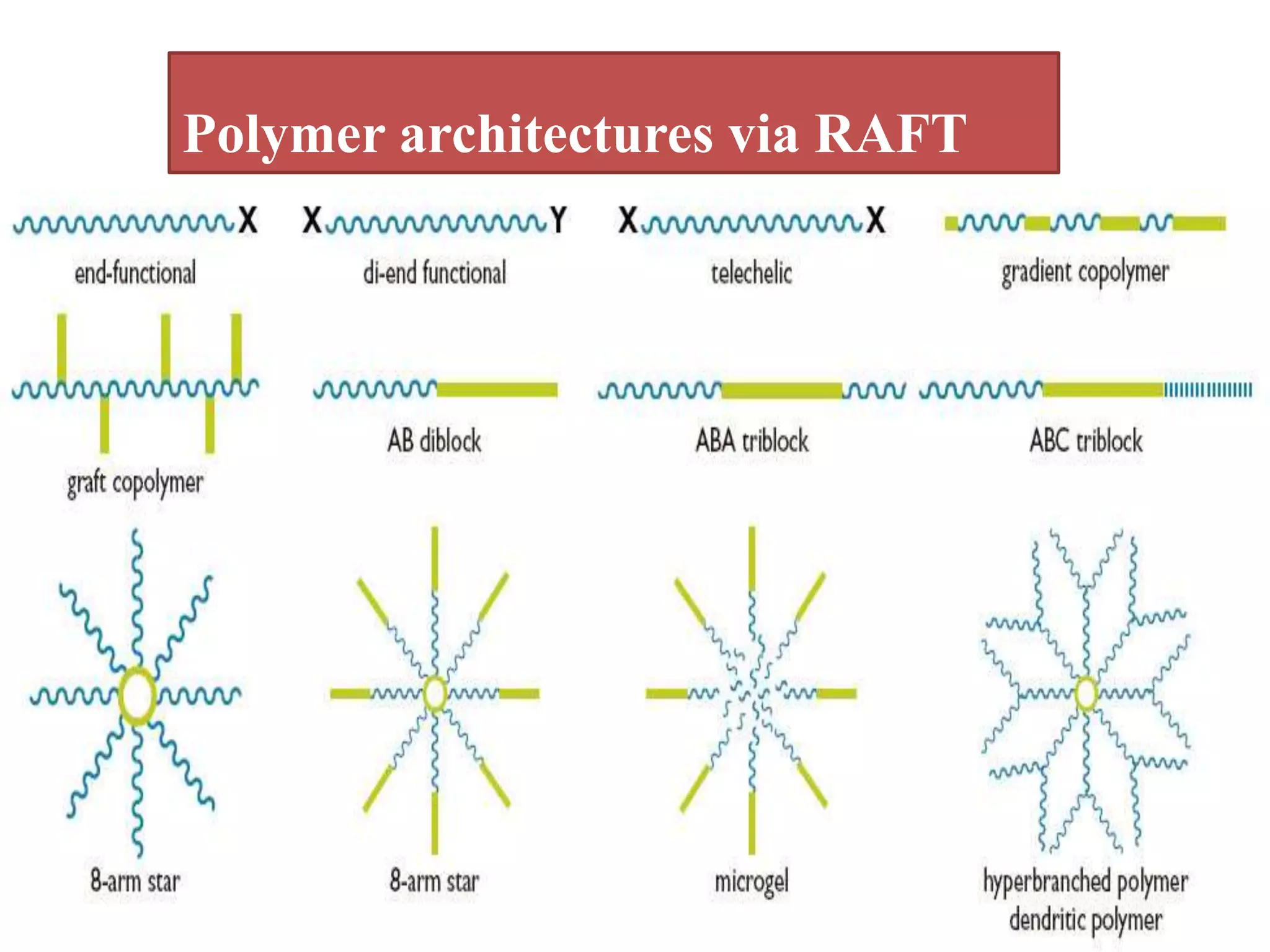
• RAFT technology also provides the ability to
design polymers with highly complex architecture
RAFT OUTCOMES
Polymer architectures via RAFT
REFERENCES
1) A.B. Lowe, C.L. McCormick / Prog. Polym.
Sci. 32 (2007) 283–351
2) W.A. Braunecker, K. Matyjaszewski / Prog. Polym.
Sci. 32 (2007) 93–146
Raft polymerization

Raft polymerization

  • 1.
  • 2.
    CONTENTS • Introduction • Comparisonbetween conventional and Controlled Radical Polymerization • RAFT mechanism • RAFT outcomes
  • 3.
    INTRODUCTION • The discoveryand Development of controlled free radical polymerization (CRP) techniques  Stable free radical polymerization (SFRP)  Atom transfer radical polymerization (ATRP)  Reversible addition fragmentation chain transfer (RAFT)
  • 4.
    The overall rateof polymerization is dependant on the combined rates of initiation, propagation and termination. Free radical polymerization: the steps
  • 5.
    1.The lifetime ofgrowing chains is extended from ~1 s in RP to more than 1 h in CRP through the participation of dormant species and intermittent reversible activation. 2.Initiation is slow and free radical initiator is often left unconsumed at the end of a conventional RP. In most CRP systems, initiation is very fast and near instantaneous growth of all chains can be achieved, which ultimately enables control over chain architecture. 3.Nearly all chains are dead in RP, whereas in CRP the proportion of dead chains is usually of 10%. Differences b/n RP and CRP
  • 6.
    4. Polymerization inCRP is often slower than in RP. However, the rates may be comparable in certain cases (e.g., when the targeted MW in CRP is relatively low). 5.Termination usually occurs between long chains and constantly generated new chains in RP. In CRP systems, all chains are short at the early stages of the reaction and become progressively longer; thus, the termination rate significantly decreases with time. 6.In degenerative transfer (DT) processes, new chains are constantly generated by a small amount of conventional initiator, and therefore termination is more likely throughout the reaction
  • 7.
    WHY CRP?? • Freeradical polymerization essentially could not control MW or MWD • Radical polymerization (RP) could not yield block copolymers due to the very short lifetime of the growing chains (1 s) • At the end of a polymerization, unreacted initiator is often left in the reaction mixture • No pure block copolymers and essentially no polymers with controlled architecture can be produced by conventional RP.
  • 8.
    • RAFT (ReversibleAddition-Fragmentation chain Transfer) technology is a form of controlled free radical polymerization • RAFT (Reversible Addition-Fragmentation chain Transfer) is a form of living radical polymerization involving conventional free radical polymerization of a substituted monomer in the presence of a suitable chain transfer (RAFT) reagent • operates on the principle of degenerative chain transfer WHAT IS RAFT??
  • 9.
    RAFT AGENT • Asmall organic molecule that is responsible for controlling growth. • Suitable selection of RAFT agent is needed , because intermediate radicals may participate in some side reactions, such as cross-termination. • The key to the RAFT polymerization process is the RAFT Agent.
  • 11.
    TYPES OF RAFTAGENTS Dithiobenzoates  Very high transfer constants  Prone to hydrolysis  May cause retardation when used in high concentrations Trithiocarbonates Xanthates
  • 12.
  • 13.
    1.Suitable RAFT agent 2.Controlled freeradical polymerization 3.well-defined polymer RAFT PROCESS
  • 15.
    • It canbe stopped and restarted at any time • Polymers with controlled molecular weight • Narrow distribution of molecular weight, i.e. low polydispersity • The ability to incorporate, in a defined sequence, one or more type of monomers in the polymer chain • The RAFT group being retained in the final polymer, and the opportunity for further chemical manipulation of the RAFT group, including further polymerization or removal. • RAFT technology also provides the ability to design polymers with highly complex architecture RAFT OUTCOMES
  • 17.
  • 18.
    REFERENCES 1) A.B. Lowe,C.L. McCormick / Prog. Polym. Sci. 32 (2007) 283–351 2) W.A. Braunecker, K. Matyjaszewski / Prog. Polym. Sci. 32 (2007) 93–146