SOLUBILITY – 4
DIFFUSION PRINCIPLES IN
BIOLOGICAL SYSTEMS
Presented By:
Mr. S.M. Ambore
Asst. Professor,
DK Patil Institute of Pharmacy, Loha. Nanded
LEARNING OUTCOMES….
Diffusion
Diffusion Flux
Concentration gradient
Diffusion Laws 2
3
DIFFUSION
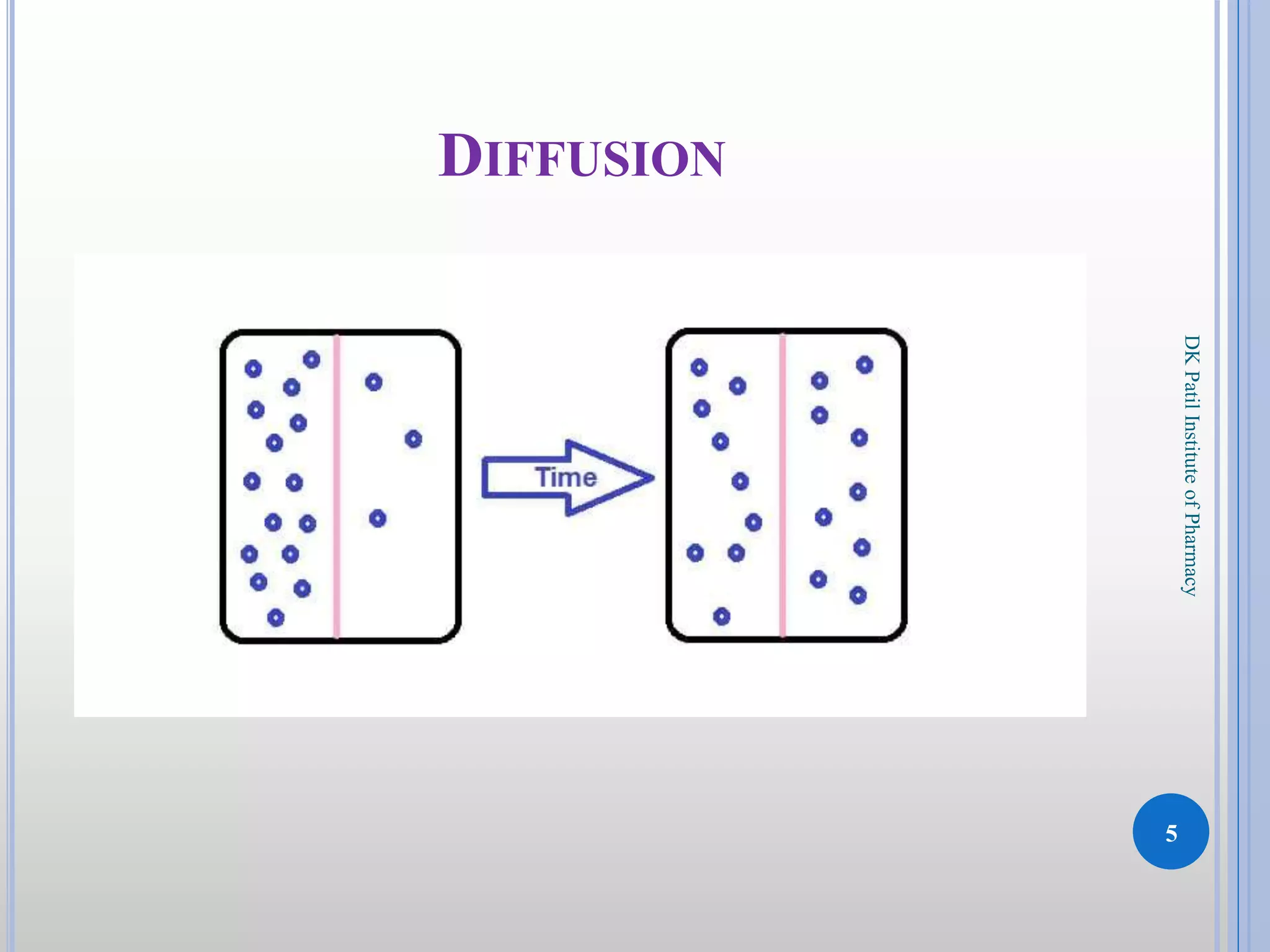
Diffusion is defined as a mass transfer of
individual molecules of substance caused by
random molecular motion and associated with
concentration gradient.
OR
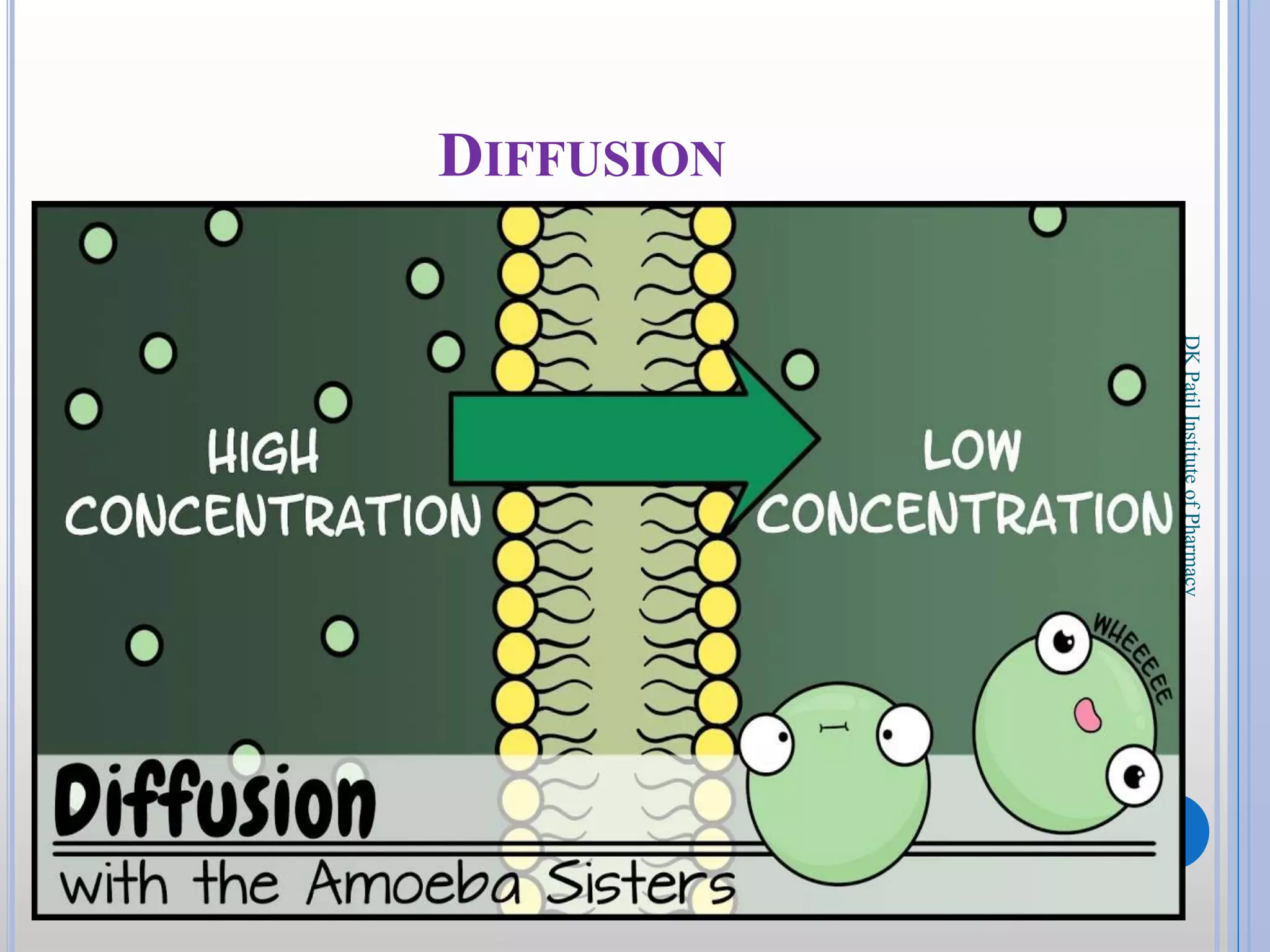
A physical process that refers to the net
movement of molecules from a region of high
concentration to lower concentration under the
influence of concentration gradient.
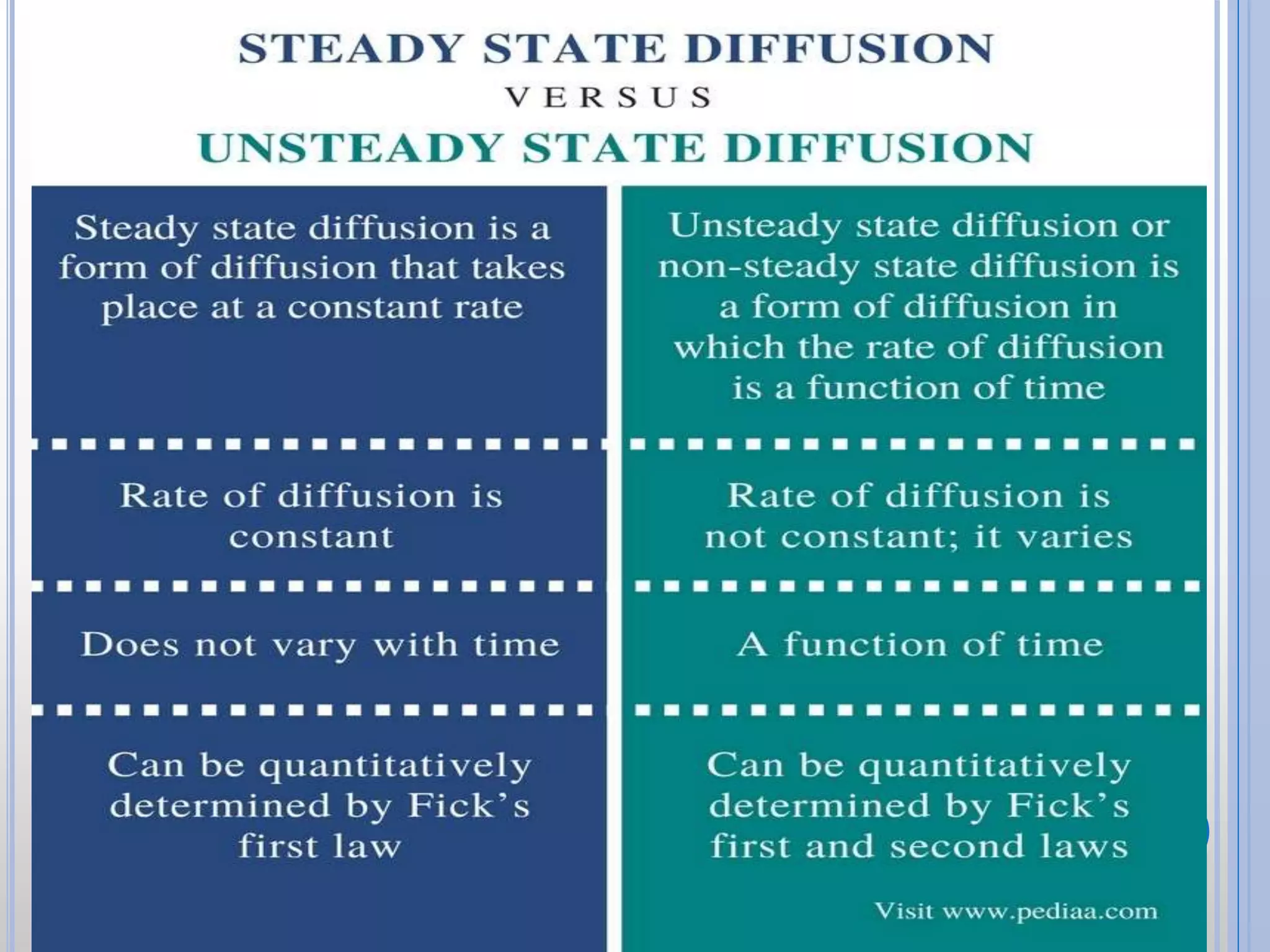
1. It is time dependant process.
2. It is well explained by FICK’S LAW OF DIFFUSION
DIFFUSION
4
DKPatilInstituteofPharmacy
DIFFUSION
5
DKPatilInstituteofPharmacy
6
NEED OF DIFFUSION
It helps to understand,
1. Release of drug from Pharmaceutical dosage form
2. Ultrafiltration, microfiltration, dialysis,
hemodailysis.
3. Permeation & distribution of drug in living tissues.
4. Estimation of molecular weight of polymers.
5. Prediction of absorption & elimination of drug.
7
TYPES OF DIFFUSION
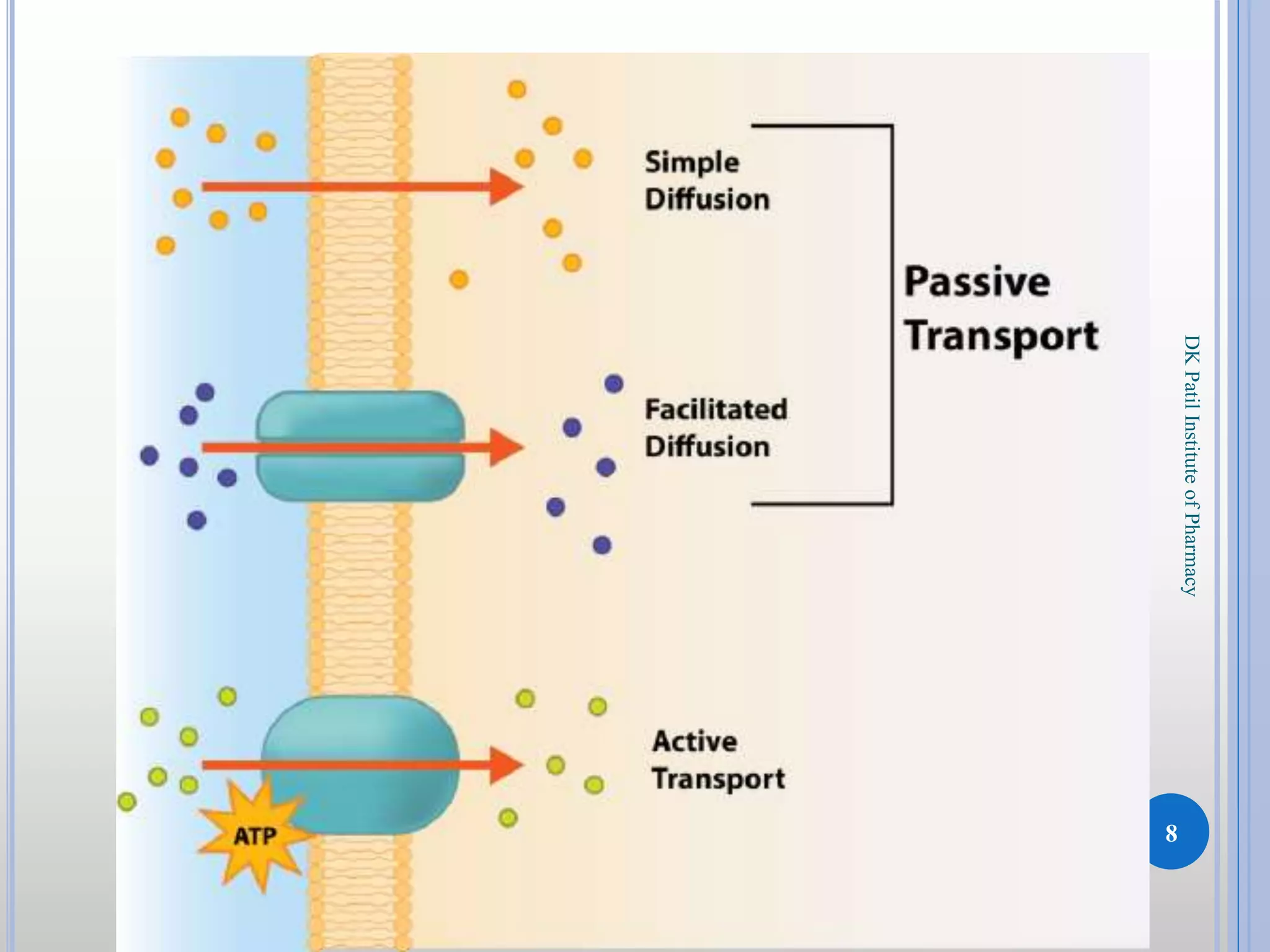
PASSIVE DIFFUSION:
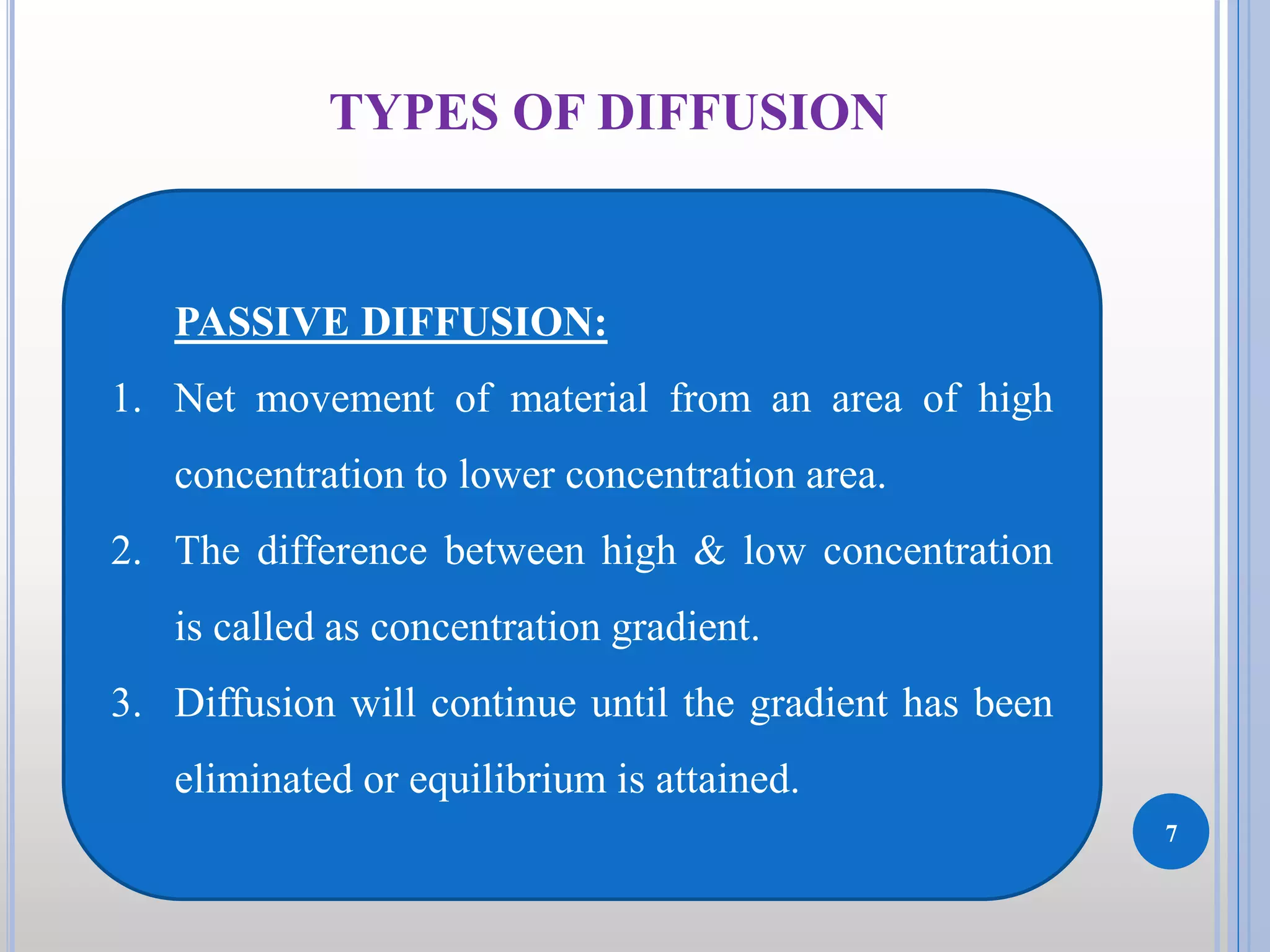
1. Net movement of material from an area of high
concentration to lower concentration area.
2. The difference between high & low concentration
is called as concentration gradient.
3. Diffusion will continue until the gradient has been
eliminated or equilibrium is attained.
8
DKPatilInstituteofPharmacy
9
TYPES OF DIFFUSION
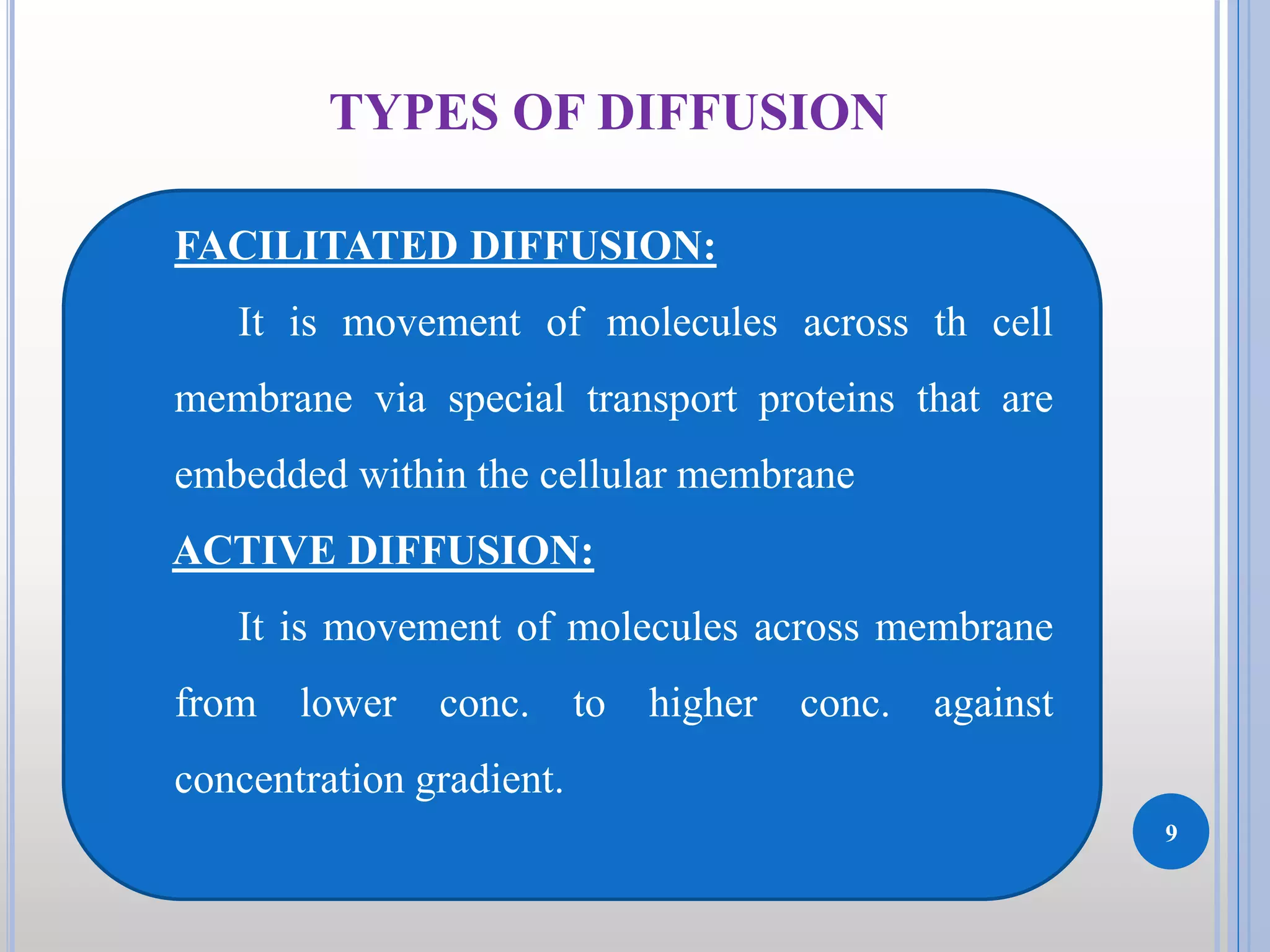
FACILITATED DIFFUSION:
It is movement of molecules across th cell
membrane via special transport proteins that are
embedded within the cellular membrane
ACTIVE DIFFUSION:
It is movement of molecules across membrane
from lower conc. to higher conc. against
concentration gradient.
10
DKPatilInstituteofPharmacy
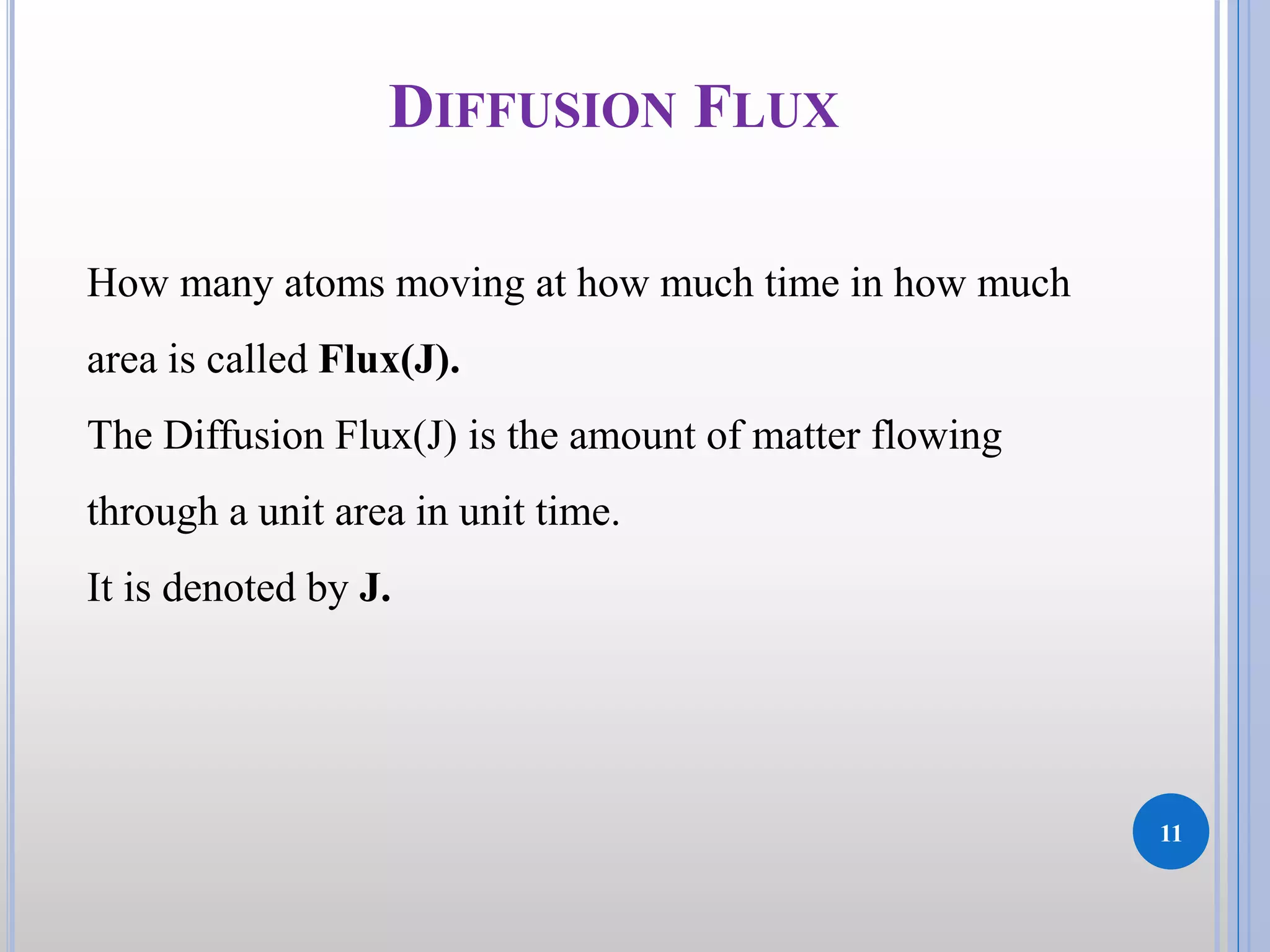
DIFFUSION FLUX
11
How many atoms moving at how much time in how much
area is called Flux(J).
The Diffusion Flux(J) is the amount of matter flowing
through a unit area in unit time.
It is denoted by J.
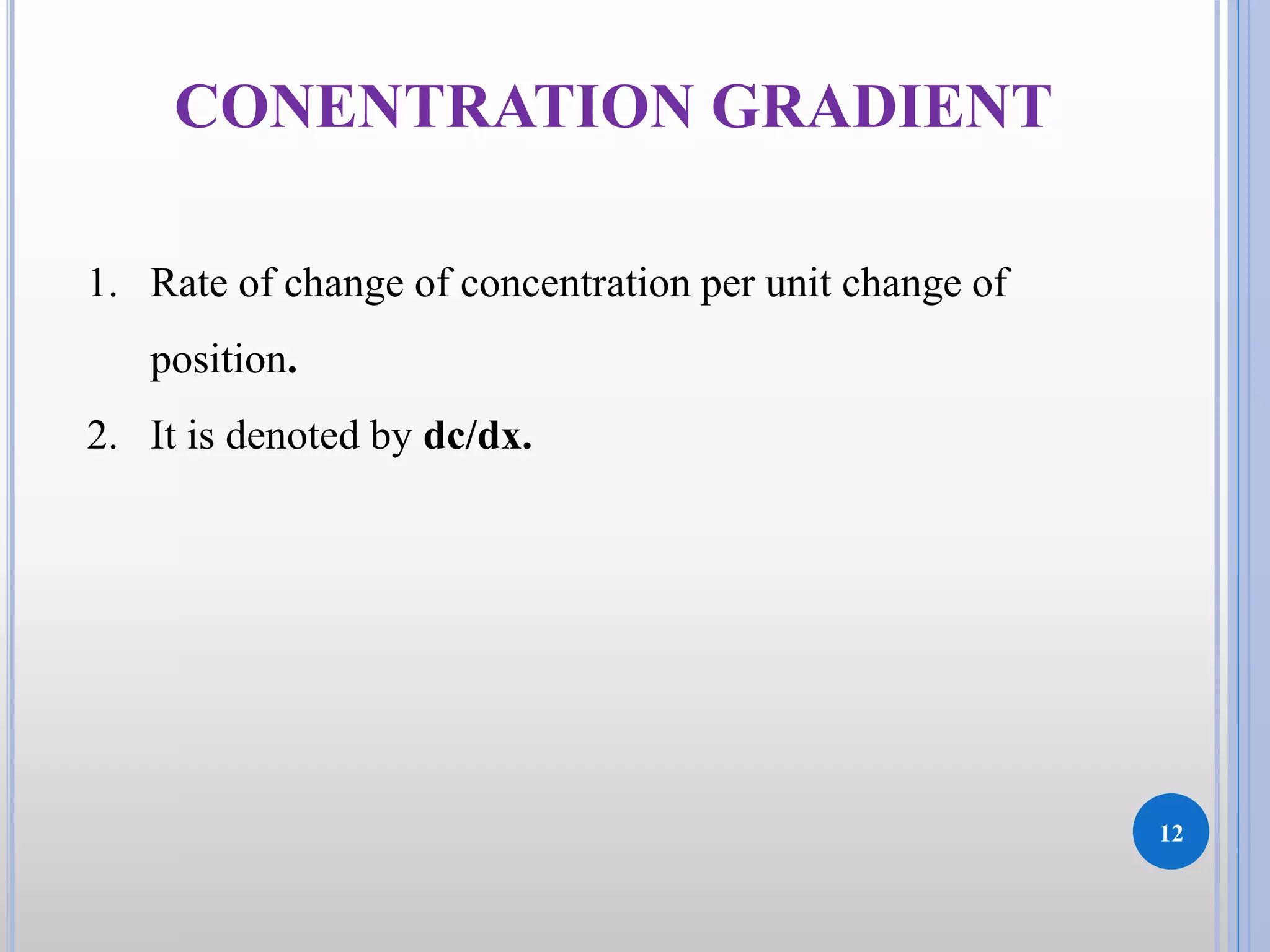
CONENTRATION GRADIENT
12
1. Rate of change of concentration per unit change of
position.
2. It is denoted by dc/dx.
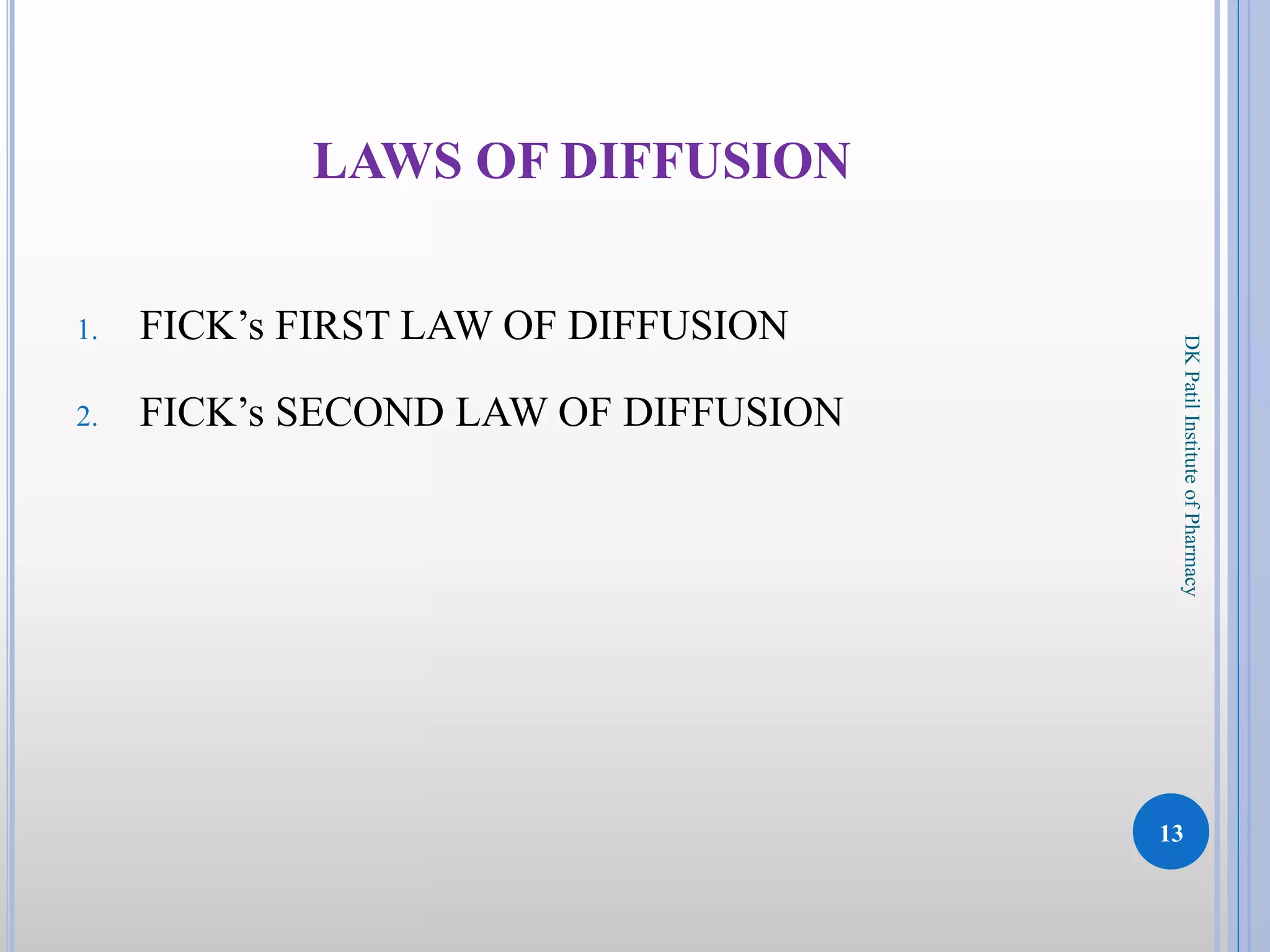
LAWS OF DIFFUSION
1. FICK’s FIRST LAW OF DIFFUSION
2. FICK’s SECOND LAW OF DIFFUSION
13
DKPatilInstituteofPharmacy
FICK’S FIRST LAW OF DIFFUSION
14
DKPatilInstituteofPharmacy
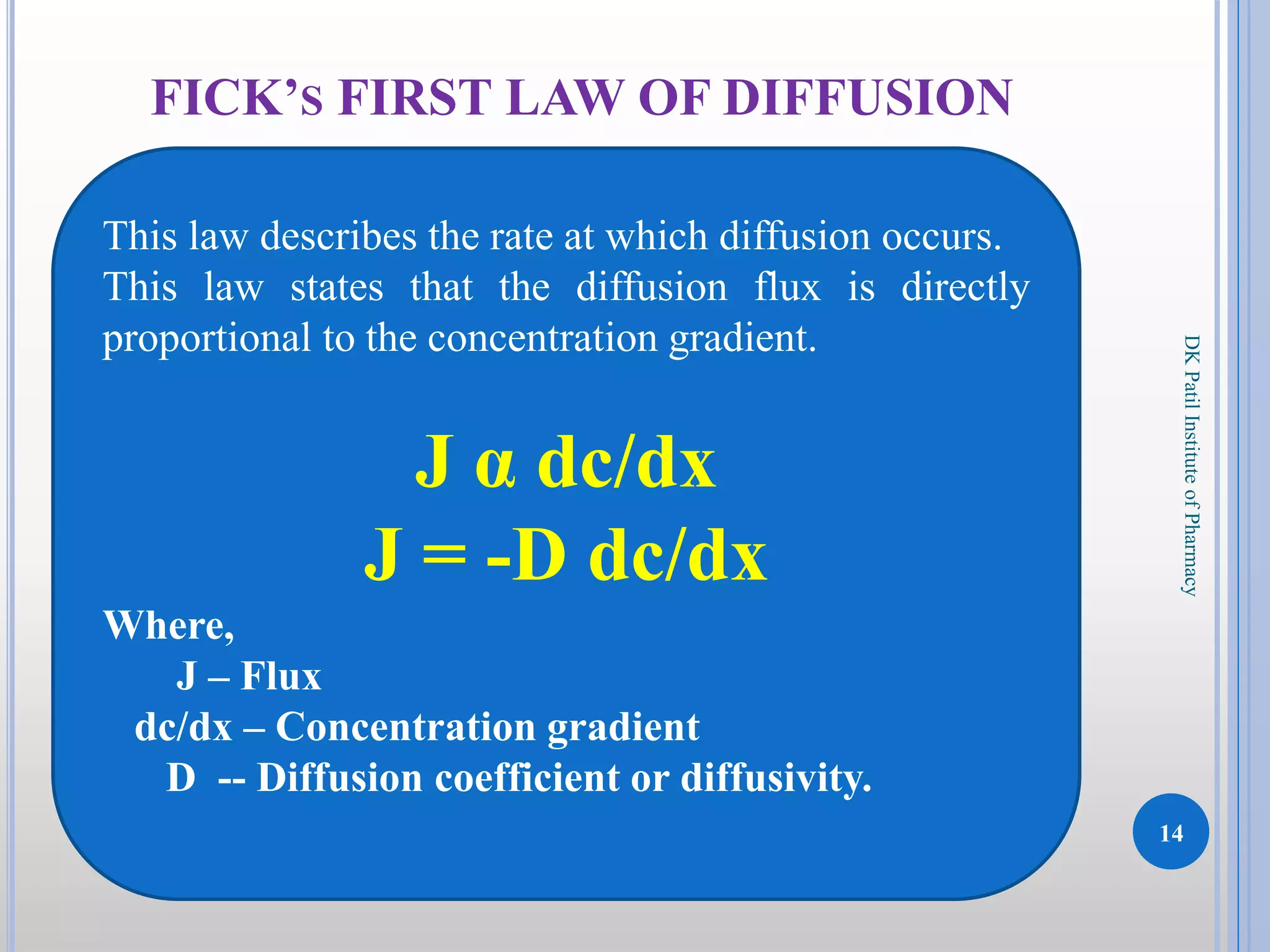
This law describes the rate at which diffusion occurs.
This law states that the diffusion flux is directly
proportional to the concentration gradient.
J α dc/dx
J = -D dc/dx
Where,
J – Flux
dc/dx – Concentration gradient
D -- Diffusion coefficient or diffusivity.
FICK’S FIRST LAW OF DIFFUSION
15
DKPatilInstituteofPharmacy
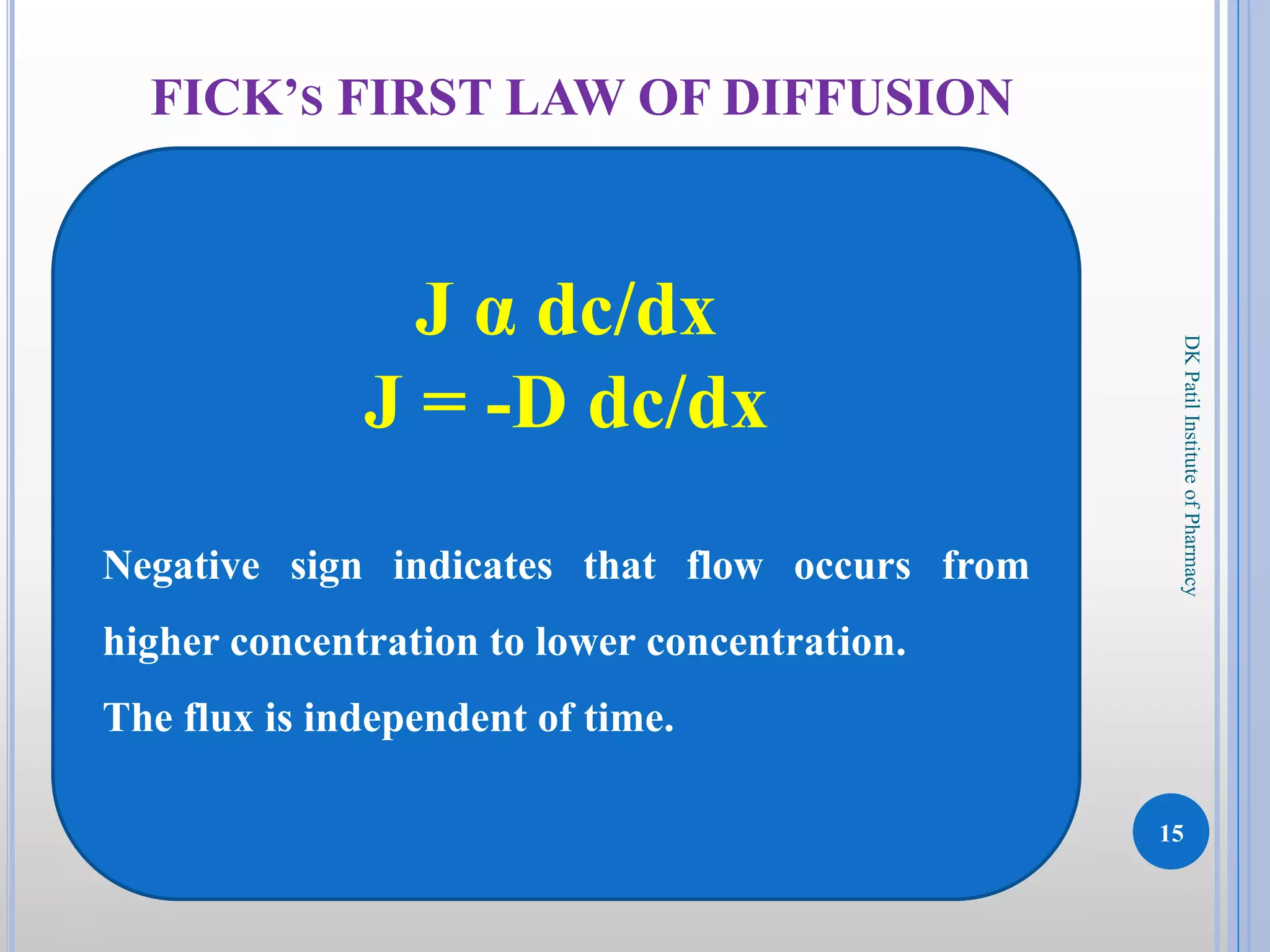
J α dc/dx
J = -D dc/dx
Negative sign indicates that flow occurs from
higher concentration to lower concentration.
The flux is independent of time.
FICK’S SECOND LAW OF DIFFUSION
16
DKPatilInstituteofPharmacy
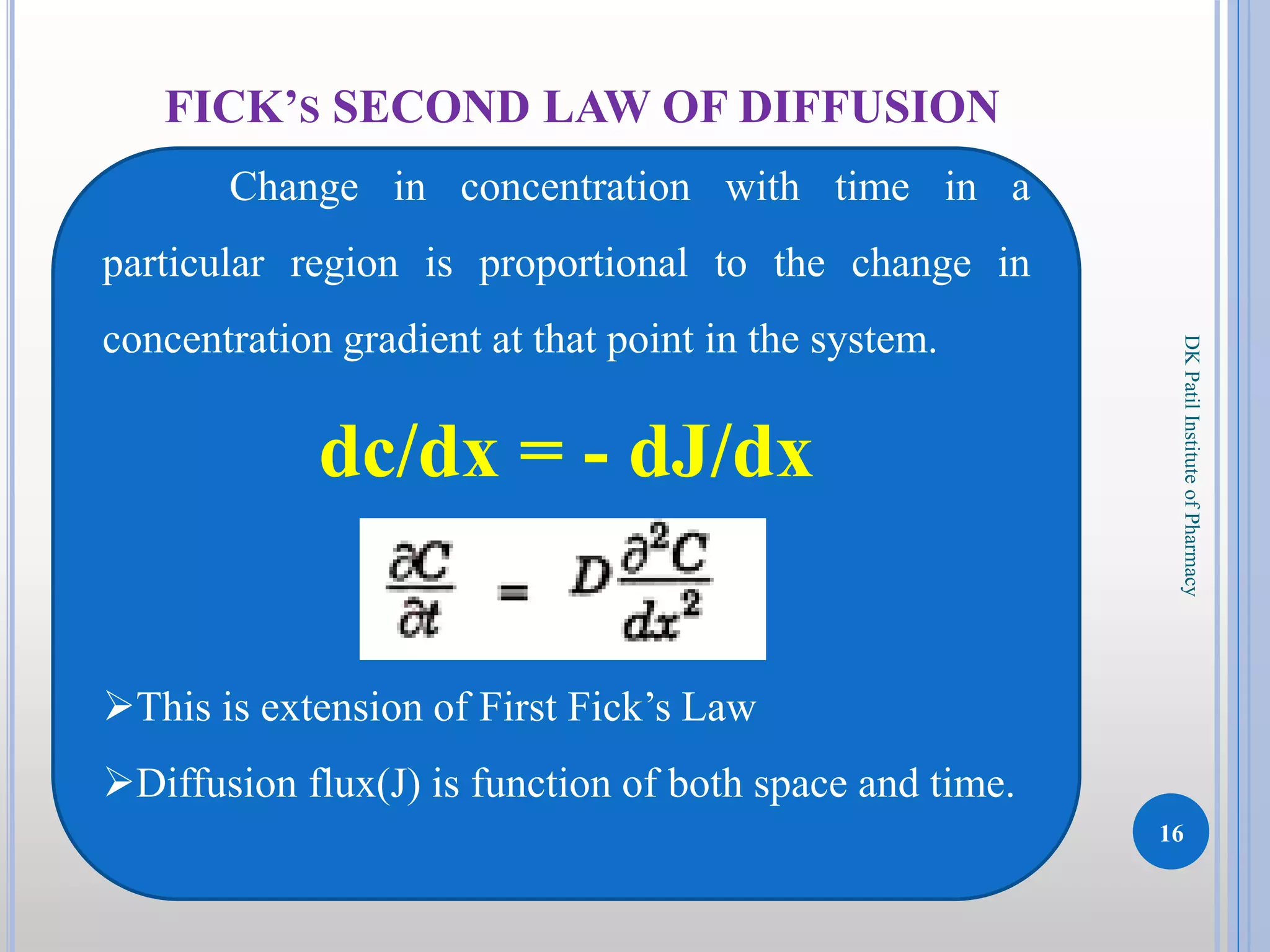
Change in concentration with time in a
particular region is proportional to the change in
concentration gradient at that point in the system.
dc/dx = - dJ/dx
This is extension of First Fick’s Law
Diffusion flux(J) is function of both space and time.
17

Solubility 4 diffusion principles in biological systems. Diffusion Flux, Fick's Diffusion Laws, Concentration gradient,

  • 1.
    SOLUBILITY – 4 DIFFUSIONPRINCIPLES IN BIOLOGICAL SYSTEMS Presented By: Mr. S.M. Ambore Asst. Professor, DK Patil Institute of Pharmacy, Loha. Nanded
  • 2.
  • 3.
    3 DIFFUSION Diffusion is definedas a mass transfer of individual molecules of substance caused by random molecular motion and associated with concentration gradient. OR A physical process that refers to the net movement of molecules from a region of high concentration to lower concentration under the influence of concentration gradient. 1. It is time dependant process. 2. It is well explained by FICK’S LAW OF DIFFUSION
  • 4.
  • 5.
  • 6.
    6 NEED OF DIFFUSION Ithelps to understand, 1. Release of drug from Pharmaceutical dosage form 2. Ultrafiltration, microfiltration, dialysis, hemodailysis. 3. Permeation & distribution of drug in living tissues. 4. Estimation of molecular weight of polymers. 5. Prediction of absorption & elimination of drug.
  • 7.
    7 TYPES OF DIFFUSION PASSIVEDIFFUSION: 1. Net movement of material from an area of high concentration to lower concentration area. 2. The difference between high & low concentration is called as concentration gradient. 3. Diffusion will continue until the gradient has been eliminated or equilibrium is attained.
  • 8.
  • 9.
    9 TYPES OF DIFFUSION FACILITATEDDIFFUSION: It is movement of molecules across th cell membrane via special transport proteins that are embedded within the cellular membrane ACTIVE DIFFUSION: It is movement of molecules across membrane from lower conc. to higher conc. against concentration gradient.
  • 10.
  • 11.
    DIFFUSION FLUX 11 How manyatoms moving at how much time in how much area is called Flux(J). The Diffusion Flux(J) is the amount of matter flowing through a unit area in unit time. It is denoted by J.
  • 12.
    CONENTRATION GRADIENT 12 1. Rateof change of concentration per unit change of position. 2. It is denoted by dc/dx.
  • 13.
    LAWS OF DIFFUSION 1.FICK’s FIRST LAW OF DIFFUSION 2. FICK’s SECOND LAW OF DIFFUSION 13 DKPatilInstituteofPharmacy
  • 14.
    FICK’S FIRST LAWOF DIFFUSION 14 DKPatilInstituteofPharmacy This law describes the rate at which diffusion occurs. This law states that the diffusion flux is directly proportional to the concentration gradient. J α dc/dx J = -D dc/dx Where, J – Flux dc/dx – Concentration gradient D -- Diffusion coefficient or diffusivity.
  • 15.
    FICK’S FIRST LAWOF DIFFUSION 15 DKPatilInstituteofPharmacy J α dc/dx J = -D dc/dx Negative sign indicates that flow occurs from higher concentration to lower concentration. The flux is independent of time.
  • 16.
    FICK’S SECOND LAWOF DIFFUSION 16 DKPatilInstituteofPharmacy Change in concentration with time in a particular region is proportional to the change in concentration gradient at that point in the system. dc/dx = - dJ/dx This is extension of First Fick’s Law Diffusion flux(J) is function of both space and time.
  • 17.