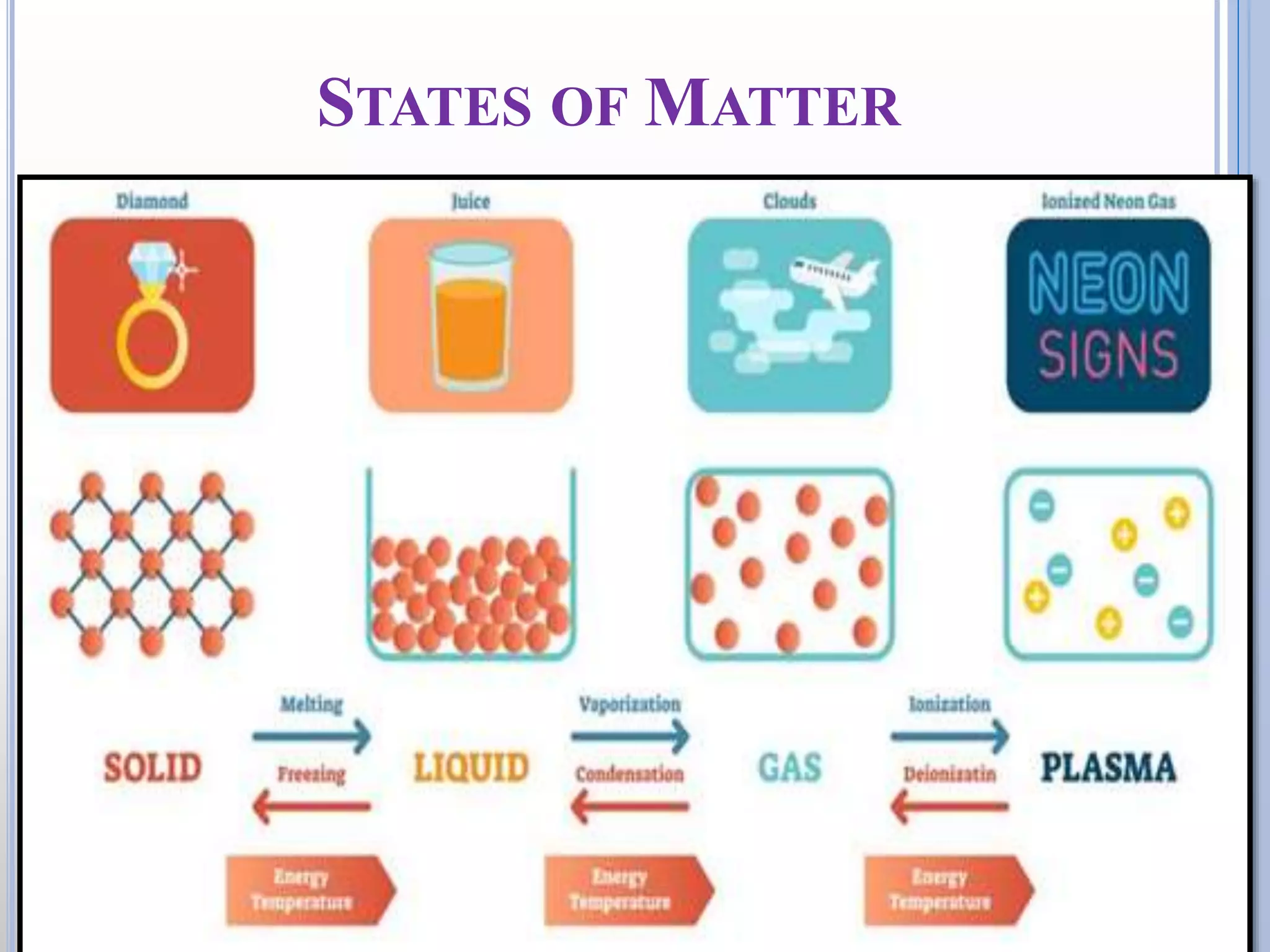
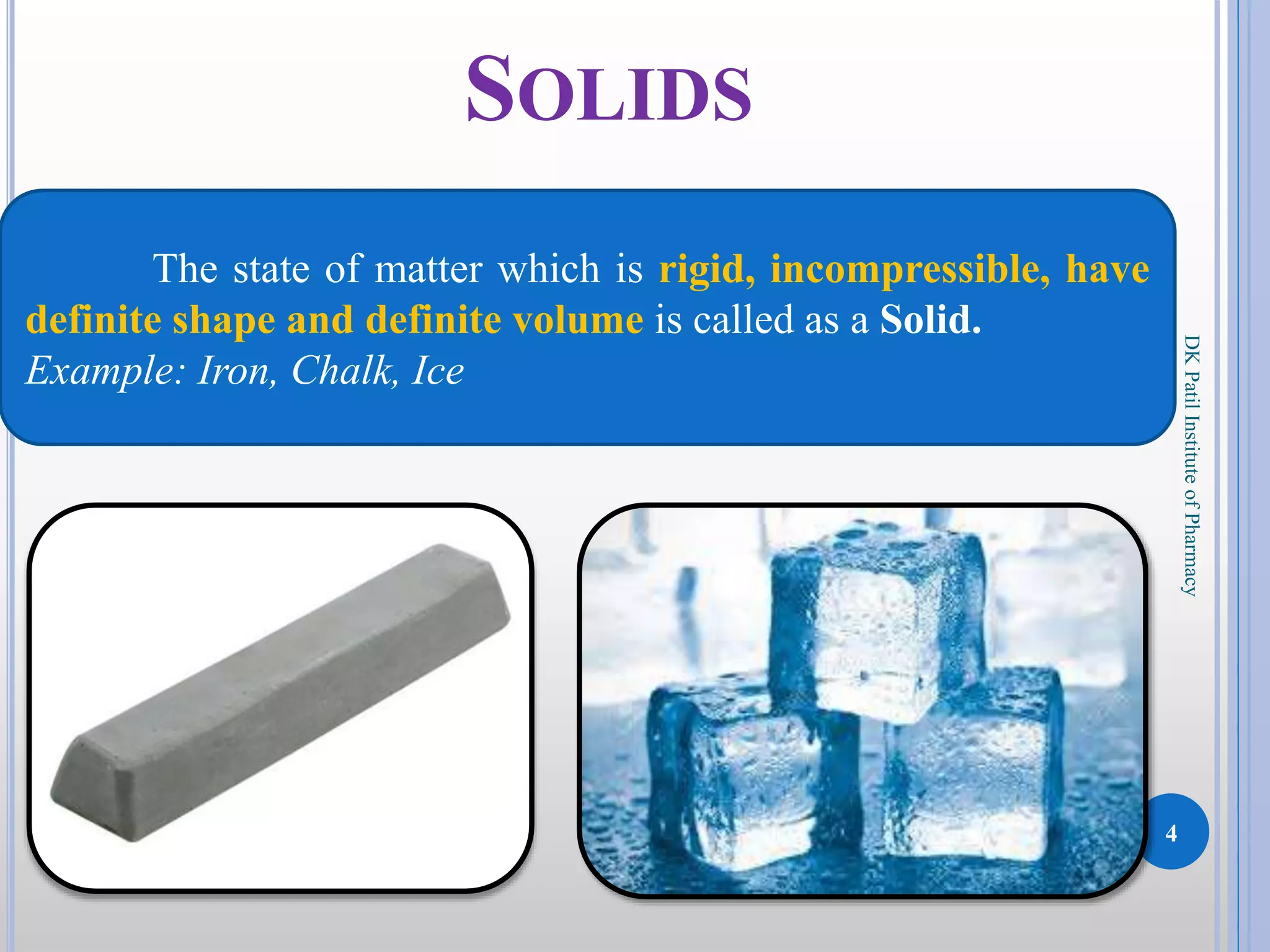
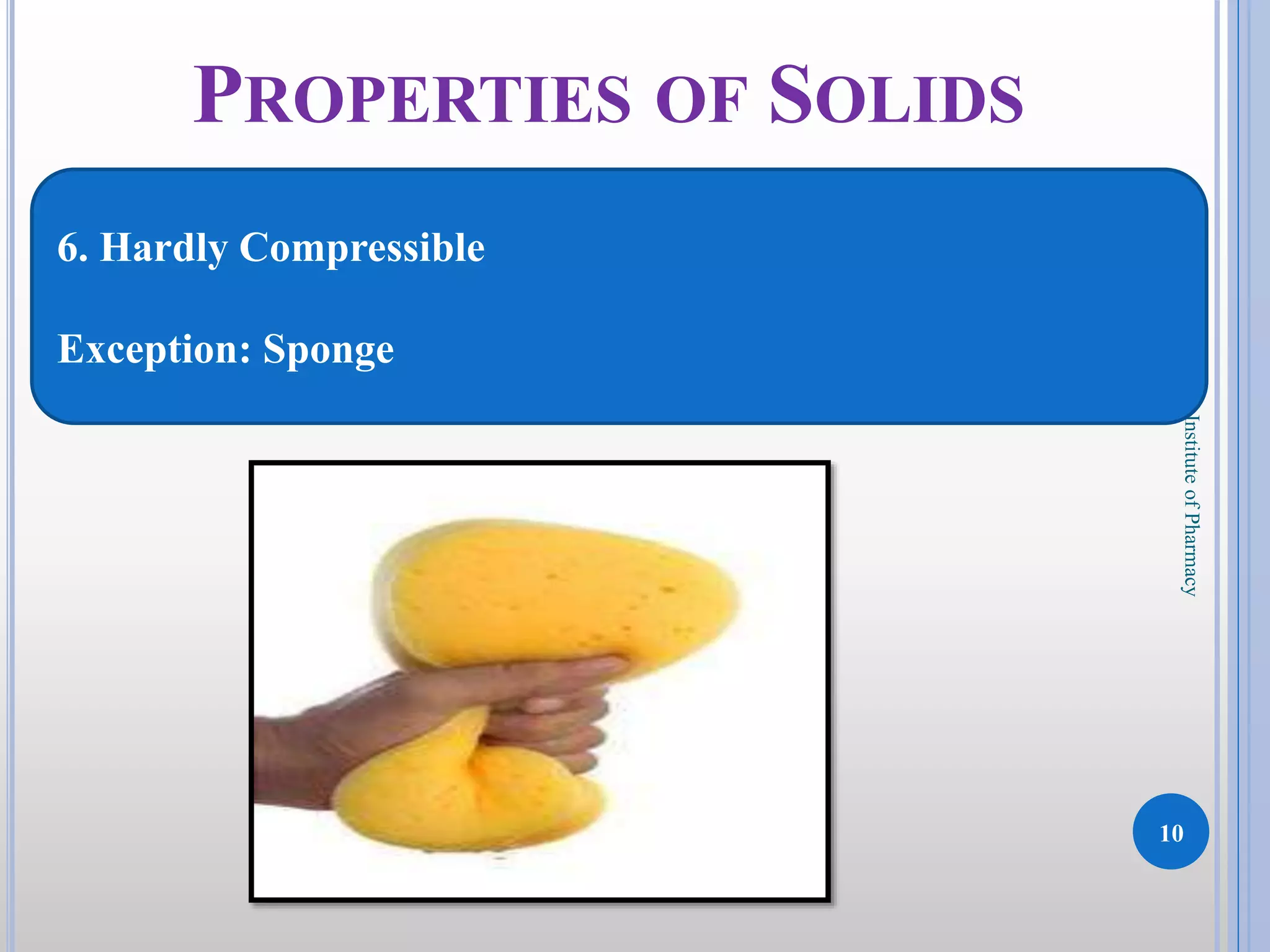
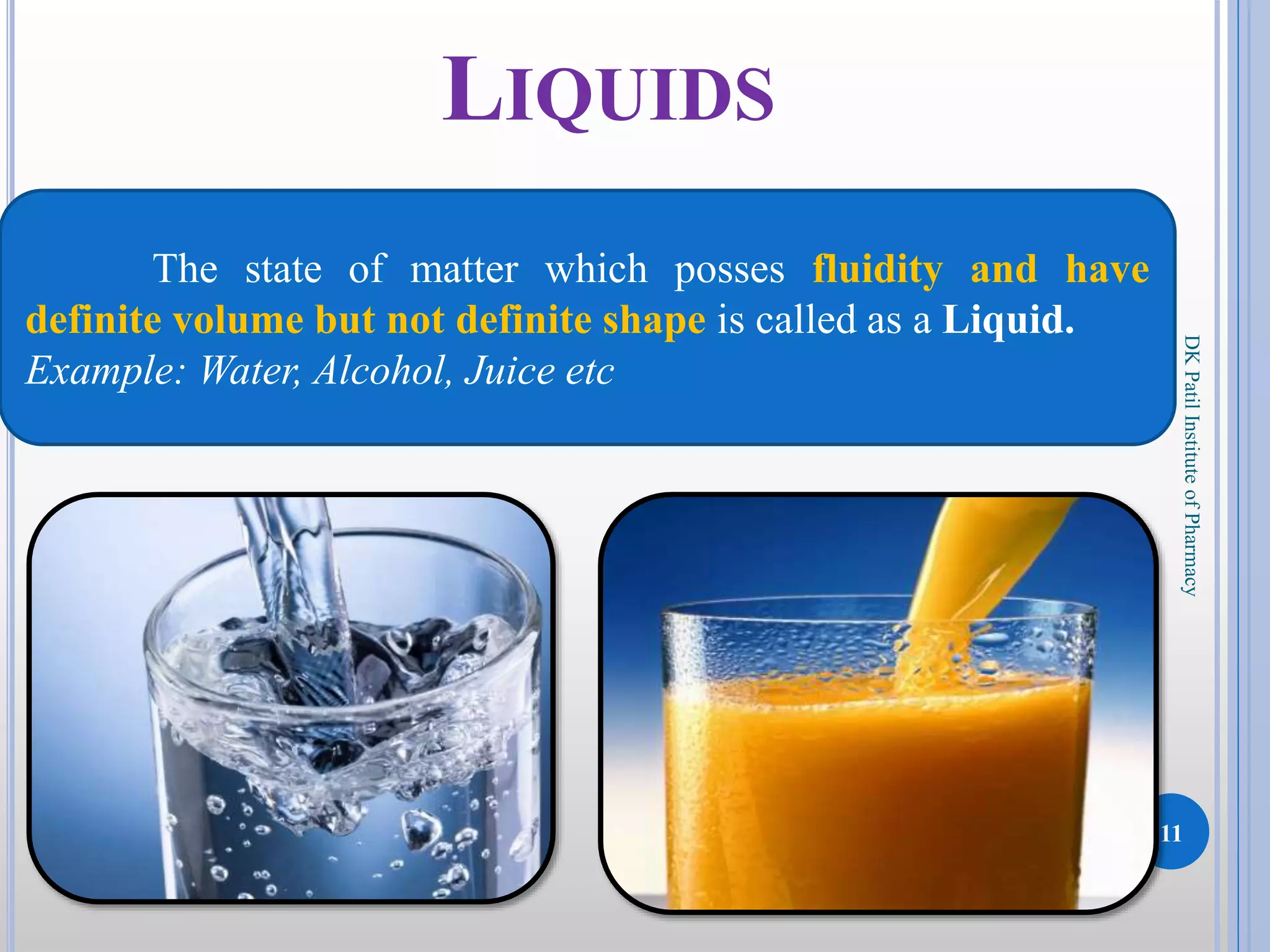
The document discusses the states of matter of solids and liquids. Solids have definite shape and volume, are rigid, incompressible, and do not diffuse or flow. Liquids have definite volume but not definite shape, are fluid, compressible, undergo diffusion, are non-rigid, and have densities between solids and gases. Key properties of liquids include fluidity, compressibility, diffusion, non-rigidity, and kinetic energy that is greater than solids but less than gases due to weaker intermolecular forces and greater intermolecular spacing than solids.
9
DKPatilInstituteofPharmacy
PROPERTIES OF SOLIDS
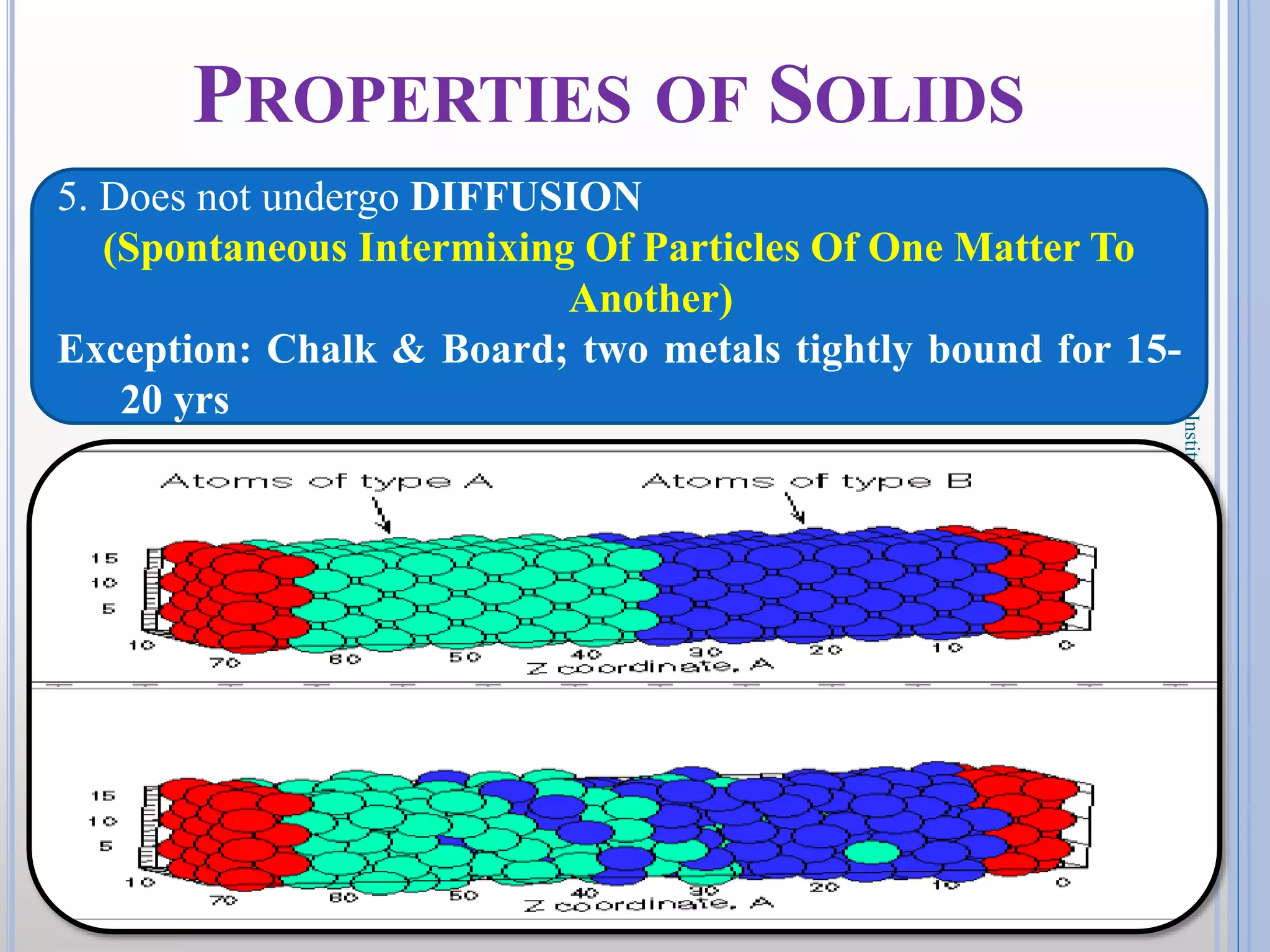
5.Does not undergo DIFFUSION
(Spontaneous Intermixing Of Particles Of One Matter To
Another)
Exception: Chalk & Board; two metals tightly bound for 15-
20 yrs
13
DKPatilInstituteofPharmacy
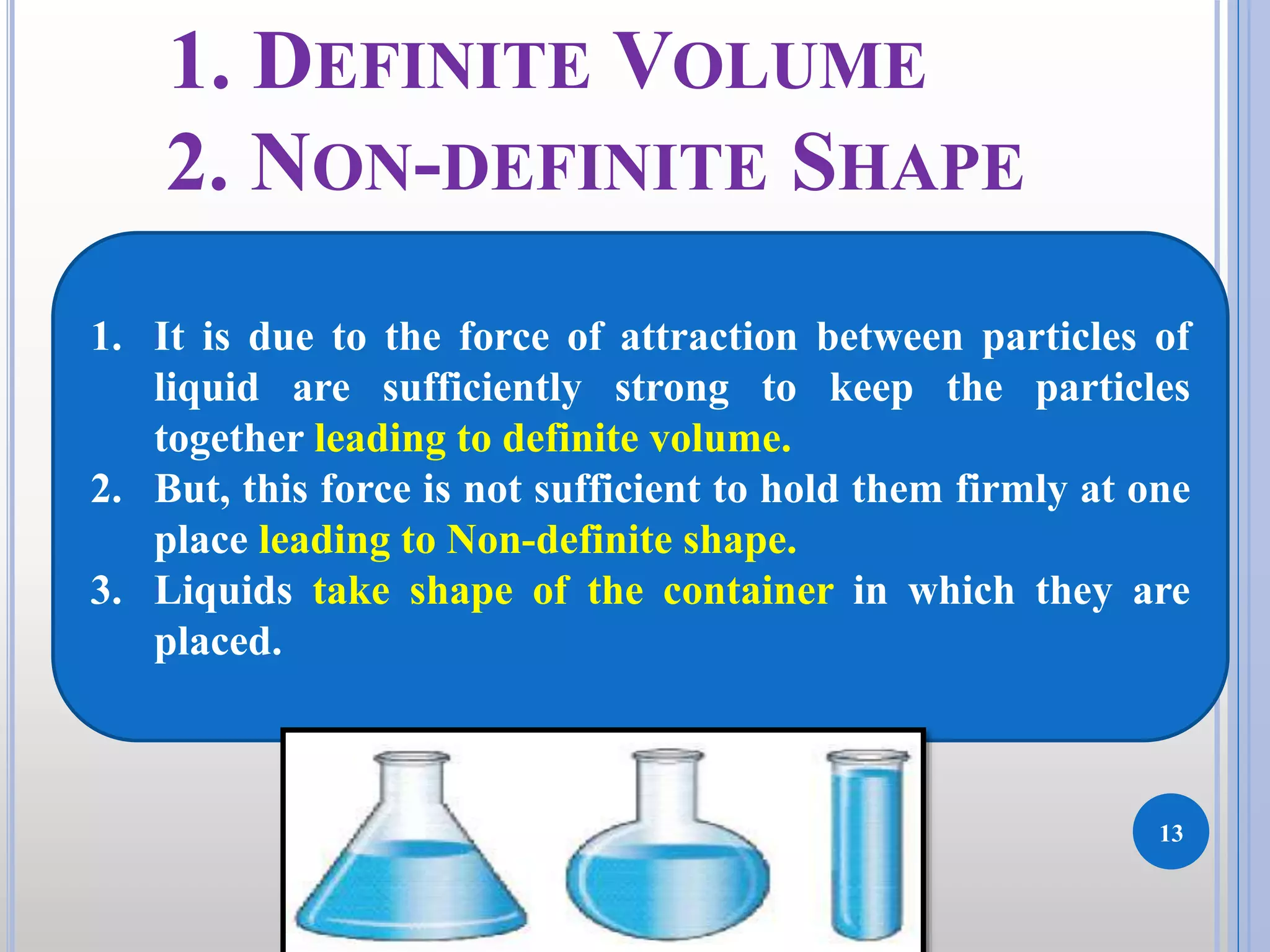
1. DEFINITE VOLUME
2.NON-DEFINITE SHAPE
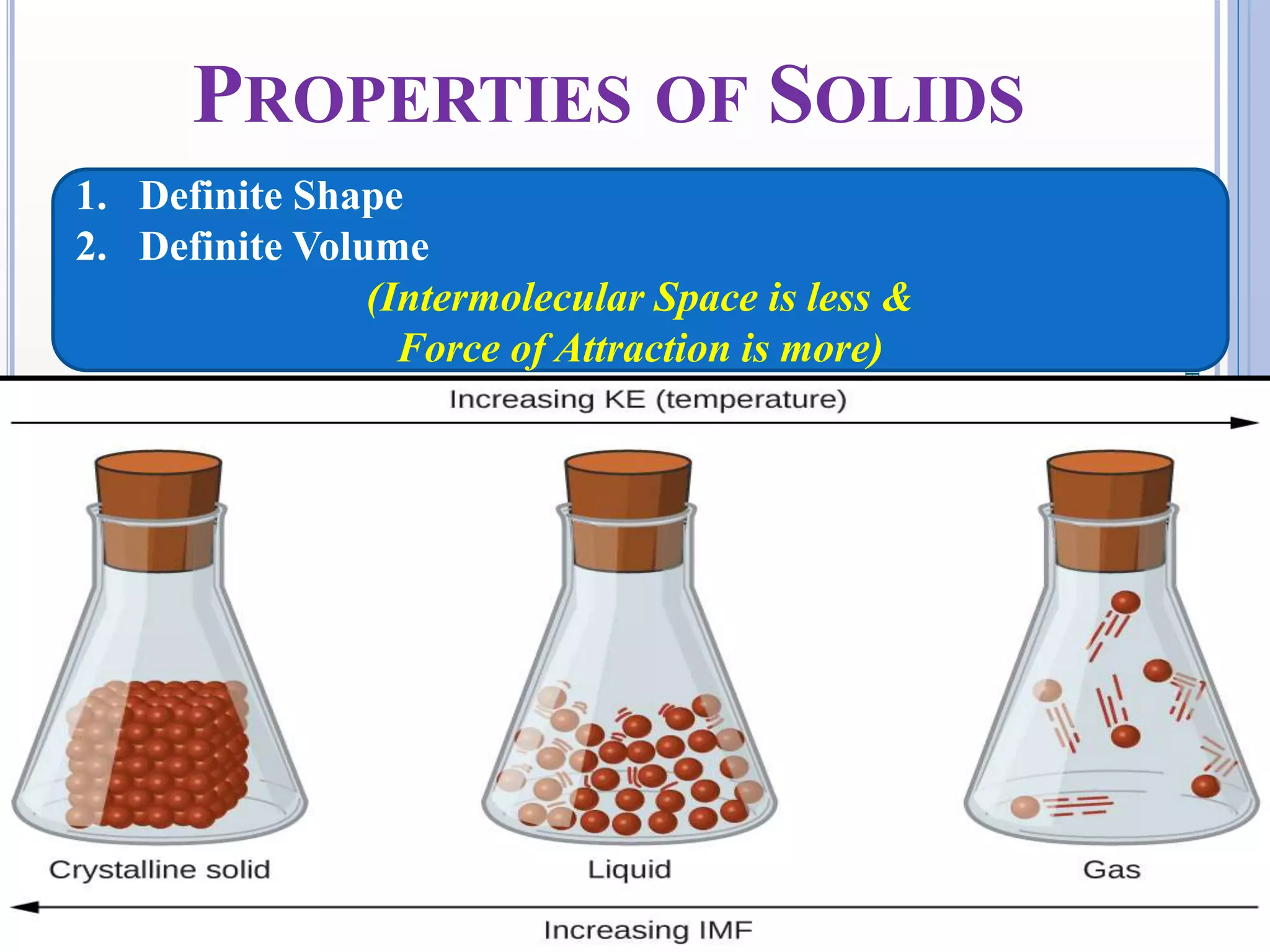
1. It is due to the force of attraction between particles of
liquid are sufficiently strong to keep the particles
together leading to definite volume.
2. But, this force is not sufficient to hold them firmly at one
place leading to Non-definite shape.
3. Liquids take shape of the container in which they are
placed.
14.
14
DKPatilInstituteofPharmacy
3. FLUIDITY
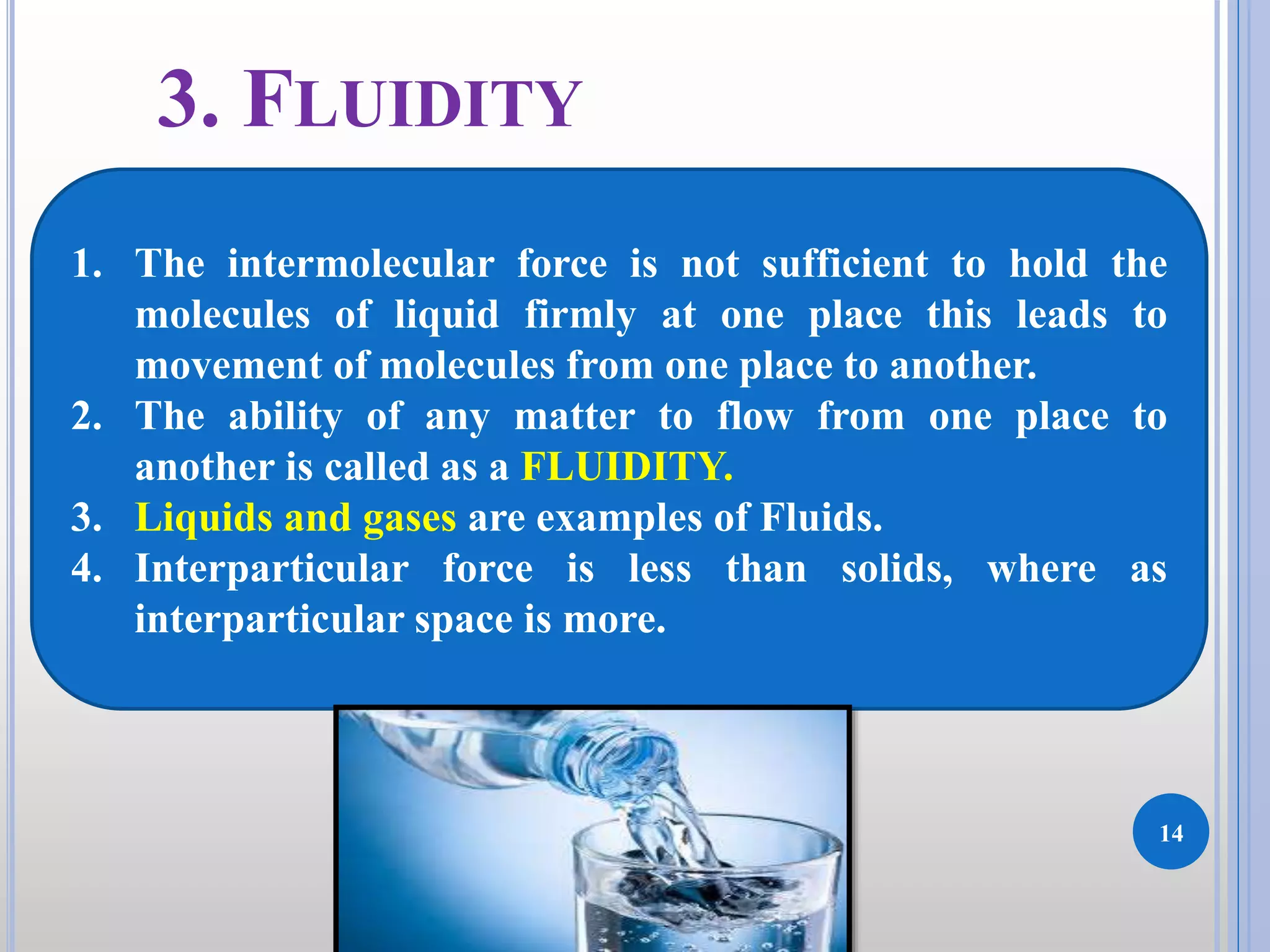
1. Theintermolecular force is not sufficient to hold the
molecules of liquid firmly at one place this leads to
movement of molecules from one place to another.
2. The ability of any matter to flow from one place to
another is called as a FLUIDITY.
3. Liquids and gases are examples of Fluids.
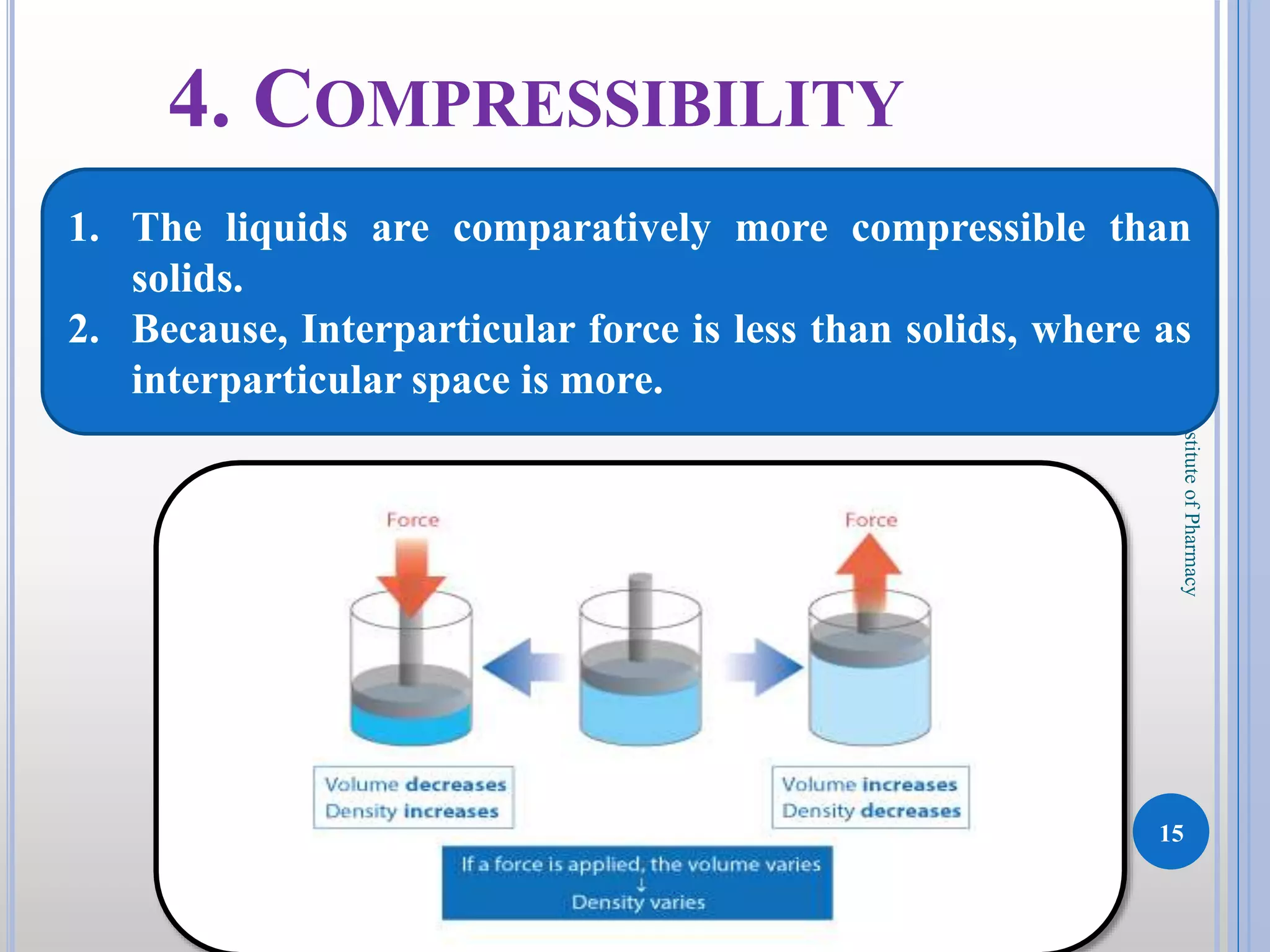
4. Interparticular force is less than solids, where as
interparticular space is more.
16
DKPatilInstituteofPharmacy
5.DIFFUSION
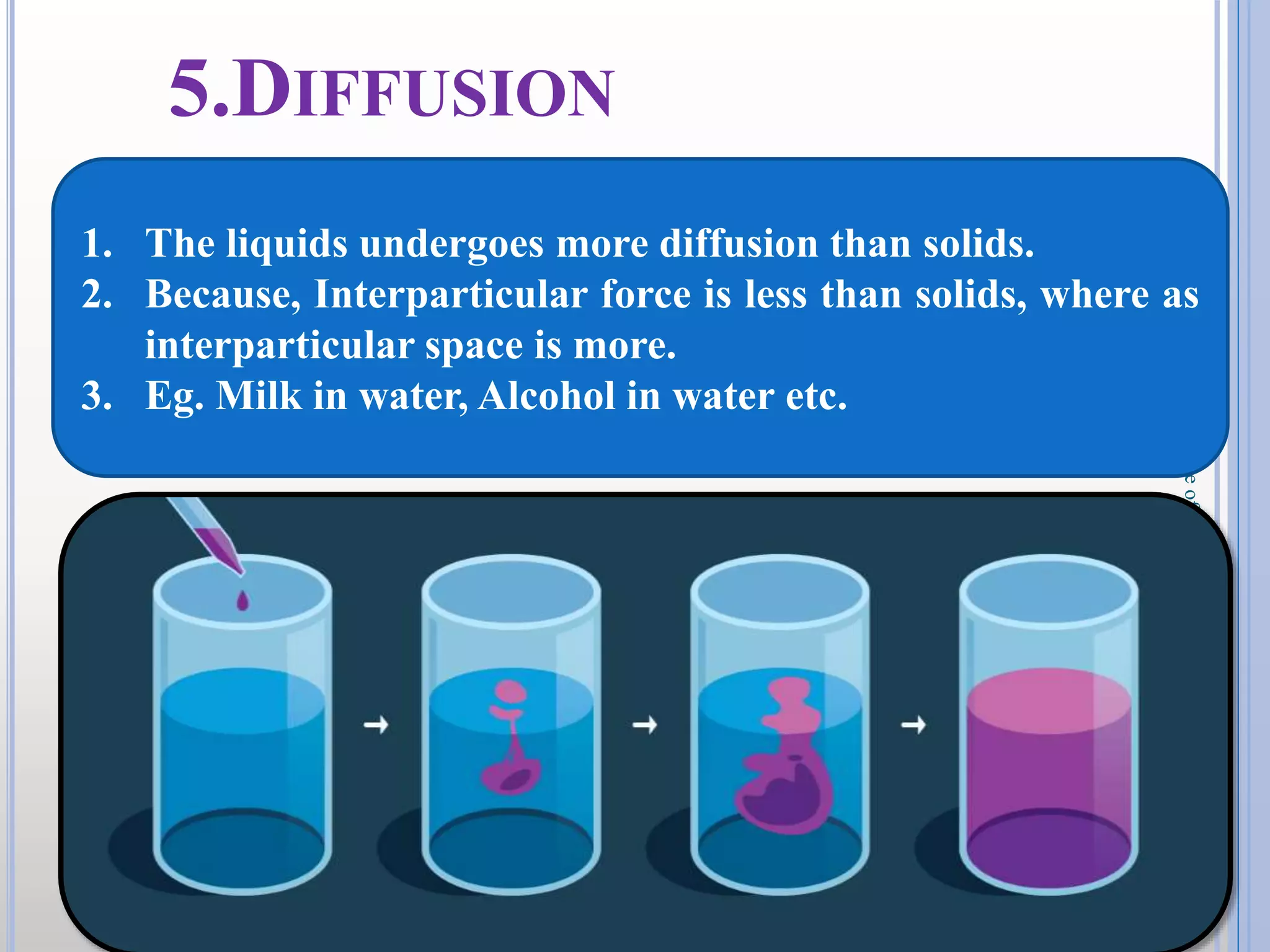
1. The liquidsundergoes more diffusion than solids.
2. Because, Interparticular force is less than solids, where as
interparticular space is more.
3. Eg. Milk in water, Alcohol in water etc.
18
DKPatilInstituteofPharmacy
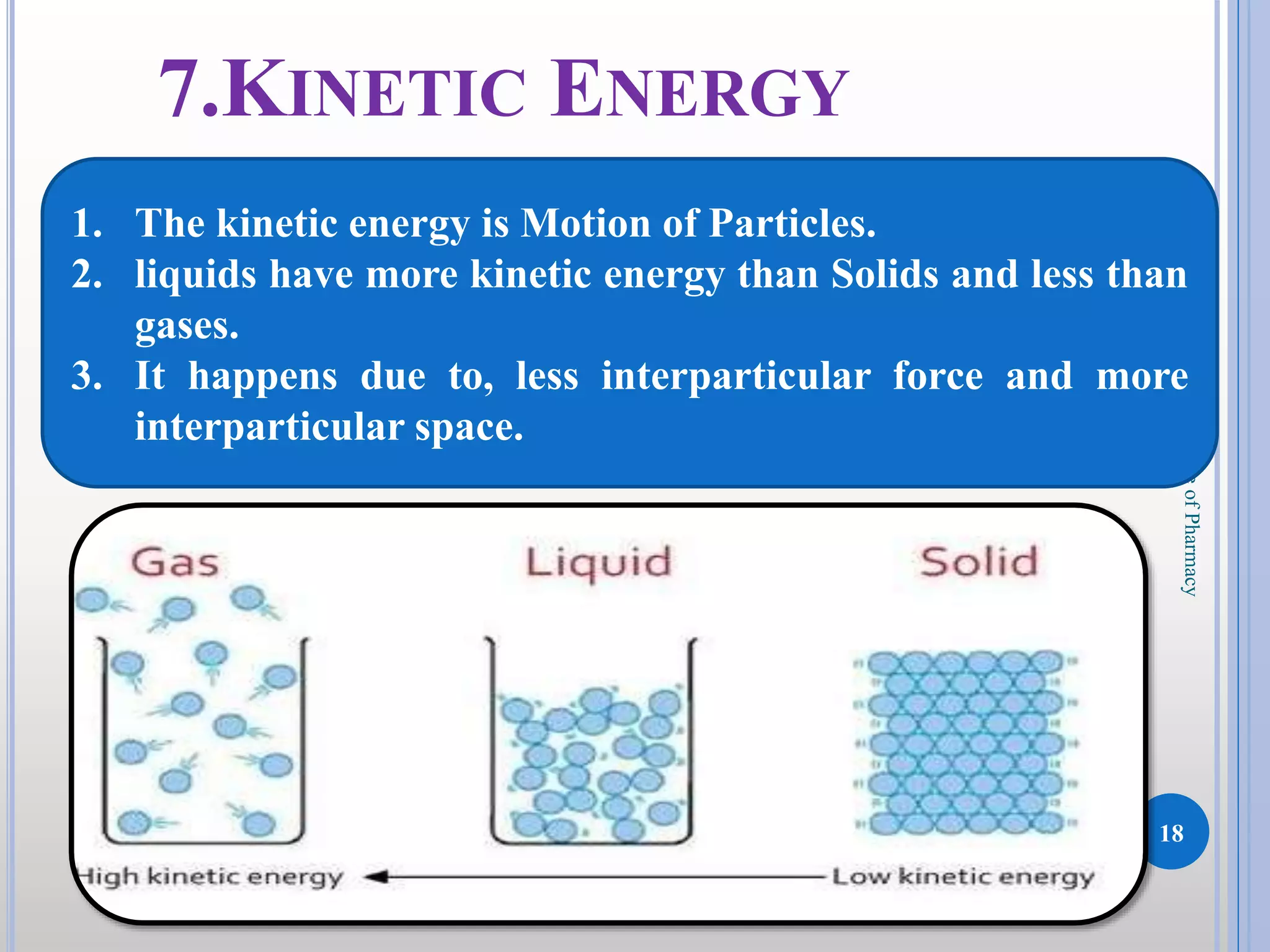
7.KINETIC ENERGY
1. Thekinetic energy is Motion of Particles.
2. liquids have more kinetic energy than Solids and less than
gases.
3. It happens due to, less interparticular force and more
interparticular space.
19.
19
DKPatilInstituteofPharmacy
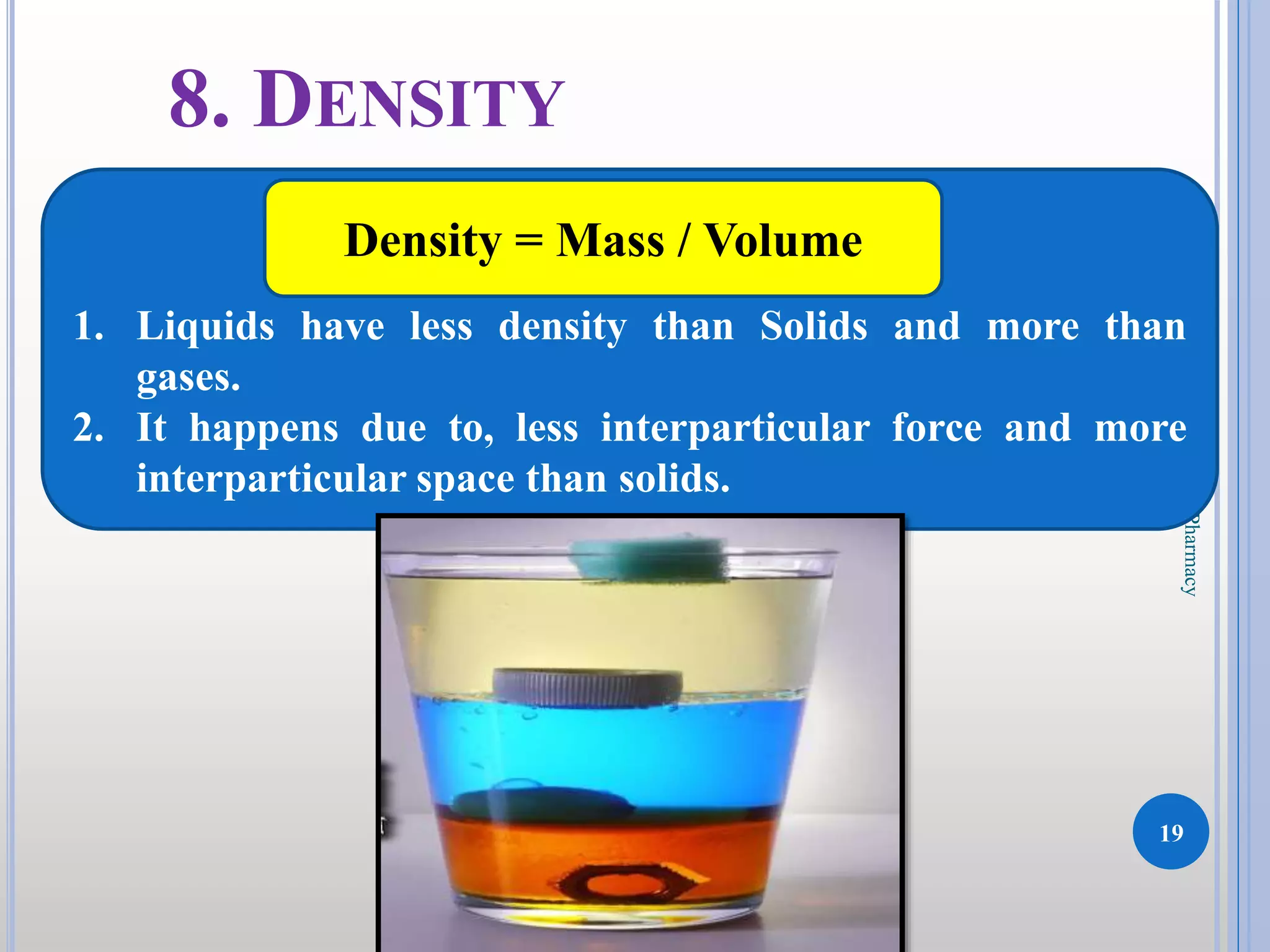
8. DENSITY
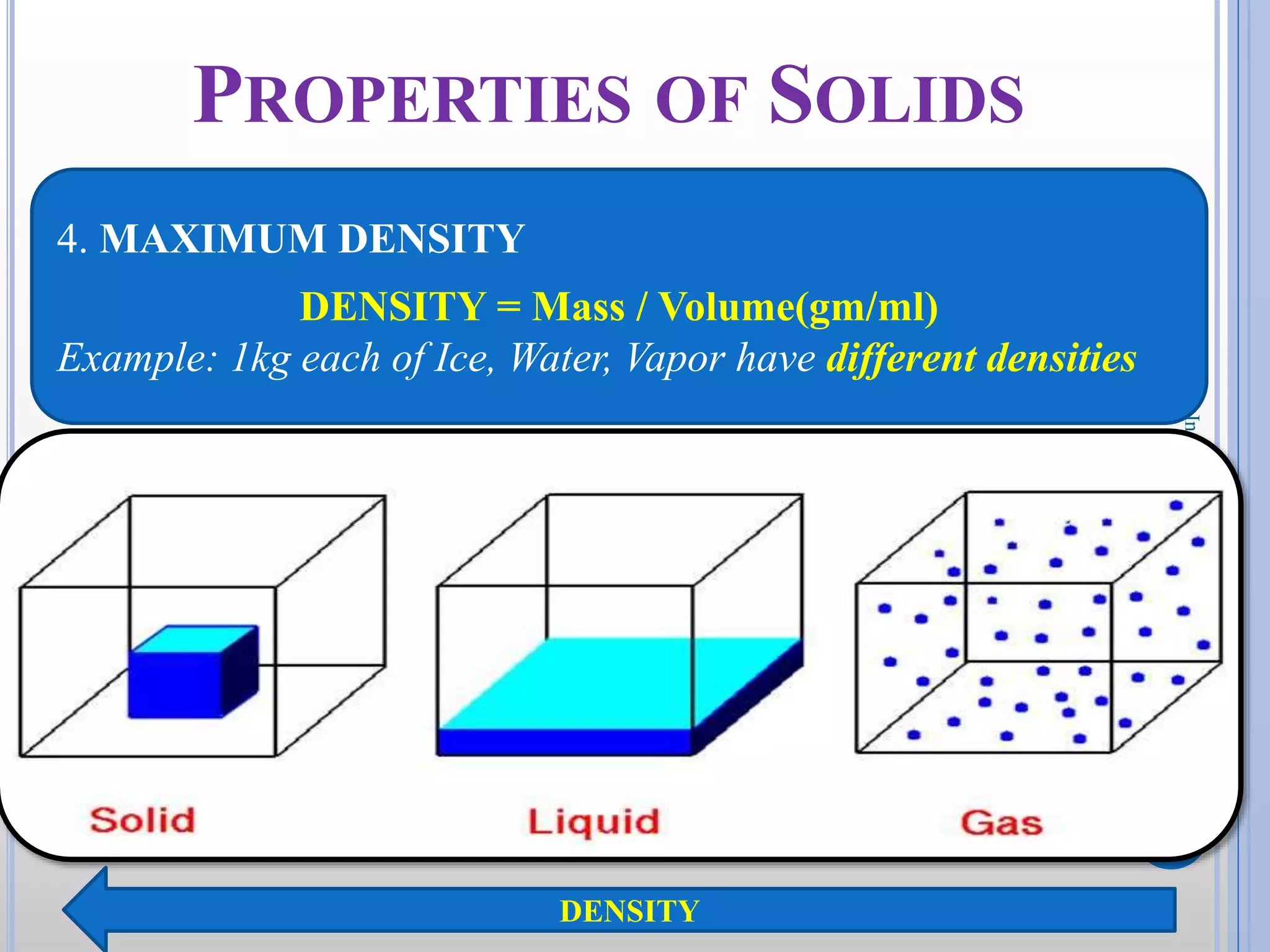
1. Liquidshave less density than Solids and more than
gases.
2. It happens due to, less interparticular force and more
interparticular space than solids.
Density = Mass / Volume
20.
20
DKPatilInstituteofPharmacy
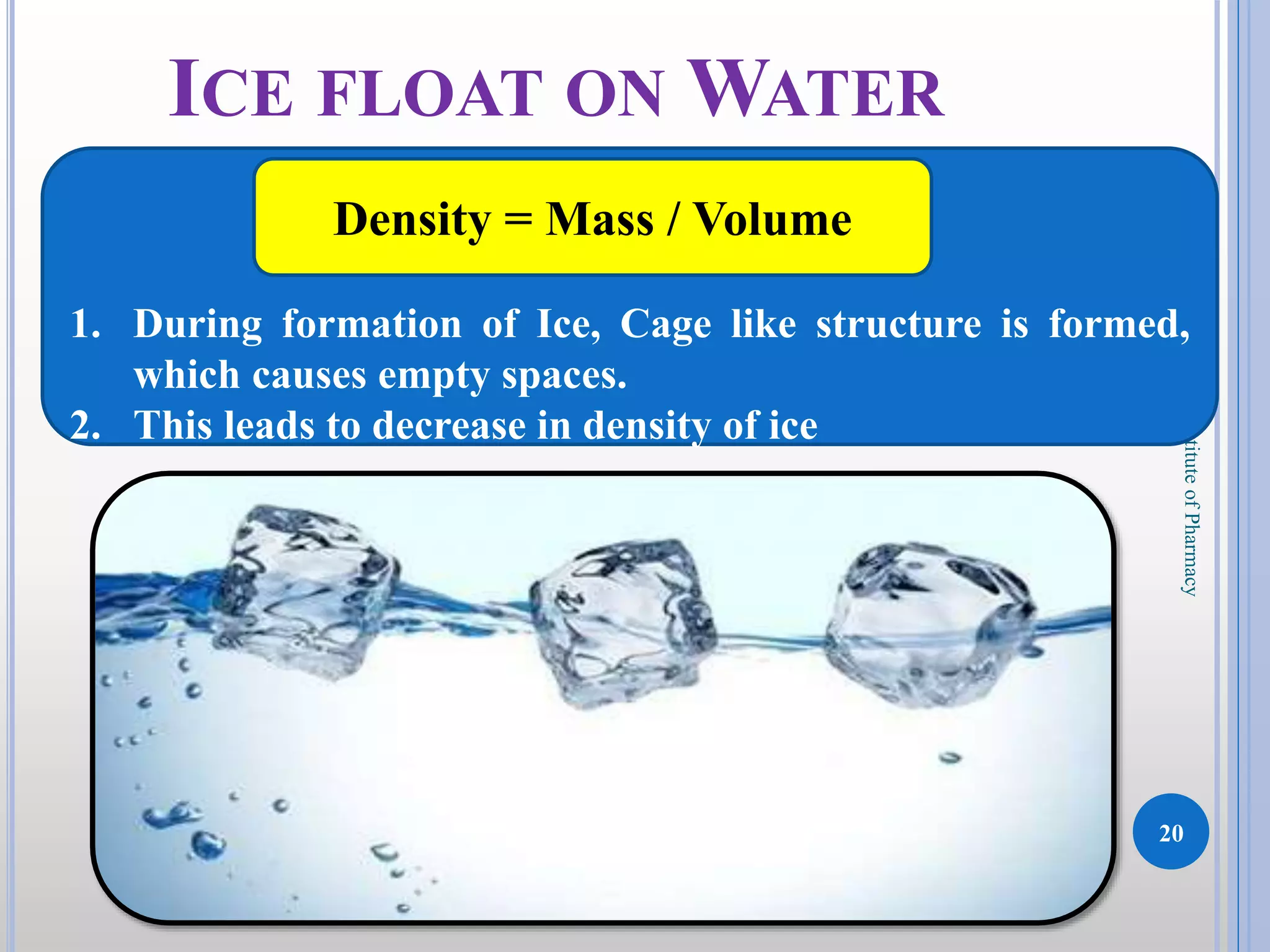
ICE FLOAT ONWATER
1. During formation of Ice, Cage like structure is formed,
which causes empty spaces.
2. This leads to decrease in density of ice
Density = Mass / Volume