RA
TE

UL
AD DS
OO
F

ON
TI

IN
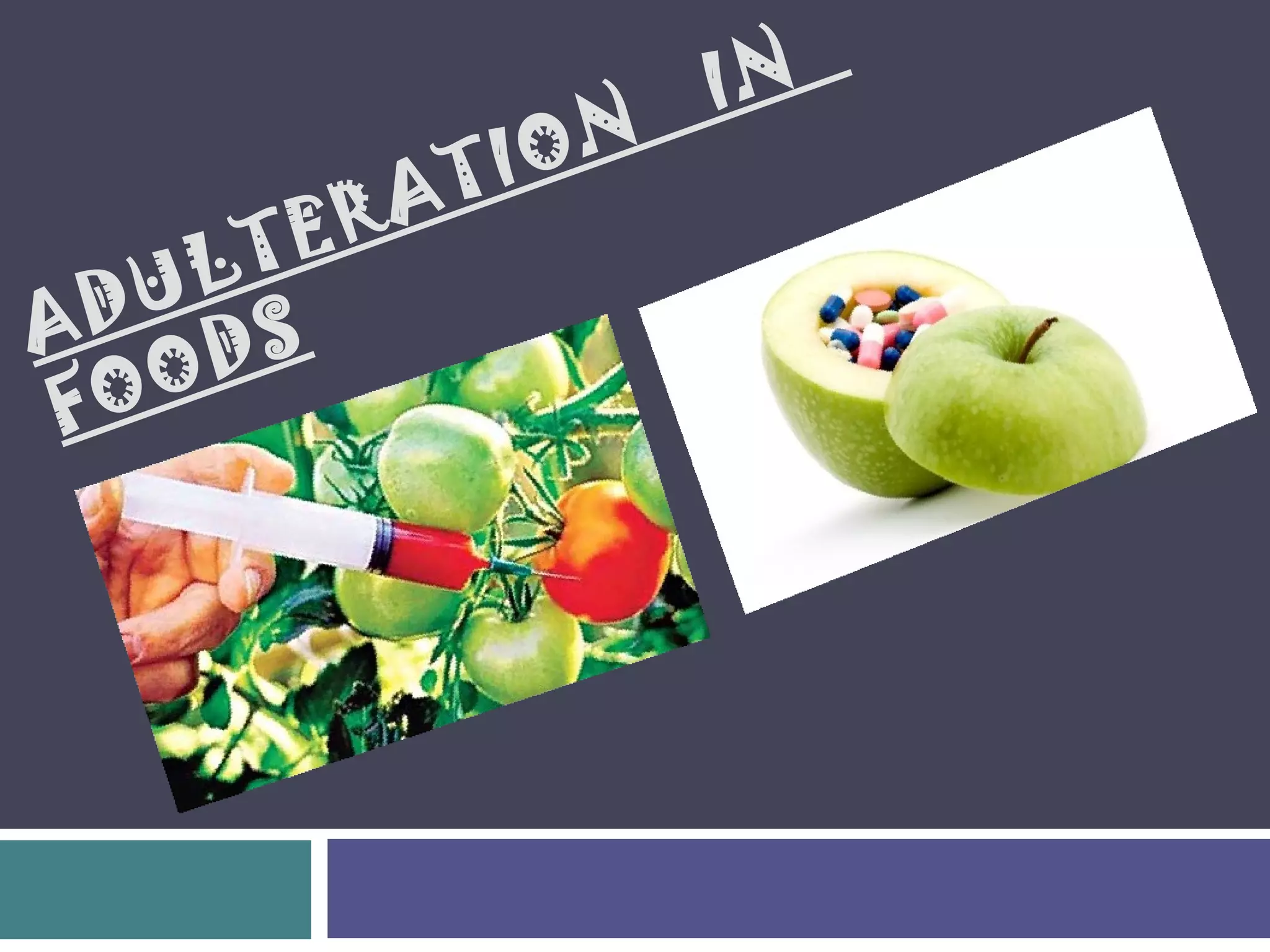
What is Adulteration??


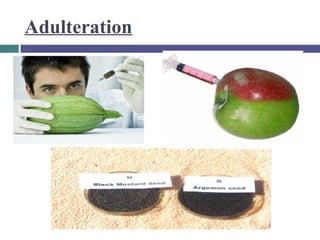
Adulteration usually refers to mixing other matter of an
inferior and sometimes harmful quality with food or drink
intended to be sold. As a result of adulteration, food or drink
becomes impure and unfit for human consumption.



The federal Food and Drug Administration prohibits
transportation of adulterated foods, drugs, and cosmetics in
interstate commerce, as provided under the Food, Drug and
Cosmetic Act (21 U.S.C.A. § 301 et seq. [1938])



"Adulteration" is a legal term meaning that a food product
fails to meet federal or state standards.
Adulteration
Some adulterated food products and
there adverse effects


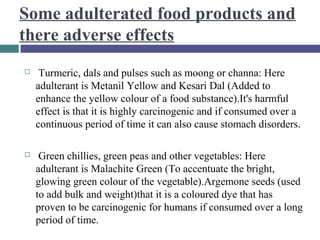
Turmeric, dals and pulses such as moong or channa: Here
adulterant is Metanil Yellow and Kesari Dal (Added to
enhance the yellow colour of a food substance).It's harmful
effect is that it is highly carcinogenic and if consumed over a
continuous period of time it can also cause stomach disorders.



Green chillies, green peas and other vegetables: Here
adulterant is Malachite Green (To accentuate the bright,
glowing green colour of the vegetable).Argemone seeds (used
to add bulk and weight)that it is a coloured dye that has
proven to be carcinogenic for humans if consumed over a long
period of time.
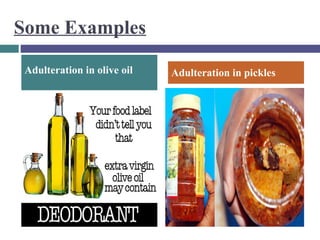
Some Examples
Adulteration in olive oil

Adulteration in pickles
Contd…


Mustard seeds and mustard oil: Here adulterant is Argemone
seeds (used to add bulk and weight).Papaya seeds (used to add
bulk)that the consumption of these could cause epidemic
dropsy and severe glaucoma. Young children and senior
citizens with poor immunity are more susceptible this.



Paneer, khoya, condensed milk and milk: Here adulterant is
starch (used to give itthick, rich texture).It 's harmful effect is
that it is unhygienic, unprocessed water and starch can cause
stomach disorders. Starch greatly reduces the nutritional value
of the ingredient.
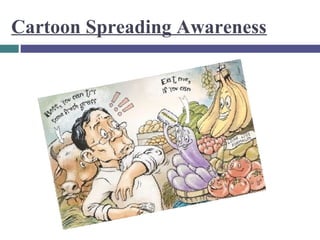
Cartoon Spreading Awareness
Contd…


Ice cream: Here adulterant is pepperonil, ethylacetate,
butraldehyde, ethyl acetate, nitrate, washing powder etc which
are not less than poison. Pepper oil is used as a pesticide and
ethyl acetate causes terrible diseases affecting lungs, kidneys
and heart.



Black pepper: Here adulterant is Papaya seeds (used to add
bulk).It 's harmful effect is that Papaya seeds can cause serious
liver problems and stomach disorders.



Coffee powder: Here adulterant is Tamarind seeds, chicory
powder It 's harmful effect is that it can cause diarrhea,
stomach disorders, giddiness and severe joint pains
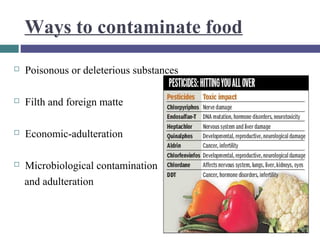
Ways to contaminate food


Poisonous or deleterious substances



Filth and foreign matte



Economic-adulteration



Microbiological contamination
and adulteration
Law against Food Adulteration
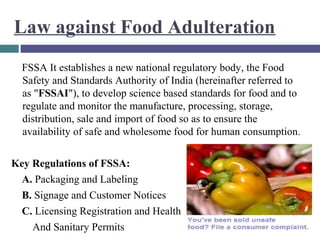
FSSA It establishes a new national regulatory body, the Food
Safety and Standards Authority of India (hereinafter referred to
as "FSSAI"), to develop science based standards for food and to
regulate and monitor the manufacture, processing, storage,
distribution, sale and import of food so as to ensure the
availability of safe and wholesome food for human consumption.
Key Regulations of FSSA:
A. Packaging and Labeling
B. Signage and Customer Notices
C. Licensing Registration and Health
And Sanitary Permits
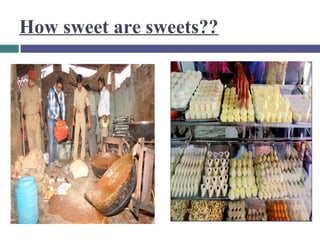
How sweet are sweets??
How to Detect Adulteration


Ingredient :Arhar Pulse , Adulterant: Kesarri Pulse
Kesari Pulse has a characteristic wedge shape. Larger Kesari
resembles Arhar (Tur). It can be separated by visual examination



Ingredient : Coffee powder, Adulterant: Cereal starch
Take a small quantity (one-fourth of a tea-spoon) of the sample in
a test tube and add 3 ml of distilled water in it. Light a spirit lamp
and heat the contents to colourize. Add 33 ml of a solution of
potassium permanganate and muratic acid (1:1) to decolourize
the mixture. The formation of blue colour in mixture by addition
of a drop of 1% aqueous solution of iodine indicates adulteration
with starch.
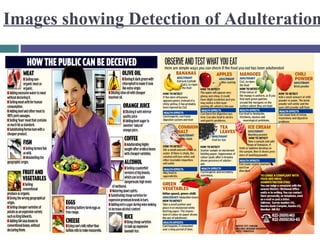
Images showing Detection of Adulteration
Contd…


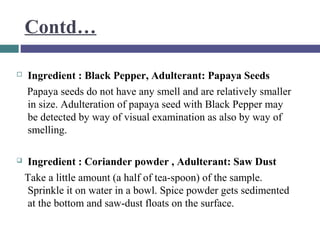
Ingredient : Black Pepper, Adulterant: Papaya Seeds
Papaya seeds do not have any smell and are relatively smaller
in size. Adulteration of papaya seed with Black Pepper may
be detected by way of visual examination as also by way of
smelling.



Ingredient : Coriander powder , Adulterant: Saw Dust
Take a little amount (a half of tea-spoon) of the sample.
Sprinkle it on water in a bowl. Spice powder gets sedimented
at the bottom and saw-dust floats on the surface.
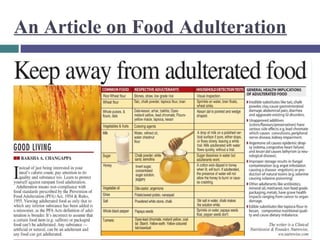
An Article on Food Adulteration
Contd…


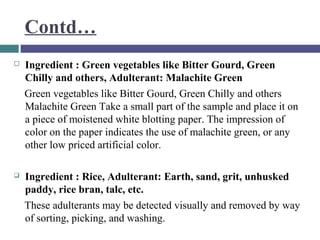
Ingredient : Green vegetables like Bitter Gourd, Green
Chilly and others, Adulterant: Malachite Green
Green vegetables like Bitter Gourd, Green Chilly and others
Malachite Green Take a small part of the sample and place it on
a piece of moistened white blotting paper. The impression of
color on the paper indicates the use of malachite green, or any
other low priced artificial color.



Ingredient : Rice, Adulterant: Earth, sand, grit, unhusked
paddy, rice bran, talc, etc.
These adulterants may be detected visually and removed by way
of sorting, picking, and washing.
Adulteration in foods

Adulteration in foods

  • 1.
  • 2.
    What is Adulteration??  Adulterationusually refers to mixing other matter of an inferior and sometimes harmful quality with food or drink intended to be sold. As a result of adulteration, food or drink becomes impure and unfit for human consumption.  The federal Food and Drug Administration prohibits transportation of adulterated foods, drugs, and cosmetics in interstate commerce, as provided under the Food, Drug and Cosmetic Act (21 U.S.C.A. § 301 et seq. [1938])  "Adulteration" is a legal term meaning that a food product fails to meet federal or state standards.
  • 3.
  • 4.
    Some adulterated foodproducts and there adverse effects  Turmeric, dals and pulses such as moong or channa: Here adulterant is Metanil Yellow and Kesari Dal (Added to enhance the yellow colour of a food substance).It's harmful effect is that it is highly carcinogenic and if consumed over a continuous period of time it can also cause stomach disorders.  Green chillies, green peas and other vegetables: Here adulterant is Malachite Green (To accentuate the bright, glowing green colour of the vegetable).Argemone seeds (used to add bulk and weight)that it is a coloured dye that has proven to be carcinogenic for humans if consumed over a long period of time.
  • 5.
    Some Examples Adulteration inolive oil Adulteration in pickles
  • 6.
    Contd…  Mustard seeds andmustard oil: Here adulterant is Argemone seeds (used to add bulk and weight).Papaya seeds (used to add bulk)that the consumption of these could cause epidemic dropsy and severe glaucoma. Young children and senior citizens with poor immunity are more susceptible this.  Paneer, khoya, condensed milk and milk: Here adulterant is starch (used to give itthick, rich texture).It 's harmful effect is that it is unhygienic, unprocessed water and starch can cause stomach disorders. Starch greatly reduces the nutritional value of the ingredient.
  • 7.
  • 8.
    Contd…  Ice cream: Hereadulterant is pepperonil, ethylacetate, butraldehyde, ethyl acetate, nitrate, washing powder etc which are not less than poison. Pepper oil is used as a pesticide and ethyl acetate causes terrible diseases affecting lungs, kidneys and heart.  Black pepper: Here adulterant is Papaya seeds (used to add bulk).It 's harmful effect is that Papaya seeds can cause serious liver problems and stomach disorders.  Coffee powder: Here adulterant is Tamarind seeds, chicory powder It 's harmful effect is that it can cause diarrhea, stomach disorders, giddiness and severe joint pains
  • 9.
    Ways to contaminatefood  Poisonous or deleterious substances  Filth and foreign matte  Economic-adulteration  Microbiological contamination and adulteration
  • 10.
    Law against FoodAdulteration FSSA It establishes a new national regulatory body, the Food Safety and Standards Authority of India (hereinafter referred to as "FSSAI"), to develop science based standards for food and to regulate and monitor the manufacture, processing, storage, distribution, sale and import of food so as to ensure the availability of safe and wholesome food for human consumption. Key Regulations of FSSA: A. Packaging and Labeling B. Signage and Customer Notices C. Licensing Registration and Health And Sanitary Permits
  • 11.
    How sweet aresweets??
  • 12.
    How to DetectAdulteration  Ingredient :Arhar Pulse , Adulterant: Kesarri Pulse Kesari Pulse has a characteristic wedge shape. Larger Kesari resembles Arhar (Tur). It can be separated by visual examination  Ingredient : Coffee powder, Adulterant: Cereal starch Take a small quantity (one-fourth of a tea-spoon) of the sample in a test tube and add 3 ml of distilled water in it. Light a spirit lamp and heat the contents to colourize. Add 33 ml of a solution of potassium permanganate and muratic acid (1:1) to decolourize the mixture. The formation of blue colour in mixture by addition of a drop of 1% aqueous solution of iodine indicates adulteration with starch.
  • 13.
    Images showing Detectionof Adulteration
  • 14.
    Contd…  Ingredient : BlackPepper, Adulterant: Papaya Seeds Papaya seeds do not have any smell and are relatively smaller in size. Adulteration of papaya seed with Black Pepper may be detected by way of visual examination as also by way of smelling.  Ingredient : Coriander powder , Adulterant: Saw Dust Take a little amount (a half of tea-spoon) of the sample. Sprinkle it on water in a bowl. Spice powder gets sedimented at the bottom and saw-dust floats on the surface.
  • 15.
    An Article onFood Adulteration
  • 16.
    Contd…  Ingredient : Greenvegetables like Bitter Gourd, Green Chilly and others, Adulterant: Malachite Green Green vegetables like Bitter Gourd, Green Chilly and others Malachite Green Take a small part of the sample and place it on a piece of moistened white blotting paper. The impression of color on the paper indicates the use of malachite green, or any other low priced artificial color.  Ingredient : Rice, Adulterant: Earth, sand, grit, unhusked paddy, rice bran, talc, etc. These adulterants may be detected visually and removed by way of sorting, picking, and washing.