Renewable Energy
Solar Energy
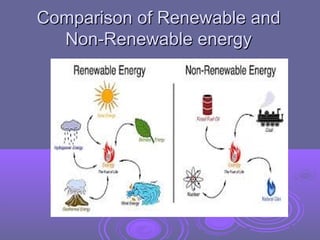
Comparison of Renewable and
Non-Renewable energy
Definition
Renewable energy is generally defined as
energy that comes from resource which
are naturally replenished on a human
timescale such as sunlight, wind, rain,
tides, waves and geothermal heat
Solar Energy
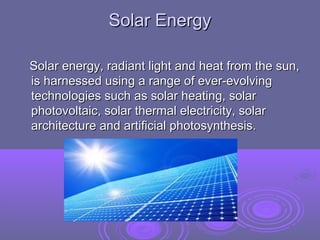
Solar energy, radiant light and heat from the sun,
is harnessed using a range of ever-evolving
technologies such as solar heating, solar
photovoltaic, solar thermal electricity, solar
architecture and artificial photosynthesis.
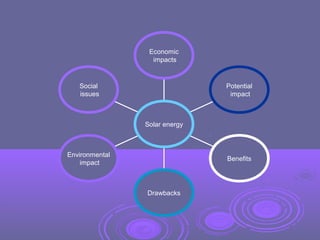
Economic
impacts

Social
issues

Potential
impact

Solar energy

Environmental
impact

Benefits

Drawbacks
Environmental Impacts
The sun provides a tremendous resource for generating
clean and sustainable electricity without toxic pollution or
global warming emissions.
The potential environmental impacts associated with solar
power — land use and habitat loss, water use, and the use
of hazardous materials in manufacturing — can vary
greatly depending on the technology, which includes two
broad categories: photovoltaic (PV) solar cells or
concentrating solar thermal plants (CSP).
The scale of the system — ranging from small, distributed
rooftop PV arrays to large utility-scale PV and CSP
projects — also plays a significant role in the level of
environmental impact.
Potential Impacts
Solar energy is considered a sustainable energy supply
technology however, the production technology for solar
modules (which are used to convert energy into power)
requires relatively high energy outputs. The predominant
negative environmental impacts of solar energy come
from producing the solar panels. Production of these
panels consumes substantial amounts of energy and
produces waste water and hazardous by-products which
are released to the air during the manufacturing process.
Social Issues
Solar energy technology is a very inefficient form of energy
conversion, which makes it's cost too high. An energy source which
requires too great an amount of work put into it (in the form of
money, which is derived from the work of the people who pay for it)
for the amount of energy obtained is not a real energy source. In
other words, if you get too little out for what you put in, it's not worth
it. It would be like going back to the horse and cart, cooking with fire
(for which you have to gather and chop up wood) and long-distance
travel by sailing ships. Solar energy is expensive to install. It
requires expensive PV (photo-voltaic) panels which have a working
life of only 10 to 20 years, which means new ones must be bought
at intervals. In order to have continuous power from solar energy,
you need storage batteries. Each battery is expensive and you need
a large number of them to store enough power for household or
business use.
Economic Impacts
There are many more ways solar energy benefits the
economy, directly and indirectly. By reducing your
home’s use of traditional energy sources, you help keep
natural ecosystems intact, reducing tax payer funded
clean-ups and potentially devastating oil spills like the
recent BP disaster along the Gulf Coast. If your
photovoltaic solar panels generate more energy than
your home uses, you can sell back energy to your local
utility company, leaving more money in your pocket to
spend at restaurants, movie theaters, or financial
investments.
Benefits of Solar Energy
Solar energy is not only sustainable, it is renewable and
this means that we will never run out of it. It is about as
natural a source of power as it is possible to generate
electricity. The creation of solar energy requires little
maintenance. Once the solar panels have been installed
and are working at maximum efficiency there is only a
small amount of maintenance required each year to
ensure they are in working order. They are a silent
producer of energy. There is absolutely no noise made
from photovoltaic panels as they convert sunlight into
usable electricity. There are continual advancements in
solar panel technology which are increasing the
efficiency and lowering the cost of production, thus
making it even more cost effective.
Drawbacks of Solar Energy


1. Solar energy is free although there is a
building of ‘collectors’ and other equipment
convert solar energy into electricity or

cost in the
required to
hot water.



2. Solar energy does not cause pollution. However, solar
collectors and other associated equipment / machines are
manufactured in factories that in turn cause some
pollution.



3. Solar energy can be used in remote areas where it is
too expensive to extend the electricity power grid.



4. Many everyday items such as calculators and other low
power consuming devices can be powered by solar
energy effectively.



5. It is estimated that the worlds oil reserves will last for 30
to 40 years. On the other hand, solar energy is infinite
(forever).
Bibliography
Weblinks:
Google.com
http://pbs.gov.pk/content/what-are-majorsector-economy-pakistan
http://environment.nationalgeographic.com
/environment/energy/great-energychallenge/world-electricity-mix/
Made By: Nabaa Rizvi
Dania Zulfiqar
Neha Butt
Sneha Rai
Nida Nasir
Zarmina Babur
THE END

Solar energy ppt

  • 1.
  • 2.
    Comparison of Renewableand Non-Renewable energy
  • 3.
    Definition Renewable energy isgenerally defined as energy that comes from resource which are naturally replenished on a human timescale such as sunlight, wind, rain, tides, waves and geothermal heat
  • 4.
    Solar Energy Solar energy,radiant light and heat from the sun, is harnessed using a range of ever-evolving technologies such as solar heating, solar photovoltaic, solar thermal electricity, solar architecture and artificial photosynthesis.
  • 5.
  • 6.
    Environmental Impacts The sunprovides a tremendous resource for generating clean and sustainable electricity without toxic pollution or global warming emissions. The potential environmental impacts associated with solar power — land use and habitat loss, water use, and the use of hazardous materials in manufacturing — can vary greatly depending on the technology, which includes two broad categories: photovoltaic (PV) solar cells or concentrating solar thermal plants (CSP). The scale of the system — ranging from small, distributed rooftop PV arrays to large utility-scale PV and CSP projects — also plays a significant role in the level of environmental impact.
  • 7.
    Potential Impacts Solar energyis considered a sustainable energy supply technology however, the production technology for solar modules (which are used to convert energy into power) requires relatively high energy outputs. The predominant negative environmental impacts of solar energy come from producing the solar panels. Production of these panels consumes substantial amounts of energy and produces waste water and hazardous by-products which are released to the air during the manufacturing process.
  • 8.
    Social Issues Solar energytechnology is a very inefficient form of energy conversion, which makes it's cost too high. An energy source which requires too great an amount of work put into it (in the form of money, which is derived from the work of the people who pay for it) for the amount of energy obtained is not a real energy source. In other words, if you get too little out for what you put in, it's not worth it. It would be like going back to the horse and cart, cooking with fire (for which you have to gather and chop up wood) and long-distance travel by sailing ships. Solar energy is expensive to install. It requires expensive PV (photo-voltaic) panels which have a working life of only 10 to 20 years, which means new ones must be bought at intervals. In order to have continuous power from solar energy, you need storage batteries. Each battery is expensive and you need a large number of them to store enough power for household or business use.
  • 9.
    Economic Impacts There aremany more ways solar energy benefits the economy, directly and indirectly. By reducing your home’s use of traditional energy sources, you help keep natural ecosystems intact, reducing tax payer funded clean-ups and potentially devastating oil spills like the recent BP disaster along the Gulf Coast. If your photovoltaic solar panels generate more energy than your home uses, you can sell back energy to your local utility company, leaving more money in your pocket to spend at restaurants, movie theaters, or financial investments.
  • 10.
    Benefits of SolarEnergy Solar energy is not only sustainable, it is renewable and this means that we will never run out of it. It is about as natural a source of power as it is possible to generate electricity. The creation of solar energy requires little maintenance. Once the solar panels have been installed and are working at maximum efficiency there is only a small amount of maintenance required each year to ensure they are in working order. They are a silent producer of energy. There is absolutely no noise made from photovoltaic panels as they convert sunlight into usable electricity. There are continual advancements in solar panel technology which are increasing the efficiency and lowering the cost of production, thus making it even more cost effective.
  • 11.
    Drawbacks of SolarEnergy  1. Solar energy is free although there is a building of ‘collectors’ and other equipment convert solar energy into electricity or cost in the required to hot water.  2. Solar energy does not cause pollution. However, solar collectors and other associated equipment / machines are manufactured in factories that in turn cause some pollution.  3. Solar energy can be used in remote areas where it is too expensive to extend the electricity power grid.  4. Many everyday items such as calculators and other low power consuming devices can be powered by solar energy effectively.  5. It is estimated that the worlds oil reserves will last for 30 to 40 years. On the other hand, solar energy is infinite (forever).
  • 12.
  • 13.
    Made By: NabaaRizvi Dania Zulfiqar Neha Butt Sneha Rai Nida Nasir Zarmina Babur
  • 14.