NON RENEWABLE RESOURCES
Dimple Sharma
Mechanical
SG-13926
SOLAR THERMAL SYSTEM
Solar collection devices, their analysis; solar collector
characteristics, solar pond; application of solar energy to
space heating
ABOUT SYSTEM
 A solar thermal system converts sunlight into heat.
 This system consists of the following components:
 collector
 storage technology (e.g. boiler, combined storage)
 solar regulator system (e.g. temperature difference
control)
 solar thermal collector absorbs solar radiation.
 The purpose of the collector is to convert the sunlight
very efficiently into heat.
 Solar heat is transmitted to a fluid, which transports the
heat to the heat exchanger via pumps with a minimum of
heat loss.
 The exchanger transfers the heat into the domestic hot
water store. The distance between collector and storage
tank should be as short as possible to minimize heat
loss.
WORKING
There are two solar thermal systems:
1.solar heating system to produce hot domestic water.
2. solar power system as supplementary heating.
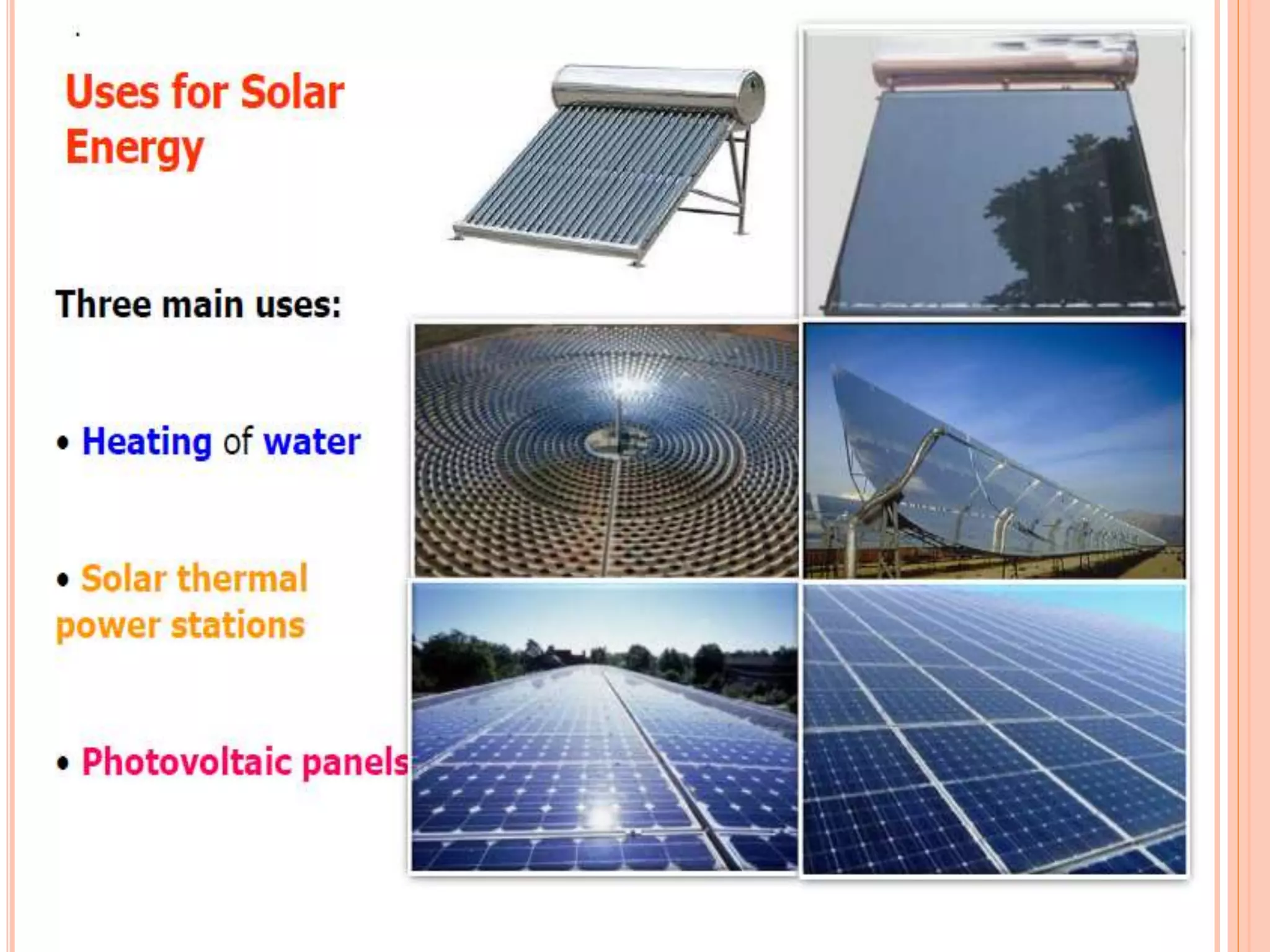
SOLAR COLLECTORS
The solar collector is the main part of a solar thermal
system, that transforms solar radiant energy into heat
that can be used for heating swimming pools, hot water
preparation, space heating and even as heat for
industrial processes.
CLASSIFICATION OF SOLAR
COLLECTOR
Basically it can be distinguished between three types of
collectors
• uncovered (unglazed) collectors
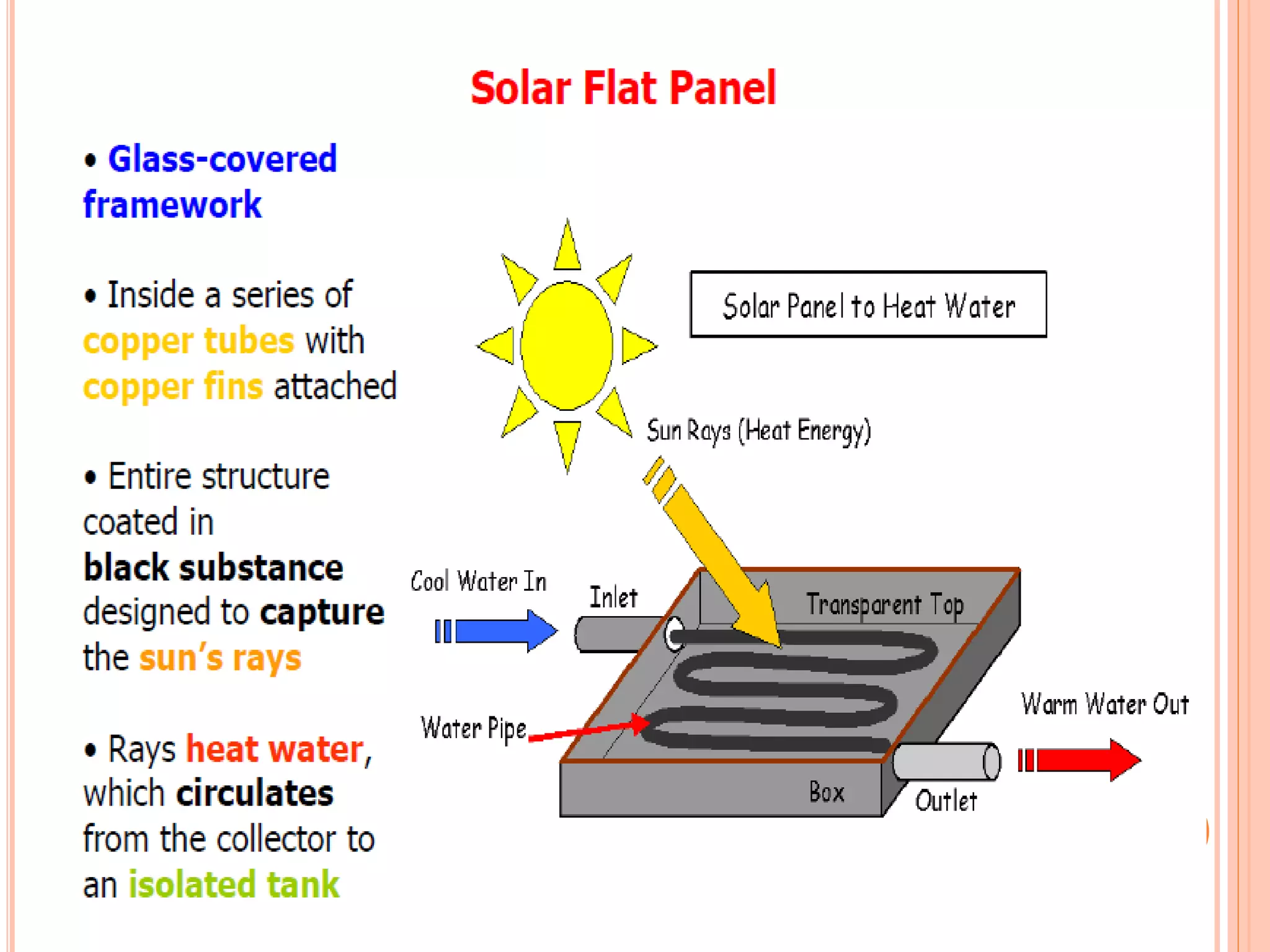
• flat plate collectors
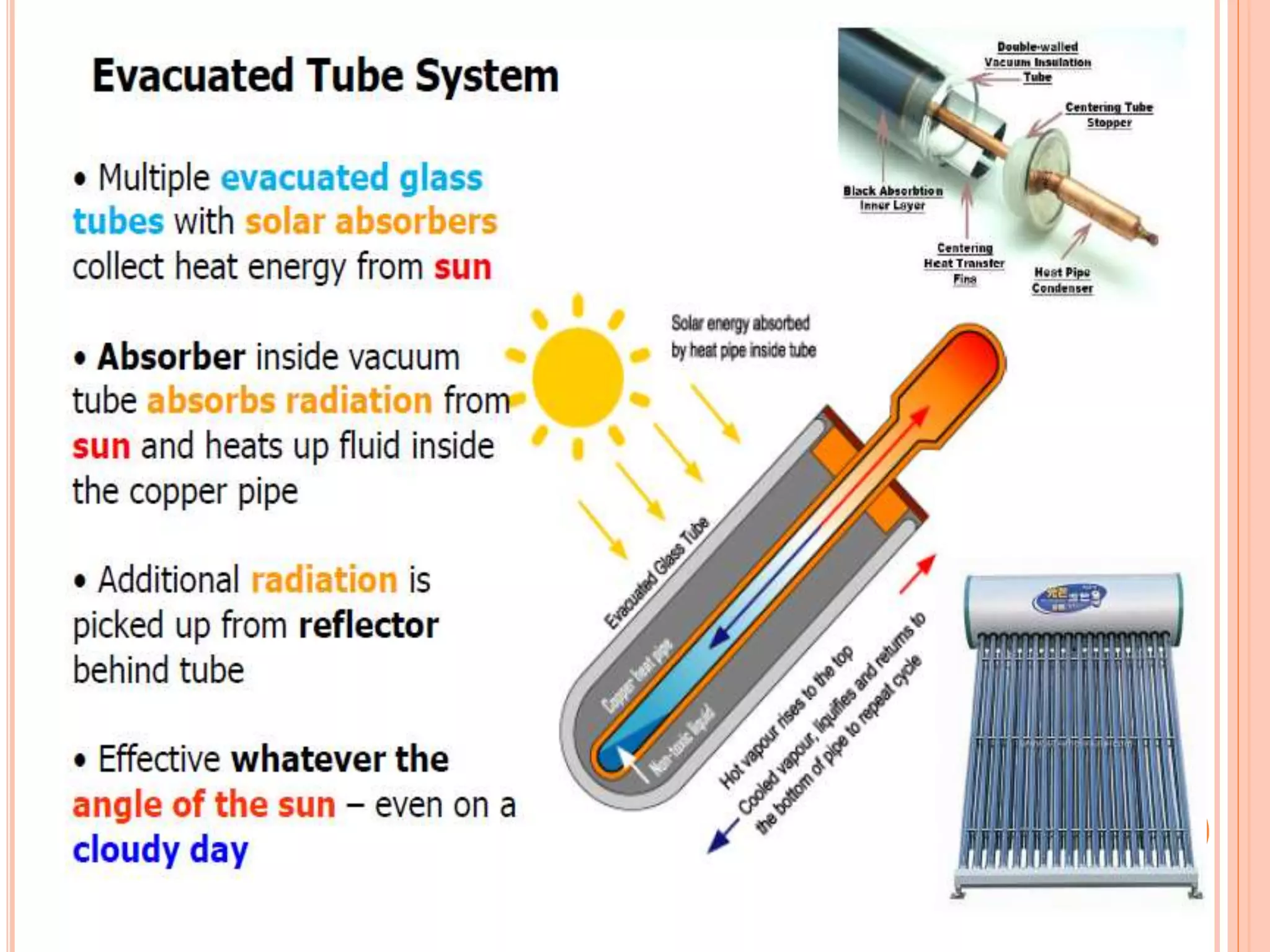
• evacuated tubular collectors
In addition to these three basic types there also exist
special collector designs for medium to high
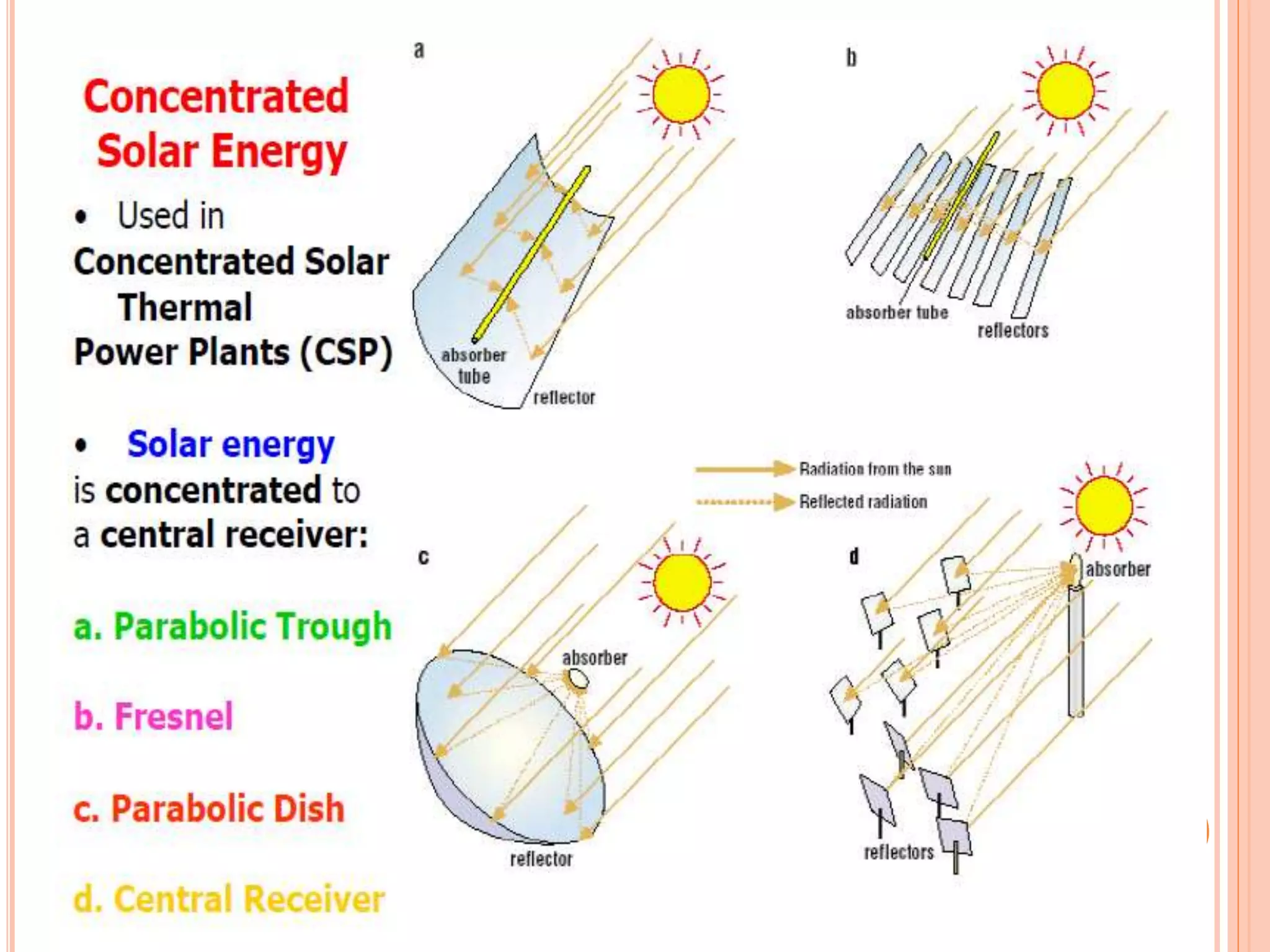
temperature applications like parabolic trough
collectors or fresnel collectors.
UNCOVERED COLLECTOR
 these collectors are best suited for low
temperature applications where the
demand temperature is below 30°C.
 Unglazed collectors are usually made of
black plastic that has been stabilized to
withstand ultraviolet light.
 Since these collectors have no glazing, a
larger portion of the Sun's energy is
absorbed.
 However, because they are not insulated
a large portion of the heat absorbed is
lost, particularly when it is windy and not
warm outside.
SOLAR POND
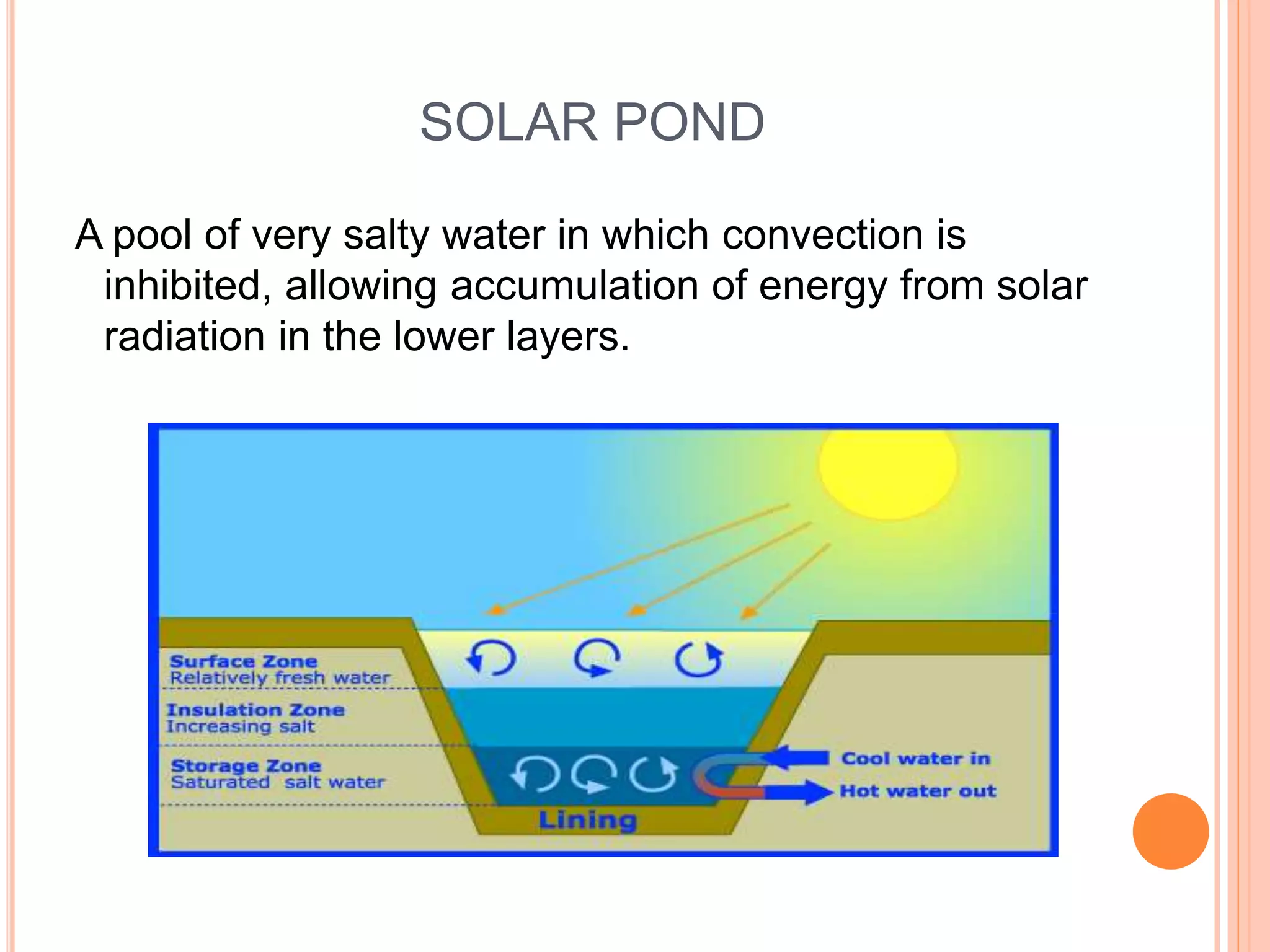
A pool of very salty water in which convection is
inhibited, allowing accumulation of energy from solar
radiation in the lower layers.
 Fresh water floats on top of salt water
 Solar heating of the brine raises its temperature to
85°C
SOLAR ENERGY FOR SPACE HEATING
A solar space heating system can consist of a passive
system, an active system, or a combination of both.
Passive systems are typically less costly and less
complex than active systems. However, when
retrofitting a building, active systems might be the only
option for obtaining solar energy
GUIDELINES FOR SPACE HEATING
Certain guidelines that should be followed:
 A building should have large areas of glazing
facing the sun to maximize solar gain.
 Features should be included to regulate heat
intake to prevent overheating.
 A building should be of sufficient mass to allow
heat storage for the required period.
 Contain features which promote the even
distribution of heat throughout the building.
PASSIVE SOLAR SPACE HEATING
Passive Solar Space Heating takes advantage of
warmth from the sun through design features, such as
large south-facing windows, and materials in the floors
or walls that absorb warmth during the day and
release that warmth at night when it is needed most.
PASSIVE SOLAR DESIGN
SYSTEMS USUALLY HAVE ONE
OF THE THREE DESIGNS
Direct Gain
stores and slowly releases heat energy collected from
the sun shining directly into the building and warming
materials such as tile or concrete .
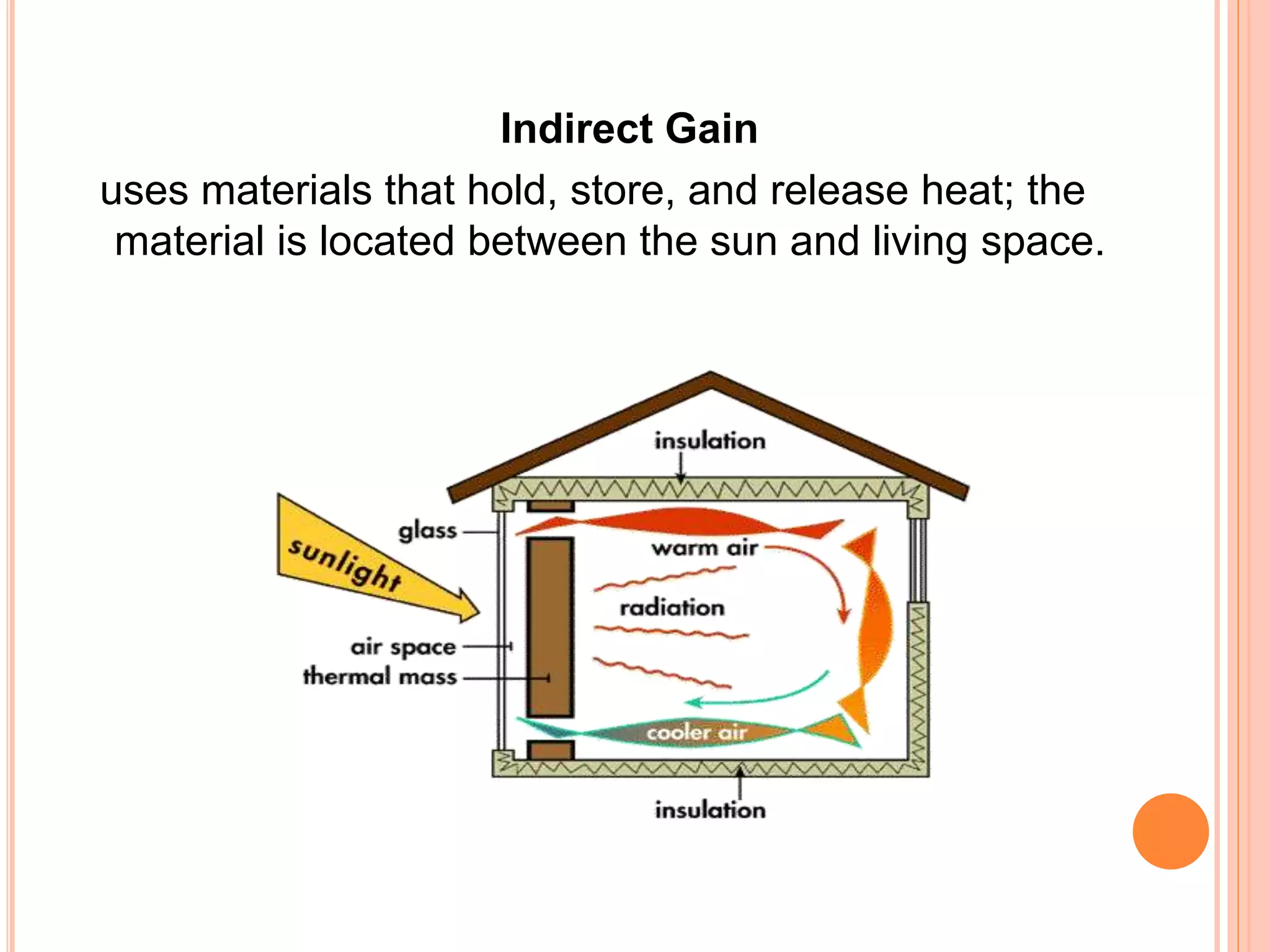
Indirect Gain
uses materials that hold, store, and release heat; the
material is located between the sun and living space.
Isolated Gain
collects solar energy remote from the location of the
primary living area
ACTIVE SOLAR SPACE HEATING
Active solar space heating systems consist
of collectors that collect and absorb solar
radiation combined with electric fans or
pumps to transfer and distribute that solar
heat.
Active systems also generally have an
energy storage system to provide heat
when the sun is not shining.
The two basic types of active solar space-
heating systems use either liquid or air as the
heat-transfer medium in their solar energy
collectors
Liquid-based systems heat water and air-
based systems heat air in the collector.
Both of these systems collect and absorb
solar radiation, then transfer the solar heat
directly to the interior space or to a storage
system, from which the heat is distributed.
An auxiliary or backup system provides heat
when storage is discharged.
Liquid systems are more often used when
storage is included.
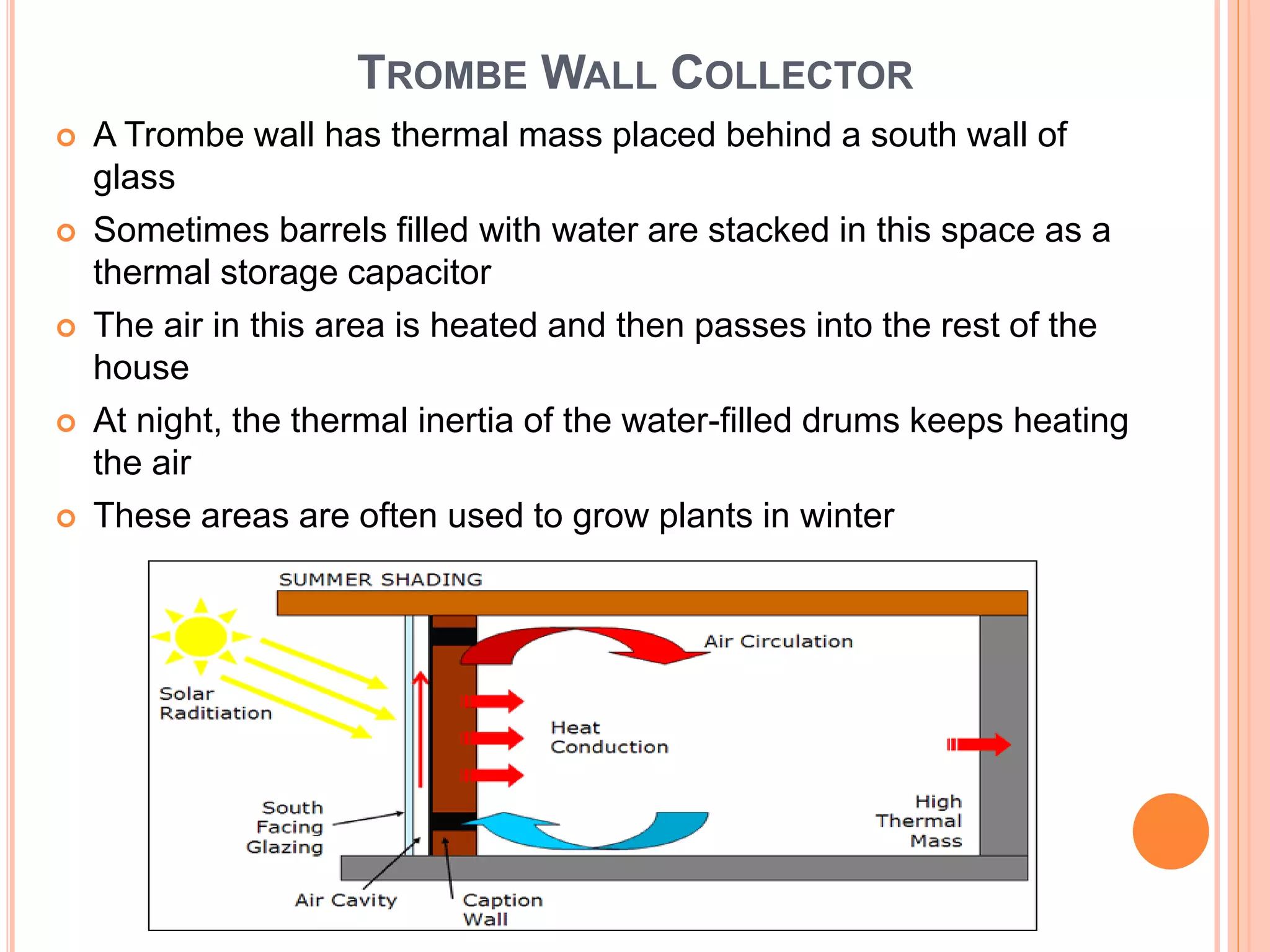
TROMBE WALL COLLECTOR
 A Trombe wall has thermal mass placed behind a south wall of
glass
 Sometimes barrels filled with water are stacked in this space as a
thermal storage capacitor
 The air in this area is heated and then passes into the rest of the
house
 At night, the thermal inertia of the water-filled drums keeps heating
the air
 These areas are often used to grow plants in winter
THANK YOU

Solar Thermal System

  • 1.
    NON RENEWABLE RESOURCES DimpleSharma Mechanical SG-13926
  • 2.
    SOLAR THERMAL SYSTEM Solarcollection devices, their analysis; solar collector characteristics, solar pond; application of solar energy to space heating
  • 6.
    ABOUT SYSTEM  Asolar thermal system converts sunlight into heat.  This system consists of the following components:  collector  storage technology (e.g. boiler, combined storage)  solar regulator system (e.g. temperature difference control)
  • 7.
     solar thermalcollector absorbs solar radiation.  The purpose of the collector is to convert the sunlight very efficiently into heat.  Solar heat is transmitted to a fluid, which transports the heat to the heat exchanger via pumps with a minimum of heat loss.  The exchanger transfers the heat into the domestic hot water store. The distance between collector and storage tank should be as short as possible to minimize heat loss. WORKING
  • 8.
    There are twosolar thermal systems: 1.solar heating system to produce hot domestic water. 2. solar power system as supplementary heating.
  • 9.
    SOLAR COLLECTORS The solarcollector is the main part of a solar thermal system, that transforms solar radiant energy into heat that can be used for heating swimming pools, hot water preparation, space heating and even as heat for industrial processes.
  • 10.
    CLASSIFICATION OF SOLAR COLLECTOR Basicallyit can be distinguished between three types of collectors • uncovered (unglazed) collectors • flat plate collectors • evacuated tubular collectors In addition to these three basic types there also exist special collector designs for medium to high temperature applications like parabolic trough collectors or fresnel collectors.
  • 11.
    UNCOVERED COLLECTOR  thesecollectors are best suited for low temperature applications where the demand temperature is below 30°C.  Unglazed collectors are usually made of black plastic that has been stabilized to withstand ultraviolet light.  Since these collectors have no glazing, a larger portion of the Sun's energy is absorbed.  However, because they are not insulated a large portion of the heat absorbed is lost, particularly when it is windy and not warm outside.
  • 16.
    SOLAR POND A poolof very salty water in which convection is inhibited, allowing accumulation of energy from solar radiation in the lower layers.
  • 17.
     Fresh waterfloats on top of salt water  Solar heating of the brine raises its temperature to 85°C
  • 18.
    SOLAR ENERGY FORSPACE HEATING A solar space heating system can consist of a passive system, an active system, or a combination of both. Passive systems are typically less costly and less complex than active systems. However, when retrofitting a building, active systems might be the only option for obtaining solar energy
  • 19.
    GUIDELINES FOR SPACEHEATING Certain guidelines that should be followed:  A building should have large areas of glazing facing the sun to maximize solar gain.  Features should be included to regulate heat intake to prevent overheating.  A building should be of sufficient mass to allow heat storage for the required period.  Contain features which promote the even distribution of heat throughout the building.
  • 20.
    PASSIVE SOLAR SPACEHEATING Passive Solar Space Heating takes advantage of warmth from the sun through design features, such as large south-facing windows, and materials in the floors or walls that absorb warmth during the day and release that warmth at night when it is needed most.
  • 21.
    PASSIVE SOLAR DESIGN SYSTEMSUSUALLY HAVE ONE OF THE THREE DESIGNS
  • 22.
    Direct Gain stores andslowly releases heat energy collected from the sun shining directly into the building and warming materials such as tile or concrete .
  • 23.
    Indirect Gain uses materialsthat hold, store, and release heat; the material is located between the sun and living space.
  • 24.
    Isolated Gain collects solarenergy remote from the location of the primary living area
  • 25.
    ACTIVE SOLAR SPACEHEATING Active solar space heating systems consist of collectors that collect and absorb solar radiation combined with electric fans or pumps to transfer and distribute that solar heat. Active systems also generally have an energy storage system to provide heat when the sun is not shining.
  • 26.
    The two basictypes of active solar space- heating systems use either liquid or air as the heat-transfer medium in their solar energy collectors Liquid-based systems heat water and air- based systems heat air in the collector. Both of these systems collect and absorb solar radiation, then transfer the solar heat directly to the interior space or to a storage system, from which the heat is distributed.
  • 27.
    An auxiliary orbackup system provides heat when storage is discharged. Liquid systems are more often used when storage is included.
  • 28.
    TROMBE WALL COLLECTOR A Trombe wall has thermal mass placed behind a south wall of glass  Sometimes barrels filled with water are stacked in this space as a thermal storage capacitor  The air in this area is heated and then passes into the rest of the house  At night, the thermal inertia of the water-filled drums keeps heating the air  These areas are often used to grow plants in winter
  • 32.