Solar PV System
By A. Prasad Roshan
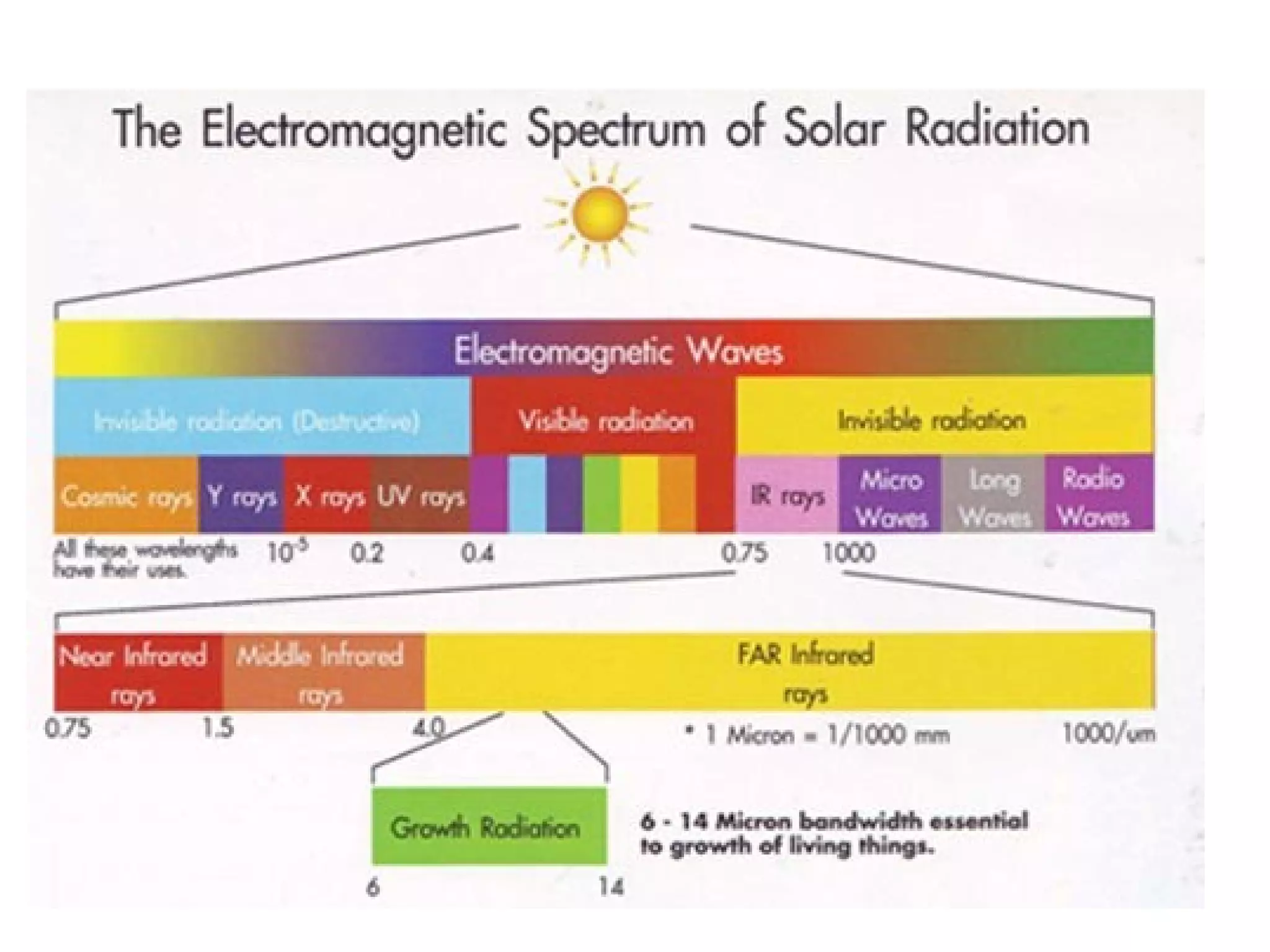
Solar energy is
radiant light and heat
from the Sun
No particles in between , No conduction, Convection
Renewable energy is energy that is collected
from renewable resources, which are
naturally replenished on a human
timescale, such as sunlight, wind, rain, tides,
waves, and geothermal heat
Renewable energy replaces conventional fuels
in four distinct areas: electricity generation,
hot water/space heating, motor fuels, and
rural (off-grid)energy services.
Non-renewable
energy comes
from sources that
will run out or will not
be replenished in our
lifetimes—or even in
many, many lifetimes.
Solar Photovoltaic
Photovoltaic has been derived from the
combination of two words, "Photo" and "Voltaic".
Photo means light and Voltaic means
electricity.
It is a technology that converts light
directly into electricity. Photovoltaic
material, most commonly highly purified silicon
converts sunlight directly into electricity.
SOLAR POWER TERMINLOGY
The energy produced by nuclear fusion is
conveyed from the heart of
The Sun by light particles and heat,
called Photons.
SOLAR CONSTANT is the rate at which energy reaches the earth's surface
from the sun, usually taken to be 1,360 watts per square metre
Direct and diffuse radiation.
Diffuse sunlight: Sunlight diffused by clouds and
other atmospheric particles that have no defined
direction from the sun to the observation point on
the ground
Direct sunlight: Sun’s rays that fall directly
from the sun to the observation point on the
ground
Global radiation refers to the total solar radiation
that strikes a surface. It includes both the direct and
diffuse radiation.
National Renewable Energy Laboratory
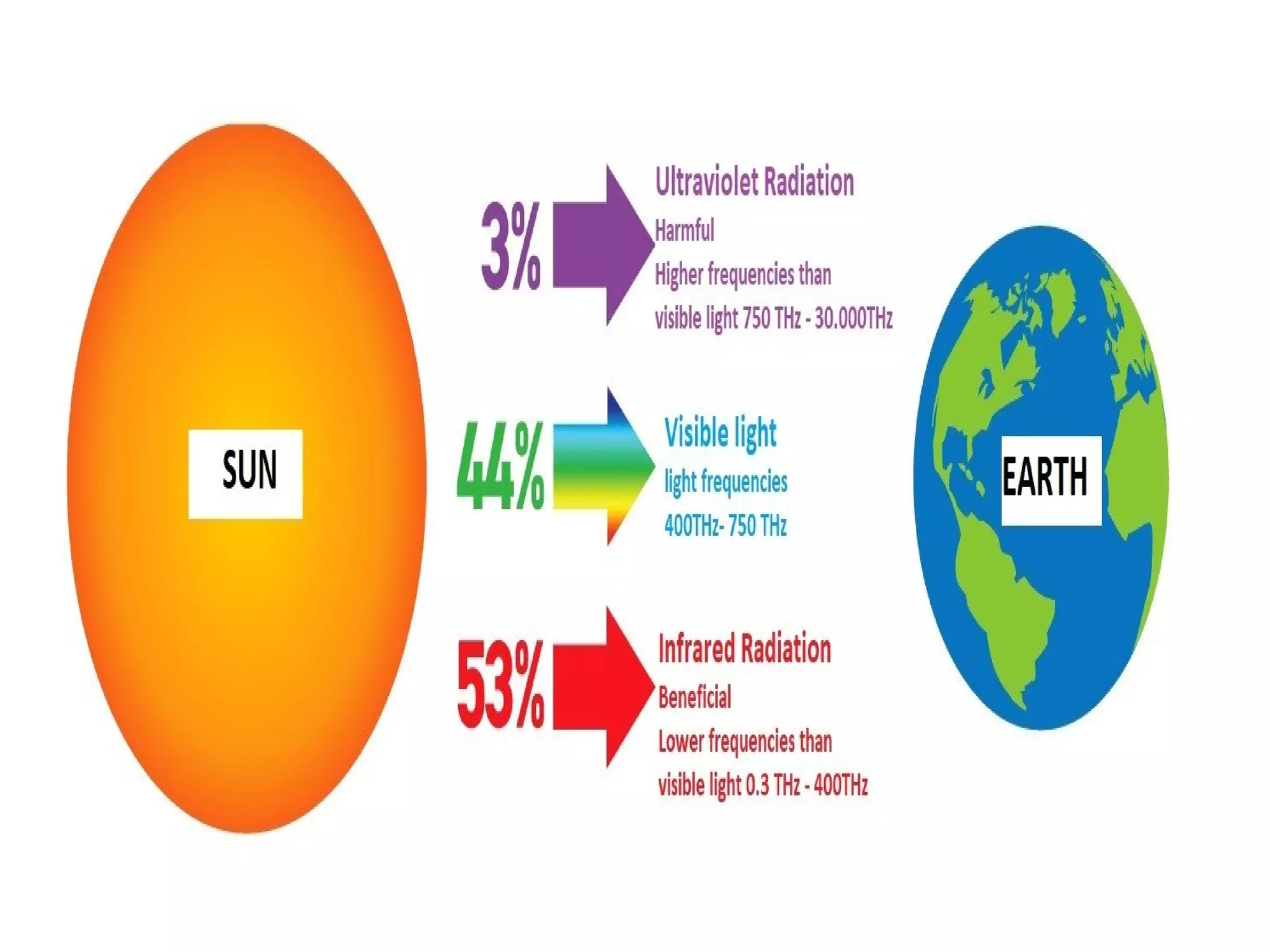
EARTH'S ENERGY BUDGET
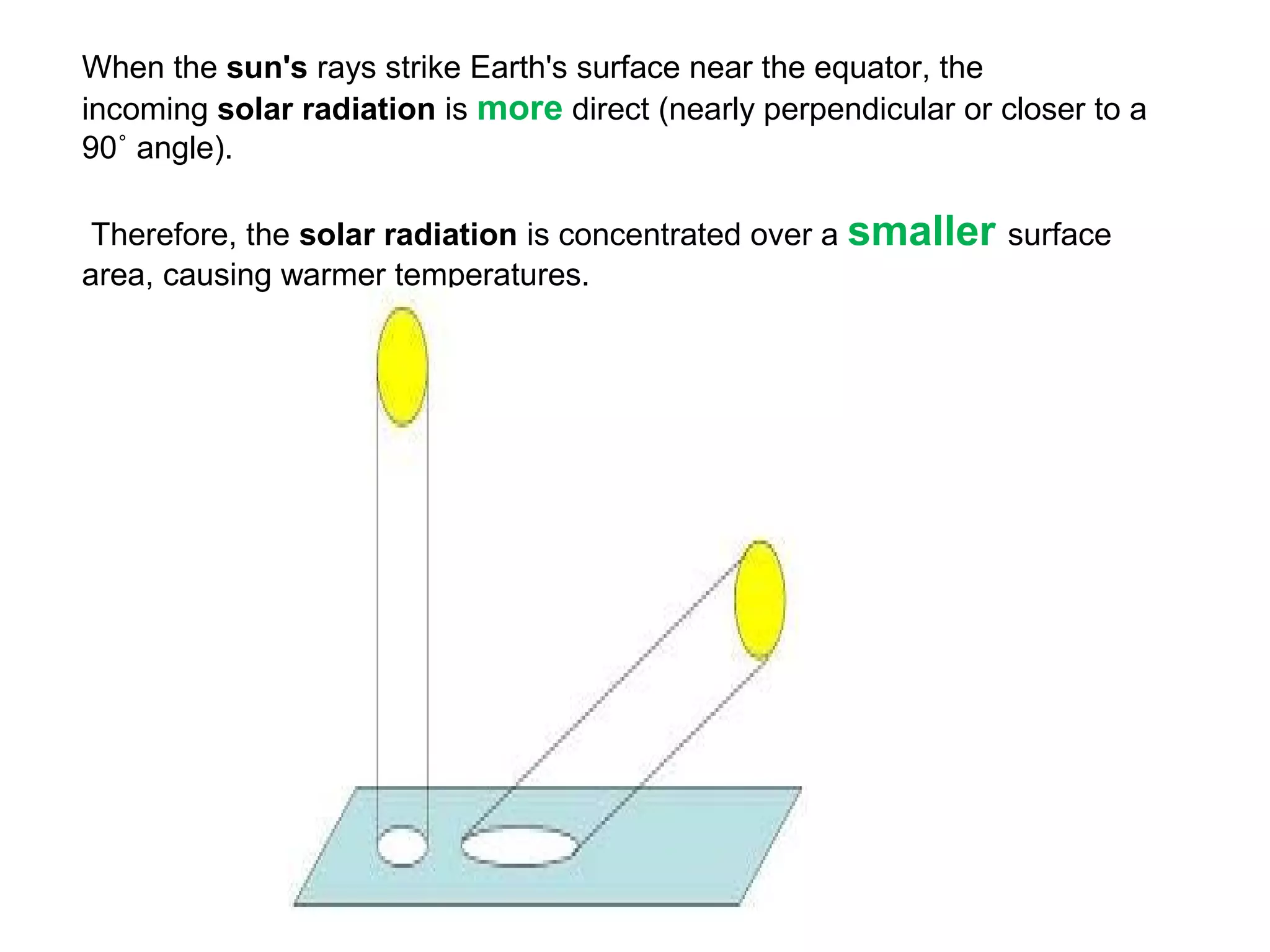
When the sun's rays strike Earth's surface near the equator, the
incoming solar radiation is more direct (nearly perpendicular or closer to a
90˚ angle).
Therefore, the solar radiation is concentrated over a smaller surface
area, causing warmer temperatures.
The Sun's zenith angleis the angle that a beam of light makes with a
line drawn perpendicular to the surface.
This angle is referred to as the " noon sun angle"
OrientationIn the northern hemisphere, a south-facing roof is
ideal as the sun is always to the south if you are in the temperate zone and
predominantly in the south for many parts of the tropical zone.
Conversely, for those in the southern hemisphere (for instance in Australia), a
north facing roof is more optimal.
Sun Angles
Solar Photovoltaic :
Photovoltaic has been derived from the
combination of two words, "Photo" and "Voltaic".
Photo means light and Voltaic means electricity. It
is a technology that converts light directly into
electricity. Photovoltaic material, most commonly
highly purified silicon converts sunlight directly into
electricity.
There are two main types of silicon used to make solar cells.
Mono crystalline solar cells are made from wafers cut from a
single large crystal of silicon while polysilicon solar cells are
cut from a solid silicon ingot that is made of many smaller
crystals.
Because mono silicon is mostly free of defects solar cells
made from it have higher efficiency than poly silicon cells.
Poly silicon is sometimes called multi crystalline silicon
12*6=72cells per module
Standard test conditions (STC) are conditions in
which a module’s or cell’s current and voltage
characteristics are measured and then recorded in the
module data sheet.
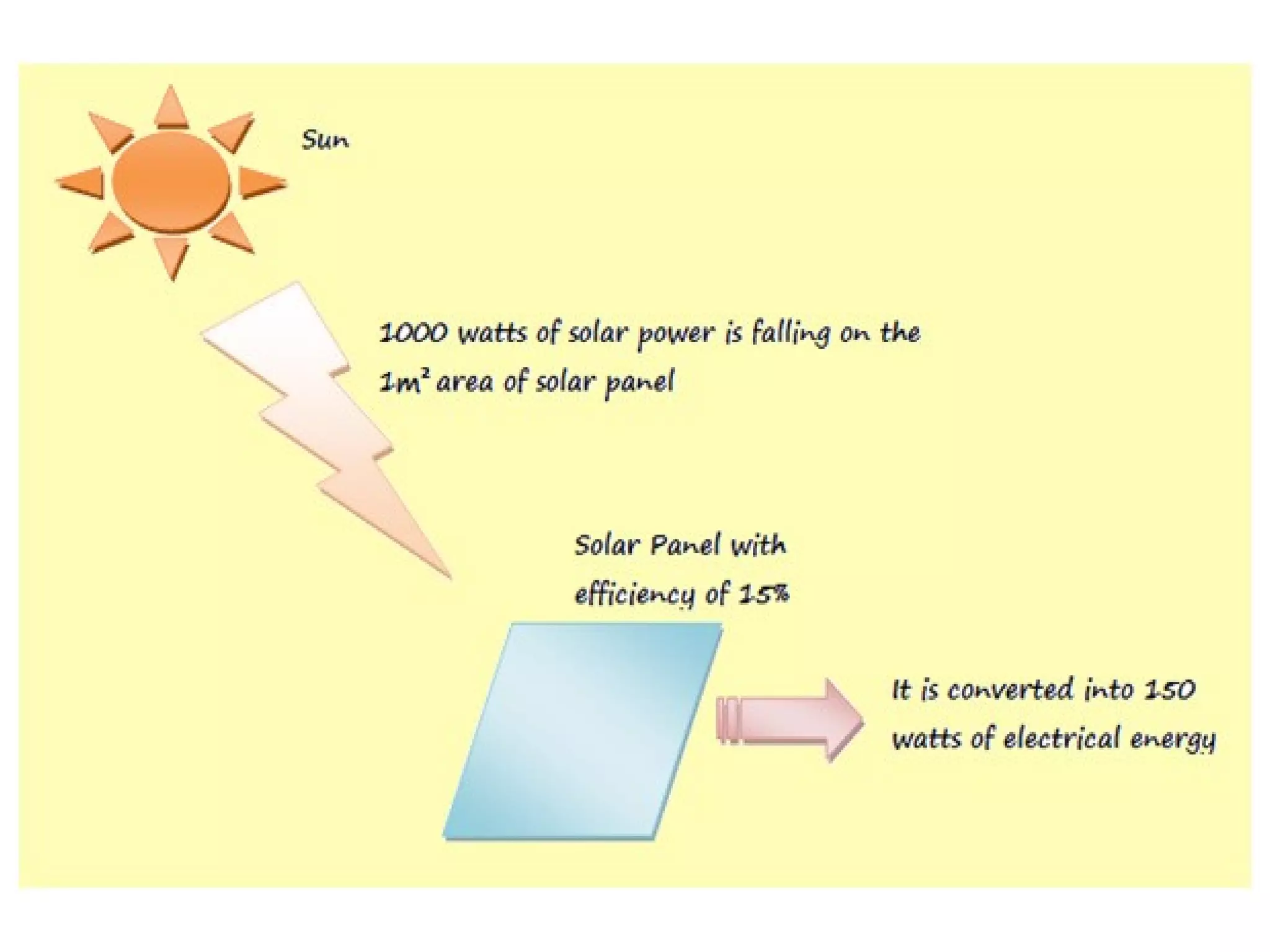
STC = 1,000 W/m², 25° C cell temperature, solar
spectrum AM = 1.5.
The Effect of Temperature on Solar
Panels. ... It is easy to presume that more
sun and therefore more heat result in more
electricity but this is wrong.
Different solar panels react differently to the
operating ambient temperature, but in all
cases the efficiency of a solar
panel decreases as it increases
in temperature.
Ambient Temperature Solar panel temperature is an often
ignored but critical parameter in a hot country like India.
solar PV panels generate less power in very hot summers as the heat
reduces their efficiency (the voltage reduces). In Chennai, the month of
January delivers better output than May
A temperature coefficient of -0.447 indicates that every 1°C increase in
temperature over 25°C will cause a 0.447% decrease in power.
Equally, every 1°C decrease in temperature over 25°C will cause a
0.447%increase in power
V1 + V2 + V3 + V4 = 0.5V + 0.5V + 0.5V + 0.5V = 2.0V. For series connected
cells, the combined output current is the same as that produced by each cell,
then: I1 = I2 = I3 = I4 = Itotal.
:V1 = V2 = V3 = V4
I1 + I2 + I3 + I4 =
1.0A + 1.0A + 1.0A + 1.0A = 4.0A.
Negative temperature coefficient of resistance of a semiconductor
An increase in the temperature of a semiconducting material results in an increase
in charge-carrier concentration.
This results, increasing the conductivity of the semiconductor.
The increasing conductivity causes the resistivity of the semiconductor material to
decrease with the rise in temperature, resulting in a negative temperature
coefficient of resistance.
A metalloid is an element with properties in between, or that are a mixture of,
those of metals and nonmetals, and which is therefore hard to classify as either a
metal or a nonmetal
Power is the rate at which energy is
generated or consumed .
Hence is measured in units
(e.g. watts) that represent
energy per unit time.
For example, when a light bulb with a
power rating of 100W is turned on for
one hour, the energy used is
100 watt hours (W. h), 0.1 kilowatt
hour, or 360 kJ.
Power= Volts* Current
Power = 230v*2.4A =552Watts = 0.552Kw
0.552Kw * 2 hour = 1.104 Kwh/day
Grid-tie inverters: Devices used to change DC Power into AC Power. AC Power
is electricity we use in our houses.
Grid tie inverters are different from conventional inverters because they are
designed to ‘feed-into’ the existing electric supply
Grid-connected PV system: A photovoltaic system which feeds its excess
electrical current generated into the public power grid for later use is grid
connected.
Net Meter: This is the piece of equipment the utility installs for you in
conjunction with your solar installation.
Unlike traditional utility meters, a net meter counts up and down. It displays the
“net usage” – the difference between how much solar electricity you generated
at your property, and how much electricity you took from the utility grid.
Hybrid solar systems generate power in the same way as a common grid-tie solar
system but use batteries to store energy for later use. This ability to store energy
enables most hybrid systems to also operate as a backup power supply during a
blackout, similar to a UPS system.
THANKS

Solar PV System

  • 1.
    Solar PV System ByA. Prasad Roshan
  • 3.
    Solar energy is radiantlight and heat from the Sun
  • 4.
    No particles inbetween , No conduction, Convection
  • 13.
    Renewable energy isenergy that is collected from renewable resources, which are naturally replenished on a human timescale, such as sunlight, wind, rain, tides, waves, and geothermal heat Renewable energy replaces conventional fuels in four distinct areas: electricity generation, hot water/space heating, motor fuels, and rural (off-grid)energy services.
  • 14.
    Non-renewable energy comes from sourcesthat will run out or will not be replenished in our lifetimes—or even in many, many lifetimes.
  • 19.
    Solar Photovoltaic Photovoltaic hasbeen derived from the combination of two words, "Photo" and "Voltaic". Photo means light and Voltaic means electricity. It is a technology that converts light directly into electricity. Photovoltaic material, most commonly highly purified silicon converts sunlight directly into electricity.
  • 20.
    SOLAR POWER TERMINLOGY Theenergy produced by nuclear fusion is conveyed from the heart of The Sun by light particles and heat, called Photons.
  • 22.
    SOLAR CONSTANT isthe rate at which energy reaches the earth's surface from the sun, usually taken to be 1,360 watts per square metre
  • 24.
  • 25.
    Diffuse sunlight: Sunlightdiffused by clouds and other atmospheric particles that have no defined direction from the sun to the observation point on the ground Direct sunlight: Sun’s rays that fall directly from the sun to the observation point on the ground Global radiation refers to the total solar radiation that strikes a surface. It includes both the direct and diffuse radiation.
  • 27.
  • 29.
  • 37.
    When the sun'srays strike Earth's surface near the equator, the incoming solar radiation is more direct (nearly perpendicular or closer to a 90˚ angle). Therefore, the solar radiation is concentrated over a smaller surface area, causing warmer temperatures.
  • 40.
    The Sun's zenithangleis the angle that a beam of light makes with a line drawn perpendicular to the surface. This angle is referred to as the " noon sun angle"
  • 55.
    OrientationIn the northernhemisphere, a south-facing roof is ideal as the sun is always to the south if you are in the temperate zone and predominantly in the south for many parts of the tropical zone. Conversely, for those in the southern hemisphere (for instance in Australia), a north facing roof is more optimal.
  • 57.
  • 60.
    Solar Photovoltaic : Photovoltaichas been derived from the combination of two words, "Photo" and "Voltaic". Photo means light and Voltaic means electricity. It is a technology that converts light directly into electricity. Photovoltaic material, most commonly highly purified silicon converts sunlight directly into electricity.
  • 63.
    There are twomain types of silicon used to make solar cells. Mono crystalline solar cells are made from wafers cut from a single large crystal of silicon while polysilicon solar cells are cut from a solid silicon ingot that is made of many smaller crystals. Because mono silicon is mostly free of defects solar cells made from it have higher efficiency than poly silicon cells. Poly silicon is sometimes called multi crystalline silicon
  • 67.
  • 71.
    Standard test conditions(STC) are conditions in which a module’s or cell’s current and voltage characteristics are measured and then recorded in the module data sheet. STC = 1,000 W/m², 25° C cell temperature, solar spectrum AM = 1.5.
  • 72.
    The Effect ofTemperature on Solar Panels. ... It is easy to presume that more sun and therefore more heat result in more electricity but this is wrong. Different solar panels react differently to the operating ambient temperature, but in all cases the efficiency of a solar panel decreases as it increases in temperature.
  • 73.
    Ambient Temperature Solarpanel temperature is an often ignored but critical parameter in a hot country like India. solar PV panels generate less power in very hot summers as the heat reduces their efficiency (the voltage reduces). In Chennai, the month of January delivers better output than May A temperature coefficient of -0.447 indicates that every 1°C increase in temperature over 25°C will cause a 0.447% decrease in power. Equally, every 1°C decrease in temperature over 25°C will cause a 0.447%increase in power
  • 84.
    V1 + V2+ V3 + V4 = 0.5V + 0.5V + 0.5V + 0.5V = 2.0V. For series connected cells, the combined output current is the same as that produced by each cell, then: I1 = I2 = I3 = I4 = Itotal.
  • 86.
    :V1 = V2= V3 = V4 I1 + I2 + I3 + I4 = 1.0A + 1.0A + 1.0A + 1.0A = 4.0A.
  • 97.
    Negative temperature coefficientof resistance of a semiconductor An increase in the temperature of a semiconducting material results in an increase in charge-carrier concentration. This results, increasing the conductivity of the semiconductor. The increasing conductivity causes the resistivity of the semiconductor material to decrease with the rise in temperature, resulting in a negative temperature coefficient of resistance.
  • 100.
    A metalloid isan element with properties in between, or that are a mixture of, those of metals and nonmetals, and which is therefore hard to classify as either a metal or a nonmetal
  • 114.
    Power is therate at which energy is generated or consumed . Hence is measured in units (e.g. watts) that represent energy per unit time. For example, when a light bulb with a power rating of 100W is turned on for one hour, the energy used is 100 watt hours (W. h), 0.1 kilowatt hour, or 360 kJ.
  • 120.
    Power= Volts* Current Power= 230v*2.4A =552Watts = 0.552Kw 0.552Kw * 2 hour = 1.104 Kwh/day
  • 122.
    Grid-tie inverters: Devicesused to change DC Power into AC Power. AC Power is electricity we use in our houses. Grid tie inverters are different from conventional inverters because they are designed to ‘feed-into’ the existing electric supply
  • 123.
    Grid-connected PV system:A photovoltaic system which feeds its excess electrical current generated into the public power grid for later use is grid connected.
  • 124.
    Net Meter: Thisis the piece of equipment the utility installs for you in conjunction with your solar installation. Unlike traditional utility meters, a net meter counts up and down. It displays the “net usage” – the difference between how much solar electricity you generated at your property, and how much electricity you took from the utility grid.
  • 129.
    Hybrid solar systemsgenerate power in the same way as a common grid-tie solar system but use batteries to store energy for later use. This ability to store energy enables most hybrid systems to also operate as a backup power supply during a blackout, similar to a UPS system.
  • 132.