Soil
Resource
s
Components and Types
1. What is Soil actually made of?
2. What are the characteristics of
soil that support and influence
the variation in Earth’s
vegetational environments?
4 Major Components of Soil
1.Inorganic Materials
Soils contain varying amounts on insoluble
materials-rock fragments and minerals that
will not readily dissolve in water.
Soil Fertilization- the process of adding
nutrients in order to meet the soil condition
that certain plants requires.
2. Soil Water
 the original source of water is precipitation.
Capillary Water- where soil water adheres to soil
particles and soil clumps by surface tension.
Hygroscopic Water- which does not move through
the soil, and it does not supply plants with the
moisture they need.
 Gravitational Water- where water that percolates down through a
soil under the force gravity.
 Leaching- where the depicting nutrients in the soil by the
through flow of water.
 Eluviation-the downward removal of soil components by water.
 Illuviation- deposition by water in the subsoil.
 Stratification- where fine particles and substances dissolved
from the upper soil are deposited in lower levels, which
become dense and may strongly colored by accumulated iron
compounds.
3. Soil Air
Is consist of 50% spaces between soil
particles and between dump.
(Aggregate of soil particle in air)
4. Organic Matter
Soil contains organic matter in addition to
minerals, gasses, and water.
Humus- is an important catalyst in chemical
reactions that help plants to extract soil nutrients.
Types of Soil and its
Characteristics:
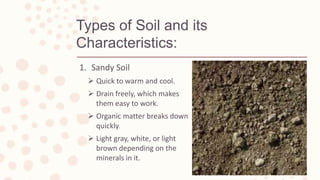
1. Sandy Soil
 Quick to warm and cool.
 Drain freely, which makes
them easy to work.
 Organic matter breaks down
quickly.
 Light gray, white, or light
brown depending on the
minerals in it.
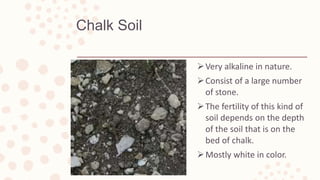
Chalk Soil
Very alkaline in nature.
Consist of a large number
of stone.
The fertility of this kind of
soil depends on the depth
of the soil that is on the
bed of chalk.
Mostly white in color.
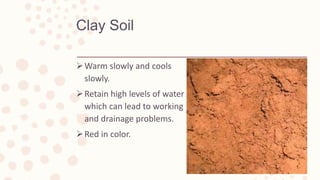
Clay Soil
Warm slowly and cools
slowly.
Retain high levels of water
which can lead to working
and drainage problems.
Red in color.
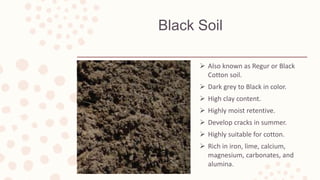
Black Soil
 Also known as Regur or Black
Cotton soil.
 Dark grey to Black in color.
 High clay content.
 Highly moist retentive.
 Develop cracks in summer.
 Highly suitable for cotton.
 Rich in iron, lime, calcium,
magnesium, carbonates, and
alumina.
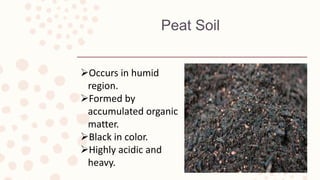
Peat Soil
Occurs in humid
region.
Formed by
accumulated organic
matter.
Black in color.
Highly acidic and
heavy.
Factors Affecting Soil Formation
Is the great variety among the components
of soils and processes that affected them.
Weathering- refers to the many processes that
breaks down rocks into smaller fragment.
Soil-Forming Regimes
1. Laterization- is a soil-forming regime that occurs in humid tropical
and subtropical climates as a result of high temperatures and
abundant precipitation.
2. Podzolization- occurs mainly in a high middle latitudes where the
climate is moist with short, cool summers and long, severe
winter.
3. Calcification- in contrast with both laterization and podzolization,
which requires humid climates.
Regimes of Local Importance
Salinization- the concentration of salts in the soil is often
detrimental to plant grow.
Gleization- occur in poorly drained areas under cold and
wet environmental conditions.
Conversing and maintaining soil
fertility are critical and crucial challenges
that are essential in maintaining natural
environment and supporting life on Earth
today and for the future.
Soil resources: Components and Types

Soil resources: Components and Types

  • 1.
  • 2.
    1. What isSoil actually made of? 2. What are the characteristics of soil that support and influence the variation in Earth’s vegetational environments?
  • 3.
    4 Major Componentsof Soil 1.Inorganic Materials Soils contain varying amounts on insoluble materials-rock fragments and minerals that will not readily dissolve in water. Soil Fertilization- the process of adding nutrients in order to meet the soil condition that certain plants requires.
  • 4.
    2. Soil Water the original source of water is precipitation. Capillary Water- where soil water adheres to soil particles and soil clumps by surface tension. Hygroscopic Water- which does not move through the soil, and it does not supply plants with the moisture they need.
  • 5.
     Gravitational Water-where water that percolates down through a soil under the force gravity.  Leaching- where the depicting nutrients in the soil by the through flow of water.  Eluviation-the downward removal of soil components by water.  Illuviation- deposition by water in the subsoil.  Stratification- where fine particles and substances dissolved from the upper soil are deposited in lower levels, which become dense and may strongly colored by accumulated iron compounds.
  • 6.
    3. Soil Air Isconsist of 50% spaces between soil particles and between dump. (Aggregate of soil particle in air)
  • 7.
    4. Organic Matter Soilcontains organic matter in addition to minerals, gasses, and water. Humus- is an important catalyst in chemical reactions that help plants to extract soil nutrients.
  • 8.
    Types of Soiland its Characteristics: 1. Sandy Soil  Quick to warm and cool.  Drain freely, which makes them easy to work.  Organic matter breaks down quickly.  Light gray, white, or light brown depending on the minerals in it.
  • 9.
    Chalk Soil Very alkalinein nature. Consist of a large number of stone. The fertility of this kind of soil depends on the depth of the soil that is on the bed of chalk. Mostly white in color.
  • 10.
    Clay Soil Warm slowlyand cools slowly. Retain high levels of water which can lead to working and drainage problems. Red in color.
  • 11.
    Black Soil  Alsoknown as Regur or Black Cotton soil.  Dark grey to Black in color.  High clay content.  Highly moist retentive.  Develop cracks in summer.  Highly suitable for cotton.  Rich in iron, lime, calcium, magnesium, carbonates, and alumina.
  • 12.
    Peat Soil Occurs inhumid region. Formed by accumulated organic matter. Black in color. Highly acidic and heavy.
  • 13.
    Factors Affecting SoilFormation Is the great variety among the components of soils and processes that affected them. Weathering- refers to the many processes that breaks down rocks into smaller fragment.
  • 14.
    Soil-Forming Regimes 1. Laterization-is a soil-forming regime that occurs in humid tropical and subtropical climates as a result of high temperatures and abundant precipitation. 2. Podzolization- occurs mainly in a high middle latitudes where the climate is moist with short, cool summers and long, severe winter. 3. Calcification- in contrast with both laterization and podzolization, which requires humid climates.
  • 15.
    Regimes of LocalImportance Salinization- the concentration of salts in the soil is often detrimental to plant grow. Gleization- occur in poorly drained areas under cold and wet environmental conditions.
  • 16.
    Conversing and maintainingsoil fertility are critical and crucial challenges that are essential in maintaining natural environment and supporting life on Earth today and for the future.