Government College Of Engineering,
            Aurangabad.


    Soil pollution
                   Invented By:-
                       Nikhil Pakwanne


)
Soil pollution
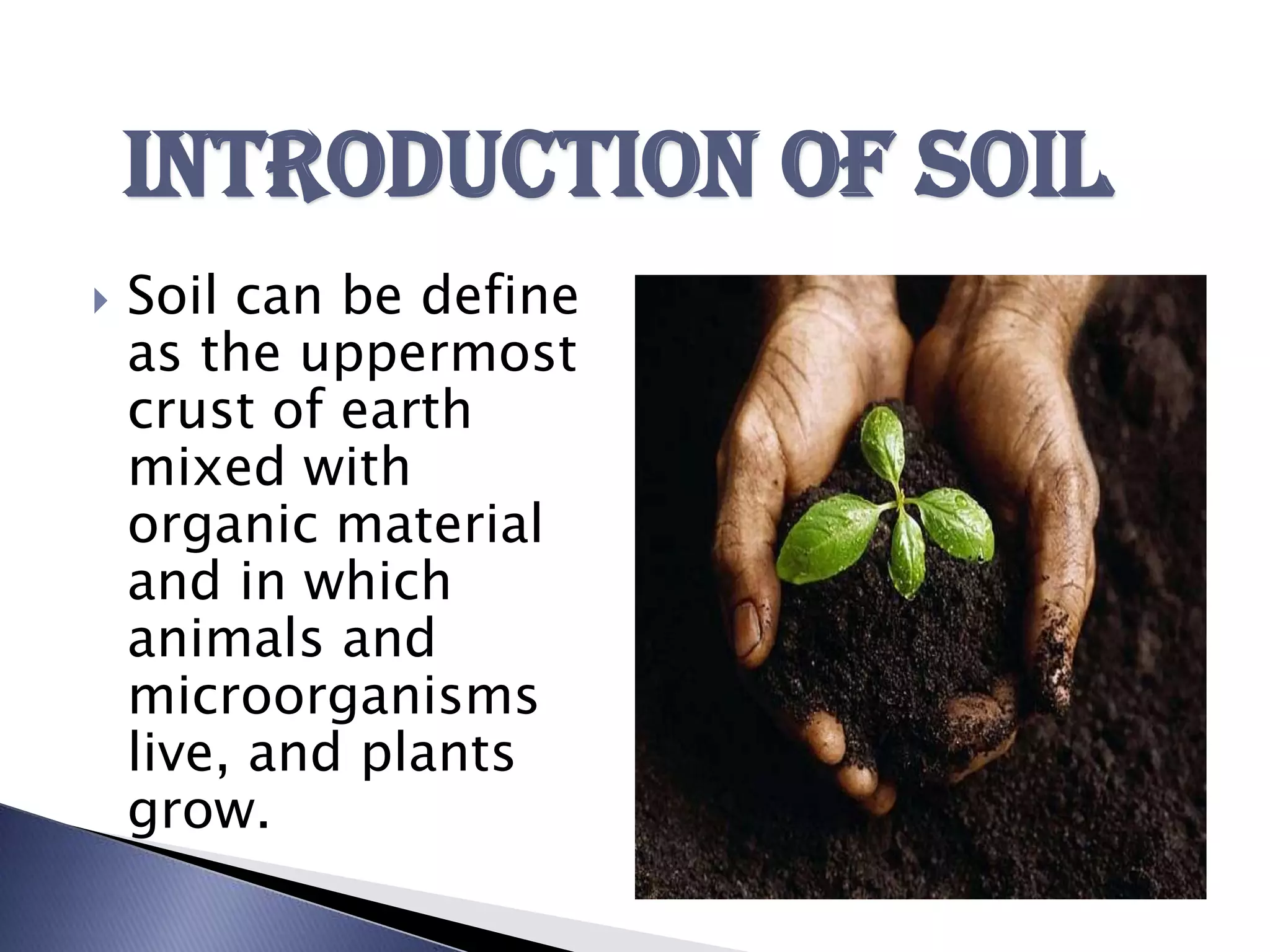
Introduction of soil
   Soil can be define
    as the uppermost
    crust of earth
    mixed with
    organic material
    and in which
    animals and
    microorganisms
    live, and plants
    grow.
Soil pollution
•   Soil pollution is defined or can be described
    as the contamination of soil of a particular
    region.

•   Soil pollution is caused by addition of
    chemicals, which reduces it’s productive
    capacity.

•   In rural areas more fertilizers & pesticides
    are used in agricultural operations & the
    residual chemicals remain in the top layers
    of soil.
SOURCES OF SOIL POLLUTION
• Acid rains
• Excess application of pesticides, fertilizer.
• Urban solid wastes.
• Disposal of Industrial wastes and sludge
  over land.
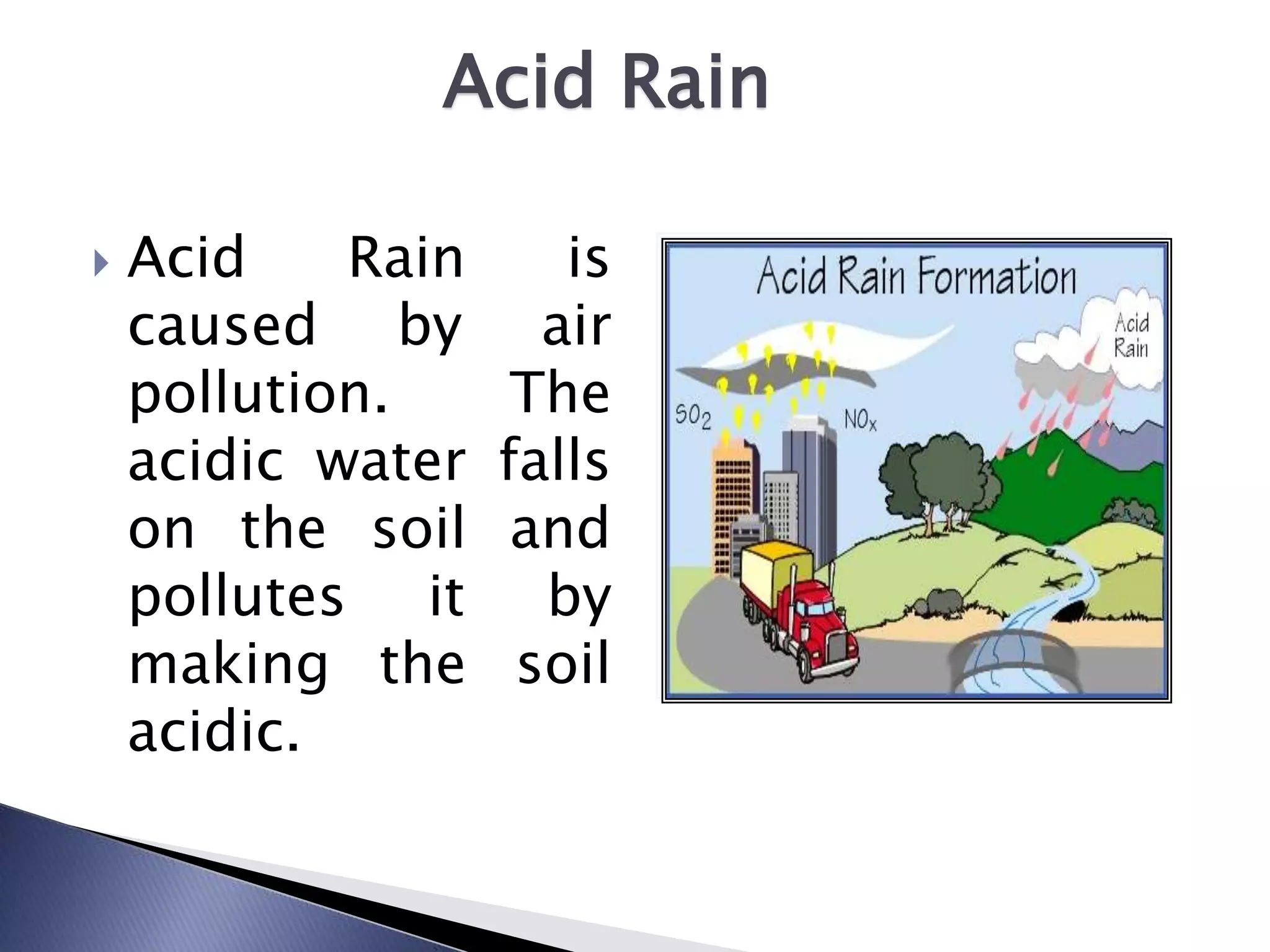
Acid Rain

   Acid    Rain      is
    caused by        air
    pollution.      The
    acidic water   falls
    on the soil     and
    pollutes it      by
    making the      soil
    acidic.
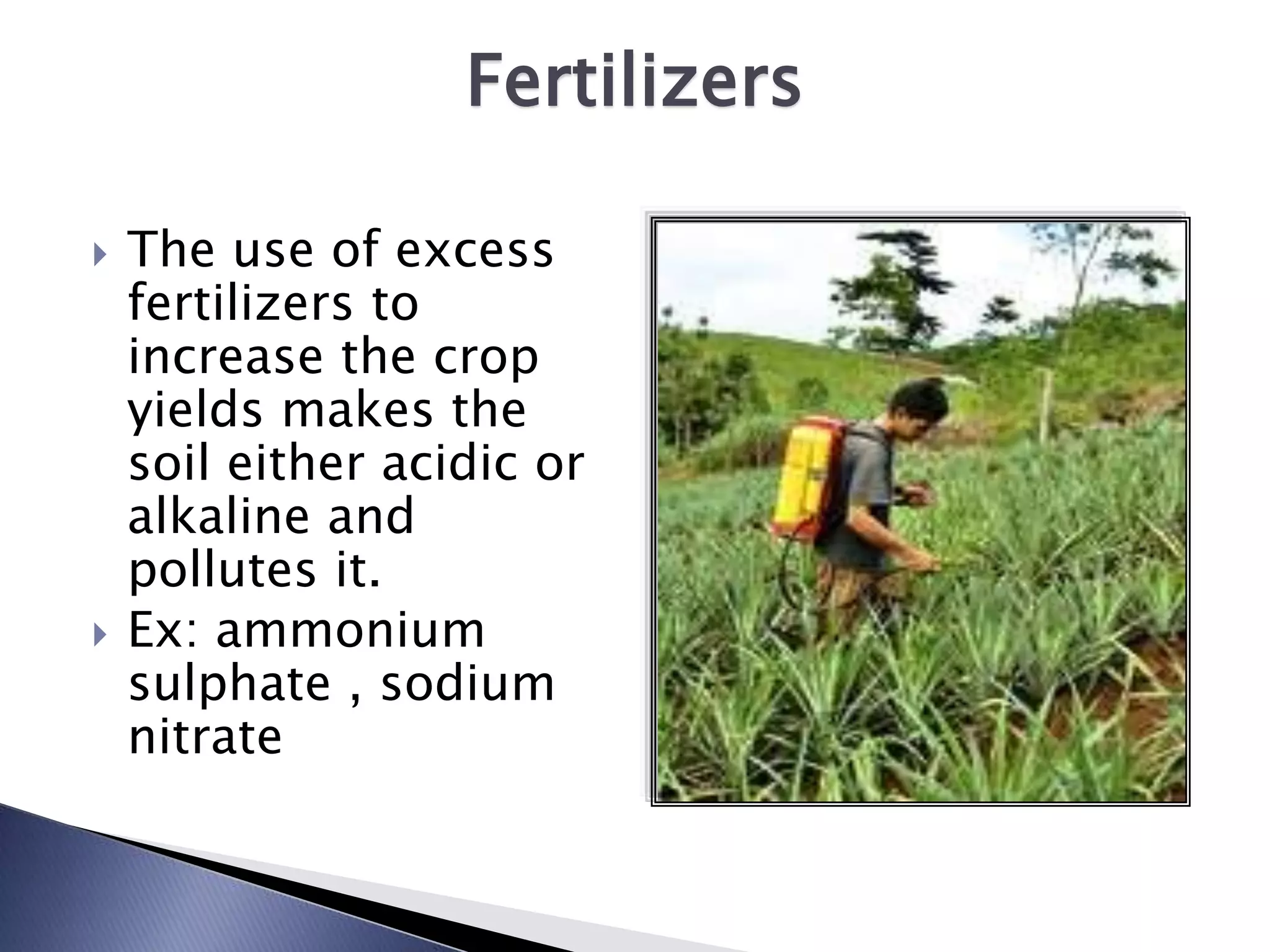
Fertilizers

   The use of excess
    fertilizers to
    increase the crop
    yields makes the
    soil either acidic or
    alkaline and
    pollutes it.
   Ex: ammonium
    sulphate , sodium
    nitrate
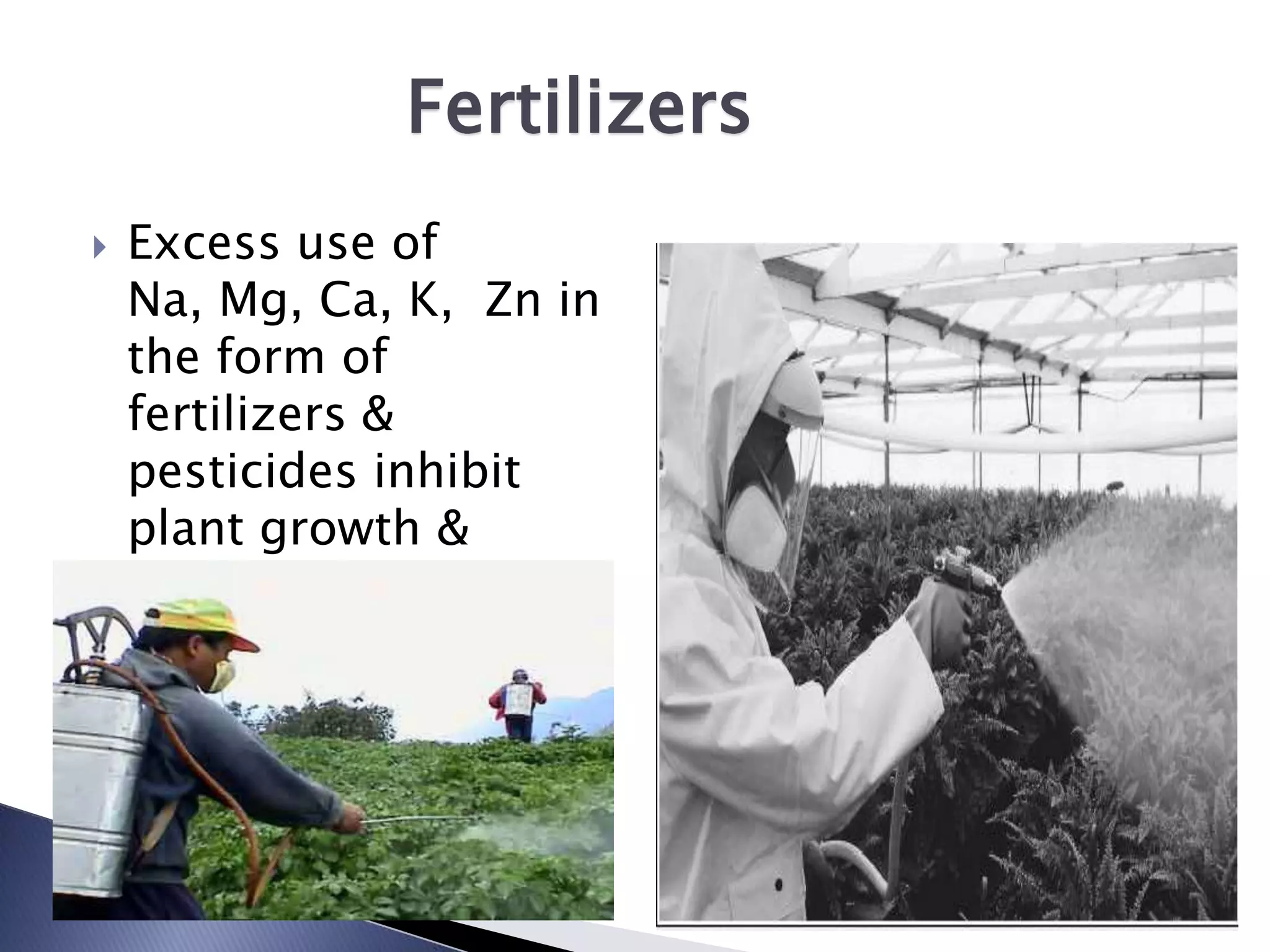
Fertilizers
   Excess use of
    Na, Mg, Ca, K, Zn in
    the form of
    fertilizers &
    pesticides inhibit
    plant growth &
    reduce crop yield.
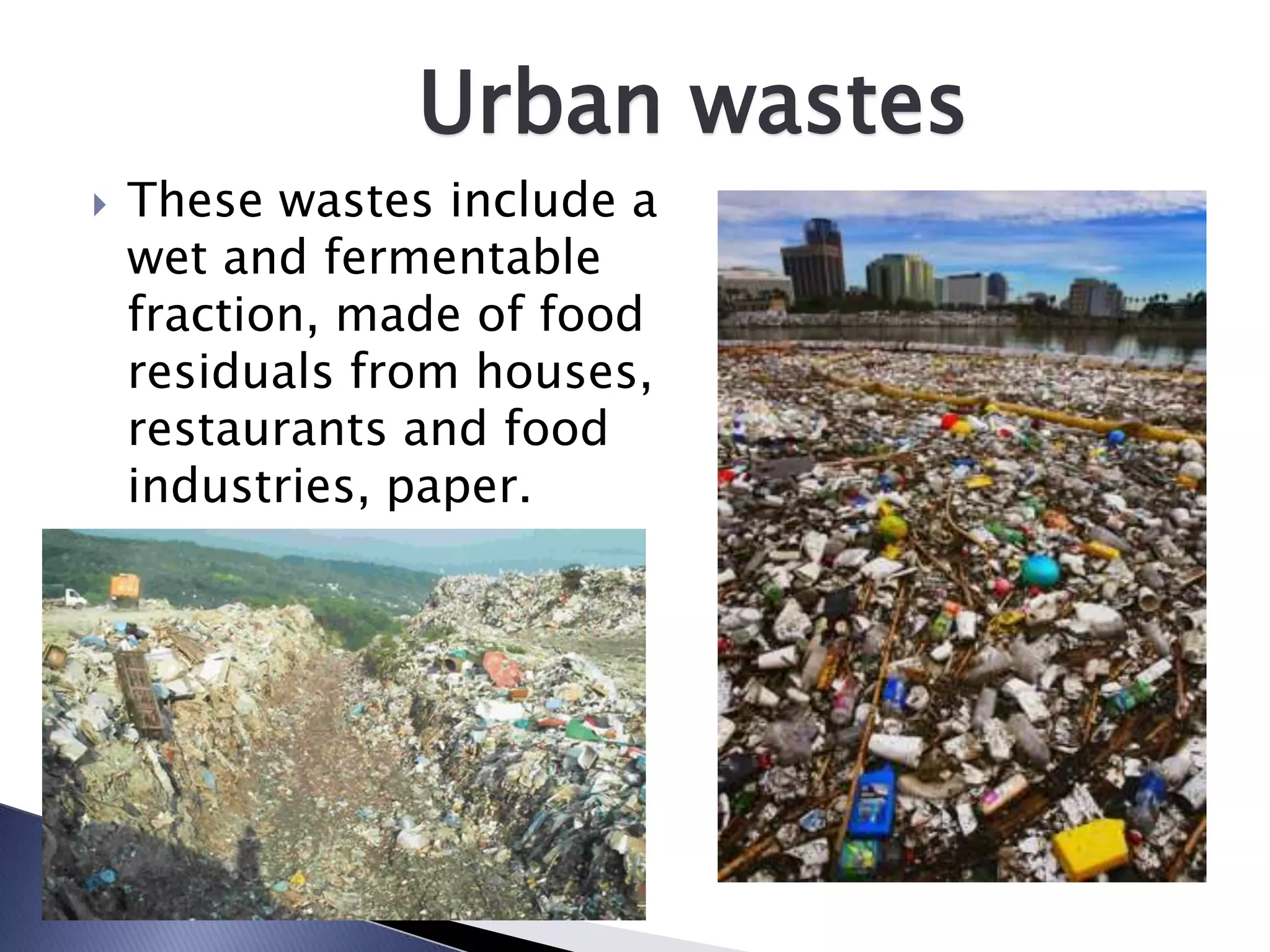
Urban wastes
   These wastes include a
    wet and fermentable
    fraction, made of food
    residuals from houses,
    restaurants and food
    industries, paper.
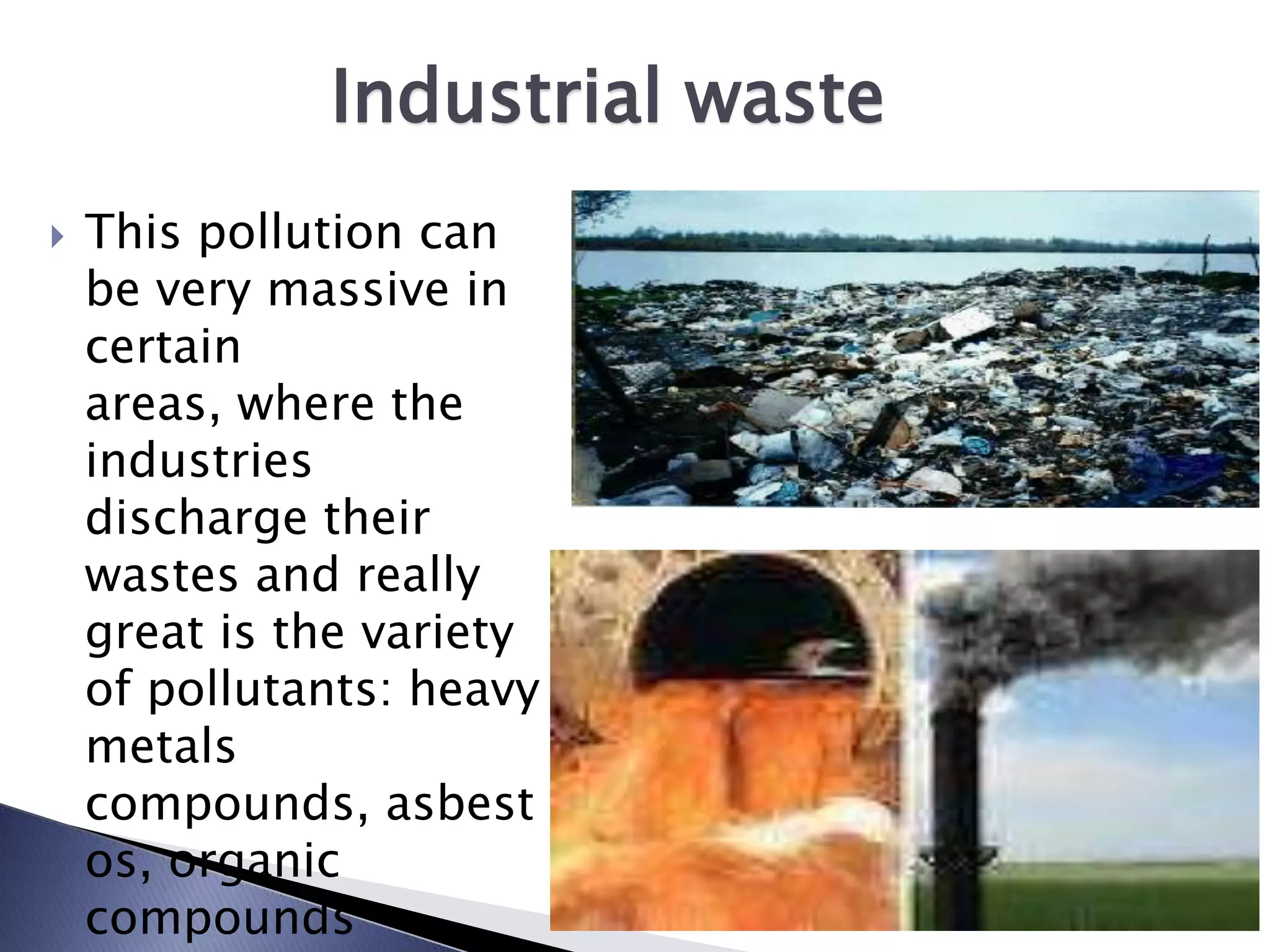
Industrial waste
   This pollution can
    be very massive in
    certain
    areas, where the
    industries
    discharge their
    wastes and really
    great is the variety
    of pollutants: heavy
    metals
    compounds, asbest
    os, organic
    compounds
POLLUTANTS
 Organic   waste

 Compounds


 Excess   use of fertilizers
Pollutants
Organic    waste
        Organic waste enter the soil pores &
 decompose pathological bacteria spread
 infection.
Compounds
  Compounds containing
 arsenic, mercury, chromium, nickel, lead, Zin
 c, & iron are toxic to the life.
  Fluorides also affect the plant
 development.
p0llutants
Excess   use of fertilizers
    Excess use of Na, Mg, Ca, K, Zn, in the
 form of fertilizers & pesticides inhabit
 plant growth & reduce crop yield.
effect
 Humans


 Animals


 Agricultural


 Urban
Humans Effects

   Causes cancers including leukemia.

   Mercury can increase the risk of
    kidney damage.

   Also cause headaches, eye irritation &
    skin rash.
Animals Effects
   Small life forms may consume
    harmful chemicals which may then
    be passed up the food chain to
    large animals.
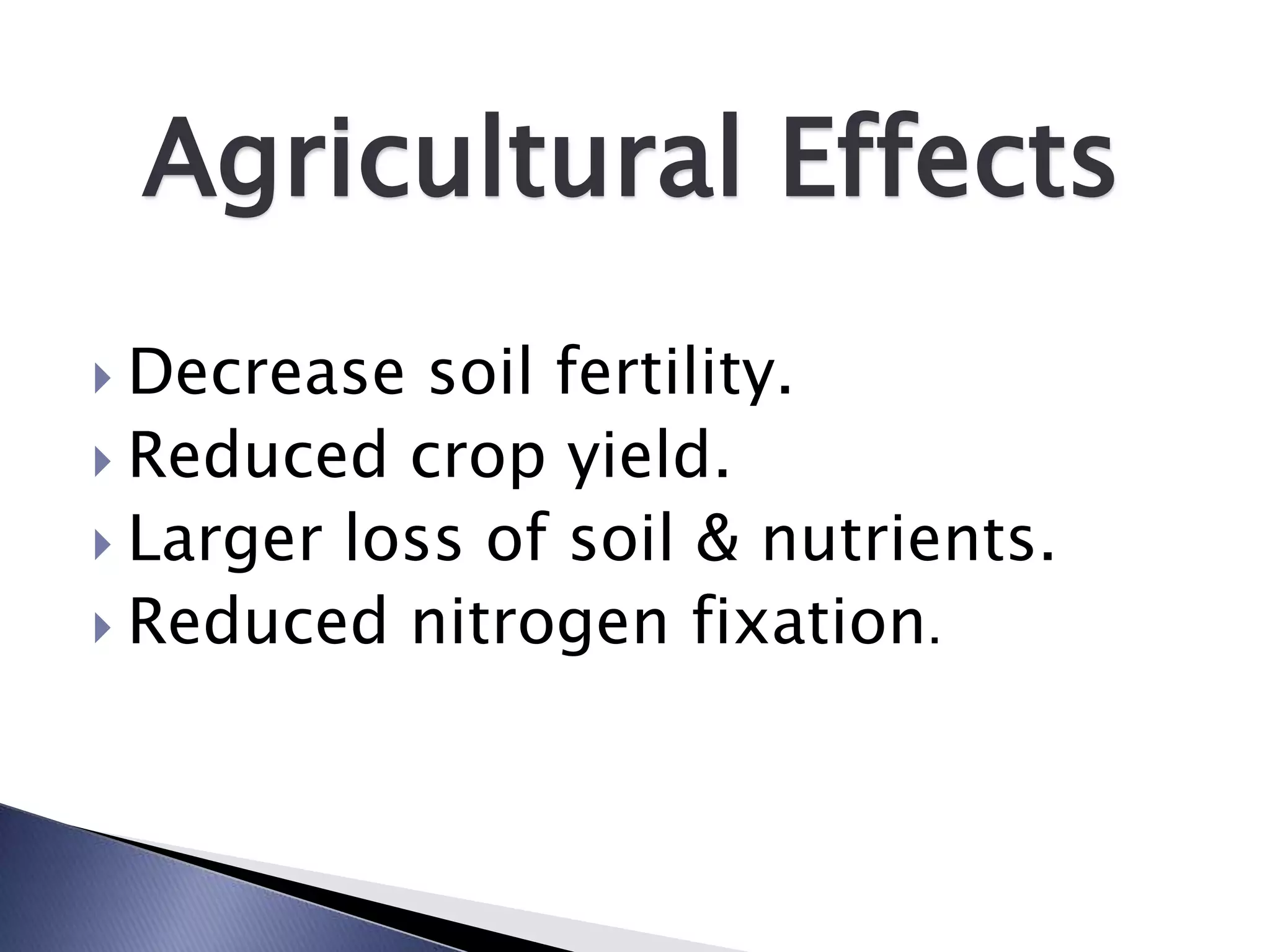
Agricultural Effects
 Decrease  soil fertility.
 Reduced crop yield.
 Larger loss of soil & nutrients.
 Reduced nitrogen fixation.
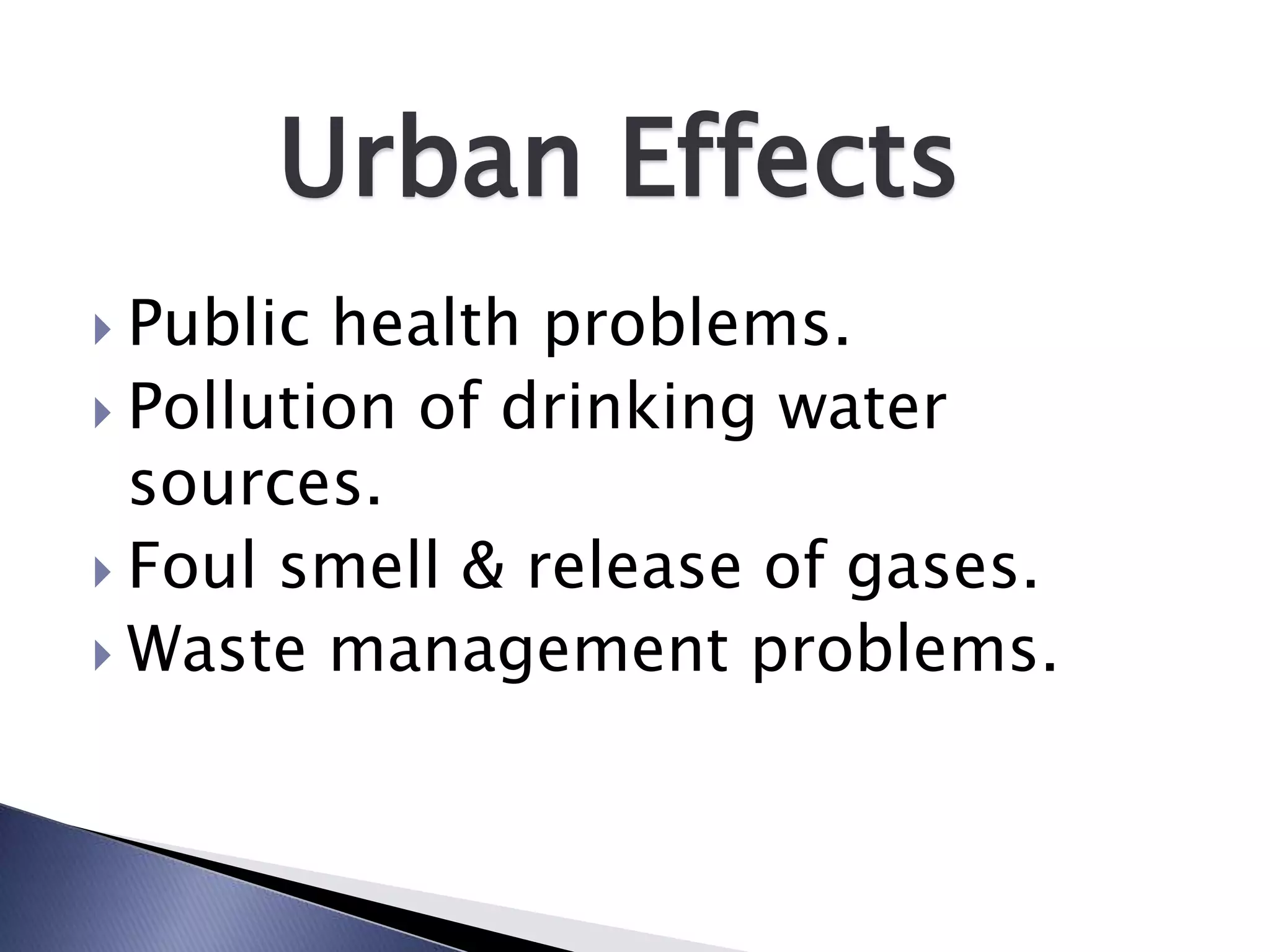
Urban Effects
 Public health problems.
 Pollution of drinking water
  sources.
 Foul smell & release of gases.
 Waste management problems.
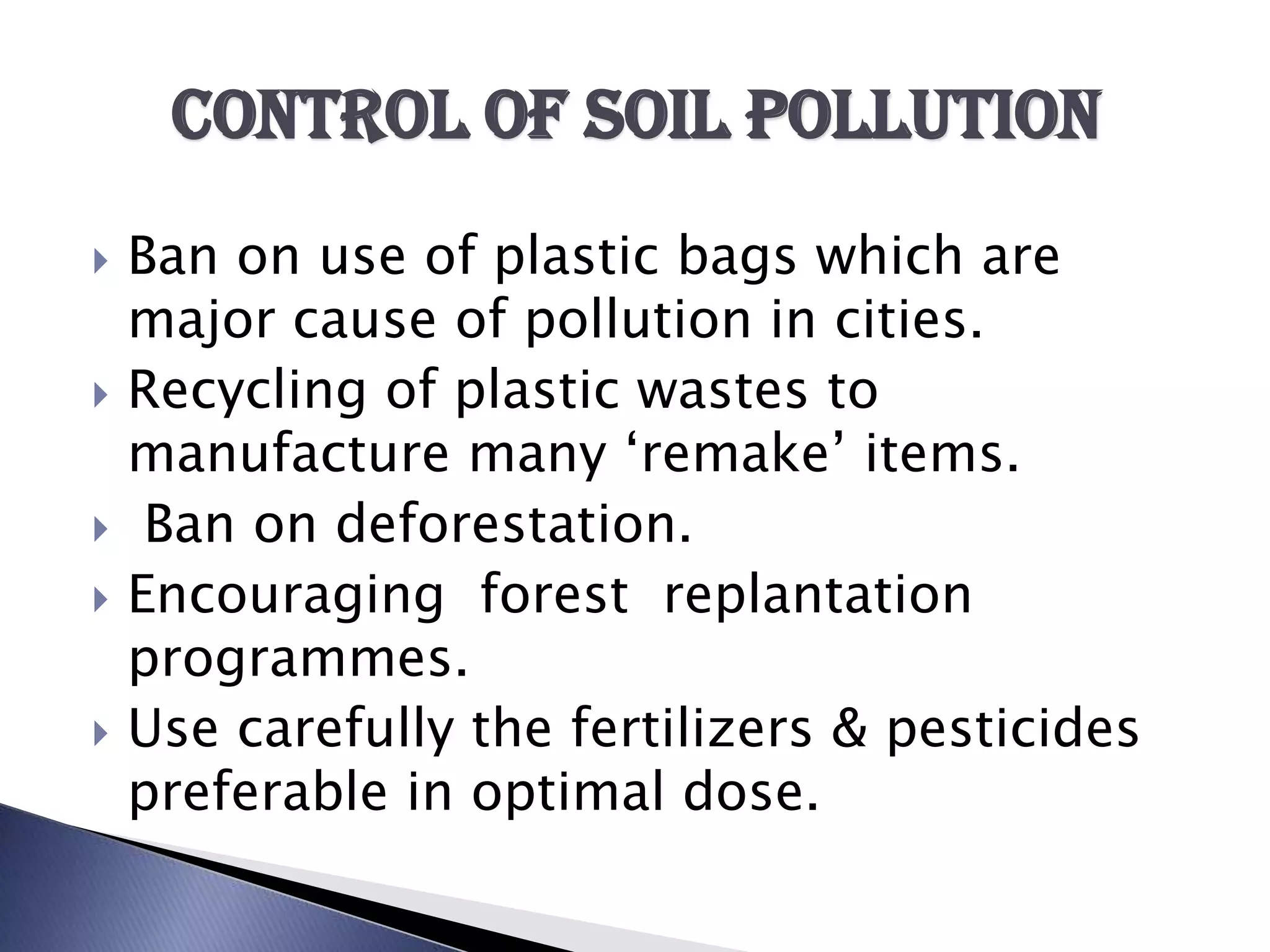
Control of soil pollution
   Ban on use of plastic bags which are
    major cause of pollution in cities.
   Recycling of plastic wastes to
    manufacture many ‘remake’ items.
    Ban on deforestation.
   Encouraging forest replantation
    programmes.
   Use carefully the fertilizers & pesticides
    preferable in optimal dose.
 http://en.wikipedia.org


 WWW.GOOGLE.CO.IN
Soil pollution By Nikhil Pakwanne

Soil pollution By Nikhil Pakwanne

  • 1.
    Government College OfEngineering, Aurangabad. Soil pollution Invented By:- Nikhil Pakwanne )
  • 2.
  • 3.
    Introduction of soil  Soil can be define as the uppermost crust of earth mixed with organic material and in which animals and microorganisms live, and plants grow.
  • 4.
    Soil pollution • Soil pollution is defined or can be described as the contamination of soil of a particular region. • Soil pollution is caused by addition of chemicals, which reduces it’s productive capacity. • In rural areas more fertilizers & pesticides are used in agricultural operations & the residual chemicals remain in the top layers of soil.
  • 5.
    SOURCES OF SOILPOLLUTION • Acid rains • Excess application of pesticides, fertilizer. • Urban solid wastes. • Disposal of Industrial wastes and sludge over land.
  • 6.
    Acid Rain  Acid Rain is caused by air pollution. The acidic water falls on the soil and pollutes it by making the soil acidic.
  • 7.
    Fertilizers  The use of excess fertilizers to increase the crop yields makes the soil either acidic or alkaline and pollutes it.  Ex: ammonium sulphate , sodium nitrate
  • 8.
    Fertilizers  Excess use of Na, Mg, Ca, K, Zn in the form of fertilizers & pesticides inhibit plant growth & reduce crop yield.
  • 9.
    Urban wastes  These wastes include a wet and fermentable fraction, made of food residuals from houses, restaurants and food industries, paper.
  • 10.
    Industrial waste  This pollution can be very massive in certain areas, where the industries discharge their wastes and really great is the variety of pollutants: heavy metals compounds, asbest os, organic compounds
  • 11.
    POLLUTANTS  Organic waste  Compounds  Excess use of fertilizers
  • 12.
    Pollutants Organic waste Organic waste enter the soil pores & decompose pathological bacteria spread infection. Compounds Compounds containing arsenic, mercury, chromium, nickel, lead, Zin c, & iron are toxic to the life. Fluorides also affect the plant development.
  • 13.
    p0llutants Excess use of fertilizers Excess use of Na, Mg, Ca, K, Zn, in the form of fertilizers & pesticides inhabit plant growth & reduce crop yield.
  • 14.
    effect  Humans  Animals Agricultural  Urban
  • 15.
    Humans Effects  Causes cancers including leukemia.  Mercury can increase the risk of kidney damage.  Also cause headaches, eye irritation & skin rash.
  • 16.
    Animals Effects  Small life forms may consume harmful chemicals which may then be passed up the food chain to large animals.
  • 17.
    Agricultural Effects  Decrease soil fertility.  Reduced crop yield.  Larger loss of soil & nutrients.  Reduced nitrogen fixation.
  • 18.
    Urban Effects  Publichealth problems.  Pollution of drinking water sources.  Foul smell & release of gases.  Waste management problems.
  • 19.
    Control of soilpollution  Ban on use of plastic bags which are major cause of pollution in cities.  Recycling of plastic wastes to manufacture many ‘remake’ items.  Ban on deforestation.  Encouraging forest replantation programmes.  Use carefully the fertilizers & pesticides preferable in optimal dose.
  • 20.