NAME - MUSKAAN VERMA
COURSE - INTEGRATED B.A.B.ED SPECIAL EDUCATION
ENROLLMENT NUMBER -A14065322017
DEPARTMENT - AMITY INSTITUTE OF REHABILITATION SCIENCES
INSTITUTE - AMITY UNIVERSITY
SEMESTER - 2ND SEMESTER
BATCH - 2022-2026
SUBJECT CODE - EVS102
SUBJECT - ENVIRONMENTAL STUDIES 2
FACULTY - Dr. Harshita Jain
Soil Pollution
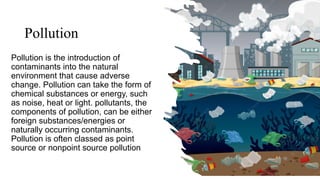
Pollution
Pollution is the introduction of
contaminants into the natural
environment that cause adverse
change. Pollution can take the form of
chemical substances or energy, such
as noise, heat or light. pollutants, the
components of pollution, can be either
foreign substances/energies or
naturally occurring contaminants.
Pollution is often classed as point
source or nonpoint source pollution
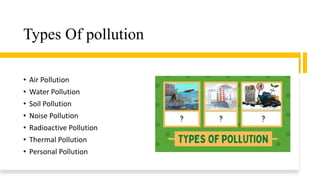
Types Of pollution
• Air Pollution
• Water Pollution
• Soil Pollution
• Noise Pollution
• Radioactive Pollution
• Thermal Pollution
• Personal Pollution
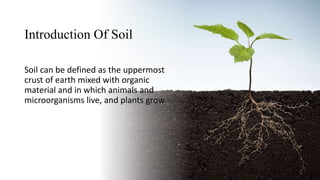
Introduction Of Soil
Soil can be defined as the uppermost
crust of earth mixed with organic
material and in which animals and
microorganisms live, and plants grow.
Soil pollution
• Soil pollution is defined or can be described
as the contamination of soil of a particular
region.
• Soil pollution is caused by addition of
chemicals, which reduces its productive
capacity.
• In rural areas more fertilizers & pesticides
are used in agricultural operations & the
residual chemicals remain in the top layers
of soil.
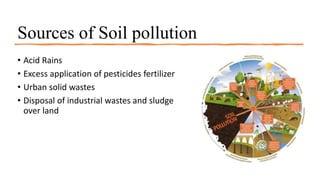
Sources of Soil pollution
• Acid Rains
• Excess application of pesticides fertilizer
• Urban solid wastes
• Disposal of industrial wastes and sludge
over land
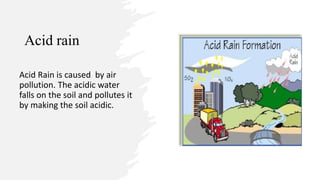
Acid rain
Acid Rain is caused by air
pollution. The acidic water
falls on the soil and pollutes it
by making the soil acidic.
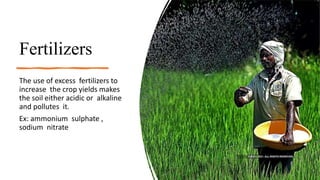
Fertilizers
The use of excess fertilizers to
increase the crop yields makes
the soil either acidic or alkaline
and pollutes it.
Ex: ammonium sulphate ,
sodium nitrate
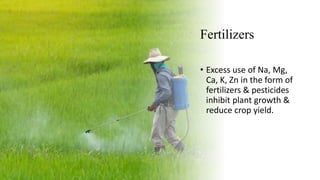
Fertilizers
• Excess use of Na, Mg,
Ca, K, Zn in the form of
fertilizers & pesticides
inhibit plant growth &
reduce crop yield.
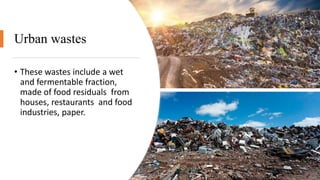
Urban wastes
• These wastes include a wet
and fermentable fraction,
made of food residuals from
houses, restaurants and food
industries, paper.
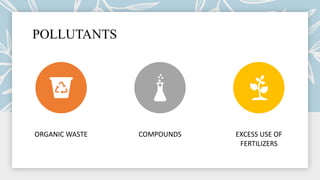
POLLUTANTS
ORGANIC WASTE COMPOUNDS EXCESS USE OF
FERTILIZERS
POLLUTANTS
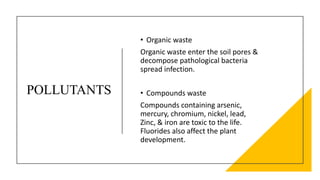
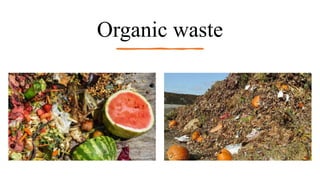
• Organic waste
Organic waste enter the soil pores &
decompose pathological bacteria
spread infection.
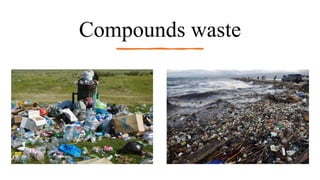
• Compounds waste
Compounds containing arsenic,
mercury, chromium, nickel, lead,
Zinc, & iron are toxic to the life.
Fluorides also affect the plant
development.
Organic waste
Compounds waste
Pollutants
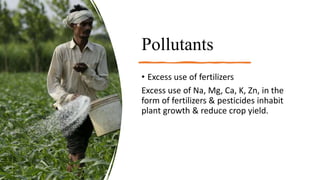
• Excess use of fertilizers
Excess use of Na, Mg, Ca, K, Zn, in the
form of fertilizers & pesticides inhabit
plant growth & reduce crop yield.
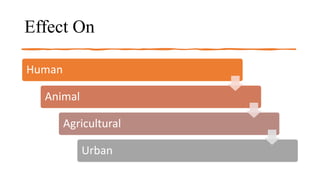
Effect On
Human
Animal
Agricultural
Urban
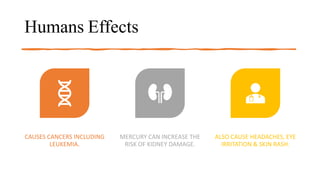
Humans Effects
CAUSES CANCERS INCLUDING
LEUKEMIA.
MERCURY CAN INCREASE THE
RISK OF KIDNEY DAMAGE.
ALSO CAUSE HEADACHES, EYE
IRRITATION & SKIN RASH.
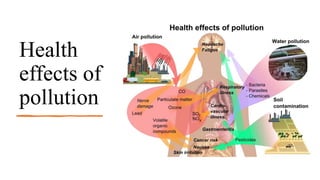
Health
effects of
pollution
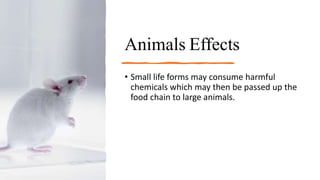
Animals Effects
• Small life forms may consume harmful
chemicals which may then be passed up the
food chain to large animals.
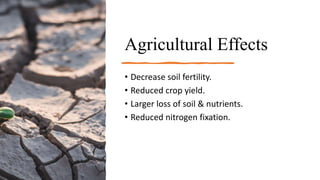
Agricultural Effects
• Decrease soil fertility.
• Reduced crop yield.
• Larger loss of soil & nutrients.
• Reduced nitrogen fixation.
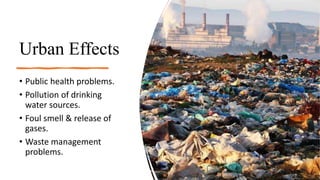
Urban Effects
• Public health problems.
• Pollution of drinking
water sources.
• Foul smell & release of
gases.
• Waste management
problems.
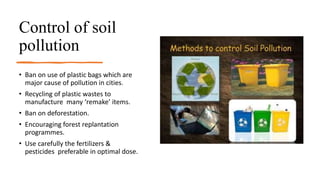
Control of soil
pollution
• Ban on use of plastic bags which are
major cause of pollution in cities.
• Recycling of plastic wastes to
manufacture many ‘remake’ items.
• Ban on deforestation.
• Encouraging forest replantation
programmes.
• Use carefully the fertilizers &
pesticides preferable in optimal dose.
Thank you

Soil pollution.pptx

  • 1.
    NAME - MUSKAANVERMA COURSE - INTEGRATED B.A.B.ED SPECIAL EDUCATION ENROLLMENT NUMBER -A14065322017 DEPARTMENT - AMITY INSTITUTE OF REHABILITATION SCIENCES INSTITUTE - AMITY UNIVERSITY SEMESTER - 2ND SEMESTER BATCH - 2022-2026 SUBJECT CODE - EVS102 SUBJECT - ENVIRONMENTAL STUDIES 2 FACULTY - Dr. Harshita Jain
  • 2.
  • 3.
    Pollution Pollution is theintroduction of contaminants into the natural environment that cause adverse change. Pollution can take the form of chemical substances or energy, such as noise, heat or light. pollutants, the components of pollution, can be either foreign substances/energies or naturally occurring contaminants. Pollution is often classed as point source or nonpoint source pollution
  • 4.
    Types Of pollution •Air Pollution • Water Pollution • Soil Pollution • Noise Pollution • Radioactive Pollution • Thermal Pollution • Personal Pollution
  • 5.
    Introduction Of Soil Soilcan be defined as the uppermost crust of earth mixed with organic material and in which animals and microorganisms live, and plants grow.
  • 7.
    Soil pollution • Soilpollution is defined or can be described as the contamination of soil of a particular region. • Soil pollution is caused by addition of chemicals, which reduces its productive capacity. • In rural areas more fertilizers & pesticides are used in agricultural operations & the residual chemicals remain in the top layers of soil.
  • 8.
    Sources of Soilpollution • Acid Rains • Excess application of pesticides fertilizer • Urban solid wastes • Disposal of industrial wastes and sludge over land
  • 9.
    Acid rain Acid Rainis caused by air pollution. The acidic water falls on the soil and pollutes it by making the soil acidic.
  • 10.
    Fertilizers The use ofexcess fertilizers to increase the crop yields makes the soil either acidic or alkaline and pollutes it. Ex: ammonium sulphate , sodium nitrate
  • 11.
    Fertilizers • Excess useof Na, Mg, Ca, K, Zn in the form of fertilizers & pesticides inhibit plant growth & reduce crop yield.
  • 12.
    Urban wastes • Thesewastes include a wet and fermentable fraction, made of food residuals from houses, restaurants and food industries, paper.
  • 13.
    POLLUTANTS ORGANIC WASTE COMPOUNDSEXCESS USE OF FERTILIZERS
  • 14.
    POLLUTANTS • Organic waste Organicwaste enter the soil pores & decompose pathological bacteria spread infection. • Compounds waste Compounds containing arsenic, mercury, chromium, nickel, lead, Zinc, & iron are toxic to the life. Fluorides also affect the plant development.
  • 15.
  • 16.
  • 17.
    Pollutants • Excess useof fertilizers Excess use of Na, Mg, Ca, K, Zn, in the form of fertilizers & pesticides inhabit plant growth & reduce crop yield.
  • 18.
  • 19.
    Humans Effects CAUSES CANCERSINCLUDING LEUKEMIA. MERCURY CAN INCREASE THE RISK OF KIDNEY DAMAGE. ALSO CAUSE HEADACHES, EYE IRRITATION & SKIN RASH.
  • 20.
  • 21.
    Animals Effects • Smalllife forms may consume harmful chemicals which may then be passed up the food chain to large animals.
  • 22.
    Agricultural Effects • Decreasesoil fertility. • Reduced crop yield. • Larger loss of soil & nutrients. • Reduced nitrogen fixation.
  • 23.
    Urban Effects • Publichealth problems. • Pollution of drinking water sources. • Foul smell & release of gases. • Waste management problems.
  • 24.
    Control of soil pollution •Ban on use of plastic bags which are major cause of pollution in cities. • Recycling of plastic wastes to manufacture many ‘remake’ items. • Ban on deforestation. • Encouraging forest replantation programmes. • Use carefully the fertilizers & pesticides preferable in optimal dose.
  • 25.