Group Members:
Sajid
Ahmed
Aharaf
Hasnat
Ashfaq
Ahmed
Ann
Nazirul
Islam
What is Land Pollution?
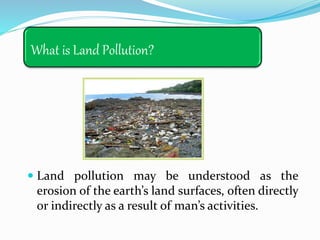
 Land pollution may be understood as the
erosion of the earth’s land surfaces, often directly
or indirectly as a result of man’s activities.
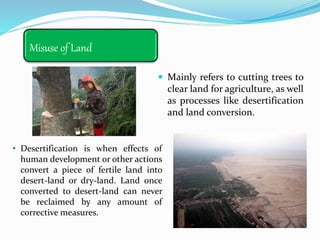
Misuse of Land
 Mainly refers to cutting trees to
clear land for agriculture, as well
as processes like desertification
and land conversion.
• Desertification is when effects of
human development or other actions
convert a piece of fertile land into
desert-land or dry-land. Land once
converted to desert-land can never
be reclaimed by any amount of
corrective measures.
Inefficient Use of Land
 Inefficient use of land as such is not going to
cause land pollution. However, inefficient
use of land amounts to wastage, and hence
shortage of land. It is an indirect cause of
land pollution that is often largely neglected.
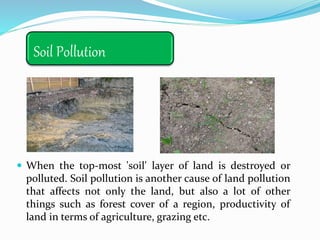
Soil Pollution
 When the top-most 'soil' layer of land is destroyed or
polluted. Soil pollution is another cause of land pollution
that affects not only the land, but also a lot of other
things such as forest cover of a region, productivity of
land in terms of agriculture, grazing etc.
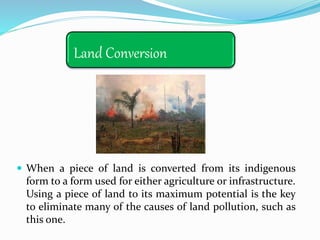
Land Conversion
 When a piece of land is converted from its indigenous
form to a form used for either agriculture or infrastructure.
Using a piece of land to its maximum potential is the key
to eliminate many of the causes of land pollution, such as
this one.
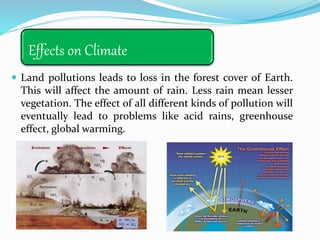
Effects on Climate
 Land pollutions leads to loss in the forest cover of Earth.
This will affect the amount of rain. Less rain mean lesser
vegetation. The effect of all different kinds of pollution will
eventually lead to problems like acid rains, greenhouse
effect, global warming.
Solution of Land Pollution
Personal level
 Encourage organic farming - buy organic food.
 Proper garbage disposal - separate your garbage before
you give it to the garbage collector; and strictly say NO to
plastic.
 Encourage recycling - buy recycled products, notebooks,
paper, etc.
 Restrict use of herbicides and pesticides - they are not
only used in farm, but in your own backyard as well.
Disposal of Wastes
 Proper waste management is the most important thing to do for the
prevention of land pollution. Several steps should be taken to ensure
that the waste gets disposed in the most harmless way, that produces
less or no toxins.
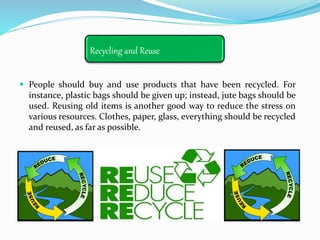
Recycling and Reuse
 People should buy and use products that have been recycled. For
instance, plastic bags should be given up; instead, jute bags should be
used. Reusing old items is another good way to reduce the stress on
various resources. Clothes, paper, glass, everything should be recycled
and reused, as far as possible.
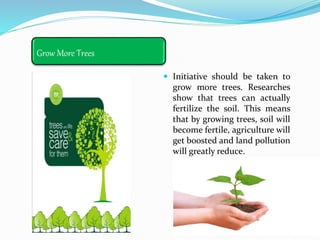
Grow More Trees
 Initiative should be taken to
grow more trees. Researches
show that trees can actually
fertilize the soil. This means
that by growing trees, soil will
become fertile, agriculture will
get boosted and land pollution
will greatly reduce.
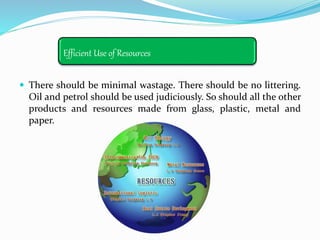
Efficient Use of Resources
 There should be minimal wastage. There should be no littering.
Oil and petrol should be used judiciously. So should all the other
products and resources made from glass, plastic, metal and
paper.
Land pollution

Land pollution

  • 3.
  • 4.
    What is LandPollution?  Land pollution may be understood as the erosion of the earth’s land surfaces, often directly or indirectly as a result of man’s activities.
  • 6.
    Misuse of Land Mainly refers to cutting trees to clear land for agriculture, as well as processes like desertification and land conversion. • Desertification is when effects of human development or other actions convert a piece of fertile land into desert-land or dry-land. Land once converted to desert-land can never be reclaimed by any amount of corrective measures.
  • 7.
    Inefficient Use ofLand  Inefficient use of land as such is not going to cause land pollution. However, inefficient use of land amounts to wastage, and hence shortage of land. It is an indirect cause of land pollution that is often largely neglected.
  • 8.
    Soil Pollution  Whenthe top-most 'soil' layer of land is destroyed or polluted. Soil pollution is another cause of land pollution that affects not only the land, but also a lot of other things such as forest cover of a region, productivity of land in terms of agriculture, grazing etc.
  • 9.
    Land Conversion  Whena piece of land is converted from its indigenous form to a form used for either agriculture or infrastructure. Using a piece of land to its maximum potential is the key to eliminate many of the causes of land pollution, such as this one.
  • 11.
    Effects on Climate Land pollutions leads to loss in the forest cover of Earth. This will affect the amount of rain. Less rain mean lesser vegetation. The effect of all different kinds of pollution will eventually lead to problems like acid rains, greenhouse effect, global warming.
  • 12.
  • 13.
    Personal level  Encourageorganic farming - buy organic food.  Proper garbage disposal - separate your garbage before you give it to the garbage collector; and strictly say NO to plastic.  Encourage recycling - buy recycled products, notebooks, paper, etc.  Restrict use of herbicides and pesticides - they are not only used in farm, but in your own backyard as well.
  • 14.
    Disposal of Wastes Proper waste management is the most important thing to do for the prevention of land pollution. Several steps should be taken to ensure that the waste gets disposed in the most harmless way, that produces less or no toxins.
  • 15.
    Recycling and Reuse People should buy and use products that have been recycled. For instance, plastic bags should be given up; instead, jute bags should be used. Reusing old items is another good way to reduce the stress on various resources. Clothes, paper, glass, everything should be recycled and reused, as far as possible.
  • 16.
    Grow More Trees Initiative should be taken to grow more trees. Researches show that trees can actually fertilize the soil. This means that by growing trees, soil will become fertile, agriculture will get boosted and land pollution will greatly reduce.
  • 17.
    Efficient Use ofResources  There should be minimal wastage. There should be no littering. Oil and petrol should be used judiciously. So should all the other products and resources made from glass, plastic, metal and paper.