Soil formation and Types
Halla AlDwaket
Besan Alzghoul
Fatima Alfayez
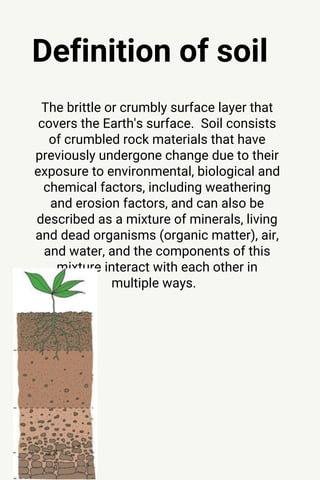
The brittle or crumbly surface layer that
covers the Earth's surface. Soil consists
of crumbled rock materials that have
previously undergone change due to their
exposure to environmental, biological and
chemical factors, including weathering
and erosion factors, and can also be
described as a mixture of minerals, living
and dead organisms (organic matter), air,
and water, and the components of this
mixture interact with each other in
multiple ways.
Definition of soil
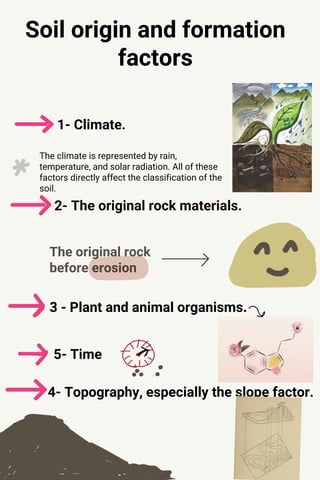
1- Climate.
The climate is represented by rain,
temperature, and solar radiation. All of these
factors directly affect the classification of the
soil.
2- The original rock materials.
3 - Plant and animal organisms.
4- Topography, especially the slope factor.
5- Time
Soil origin and formation
factors
The original rock
before erosion
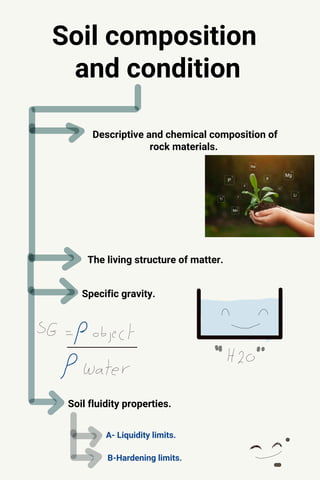
Descriptive and chemical composition of
rock materials.
The living structure of matter.
Specific gravity.
Soil fluidity properties.
A- Liquidity limits.
B-Hardening limits.
Soil composition
and condition
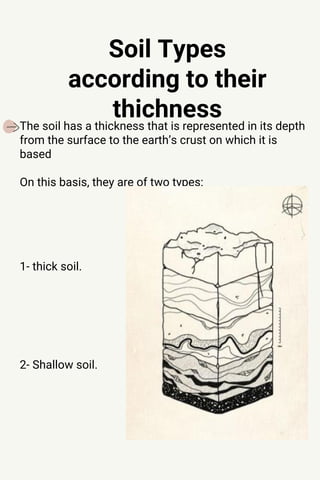
The soil has a thickness that is represented in its depth
from the surface to the earth’s crust on which it is
based
On this basis, they are of two types:
1- thick soil.
2- Shallow soil.
Soil Types
according to their
thichness
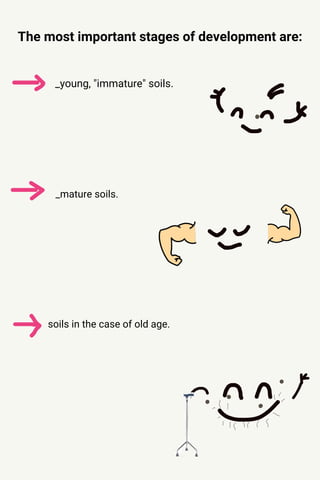
The most important stages of development are:
_young, "immature" soils.
_mature soils.
soils in the case of old age.
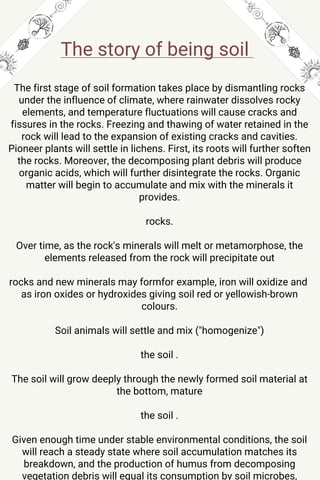
The story of being soil
The first stage of soil formation takes place by dismantling rocks
under the influence of climate, where rainwater dissolves rocky
elements, and temperature fluctuations will cause cracks and
fissures in the rocks. Freezing and thawing of water retained in the
rock will lead to the expansion of existing cracks and cavities.
Pioneer plants will settle in lichens. First, its roots will further soften
the rocks. Moreover, the decomposing plant debris will produce
organic acids, which will further disintegrate the rocks. Organic
matter will begin to accumulate and mix with the minerals it
provides.
rocks.
Over time, as the rock's minerals will melt or metamorphose, the
elements released from the rock will precipitate out
rocks and new minerals may formfor example, iron will oxidize and
as iron oxides or hydroxides giving soil red or yellowish-brown
colours.
Soil animals will settle and mix ("homogenize")
the soil .
The soil will grow deeply through the newly formed soil material at
the bottom, mature
the soil .
Given enough time under stable environmental conditions, the soil
will reach a steady state where soil accumulation matches its
breakdown, and the production of humus from decomposing
vegetation debris will equal its consumption by soil microbes,
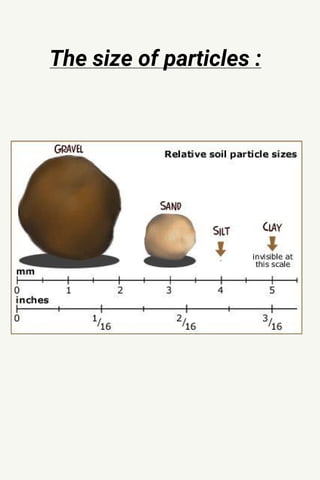
The size of particles :
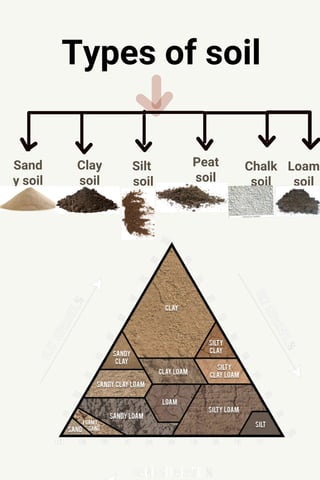
Sand
y soil
Clay
soil
Silt
soil
Peat
soil
Chalk
soil
Loam
soil
Types of soil
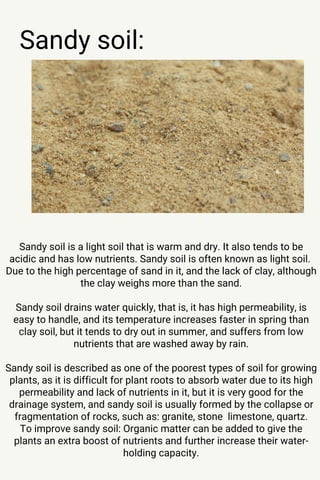
Sandy soil:
Sandy soil is a light soil that is warm and dry. It also tends to be
acidic and has low nutrients. Sandy soil is often known as light soil.
Due to the high percentage of sand in it, and the lack of clay, although
the clay weighs more than the sand.
Sandy soil drains water quickly, that is, it has high permeability, is
easy to handle, and its temperature increases faster in spring than
clay soil, but it tends to dry out in summer, and suffers from low
nutrients that are washed away by rain.
Sandy soil is described as one of the poorest types of soil for growing
plants, as it is difficult for plant roots to absorb water due to its high
permeability and lack of nutrients in it, but it is very good for the
drainage system, and sandy soil is usually formed by the collapse or
fragmentation of rocks, such as: granite, stone limestone, quartz.
To improve sandy soil: Organic matter can be added to give the
plants an extra boost of nutrients and further increase their water-
holding capacity.
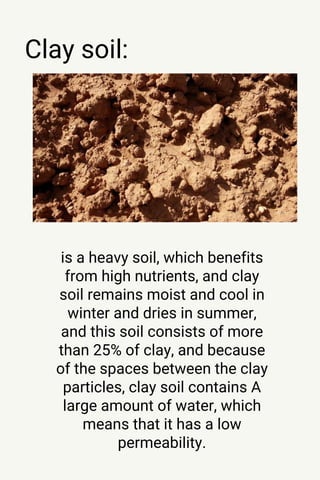
Clay soil:
is a heavy soil, which benefits
from high nutrients, and clay
soil remains moist and cool in
winter and dries in summer,
and this soil consists of more
than 25% of clay, and because
of the spaces between the clay
particles, clay soil contains A
large amount of water, which
means that it has a low
permeability.
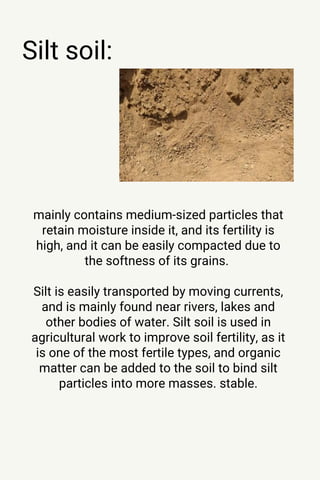
Silt soil:
mainly contains medium-sized particles that
retain moisture inside it, and its fertility is
high, and it can be easily compacted due to
the softness of its grains.
Silt is easily transported by moving currents,
and is mainly found near rivers, lakes and
other bodies of water. Silt soil is used in
agricultural work to improve soil fertility, as it
is one of the most fertile types, and organic
matter can be added to the soil to bind silt
particles into more masses. stable.
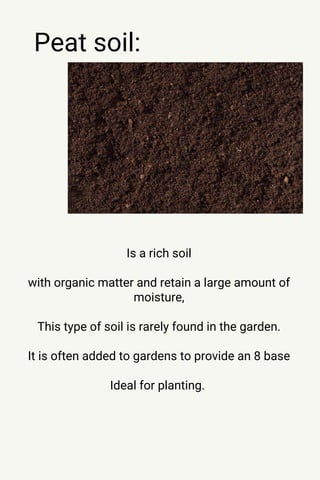
Peat soil:
Is a rich soil
with organic matter and retain a large amount of
moisture,
This type of soil is rarely found in the garden.
It is often added to gardens to provide an 8 base
Ideal for planting.
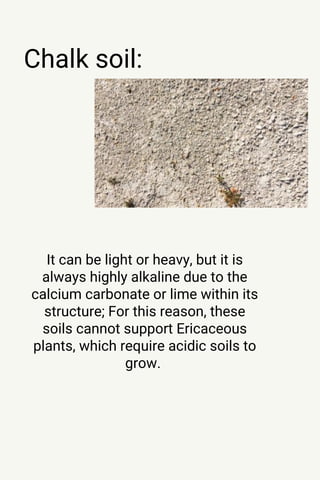
Chalk soil:
It can be light or heavy, but it is
always highly alkaline due to the
calcium carbonate or lime within its
structure; For this reason, these
soils cannot support Ericaceous
plants, which require acidic soils to
grow.
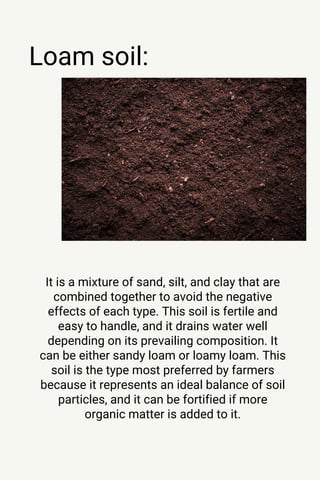
Loam soil:
It is a mixture of sand, silt, and clay that are
combined together to avoid the negative
effects of each type. This soil is fertile and
easy to handle, and it drains water well
depending on its prevailing composition. It
can be either sandy loam or loamy loam. This
soil is the type most preferred by farmers
because it represents an ideal balance of soil
particles, and it can be fortified if more
organic matter is added to it.
Wikipedia
The Reference
Thank you

Soil formation and Types

  • 1.
    Soil formation andTypes Halla AlDwaket Besan Alzghoul Fatima Alfayez
  • 2.
    The brittle orcrumbly surface layer that covers the Earth's surface. Soil consists of crumbled rock materials that have previously undergone change due to their exposure to environmental, biological and chemical factors, including weathering and erosion factors, and can also be described as a mixture of minerals, living and dead organisms (organic matter), air, and water, and the components of this mixture interact with each other in multiple ways. Definition of soil
  • 3.
    1- Climate. The climateis represented by rain, temperature, and solar radiation. All of these factors directly affect the classification of the soil. 2- The original rock materials. 3 - Plant and animal organisms. 4- Topography, especially the slope factor. 5- Time Soil origin and formation factors The original rock before erosion
  • 4.
    Descriptive and chemicalcomposition of rock materials. The living structure of matter. Specific gravity. Soil fluidity properties. A- Liquidity limits. B-Hardening limits. Soil composition and condition
  • 5.
    The soil hasa thickness that is represented in its depth from the surface to the earth’s crust on which it is based On this basis, they are of two types: 1- thick soil. 2- Shallow soil. Soil Types according to their thichness
  • 6.
    The most importantstages of development are: _young, "immature" soils. _mature soils. soils in the case of old age.
  • 7.
    The story ofbeing soil The first stage of soil formation takes place by dismantling rocks under the influence of climate, where rainwater dissolves rocky elements, and temperature fluctuations will cause cracks and fissures in the rocks. Freezing and thawing of water retained in the rock will lead to the expansion of existing cracks and cavities. Pioneer plants will settle in lichens. First, its roots will further soften the rocks. Moreover, the decomposing plant debris will produce organic acids, which will further disintegrate the rocks. Organic matter will begin to accumulate and mix with the minerals it provides. rocks. Over time, as the rock's minerals will melt or metamorphose, the elements released from the rock will precipitate out rocks and new minerals may formfor example, iron will oxidize and as iron oxides or hydroxides giving soil red or yellowish-brown colours. Soil animals will settle and mix ("homogenize") the soil . The soil will grow deeply through the newly formed soil material at the bottom, mature the soil . Given enough time under stable environmental conditions, the soil will reach a steady state where soil accumulation matches its breakdown, and the production of humus from decomposing vegetation debris will equal its consumption by soil microbes,
  • 8.
    The size ofparticles :
  • 9.
  • 10.
    Sandy soil: Sandy soilis a light soil that is warm and dry. It also tends to be acidic and has low nutrients. Sandy soil is often known as light soil. Due to the high percentage of sand in it, and the lack of clay, although the clay weighs more than the sand. Sandy soil drains water quickly, that is, it has high permeability, is easy to handle, and its temperature increases faster in spring than clay soil, but it tends to dry out in summer, and suffers from low nutrients that are washed away by rain. Sandy soil is described as one of the poorest types of soil for growing plants, as it is difficult for plant roots to absorb water due to its high permeability and lack of nutrients in it, but it is very good for the drainage system, and sandy soil is usually formed by the collapse or fragmentation of rocks, such as: granite, stone limestone, quartz. To improve sandy soil: Organic matter can be added to give the plants an extra boost of nutrients and further increase their water- holding capacity.
  • 11.
    Clay soil: is aheavy soil, which benefits from high nutrients, and clay soil remains moist and cool in winter and dries in summer, and this soil consists of more than 25% of clay, and because of the spaces between the clay particles, clay soil contains A large amount of water, which means that it has a low permeability.
  • 12.
    Silt soil: mainly containsmedium-sized particles that retain moisture inside it, and its fertility is high, and it can be easily compacted due to the softness of its grains. Silt is easily transported by moving currents, and is mainly found near rivers, lakes and other bodies of water. Silt soil is used in agricultural work to improve soil fertility, as it is one of the most fertile types, and organic matter can be added to the soil to bind silt particles into more masses. stable.
  • 13.
    Peat soil: Is arich soil with organic matter and retain a large amount of moisture, This type of soil is rarely found in the garden. It is often added to gardens to provide an 8 base Ideal for planting.
  • 14.
    Chalk soil: It canbe light or heavy, but it is always highly alkaline due to the calcium carbonate or lime within its structure; For this reason, these soils cannot support Ericaceous plants, which require acidic soils to grow.
  • 15.
    Loam soil: It isa mixture of sand, silt, and clay that are combined together to avoid the negative effects of each type. This soil is fertile and easy to handle, and it drains water well depending on its prevailing composition. It can be either sandy loam or loamy loam. This soil is the type most preferred by farmers because it represents an ideal balance of soil particles, and it can be fortified if more organic matter is added to it.
  • 16.