Hydrological Cycle and its
Components
Contents
• Hydrological cycle
• Components of the cycle
• Process
Hydrological Cycle
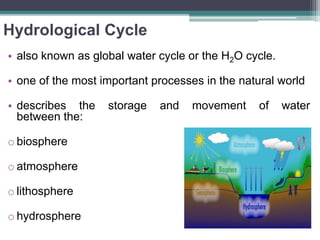
• also known as global water cycle or the H2O cycle.
• one of the most important processes in the natural world
• describes the storage and movement of water
between the:
o biosphere
o atmosphere
o lithosphere
o hydrosphere
Hydrological Cycle
• total amount of water remains constant, its
distribution among the various processes changes.
• throughout water changes between three different
states:
owater evaporating into water vapor
ovapor condensing to become water
owater freezing into ice
oice melting into water
Components of Hydrological Cycle
• the hydrological cycle is composed of the following
components:
o Evaporation
o Transpiration
o Sublimation
o Condensation
o Precipitation
o Run-off
o Infiltration and percolation
o Ground-water flow
Evaporation
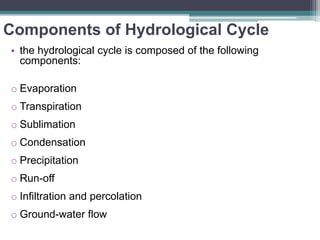
• Surface water get energized
by the solar radiations
• sufficiently energized break
free from the forces binding
them together and they
evaporate as water vapor.
• largest amount of water
comes from oceanic
evaporation
Transpiration
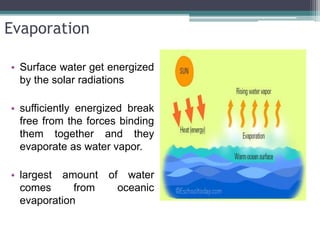
• process of water movement
through a plant and its
evaporation from aerial
parts, such as leaves,
stems and flowers.
• Evaporation along with
transpiration is known as
evaporation
Sublimation
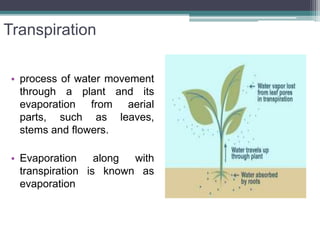
• Movement of water directly
from a solid to a gaseous
state without ever entering
the liquid state.
• This allows water in snow or
glaciers to enter the
atmosphere directly.
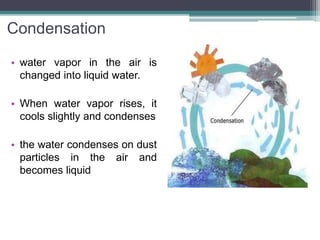
Condensation
• water vapor in the air is
changed into liquid water.
• When water vapor rises, it
cools slightly and condenses
• the water condenses on dust
particles in the air and
becomes liquid
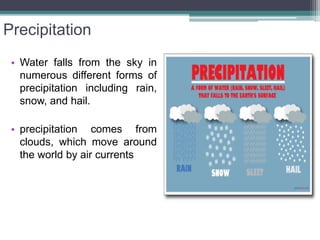
Precipitation
• Water falls from the sky in
numerous different forms of
precipitation including rain,
snow, and hail.
• precipitation comes from
clouds, which move around
the world by air currents
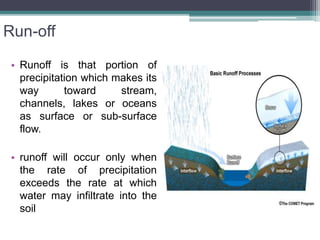
Run-off
• Runoff is that portion of
precipitation which makes its
way toward stream,
channels, lakes or oceans
as surface or sub-surface
flow.
• runoff will occur only when
the rate of precipitation
exceeds the rate at which
water may infiltrate into the
soil
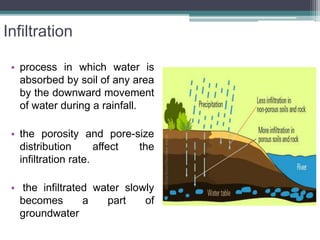
Infiltration
• process in which water is
absorbed by soil of any area
by the downward movement
of water during a rainfall.
• the porosity and pore-size
distribution affect the
infiltration rate.
• the infiltrated water slowly
becomes a part of
groundwater
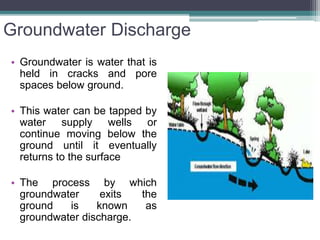
Groundwater Discharge
• Groundwater is water that is
held in cracks and pore
spaces below ground.
• This water can be tapped by
water supply wells or
continue moving below the
ground until it eventually
returns to the surface
• The process by which
groundwater exits the
ground is known as
groundwater discharge.
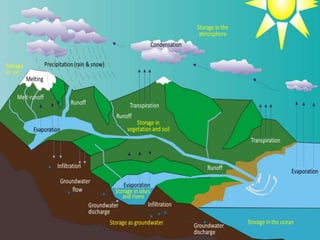
Hydrological Cycle
• Process of hydrological cycle starts with oceans. Water in
oceans, gets evaporated due to heat energy provided by solar
radiation and forms water vapor.
• This water vapor moves upwards to higher altitudes forming
clouds. Most of the clouds condense and precipitate in any
form like rain, hail, snow, sleet.
• A part of clouds is driven to land by winds. Precipitation, while
falling to the ground, some part of it evaporates back to
atmosphere.
Hydrological Cycle
• Portion of water that reaches the ground, enters the earth’s
surface infiltrating various strata of soil and enhancing the
moisture content as well as water table.
• Vegetation sends a portion of water from earth’s surface back
to atmosphere through the process of transpiration.
• Once water percolates and infiltrates the earth’s surface,
runoff is formed over the land, flowing through the contours of
land heading towards river and lakes and finally joins into
oceans after many years.
• Some amount of water is retained as depression storage.
Hydrological Cycle
• Further again the process of this hydrological cycle continues
by blowing of cool air over ocean, carrying water molecules,
forming into water vapor then clouds getting condensed and
precipitates as rainfall.
• Similarly, then water gets percolated into soil, increasing
water table then formation of runoff waters heading towards
water bodies. Thus the cyclic process continues.
THANKYOU 

Hydrological cycle and its components

  • 1.
    Hydrological Cycle andits Components
  • 2.
    Contents • Hydrological cycle •Components of the cycle • Process
  • 3.
    Hydrological Cycle • alsoknown as global water cycle or the H2O cycle. • one of the most important processes in the natural world • describes the storage and movement of water between the: o biosphere o atmosphere o lithosphere o hydrosphere
  • 4.
    Hydrological Cycle • totalamount of water remains constant, its distribution among the various processes changes. • throughout water changes between three different states: owater evaporating into water vapor ovapor condensing to become water owater freezing into ice oice melting into water
  • 5.
    Components of HydrologicalCycle • the hydrological cycle is composed of the following components: o Evaporation o Transpiration o Sublimation o Condensation o Precipitation o Run-off o Infiltration and percolation o Ground-water flow
  • 6.
    Evaporation • Surface waterget energized by the solar radiations • sufficiently energized break free from the forces binding them together and they evaporate as water vapor. • largest amount of water comes from oceanic evaporation
  • 7.
    Transpiration • process ofwater movement through a plant and its evaporation from aerial parts, such as leaves, stems and flowers. • Evaporation along with transpiration is known as evaporation
  • 8.
    Sublimation • Movement ofwater directly from a solid to a gaseous state without ever entering the liquid state. • This allows water in snow or glaciers to enter the atmosphere directly.
  • 9.
    Condensation • water vaporin the air is changed into liquid water. • When water vapor rises, it cools slightly and condenses • the water condenses on dust particles in the air and becomes liquid
  • 10.
    Precipitation • Water fallsfrom the sky in numerous different forms of precipitation including rain, snow, and hail. • precipitation comes from clouds, which move around the world by air currents
  • 11.
    Run-off • Runoff isthat portion of precipitation which makes its way toward stream, channels, lakes or oceans as surface or sub-surface flow. • runoff will occur only when the rate of precipitation exceeds the rate at which water may infiltrate into the soil
  • 12.
    Infiltration • process inwhich water is absorbed by soil of any area by the downward movement of water during a rainfall. • the porosity and pore-size distribution affect the infiltration rate. • the infiltrated water slowly becomes a part of groundwater
  • 13.
    Groundwater Discharge • Groundwateris water that is held in cracks and pore spaces below ground. • This water can be tapped by water supply wells or continue moving below the ground until it eventually returns to the surface • The process by which groundwater exits the ground is known as groundwater discharge.
  • 14.
    Hydrological Cycle • Processof hydrological cycle starts with oceans. Water in oceans, gets evaporated due to heat energy provided by solar radiation and forms water vapor. • This water vapor moves upwards to higher altitudes forming clouds. Most of the clouds condense and precipitate in any form like rain, hail, snow, sleet. • A part of clouds is driven to land by winds. Precipitation, while falling to the ground, some part of it evaporates back to atmosphere.
  • 15.
    Hydrological Cycle • Portionof water that reaches the ground, enters the earth’s surface infiltrating various strata of soil and enhancing the moisture content as well as water table. • Vegetation sends a portion of water from earth’s surface back to atmosphere through the process of transpiration. • Once water percolates and infiltrates the earth’s surface, runoff is formed over the land, flowing through the contours of land heading towards river and lakes and finally joins into oceans after many years. • Some amount of water is retained as depression storage.
  • 16.
    Hydrological Cycle • Furtheragain the process of this hydrological cycle continues by blowing of cool air over ocean, carrying water molecules, forming into water vapor then clouds getting condensed and precipitates as rainfall. • Similarly, then water gets percolated into soil, increasing water table then formation of runoff waters heading towards water bodies. Thus the cyclic process continues.
  • 18.